LEAP 2026: Saudi Arabia’s AI blueprint comes into focus

Riyadh revealed the scale of its push to become a global technology hub at the annual summit that wrapped up on 3 September

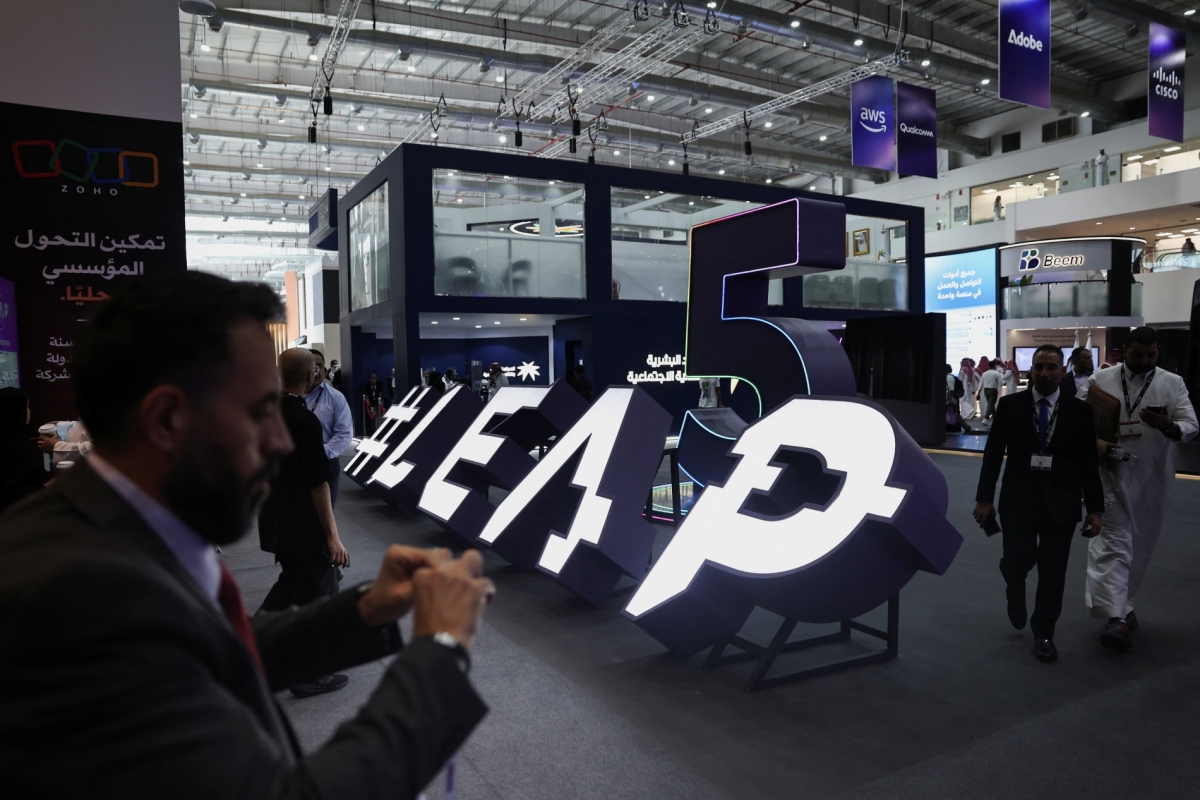
Visitors attend the LEAP conference in Riyadh on 31 August 2026.
Reuters
Visitors attend the LEAP conference in Riyadh on 31 August 2026.

LEAP 2026: Saudi Arabia’s AI blueprint comes into focus

Saudi Arabia’s increasingly ambitious goal to become a global hub for AI and cloud computing was laid bare at LEAP, an annual global technology summit held in Riyadh. Tech deals worth $15bn were announced during the four-day conference, highlighting not only the scale of investment in AI, the cloud, data centres, and advanced technologies but also its ambition to become a tech leader.

That ambition was visible across the conference: in new AI models and locally designed hardware, multibillion-dollar investments in cloud and computing infrastructure, plans for autonomous vehicles, and the expansion of domestic technology manufacturing. Taken together, the announcements offered a picture of a country attempting to build an entire technology ecosystem rather than simply import the products it needs.

LEAP’s fifth edition, held in Riyadh from 31 August to 3 September, brought together 1,323 speakers and 1,397 investors from 1,027 firms with a combined $18.3tn in assets under management. More than 1,500 exhibitors took part, including over 750 global companies, alongside 1,294 firms participating in the exhibition and startup programme.

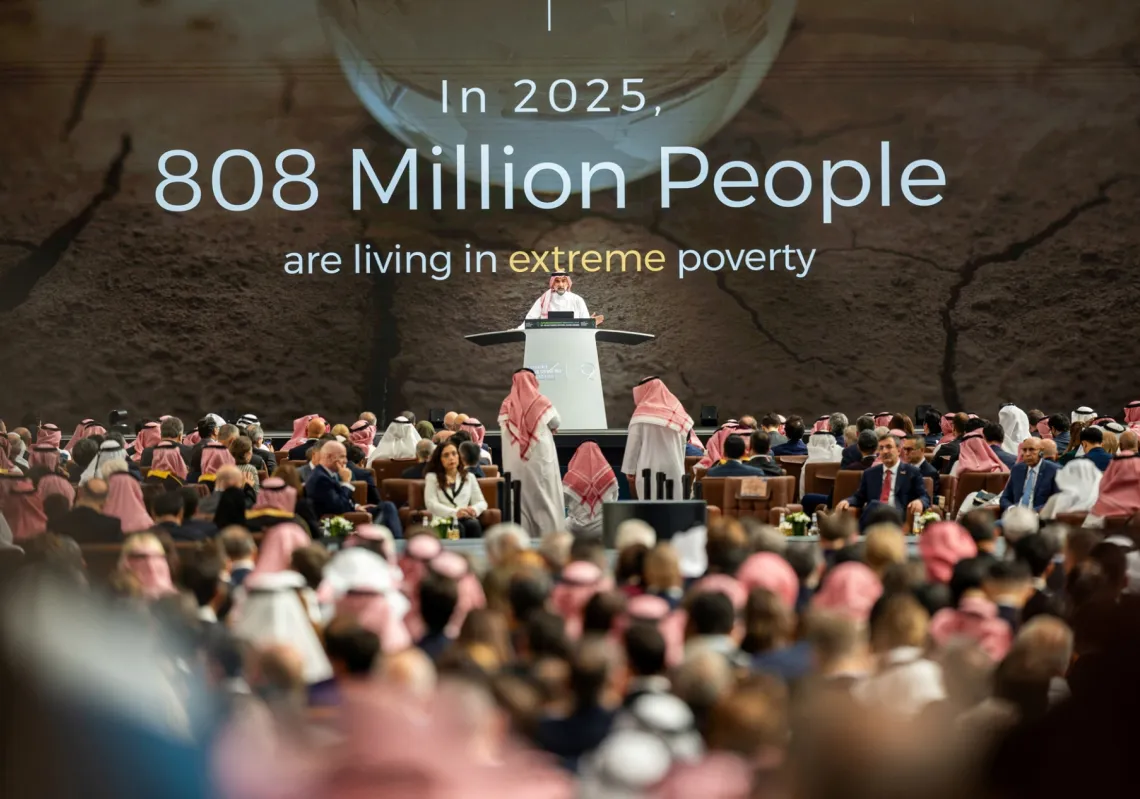
“The days when we drew up technology plans spanning five to 10 years are over,” said Abdullah Al-Swaha, Minister of Communications and Information Technology, during the opening ceremony. “We are living in an age of extraordinary acceleration that demands faster, more agile, and more flexible ways of working.”

Al-Swaha pointed to the growth of Saudi Arabia’s technology sector, which has expanded rapidly under Vision 2030, growing from less than $80bn in 2016 to $139.2bn. Jobs in the sector have also increased from 150,000 to 450,000, underscoring the scale of the country’s digital transformation.
Reuters
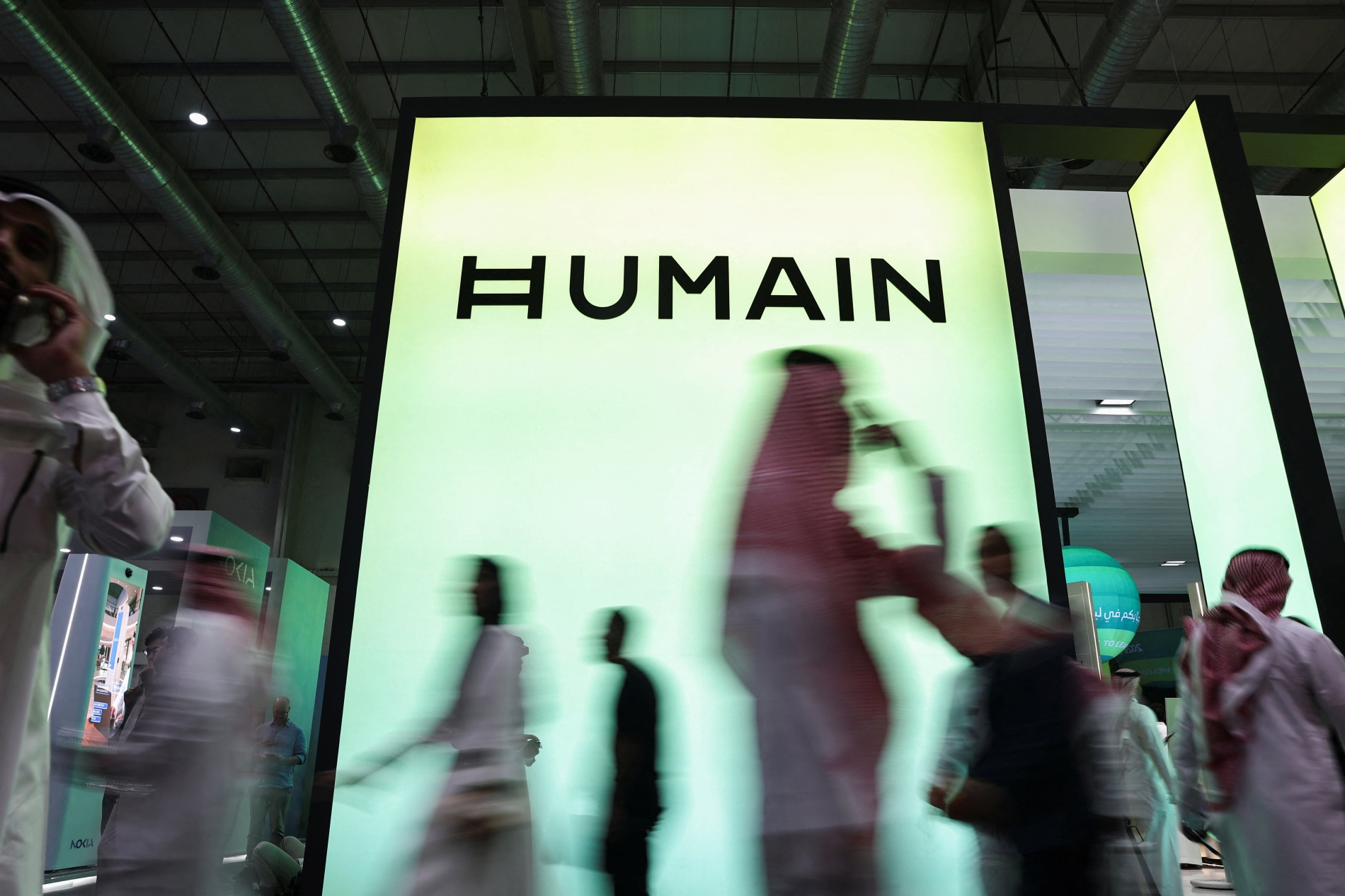
The HUMAIN company pavilion at the LEAP conference in Riyadh, on 31 August 2026.

HUMAIN takes centre stage

At the centre of it all was HUMAIN, the AI company Saudi Arabia’s Public Investment Fund (PIF) launched in May last year. On the first day, it unveiled HUMAIN M3, a new open-weights Arabic language model trained on more than one trillion Arabic tokens, alongside HUMAIN Voice, a conversational AI platform designed for multiple Arabic dialects, including Saudi, Maghrebi, Egyptian, and Levantine Arabic.

More announcements followed, including a partnership with the US chipmaker Qualcomm and the unveiling of the Horizon Ultra, a next-generation AI personal computer designed in Saudi Arabia. Qualcomm also announced plans to expand its presence in the country with a new engineering office in Riyadh.

Perhaps more significantly for Saudi Arabia’s ambitions to become an AI hub, HUMAIN revealed that production AI computing infrastructure developed with AMD and Cisco had gone live in the country. The companies plan to deploy up to 250MW of additional AI infrastructure from 2027 and remain on track to build up to 1GW by 2030.
What you are seeing is a country rallied around a mission, with partners across Saudi Arabia building alongside us. 

Tareq Amin, CEO of HUMAIN

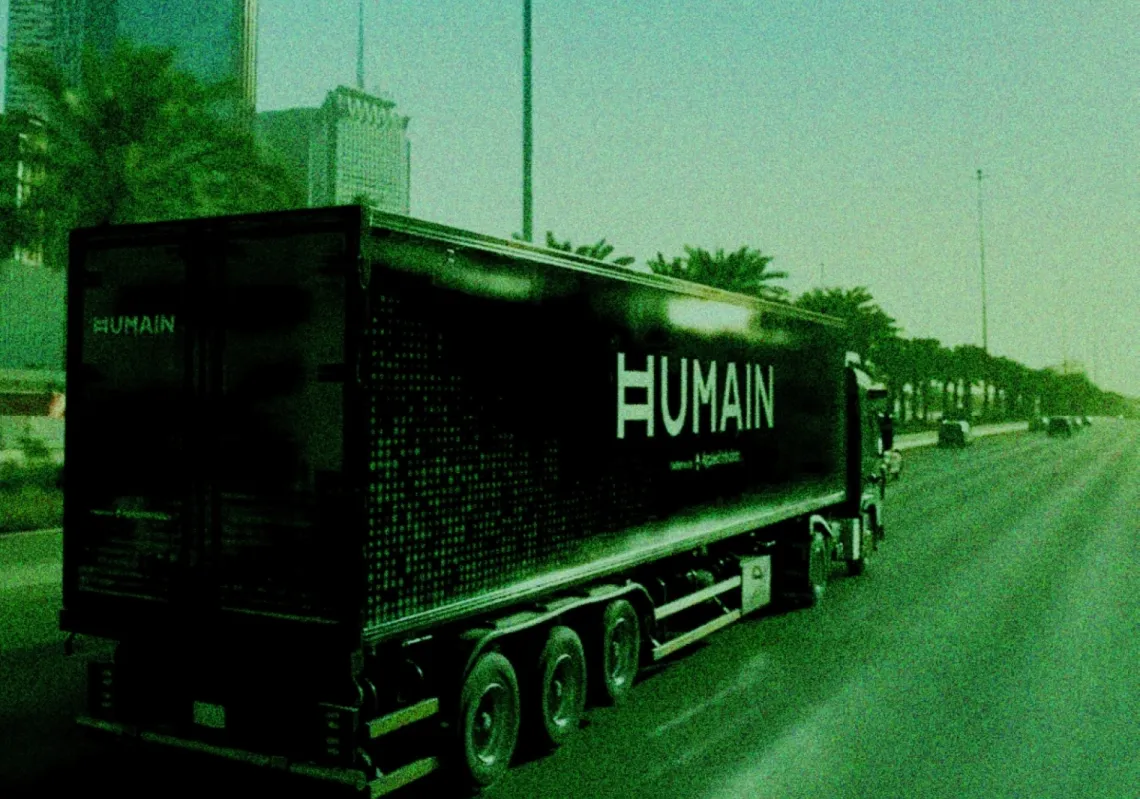
The company also announced a strategic partnership with Applied Intuition to deploy thousands of autonomous trucks along Saudi Arabia's main logistics corridors by 2030. The initiative is intended to establish a unified national autonomous logistics network before expanding into other areas of physical AI, including self-driving taxis, ports, manufacturing, agriculture, and construction.

Speaking on the first day, the company's CEO, Tareq Amin, said HUMAIN's ambitions depended on a broader national effort to establish Saudi Arabia as a global AI leader. "No company delivers something at this scale on its own," he said. "What you are seeing is a country rallied around a mission, with partners across Saudi Arabia building alongside us. The leadership understood early that AI is a foundational technology rather than an additive one, and everything we are building serves that vision."

Reuters
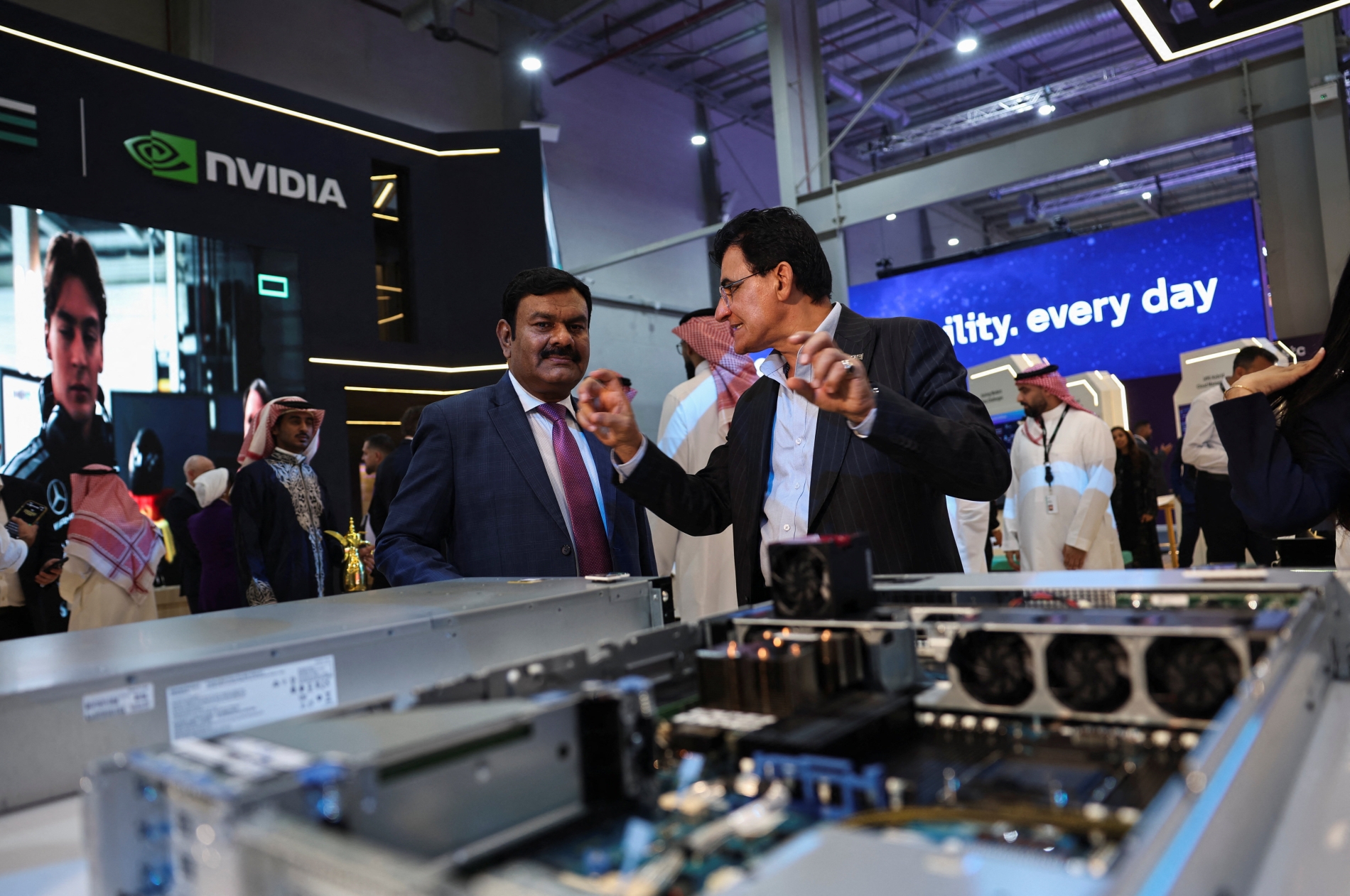
A view of Nvidia's participation in the LEAP conference, Riyadh, on 31 August 2026.

A strategic data hub

Saudi Arabia is working both to attract data centres and to build its own facilities as it seeks to become a producer of digital capacity rather than simply a market for imported technology. Data centres have become central to that strategy, providing the computing infrastructure needed to support Saudi's growing ambitions in AI and cloud computing.

HUMAIN has broadened its partnerships as it works to localise data-centre cooling systems and power equipment. It signed a strategic cooperation agreement with Amazon Web Services (AWS) to provide up to 50MW of capacity for Saudi Arabia's first AI Zone by 2028. The agreement builds on AWS's long-standing plans to establish its first cloud infrastructure region in Saudi Arabia, backed by more than $5.3bn in investment. First announced in 2024, AWS said the project will launch in December. 

Saudi companies are also expanding domestic data-centre capacity. Al Moammar Information Systems announced a major partnership with HUMAIN to develop its data-centre operations and infrastructure, alongside plans to increase its total capacity to 192MW to meet growing demand for computing and technology services.

Microsoft, meanwhile, is preparing to launch a new cloud data-centre region in Saudi Arabia's Eastern Province, with local organisations expected to gain access to its cloud services and applications from November. According to Ayman Al-Ghamdi, President of Microsoft Arabia, the project is expected to contribute $44bn to the Saudi economy and create 100,000 jobs, with 33% of them in AI and computing.

These cloud investments add to the infrastructure already being developed by the Saudi Data and AI Authority (SDAIA), which broke ground in January on the Hexagon project in Riyadh. The facility is planned to become the world's largest government data centre, with a projected capacity of 480MW.

Saudi Arabia's technology ambitions also extend to manufacturing. One prominent example is Lenovo's manufacturing facility in Riyadh, developed in partnership with Alat, a PIF company. Covering 200,000sqm, the facility is expected to produce millions of laptops, desktop computers, and servers each year. On the sidelines of LEAP, Lenovo also unveiled the first laptop manufactured in Saudi Arabia, although the company did not disclose the model. Mass production of selected products is scheduled to begin later this year.

FAYEZ NURELDINE / AFP
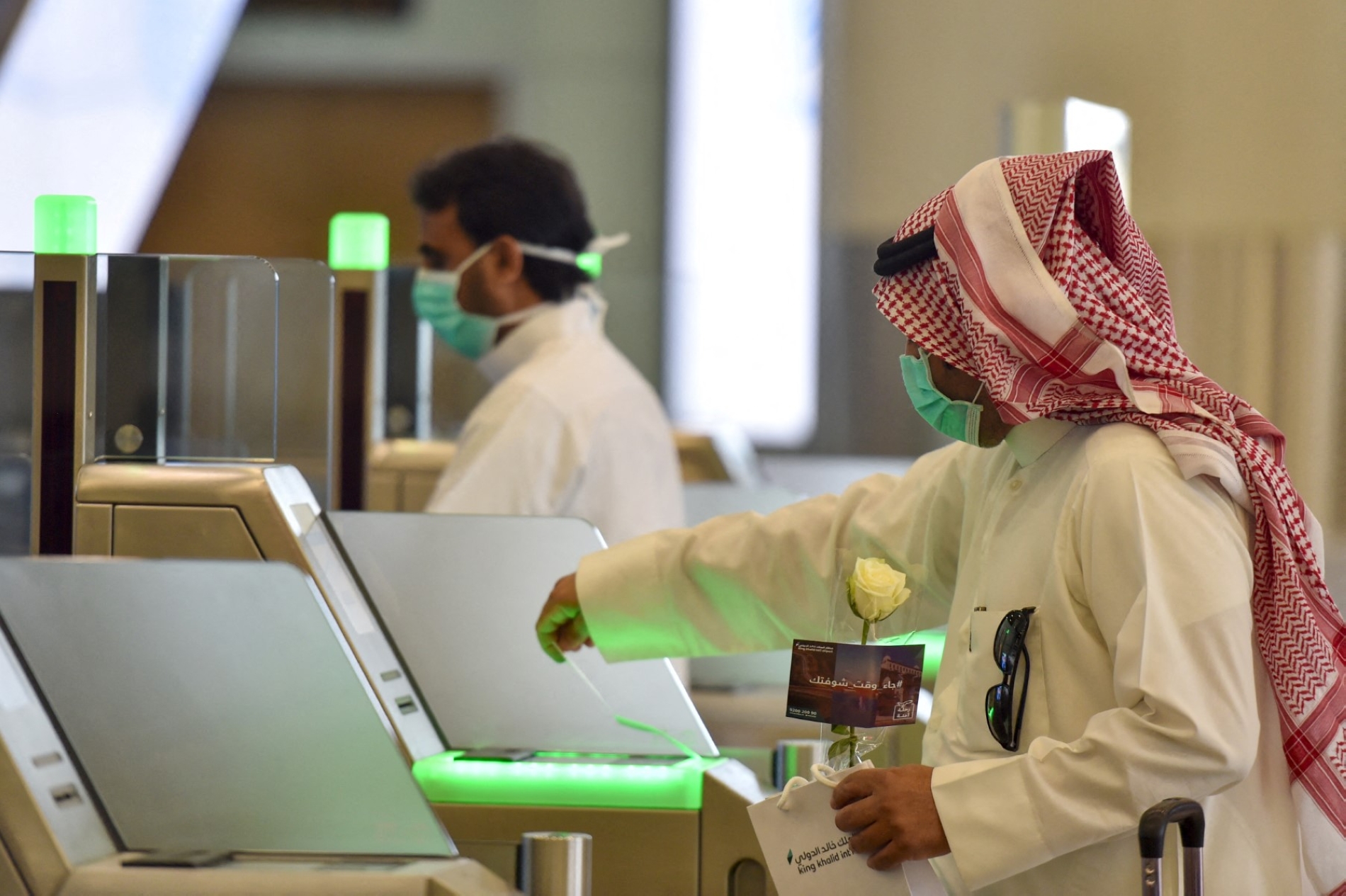
A Saudi passenger scans his boarding pass at Terminal 5 at King Fahd International Airport.

AI's fuelling power

Saudi Arabia's AI ambitions are also increasingly visible in the way technology is being applied across government, public services, and the wider economy. It has steadily expanded AI use across everyday transactions and public services. At LEAP, the General Directorate of Passports showcased a contactless electronic gate that allows travellers to pass their hand over a device, reducing the need for an officer to inspect travel documents and streamlining the visitor experience.

Tawakkalna, the country's national platform for government services, is another example of the shift towards digital services, bringing a broad range of government functions together through a single platform.

"We are seeking to understand and anticipate new user needs and develop services accordingly, while increasing our capacity to handle more requests with greater flexibility," explained Essam Al-Wagait, Director of the National Information Centre at SDAIA. "We are also trying to make these services part of users' daily lives and make their tasks easier. The application is moving in the right direction, having processed more than four billion transactions per month over the past six months."

Saudi Arabia has steadily expanded the use of AI across everyday transactions and public services

The Ministry of Tourism has adopted a similar approach. On the sidelines of LEAP, it launched a new tourism platform designed to act as a digital companion, bringing together services ranging from licensing and information to travel planning and responding to visitors' individual needs and preferences.

Saudi technology company Tahakom is applying AI and data to transport, logistics, and urban management. At LEAP, it showcased systems for monitoring vehicle movements and tracking shipments, alongside AI-powered crowd monitoring, drones, and remote sensing technologies. Its Urban Reality platform can also simulate real-world scenarios to support crowd management and emergency response. 

In finance, meanwhile, algorithmic trading now accounts for roughly a quarter of trading volumes on the Saudi stock market, reflecting the growing use of automation and data-driven technologies across the economy. Saudi sport is also using technology more in player recruitment, performance analysis, and health-related applications designed to sustain performance and improve efficiency.

Saudi Pro League Media Office/Handout via REUTERS
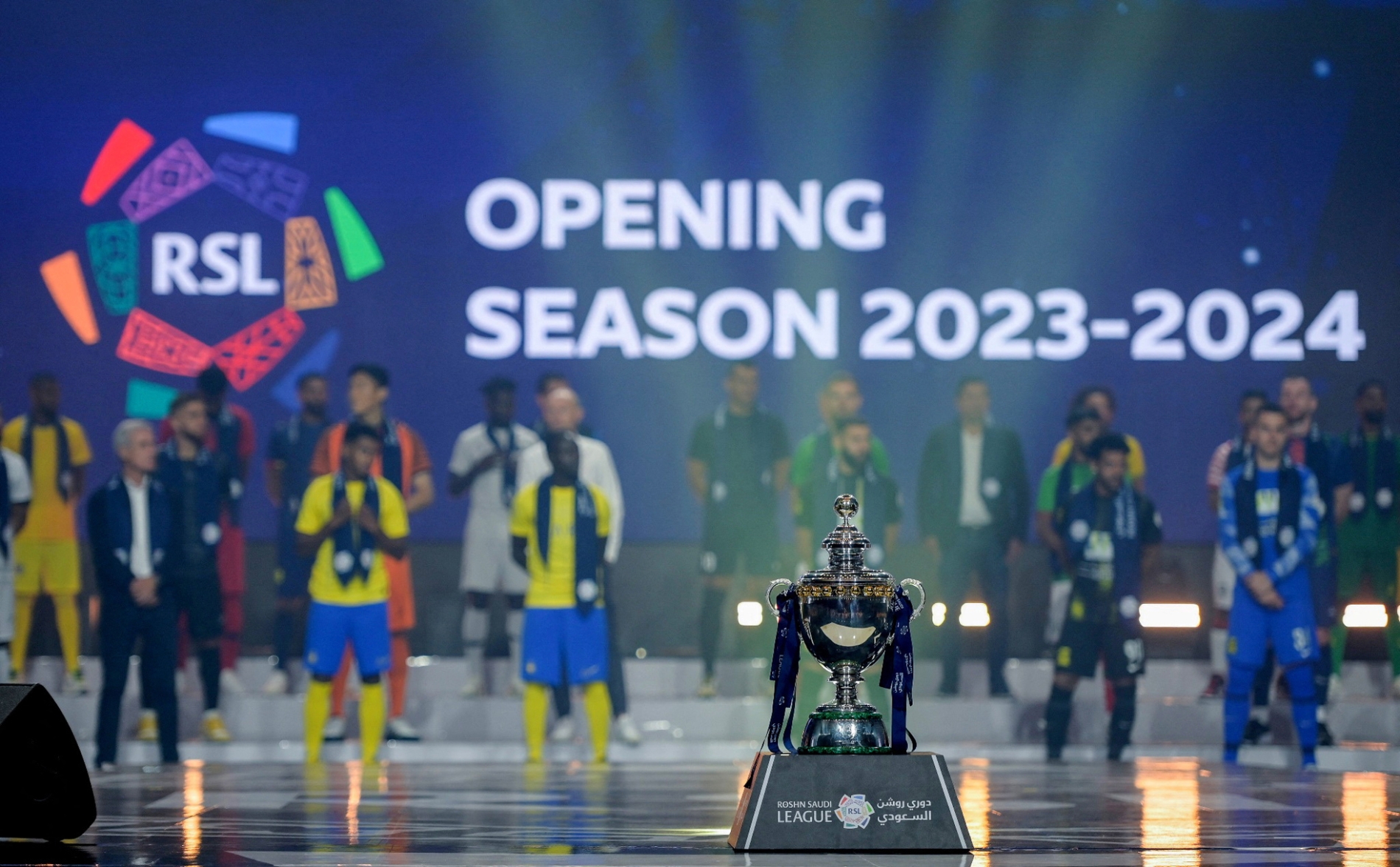
Trophy stands bright at the opening of the Saudi Pro League's 2023-24 season.

Its reach extends to stadiums and sporting facilities, where algorithms and AI are being used to manage operations, monitor crowds, optimise energy consumption, strengthen safety and improve the spectator experience.

Together, these applications illustrate the next stage of Saudi Arabia's technology strategy. The country is not only investing in AI models, cloud infrastructure, data centres, and hardware, but increasingly seeking to embed those technologies into the systems and industries that underpin everyday life and the wider economy.

Saudi Arabia's ambitions now extend beyond adopting emerging technologies to building them, developing their applications, and localising the infrastructure they depend on.

font change