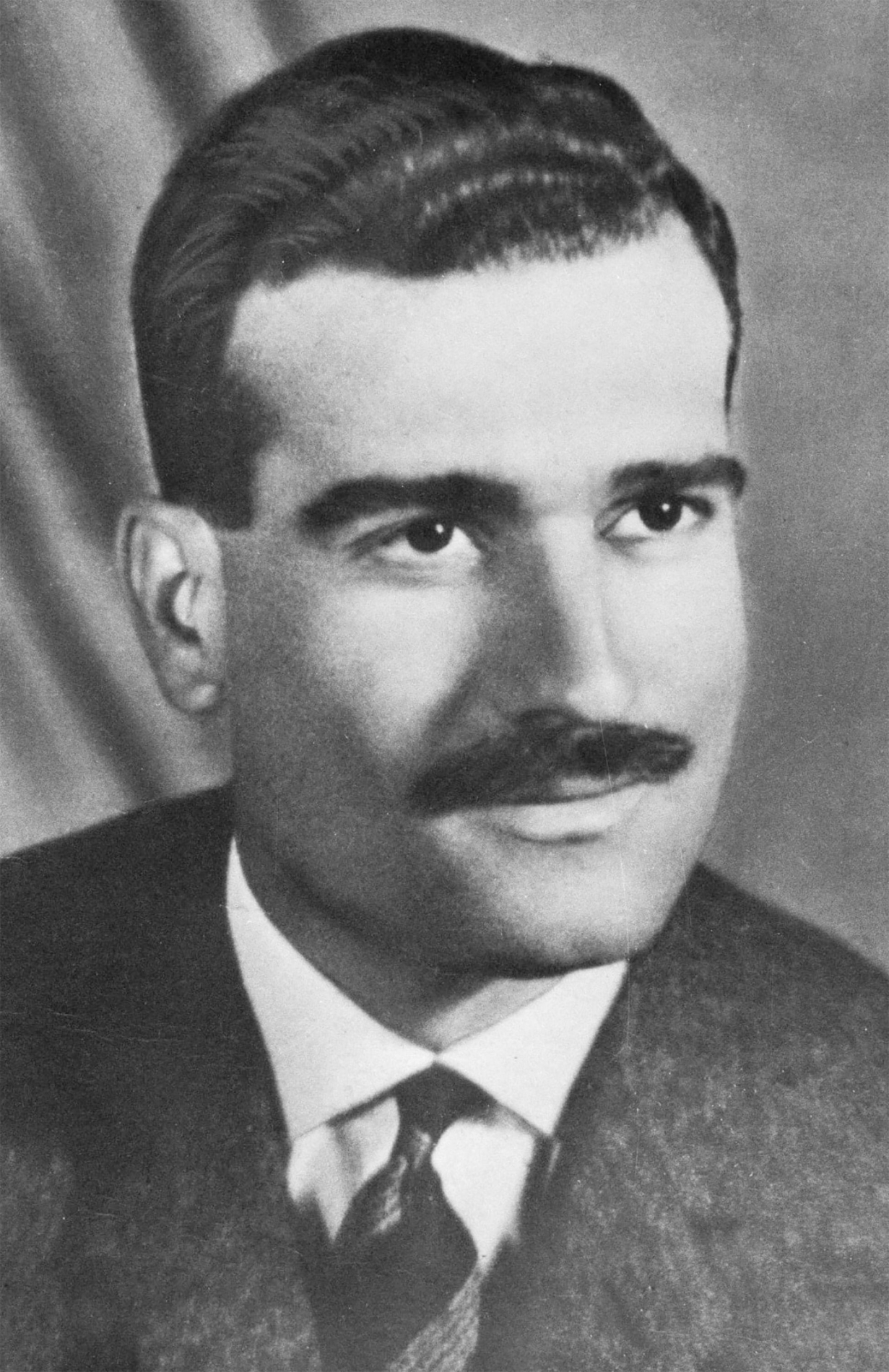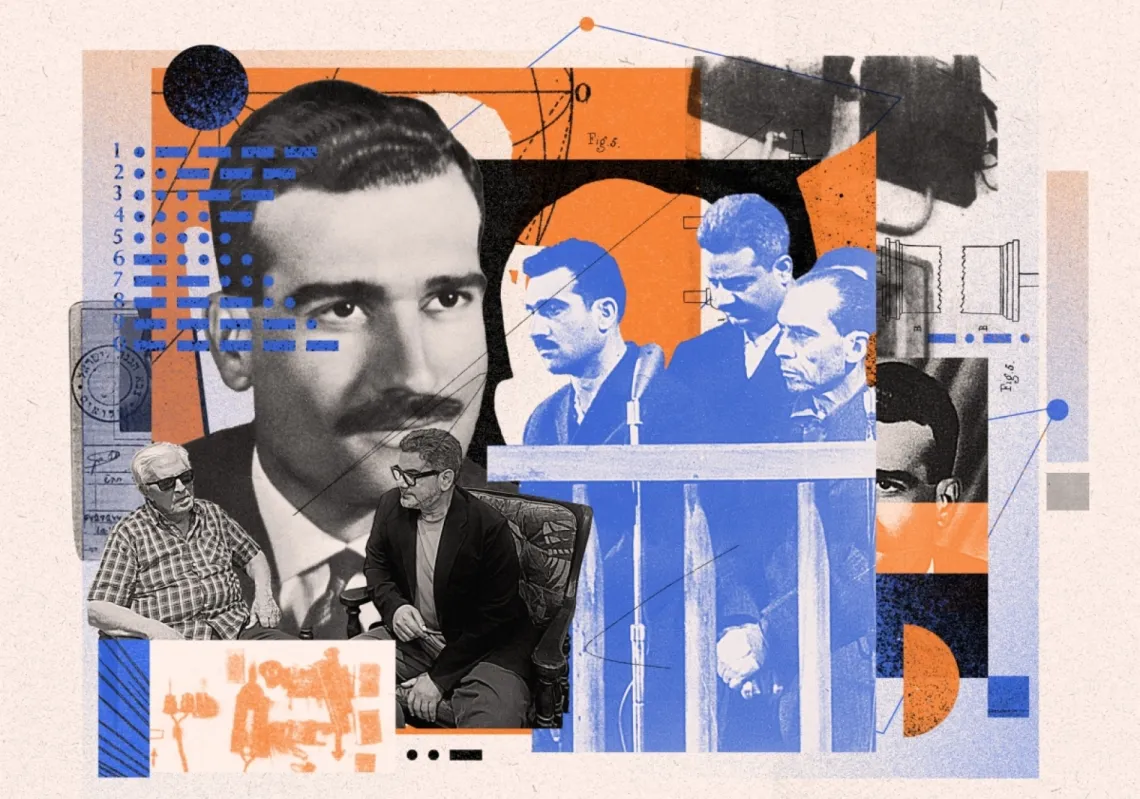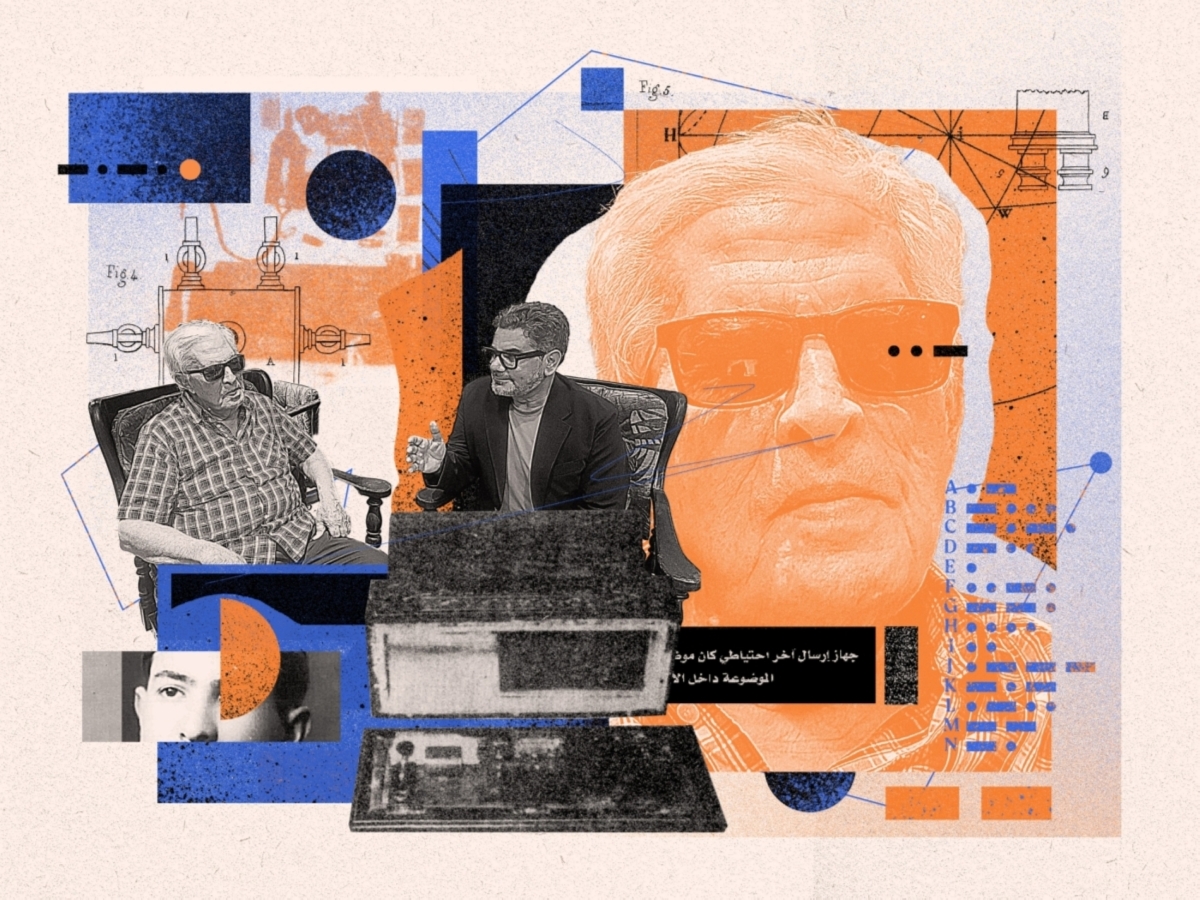

By the end of Part 2, retired Syrian military officer Said Jawish had told Al Majalla how he and his team tracked the Egyptian-born Israeli spy Eli Cohen down to an apartment in Damascus, from where he was broadcasting radio messages to Mossad. Here, in Part 3, Jawish picks up the story.
Cohen, who spoke fluent Arabic and who was later portrayed by Sacha Baron Cohen in the 2019 Netflix TV series The Spy, had been masquerading as an expat businessman setting up projects in the Syrian capital. Whilst there, he got to know some of the country’s top military and political leaders, using the alias Kamel Amin Thabet.
When Jawish and his team finally found Cohen’s transmitter and Morse key in January 1965, the Mossad man knew the game was up, but he was not taken away immediately; rather, he stayed largely in the apartment for another six days, transmitting messages back to Israel’s foreign intelligence service, all the time watched by Jawish and his team from Signals Company 134, who would sometimes take Cohen out to restaurants.
In Part 3, Jawish recalls how his superiors were told, how they reacted, and how Cohen had the chance to escape on the day that he was caught. He also recalls the conversations about what to do with the Israeli spy, and how Jawish spent three months in prison for voicing his opposition to his execution. Finally, as both men were in the same prison the night before Cohen was hanged, Jawish recalls elements of their conversation, as Cohen contemplated his fate.
Not caught up? Read the intro, Part 1 and Part 2.
Did you then take Cohen to prison? What happened?
No, he stayed in the apartment. After we obtained this information from him, I called Mohammed Widad Bashir, the communications officer.
How did you call him?
On the landline in the apartment. I told him we were in the man’s home and had found everything. He said: “Alright.” Within an hour, Col. Ahmad Suwaydani, head of the Intelligence Branch (who later became Chief-of-Staff of the Syrian Armed Forces), arrived with Widad Bashir and First Lieutenant Mohammed Nassif, who later became known as Maj. Gen. Abu Wael (a Syrian intelligence officer specialising in electronic warfare, who later became Syrian Assistant Vice-President).
Ahmad Suwaydani came in and asked: “Where is he?” We said: “This is the man.” Then he asked me: “Does Adnan know?” Adnan Tayyara was head of the Israel Branch (he later became a General who led the Syrian delegation in talks with Israel in Geneva in the 1970s).
As I said, we were a communications unit, a technical unit. Until then, we had had no coordination with Intelligence. That is why I wrote some time ago that no intelligence service—Egyptian, Chinese, or Syrian—had any role in discovering him. Signals Company 134 discovered and captured Cohen.
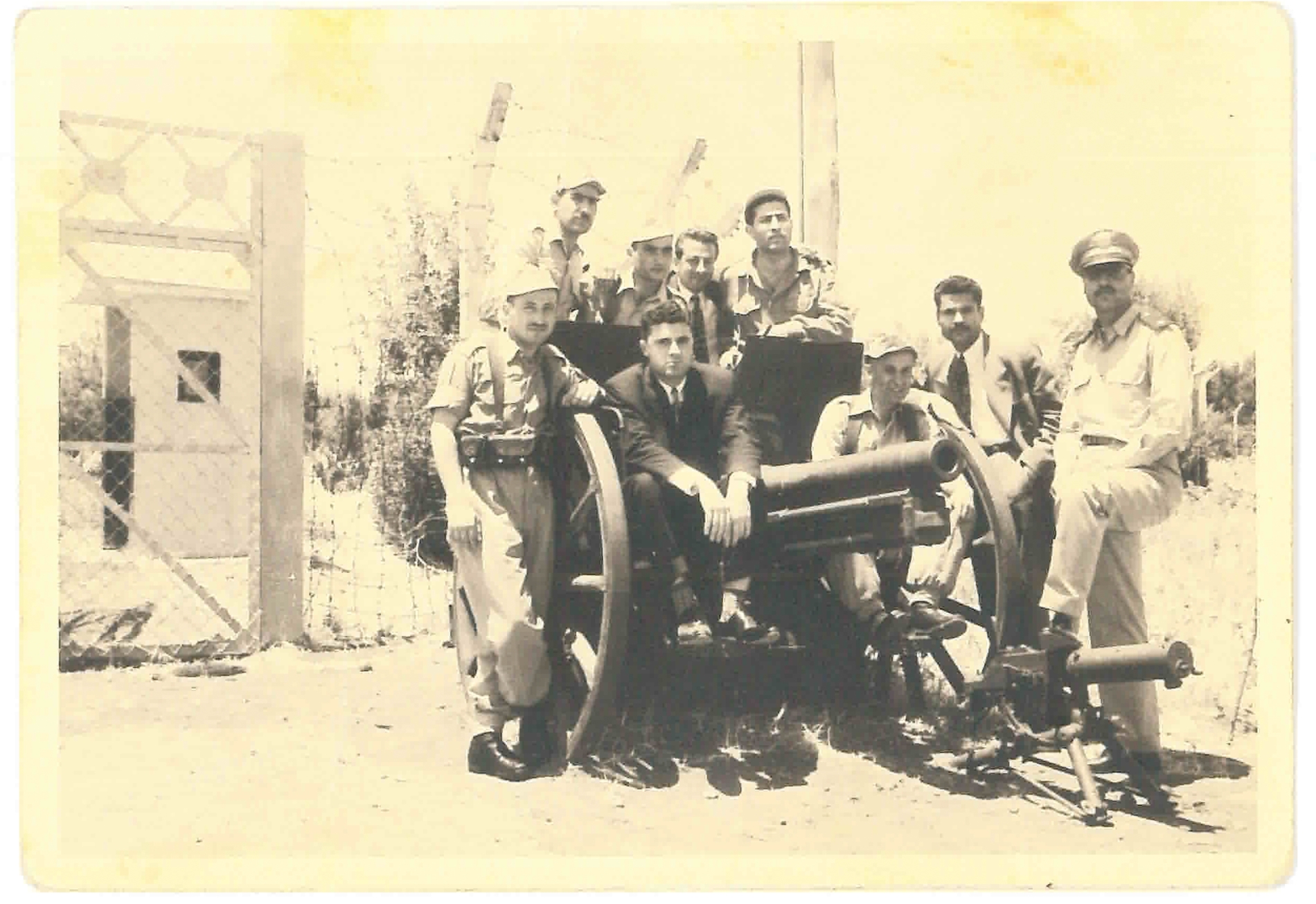
Regarding the Soviet direction finder said to have helped uncover him, there have been claims the signal came from the Indian embassy.
None of that is true.
OK. What happened after they arrived?
I told Col. Suwaydani that I had reached an agreement with Cohen. He said: “Since you have reached an agreement, stay with him. Any messages that come in will be taken back to the branch.” He then asked whether Adnan knew. I told him that he did not and that he was away on a staff course. He told me to bring him. I went to the Staff College and brought Adnan Tayyara back with me. I told him we had caught a spy and explained what had happened. It was only then that Intelligence became involved. Adnan Tayyara, incidentally, was an excellent officer.
Did Adnan Tayyara later head the committee?
Correct. His office was in Abu Rummaneh.
What happened next? Did they take over the investigation?
No, we stayed in the apartment. We wanted to decipher the code, and for that we needed The Three Musketeers. Cohen told us that the following year, 1964, he had used an issue of the monthly magazine Al Mukhtar. I went to Beirut, bought the issue, and found a copy of The Three Musketeers.
Was that after you had left the apartment?
No, we were still there.
You went to Beirut while Cohen was still in the apartment?
I went and returned straight away. Some of our men stayed with him in the apartment.
How long was he held there?
Six days. I will tell you about an important incident that happened in the apartment. This was during Ramadan.
Were his hands tied?
No, we sat with him quite normally. I was young and strong enough to overpower him, so we were not afraid of him. About an hour before iftar, Rifaat and Mahmoud, the only two men with me, asked to go home to break their fast and then return. The driver was downstairs at the entrance. I was not fasting, so they left, leaving Cohen and me alone. About 15 minutes later, the doorbell rang.
I asked Cohen who was at the door. He said it was Lt. Khalil Zahreddine (whose uncle was the head of the Syrian army and a former defence minister) and a heavyset man wearing a hat named George Seif (a journalist who became the Minister of Information). I told him not to open the door.
You said that to Cohen? Had you become friendly?
Yes, we talked and shared stories. They kept knocking and started pushing at the door. We had forced it open earlier, so they could now break in easily. I told Cohen: “Open the door. Tell them you have a headache and were asleep, then apologise for not being able to receive them.” I thought that now I knew their names, we could summon them later. I went into the kitchen and warned Cohen not to leave, telling him that the orders were to shoot him if he tried. He said he understood.
I heard the door open, then someone asked him: “Where have you been, man?” He replied that he had a headache and had been asleep. Then I heard a pistol being cocked and saw Lt. Khalil running towards me in the kitchen. I was wearing an ordinary shirt and trousers. He grabbed me by the front of my shirt and said: “You?”
I was taken aback and stood there without speaking for a few seconds; I cannot say exactly how long. Then I collected myself and told him: “Put your gun down.” He asked who I was. We went into a hall with a table and a telephone and sat down. I told him: “I am from the Mousli family. I have a sister at university, and this is Mr Kamel...”
That is what you told him? That you were from the Mousli family?
Yes. I came up with it on the spot. I said Kamel had promised to marry my sister, then changed his mind, and that my father was elderly and might die of grief. I told him I did not know what to do. He said: “Do not worry. It is a simple matter.” I replied: “Since you are here, let me call my father and ask him to come. A few words from you might calm him down.” He agreed.
I called Widad Bashir (the communications officer) and said: “Hello, Dad. It is Said.” At first, he did not understand and asked what was wrong. I covered the receiver as best I could and said: “It is about my sister Leila...” Then he understood. I told him a police officer was here who could help us and asked him to come, and to bring “Uncle Adnan” with him, meaning Adnan Tayyara. After I hung up, the front door opened, and I saw George Seif with two smartly dressed men in ties. He pointed at me and said: “That is him.” I was sitting down, with Lt. Khalil opposite me.
Where was Cohen?
He was standing near the window with George Seif. I could see he had plenty of chances to escape, but he did not take them. One of the men told me to stand up. I asked who he was. He showed me his identity card and said he was First Lieutenant Aql Gharban from Political Security. The other man introduced himself as Captain Saleh Saghbini, also from Political Security.