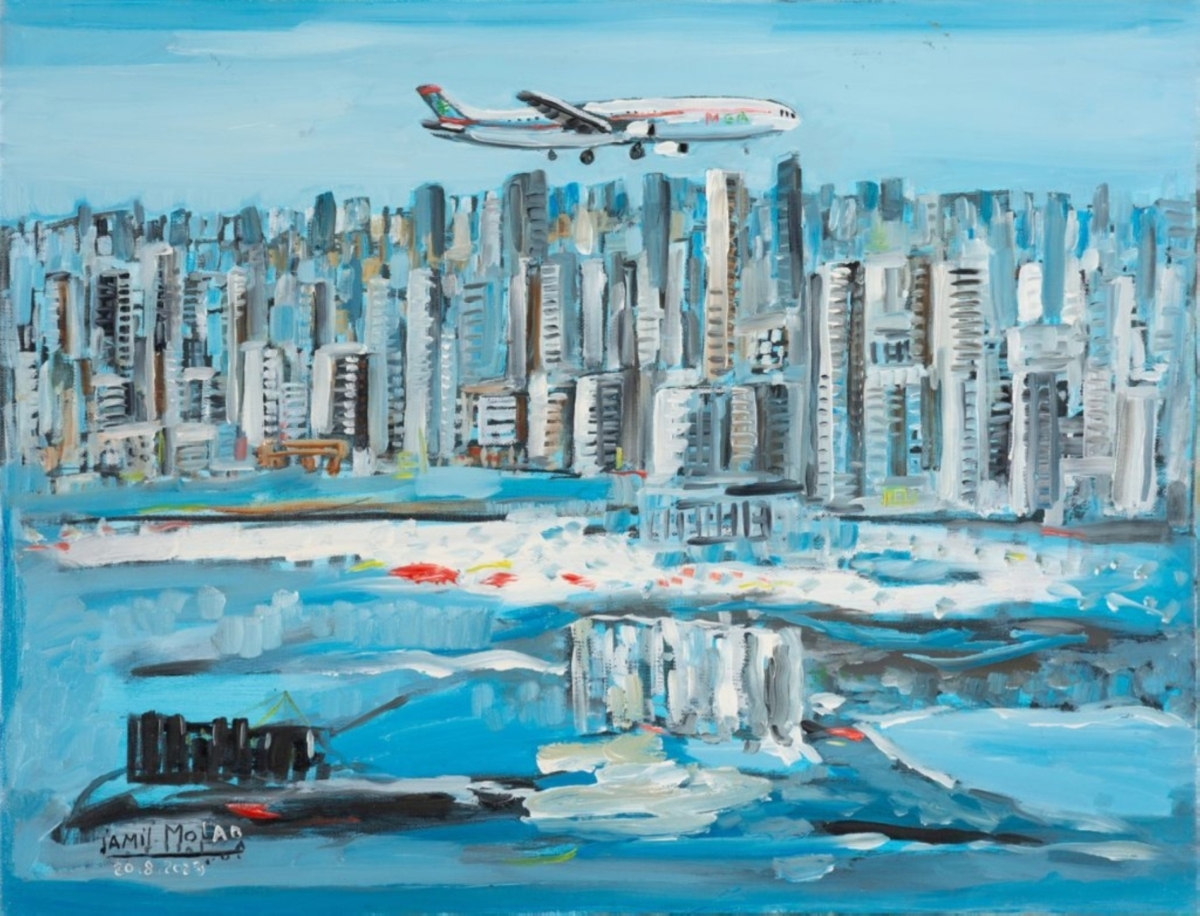

In an age where so much is at our fingertips—from information to entertainment—people's attention spans have become so short. Yet Jamil Molaeb's works always find a way to cut through with a unique freshness. Born in 1948, the veteran Lebanese artist has the rare ability to see things as though encountering them for the first time, retaining a sense of wonder that fades amid abundance.
Molaeb’s current exhibition at Galerie Janine Rubeiz in Beirut returns to his earlier pieces. He has displayed his older works before, and each time they bring a new lustre. It is not so much a push into the past as a pulling of the present.
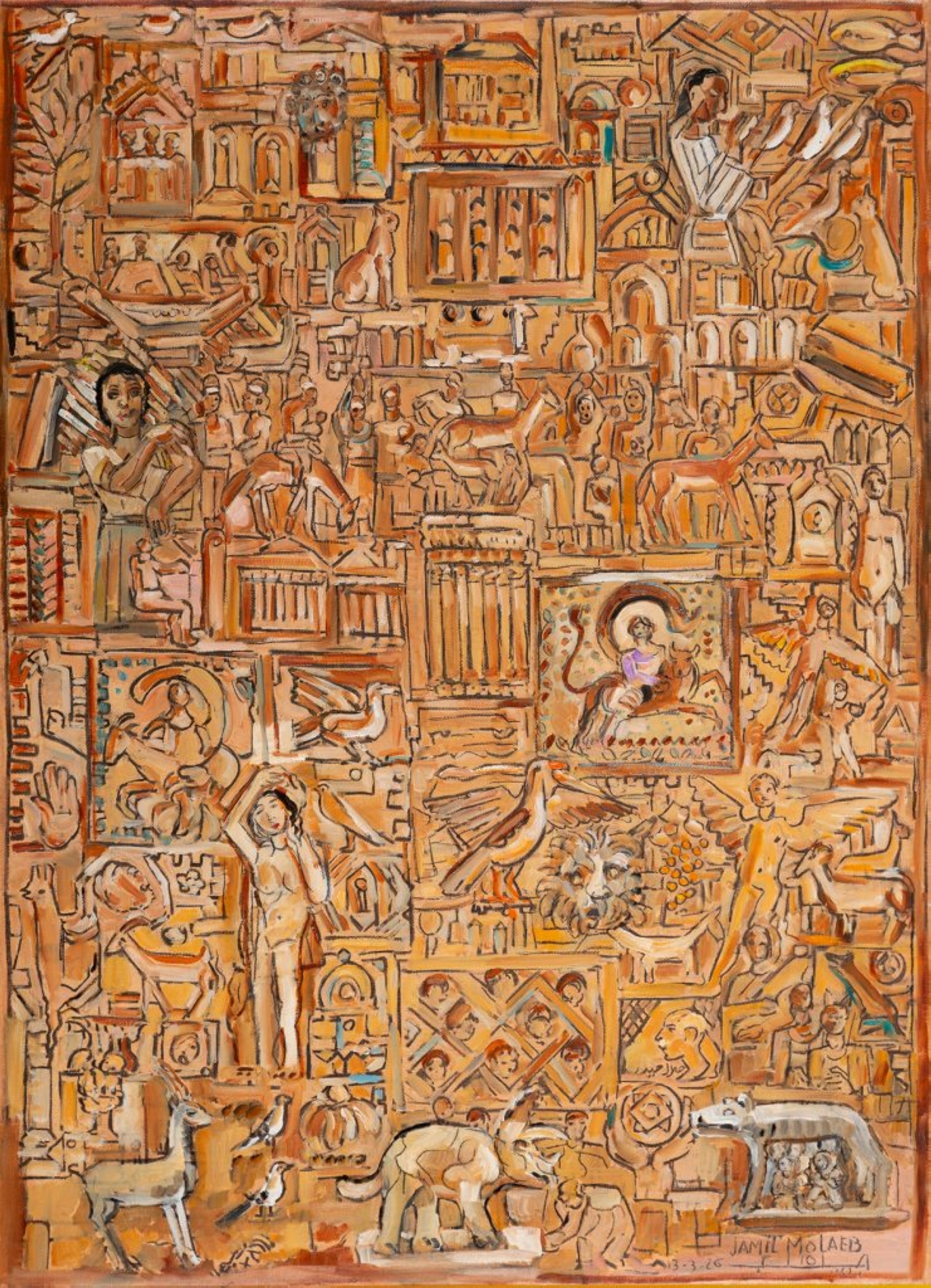
The exhibition brings together around 50 works Molaeb selected from hundreds of paintings produced over many years, in different sizes and styles. The act of choosing these works is itself an act of returning to what remains alive in them and discovering what is still capable of speaking. The exhibition’s title, Journeys of Cities, points to the path the artist himself has travelled. Cities pass through his experience, their meanings changing over time before resurfacing in his paintings as though they had never left.
Cities through Molaeb’s eyes
These days, artists and gallery owners are often quick to dwell at length on an artist’s multiple backgrounds and identities. We are told that an artist is Lebanese and American, or Lebanese and African, that he lived in one country or another and was shaped by its culture, as though the sheer number of places in which an artist has lived has any bearing on his/her art.
Molaeb has lived in the Lebanese town of Baissour, in Beirut, New York and Algeria, as well as in other countries. He has visited Japan and elsewhere, and continues to travel from one country to another. Yet his travel history does not define him. The gallery’s curators were perhaps right not to present his work through such a lens. These places undoubtedly became part of his life and broadened his field of vision, but his artistic language and eye remained distinctly his.
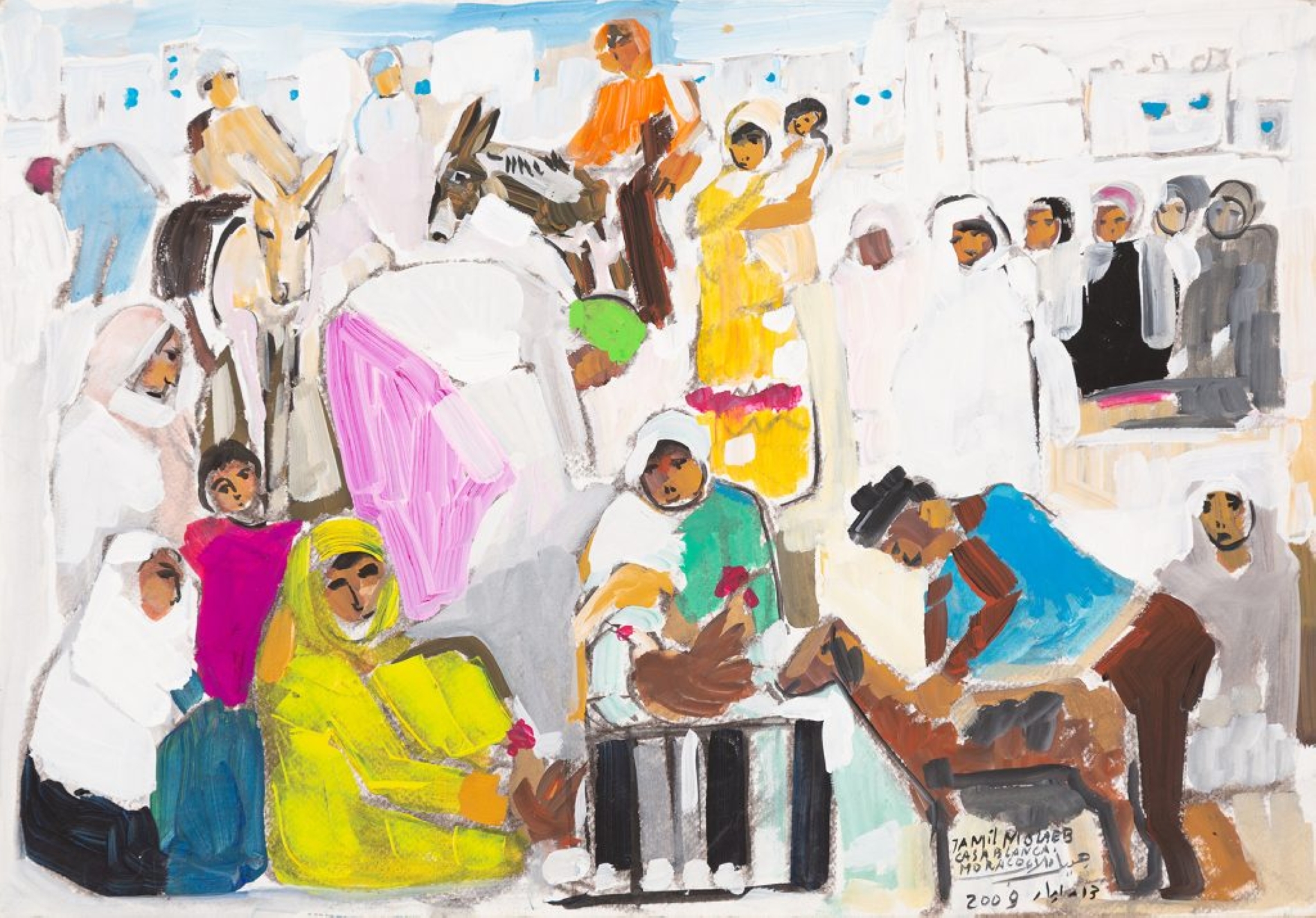
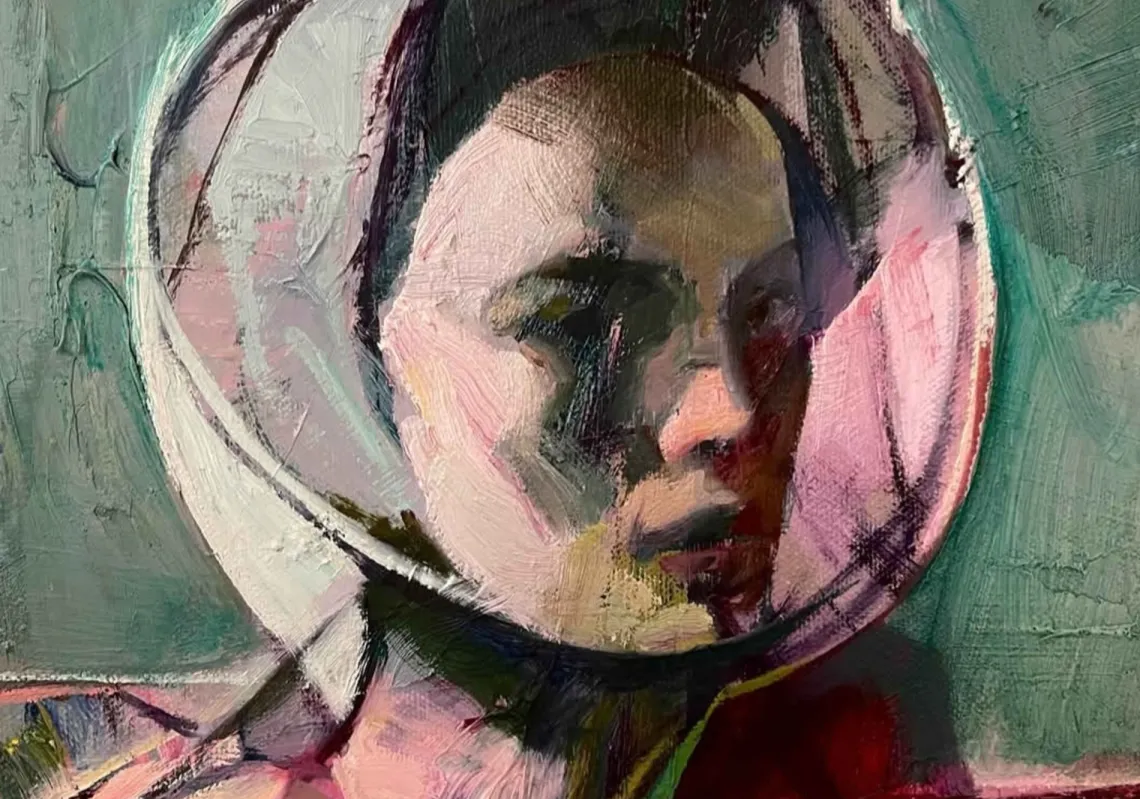
His painting of an Algerian woman, for example, does not treat her Algerian identity as a subject in itself or as a cultural signifier. He moves beyond it towards the woman herself, her presence, her features and the emotions she carries. Algeria thus becomes part of the scene rather than what ultimately defines the figure. Place is present, but it does not overwhelm the human being whom the artist sees through his own eyes.
This, perhaps, is precisely what allows him to move between cities without losing himself. He does not paint a city to tell us that he once lived there, nor does he offer it as a cultural calling card. He paints it because he has seen something there that he wants to preserve.
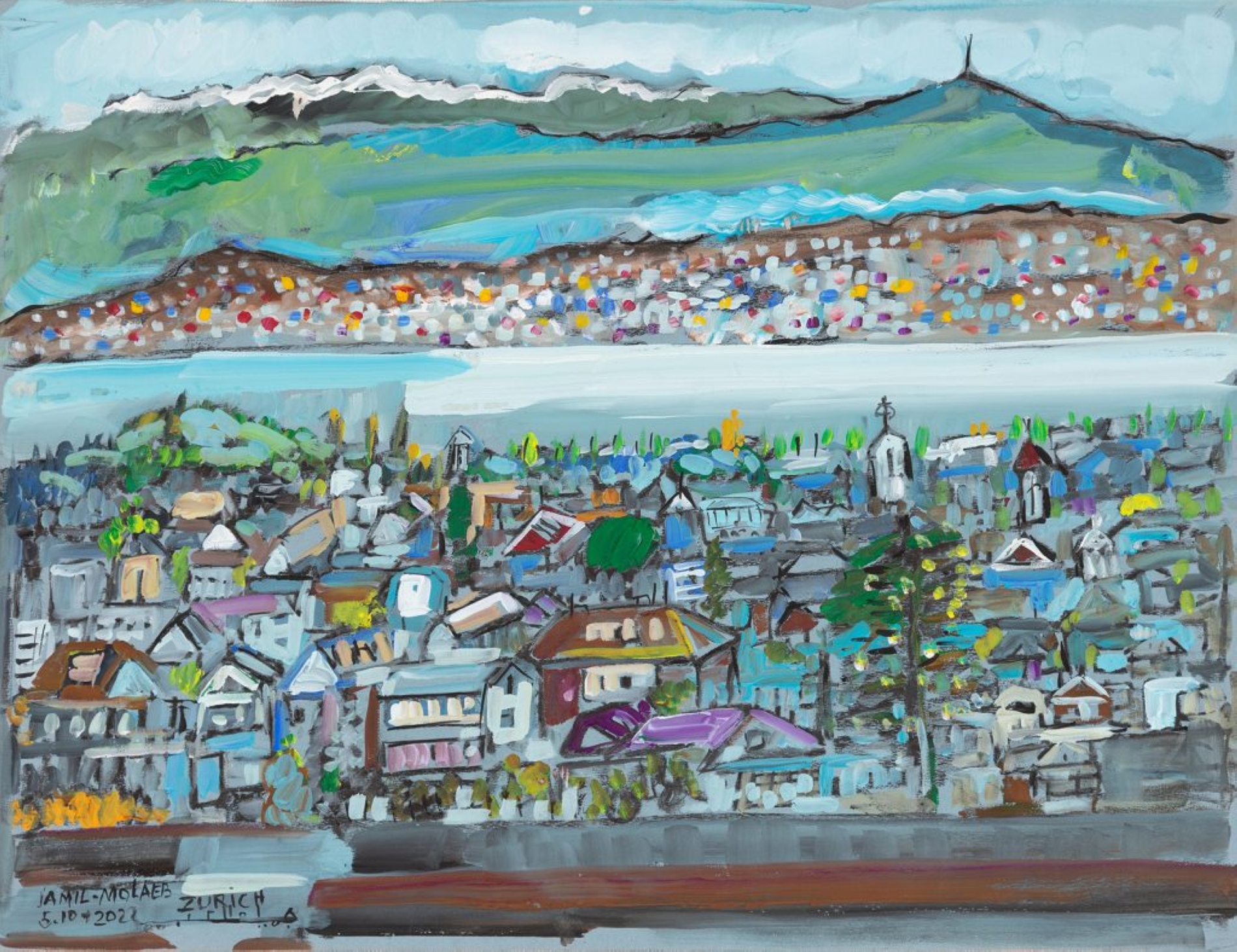
Some artists may have favourite places. But in Molaeb’s eyes, every city deserves to be painted, and every city deserves to be seen. He loves the city and can see and capture its unique vibrancy and pulse. In his paintings, he wants the city to remain vibrant and clamorous even in silence and alive even when nothing remarkable is happening.
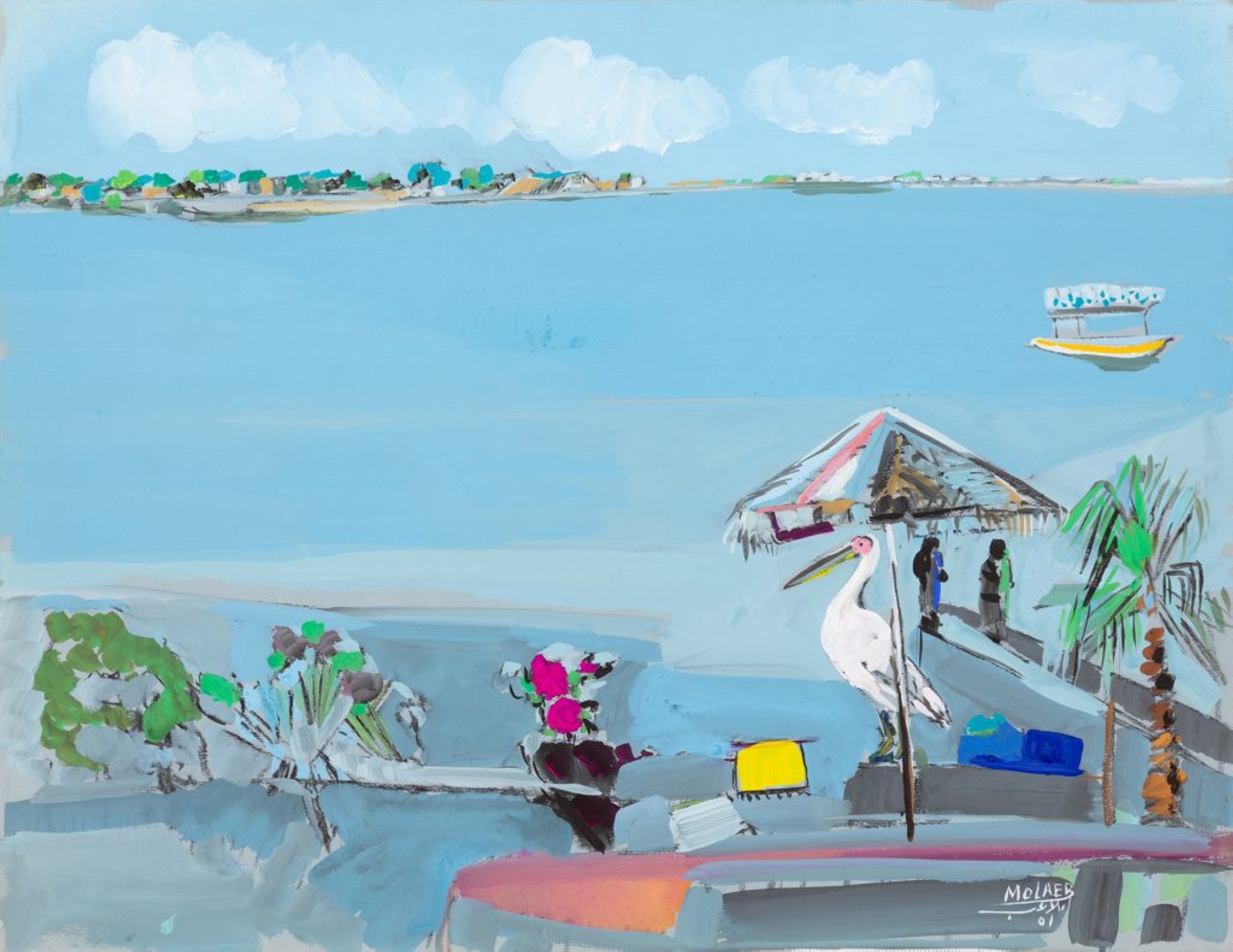
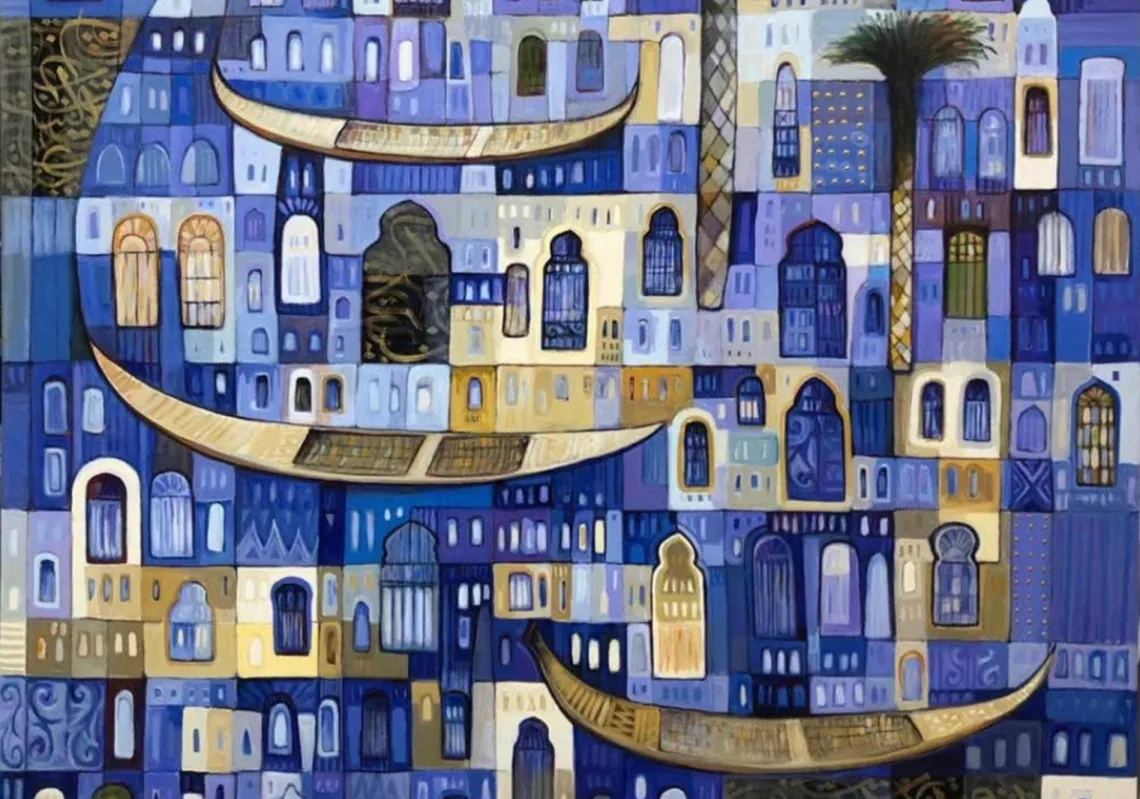
The sea becomes expanse and openness. A cluster of houses in Beirut, or in another city, forms an architecture that refuses to collapse. There is a latent life within place whose pulse the artist seeks to capture before it disappears behind newer forms.
This is why the cities in his paintings appear like doors opening before us. It is as though the artist casts away the soot of the present, allowing them to emerge as he wants them to be. Through Molaeb's brush, the city resists sorrow, even when it carries within it every form of pain and war. He can know a city's tragedies without letting them become its sole definition
The horrors he sees in Beirut, for instance, do not disappear, but become a depth within the colour itself. The colours continue to gather force and intensity, descending into the depths of what has happened, only to discover that even the bottom itself can remain illuminated by colour, however harsh it may be.