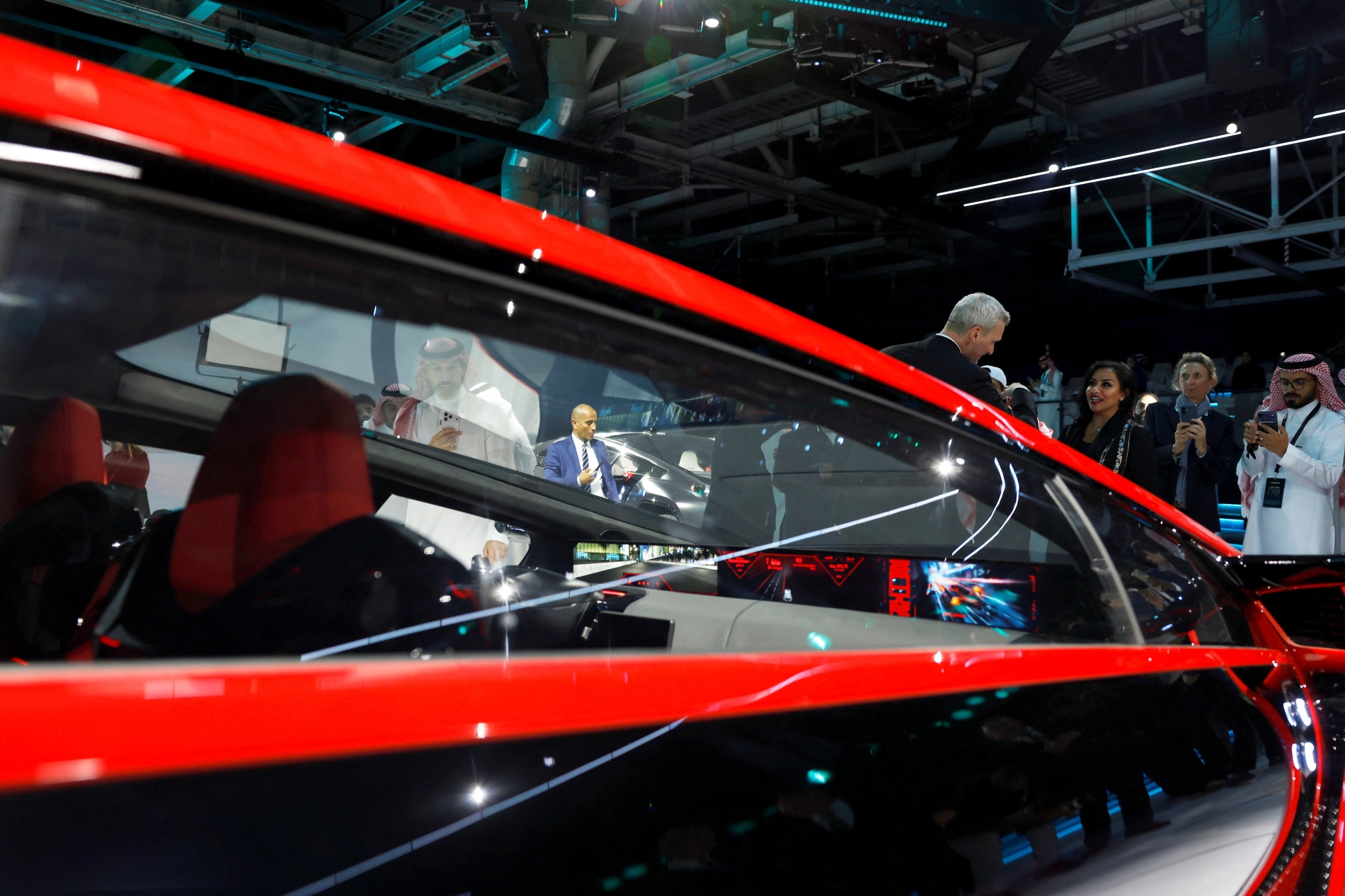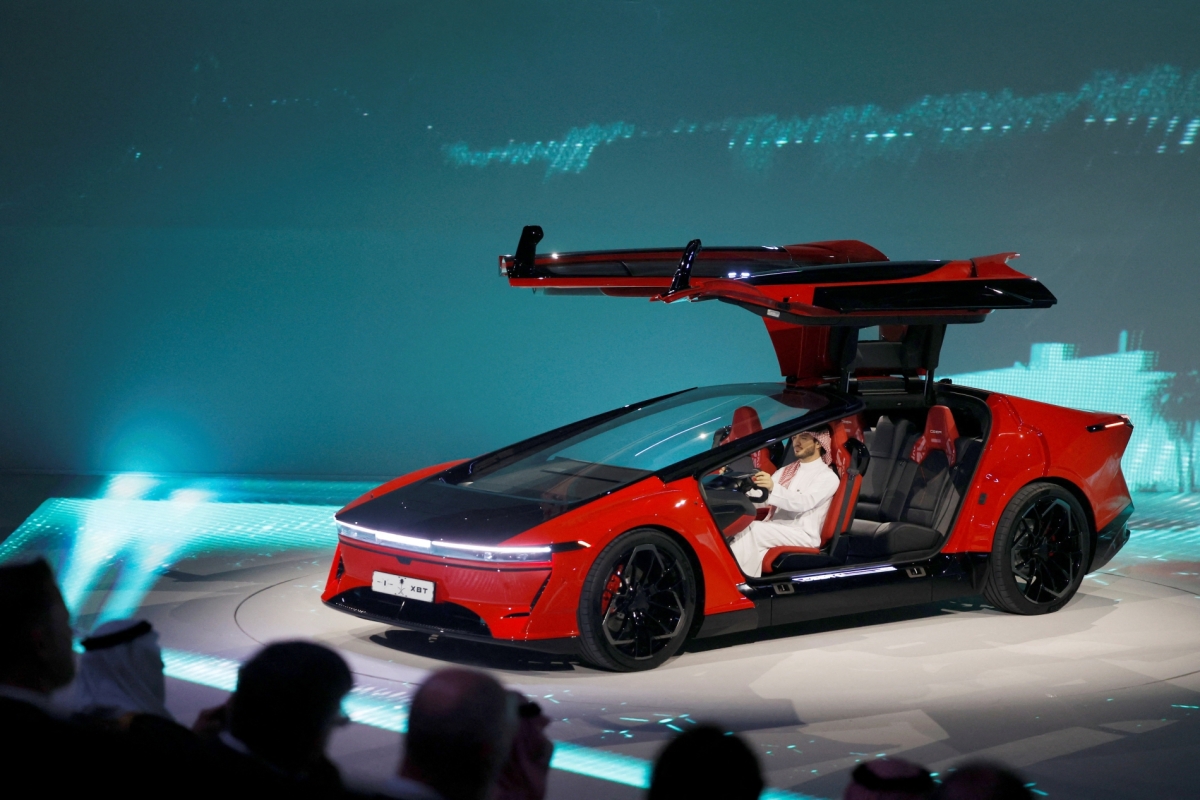

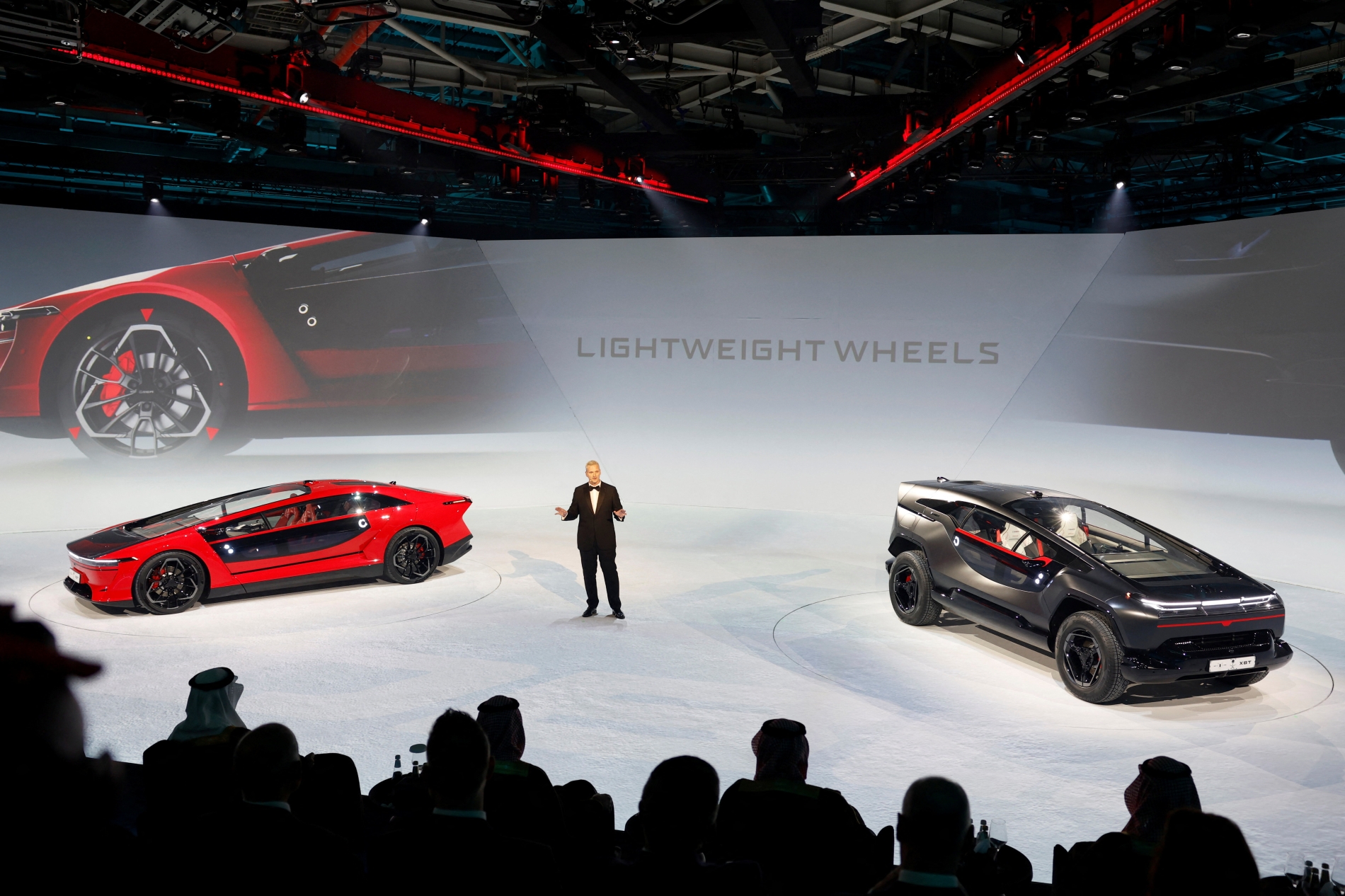
With its distinctive wedge shape, gull-wing doors, and chunky F1-style steering wheel, the CEER EXOBOT will be hard to miss when it hits the roads in 2027. The Saudi company unveiled its first two aerodynamic offerings (a sports utility vehicle and a sedan) on 21 September, a move backed by Saudi Crown Prince Mohammed bin Salman, whose plans for a future beyond oil include a national automotive industry that CEER is part of.
Nearly four years after the company was established, the first actual vehicles to bear the Saudi brand’s name are expected next year, but details are still to be worked out. For instance, although customers can go online and start designing their dream car, pricing information is yet to be announced. Still, EXOBOT's significance goes beyond the arrival of another vehicle in an already crowded market. It is the starting gun for a Saudi car industry and manufacturing ecosystem.
It began when the Saudi sovereign wealth fund (the Public Investment Fund, or PIF) invested in American company Lucid before bringing part of its vehicle manufacturing to Saudi Arabia. CEER was then established as a Saudi brand through a joint venture between the PIF and Taiwan’s Foxconn, the world’s largest electronics contract manufacturer, drawing on technology and components from international firms, including the German carmaker BMW.
Saudi Arabia soon began attracting suppliers and building a domestic skills base through institutions such as the National Automotive and Vehicles Academy, but analysts wonder what kind of car industry it is building, given that its experience so far does not resemble the American or Chinese models represented by Tesla and BYD. Instead, the emerging model combines Saudi capital with international technology and expertise, while gradually localising more of the industry.
Setting up shop
CEER is a baby compared with some of the world’s major carmakers, many of whom can trace their origins back a century or more. It was founded in California in 2007 under the name Atieva, initially focusing on batteries and electric powertrain systems, before changing its name to Lucid and moving into luxury electric vehicle (EV) manufacturing. The Lucid Air later became its flagship product as it sought to enter a market dominated by Tesla.
Saudi Arabia’s involvement with Lucid began as an investment but gradually grew, and the PIF became the company’s controlling shareholder. The relationship progressed from holding a stake to transferring some manufacturing operations to Saudi Arabia. In September 2023, Lucid opened its doors in King Abdullah Economic City (KAEC), the country’s first passenger vehicle assembly facility of any significant scale.
The first phase relies on vehicles and components produced at the company’s Arizona plant, with final assembly of up to 5,000 cars to be completed in Saudi Arabia. The next stage involves moving toward full manufacturing at a facility designed to make up to 150,000 vehicles annually. But building a car industry from scratch does not happen simply by opening a factory.
There have been false starts. The Ghazal 1, for instance, was developed by King Saud University and unveiled in 2010 as the first Saudi-made car, with ambitions for commercial production, but the experiment did not develop into an industry or create an extensive network of domestic suppliers. Before Lucid, the country had plants for assembling trucks and vehicles, including Isuzu operations in Dammam, as well as assembly of other heavy vehicles, so it had some assembly experience, but large-scale passenger car manufacturing and its supplier ecosystem were absent.
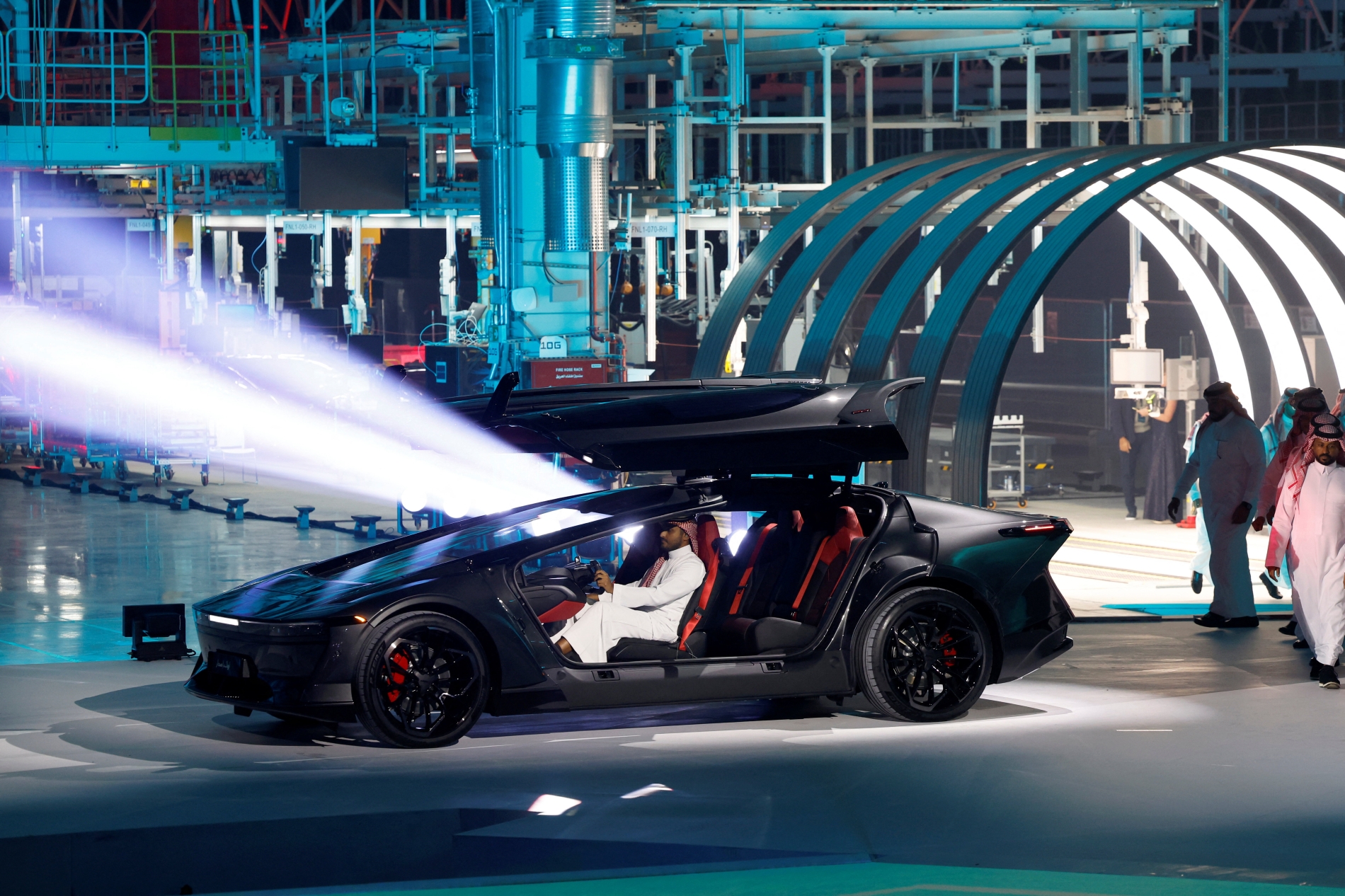
That is the fundamental difference between then and now. In November 2022, Saudi Arabia took a different step with the launch of CEER. This was no longer about investing in a foreign company and ‘in-shoring’ part of its manufacturing activity. Saudi Arabia set up CEER as its first EV brand. Using licensed technologies and components from BMW and with Foxconn developing the vehicles’ electrical systems, the project advanced to building the factory and production lines, and CEER expanded its contracts with specialist international companies and suppliers in automotive equipment, engineering, and manufacturing.
Made in Saudi Arabia
While Lucid was an American company that developed its vehicles and technologies before bringing part of its manufacturing to Saudi Arabia, CEER is a Saudi brand and project, based in Saudi Arabia, but with elements of its technology, expertise, and supplier network accessed through foreign partnerships. EXOBOT is the first clear result of this approach: an EV that was designed, developed, and manufactured in Saudi Arabia, but with technology and components from abroad.
The question is not simply how many cars CEER will produce, or how many it will sell, but how much of the vehicle's value will remain in Saudi Arabia, how many components will eventually be produced locally, how Saudi companies will enter the supply chain, and whether the expertise now coming from BMW, Foxconn, and others will be embedded in Saudi companies, universities, and the domestic workforce.