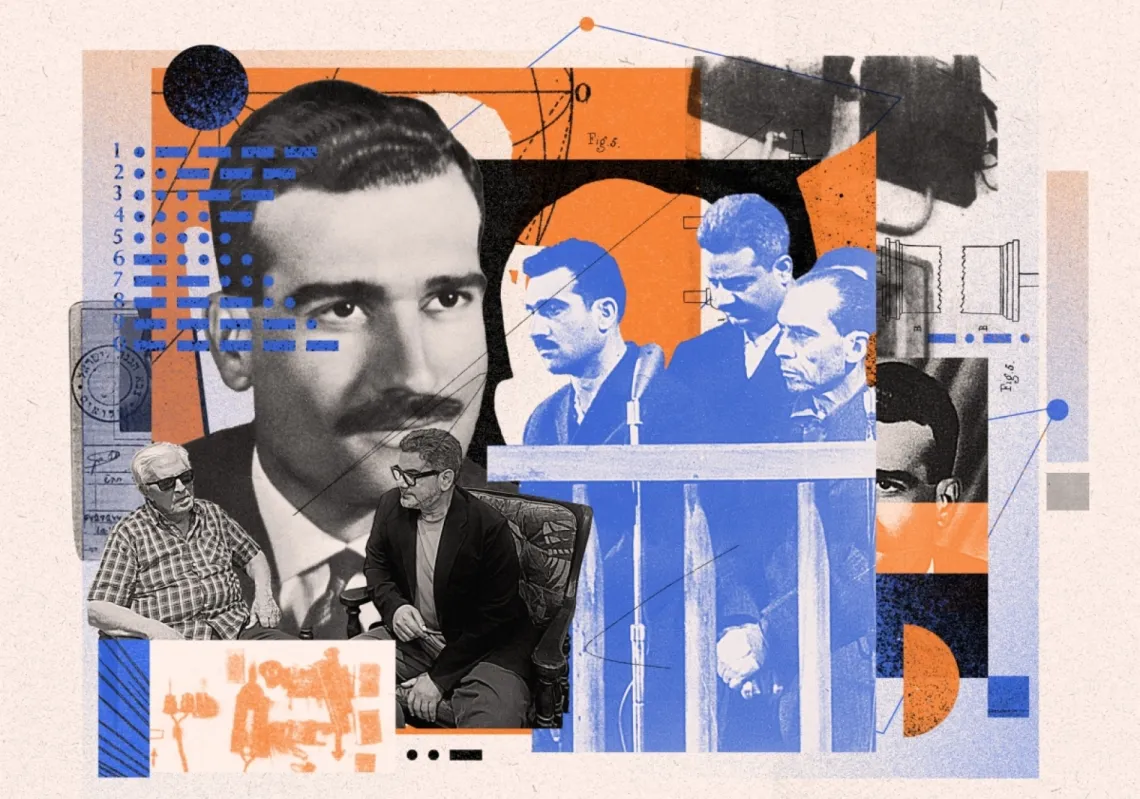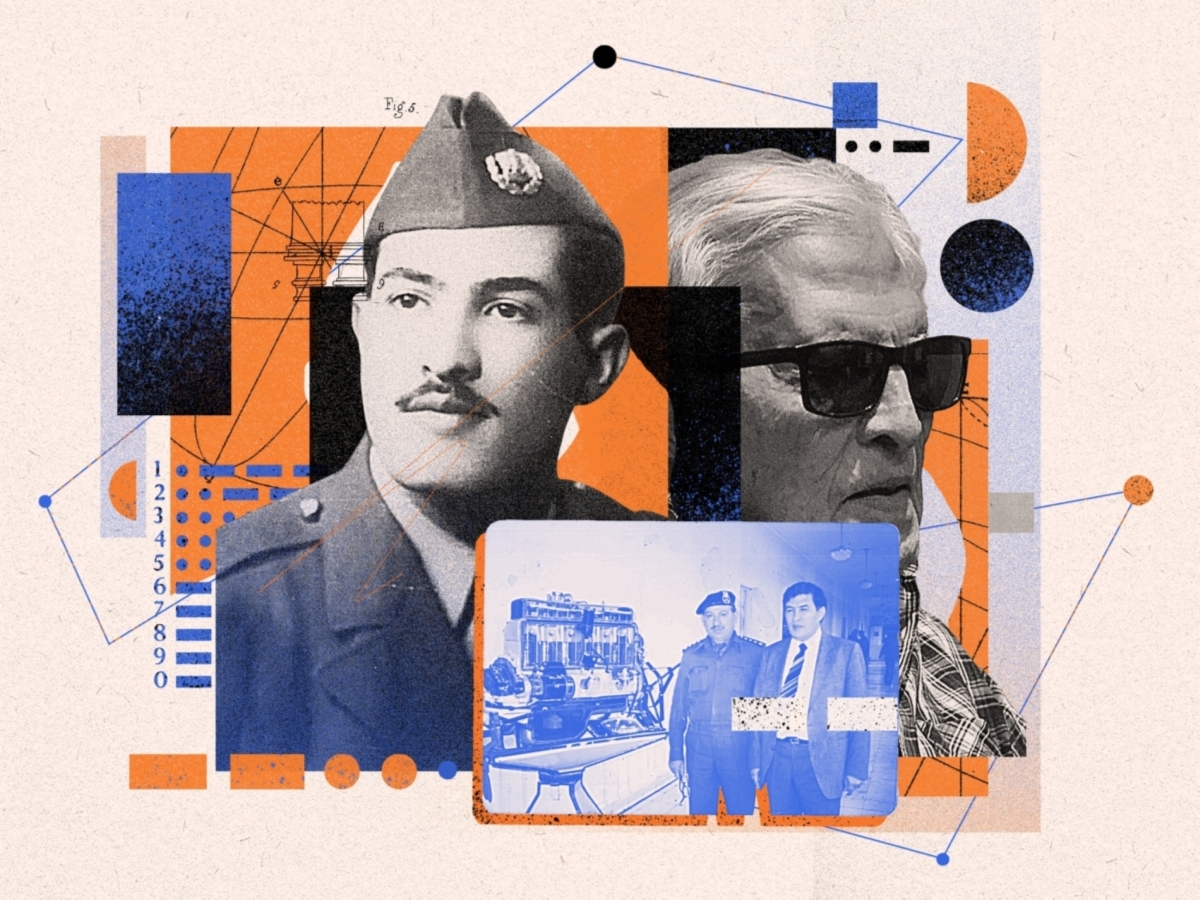

Said Jawish grew up in the Kurdish Quarter of Damascus, in a family that knew financial hardship, and worked as an electrician before joining the army. He learnt Hebrew from two Palestinians and later taught other Syrian soldiers the language. Still, he could not have imagined that Hebrew would lead him to an Israeli spy: Eli Cohen.
Now an old man with poor eyesight, Jawish specialised in signals and taught at the Military Academy in Homs. His students later held leadership positions in politics, the army, and intelligence. On his way back from teaching his students about signals, he hit on an idea for listening to Israeli communications. This was outside his remit, though, so he had to convince the army’s senior command.
At his home in Damascus, he told Al Majalla about his attempts to get permission to set up listening stations in the Golan Heights and to train dozens of Syrian soldiers how to intercept Israeli messages. Finally, a stroke of luck and a flower bouquet helped get him the nod he needed. It marked the beginning of an undertaking that Jawish recounts in detail, including its locations, equipment, and personnel.
Signal Company 134, part of the Signal Corps, was established to carry out this work. As he explains, its activities were not confined to military communications; they also included radio broadcasts, news agencies, and other work. Some were transmitted in Morse code, in groups of letters or numbers, without any clear indication of the sender or recipient. The messages were intercepted and recorded. There was just one problem: Jawish’s team could not decipher them. As the logs filled with these transmissions, no one could know where one of the messages would eventually lead.
Here is the first part of the interview:
How would you introduce yourself?
I am a Syrian from Damascus, from the Kurdish Quarter. I grew up there in difficult economic and material circumstances. I worked in the electrical trade. Some Palestinians came and settled in our neighbourhood, including Muhammad Atiya and Ibrahim Bakr, both of whom became my Hebrew teachers.
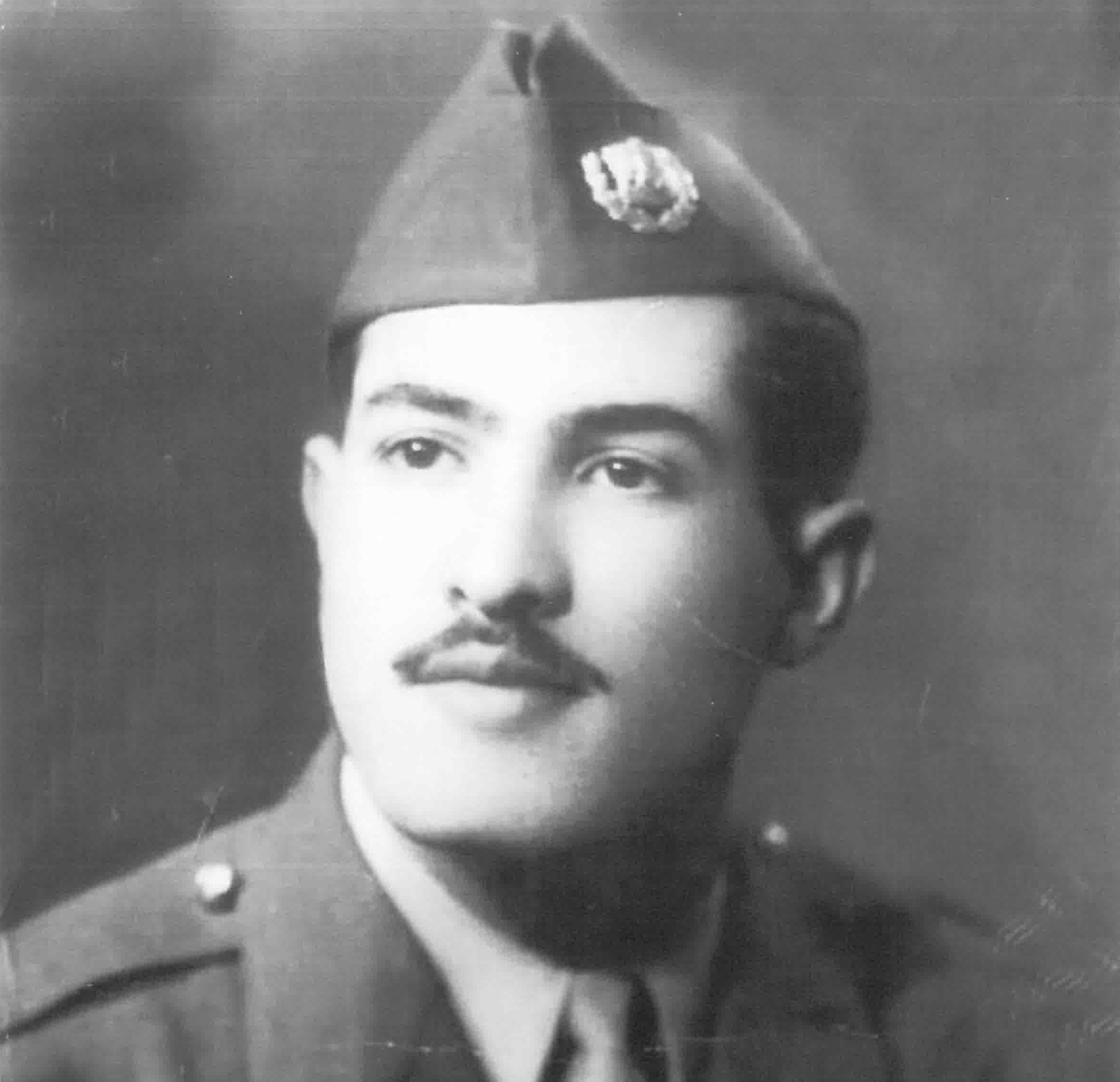
As a young man enthusiastic about the Palestinian cause, I learnt Hebrew from them. In 1951, I joined the army at the School of Specialists, and specialised in the Signal Corps. They gave me a Hebrew-language course because I already knew the language. My teachers were Muhammad Atiya and Yahya al-Yahya.
Did they come to Syria before the Nakba?
Yes, in 1946. I joined the army during Adib Shishakli’s rule. He was the greatest, most honourable and most patriotic figure Syria ever had. I didn't know him, and we weren't related, but I know Syria prospered during his time. He was not seeking power when the Baathists and the British conspired against him through the Iraq Petroleum Company. I know about that whole conspiracy and how it happened.
What year was it?
Early 1954. At the time, after I had been transferred there, I was teaching Hebrew at the Military Academy in Homs while also reporting for duty at the Central Branch. During Shishakli’s time, the intelligence branches were called the Central Branch. So, I taught at the academy and reported for duty at the Central Branch. Among the people I taught in my first course who became well known were Mustafa Tlass and Ali Zaza.
Tlass became defence minister, and Zaza became director of General Intelligence.
Correct. Zaza later became interior minister. I was teaching Hebrew. My first course included Ali Zaza, Ali Aslal, Mustafa Tlass, and Abdullah al Khatib. The latter was an intelligence officer during the Syrian-Egyptian union, from 1958 to 1961. Well-known officers graduated in 1955 from a later course that I taught, including Rabah al Tawil, Salim Hatum, Adnan Dabbagh, Nasir al Din Nasir and Hassan Turkmani, who later became defence minister. In 1956, I taught students how to use a radio communications set, how to receive signals, and so on.
What kind of set was it? Soviet?
It was Canadian. We did not have Soviet equipment. It was a Canadian set of the kind used during the Second World War. I heard one station calling: “Torch One, Torch Two, Fox One, Fox Two.” I told the students to listen. The lesson was about how to use the equipment, and I told them it was a military station calling another station. The lesson ended, and I returned to my room. Then a thought occurred to me: why don’t we monitor the Israeli army’s radio communications?
When was that?
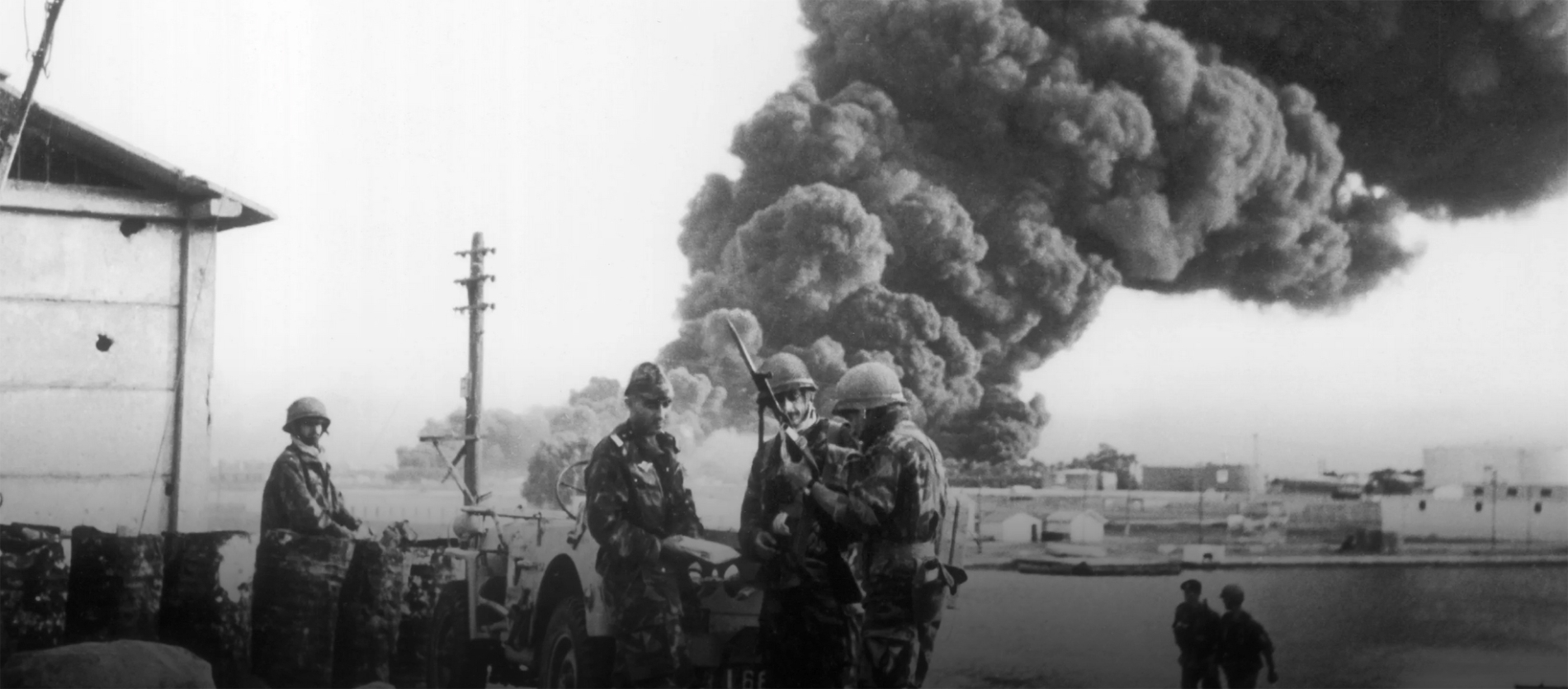
It was 1956, the year of the Tripartite Aggression against Egypt (the Suez War, fought by Britain, France, and Israel). I prepared a proposal and submitted it to the command through the academy director. Incidentally, the directors of the Military Academy at the time were all Damascenes, while the instructors came from different regions. About 20 days later, the commander summoned me to the Signal Corps.
Two officers were with him, and I had the proposal on the table in front of him. He said: "What is this?" I told him it would let us hear what the Israeli army was saying, gather information, learn how they communicate, and determine the echelon of the unit transmitting. For example, was it a battalion, a company, a platoon, or a brigade? We could estimate its size, decipher the cipher they use, and so on.
How did he respond?
He began mocking me. "Oh, those poor Jews," he said. "What will happen to them if you decipher the cipher they use?" He continued mocking me. I controlled myself and answered seriously. In the end, he said: "This is a big job. Go back and keep teaching Hebrew. This is not your job."
I came away deeply shocked by the negative response. I went back to Homs on one of the old buses known as bosta. Tears streamed down my face throughout the journey. I felt as though I had failed. But I took it as a challenge, so I submitted the proposal to the Intelligence Section.