Katherine Mansfield poetry collection reclaims the moment

The New Zealander, who died young over 100 years ago, produced a canon of work that gains more admirers every year. A new book shows what she did with poetry - and why

Katherine Mansfield poetry collection reclaims the moment

Despite dying of tuberculosis in France at the tender age of 34, Katherine Mansfield (1888-1923) had already secured her place in literary modernism through her short stories alone, having spent most of her short life far from her homeland of New Zealand. She left behind works that changed the way the short story form was understood. It had such an effect on British author Virginia Woolf that she said Mansfield was the only writer whose work she envied.

Yet behind the author of The Garden Party (1922) and The Daughters of the Late Colonel (1921) was also a woman who remained little known as a poet for almost a century, even among readers familiar with her work. This is revealed in The Karaka Bird, recently published in Paris by Lanskine. The volume brings together 44 of Mansfield’s poems, translated and introduced by the French poet Florence Pazzottu.

For many years, Mansfield’s poetry received little recognition. Pazzottu notes that only a small number of her poems appeared during her lifetime, and that a publisher who readily welcomed her stories was reluctant to take on a poetry collection she had written from 1911-13 because the poems did not rhyme. Mansfield responded in a manner befitting her rebellious spirit: she published them as translations of work by an invented Russian poet, Boris Petrovsky, and later hid behind the name Elizabeth Stanley. The episode helps explain the formal freedom that characterises the collection.

Focus on flashes

Mansfield does not approach the poem as a structure needing fixed rules; she seems more concerned with movement than formal completion, with flashes rather than rhetoric, to capture what passes through consciousness at the moment it occurs. Pazzottu argues that Mansfield sought a form that was “flexible, light, and unconstrained,” something that could record instances, subtle movements, and the shifts and intensity of lived experience. In this way, we see the close relationship between Mansfield’s poems and her stories. Both aim to seize what is soon to slip away, before it becomes interpretation.

Childhood occupies a central place in The Karaka Bird. In There Was a Child Once, which Pazzottu chose to open the collection despite it departing from chronological order, a child appears in a secret garden, pale and silent. A smile is enough for the narrator to know everything about him. The two walk through the darkness, exchange secrets, and imagine themselves swimming beneath the sea, until they hear footsteps on the “road of the world” and are terrified.

The garden is more than a memory. It is a protected inner space, while ‘the world’ beyond appears threatening and unknown. When the two children part, neither waves goodbye. It is as though loss had been present at the heart of paradise from the beginning. That paradise has the name and features of a particular place: New Zealand.

REUTERS/Henning Gloystein
The town of Queenstown on the shores of Lake Wakatipu in New Zealand, on 7 March 2017.

Childhood in Mansfield’s poetry is a land with its own trees, grasses, sea and light. In When I Was a Bird, the little girl climbs a karaka tree, turns her dress into wings and invents a song “without words” that continues singing by itself before ending in sadness. The sky is a blue nest, the clouds are white feathers, and the sun is a mother embracing the nest with her warmth. When her younger brother laughs at her and says she is not a bird because he can see her legs, her conviction does not waver.

Perhaps this offers a key to Mansfield’s poetry as a whole. Rather than escaping reality, imagination gives things another kind of truth. The child knows that her dress is not a pair of wings, yet she flies all the same. This ability to move between the visible and the imagined helps explain nature's powerful presence throughout the collection. The river becomes a woman who wakes and smiles, the sun a lover who kisses her, and seagulls the thoughts of a dream flying from her heart. In The Storm, the narrator flees into the forest during a storm in search of shelter, only for nature to threaten to swallow her. Just as she cries out, daring the storm to kill her, it stops. The sun spreads its wings, while the trees seem to laugh gently.
Mansfield uses poetry to capture what passes through consciousness at the very moment it occurs

Interacting with nature

In Mansfield's work, nature can be a living being that interacts with us and sometimes rejects us. In The Sea, the narrator approaches the sea as though answering an ancient summons, only for it to deny ever having called her. It tells her that the only part of the sea she carries in her body is the salt tears she is afraid to shed. The relationship with the natural world is therefore one of desire, fascination, and danger. Water, trees, grass, and sky offer the possibility of becoming one with the world while reminding the body of its fragility and impermanence.

One of the most beautiful expressions of this relationship appears in Earth Child in the Grass, where the narrator lies down shortly before dawn and presses the field's green grass against her body. The grass speaks to her and promises that one day, the earth will open its breast and allow her to slip inside. Death becomes a sensual return to matter. The body that now lies upon the earth will one day become part of it. Her rippling hair will become the rippling grass, the scent of her kisses in its fragrance. The poem reveals the connection between love and mortality in Mansfield's work: both want to cross the boundaries of the self and dissolve into something else.

Loneliness, too, becomes tangible. In the poem that bears its name, loneliness arrives at night in place of sleep and sits beside the bed. The narrator neither drives it away nor resists it. Instead, she wishes to turn towards it, take its hand and cling to it, while the sound of rain echoes over barren ground. This simple personification turns a psychological state into a companion with a body that grows tired and old. The poem reveals a fundamental feature of Mansfield's writing: feelings do not remain within the self for long. They quickly acquire a body, a voice, or a natural landscape.

Jung Yeon-je / AFP
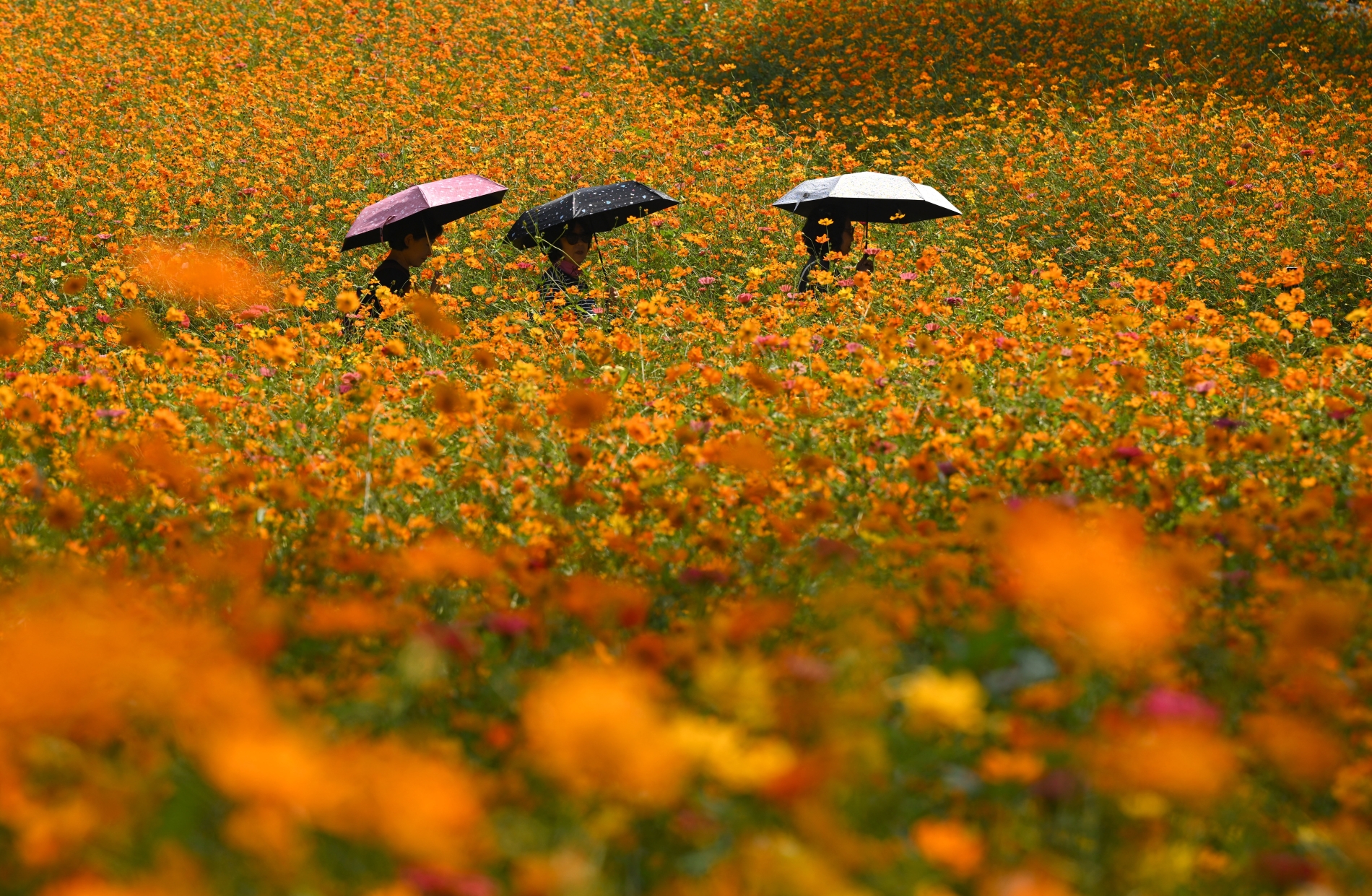
People walk through a field of yellow cosmos flowers. For illustrative purposes only.

Tears to laughter

Love itself exists under the threat of separation. In The Meeting, two people sit together knowing that, despite speaking of a future meeting, they are parting forever. A small clock fills the room with its sound, its ticking becoming a horse galloping at night along an isolated road. After the departure, the sound gradually fades until the narrator whispers that she will die if it stops. In The Gulf, the distance between two people becomes a "gulf of silence" that neither words nor touch can bridge. Tears may fill it, but laughter soon emerges as the force that breaks the silence apart.

This shift between loss and laughter matters because it keeps the collection from sinking into darkness. Indeed, Mansfield is ironic, playful, and at times childlike. In To God the Father, she addresses God as an older adult with a grey beard sitting on an oversized throne. She says she stopped believing in him centuries ago, then returns because she is tired of the world's noise and wants to sit on his lap and sleep, her hands clutching his beard. The sacred is thus returned to the intimacy of childhood: God loses his authority, but his embrace becomes necessary again.

What left the deepest mark on Mansfield's poetry was the death of her younger brother, Leslie, killed in France in 1915 during the First World War at the age of 21. Pazzottu notes that poetry assumed a greater place in Mansfield's life after this trauma, with memories of her New Zealand childhood returning to her stories with force. In one of the collection's most painful pieces, she recovers her brother through dreams.

He waits beside a stream from their childhood, holding fruit that he offers his sister, telling her that the fruit is his body. She wakes to find only the wind, dark water, and the question of which road might carry her feet back into the dream. In this way, memory restores an entire country, along with her brother, whose death turns childhood into a place to be revisited through writing. Although far away, New Zealand becomes painfully close.

Exile and loss converge, transforming place into bodily memory: the smell of grass, the sound of water, trees, the sea, wild fruit, birds. This may be why Pazzottu's choice of The Karaka Bird as the collection's title feels so fitting. Within a single image, it brings together childhood, homeland, transformation, and freedom, turning the bird the young Mansfield imagined herself to be into a hidden symbol of writing.

Wikimedia Commons
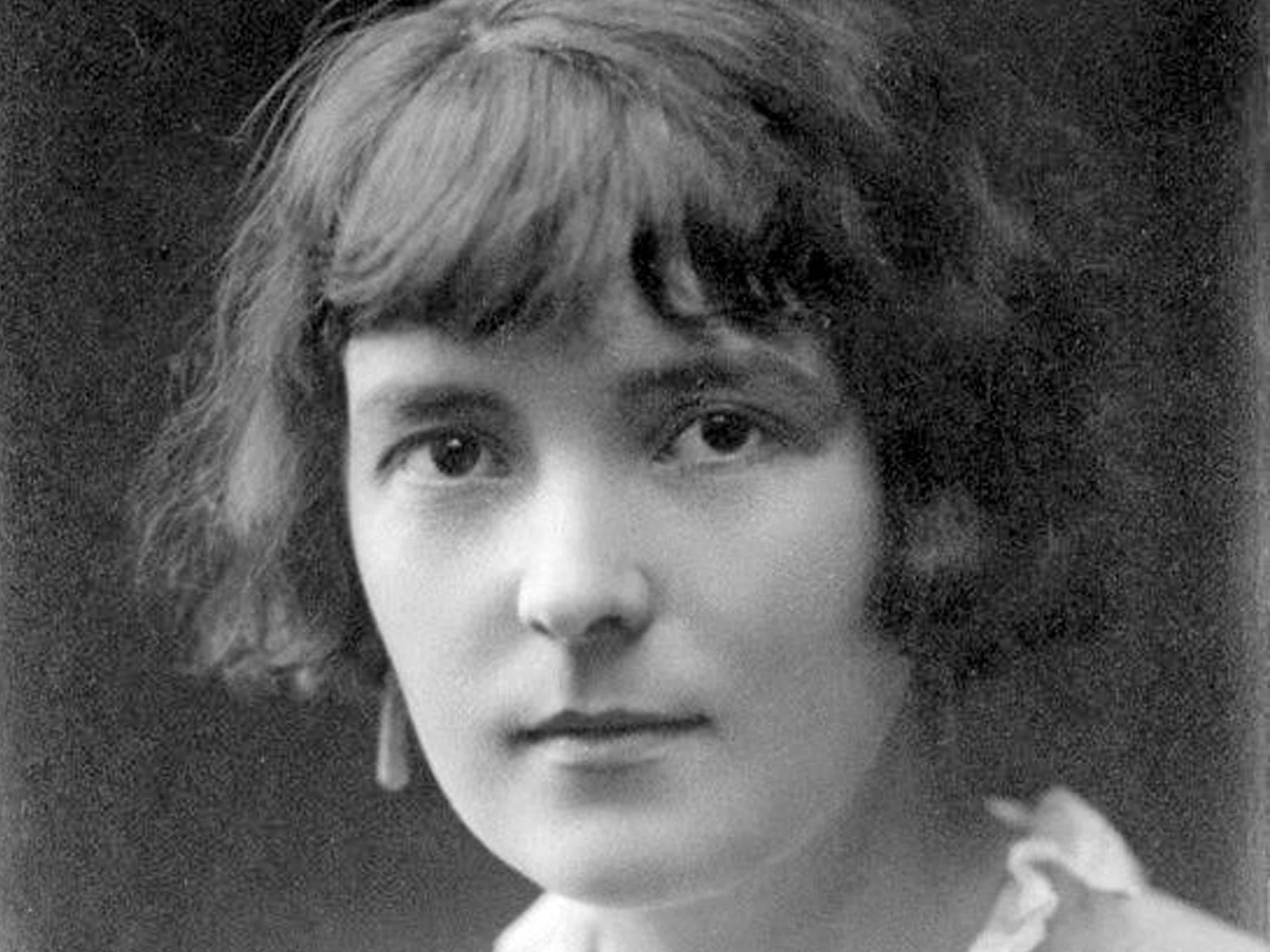
Katherine Mansfield (14 October 1888 – 9 January 1923)

No longer an appendix

Pazzottu also points out that many memories, dreams, and places pass from Mansfield's poems into her stories, diaries, and letters, and that reading these different forms alongside one another reveals the intensity of her short life. This is one of the book's chief virtues: it corrects the impression that poetry was peripheral to Mansfield's creative life. What emerges is neither a poet competing with the short-story writer nor an unfamiliar side that must be separated from the familiar. Instead, we find the same intimate laboratory in which the images, rhythms, and sensibilities that would give her prose its singular quality were taking shape.

More than a century later, Mansfield's poems therefore seem less like an appendix to the work of a major writer than a side door to her heart. They naturally vary in quality; some are closer to songs or brief reflections than fully realised poems, yet this honesty traces a creative path spanning 12 years, united by a desire to sense the world before it disappears.

For Mansfield, childhood is not a time that has passed; it is a way of keeping the world open to wonder. From this comes the strange combination that inhabits her poetry: joy that seems already to know it will be lost, tenderness alongside loneliness, a body celebrating life while hearing the footsteps of death, and a memory trying to make a place for the absent among the living. In The Karaka Bird, we discover that poetry was never a hidden margin in Katherine Mansfield's life. It was where she learned to help the fleeting resist its disappearance.

font change

Related Articles