The fall of Mokha: a chance to reconsider a flawed course

Had the anti-Houthi units been working in coordination, their enemy would not have progressed so easily down Yemen’s Red Sea coast, but infighting and a lack of leadership opened the door

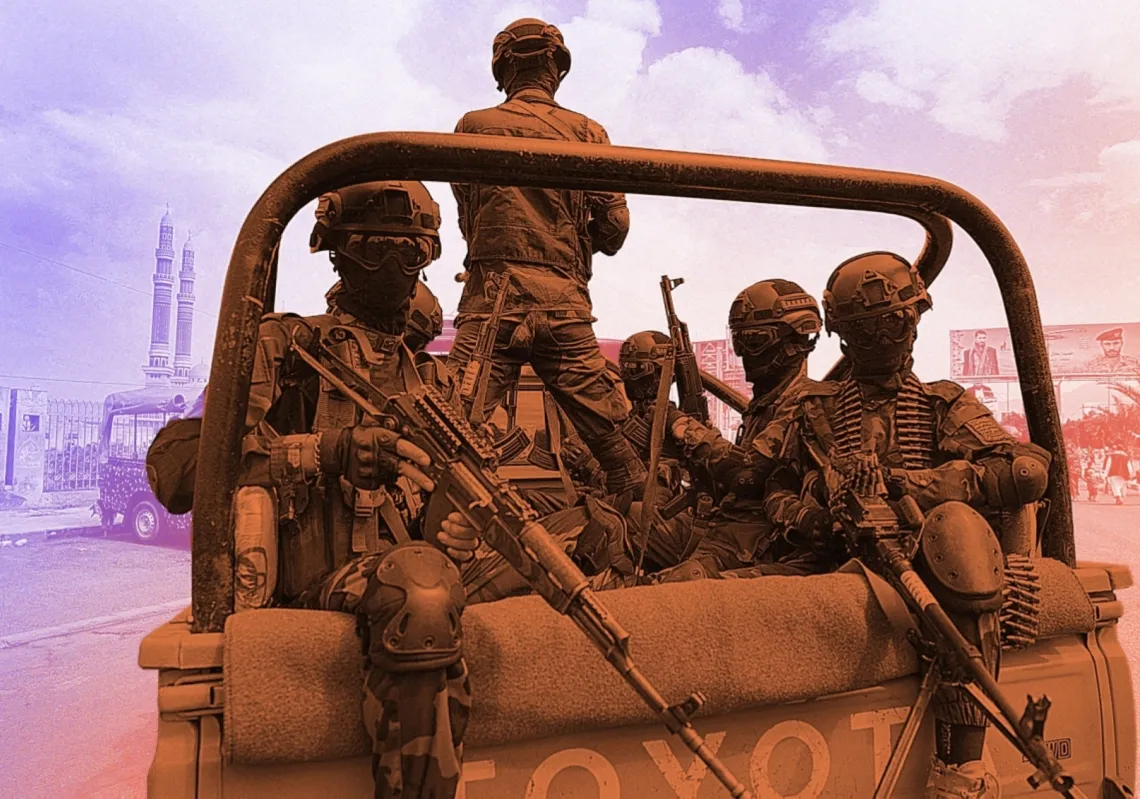
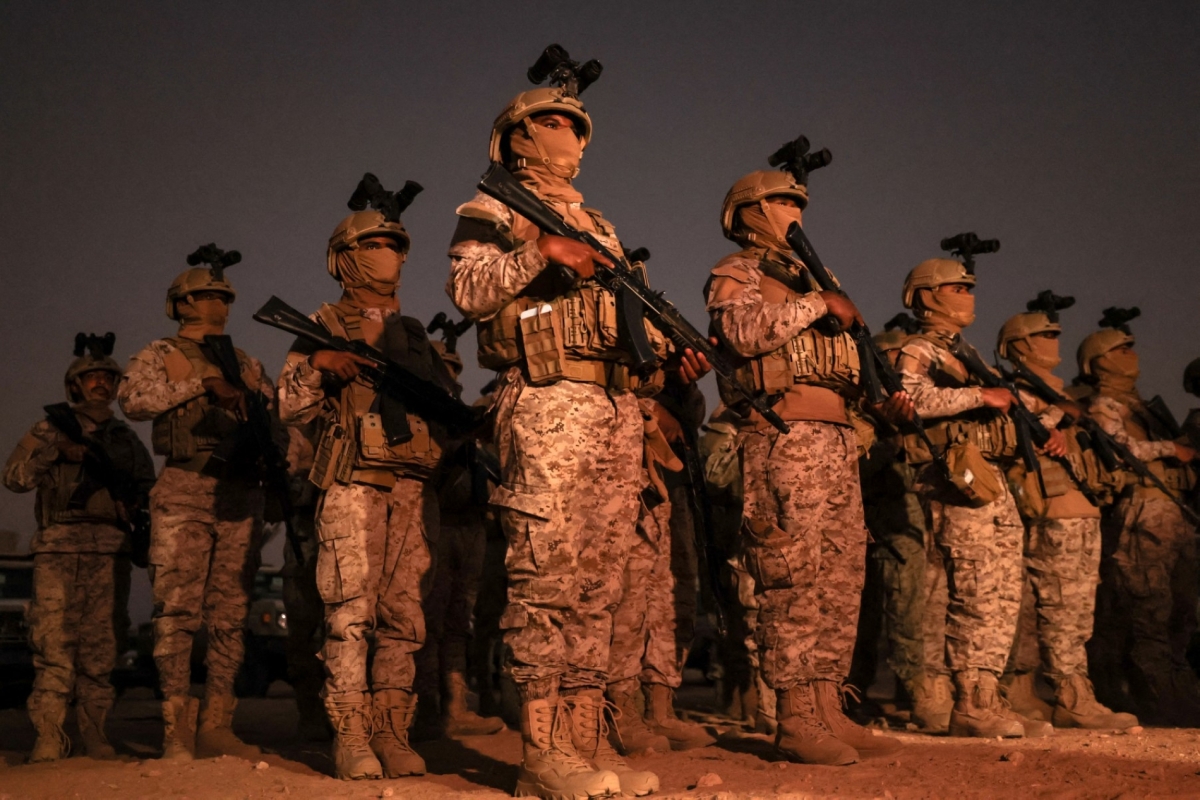
Pro-Yemeni government forces at an exhibition at Al Rayyan airport in the city of Mukalla in Yemen's coastal southern Hadramawt province on 19 January 2026.
FADEL SENNA / AFP
Pro-Yemeni government forces at an exhibition at Al Rayyan airport in the city of Mukalla in Yemen's coastal southern Hadramawt province on 19 January 2026.

The fall of Mokha: a chance to reconsider a flawed course

After more than eight years under the control of Yemeni government forces, the fall of the strategic Red Sea port of Mokha represents a serious setback. Its significance lies partly in the area’s geopolitical importance and the loss of more than 140km of territory.

More troubling is that Mokha fell after more than a decade of confrontation with the Houthi militia and after weeks of clear signs that war was resuming. That span should have been ample time to prepare. Houthi military tactics are now familiar, and they have fewer troops and less equipment than the government.

More than anything, the loss of Mokha and the surrounding area is a result of deep divisions within the anti‑Houthi camp, the diversity of which should be one of its strengths, since it mirrors the political and social character of Yemeni society and affirms that this coalition is both broad and national, encompassing varied constituencies and identities (unlike the narrow social and political base of the Houthi movement).

This lets the anti‑Houthi camp legitimately claim to represent Yemen’s different social groups and, numerically, most Yemenis. Indeed, over the past decade, the number of political and social forces aligned against the Houthis has increased, while the Houthi camp has steadily contracted owing to exclusionary practices and rigid group loyalties.

Diversity’s double-edged sword is that it can become a liability without a structure to regulate it. This may culminate in military failure when disparate armed formations pursuing differing aims fail to coordinate and get organised. Recent events along Yemen’s south-west coast revealed this vulnerability with stark clarity.

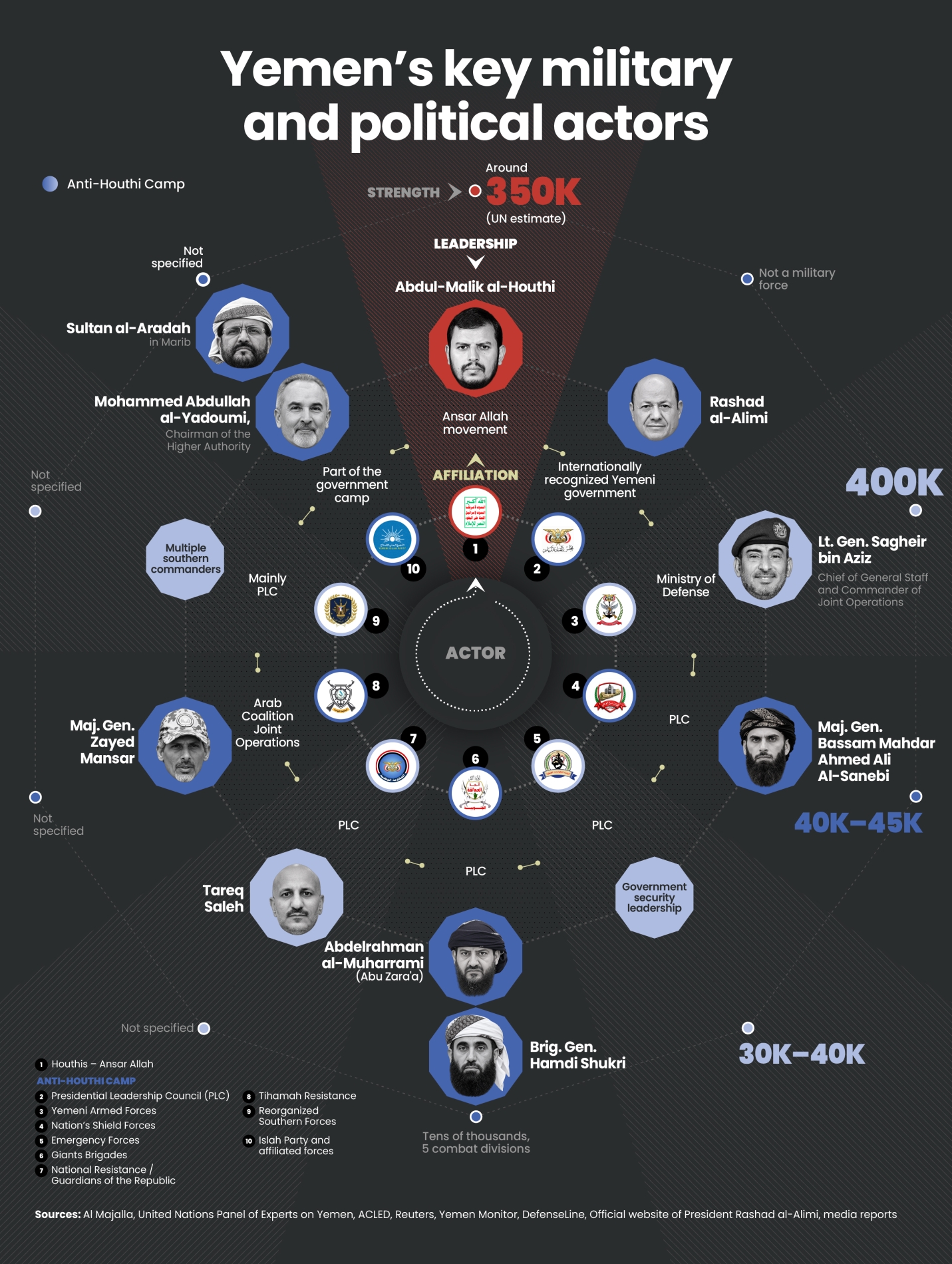
Tariq Saleh’s forces were responsible for administering and defending the area, but most of his fighters hail from northern Yemen (including Houthi defectors following the militia’s 2017 battle against forces loyal to Saleh’s uncle, the former president Ali Abdullah Saleh, which ended with Saleh’s killing). Others came from central governorates such as Ibb and Taiz. Most were outsiders in the coastal region of Tihama.

An attempt was made to address this by creating the so‑called Tihama Forces, recruited from the local population, but the people of Tihama are some of the most marginalised in Yemen, and grievances run deep. It is now understood that, whilst aiming to prevent the emergence of another powerful regional force, the Tihama units were divided into three components: some came under Tariq Saleh’s command, some were independent formations, while others were incorporated into the Giants Brigades.
Diana Estefanía Rubio

Led by Hamdi Shukri, the Brigades control areas to the south, from which they recruit their fighters (in particular from al‑Subaiha). They are often described as ‘southern separatists’, but that description is inaccurate. They are predominantly Salafist, and their relationship with Saleh’s forces has long been marked by intense rivalry.

East of the coast are forces affiliated with the Islah Party, which includes the Muslim Brotherhood. They form part of the Yemeni army’s Fourth Military Region in the Taiz and Tur al‑Bahah fronts. Their relationship with Saleh’s forces is also deeply hostile, largely because of the bitter political rivalry between the two sides following the 2011 uprising that removed Ali Abdullah Saleh from power.

The picture that emerges in the aftermath is that Tariq Saleh’s National Resistance Forces were confined to a narrow, flat, and strategically vital strip of territory, and that relations with the surrounding military formations were strained. Whilst manageable in peacetime, such a situation in wartime is dangerous. The coast cannot be defended without securing its hinterland, and this requires close cooperation with the other military forces operating around it, which explains why the Houthis’ offensive on the western coast began through Taiz and Tur al‑Bahah (fighting continues in the mountains of Taiz as the Houthis seek to secure their hold over the coast).

Coordination between the coastal and Taiz forces was needed long before the Houthi advance, and historic grievances should have come second to military imperatives and the reality of a shared threat.
More than anything, the loss of Mokha and the surrounding area is a result of deep divisions within the anti‑Houthi camp

Too little, too late

Even with sincere intentions and a genuine willingness to cooperate, effective coordination takes time, yet in western Yemen a joint operations room bringing together these mutually antagonistic anti-Houthi forces was only established after the Houthi advance had begun, by which time it was 'too little, too late.'

Coordination is more than sitting in the same room; collective action demands prior training and sustained cooperation to succeed. A group dance cannot be performed simply because everyone arrives at the same venue and agrees that it should happen; it requires preparation, rehearsal, practice, and understanding. The need for a joint operations room had long been recognised, and the importance of coordination among the various forces had repeatedly been raised, yet it did not happen.

Questions must be asked not just of Saleh and the other field commanders but more so of the civilian leaders, including the head of state, the members of the Presidential Leadership Council, and the defence minister. Coordination among the defensive units should have been at the top of their priority list ever since the new government was formed at the beginning of the year, and it should have become an even more urgent priority nearly two months ago, when fighting recommenced. 

AFP
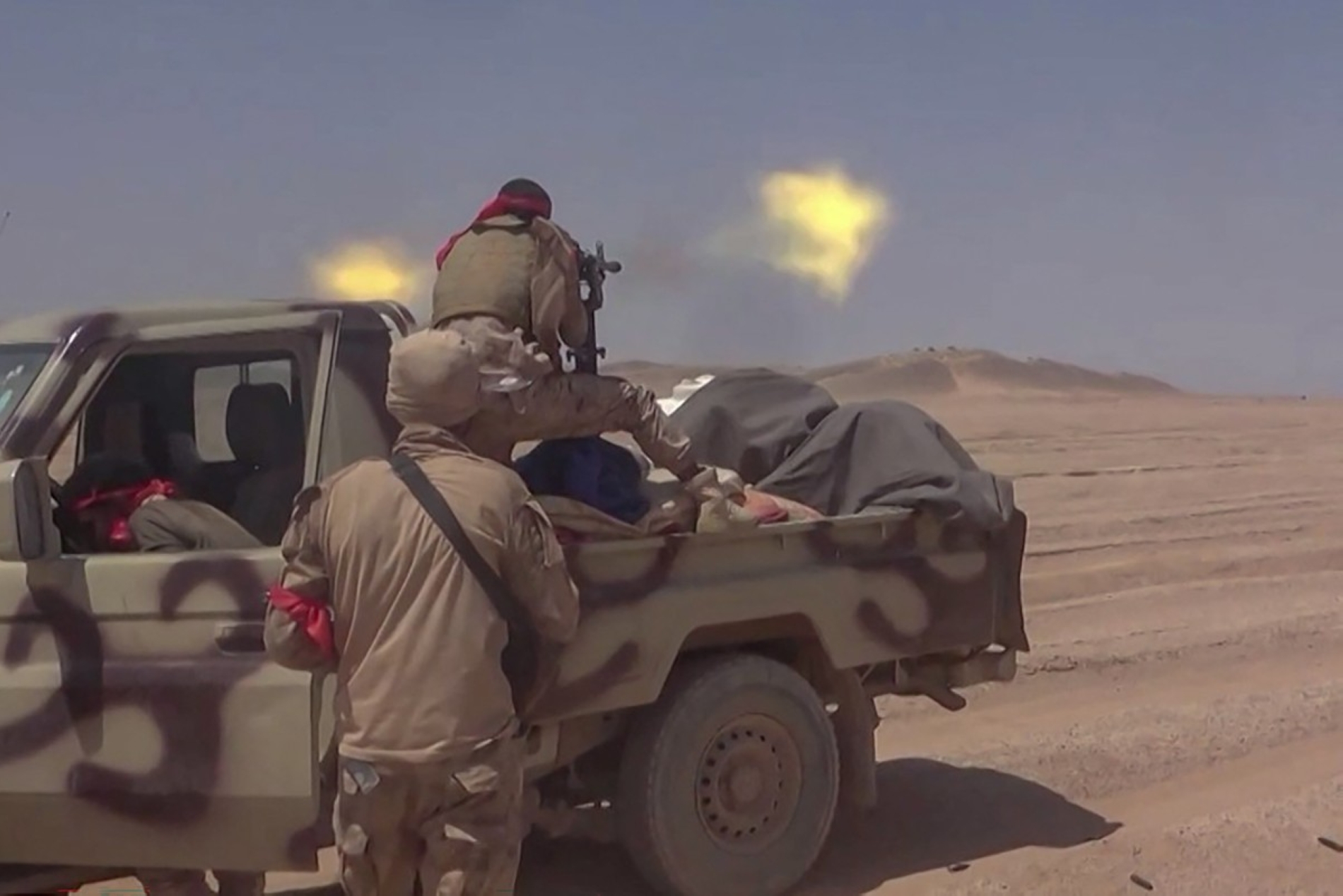
Pro-Yemeni government forces engaging in clashes with Houthi authorities in Al-Jawf province on 15 September 2026.

Planning inadequacies

To only think about this once the battle had intensified, and to set up a joint operations room just days before Mokha fell, was plainly insufficient. Effective cooperation between forces that have neither trained together nor operated alongside one another cannot be conjured at the last minute, as fighting rages all around. The risk of failure was therefore very high, and failure indeed followed.

Once the joint operations room was finally set up, tension among commanders who disagreed about what to do marked it. Without clear operational leadership or effective central military direction, control of the battle slipped away, leaving forces with the equipment, training, motivation, and ability defeated. At its root, then, this failure was political.

There was no 'centre' directing the military effort and no shared political framework to bind the infighting factions whose internal struggles became so consuming that they lost sight of the reason they had been brought together in the first place: the Houthi threat. The Houthis reject these factions and envisage no relationship with them except complete submission (which is no basis for a sustainable political order), but they have a centralised decision‑making structure that gives them speed and cohesion. Both are needed to achieve substantial military gains against divided but well-armed opponents.

The latest military setback may yet offer an opportunity for reassessment, correction, and even a reversal of course

Opportunity to reassess

Yet this same centralisation makes it difficult to consolidate and govern the areas that they seize on the battlefield. Yemen is vast (at almost half a million square kilometres), socially diverse, and politically divided, with an array of armed groups spread across difficult mountainous terrain. Governing such a country through rigid centralisation is no easy task.

The Houthis neither accept this diversity nor truly recognise it. Their military gains may therefore fail to produce lasting political success and may remain fragile because of the weakness of their social base. The challenge lies in exploiting these vulnerabilities, resisting the temptation to divide the spoils of a battle that has yet to be won, and managing diversity and disagreement with political discipline and military firmness.

The latest military setback may yet offer an opportunity for reassessment, correction, and even a reversal of course. That requires an accurate diagnosis of the many causes behind the defeat and a serious, candid effort to address the weaknesses it exposed. That is entirely possible if leadership fully understands the dangers and sets its priorities accordingly.

font change