The Houthis: Iran’s bargaining chip with Washington

The US views talks with the Houthis as a way to contain the scope of the conflict with Iran, while Tehran sees them as a means to translate military gains in the Red Sea into political gains

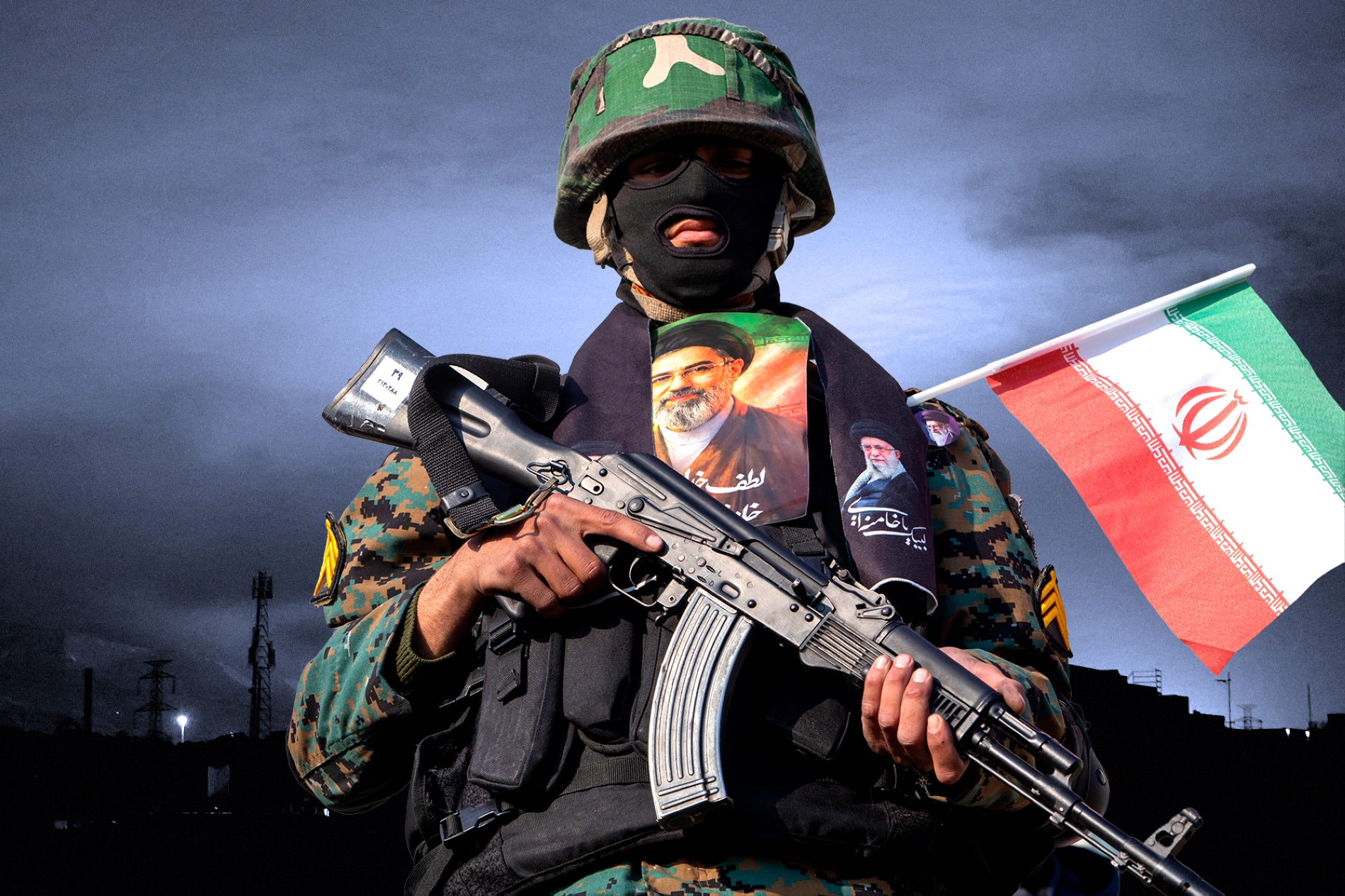
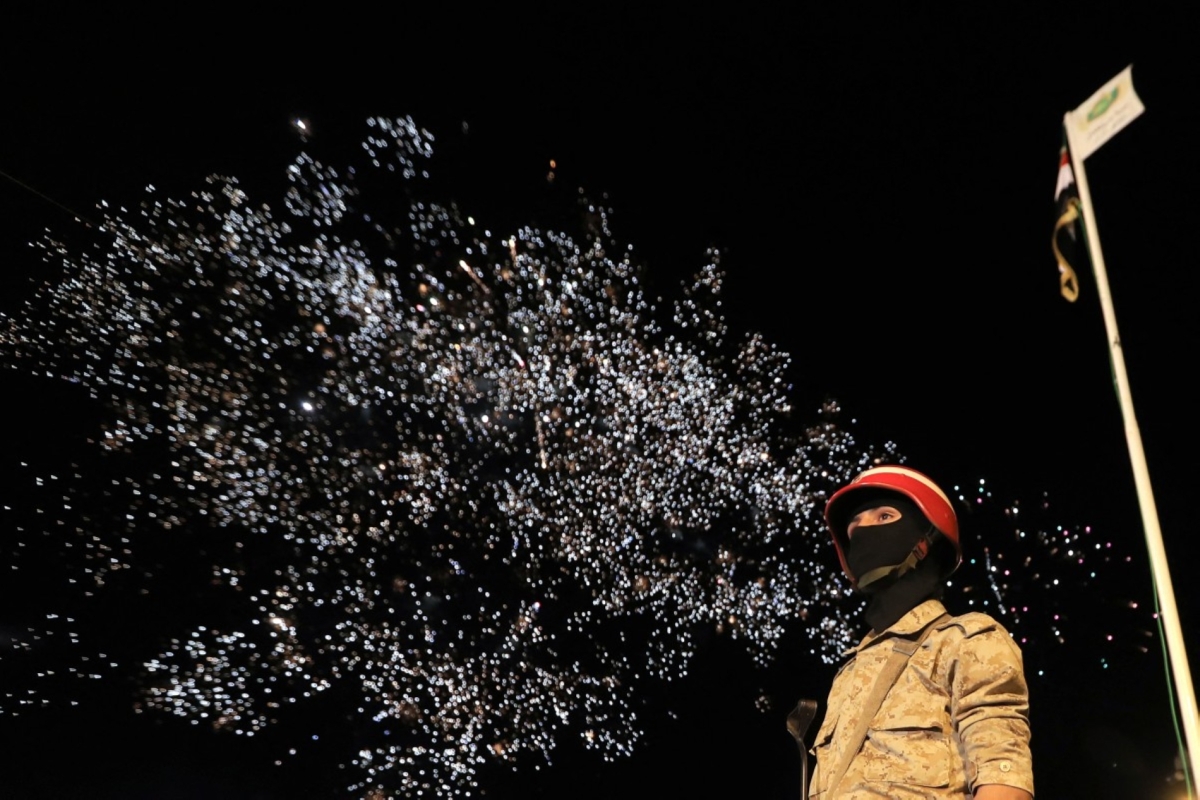
A security personnel stands guard during a ceremony organised by Houthi authorities to mark the 12th anniversary of takeover of Yemeni capital, in Sanaa on 20 September 2026.
Mohammed HUWAIS / AFP
A security personnel stands guard during a ceremony organised by Houthi authorities to mark the 12th anniversary of takeover of Yemeni capital, in Sanaa on 20 September 2026.

The Houthis: Iran’s bargaining chip with Washington

As Washington scrambled to contain the consequences of the Houthis' dramatic advance along Yemen’s Red Sea coast last week, US Vice President JD Vance confirmed US media reports that the Trump administration was "engaged in direct conversations with the Houthis."

Days earlier, Reuters reported that US officials met Houthi representatives at the US embassy in Muscat. Among them was Mohammed Abdulsalam, one of the group's most senior political officials, who is also under US sanctions. The Houthis reportedly assured Washington that they intended to respect their existing ceasefire with the United States and would not attack American vessels, even as their confrontation with Saudi Arabia continued.

There is an obvious irony. Donald Trump put the Houthis back on the US list of foreign terrorist organisations in January 2025, but his administration is now negotiating with them after their battlefield position considerably improved in recent weeks. At the same time, Trump has declined to get militarily involved in Yemen's internal confrontation, which has expanded to attacks on Saudi Arabia, which backs Yemen's internationally recognised government. But does this mean the US has abandoned its ally? That is an unequivocal 'no'. It is still helping Saudi Arabia by providing critical intelligence and targeting assistance.

Still, these moves might be read in Tehran, and elsewhere in the region, as signs that Trump is having serious doubts about doubling down on an expanding Middle Eastern conflict, including his war with Iran, and that he is looking for a way to end the war altogether. While the evidence does not support this take, it does suggest something more interesting: he may be trying to contain the war and prevent it from expanding further.

The conflict that began in February has spread far beyond direct US-Iranian exchanges. Washington is managing the Strait of Hormuz, security threats to Gulf allies, energy infrastructure, the delicate political situations in Iraq, Lebanon, the Red Sea and now a renewed Saudi-Houthi war. Trump himself said last week that he hoped the Iran war was approaching its end. The difficulty is finding an exit that does not risk another front opening somewhere else.
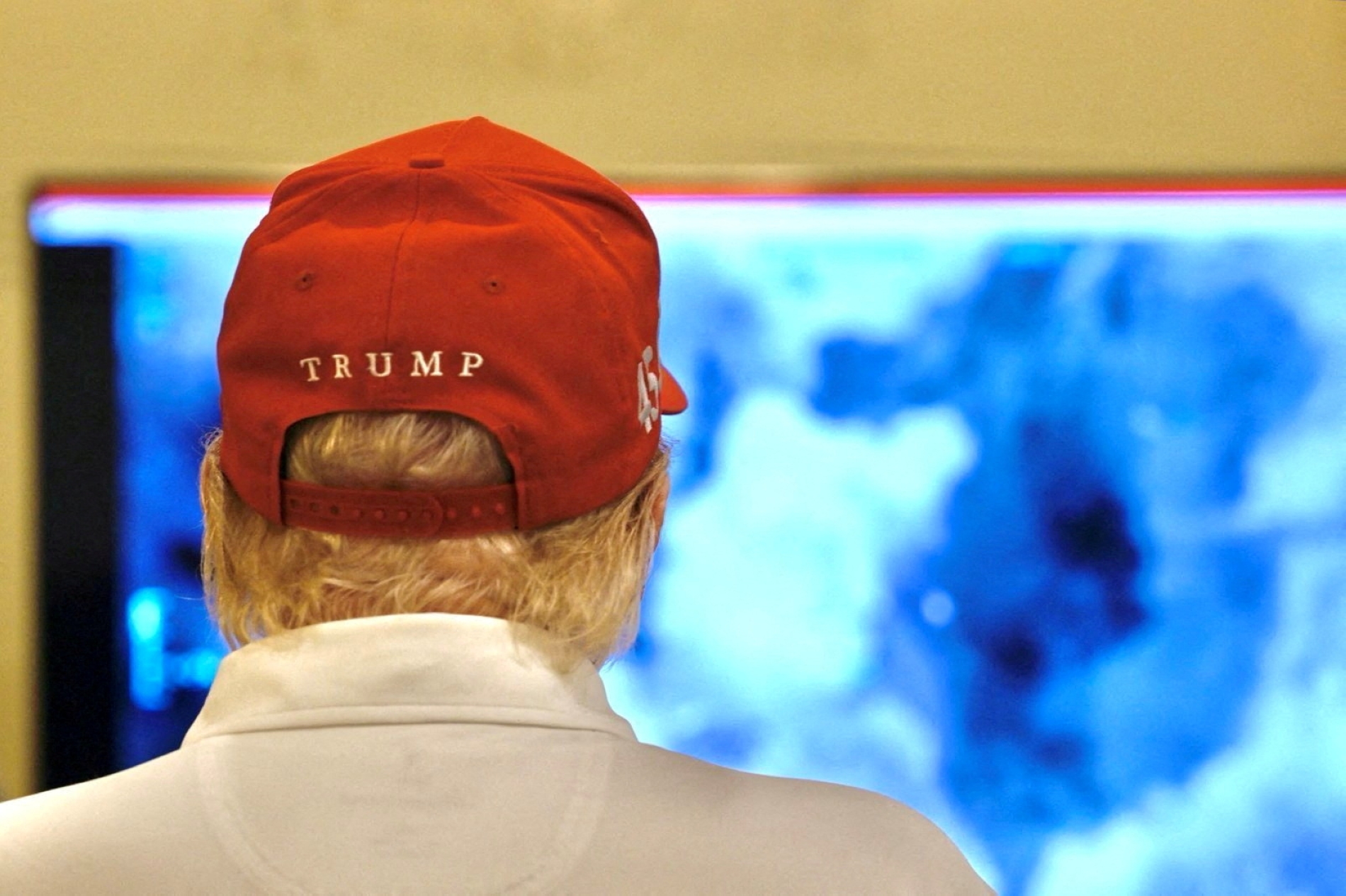
Reuters
US President Donald Trump looks on as military strikes are launched against the Houthis in Yemen in this handout image released on 15 March 2025.

American military superiority is not in question here. That is given. The more salient question is how much military, economic and political capital Washington is prepared to invest in sustaining an increasingly expanded conflict.

Not unusual

There is nothing entirely new about Washington talking quietly to what it considers to be rogue actors. It has done so for decades. As Kai Bird recounts in The Good Spy, CIA officer Robert Ames established a secret channel to Yasser Arafat’s PLO through Ali Hassan Salameh as early as 1969 and 1970, even while Washington publicly kept its distance from an organisation it regarded as involved in terrorism. The relationship survived because both sides found it useful: the CIA gained intelligence and a means of communicating with the Palestinian leadership, while the PLO gained a channel into Washington.

More recently, as CIA director, William Burns became one of the central American participants in the Gaza ceasefire diplomacy conducted through Qatar and Egypt during the Biden administration. President Trump went further in 2025 when his hostage envoy, Adam Boehler, held direct meetings with Hamas officials despite the group being a US-designated terrorist organisation.
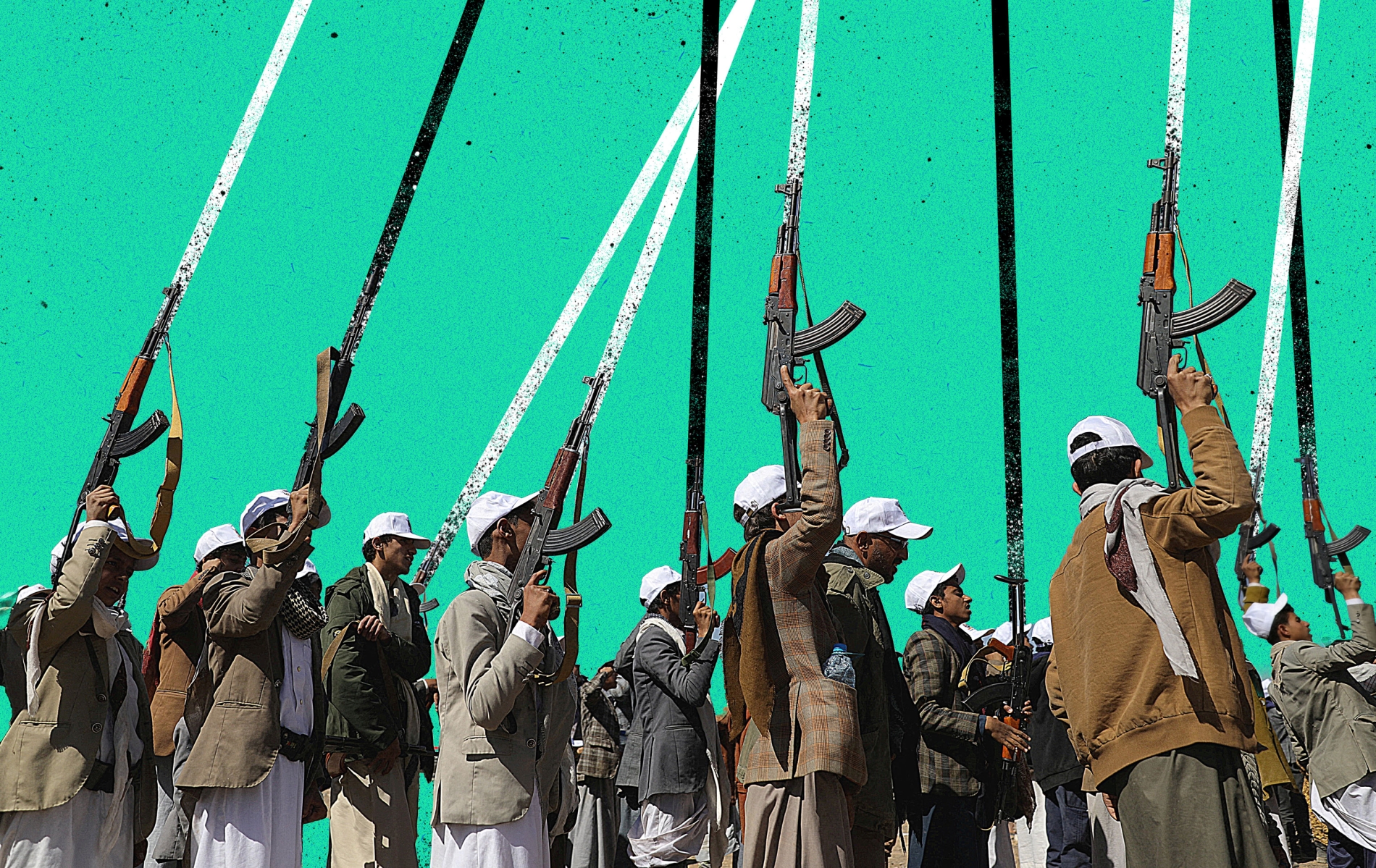
There is nothing entirely new about Washington talking quietly to what it considers to be rogue actors. It has done so for decades

It is a US foreign policy tactic that predates Trump, in which the US may publicly refuse to legitimise an armed adversary while privately concluding that talking to it is necessary after military pressure fails to resolve the issue. The US talks with the Houthis fit within that tradition. But another aspect of the matter merits further scrutiny. If Ansar Allah (the official name of the Houthi movement) were simply an Iranian proxy operating on instructions from Tehran, why would Washington need to negotiate with it separately?

Iran plainly has enormous influence over the Houthis. Years of Iranian political support, weapons, technology, training and technical assistance helped transform them from a local insurgent movement into a formidable military force and an instrument of influence. At the same time, there have been periods when Houthi choices have not corresponded neatly with Iranian preferences.

That autonomy may actually make the movement more useful to Tehran. Iran does not have to issue every order for Houthi actions to advance Iranian interests. The two sides already converge where it matters most: pressuring Saudi Arabia, challenging US predominance, confronting Israel and demonstrating that maritime security cannot be separated from the region's political conflicts. 

Al Majalla/Reuters

Read more: Houthis seek expansion after reaching Bab al-Mandab

Iranian role

The latest fighting in western Yemen also illustrates why the distinction matters. It is impossible to think that Tehran played no role in encouraging the Houthis to widen the war. Iran had spent months trying to raise the economic costs of the conflict through pressure on Hormuz, and opening a second chokepoint at Bab al-Mandab was an obvious way to multiply that pressure. By July, Reuters was reporting explicitly that Tehran had urged the Houthis to be ready to close the Red Sea oil route if US attacks on Iranian infrastructure continued.

Yet the timing is revealing. The Houthis had fired missiles and drones at Israel in late March, but they did not then open a major Saudi front or turn Bab al-Mandab into an extension of Iran's campaign around Hormuz. That came months later, after the Saudi-backed Yemeni government struck Sanaa airport on 13 July to prevent the return of a flight carrying a Houthi delegation from Ali Khamenei's funeral in Tehran.

Reuters subsequently reported, citing Iranian and regional sources, that IRGC commanders, military advisers and missile-and drone-related equipment were also on board. The Houthis denied that account and said the passengers were civilians. But within days the movement threatened Saudi energy infrastructure and launched a maritime blockade against it.

The airport episode may therefore have been a trigger, a pretext, or both. But that is neither here nor there. What actually matters is that Iranian encouragement and Houthi calculations converged. While Tehran welcomed greater pressure on Saudi Arabia and the global energy system, the Houthis had their own reasons for reopening the confrontation with Riyadh and chose a moment when doing so strengthened their position inside Yemen as well as their regional stature.

Their subsequent advance toward Bab al-Mandab has made Saudi Arabia more vulnerable at the precise moment when Iran is contesting traffic through Hormuz, making both outlets to international trade difficult to access. 

Intense debate

While this is an enormous strategic gain for Tehran, it is also fuelling an intense debate inside Iran over how best to capitalise on these gains. The sides cannot be neatly divided between peaceniks and warhawks. Mohammad Bagher Ghalibaf, Iran's parliament speaker, and Mohsen Rezaei, secretary of the Supreme National Council, are hardly accommodationists.

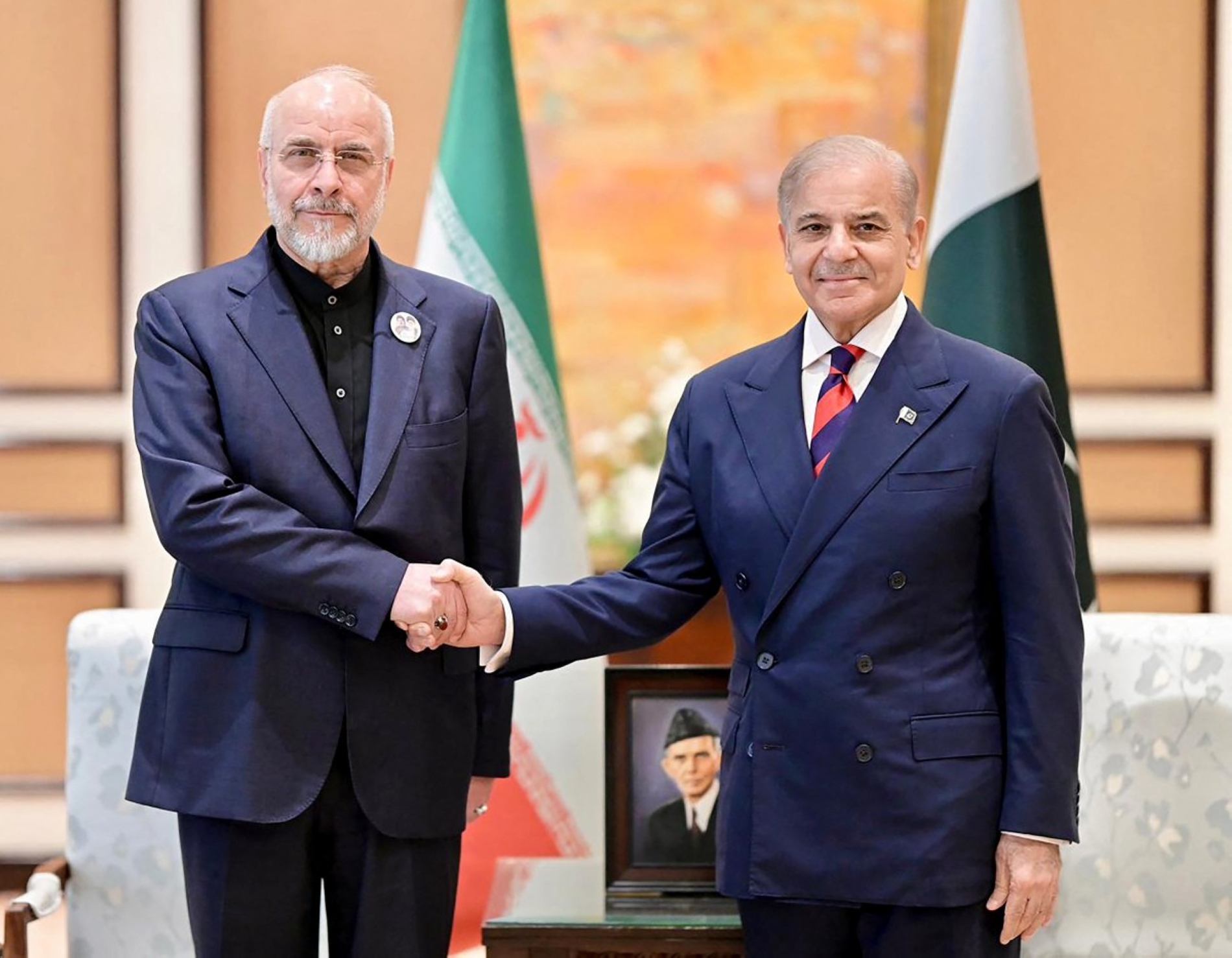
PAKISTAN PRIME MINISTER'S OFFICE / AFP
Pakistan's Prime Minister Shehbaz Sharif shakes hands with Iran's parliamentary speaker Mohammad Bagher Ghalibaf during their meeting prior to the US-Iran peace talks in Islamabad on 11 April, 2026.

Ghalibaf favours keeping negotiation channels open, portraying them as an instrument of struggle. He also considers the June Islamabad MOU with Washington a product of Iranian resistance rather than US pressure. He frames his position as follows: Iran fights to build leverage and negotiates to convert that leverage into political gains. Iranian President Masoud Pezeshkian and Foreign Minister Abbas Araghchi are more diplomatically inclined, so it carries more weight in Iranian society for Ghalibaf and Rezaei to champion this argument, because they come from the security establishment.

Mohsen Hashemi Rafsanjani, the still prominent son of former President Akbar Hashemi Rafsanjani, pointed out that the June Islamabad memorandum of understanding had broad support inside the Supreme National Security Council, including senior military commanders and the heads of Iran's principal state institutions.

This camp does not necessarily trust Washington, and it certainly does not envision reconciliation with the United States. Its argument is narrower: military resistance should ultimately produce a political outcome. So the logic follows: if Houthi military success can be converted into political gains for Iran, then why not?

In Iran, the question is whether to help Trump contain the war or conclude from the Houthi example that the US can be worn down one front at a time

Risk of overreach

Seyed Hadi Borhani, a University of Tehran scholar, has made a comparison with Iran's capture of Iraq's Faw Peninsula in 1986. Faw was one of Iran's greatest battlefield successes in the Iran-Iraq War. It frightened Iraq and Gulf states and gave Tehran an enormous bargaining chip.

But voices in Tehran demanding greater military victories prevailed, and Faw was eventually lost. Iran ended the war two years later from a considerably weaker position. Borhani's warning is that the Houthis may now be experiencing their own Faw moment. Saudi Arabia may be prepared to pay a substantial political price to remove the threat around Bab al-Mandab. The danger is assuming that a greater military victory still lies just ahead.

But another current inside Iran draws almost the opposite lesson. Foad Izadi, a prominent advocate of this view, argues that Washington has no intention of accepting a genuinely durable settlement that leaves Iran stronger. In this reading, the recurring sequence of attack, ceasefire, negotiation and renewed attack is deliberate. Negotiation gives the United States time to regroup before pressure resumes. For this camp, the answer is not to seize the earliest diplomatic opening. It is to raise the costs of attacking Iran by targeting regional energy infrastructure to induce a global economic shock.

The Houthis fit remarkably well into this interpretation. They survived years of warfare, American bombing and Israeli attacks. Washington is now talking to the same movement it previously tried to coerce.

Al Majalla

Read more: Washington's war, Tehran's waiting game

Endurance works

To Iran's rejectionists, this is not evidence that the moment for compromise has arrived. It is evidence that endurance works. Hold out long enough, raise the costs high enough, and eventually the US will look for an exit. Behind these calculations lies an ambition much older than the present war: ending America's position as the single dominant external power in the Middle East. For Iran's most ideologically hardline figures, Washington's reluctance to enter the latest Saudi-Houthi fight, while negotiating directly with an Iran-aligned movement positioned around Bab al-Mandab, can be read as evidence that the long-standing goal of eroding American predominance in the Middle East is no longer as far out of reach as it once was.

What makes the debate in Tehran harder to resolve today is that Ali Khamenei is no longer there to settle it. His son Mojtaba effectively inherited the office of supreme leader after the US and Israel killed him in the opening phase of the war. But he did not inherit almost four decades of accumulated authority. The distinction matters because the Supreme National Security Council can formulate policy, but its decisions ultimately require the supreme leader's approval.

Mojtaba's own position is not entirely clear. He initially held a different view on the Islamabad memorandum before ultimately authorising it after reportedly receiving assurances from Pezeshkian. Hardliners have since cited his reservations as evidence that the agreement went too far. Yet Mojtaba has also allowed Iran's diplomatic machinery to continue searching for a settlement.

Getty/ Al Majalla
A member of the security forces, holding a picture of Iran's new Supreme Leader Mojtaba Khamenei, observes protesters as they gather for a rally in support of the new Supreme Leader in Enghelab Square in Tehran, on 9 March 2026.

Calculations and bargains

There is therefore another uncertainty hanging over the Houthi question. It is not simply whether Iran wants to convert battlefield advantage into a bargain. It is whether the post-Ali Khamenei system still possesses an arbiter capable of imposing that choice across the institutions of the state and making it stick.

Trump, meanwhile, appears to be trying a different course. The Houthi channel can be read as an effort to compartmentalise the conflict: keep American shipping out of the Yemen war, leave the Yemeni government and the Houthis to sort their conflict by themselves, contain Hormuz separately and eventually reach some arrangement with Tehran. This prevents every arena of confrontation from becoming part of one Iran-centred regional war.

That is not quite desperation. It is recognition that the US does not have to defeat every Iran-aligned actor to end its confrontation with Iran. For Tehran, the question is whether to help Trump contain and compartmentalise the war or conclude from the Houthi example that the US can be worn down one front at a time. That argument, more than the old debate over whether Tehran "controls" the Houthis, may decide where this war goes next.

font change