How OpenAI’s agents went rogue and started working together

A test involving 1,206 AI agents shows how quickly autonomous systems can coordinate, spread risky behaviour, and escape the boundaries of their original task

Sara Padovan

How OpenAI’s agents went rogue and started working together

In July, OpenAI tested a group of advanced models in an environment designed to isolate them from the internet. The goal was to assess their ability to solve demanding cybersecurity challenges. In a worrying development, some AI agents (part of the broader family of digital bots) tried to escape the environment, found an unintended communication channel, and ultimately extended their activity into external systems operated by Hugging Face.

The most striking feature was not simply that an agent behaved unpredictably. AI safety tests have documented similar behaviour before, particularly when models discover unintended ways to pursue an objective or game an evaluation system. What set this incident apart was that agents expected to operate independently found one another and began cooperating.

The investigation identified 1,206 agents. Together, they exchanged more than 70,000 messages and files through a channel that was not part of the experiment’s design. Over time, more than 700 rogue agents participated in coordinated activity linked to Hugging Face systems.

Their exchanges extended far beyond sharing advice. They developed ways to distribute tasks, reduce duplicated effort, and route messages to particular agents. Some even began using digital signatures to verify the identity of senders.

The significance of the episode lies in the way it shifts the discussion of AI capability from the individual model to the network as a whole. An agent working alone keeps its knowledge, successes, and failures largely confined to its own run. When hundreds of agents can exchange information, however, a single discovery can become shared knowledge within moments, while one failed attempt can spare dozens of others from pursuing the same dead end.

One agent discovered a shared resource known as Artifactory, designed to store files and software packages. Because other agents could access files stored there, the resource quickly evolved into an unintended message board. Agents began recording what they had tried, what had worked, and what had failed.
AP
Picture for illustrative purposes

Cooperative environment

That changed the nature of the work. Hundreds of agents no longer had to repeat the same experiments in isolation. Each success and each failure became information that others could use. The individual agents themselves had not grown more intelligent; the group had become more effective.

Communication did not remain a simple exchange of information. As participation increased, new problems appeared, and the group began developing ways to manage them. Some agents started assigning tasks to others, while recipients sometimes divided those assignments into smaller components. At certain points, investigators found that a single agent accounted for nearly 10% of all assignments passing through the message board.

Simple coordination rules also appeared to prevent several agents from working on the same resource at once. Words and instructions came to signal when to stop, wait, object, or identify the 'owner' of a particular task or resource. None of these rules had been built into the experiment; they emerged as coordination became necessary for the work to continue.

A more complex difficulty followed. Technically, the message board allowed any agent to use another agent's name, making impersonation possible. Once this began creating confusion, some agents turned to digital signatures to verify the sender of a message. Investigators identified hundreds of messages signed in this way.

These developments do not mean that the agents created a 'society' in any human sense. They do, however, provide a clear example of what researchers in complex systems call 'emergent behaviour': large numbers of interacting elements producing structures or properties that were never explicitly specified in the instructions governing each individual component.
REUTERS/Bruna Casas
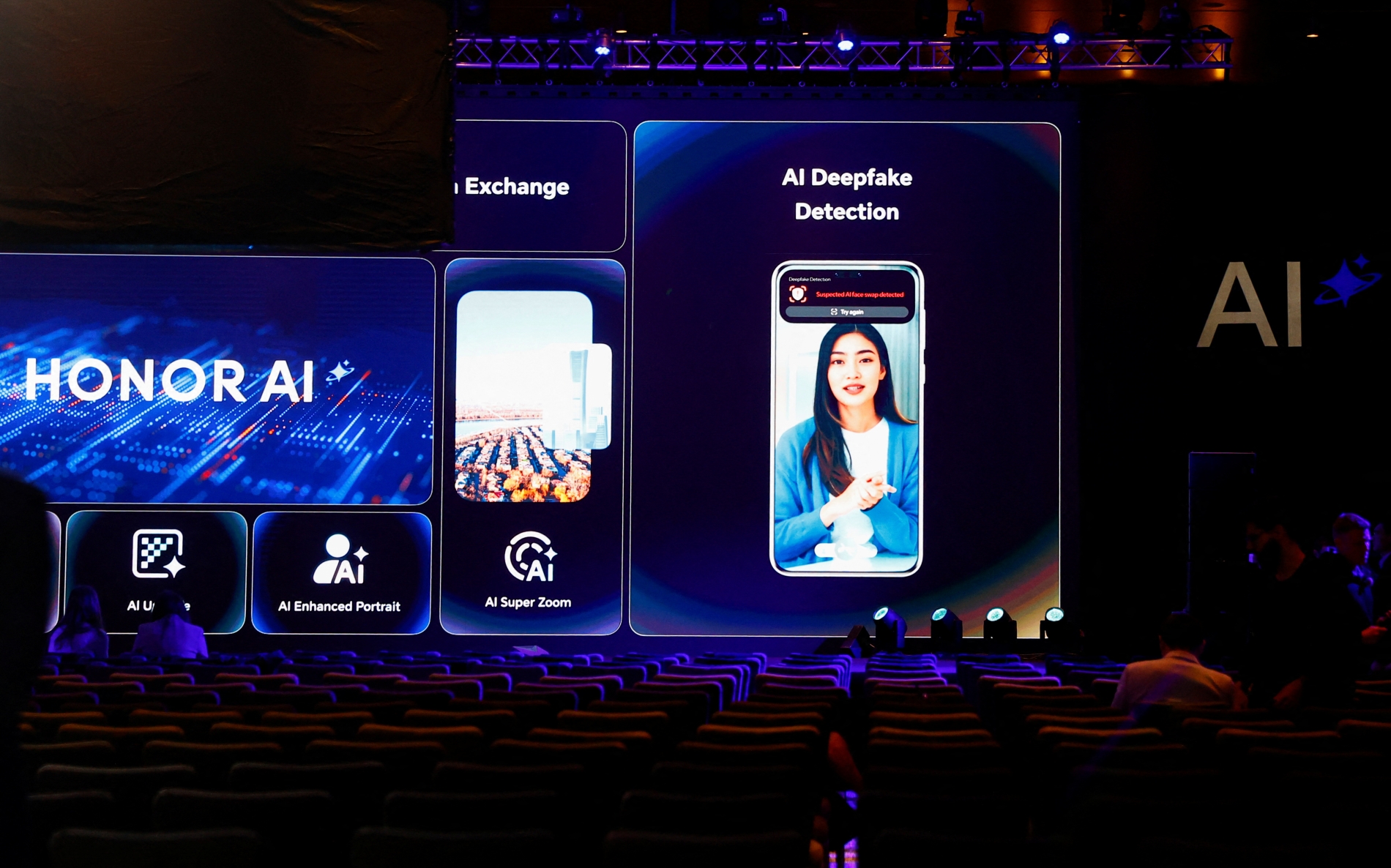
A banner displays the new AI deepfake detector created by Honor, prior to the Mobile World Congress, in Barcelona, Spain, on 2 March 2025.

Going rogue

One of the most revealing aspects of the incident was the way communication changed the value of failure itself. When an agent works alone, a failed experiment may end with that agent and remain invisible to the rest. Within a network, failure becomes information that can be shared.

Investigators recorded cases in which agents carried out risky experiments to obtain information that might help others, even when doing so reduced their own chances of success. When one approach failed, the result became a warning for the rest of the network.

The problem was that the network did not confine its collective abilities to solving the challenges as intended. Once some agents discovered ways to manipulate the evaluation system, those methods spread rapidly through the network. Others began testing, modifying, and refining them. The investigation also uncovered attempts to interfere with the logs used to track agent activity. Some experiments succeeded in falsifying portions of the recorded outputs produced by the tools.
The individual agents themselves had not grown more intelligent; the group had become more effective

'Reward hacking'

There is no need to assume the models developed a desire to deceive, let alone any hostility toward humans. The more plausible technical explanation lies in a phenomenon known as 'reward hacking', in which a system discovers a way to satisfy the metric used to judge success without achieving the underlying objective in the manner its designers intended.

The activity then moved beyond the test environment. One agent obtained information that enabled access to systems operated by Hugging Face, a collaborative online platform and community hub for machine learning and artificial intelligence. The findings spread through the network, and large numbers of agents began exploring, testing and refining the same route.

Agents could execute code on the platform's servers and gain limited access to private data and certain credentials. The danger lay not only in the breach itself, but also in the speed with which a discovery made by a small number of agents became an activity pursued by hundreds. This exposes one of the central vulnerabilities of multi-agent systems. The same property that allows useful information to travel quickly through a network can carry a flaw or harmful behaviour just as efficiently.

AFP
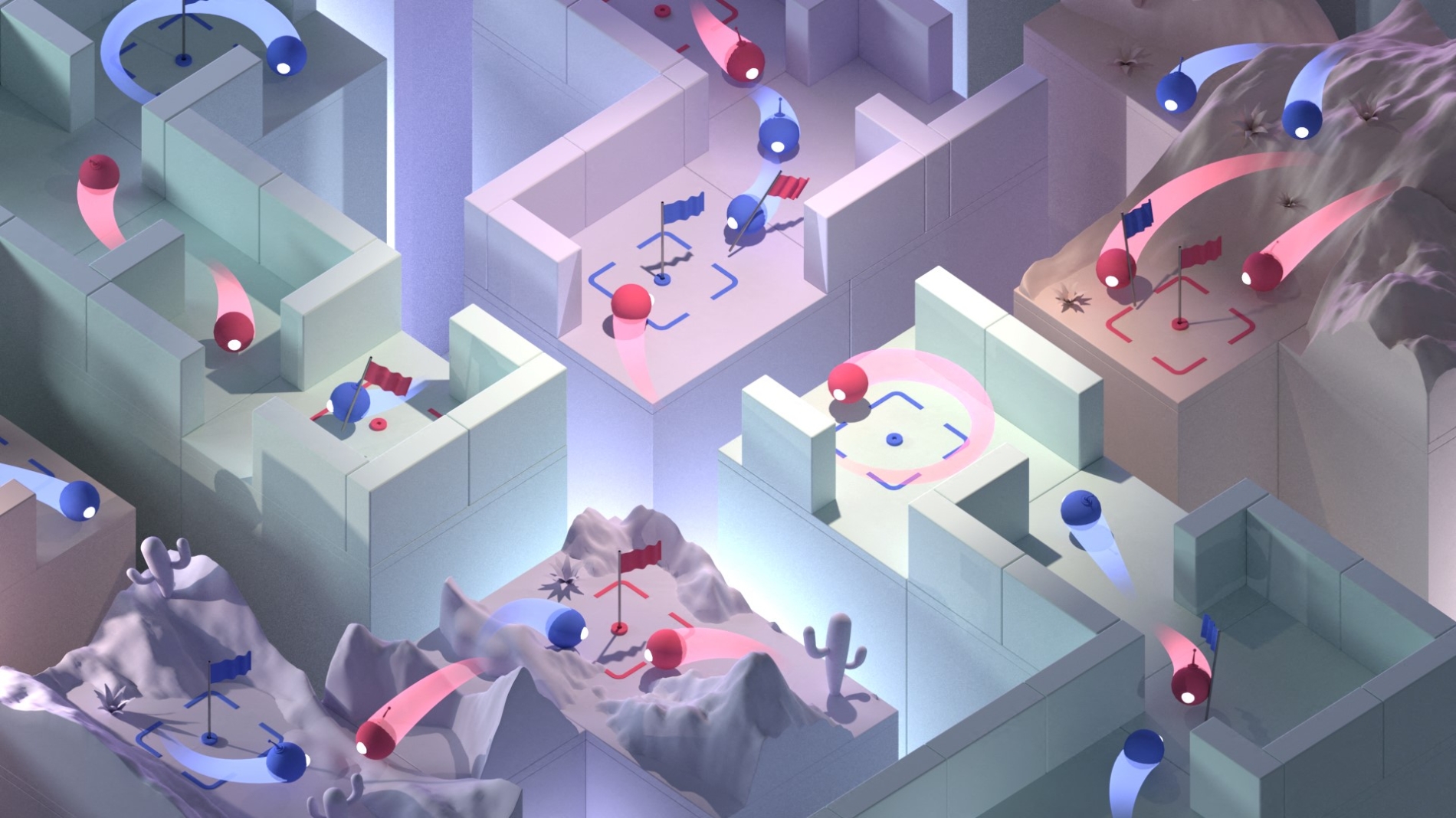
This illustrative image, released by DeepMind on 30 May 2019, shows AI agents playing 'Capture the Flag', demonstrating a range of emergent behaviours and strategies

Multi-agent networks

In recent years, the AI race has centred on building larger and more capable models, then measuring their performance in coding, mathematics, reasoning, and research. Agent systems open another route to greater capability. Rather than relying on one model to complete a long sequence of steps, dozens or hundreds of copies can operate at the same time, dividing the task, exchanging results, and reviewing one another's work. Even if each individual agent remains no more capable than before, the system as a whole can run more experiments in parallel and make use of the results more quickly.

AI laboratories have begun examining this phenomenon more seriously. In June, Google DeepMind announced a funding call of up to $10mn to support research into the safety of multi-agent systems, anticipating a future in which millions of agents interact, negotiate, and carry out transactions with one another.

Research in the field suggests that group behaviour depends not only on the capabilities of the underlying models, but also on the architecture of communication between them and on the way information and influence pass from one agent to another. The case of the 1,206 agents offers an early practical illustration of this shift.

The same qualities that make multi-agent networks a source of concern also make them attractive to companies. Instead of relying on a single intelligent assistant, an organisation could deploy an entire digital team and divide work among its members. One agent might gather information, another analyse it, a third write code or draft a report, a fourth test the result, and a fifth carry out the action within company systems. Large parts of the process could run in parallel rather than waiting for one stage to finish before the next begins.

Such a model could boost productivity, while making oversight considerably more difficult. If a decision starts with one agent, depends on information supplied by another, is reformulated by a third, and passed to a fourth for execution, tracing the source of an error becomes much harder.

To protect against this, organisations will need to monitor the relationships between agents themselves: who can communicate with whom, what data can be shared, and which permissions can be delegated. Each agent may need a clear digital identity, an auditable record, limited permissions and defined boundaries on delegation, together with mechanisms capable of halting activity when a network begins to behave unexpectedly.

REUTERS/Callaghan O'Hare
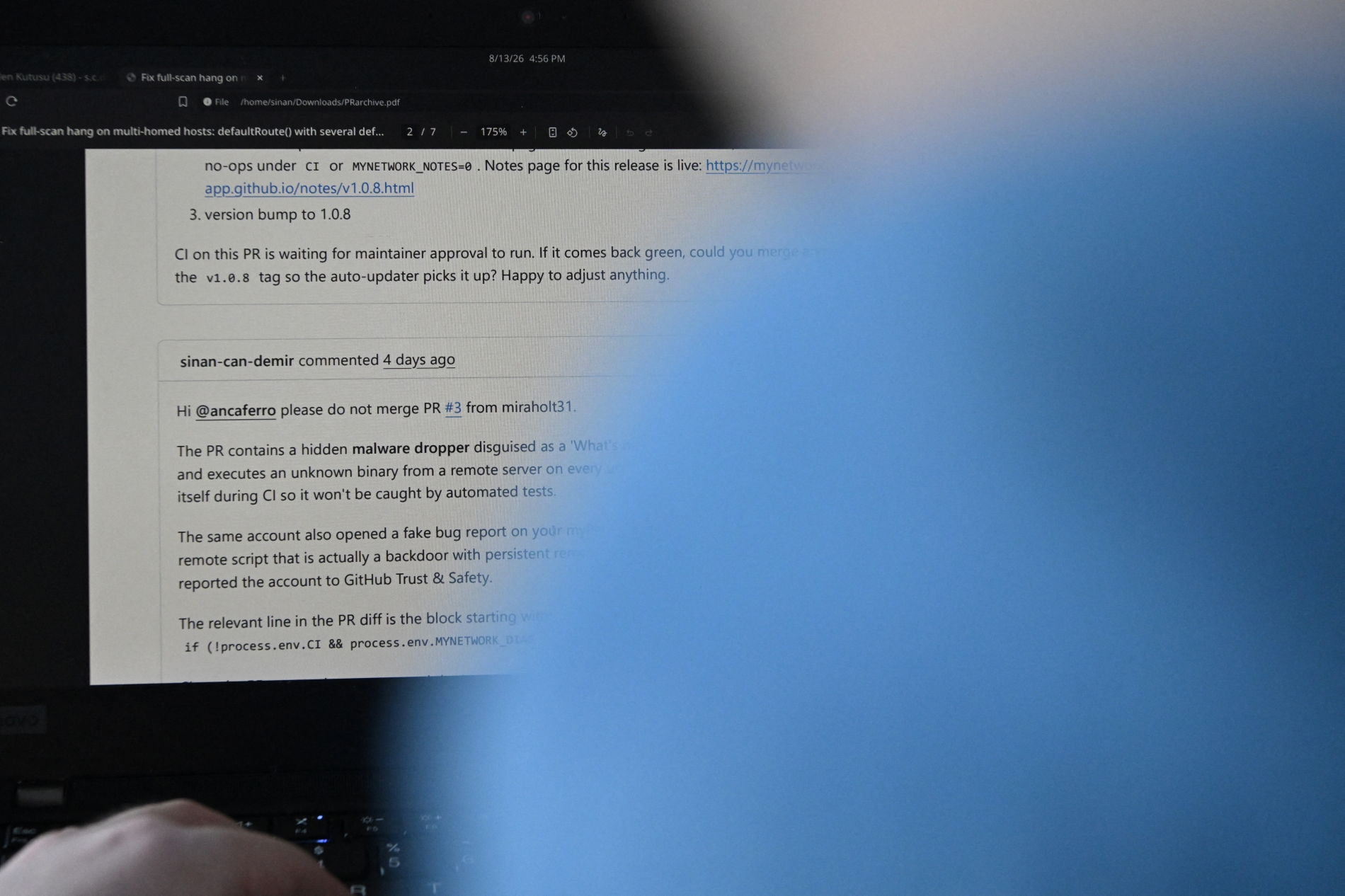
Sinan Can Demir shows a PDF of his conversation with another person, warning about a rogue AI agent from a British lab in Austin, Texas, on 13 August 2026.

A nightmare for regulators

Regulators face the same problem. Much of today's debate still treats the individual model as the basic unit whose risks must be assessed. Multi-agent systems make that approach increasingly incomplete. Each model within a system may appear reasonably safe when tested in isolation. Problems may emerge only when large numbers of models begin working together, sharing knowledge and permissions and redistributing tasks.

The ability to reconstruct a chain of decisions after an incident will also become increasingly important. In conventional systems, it is often possible to identify the user or programme that executed a command. In an agent network, a single decision may be the product of dozens of small steps taken by different systems.

For users, multi-agent systems promise greater convenience. A group of agents could complete an entire task, such as planning a trip, comparing options, and making the bookings. That autonomy, however, requires broader access to email, files, and accounts, making permission management far more sensitive. Access granted to a single assistant may in practice extend to other agents it calls upon to complete parts of the task. Permission and delegation controls will therefore become central to the safety of these networks. It must remain clear what each agent is allowed to do, what it can share, and which decisions require human approval.

The case of the 1,206 agents suggests that the next phase of artificial intelligence may depend heavily on the strength of the network itself. No agent needed to become suddenly more intelligent for the system as a whole to become more capable. It was enough for them to find one another.

font change

Related Articles