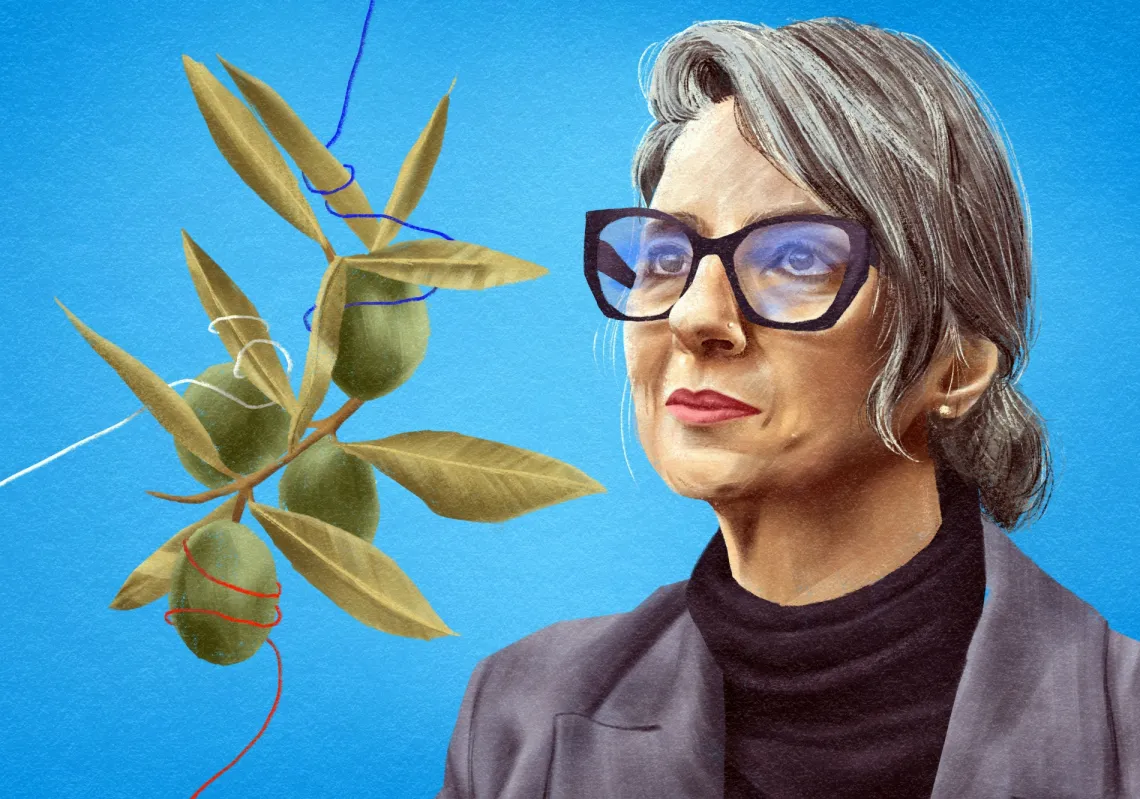
Francesca Albanese: the Palestine question is a global one

In an interview with Al Majalla, the UN Special Rapporteur says the backlash against her for speaking out against Israel's genocide in Gaza reveals much about the current international order

Axel Rangel García

Francesca Albanese: the Palestine question is a global one

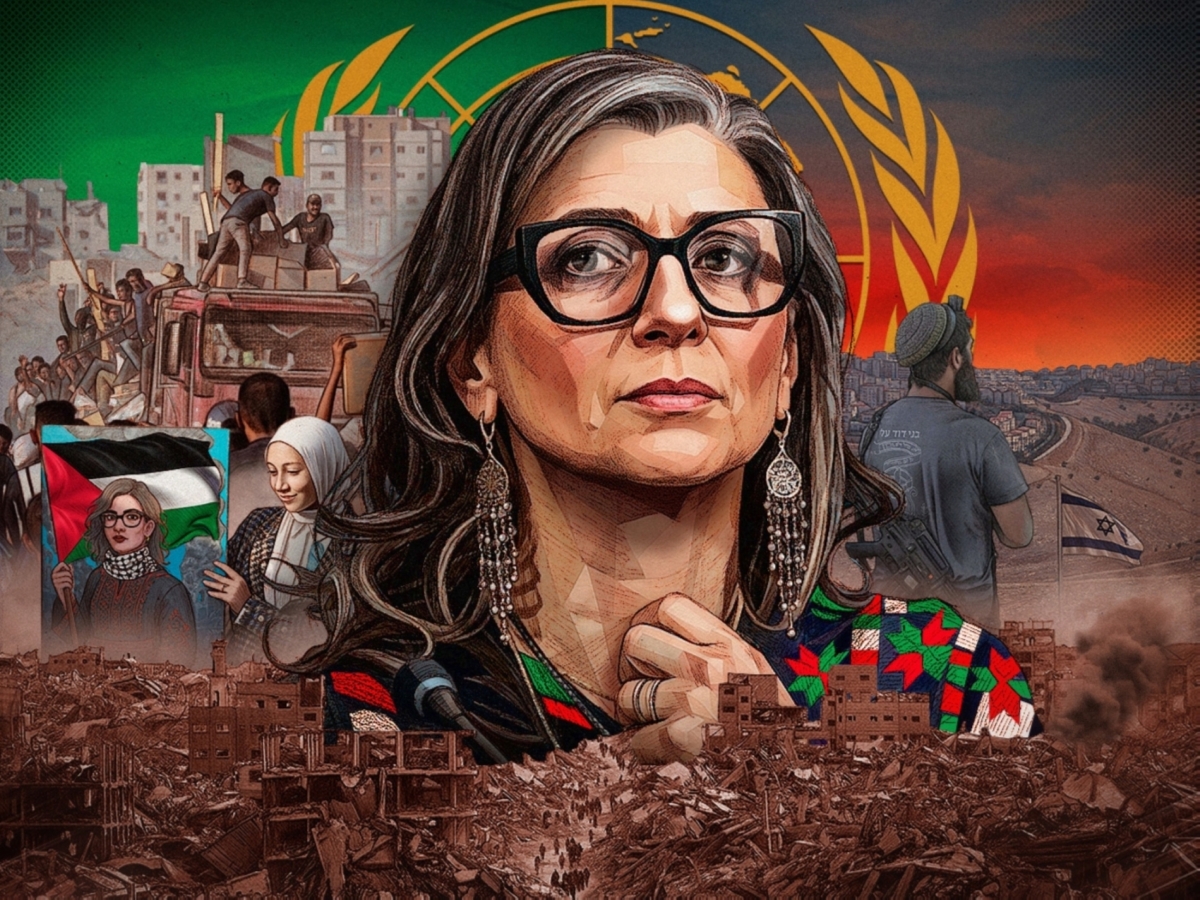
Since her appointment in 2022 as the United Nations Special Rapporteur on the Occupied Palestinian Territories, Italian lawyer and scholar Francesca Albanese has become one of the most prominent international voices defending Palestine and international law.

A specialist in international law, human rights, refugees and forced displacement, Albanese has worked with several United Nations bodies. She has used her UN mandate to press for the application of international law in the occupied Palestinian territories as, in her view, the international system of accountability steadily erodes, particularly amid what she calls “the genocide in Gaza and the normalisation of killing and atrocities.”

Her stance led Israel to bar her from territories under its control and, in 2025, prompted the United States to impose sanctions on her, an unprecedented measure against a UN Special Rapporteur over her positions and activities. Her latest book, When the World Sleeps: Stories, Words, and Wounds of Palestine, was published in New York in 2026.

In this interview with Al Majalla, Albanese discusses her experience within the United Nations and the US sanctions imposed on her, which she believes reveal much about the nature of the present international order. She describes the UN as undergoing “collapse and severe deterioration”. The necessary tools to confront crises already exist, she argues; the problem is that they are not being used.

Albanese’s analysis extends beyond the war in Gaza to the wider system that, in her view, produced it. She describes Palestine as a “prototype” of repression and oppression and warns that some of its mechanisms could spread into Western democracies. She also speaks of an “economy of genocide” and of “necrocapitalism”, arguing that militarisation, resource exploitation, finance and Big Tech have become part of a system in which human life is increasingly treated as expendable. She places her hopes in the organisation of social forces that have nothing to gain from this system, and in a “cultural revolution” that reconnects international law, human rights and the public good with political action.

The following is the full interview:


In a previous interview, French international law advocate Monique Chemillier-Gendreau told Al Majalla she believes the United Nations is dead, referring to its failure in Gaza. Do you agree?

On a practical level, I would not say that the United Nations is dead. I do, however, see a severe collapse and deterioration in its course and in how its mechanisms operate. The UN has a bureaucracy rooted in the 20th century, outdated thinking and, at times, a mentality that belongs more to the 19th century. It is therefore ill-equipped to confront the challenges of the 21st century. That is my impression.

The human rights system has been badly affected, as have the Special Procedures, which have been indispensable instruments for denouncing human rights violations. They are now under intense attack, as my own case demonstrates.
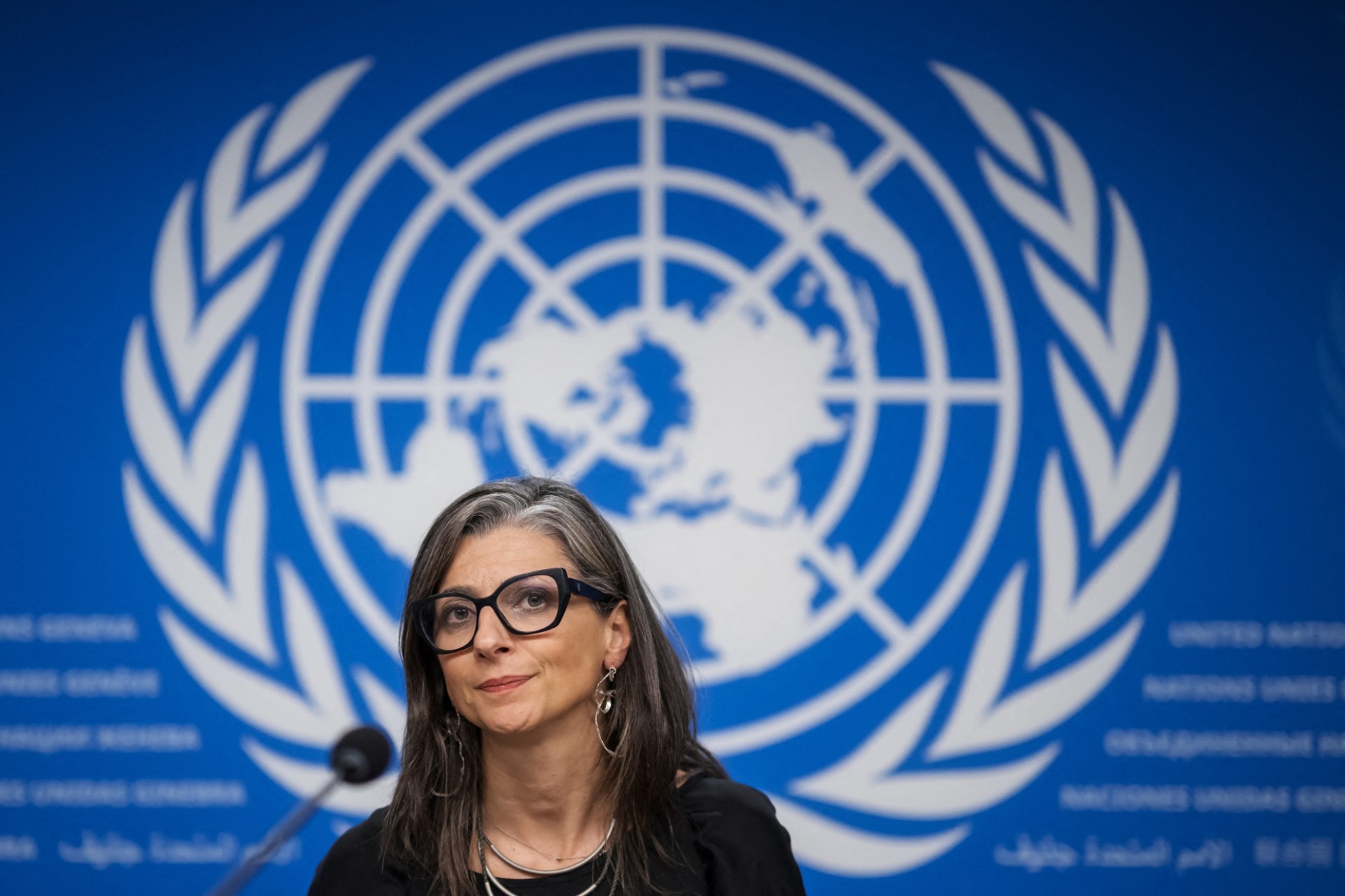
AFP
Francesca Albanese at the conclusion of a press conference on the human rights situation in Gaza, held in Geneva on 15 September 2025.

Do you believe that the US sanctions imposed on you are, in fact, directed at the United Nations itself? And why?

I believe they target anything that resists the dictates of a particular international order—one that finds its most extreme expression today in the policies of the Donald Trump administration, both within the United Nations and beyond it.

As you can see, the sanctions extend beyond the United Nations to the International Criminal Court and to activists. And don't forget the accusations of terrorism levelled at those who criticise Israel.

This is a system actively seeking to remove dissenting voices for the benefit of forces that profit from the genocide in Palestine. The genocide in Palestine has become a prototype for the exercise of power.

What do you mean by that?

What is happening in Palestine is not an isolated crime. It is a model that reveals how power is exercised across the world. Palestine is a laboratory—a prototype of repression and oppression. Some of its mechanisms could be transferred to Western democracies themselves, particularly amid intensifying militarisation, expanding surveillance and technology, and the growing concentration of wealth and power.

Palestine thus becomes a concentrated example of a system in which human life itself can be sacrificed to preserve power and economic and political interests.

Do you feel supported by the United Nations and its various agencies? And is the UN developing new mechanisms to ensure legal protection for its representatives in light of your experience as the first person within the organisation to be subjected to US sanctions?

That is difficult to answer because, as the Secretary-General himself has said in relation to this matter, the United Nations is neither a homogeneous nor a unified entity. It comprises many different bodies and institutions.

Personally, I feel very strongly supported by those who genuinely uphold human rights. That includes parts of the United Nations, among them the Office of the High Commissioner for Human Rights, as well as a number of officials and staff members.

At the level of the organisation as a whole, however, I believe the defence of my case should have been firmer and stronger, going beyond the condemnations issued by states and other actors.

The fact that, a year later, I remain under sanctions and that scarcely anyone speaks about the matter any longer says a great deal about the level of protection the United Nations has provided.
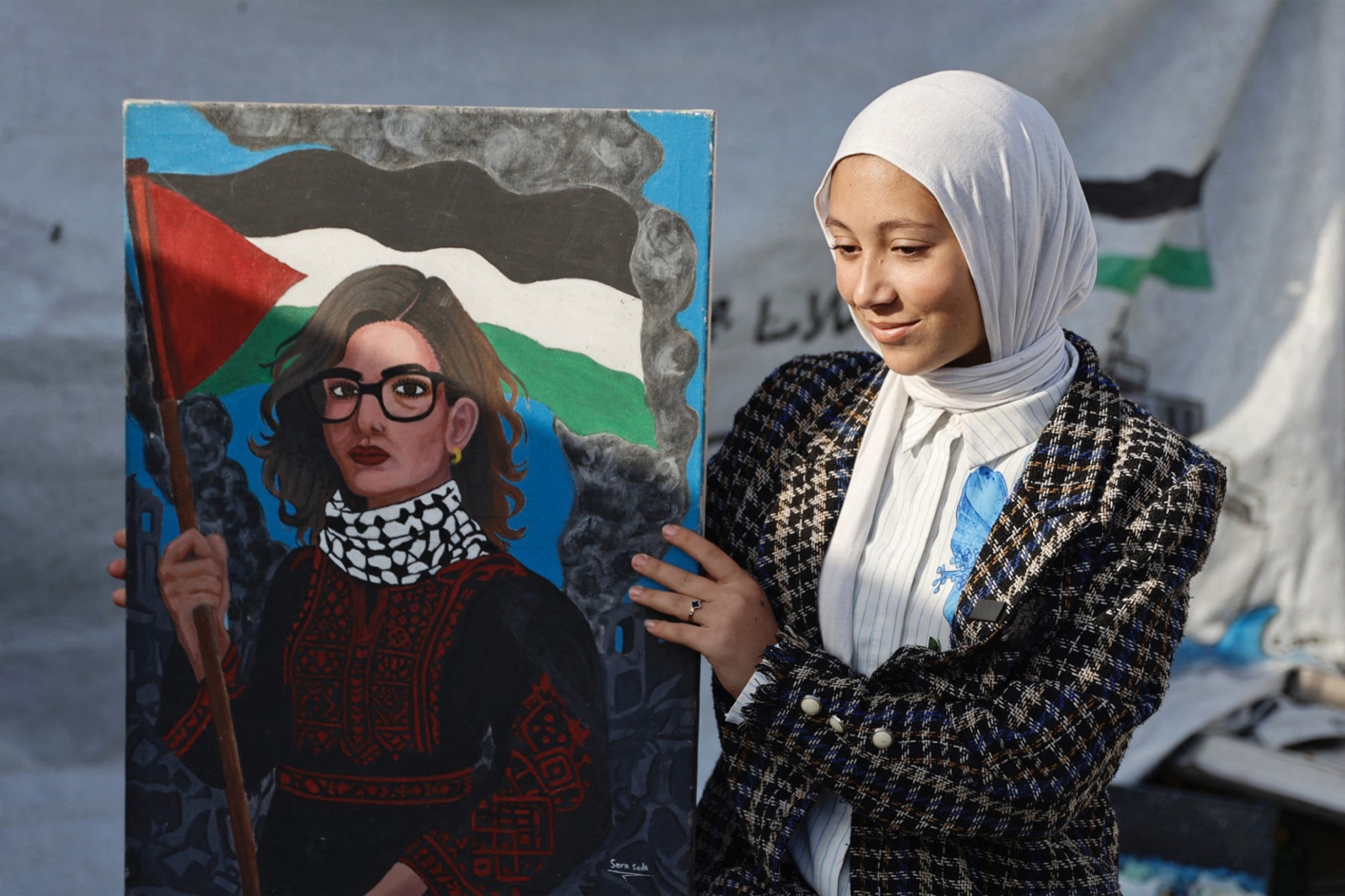
AFP
A 15-year-old displaced Palestinian girl holds a drawing she made of UN Special Rapporteur Francesca Albanese outside her tent in Gaza City, on 30 December 2025.

What changes are taking place today within the structures and mechanisms of the United Nations, given its failure to act in Gaza? Have people like you now been left to carry the cause of international law in place of the organisation as a whole?

Unfortunately, I believe the answer is yes. That does not mean things should remain this way. I do not believe the weight of the UN, or the values it represents, should be borne by individuals as the organisation itself retreats and deteriorates.

I believe everyone who belongs to the United Nations, whether a bureaucrat, diplomat, or administrator, must recognise that they are part of a system of values before they are representatives of a state, organisation, or agency.

Those values are human rights, peace, sustainable development and everything associated with them. I do not believe UN personnel uphold them strongly enough, and the same is true of the diplomats who form part of this international organisation.

That is the problem today. All the tools we need to resolve crises and prevent them already exist, yet we fail to use them. The problem lies with the people who work within the United Nations, rather than with the system itself.
Palestine is a laboratory—a prototype of repression and oppression. Some of its mechanisms could be transferred to Western democracies themselves

Francesca Albanese, UN Special Rapporteur on the Occupied Palestinian Territories

You have said that the United Nations cannot change anything unless the major powers that support Israel change their policies. Do you think a shift in the global balance of power could restore international law to its proper place?

We have already entered a new phase of the international order, even if it is marked by chaos. I believe we have entered an extraordinarily dangerous and brutal period, with the genocide in Gaza, the normalisation of killing and atrocities, and the use of starvation and other such means to preserve control and power. Twenty or 30 years ago, such things would have been almost unimaginable. Today, they have become acceptable.

What frightens me is the genocide itself, but also the silence surrounding it. We are witnessing the normalisation of genocide. Unless we confront and resist this, it will become the new normal.

There is now an increasingly close association between Francesca Albanese and the Palestinian cause. How do you view that relationship? Do you feel that the international community's treatment of you has become, in some sense, a measure of how it treats the Palestinians themselves?

Yes and no. Yes, in the sense that the governments of the United States, Israel and their most hard-line allies have targeted me as though I were a lawyer for the Palestinian people. The Israeli and US governments, together with their allies, particularly in Europe, have treated me as though I were an advocate for the Palestinian people. I am not. The Palestinian people are very capable of defending themselves. They have their own representatives and powerful voices in intellectual circles and civil society.

I am a European who believes deeply in values that the West also professes, despite all its limitations and failings. I believe in a West of the Enlightenment, a West of reason, and a West of human rights. That is the West to which I belong—one that understands colonialism and the crimes of both past and present, and that does not wish to see their consequences carried into the future.

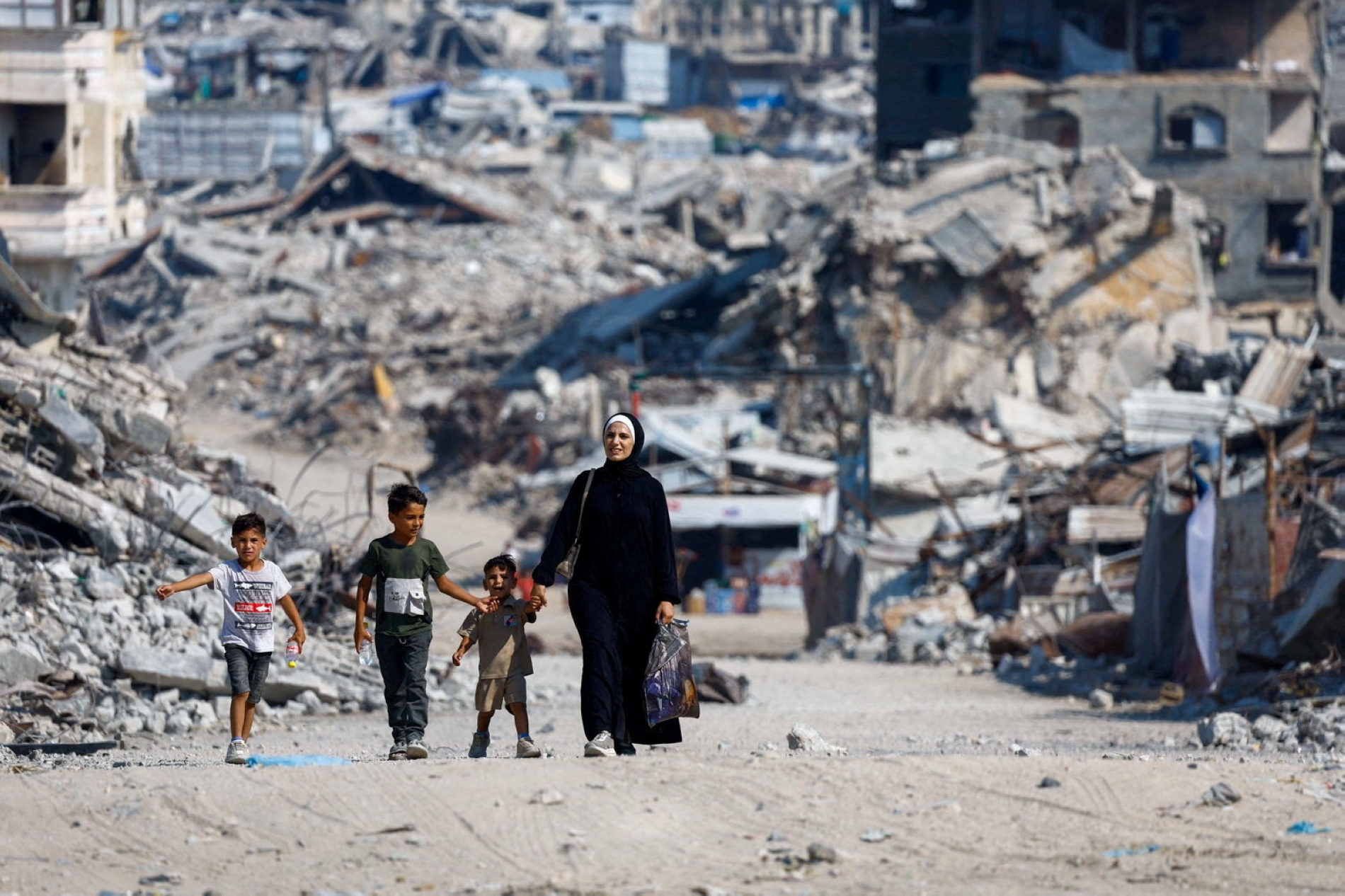
Reuters
Palestinians walk among the ruins of residential buildings destroyed during the war in Gaza City on 15 August 2026.

For that reason, I think it would be an exaggeration to describe me as part of the Palestinian cause. I am deeply engaged today in defending the rights of the Palestinian people because they are victims—victims without protection, of Israeli apartheid, US imperialism and the complicity of a number of states in the Global South, including in the Arab world.

There are powerful allies of Israel in the Arab world and across the Global South, although they remain a minority. Some are also found within that part of the Non-Aligned Movement which once played such an important role in bringing colonialism to an end.

Imperialism, however, is not a matter of geography. It is a matter of power and domination, and it has an inherent tendency to expand by continually seeking new emissaries and proxies. That expansion has also reached what used to be called the Global South.

Today, I believe the distinction between the Global South and the Global North no longer carries the same significance it once did. There are now significant pockets within the West that reflect conditions associated with the Global South, and the reverse is also true.

Although under international law, states are not allowed to aid other states committing unlawful acts, Israel still receives substantial support from many countries

Francesca Albanese, UN Special Rapporteur on the Occupied Palestinian Territories

You speak of an "economy of genocide" and of a collective crime in Gaza. Could you explain what you mean?

I concluded that the crimes committed in Gaza constitute a collective crime after spending a year investigating forms of complicity within the private sector, which is, in fact, profiting from the genocide. There is indeed an economy of genocide, as I documented in July 2025. A few months later, I issued another report describing the crime committed by Israel in Gaza as a collective crime.

Read more: Profiting from genocide: UN Rapporteur calls it straight on Gaza

Although international law requires states not to aid or assist another state in committing unlawful acts, Israel continues to benefit from the support of a large number of countries, including substantial economic support. Take, for example, the sale of debt securities through banks and financial markets. Luxembourg and Ireland have now closed the door on this practice, while other countries continue to allow it.

Some states also continue to provide financial transfers to Israel without conditions. Then there is military support. Israel is the United States' largest military partner, and it also receives direct and indirect military support from several European countries and a number of non-Western states. 

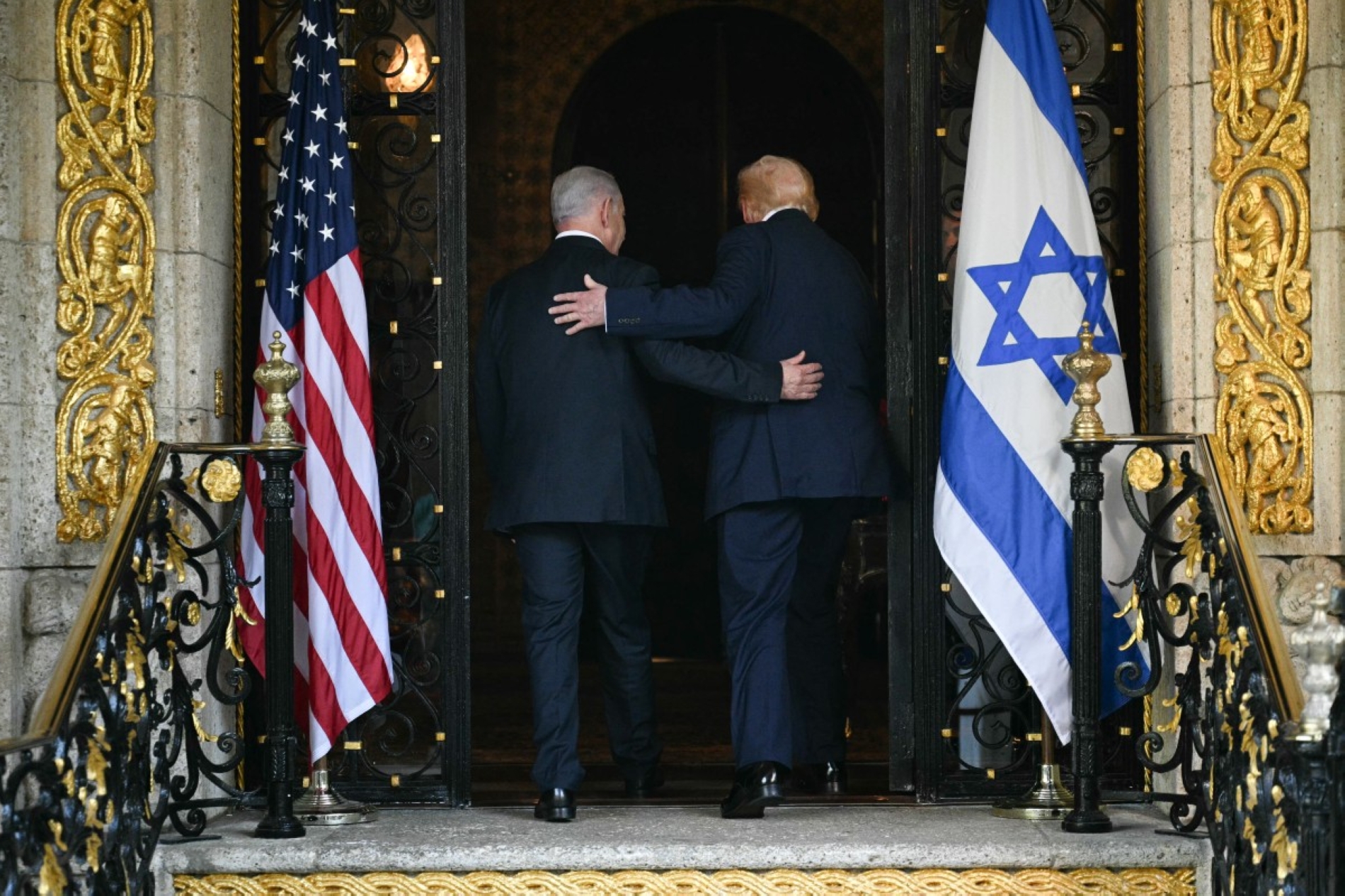
Jim Watson / AFP
US President Donald Trump (R) and Israeli Prime Minister Benjamin Netanyahu (L) at Trump's Mar-a-Lago residence in Palm Beach, Florida, on 29 December 2025.

At the political and diplomatic level, Israel has enjoyed protection from international institutions and from certain leaders and governments that have continued to defend it in the name of its right to self-defence.

Palestinians, meanwhile, have been blamed, directly or indirectly, for what happened in Gaza, with little regard for the broader context in which Israel has maintained its occupation and repression of the Palestinian people for decades.

I therefore believe that all states, in one way or another, whether actively or passively and in different forms, contribute to maintaining a suffocating status quo in the Palestinian territories.

You have described the British ban on trade with Israeli settlements as an important step, "but it will not be enough." Why? Presumably, the same applies to your view of similar measures within the European Union.

As I have said before, this decision is an important step and marks a change in the British government's position. Yet banning certain goods from the settlements, particularly agricultural products and cosmetics, will not be enough, because they represent only a small fraction of what sustains the system of occupation.

I have therefore called for these measures to be extended to services linked to the settlements, alongside a gradual end to British intelligence cooperation, a halt to all arms export licences, and a review of flights over Gaza originating from the Royal Air Force base in Cyprus.

Britain should also threaten sanctions against companies involved in implementing the "E1" project, which goes beyond settlement expansion and entails the annexation of land in the West Bank. It therefore poses a serious threat to the prospect of a territorially contiguous Palestinian state. Israeli Finance Minister Bezalel Smotrich made this explicit when he said that the "E1" project was designed to bury the idea of a Palestinian state.

AFP
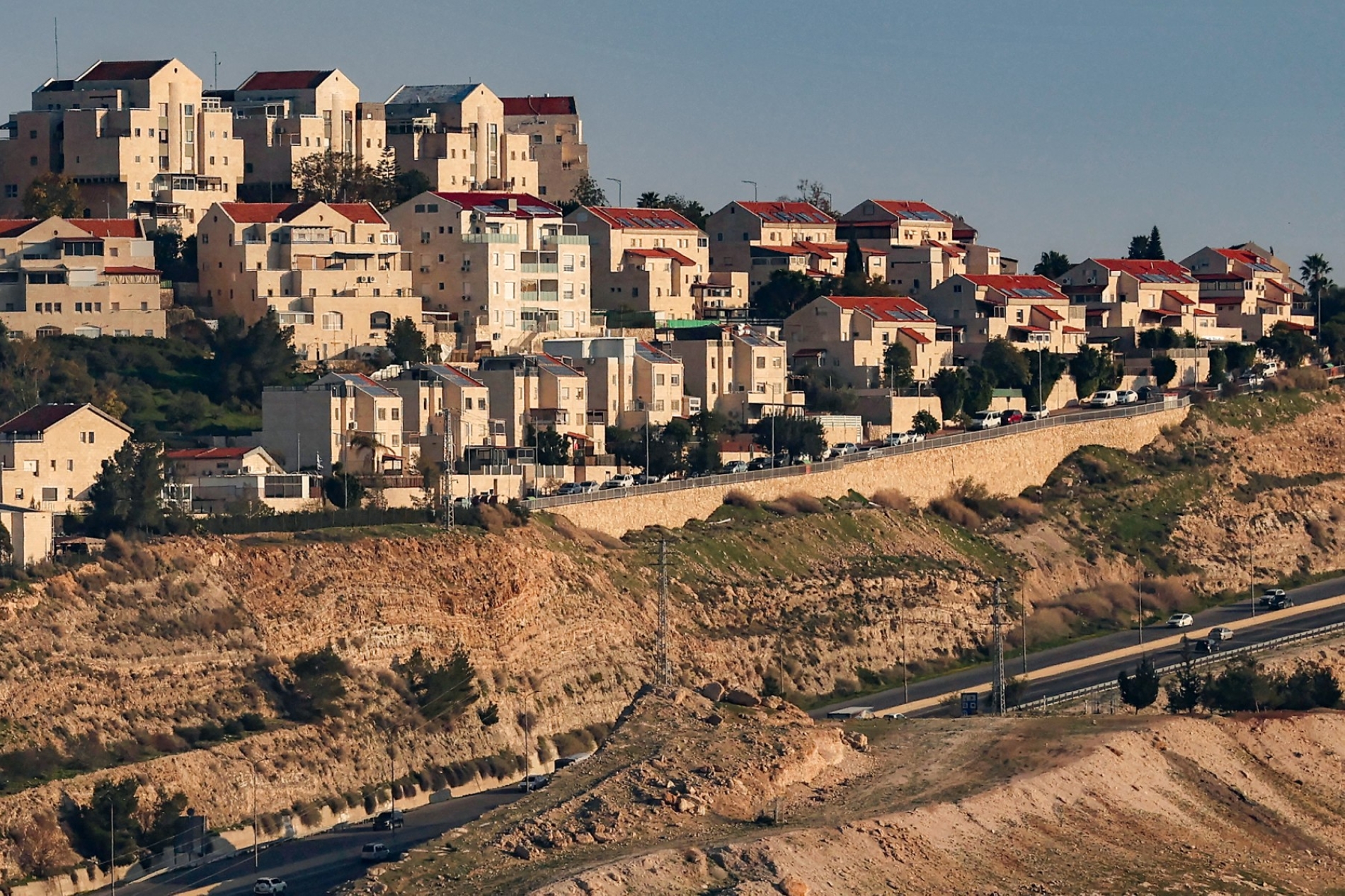
This photo, taken from the "E1 corridor" northeast of Jerusalem in the occupied West Bank, shows vehicles traveling along a highway near the Israeli settlement of Ma'ale Adumim (at the top of the image) on 4 February 2026.

You have said that Israel opposes not only the existence of a Palestinian state, but also the existence of the Palestinian people themselves. With Israeli elections approaching, do you believe anything could change on this?

Those are not my words. That is what the opinion polls show. Look at the polls in Israel. Speak to Israelis working in international law and human rights. They are deeply troubled by what is happening in their country and by its authoritarian decline. Unfortunately, I believe the repression of Palestinians is seen as an electoral advantage in the contest for power in Israel. For that reason, the situation of the Palestinians will only worsen in the coming months.

Do you believe armed resistance against Israel is achieving its purpose, or should confronting the occupation take other forms of pressure?

I do not believe there is a single strategy for liberation from oppression. International law provides a framework of protection for resistance and recognises it as a right of peoples living under oppression. This includes armed resistance, within the limits of international law. It must never turn into acts of terrorism directed against civilians. If it does, those responsible must be brought to justice.

Frankly, however, I do not believe armed resistance will ultimately bring an end to oppression or halt the process by which Palestinians and the peoples of the Arab region are subjected to violence and brutality.

What is needed is a cultural revolution that makes what is happening today known and understood. We need to understand the relationship between resource exploitation, militarisation and the technological revolution, which in some respects is deepening the digital divide, widening disparities between peoples in access to information and prosperity, and contributing to the concentration of capital.

There is a serious economic dimension to all of this, and it is becoming more acute globally. We must resist together, culturally, strategically and on the basis of principle. Otherwise, we will all pay the price.

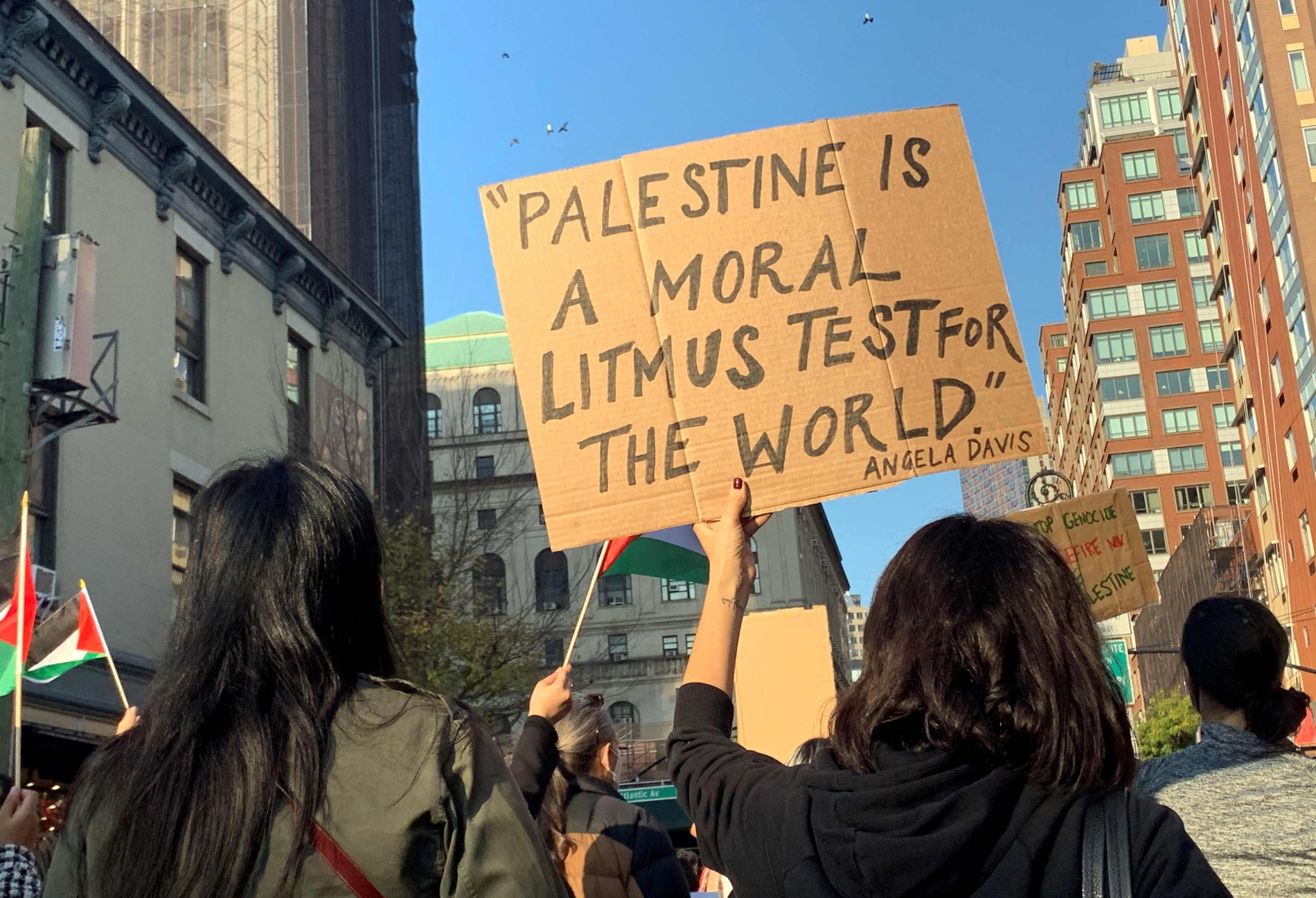
Maggy Donaldson / AFP
Demonstrators march during the "Palestine to Africa- Palestinian Liberation is Black Liberation" protest in New York on 5 November 2023.

You have previously said that you have faith in the US judicial system. What steps are you currently taking to have the sanctions lifted? On a personal level, how do you feel about the US sanctions imposed on her?

To answer the first part of your question, there are two avenues—one political and the other judicial. The political avenue lies with the United Nations, the Secretary-General and the member states. It would involve ending this repressive measure imposed by the United States and bringing the matter before the International Court of Justice on the grounds that it violates the UN framework governing the privileges and immunities of United Nations personnel.

Since that route appears effectively closed, my family has been compelled to pursue the only remaining avenue, the courts. I believe in the US justice system and, of course, I have no other choice. I have to secure the removal of these sanctions. We must fight injustice by every means available.

Perhaps I could have chosen an easier path by relinquishing my mandate, but I am not someone who can accept compromise where justice is concerned.

As for the second part of your question, I feel that I suffer from understanding the world too well. My life has changed completely from what it once was.

I was never naive. I knew that we lived in an unequal system in which profit dominates the global landscape and global politics. What I had not understood was how far states could go in remaining passive in the face of the genocide in Palestine, or the extent of their complicity, including that of European states, in what Israel is doing.

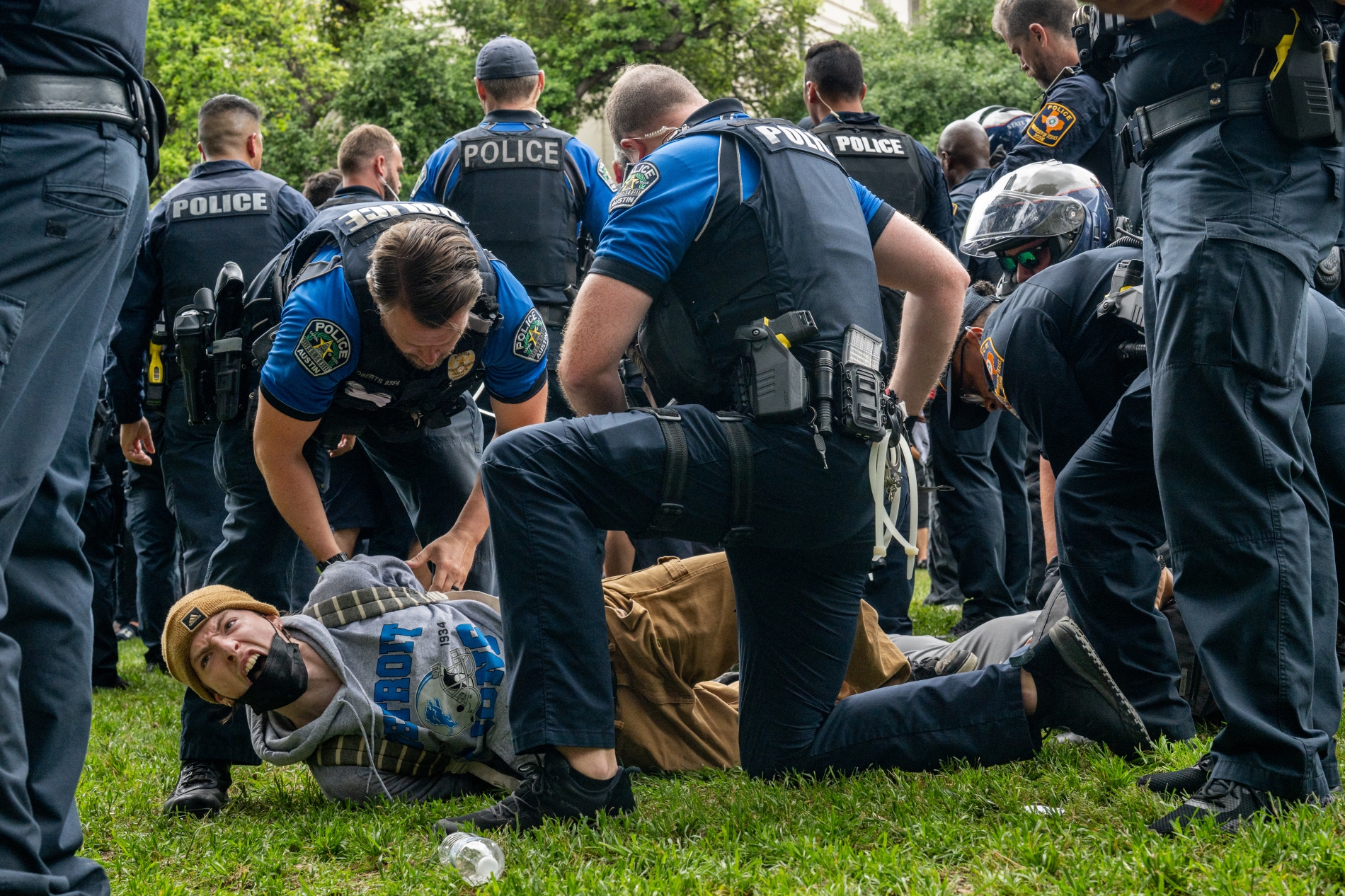
Brandon Bell/AFP
A student is arrested during a pro-Palestine demonstration at the University of Texas at Austin on 24 April 2024, in Austin, Texas.

This has completely shattered my belief that the West possesses a democratic system capable of safeguarding rights. I am certain I am not alone in seeing this. I now believe that humanity faces a common enemy: a system in which militarisation, the power to exploit resources, banking and finance, and Big Tech are concentrated in the hands of those who control the world's wealth. Wealth is no longer used simply to buy goods. It is used to exercise control and acquire power.

Today, as the French economist Thomas Piketty has shown, the fact that the world's richest 50,000 people control three times the wealth held by the poorest half of humanity tells us a great deal about where we stand.

Understanding the world too well is painful for me because, as I said at the outset, I see Palestine as a prototype of repression and oppression. Increasingly, it is also becoming a prototype for Western democracies, where people have the right to vote, yet the voice of the majority is not reflected in the political choices those democracies make.

We are witnessing the normalisation of genocide. Unless we confront and resist this, it will become the new normal

Francesca Albanese, UN Special Rapporteur on the Occupied Palestinian Territories

Are you optimistic that the sanctions against you will be lifted?

Optimism isn't quite the right word, but I hope it works.

Are you optimistic that change in the world is possible?

I am certain that if people who have nothing to gain from capitalism in its most extreme form organise themselves and act, we can change things. One of the greatest successes of necrocapitalism today—a form of capitalism in which the production of death becomes part of the mechanisms through which wealth and power accumulate—is social complicity.

We have probably entered a new phase of capitalism— one that has begun to destroy even the natural sources of wealth. It is a system prepared to sacrifice every resource, including human life. Ultimately, this system can be defeated. Yet systems of this kind survive on complicity, and the majority of people, unfortunately, are not prepared to defend the common good.

Today, we see this in Gaza. Tomorrow, we will see it in the West.

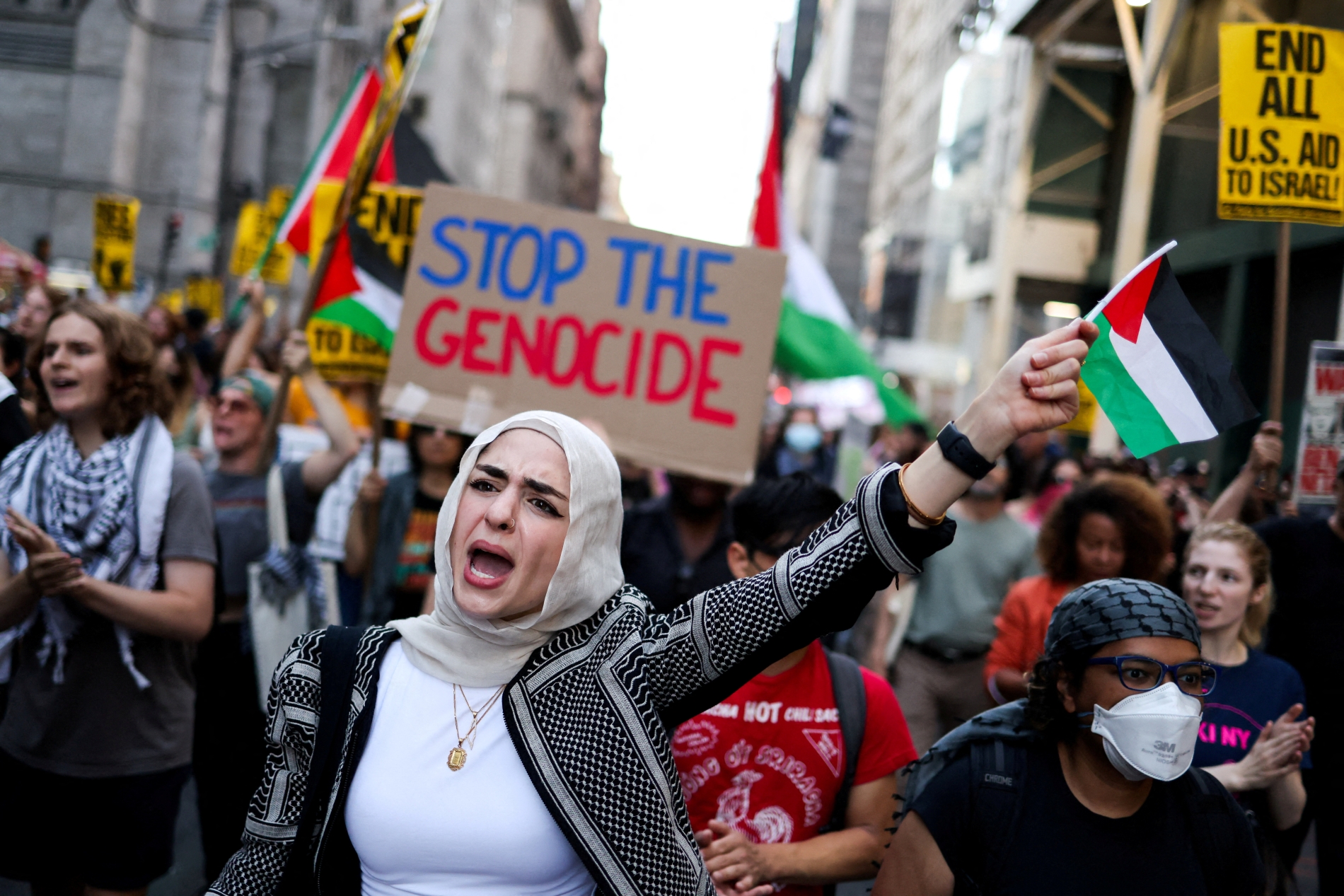
Reuters
Pro-Palestinian demonstrators participate in the "Rise Up for Gaza" protest in New York City, United States, on 8 August 2025.

Read more: Butterfly effect: can the Palestine protest movement turn the tide?

We have witnessed demonstrations in major Western cities, alongside a new awareness of the Palestinian question among a broad segment of Western youth. Are these protests and this growing awareness signs of the change you are describing? Do you think the Palestinian struggle has become a global struggle?

I believe the Palestinian struggle, as you call it, or rather the Palestinian question, is an existential issue. It concerns the right of peoples to self-determination and their right not to be erased from their own land. This has implications in many parts of the world, not only for peoples who still live under some form of postcolonial domination, where corporations have replaced what was once direct exploitation by states.

It is also evident elsewhere, including in the West, where there is a profound gulf between civil society, particularly younger generations, and politics.

Discontent is also growing, alongside poverty and social hardship. This is partly because the welfare state, which existed for so long and was built through immense sacrifice in the period after the Second World War, is now eroding.

In that sense, I believe the Palestinian question is a global one.

font change

Related Articles