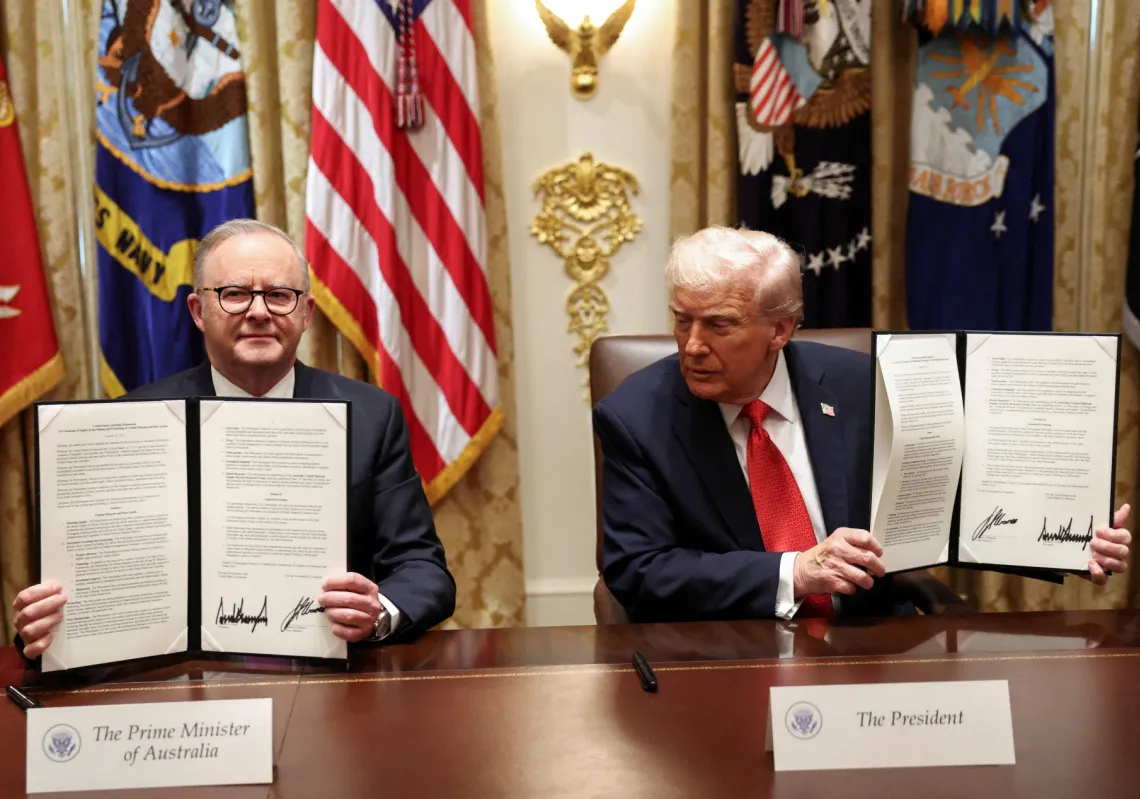
Five years after the Taliban took over Afghanistan following the American withdrawal, the government in Kabul has extended an offer to the United States: come back, invest in Afghan minerals, and open an embassy. US President Donald Trump has already struck deals around the world for the rare minerals US technology firms need to compete with China and is keen to secure more, so the surprise business pitch is sure to pique his interest.
If a deal were to be had, it would mark an incredible turnaround, given that the Taliban regime is currently sanctioned and shunned by much of the international community, and at loggerheads with its one-time backer, Pakistan. Trump will also know that Moscow and Beijing are slowly investing in Afghan minerals. This interest dates back to the Cold War, when Soviet scientists conducted the first cursory geological surveys and believed Afghanistan sat on $1tn of rare earth minerals.
After the US-led intervention in Afghanistan as part of America’s ‘War on Terror’ in the aftermath of the 9/11 attacks by al-Qaeda (whose leaders were based in the Afghan mountains), several US initiatives showed keen interest in Afghan mining, including one by the giant American bank JP Morgan. But Afghanistan at that time was too dangerous and corrupt for any meaningful extraction of these minerals. Today, ironically, stability has been largely restored, albeit at the expense of the rights of women and Afghanistan’s non-Pashtun minorities. But could such an egregious regime still tempt Trump, who famously wrote The Art of the Deal?
Longstanding interest
The world’s leading Taliban expert, Ahmed Rashid, wrote almost 30 years ago that the Taliban had secured trading routes known by Central Asian states as the best means of exploiting minerals and new energy pipelines that could transform transnational trade linking Central and East Asia via Afghanistan.
The Taliban first came to power in 1996 after a bloody four-year civil war following the collapse of a Soviet-backed government in 1992. The Americans took notice and invited the Taliban to Texas in 1997 to discuss oil pipelines and minerals. An Argentine company also took part and was close to inking a deal to link Central Asian oil and gas to Pakistan via Afghanistan. Rashid wrote that commercial viability interested the Americans, Chinese, Indians, and Russians. But the Taliban were also harbouring al-Qaeda, and after 9/11, all bets were off.
Leading NATO generals in Afghanistan, such as American Gen. David Petraeus and British Field Marshal David Richards, supported the idea that mining could stabilise the Afghan economy and connect it to international markets. Richards later convinced British Prime Minister David Cameron to back JP Morgan and other leading Western mining firms to host a conference in London. Richards found that mining would move Afghanistan from a foreign aid recipient to a foreign trade partner.
The mining never materialised because of geopolitical and security issues, and rampant corruption made it virtually impossible to do business. But the resources are still there, and the Taliban appear ready to move forward. But has the situation changed?

Beneath the rugged, landlocked mountains and caves, are there really these valuable rare-earth minerals? Myths about Afghanistan's mineral wealth have been told for generations. Stories of emeralds, rubies, and gold lured Alexander the Great and the Mongols.
Two Americans founded one of the first mining ventures in Afghanistan: Milt Bearden, a legendary CIA officer who helped the mujahideen beat the Soviets, and Gianni Koskinas, a retired Special Forces colonel. Together, they built a careful coalition of Western funds with local tribal backing to create legitimate business development that lasted until the fall of Kabul five years ago. Some Trump officials now feel that China is benefiting from America's early investment in Afghan mining.