
Yemen has long been a testing ground for highly lethal modern weapons, evidenced by the Houthi strike on Gulf Coalition forces and Yemeni allies in December 2015, using a Tochka ballistic missile, which killed well over 100 soldiers. For their part, forces allied to the Yemeni government have hammered Houthis with relentless airpower, inflicting thousands of casualties in grinding battles around Marib province from 2021 to 2022.
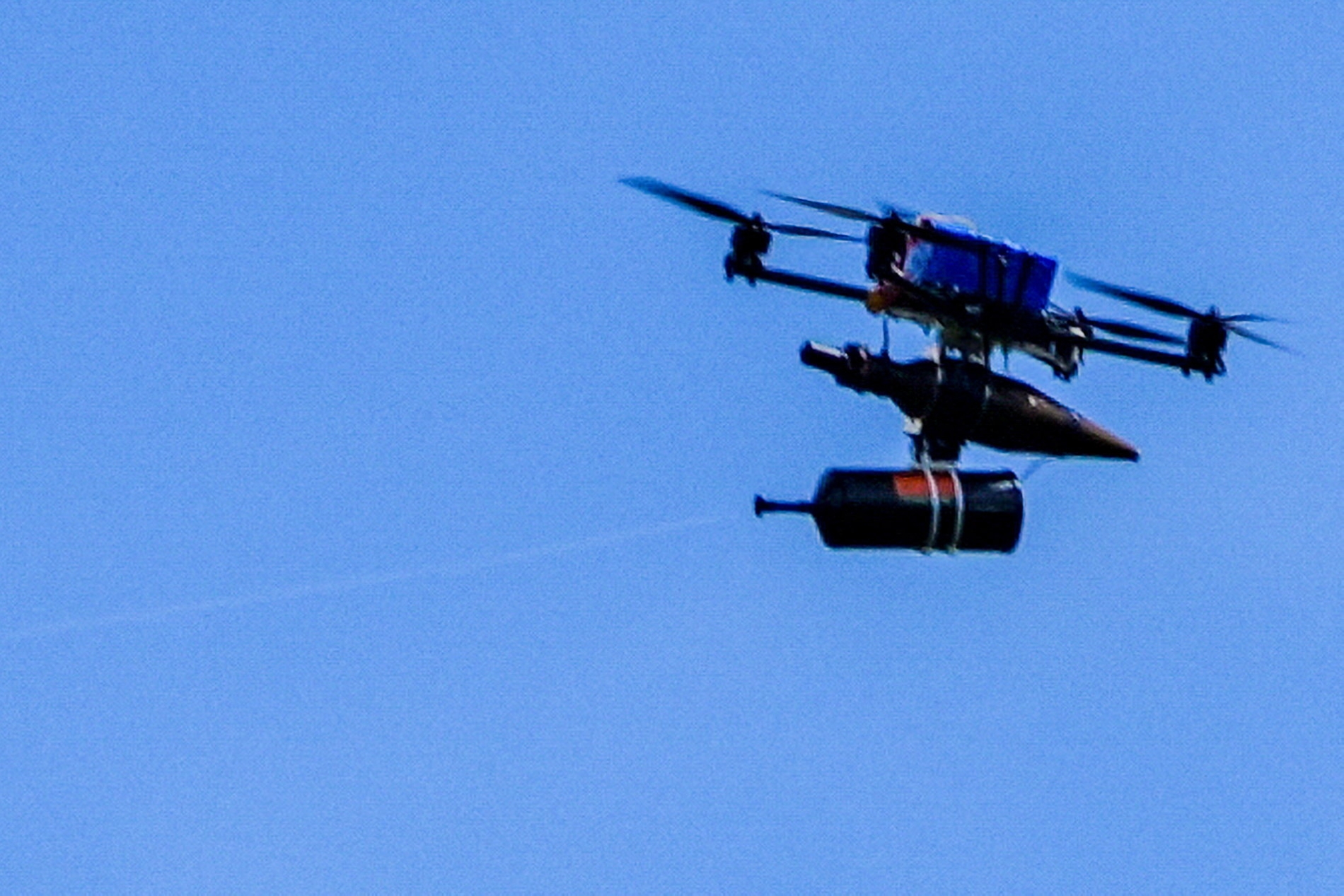
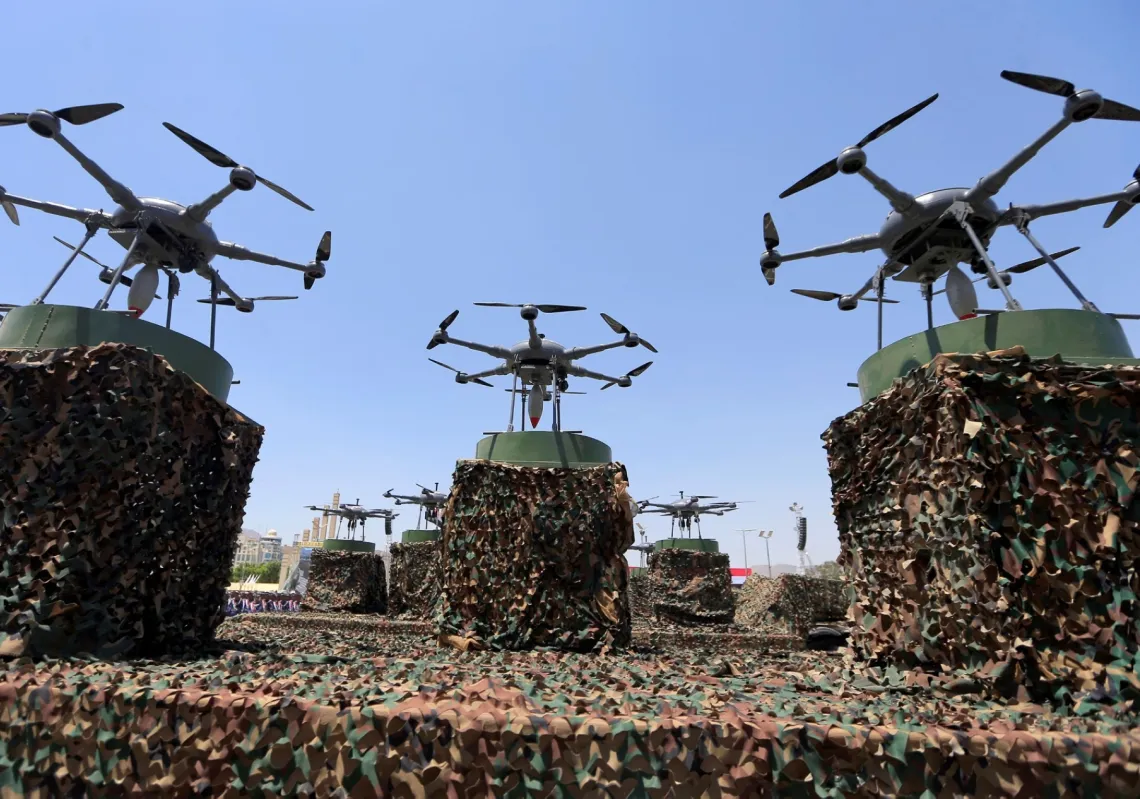
In the past, both Houthis and Yemeni forces enabled some of this conventional firepower with drones. The former used Rajum hexacopter bombers to stalk pro-government fighters, which accounted for 25% of their drone strikes, while the latter used US-made ScanEagles, which loitered around the battlefield for 20 hours per mission to seek out Houthi positions.
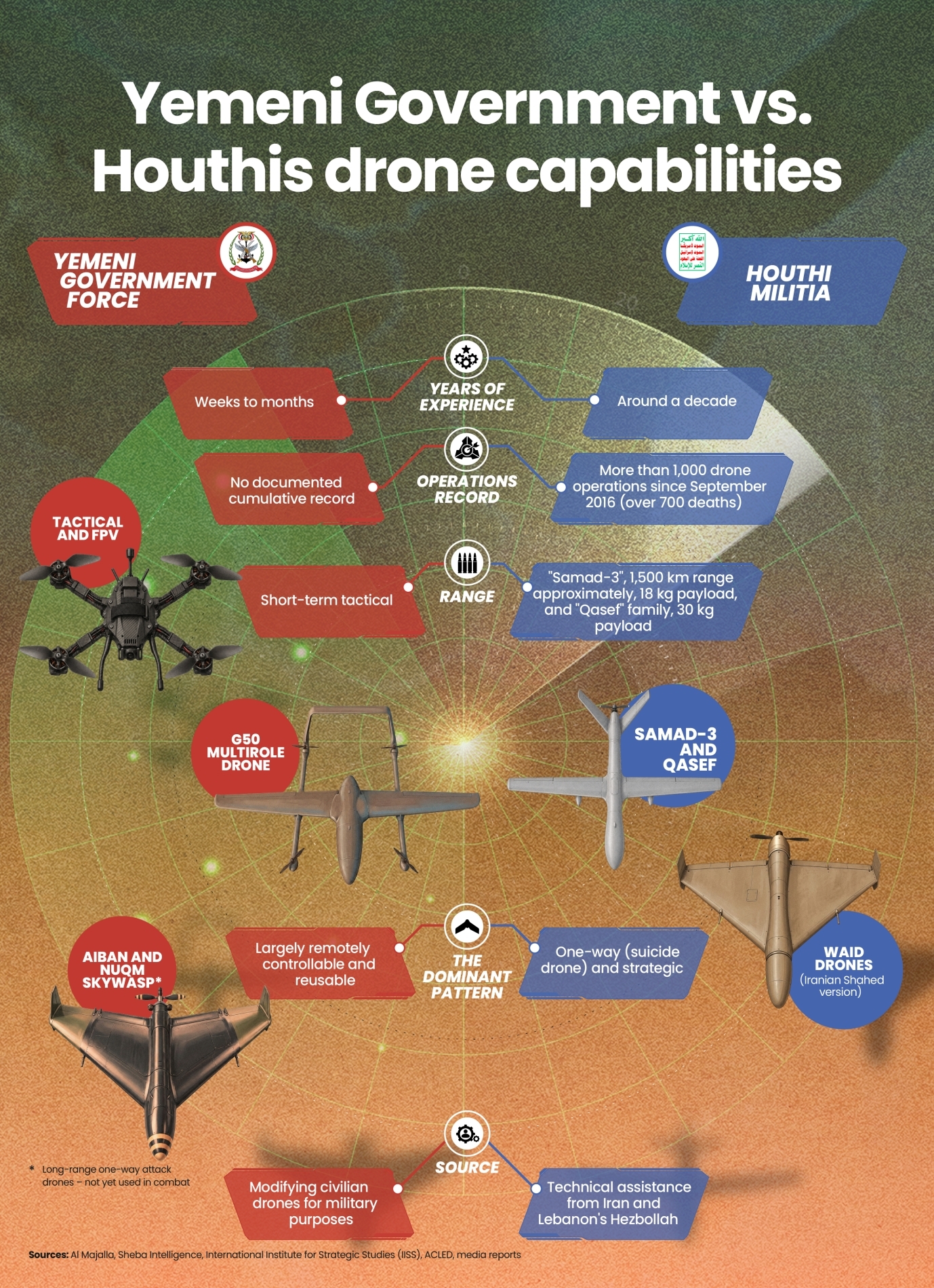
Much of this fighting involved a wide mix of systems. The Houthis were the first non-state group to use modern passive air defence systems, which have proven deadly to fighter jets and drones. They have long used Iranian-designed drones, most infamously the Shahed 136, the Wa’id in Houthi service and the Geran-2 in Russian use, which have been used to strike energy infrastructure across the Gulf and Ukraine, respectively. (The Geran-2 is based on the Iranian-designed HESA Shahed-136 kamikaze drone).
The Houthis have also pioneered unmanned explosive attack boats—a tactic that Ukrainian forces successfully adapted, which allowed them to inflict a major tactical setback on Russia’s Black Sea Fleet. Houthi drones have also reached as far as Israel and have been used to lethal effect against US forces. The fact that such a cheap system could inflict real destruction against a superpower has surprised many observers.
Dangerous phase
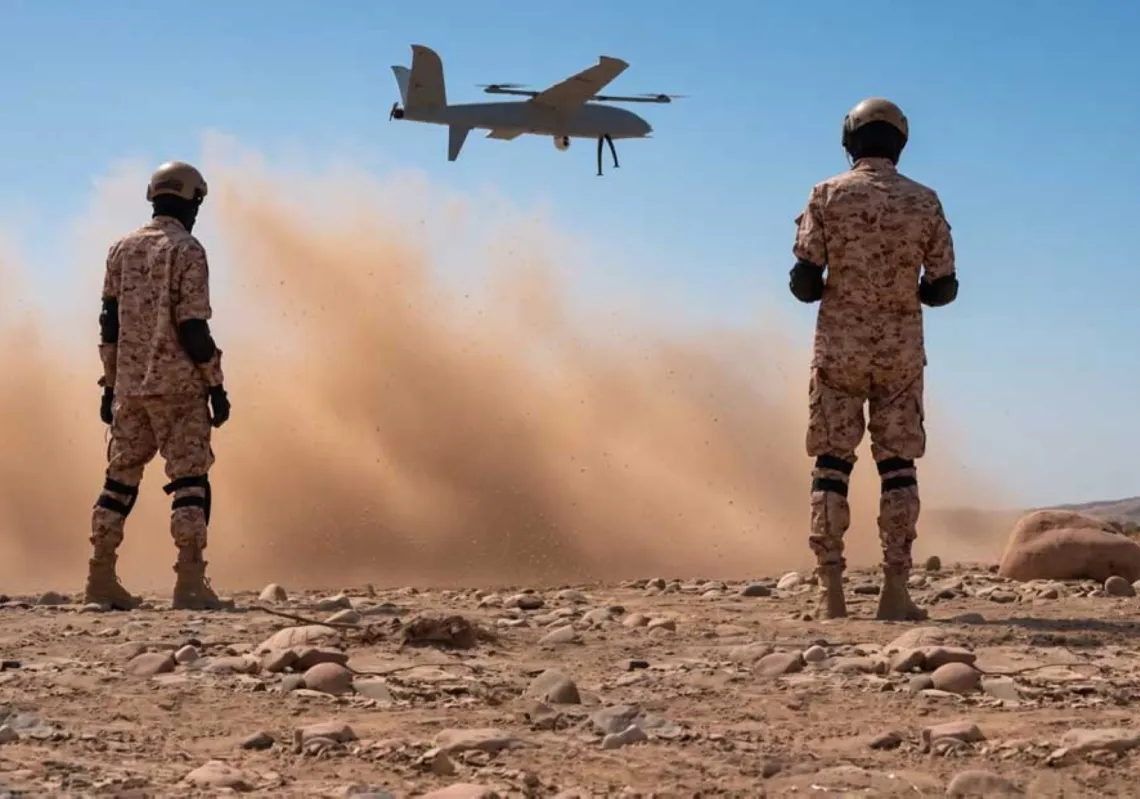
Despite the proliferation of this deadly technology, the war may be entering a dangerous new phase. Now that pro-government forces have been supplied with tactical drones with ranges from 5-100 kilometres, this round of fighting has the potential to grind into bloody deadlock, if the Ukraine war—where thousands of these systems are used per day—is a guide.
For example, the Houthis have been quick to adopt fibre-optic-controlled drones, which Ukraine only started using three years after Russia’s invasion. Much has been made of the fact that because they do not need a radio link, they are impossible to jam with electronic warfare, which typically stops most drones. They also do not rely on the radio horizon, where hills and buildings can block radio control and cause drones to suddenly lose signal. To avoid this, a radio-controlled drone can fly higher, making it easier to detect.
Fibre-optic drones require specific skill to avoid snagging the cable but have terrifying ambush capability. They can sneak through valleys or down streets or even sit near roads as a kind of flying roadside bomb, which could prove especially useful in rugged, hilly terrain such as Taiz, where fighting is currently heavy.