Takeshi Miike's new Kabuki documentary surprises critics

For a filmmaker who has spent decades challenging norms, a film about traditional Japanese theatre seems like an odd choice. At the Venice Film Festival, he explains to Al Majalla why it is not.

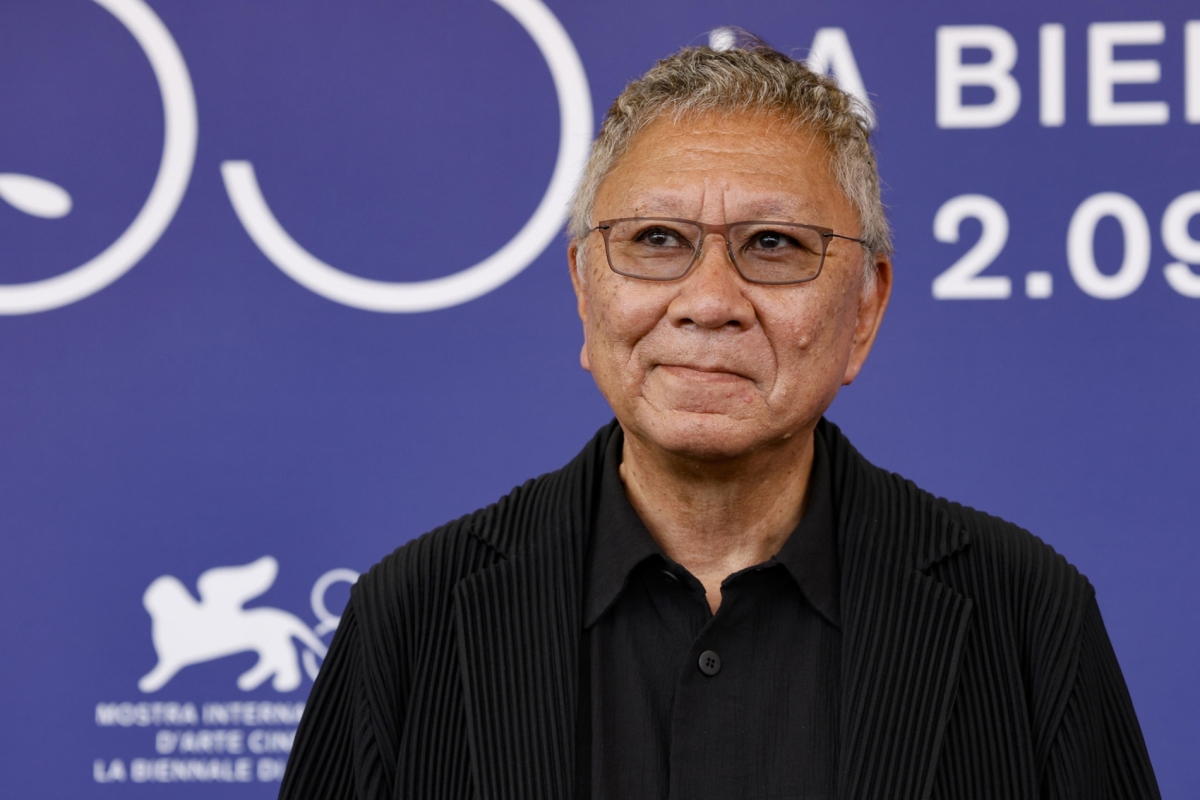
Japanese director Takashi Miike at an event for the film 'Shumei: The Living Legacy of Kabuki'
IMDb
Japanese director Takashi Miike at an event for the film 'Shumei: The Living Legacy of Kabuki'

Takeshi Miike's new Kabuki documentary surprises critics

For filmmaker Takashi Miike, whose cinema has spent decades challenging conventions, confronting violence and turning genre expectations upside down, making a documentary film about Kabuki—a classical form of Japanese theatre that mixes dramatic performance with traditional dance—might seem like an unexpected detour. It is not.

Miike’s new documentary Shumei: The living legacy of Kabuki follows the succession of Ichikawa Danjuro, a prestigious stage name held by a famous line of Kabuki actors in Japan. It is a meditation on inheritance, rebellion, gender and the essence of artistry itself. Beneath the story of an artist inheriting a centuries-old tradition, Miike tackles a question that he frequently addresses in his past works: what happens when individuals are forced to negotiate between the roles society assigns them and the identities they choose for themselves?

Sitting on a sofa, tanned behind his smoked sunglasses, the 79-year-old filmmaker looks tough. Flanked by his interpreter and the character of his film, Kabuki star Danjuro XIII, also accompanied by his own translator, the set-up speaks for itself: I am in the presence of royalty.

I immediately asked him why he chose to make a documentary right before his 80th birthday.

“I did not choose to direct this film, it made itself” he says. “I was barely there holding the camera, just trying to document Ichikawa (one of the biggest families in Kabuki, a 360-year-old lineage), this big event that was Shumei's grand naming ceremony held in Kabuki theatre, and understand the transition from Ebizo to Danjuro.” Miike's face lights up, betraying an inner child whose art is central to his nature.

Miike says Kabuki did not directly influence his cinematic works, but it is so embedded in Japanese culture that he absorbed it almost unconsciously.

“When we talk about performing, that means Kabuki,” he says, explaining that Japanese artists inevitably grow up surrounded by the tradition. The influence, he suggests, is less a conscious borrowing than something that innately becomes part of the cultural vocabulary.

This phenomenon is particularly telling when applied to a filmmaker whose work is often associated with theatrics, exaggeration and performance. Miike may not have deliberately borrowed from Kabuki, but his works share its interest in constructed identities, transformation and the unstable boundary between performance and reality.

The team behind the documentary 'Shumei: The living legacy of Kabuki'directed by Takashi Miike, on the red carpet at the Venice Film Festival, on 3 September 2026.

Provocative origins

This history of Kabuki also holds a striking irony. Widely regarded as one of Japan's most prestigious traditional art forms, its origins were considerably more disruptive. The form emerged in the early 17th century through performances associated with women, most famously Izumo no Okuni. Its early form, in which women played both male and female roles, was seen as so taboo at the time that they were eventually banned from the stage. The tradition subsequently evolved into the highly codified male-dominated art form known today, where men perform female roles, known as onnagata.

That history makes Kabuki a fascinating prism through which to view Miike’s cinema. His films have repeatedly questioned conventional ideas about gender, sexuality and power. Women in his films can be victims of violence and objectification, but they can also become the agents of revenge, disruption and transformation.

But neither Miike nor Danjuro will outwardly describe their works as feminist. They would rather let audiences decide for themselves. This strategic ambiguity is best illustrated by his film Audition. The 1999 psychological-horror film features a character named Asami Yamazaki, who, on the surface, appears to embody an old cinematic fantasy: the mysterious, submissive woman chosen by a man who believes he has the right to choose his future wife. But the film gradually reverses that power dynamic. The woman who appears to be the object of male desire becomes the one who controls the fate of the man who chose her.

Mikke's portrayal of women is oftentimes disturbing, violent and deliberately uncomfortable to the point where Showtime’s Masters of Horror series decided against broadcasting the episode he had directed, despite commissioning him. But that discomfort is precisely what makes his films so fertile for a feminist reading: they expose the violence beneath apparently ordinary structures of male desire and control.

The connection with Kabuki is therefore not that both are outwardly feminist. It is that both contain a history of gender as performance—of men and women occupying roles, adopting identities and challenging the boundaries imposed upon them.

As Kabuki continues to evolve, women are increasingly finding ways back into a theatrical tradition from which they were historically excluded. That return creates a fascinating reversal: a form created in part through women's performance, later transformed into an almost exclusively male tradition, is once again becoming a space in which women's participation can be reconsidered. As a matter of fact, Danjuro’s daughter, albeit in more minor roles than her brother, plays in her father’s productions.
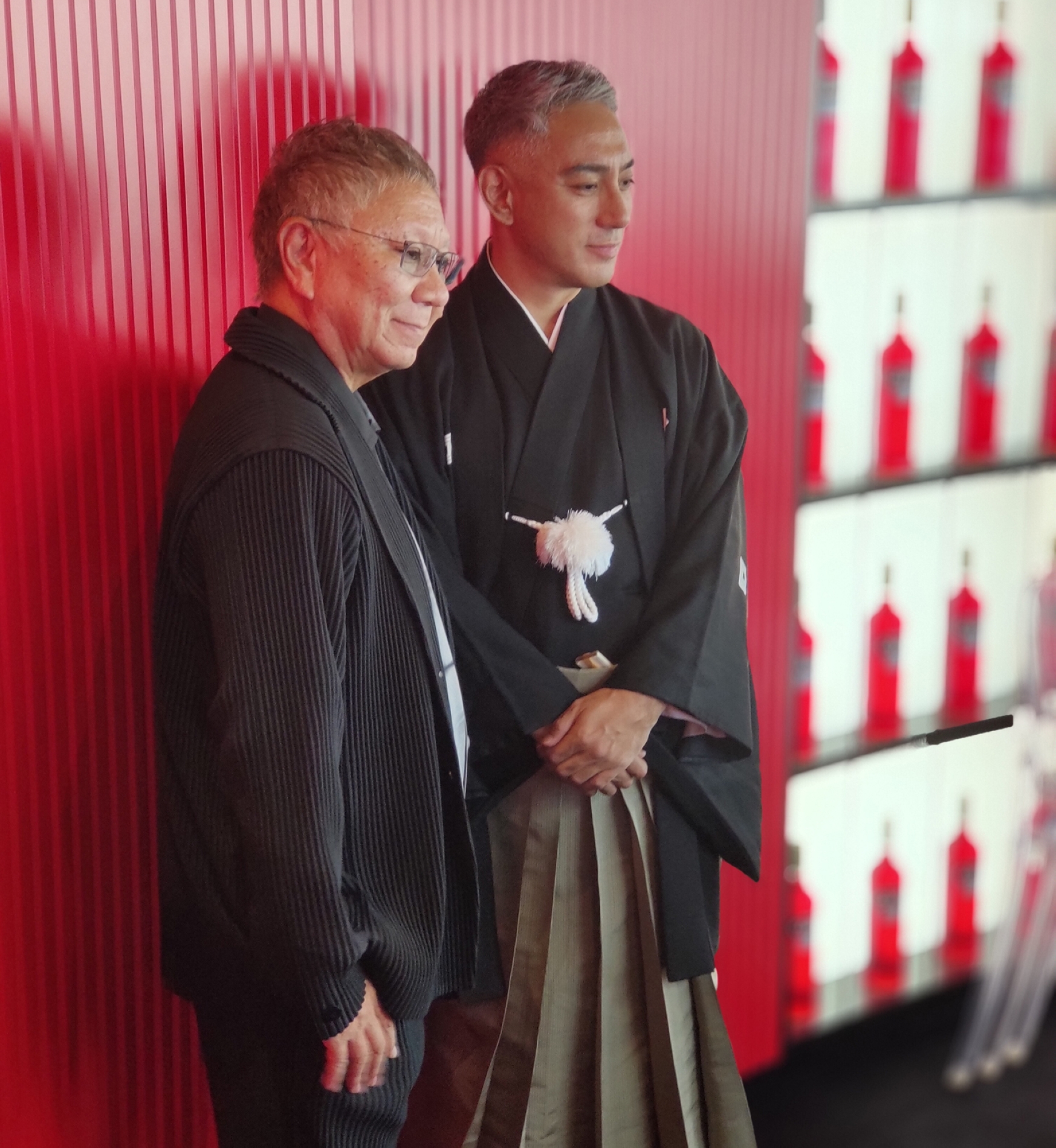
Perhaps the real connection between Miike and Kabuki is that both remind us that tradition does not have to mean obedience

Inheritance vs choice

The father of two central figures of Miike's documentary also deals with another kind of constraint: inheritance. An inheritance based on a 360-year tradition and history of malediction for whoever in the lineage accepted the Danjuro name, such as early deaths, illnesses or suicidal tendencies.

To become Danjuro is to inherit not simply a name but centuries of expectations. Danjuro acknowledges the pressure surrounding such a succession, but insists that tradition does not necessarily eliminate individual choice.

"There is pressure and expectations," he says, "but there is also a possibility to say no."

Ichikawa Ebizo said yes at the peak of his career and became Danjuro XIII. But instead of focusing on the weight of a potential malediction, he decided to take on 13 roles in one single performance, proving that his acceptance was no trivial matter, and that his biggest malediction yet was behind him, with the sudden death of his 34-year-old wife and mother of his young children.

That sentence could almost serve as a manifesto for Miike's entire body of work. His characters frequently find themselves trapped inside systems—family, social expectations, violence, masculinity, organised crime or institutions—and then push against them. Sometimes that resistance is liberating; other times it is catastrophic; but most often, it is both.

The question is not whether tradition should be destroyed, but whether it can survive without becoming a prison and quietly evolve without losing its solemn essence.

 Leila Amar
Takashi Miike

Staying relevant

For Dajuro XIII, Kabuki's survival may ultimately depend on its ability to become relevant to people who did not grow up with it. He is optimistic about younger Japanese audiences. New technologies and platforms may change how they consume theatre, he says, but this does not necessarily mean they will abandon traditional culture. Instead, it may help them rediscover it.

"It comes in waves. Every generation has something new, be it technology or something else, but every time this happens, we tend to revert back to traditions," he says.

That paradox—the old becoming new precisely because it is seen from a different perspective—is at the heart of cultural survival. For Miike, this is how Kabuki keeps "reviving" and "reinviting" itself.

IMDb
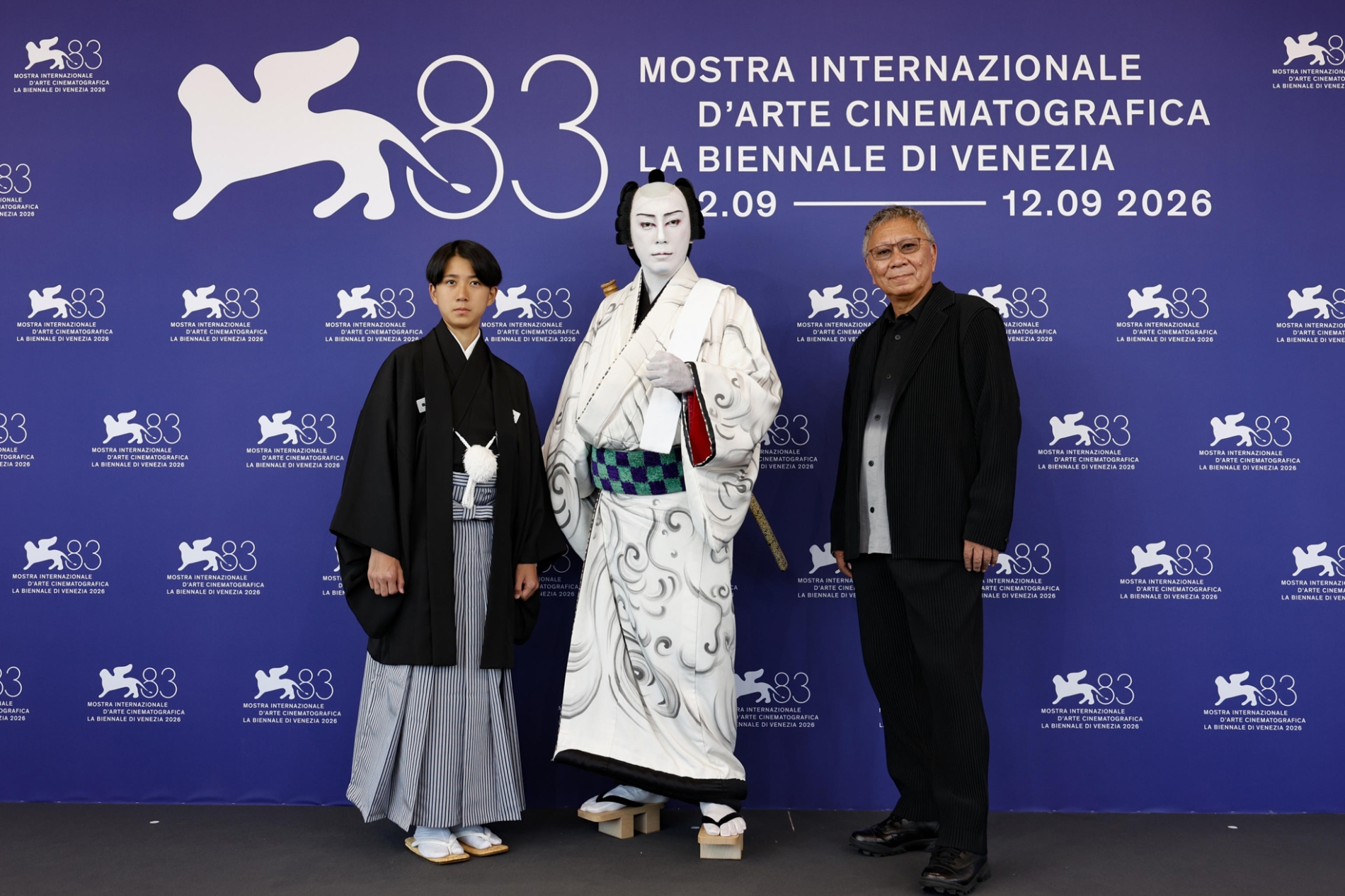
Ichikawa Shinnosuke VIII, Ichikawa Danjūrō ​​XIII, and Takashi Miike during a photo call for the film 'Shumei: The Living Legacy of Kabuki' at the Venice Film Festival, on 4 September 2026.

No need for explanation

Miike deliberately refuses to over-explain Kabuki to his audience and admits to filming directly from their perspective, not understanding what they are seeing from the beginning. "It changes a lot from how I normally direct, but I wanted to keep it as pure as possible," he adds. This is why the second half of the documentary contains no narration, allowing audiences to experience the performances directly.

With Shumei, the ambition is simple: to create a first encounter. He hopes that an international viewer might watch the film, become curious about Kabuki and eventually seek out a performance in Japan. In that sense, the documentary is not intended to translate Kabuki into something more familiar. It is intended to create enough curiosity for audiences to cross the cultural distance themselves.

It is a journey Danjuro knows very well: performing across the world on the most prestigious Western stages, such as Carnegie Hall in New York or the Opéra Garnier in Paris, and even being knighted by French cultural institutions.

"Of course you need to adapt to various audiences, as each has their own relation to theatre. The UK, for example, tends to focus more on the text, with a lot of effort going into subtitling, while France focuses more on the stage experience. Sometimes we can shorten plays, but we always keep the essence of the art," adds Danjuro.

Miike's most revealing comments come when he turns from Kabuki to cinema itself. He recalls the filmmakers of earlier generations as difficult, uncompromising figures. Contemporary filmmakers, by contrast, are increasingly "manageable"—and, he suggests, increasingly "watered down."

The comparison with Kabuki is not exact, he admits. But the lesson is clear: "There are those kinds of trends that we used to have in filmmaking," he says. "Even though we as filmmakers do not have such a long history as Kabuki does, we need to preserve this energy like the Kabuki people preserve their traditions."

Here, the director hints that studios have so much power that singular voices tend to disappear, drowned out in a system that can stifle true creativity amid widespread globalisation. 

When asked if he is still rebellious, he enthusiastically replies: "Yes, I am, and this should be the drive of every filmmaker, but it has become increasingly hard to be outspoken in the industry these days. By the way, you will see my next Netflix movie is very soft compared to what I usually do."

Energy, then, is perhaps the most important idea in the documentary. Preserving an art form does not necessarily mean preserving it exactly as it was. Kabuki itself has survived precisely because it has transformed: women became men performing women; old stories acquired new interpretations; generations rediscovered an ancient art through contemporary eyes.

Miike's films reflect a similar principle. They are often deliberately unruly, excessive and uncomfortable to avoid being too easily digestible.

And perhaps that is the real connection between Miike and Kabuki. Both remind us that tradition does not have to mean obedience. Sometimes, to keep an art form alive, you have to preserve what made it dangerous in the first place: its ability to challenge the audience, deconstruct identities, and mishbehave.

font change