As Sudan’s army, the RSF, and civilian forces contest who should shape the country’s future, the Quintet faces growing obstacles to building an inclusive political process
ODD ANDERSEN / AFP
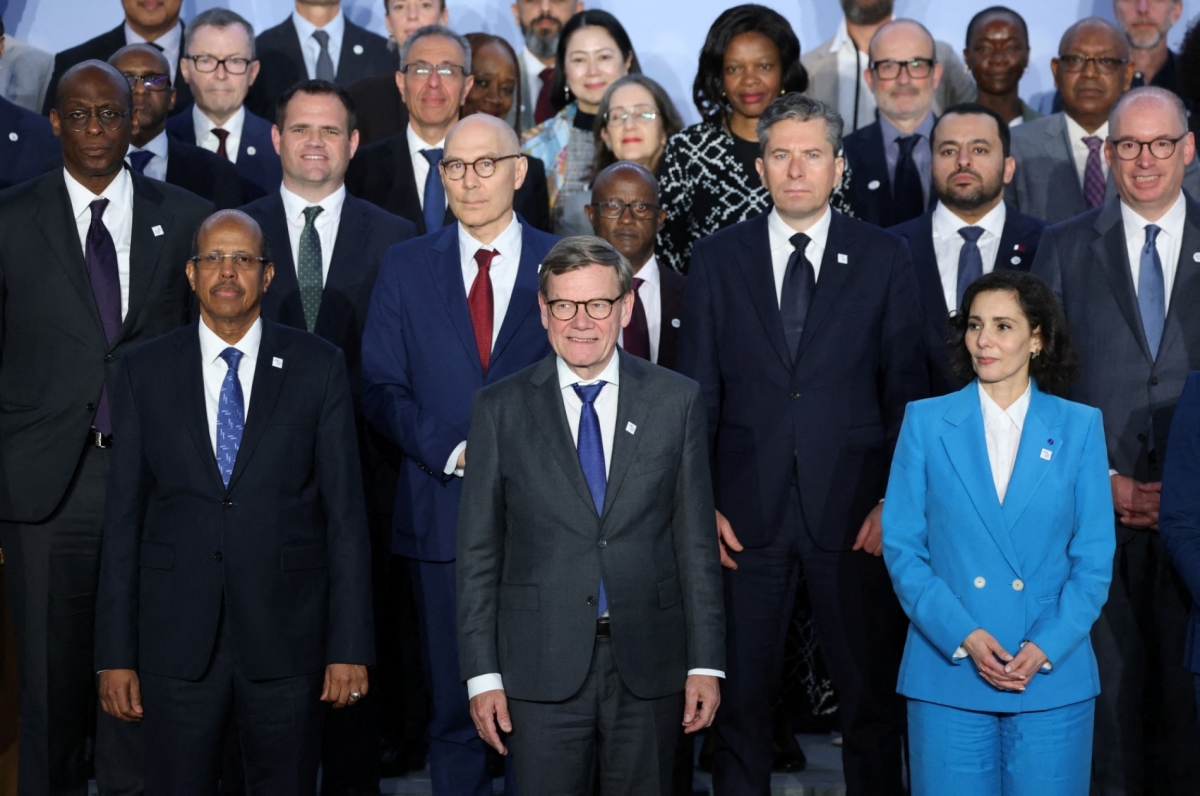
African Union, EU, and German officials pose for a family photo during the third international conference on Sudan, at the Foreign Office in Berlin on 15 April 2026.
A ceasefire will not decide Sudan’s future. Even if the Sudanese Armed Forces and the Rapid Support Forces (RSF) agree to a ceasefire, the questions that will determine the country’s future will remain unanswered: Who governs? Who represents the Sudanese people? What form will the next state take?
A broad political process therefore remains a necessity, separate from any military negotiations, and will require regional, international, and UN backing capable of guaranteeing the widest possible representation of Sudanese society.
Although all sides acknowledge the importance of this political process, the mechanism intended to facilitate it has faced structural obstacles from the outset that threaten to derail the entire endeavour. The ‘Quintet’ brings together the African Union, the Arab League, the Intergovernmental Authority on Development (IGAD), the UN, and the European Union, and is tasked with facilitating an inclusive intra-Sudanese dialogue alongside efforts to end the war.
The army, as the country’s most powerful military force and the institution that controls the machinery of the state, does not object to dialogue in principle. It wants, however, to control its parameters: who leads it, who takes part, and which boundaries cannot be crossed.
From the army’s perspective, any political process overseen by international or regional actors threatens its position as the final arbiter of Sudan’s future system of government. Its repeated objections to the mechanism’s composition and leadership therefore go beyond procedural disputes. They seek to keep Sudan’s future political authority in its own hands rather than in the hands of international mediators or political rivals.
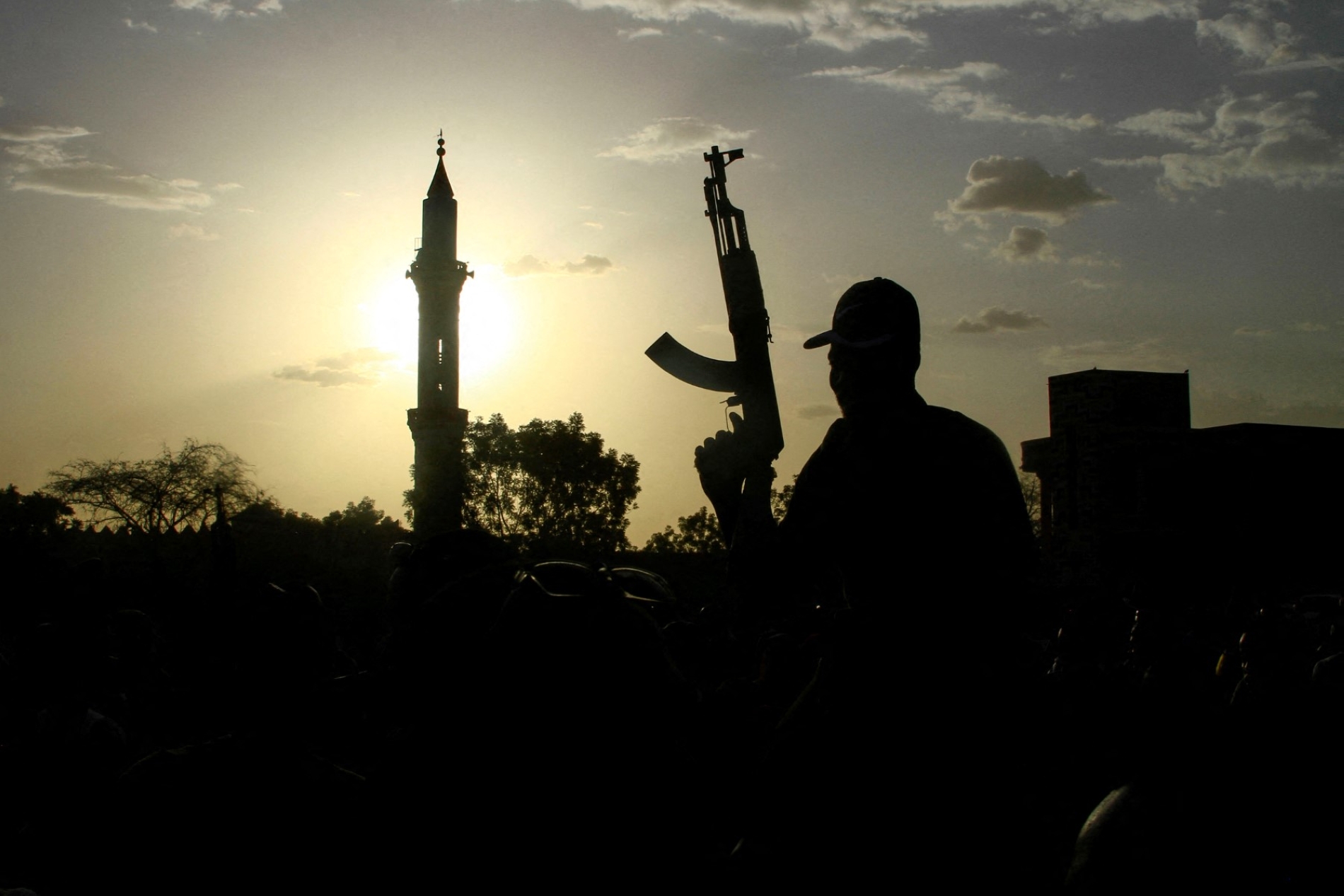
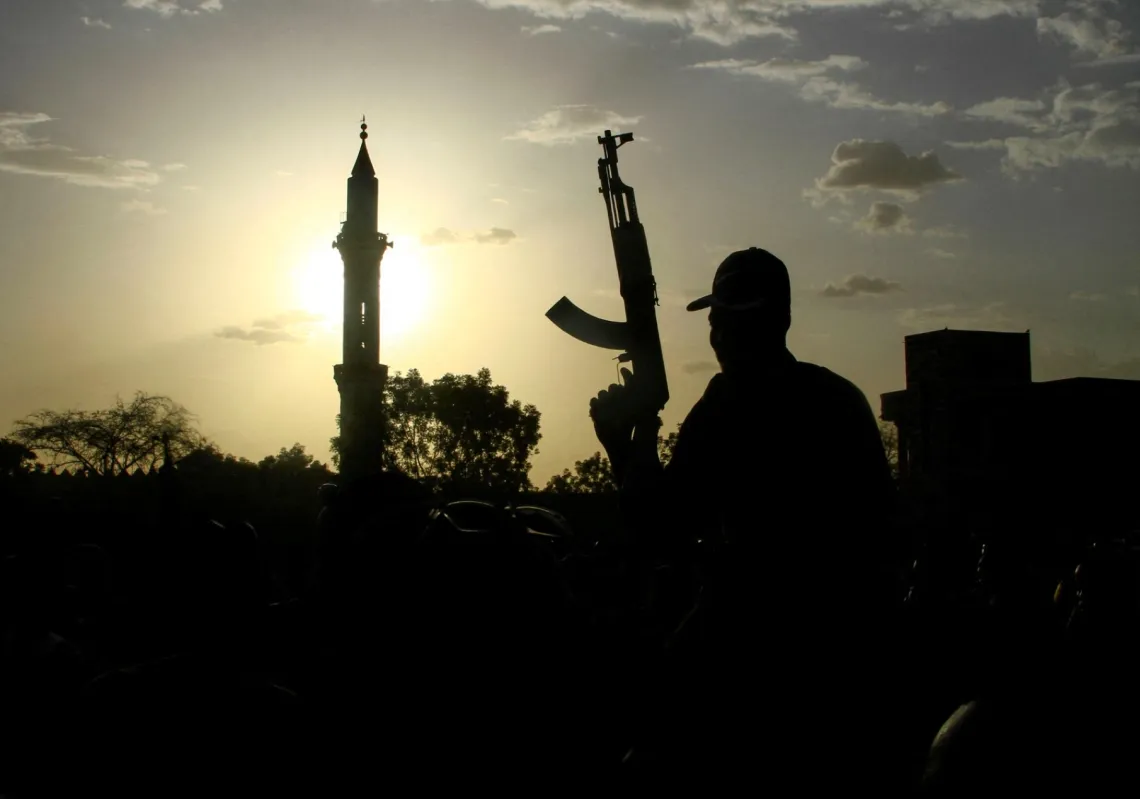
A fighter loyal to Sudan's army chief Abdel Fattah al-Burhan holds up a weapon backdropped by the minaret of a mosque, during a graduation ceremony in the southeastern Gedaref state on 27 May 2024.
A government source told me that the army objects to the African Union taking the leading role in the mechanism while Sudan’s membership in the organisation remains suspended following the 25 October 2021 coup. This raises a fundamental dilemma: how can an international body lead a political process in a country that is not currently an active member of it?
The African Union Peace and Security Council suspended Sudan immediately after the coup, in keeping with its policy of ‘zero tolerance’ towards unconstitutional changes of government, the same policy it has applied to other African states that have experienced coups in recent years, including Mali, Niger, Guinea, and Burkina Faso.
Keeping Sudan suspended weakens its ability to play an effective role amid a deepening humanitarian and security crisis.
Serious obstacle
This contradiction has become one of the most serious obstacles to any settlement. The body entrusted with shepherding a political solution is also the body that suspended its formal dealings with the state concerned. The army draws directly on this anomaly to justify its reservations: 'We are not currently part of the African Union, so how can we be expected to accept the terms of a body from whose membership we are officially suspended?' The argument has procedural merit, although it is also used politically to avoid serious engagement with the Quintet.
The transitional government has repeatedly tried to lift the suspension, particularly after Sudan returned to IGAD, but those efforts have yielded nothing so far. The African Union is thus caught in a double bind. It cannot declare that what happened in Sudan was 'not a coup' without undermining the credibility of its own policy against military seizures of power. Yet keeping Sudan suspended weakens its ability to play an effective role amid a deepening humanitarian and security crisis, while giving the army another pretext to challenge the legitimacy of the AU's leadership of the political process as a whole.
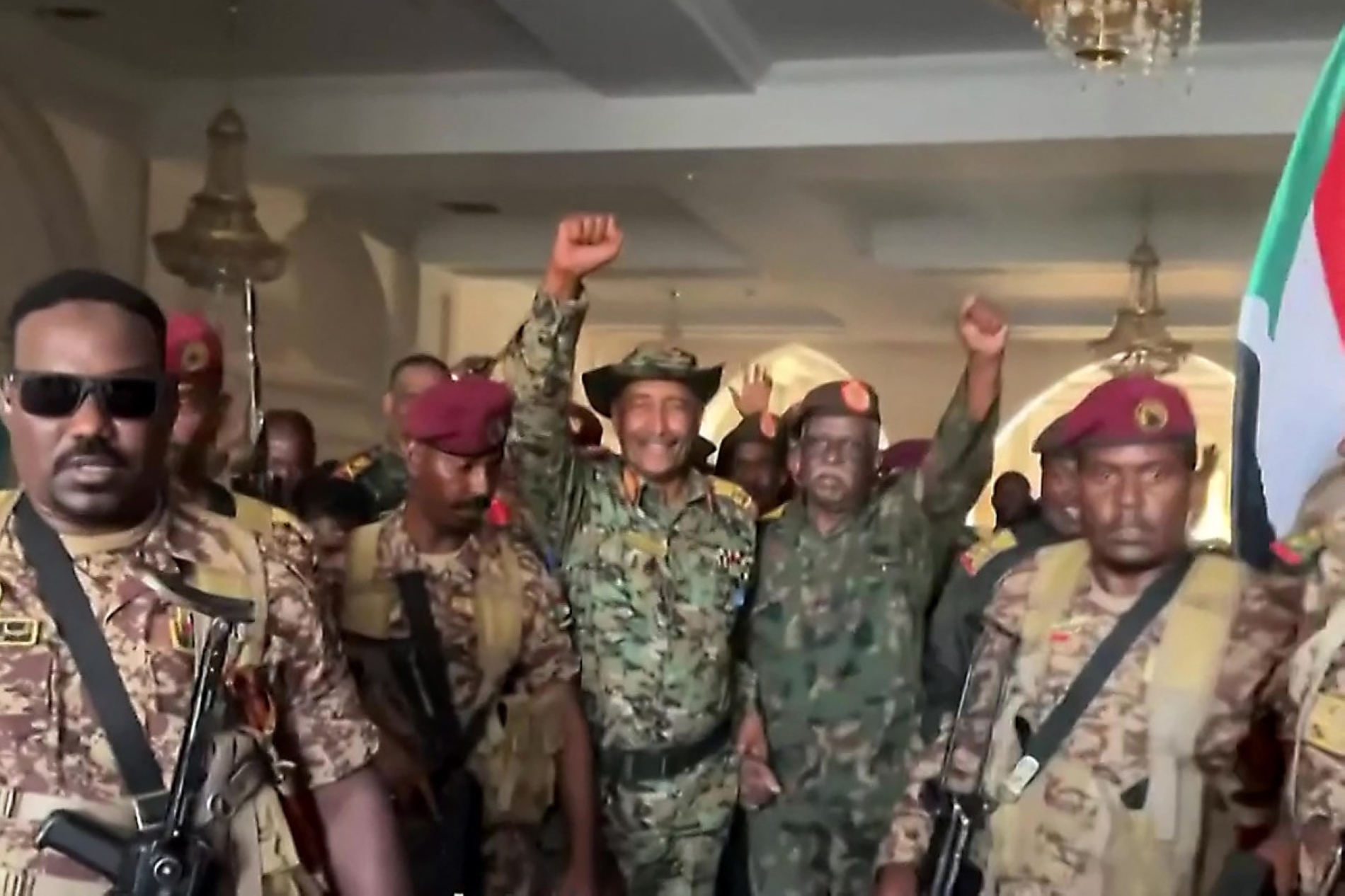
On 26 March 2025, Sudanese Army Commander Abdel Fattah al-Burhan arrived at the recaptured Presidential Palace in Khartoum, declaring the capital "free" of the Rapid Support Forces after nearly two years of war.
Even though other actors, including the Arab League and IGAD, recognise Abdel Fattah al-Burhan as chairman of the Sovereignty Council and Kamil Idris as prime minister, this recognition has done little to make the Quintet more acceptable to the army and its government.
The divergence extends beyond Sudan's relationship with the African Union to the conduct of the Quintet's members themselves. While the African Union has maintained its position on Sudan's suspension, the UN Secretary-General's Personal Envoy, Pekka Haavisto, has acted more independently, intensifying his contacts with Sudanese actors and urging them to make tangible commitments to de-escalation. At times, his efforts have appeared to run parallel to the mechanism's collective work rather than being fully integrated into it.
The Arab League and IGAD, both of which recognise the al-Burhan-Idris government as the legitimate authority, have shown greater flexibility towards the army's proposal for an 'internal dialogue' than the African Union, whose position has been more rigid. These differences among the Quintet's own members help explain the fragility of the mechanism and give the army room to manoeuvre between mediators with divergent positions rather than face a unified international front.
The army's objections are not the only factor obstructing the process. The RSF, the other party to the war, has yet to show any genuine commitment to serious negotiations. Their commander, Mohamed Hamdan Dagalo, also known as Hemedti, said in a recent speech that his forces were prepared to continue fighting until 2040 if necessary, underscoring how remote a political settlement remains.
While the Quintet seeks to build an inclusive political process, the RSF continues to consolidate parallel institutions on the ground, from administering examinations in Nyala and Darfur to enforcing discipline within its own ranks. This suggests that its immediate priorities remain administrative and military rather than political. The absence of any comparable commitment from the other belligerent makes any reading of the Quintet's predicament that focuses solely on the army's conditions necessarily incomplete.
Then there is the nature of the political dialogue itself and, more precisely, a central question: who is entitled to sit at the table? Here the issue of the Sumoud and Tasis alliances comes to the fore, along with other forces the army regards as aligned with, or sympathetic to, the RSF.
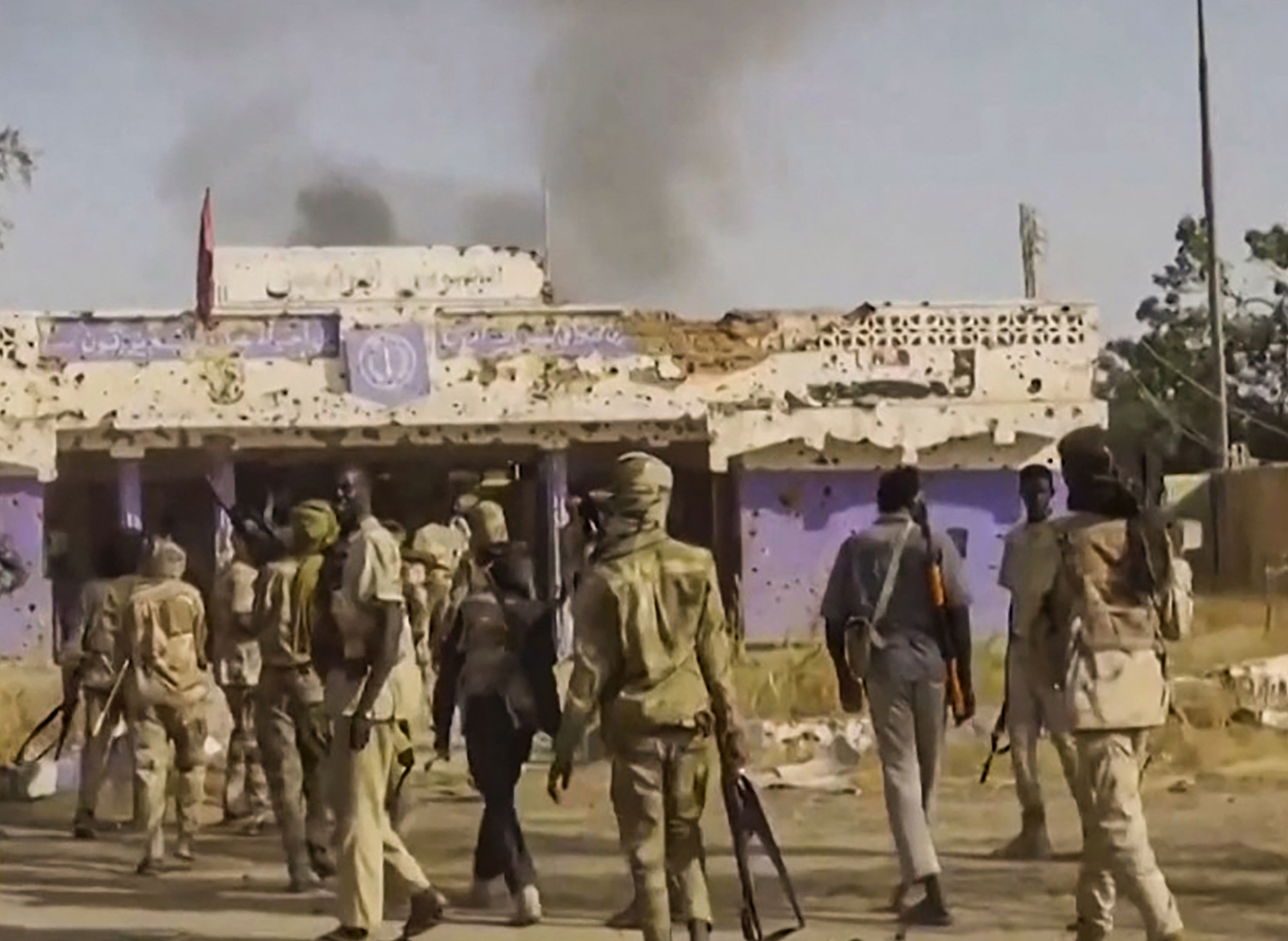
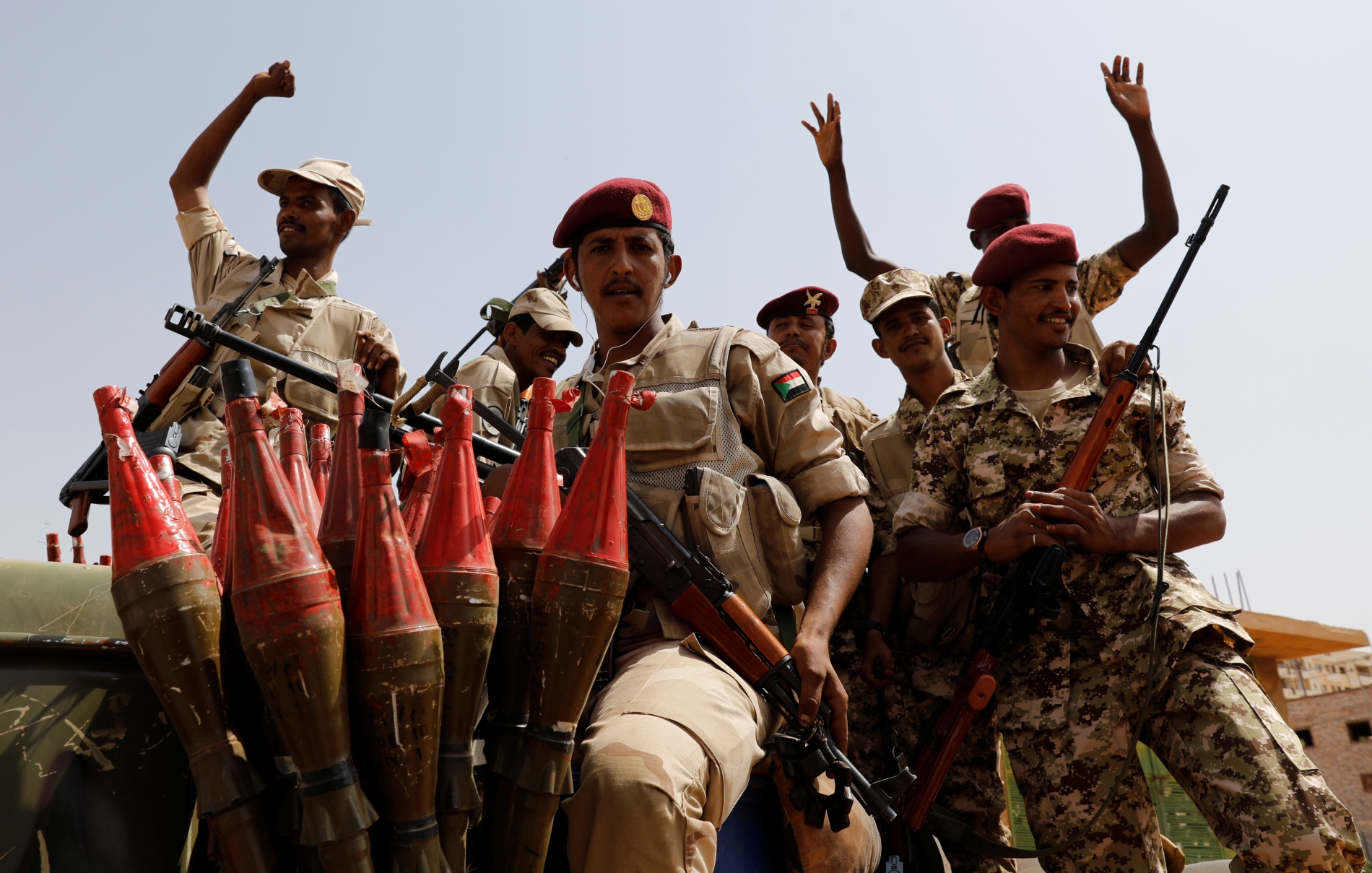
Fighters from the Rapid Support Forces (RSF) carry weapons and celebrate in the streets of El Fasher, Darfur, Sudan, on 26 October 2025.
In its public statements, the Quintet has sought to steer clear of this controversy. In a statement issued on 14 April, it reaffirmed its commitment to facilitating an inclusive, Sudanese-owned intra-Sudanese dialogue to end the war and lay the foundations for a peaceful transition. That commitment took practical form when the Quintet convened consultations in Addis Ababa from 3 to 5 June in an effort to establish a preparatory committee that could launch the dialogue.
A subsequent statement, issued on 6 August, confirmed that contacts with Sudanese political blocs and parties were continuing. The African Union Peace and Security Council likewise called for an inclusive intra-Sudanese dialogue under AU leadership and urged the Quintet to continue consulting Sudanese actors in preparation for its launch.
Developments on the ground, however, made clear that the question of who participates is no procedural footnote. It lies at the heart of the dispute. Preparations for the June meeting in Addis Ababa nearly foundered after some groups objected to the invitation extended to a new political bloc led by Mohamed Ahmed al-Jakoumi, widely regarded as aligned with the army's camp. Following intensive consultations, the Quintet withdrew the invitation. Other civilian groupings, meanwhile, objected from the outset to the participation of the Sumoud and Tasis alliances.
While the Quintet seeks to build an inclusive political process, the RSF continues to consolidate parallel institutions on the ground.
The divisions went deeper. Sumoud demanded the exclusion of the National Congress Party and the Islamic Movement, holding both responsible for the outbreak of the war. The Democratic Bloc, for its part, insisted that civilian forces within Tasis sever their ties with the RSF and end the 'parallel government' as a condition for participation.
The rift widened further in late July, when the Sudanese Declaration of Principles Forces, together with Sumoud and Tasis, boycotted the Quintet's meetings in Addis Ababa in protest at both its approach and the parties invited to attend. The boycott exposed a widening gulf between the international mediators' vision and the competing Sudanese factions' visions of what a fair political process should look like.
The army's objection to the question of 'who will the dialogue be with' therefore does not stand in isolation. It is part of a deeper dispute running through Sudan's civilian and political forces. Representation has become a multilayered obstacle in which questions of legitimacy, battlefield alliances, and responsibility for starting the war intersect, reaching far beyond any technical disagreement over the composition of a preparatory committee.
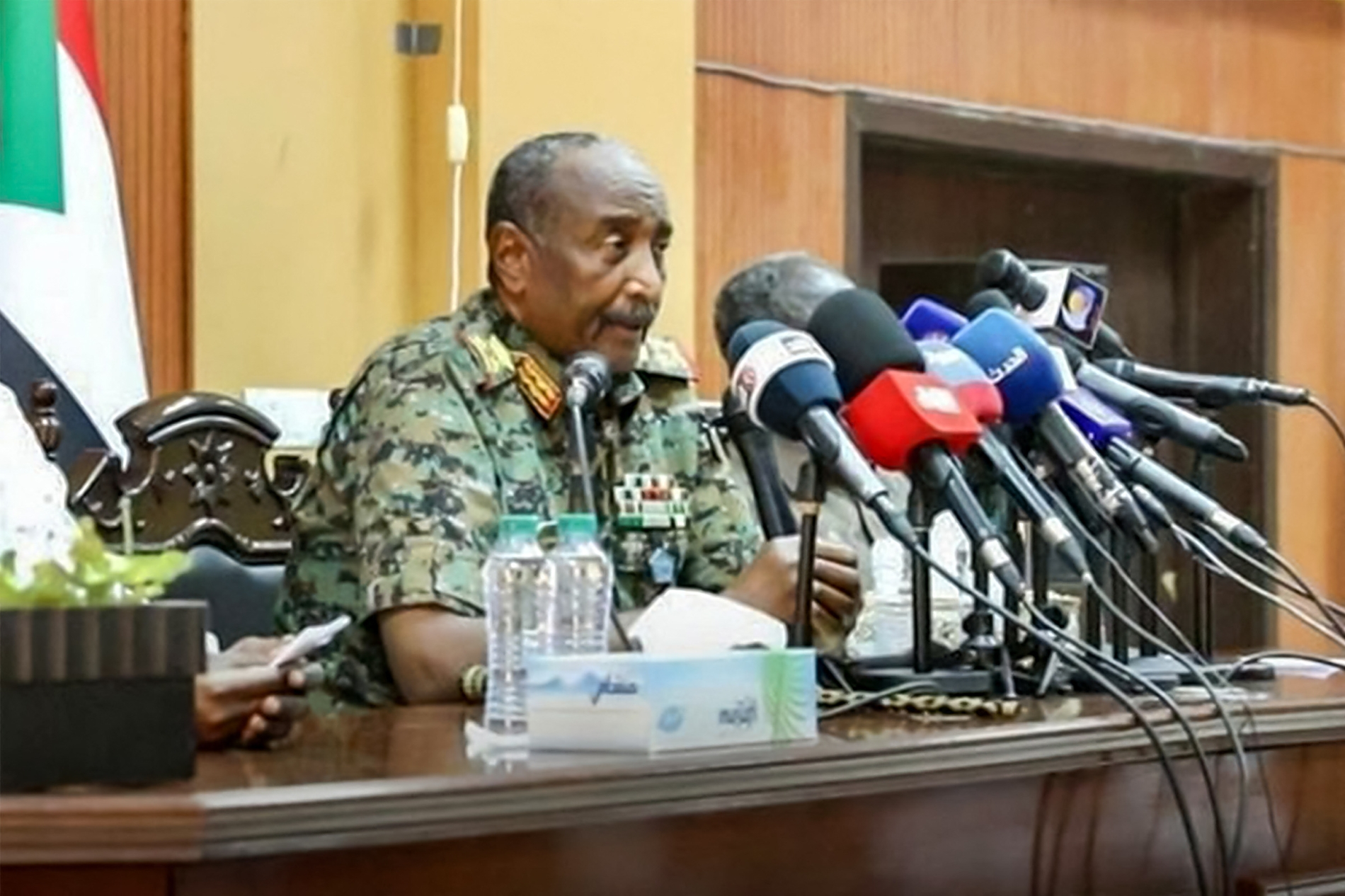
Sudan's army chief General Abdel Fattah al-Burhan gives a press conference in Port Sudan on 24 August 2024. He declined to attend the talks in Geneva, vowing instead to 'fight for 100 years'.
Parallel dialogue
The paradox is that, even as the Quintet seeks to advance a broad political process, al-Burhan is promoting an 'intra-Sudanese dialogue' of his own. In a recorded address marking the 72nd anniversary of the Sudanese Armed Forces, he said participants in the national dialogue would be granted temporary immunity and would face no legal prosecution for views expressed during the discussions.
On 26 May, he announced that preparations were under way for a comprehensive dialogue inside Sudan to agree on the foundations of governance and complete the transition to civilian democratic rule. At the same time, he set clear limits on participation, excluding forces his government considers linked to the RSF or implicated in the war. However, in late August, Sudanese political and civil forces rejected his call, proposing instead a roadmap built around three concurrent tracks: humanitarian relief, a permanent ceasefire, and an exclusively civilian political process.
The dispute, then, is between two competing visions of dialogue: a process the Quintet seeks to make broad and inclusive, and an internal process in which the existing authorities would retain greater control over the rules and who is permitted to participate.
The same pattern has surfaced before. In December 2025, Prime Minister Kamil Idris presented the UN Security Council with an initiative beginning with a ceasefire, the disarmament of the RSF, and its withdrawal from the cities, followed by an 'intra-Sudanese dialogue' to determine how the country should be governed. The initiative itself allowed for an international and regional role in supervising some of these arrangements. Idris spoke of a ceasefire monitored by the United Nations, the African Union and the Arab League.
The government's objection, therefore, is not to an external role as such. The real dispute concerns the extent of that role and, above all, who has the authority to set the rules of the political process and determine who takes part.
The repeated revival of 'intra-Sudanese dialogue' whenever external pressure intensifies may also serve a more strategic purpose: to buy time, regain control of the settlement process, and preserve the possibility of changing the balance of power on the battlefield.
RSF soldiers secure a site where its leader, General Mohamed Hamdan Dagalo, attends a meeting in Khartoum, Sudan, on 18 June 2019.
US role crucial
Washington's role remains central and hard to replace, even though multilateral institutions rather than individual states lead the Quintet. This is particularly important because the US has been the international actor most insistent that any political transition in Sudan should culminate in democratic civilian rule and prevent Islamist forces from returning to the centre of political power.
In recent months, however, Washington has begun redirecting its diplomatic capital towards the humanitarian track at the expense of the broader political process. That shift comes at a cost to the Quintet as a whole. Without sustained US pressure alongside the UN and African Union, the army gains greater room to weaken the mechanism through procedural delay rather than reject it outright. Every gap in US diplomatic engagement gives it further space to strengthen its parallel track of internal dialogue.
What the US administration needs, therefore, is more than a resumption of engagement. It requires an approach attuned to the full complexity of the Sudanese landscape: measured enough to recognise that the obstacles are structural and intertwined rather than merely procedural, and sufficiently open to linking humanitarian instruments, from local truces to aid corridors, to clear political conditions for serious participation in an inclusive dialogue.
Only then can the humanitarian track become a source of leverage for the Quintet, rather than an end in itself, while keeping the goal of a civilian transition at the heart of US calculations instead of allowing it to slip into the background.
Ultimately, the greatest danger is that the principle of 'Sudanese ownership', without a genuine balance among the country's warring parties or sufficient international leverage to counterbalance them, could cease to serve as the foundation of a durable settlement and instead become a means by which one belligerent decides alone who is entitled to a place in Sudan's future.