As states race to embed algorithms in systems of reconnaissance, targeting, air defence, and military decision-making, a new layer of risk is taking shape
In the age of artificial intelligence, peace can no longer rest solely on ceasefire agreements, border monitoring, or efforts to curb the proliferation of missiles and nuclear warheads. As states race to embed algorithms in systems of reconnaissance, targeting, air defence, and military decision-making, a new layer of risk is taking shape.
An algorithm capable of analysing satellite imagery, correlating communications with human movement, classifying a potential target, and recommending a strike within seconds changes far more than the mechanics of combat. It alters the prospects of preventing war, containing escalation, and determining responsibility when things go wrong.
The Global Peace Index 2026, produced by the Institute for Economics and Peace, illustrates the scale of the transformation unfolding on contemporary battlefields. Recorded drone attacks rose from 364 in 2018 to more than 42,000 in 2025.
These figures do not mean that every drone operates autonomously. The Russia–Ukraine war accounts for a substantial share of the increase. Even so, the broader trajectory is difficult to ignore. Sensors have become cheaper, offensive platforms more numerous, military data more plentiful, and the interval between identifying a target and striking it has become dramatically shorter. The report estimates that, in some systems, the time between detection and attack has fallen from nearly a full day to as little as five seconds.
Such speed may confer a considerable military advantage, while also creating a serious political problem. Diplomacy needs time: time to verify information, interpret an adversary’s intentions, open channels of communication, and forestall impulsive reactions. Algorithms are generally designed to accelerate response, rather than preserve the interval in which hesitation, reassessment, or negotiation may still be possible.
When the warning and targeting systems of two adversaries begin operating at machine tempo, escalation may move faster than political leaders can understand, much less control. One algorithm may interpret a troop movement or radar signal as evidence of an impending attack and recommend a pre-emptive strike.
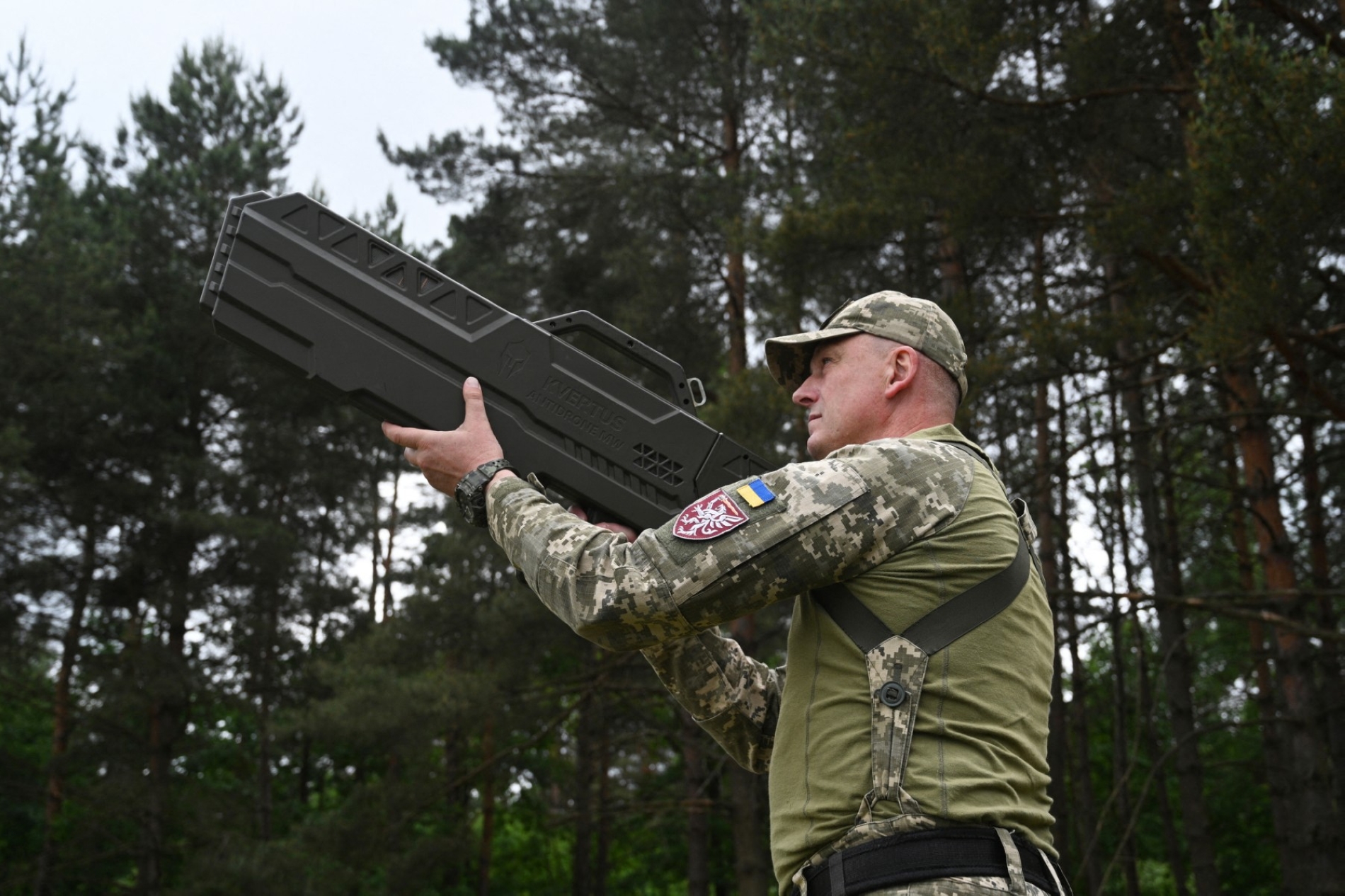
A Ukrainian serviceman tests an anti-drone gun developed by Ukrainian company Kvertus in the Lviv region on 28 May, 2024, amid Russia’s invasion of Ukraine
The illusion of human control
The danger, however, is more immediate: human beings making momentous decisions within an environment shaped by algorithms and at a pace that leaves them only seconds to accept or reject what the system proposes. That, of course, assumes humans are making these decisions at all.
Israel’s war on Gaza illustrates not only how these systems are changing the conduct of warfare but how AI is being used to identify targets, coordinate military operations, and accelerate decision-making. These systems, including Habsora (The Gospel) and Lavender, can process vast quantities of information and generate large numbers of potential targets. According to an investigation by +972 Magazine, Lavender was used to identify people as potential militants, with the investigation reporting that there was “no requirement to thoroughly check why the machine made those choices or to examine the raw intelligence data on which they were based”.
A human being may formally remain 'in the decision loop', yet formal presence alone does not amount to meaningful oversight.
A human being may formally remain 'in the decision loop', yet formal presence alone does not amount to meaningful oversight. If a system presents a target that has already been classified, assigns it a threat level, selects the appropriate weapon, and gives the operator only a few seconds to approve the strike, human judgement risks being reduced to a procedural formality within a process largely driven by the machine.
The problem is compounded by 'automation bias': the human tendency to place excessive trust in a computer-generated recommendation, particularly under the pressures of limited time, exhaustion, and fear. Human control therefore cannot be judged merely by who presses the final button. Genuine control requires the operator to understand the basis of the recommendation, have access to independent information, recognise the system's limitations, and possess a realistic opportunity to challenge its conclusion or abort the strike.
Without those safeguards, the human decision-maker risks becoming little more than a legal façade for a choice the algorithm has, in practical terms, already made.
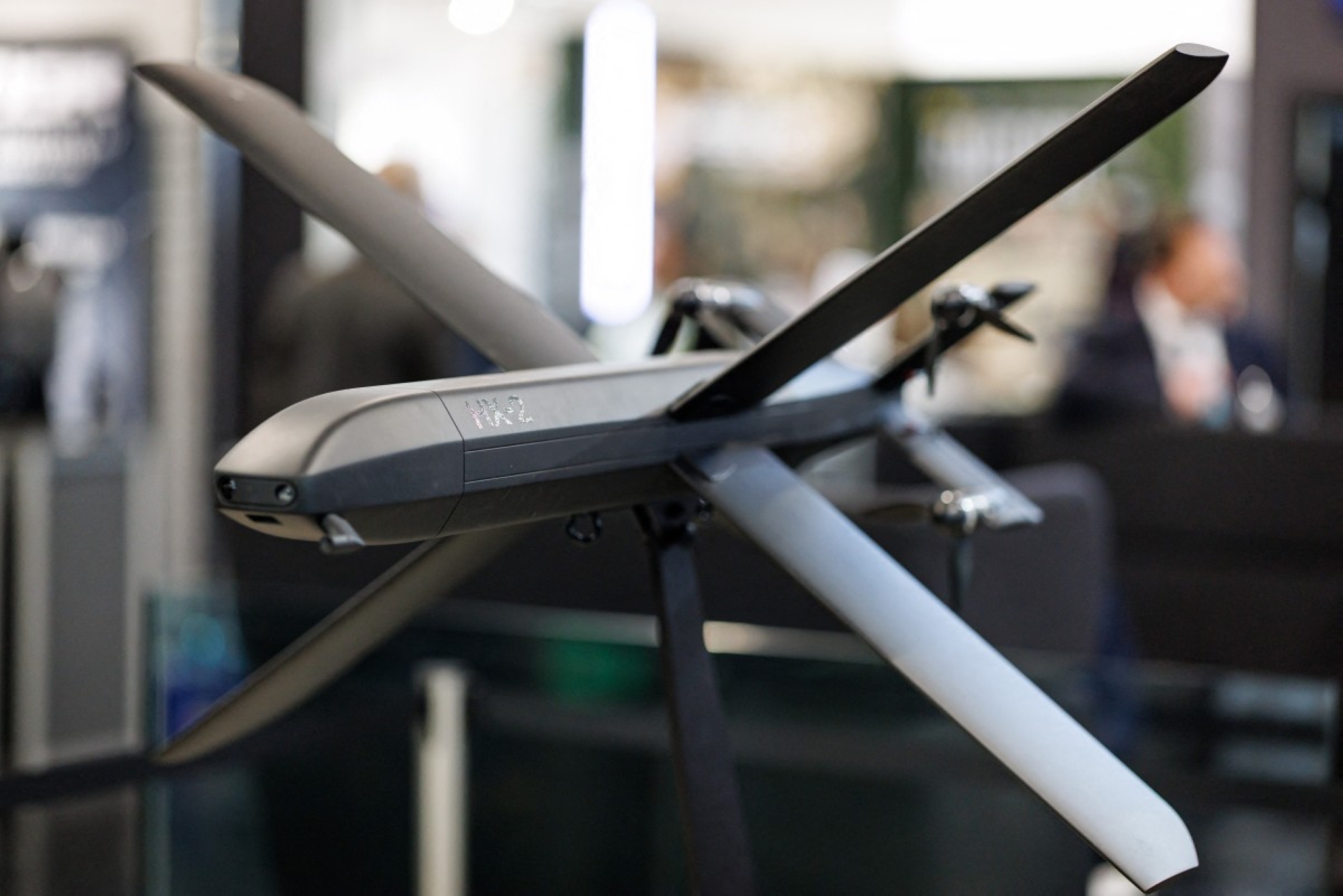
The HX-2 AI Strike Drone is displayed at the stand of German defence start-up Helsing during the Enforce Tac security and defence trade fair in Nuremberg, southern Germany, on 25 February, 2026
Predicting how a weapon will behave
Traditional arms-control regimes have largely rested on what can be seen, measured, and counted: the number of tanks, the range of missiles, the quantities of chemical agents, and the scale of nuclear stockpiles.
AI presents a more difficult challenge. It is software that can be copied, modified, and transferred rapidly, while the same model may serve civilian and military purposes alike. An algorithm designed to analyse images of crops may be applied just as readily to imagery from a battlefield, while an object-recognition tool may become a component of a target-selection system.
Political settlements after conflict depend in part on the ability to investigate violations, identify those responsible, and hold to account those who gave or carried out orders. AI may make that task considerably more difficult.
An algorithm cannot stand trial, serve a prison sentence, or compensate its victims. States, commanders, and operators remain legally responsible for the use of force, yet responsibility may be distributed across a long chain of actors. One company may have designed the model, another supplied the data, a contractor integrated it into a military platform, an armed force adjusted its parameters, a commander defined its area of operation, and an operator ultimately approved the strike.
Without digital records showing what data the system received, which version of the model was running, what confidence score it produced, what warnings appeared, and what human orders were issued, investigators may be left trying to reconstruct a decision made in fractions of a second inside an opaque system.
Does existing law go far enough?
International humanitarian law applies to every weapon, whether a rifle, a missile, or a system powered by AI. Armed forces remain bound by the duty to distinguish civilians from combatants, avoid excessive harm, and take all feasible precautions to protect civilian life.
The difficulty lies in applying those principles as decisions accelerate and systems become increasingly complex. The law requires a commander to verify a target, yet it does not always specify how much time that commander must be given, what information must be presented, how thoroughly the system's workings need to be understood, or what degree of uncertainty should make its use unacceptable.
The International Committee of the Red Cross (ICRC) therefore draws a distinction between the applicability of existing law and its sufficiency. The ICRC has called for a prohibition on systems whose effects cannot be predicted with sufficient confidence, as well as on weapons designed or used to target human beings autonomously.
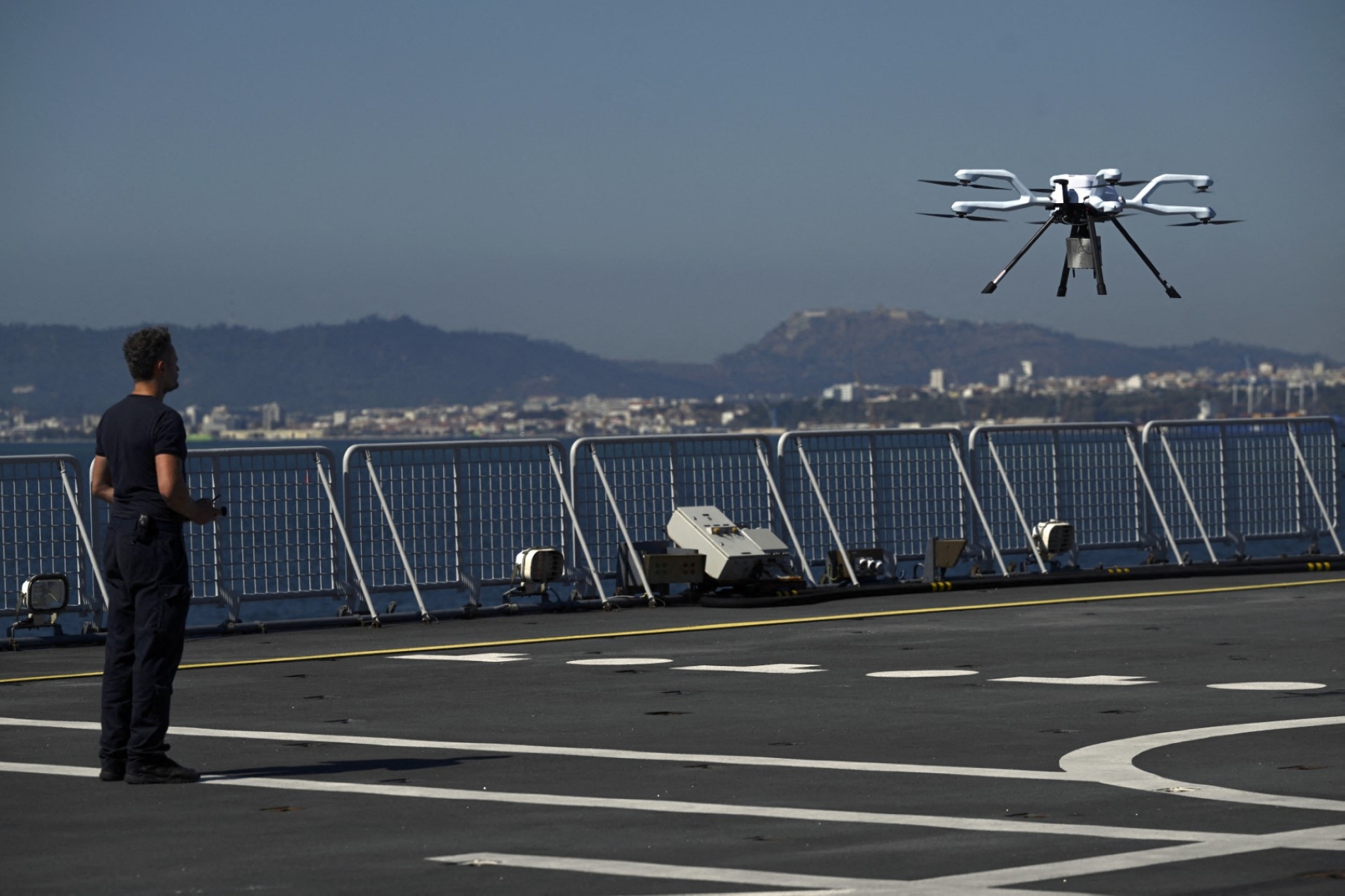
A soldier operates an "Acecore" drone from the landing deck of the Dutch amphibious transport ship HNLMS Rotterdam during NATO's "REPMUS 22" exercise.
The race to deploy
Technologies that promise military superiority encourage rivals to acquire them. AI may intensify this dynamic because it offers armed forces the prospect of finding and attacking targets more quickly and at lower cost.
Even when they recognise the dangers of military autonomy, states may conclude that failing to develop such capabilities is more dangerous than developing them, for fear that an adversary will gain the advantage first. Military competition can encourage the deployment of systems before they have been adequately tested, the erosion of safety standards, and the concealment of defects, failures, and accidents. International governance becomes particularly important under such conditions, both to prevent unlawful use and to ease competitive pressures by establishing shared red lines that reduce the strategic cost of restraint.
The pressure to move quickly is evident in the rhetoric surrounding the global race for AI dominance. Emil Michael, the US undersecretary of war for research and engineering, has described AI as "America's next Manifest Destiny", adding that "there is no prize for second place in the global race for AI dominance".
Negotiations, however, are moving more slowly than the technology itself. Most states accept that international law applies and that responsibility must remain human, yet disagreement persists over what meaningful human control requires and whether the necessary rules should be legally binding or merely voluntary.
Regulating AI warfare
AI poses a distinctive problem. It is neither a substance that can simply be prohibited nor a stockpile that can readily be counted. It is inherently dual-use and is often developed within civilian companies and universities. Any workable treaty is therefore more likely to regulate or prohibit particular functions than the technology as a whole.
Such rules could bar systems from selecting and attacking human beings without meaningful human judgement, prohibit systems whose behaviour cannot be predicted with sufficient reliability, and exclude AI from decisions to launch nuclear weapons.
Technology companies develop the models, chips, cloud infrastructure, and computer-vision systems upon which military applications increasingly depend, giving them a direct role in international security. They must therefore be brought within systems of accountability through contracts, export controls, safety standards and independent audits.
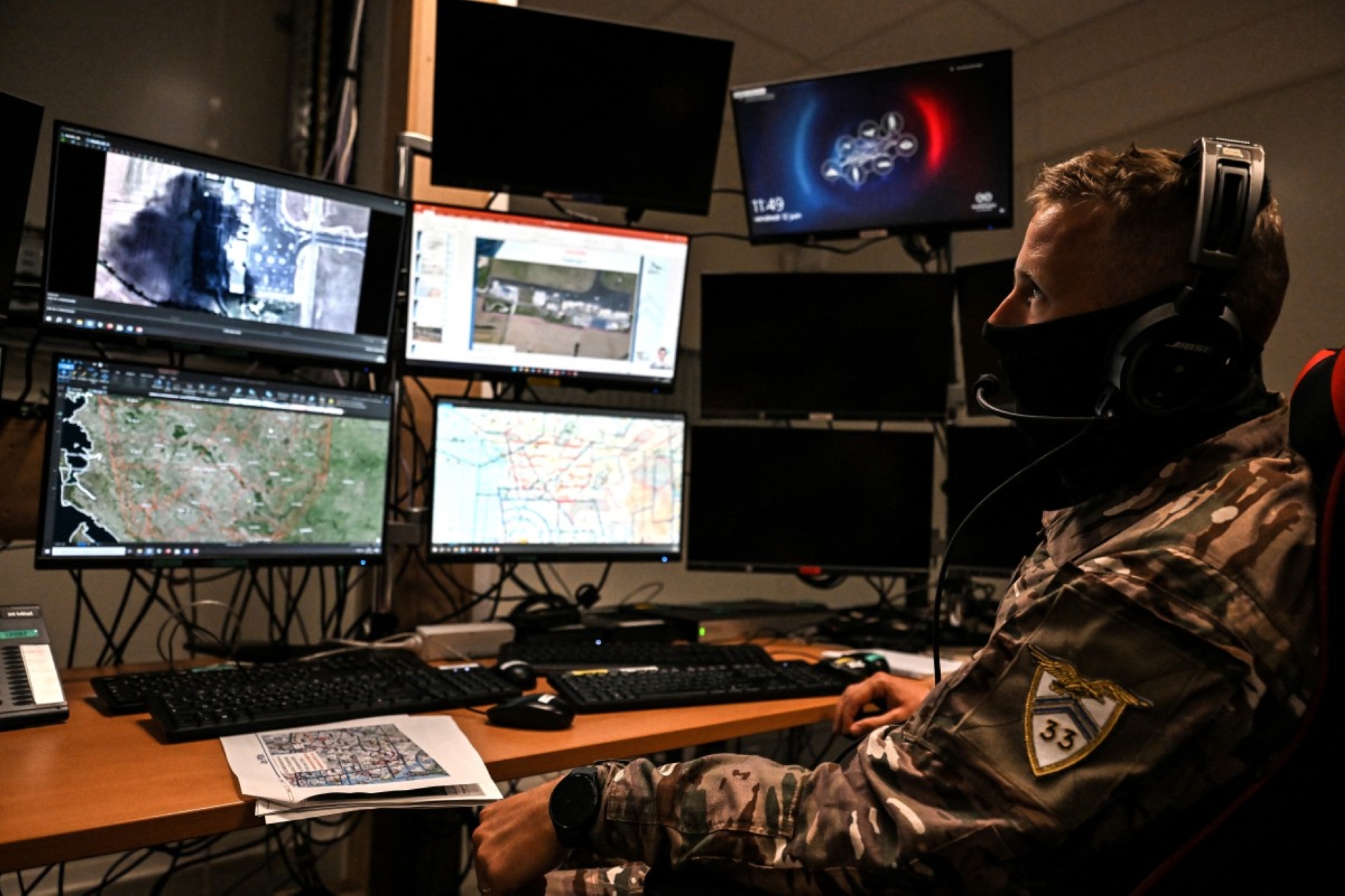
A member of the crew monitor screens in the information ground cockpit during a training flight of an MQ-9 Reaper military drone in Chateaubernard, southwestern France on 12 June 2026.
AI for peace
Governance should not become a blanket rejection of technology. AI can strengthen civilian protection, analyse images of destruction, detect mines, intercept missiles, select less harmful weapons, or abort a strike when civilians are detected near a target.
There is a crucial difference between automating a specific task within a controlled environment and granting a system the authority to determine whether a human being should be targeted. A system that intercepts an airborne object within a clearly defined zone is fundamentally different from an algorithm that identifies a person as a combatant on the basis of a phone, patterns of movement or personal associations.
The paradox is that AI is being incorporated into warfare at remarkable speed, while its use in conflict prevention and peace-building remains limited and uneven. Algorithms can analyse indicators such as rising prices, displacement, inflammatory rhetoric, and localised violence, providing early warning before tensions deepen into armed conflict. They can support mediation, document violations, assess the consequences of war, and help direct humanitarian assistance.
Governance does not require the creation of a global authority empowered to review every line of code or prevent states from making legitimate use of technology. Its purpose is to establish rules that keep AI from becoming a permanent source of instability.
These measures will not abolish war. They may, however, prevent algorithms from becoming a force that drives escalation without oversight or accountability.