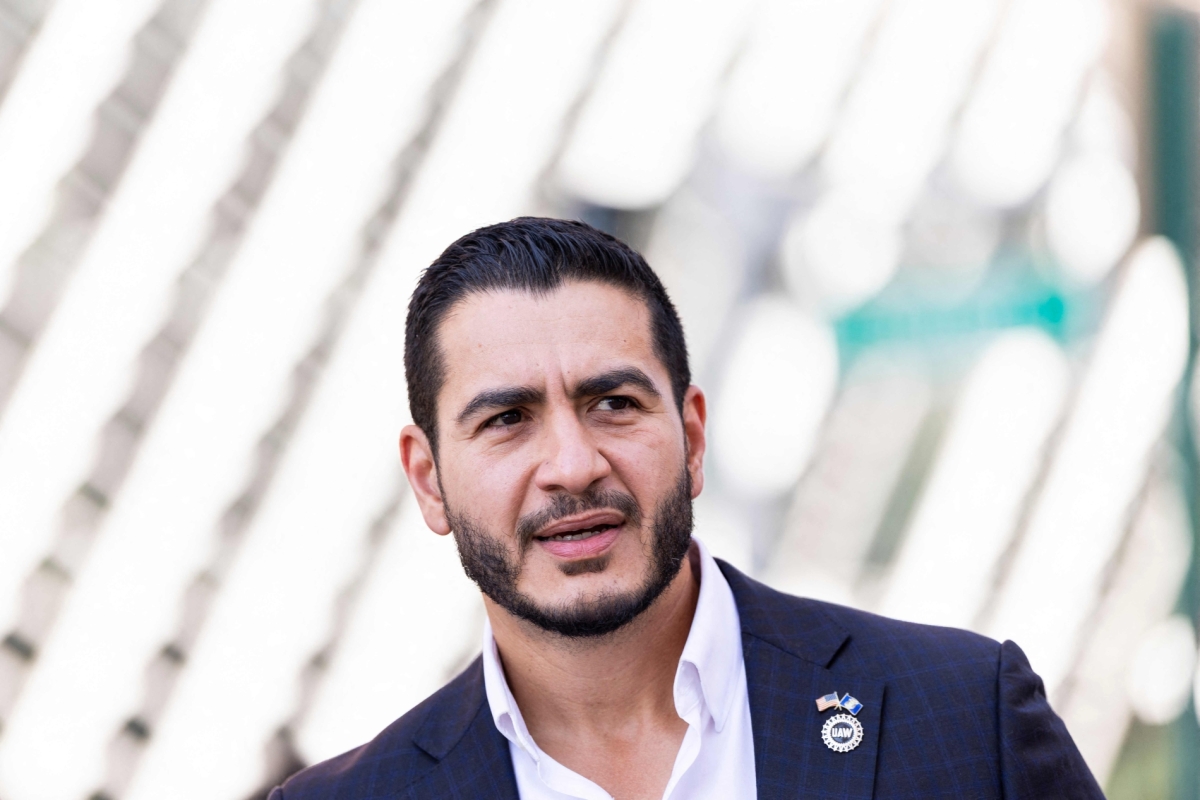

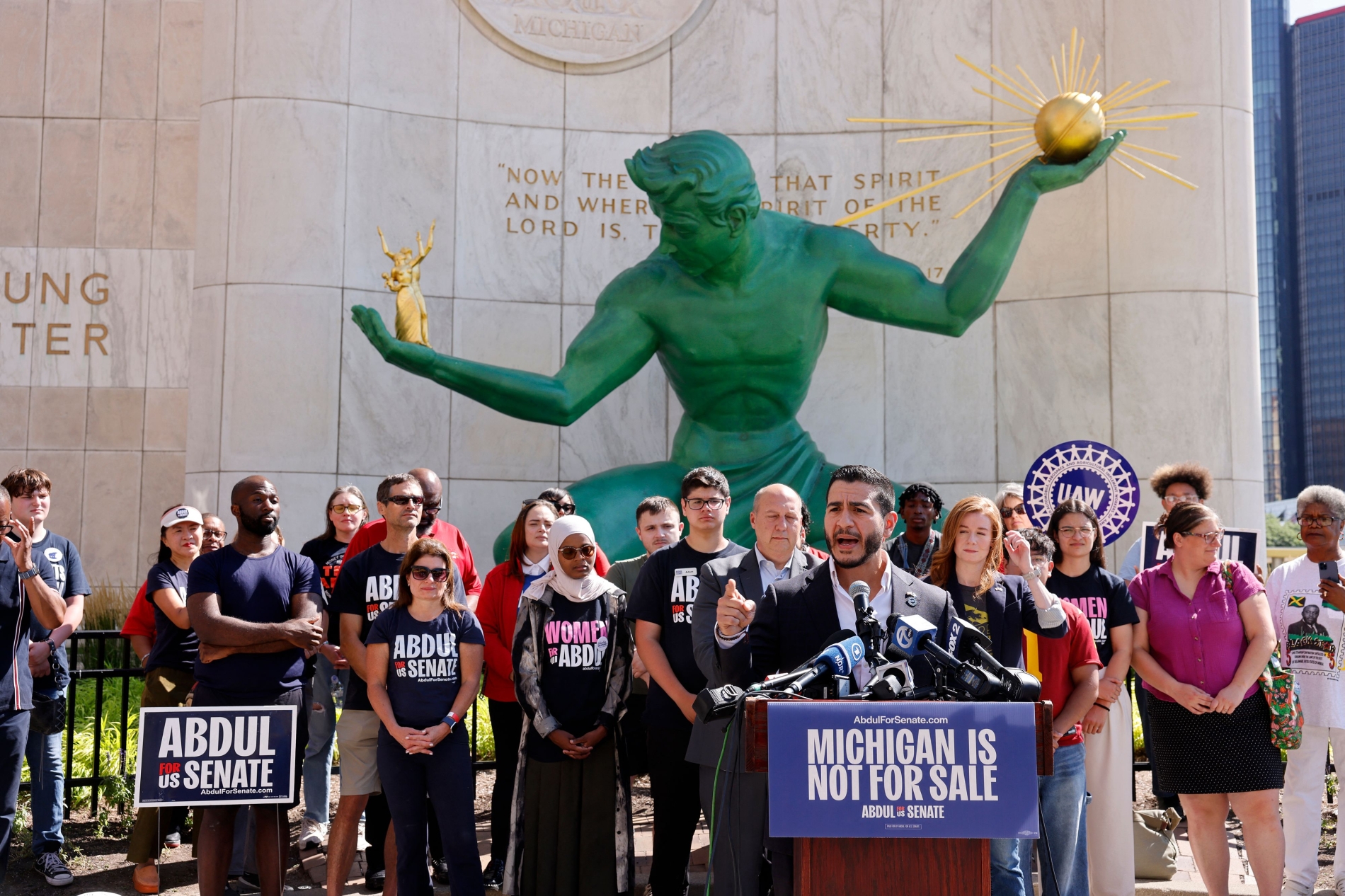
After a bruising campaign in which the traditional Democratic establishment and its allies among Jewish and pro-Israel lobbying organisations spent tens of millions of dollars supporting their preferred candidate, Congresswoman Haley Stevens, a 41-year-old Egyptian American epidemiologist, Abdulrahman Mohamed El-Sayed, widely known as Abdul El-Sayed, emerged victorious. His win secured the Democratic nomination for the forthcoming United States Senate election, in which he will face Republican Mike Rogers. If he wins in November, he would become the first Arab-Muslim senator in US history.
El-Sayed faced an extensive and relentless advertising campaign on Stevens’s behalf, with total spending reaching $70mn. Pro-Israel Jewish lobbying groups and senior Democratic figures poured money into the race for months. Michigan’s highly popular governor, Gretchen Whitmer, and Gary Peters, the retiring senator whose seat is being contested, also endorsed Stevens in a final attempt to halt El-Sayed’s advance.
For their part, leading figures of the progressive left closed ranks behind El-Sayed. Senator Bernie Sanders, Senator Elizabeth Warren, New York Congresswoman Alexandria Ocasio-Cortez, Minnesota Congresswoman Ilhan Omar and Michigan Congresswoman Rashida Tlaib joined him on the campaign trail, travelling through several of the 12 counties in which the electoral battle was fought.
Apart from El-Sayed's win, the Democratic primaries in Michigan yielded further victories for progressives over candidates backed by the party establishment. The liberal Donavan McKinney defeated Congressman Shri Thanedar, one of the most outspoken advocates of continued United States military support for Israel. Thanedar joined five other members of Congress defeated by progressive challengers, three in Texas and two in New York.
A resonating message
El-Sayed’s victory challenges assumptions that have long governed US electoral politics. Voters responded to his programme and to his refusal to be beholden to corporate money, submit to the interests and pressures of an ageing party establishment or kowtow to powerful lobbying organisations. The immense influence of such groups has typically been successful at securing electoral wins. But in recent years, these groups seem to be increasingly less effective.
The pro-Israel lobbying group AIPAC began pouring tens of millions of dollars into support for Stevens in June. Its total expenditure eventually exceeded $46mn. According to El-Sayed, his opponent spent eleven times more on her campaign than he did.
Stevens insisted that the money had exerted no influence over her political positions, which include support for the continued provision of unconditional military assistance to Israel, alongside advocacy of a Palestinian state beside it. El-Sayed, by contrast, has frequently criticised Israel's definition as a Jewish state, arguing that codifying a nation exclusively for one ethno-religious group is fundamentally incompatible with liberal, democratic values, while affirming his belief in equal rights, dignity and peace for Jews and Palestinians alike.
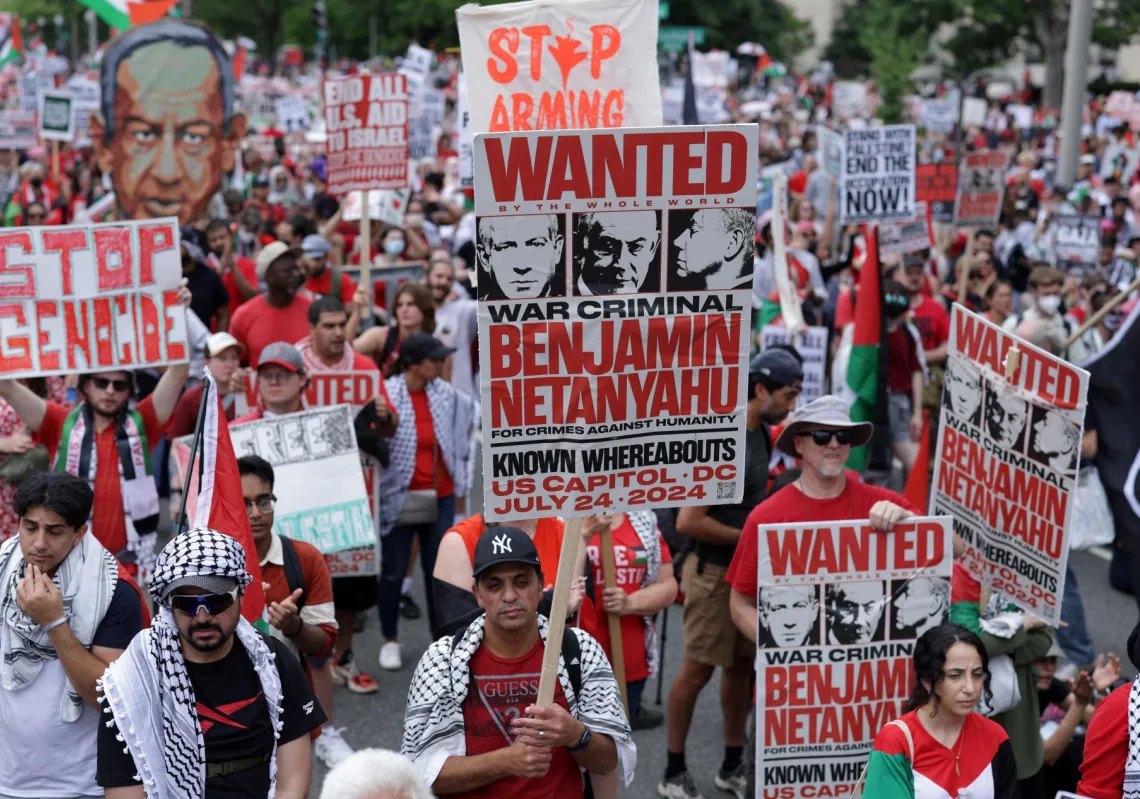
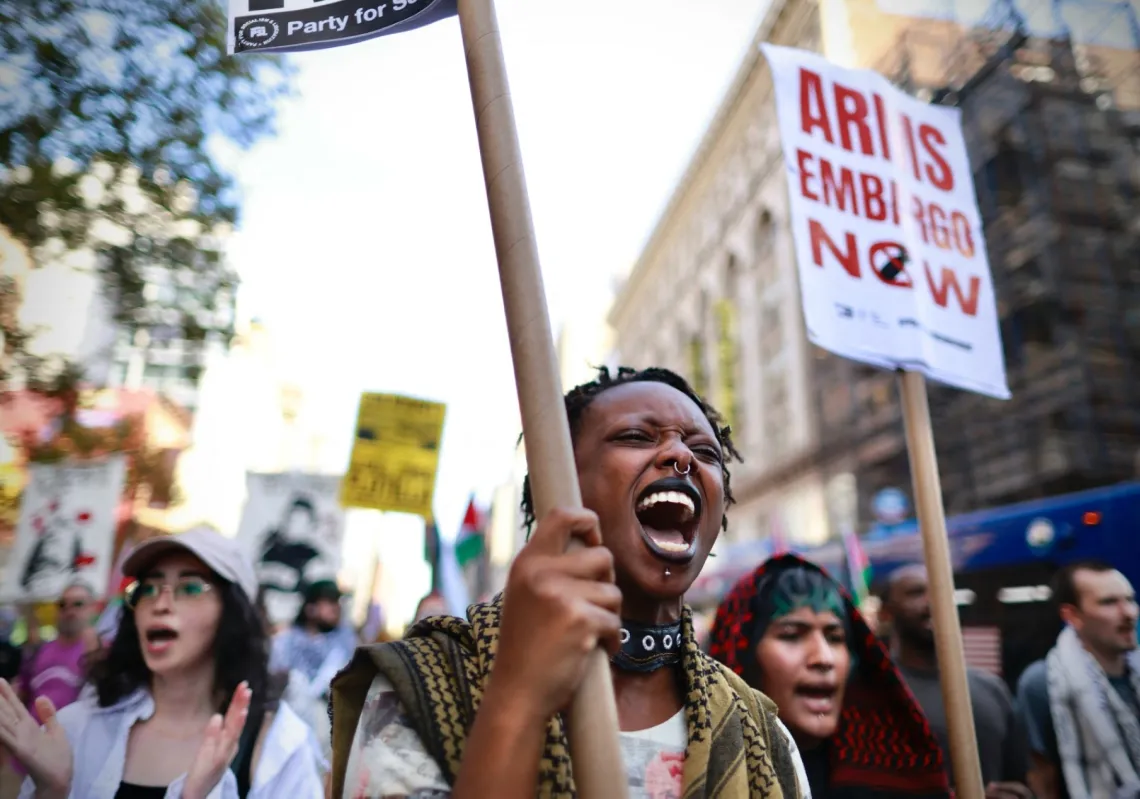
El-Sayed has joined a growing number of Democratic politicians who accuse Israel of committing genocide in Gaza, a claim affirmed by multiple United Nations reports. His bold stance has proved extremely popular in Michigan, home to the largest Arab and Muslim community in the United States.
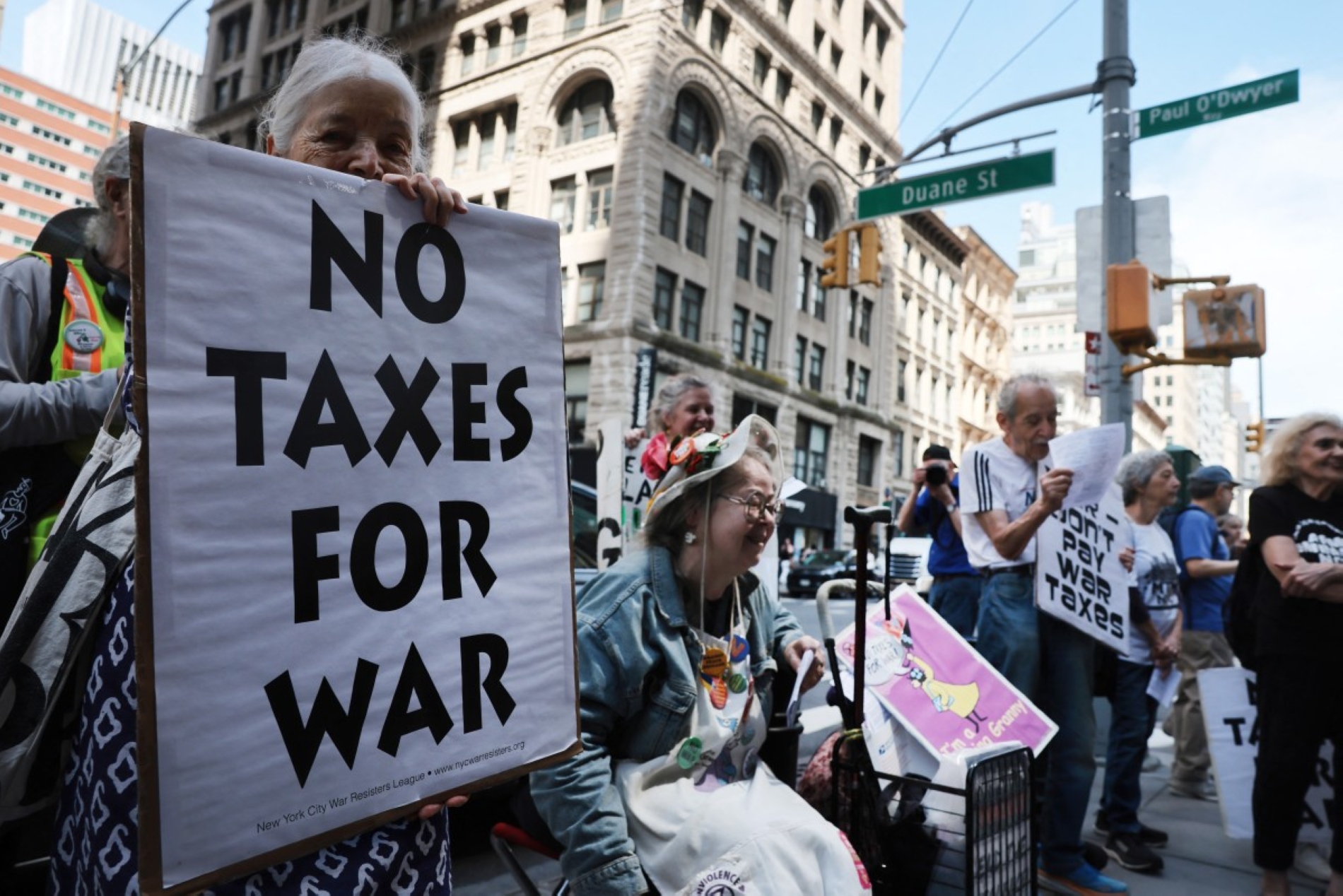
El-Sayed has also explicitly called for an end to US financial and military support to Israel and openly questions why US taxpayers should be expected to take money from their own pockets to fund military operations of a foreign country, whether Israel, Pakistan, Egypt or any other state, while American children can barely find schools fit to attend.
Taxes, he argued, should be spent on providing healthcare to Americans rather than transferred to foreign governments that use the money to purchase bombs and tanks to kill people in other countries and destroy their infrastructure. He also firmly rejects financial support to any country implicated in human rights abuses, or to armed forces that commit genocide, impose apartheid or draw the US into wars in which it has no stake.
Education and career
El-Sayed was born in Detroit, Michigan, in 1984 to Egyptian immigrant parents. His father was an engineer from Alexandria, while his mother worked as a nurse in Missouri. He excelled throughout his education and earned several degrees in Michigan, including in medicine and public health, before completing further medical studies at Columbia University.
Rather than pursue a licence to practise medicine, El-Sayed chose a career in public health and epidemic control. In 2014, he was appointed assistant professor in Columbia University’s Department of Epidemiology and became director of the Systems Science Program and Global Research Analytics for Population Health.