Writer João Morgado on switching from the epic to the intimatehttps://en.majalla.com/node/328766/culture-social-affairs/writer-jo%C3%A3o-morgado-switching-epic-intimate
Writer João Morgado on switching from the epic to the intimate
From the lives of explorers to the intimacies of the human condition, Morgado looks for the imperfect and the relatable, whether in historical figures or in ourselves.
Writer João Morgado on switching from the epic to the intimate
João Morgado is a prominent Portuguese writer who has published several novels, along with a collection of short stories, novellas, poetry, and children’s tales. In historical fiction is his Trilogy of the Navigators including Vera Cruz (Pedro Álvares Cabral, who claimed Brazil for Portugal), Indias (Vasco da Gama, who discovered the first direct maritime route between Europe and India via the Cape of Good Hope and across the Indian Ocean), and Ferdinand Magellan and the Bird of Paradise.
His book Dust in the Gale covers Vasco de Gama’s turbulent life, while The Book of Empire is a biographical novel about Luís Vaz de Camões, who many consider to be Portugal’s greatest poet. Additionally, he wrote Trilogy of Intimacy, including Diary of the Unhappy, Diary of the Imperfect, and Diary of the Unfaithful. Al Majalla spoke to him about his writing. Here is the conversation:
You have written in many literary genres. How do you see this diversity? Is it a search for your voice, or a recognition that a writer cannot be limited to a single form?
I’m a plural writer in themes, narrative structures, voices. I write novels, short stories, poetry, theatre, chronicles... not as a strategy, but out of a natural impulse. I shift from the epic to the intimate, feminine to masculine, archaic to contemporary, with the creative spontaneity that defines me.
This variety stems from a multifaceted life. I’ve been a textile worker, a salesman, a journalist, a marketer, a politician, a screenwriter... Literature must come from life to the page, and there’s no single way to express the world. Identity, literary or personal, doesn’t need to be singular to be authentic.
Praia di Bunitas is a children’s book and marks your first exploration into the vast world of African culture. Tell us more.
Praia di Bunitas is part of this diversity. It was born from a social initiative and was donated to schools in Cape Verde, a Portuguese-speaking African archipelago. It’s the story of a friendship between a little girl and her doll, which also conveys an urgent environmental message about preserving the oceans, through the figure of a water goddess.
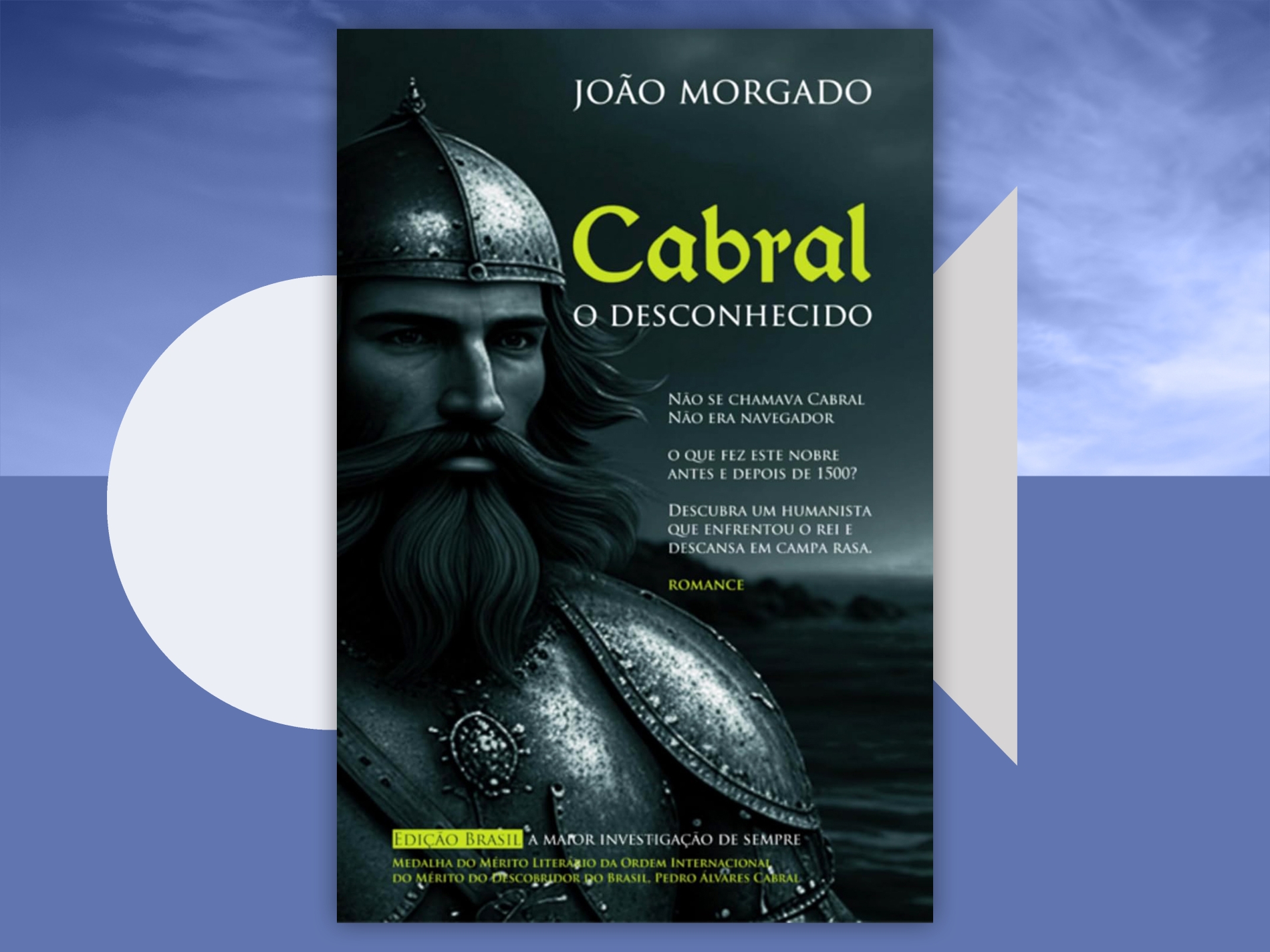
Morgado's biography of Pedro Álvares Cabral, who claimed Brazil for Portugal.
It includes passages in Cape Verdean Creole, a language born from the encounter between Portuguese and African languages, a cultural synthesis I find fascinating. Children’s literature should educate, warn, and sow the seeds of the future. I hope other projects celebrate the richness of African culture.
In an interview, you mentioned that historical literature in Portugal has a long tradition. The established form of the historical novel began in the 19th century with Alexandre Herculano, who you consider your most important reference in this genre. Could you elaborate on that?
Like Victor Hugo in France or Tolstoy in Russia, Alexandre Herculano founded the great historical novel in 19th century Portugal. Following his example, I seek to capture the spirit of those eras and the drama of the protagonists. But I take a more critical approach, less aligned with the official version found in textbooks. In my books, historical figures have virtues and flaws, like any human being.
I shift from the epic to the intimate, feminine to masculine, archaic to contemporary… This variety stems from a multifaceted life
This can be controversial, but it is what allows today's readers to truly connect with the past, recognising in those figures the same moral and emotional dilemmas we face. This approach of bringing history into literature has resonances in the Arab tradition, with Ibn Khaldun and other masters who understood that history is not just chronology, but above all an expression of human nature. A living literature should not comfort certainties but awaken questions. The historical novel should follow that motto.
You often humanise national heroes, revealing both their virtues and their flaws. Why is this important to you?
History is made of people, not untouchable legends or gods, but human beings with ambitions, frailties, and contradictions. As Camões wrote, there are figures who—through their deeds—escaped 'the law of death' in collective memory. But for today's readers to see themselves in them, we must understand them in all their facets.
It was the ambition and obstinacy of Fernão de Magalhães (Magellan) that led him to cross the Atlantic toward the Pacific, uniting worlds that until then had been separate for Europeans. It was the almost feverish messianism of Dom Sebastião (King Sebastian) that led him to the disastrous expedition culminating in Alcácer Quibir, precipitating the union of the Portuguese and Spanish crowns, when Portugal had a foreign king for 60 years.
Historical literature cannot be limited to the official version, so often sanitised of sins. We must understand the figures of the past in the context of the political, social, and religious thought of their time. It is that human truth, in all its complexity, that I seek to explore.
Critics point out that Dust in the Gale portrays the darker side of Vasco da Gama. How did you balance historical accuracy with the need to humanise and dramatize such a legendary figure?
When I write, I assume a pact with the reader: a novel is, above all, a work of fiction. But I have the duty to offer the reader the most rigorous information known on the subject, wrapped in literary language that facilitates understanding and stimulates the pleasure of reading.
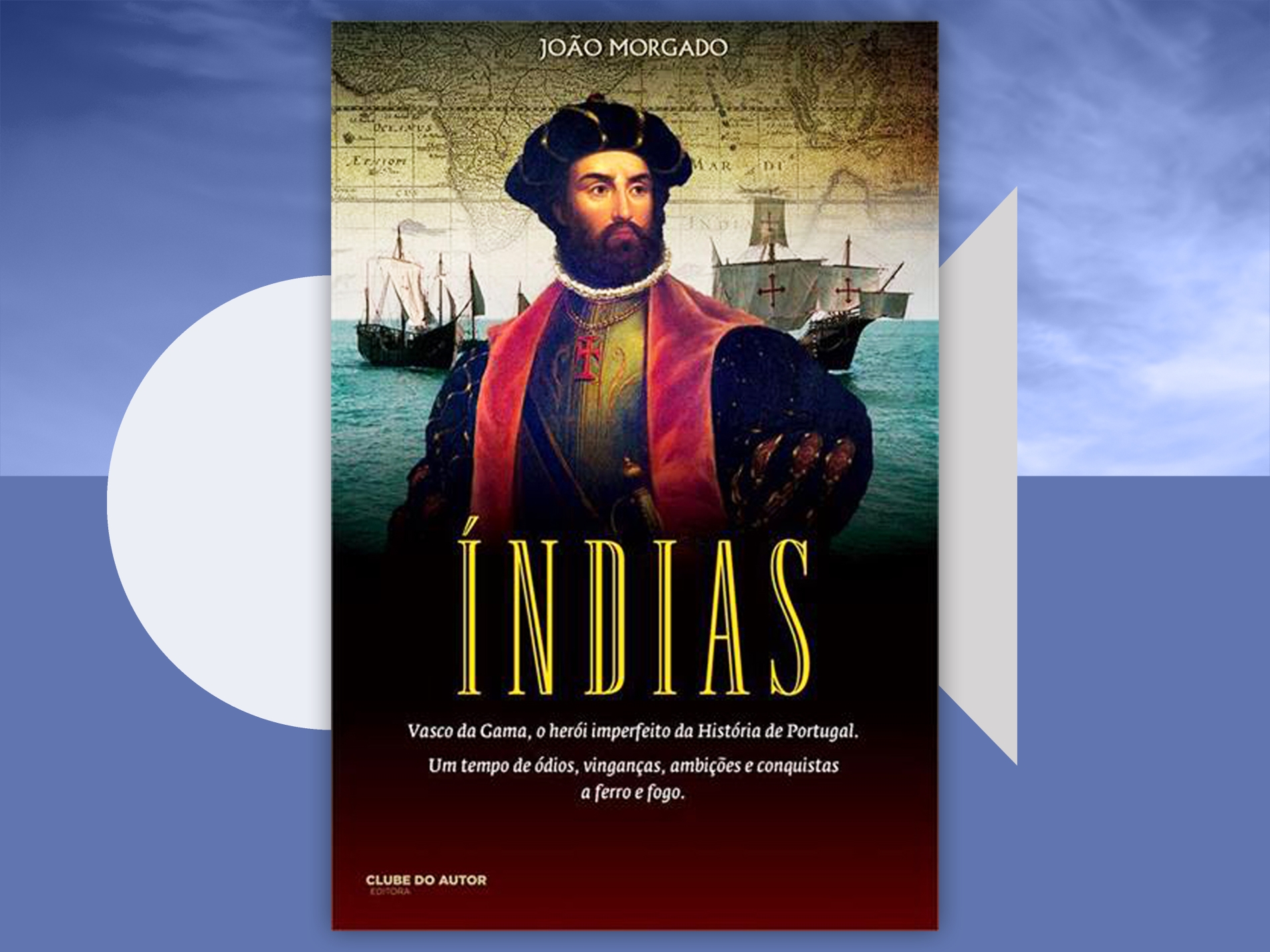
Morgado's biography of Vasco da Gama, who discovered the first direct maritime route between Europe and India via the Cape of Good Hope and across the Indian Ocean.
In Dust in the Gale, I sought to portray Vasco da Gama with the complexity that time and documents allow without deification, but also without anachronistic judgment. This novel does not aim to condemn the navigator, but to understand the man and place him in his time: his personality, his values, the dilemmas he faced. The violence he committed is documented and although it shocks us today, it must be understood in the social, political, and religious context of the 15th century. It should not be hidden, but rather explained and contextualised.
As I wrote: "Being a hero to a people is not the same as being a saint." Truth be told, the choice to humanise characters is not always consensual, but I believe healthy literary debate enriches historical understanding. Loved or hated, he is today more than just a name; he is flesh and blood, a personality.
Your historical novels, such as Índias, Vera Cruz, and Fernão de Magalhães e a Ave-do-Paraíso, reconstruct crucial moments of Portuguese history. What draws you repeatedly to these eras and specific figures?
Those three novels form the Trilogy of the Navigators, biographical works centred on figures who profoundly marked Portuguese and world history in the 15th and 16th centuries. Vasco da Gama, who established the sea route to India; Pedro Álvares Cabral, whose expedition reached the territory that would become Brazil; and Fernão de Magalhães, whose voyage—completed by Elcano after his death—achieved the first circumnavigation of the globe and definitively confirmed the Earth's roundness.
What attracts me to these men is not only their role in the great maritime endeavours of the era, but above all the human dilemmas they faced: the impossible decisions, the conflicts of loyalty, the boundless ambitions, the fears. These were journeys of an almost superhuman harshness; heat, ice, storms, hunger, diseases, privations we cannot even imagine when we read the pages of history.
These was a time when knowledge and science evolved remarkably, from the design of ships to the understanding of winds, tides, and stars. The contribution of Arab knowledge, especially in celestial navigation and cartography, was fundamental. It was an encounter of civilisations that led maps to be redrawn and knowledge exchanged, but also to conflicts and tragedies. This is rich literary territory, the moment when the world became truly interconnected, with all its promises and shadows.
What other figures are next?
I wrote a biographical novel of Camões, the national poet who wrote The Lusiads, the great epic that places him alongside Homer and Sirat Antar, or the poetry of Al-Mutanabbi, which I still need to know better! Moving beyond Portugal, I am finishing a work on Ibn 'Ammar, the 11th-century Andalusian poet. His fascinating story—the friendship and rivalry with King Al-Mu'tamid of Seville, his poetic genius, his tragic fate—has always attracted me.
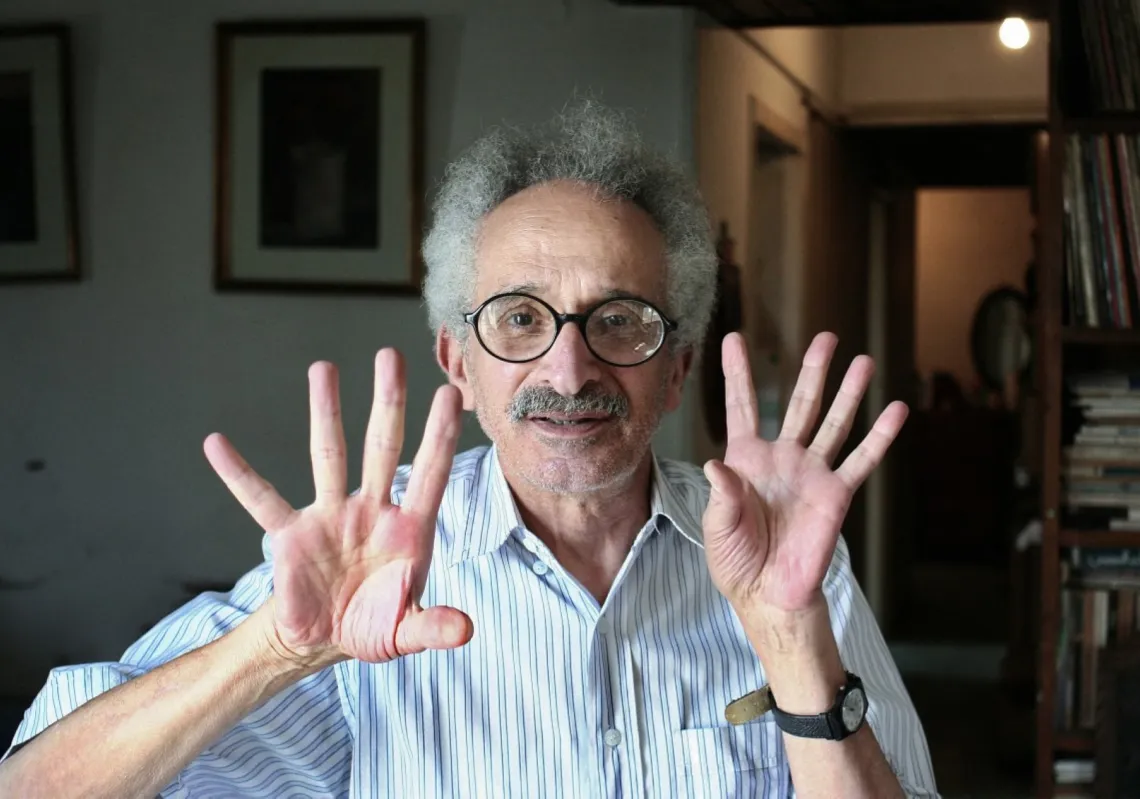
Portuguese writer João Morgado
With this work, I hope to build bridges between narrative traditions, both Portuguese and Arab. For me, Al-Andalus represents a space of encounter between cultures, where the Arabic language, poetry, philosophy, and science flourished in a unique way. Ibn 'Ammar is a figure who embodies both the splendour and the fragility of that world.
Your Intimacy Trilogy delves into themes such as unhappiness, imperfection, and infidelity. What conceptual thread led you to unite these three books?
The Intimacy Trilogy was born from a simple question: what if life does not fulfil the promise of happily ever after? These are novels begin where others end: when love is no longer blind, and illness, boredom, or disillusionment set in. They explore what literature so often seems to want to avoid: the wear and tear of daily life, ageing, frailty, the silence after passion. They walk the fringes of human experience.
My characters are ordinary people, like us. One says: "About us, no-one will ever write a novel." But it is precisely in that apparent banality that the deepest questions emerge. How do we deal with disappointment in ourselves, with imperfection, with unhappiness, with growing older?
Literature must be a continuous interrogation, an opening of the eyes, an exercise in lucidity in the face of the certainties that comfort us but so often prevent us from seeing human truth clearly. These three diaries are, in the end, a meditation on the human condition when stripped of illusions, and on the possibility of finding meaning and dignity even in the imperfection of existence.
José Saramago occupies a unique place in contemporary Portuguese literature. What are the essential elements of his literary project?
Saramago won the Nobel Prize for Literature in 1998 because he managed to do something rare: transform deeply philosophical questions into accessible narratives. His genius lies in starting from extraordinary premises—if we all went blind, if there was no more death—to create urgent reflections on our time, the fragility of civilisation, the fear of the other, our essential humanity.
He writes in a style that feels like he's telling a story by the fireside, and people let themselves be seduced by that simplicity which hides a profound complexity in the ethical, political, and existential questions he addresses.