The last days of Ali Abdullah Saleh 

Based on years of reporting and interviews, this account reconstructs how Yemen’s former president forged an alliance with the Houthis, why it collapsed, and the events that led to his death

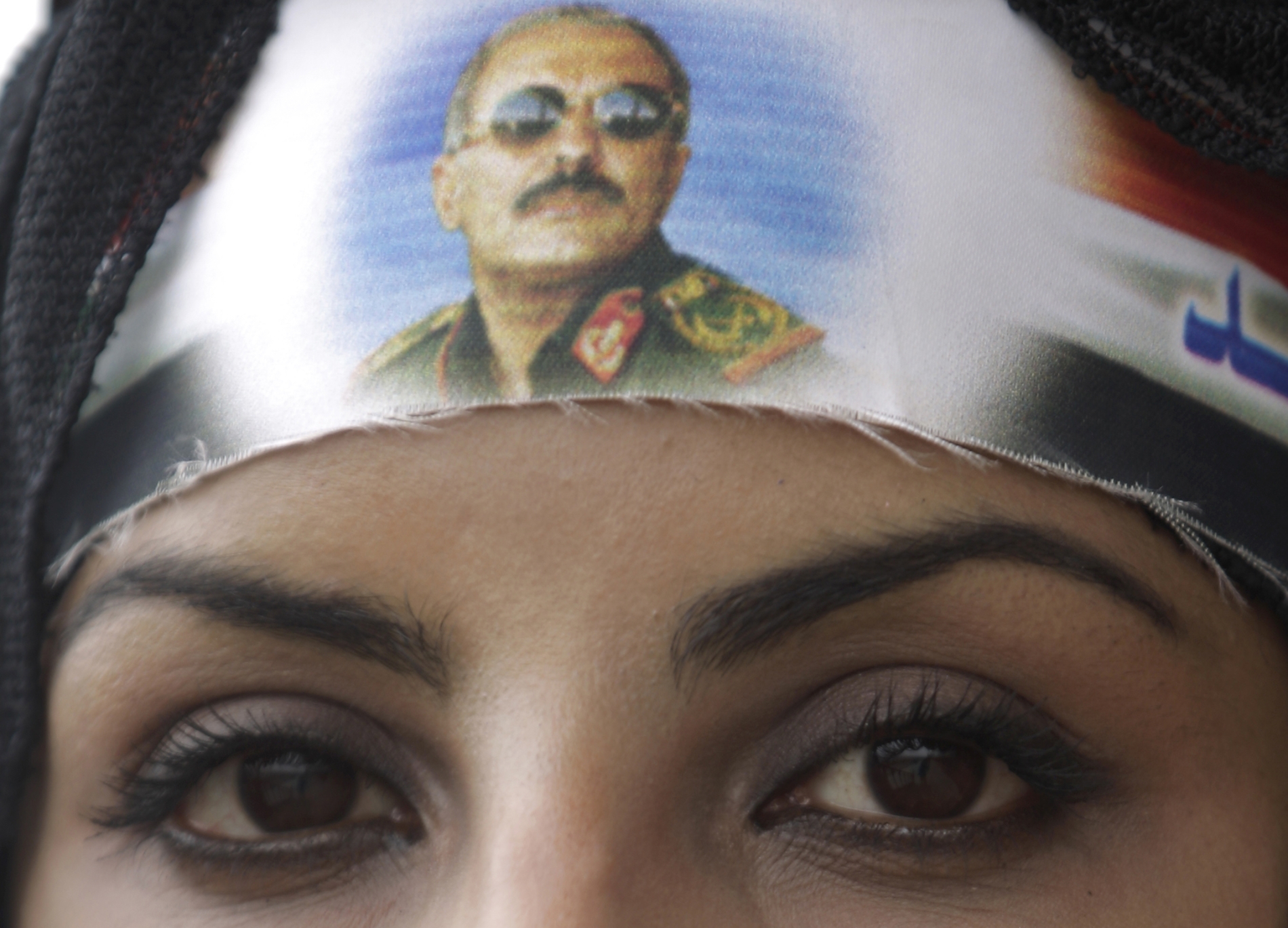
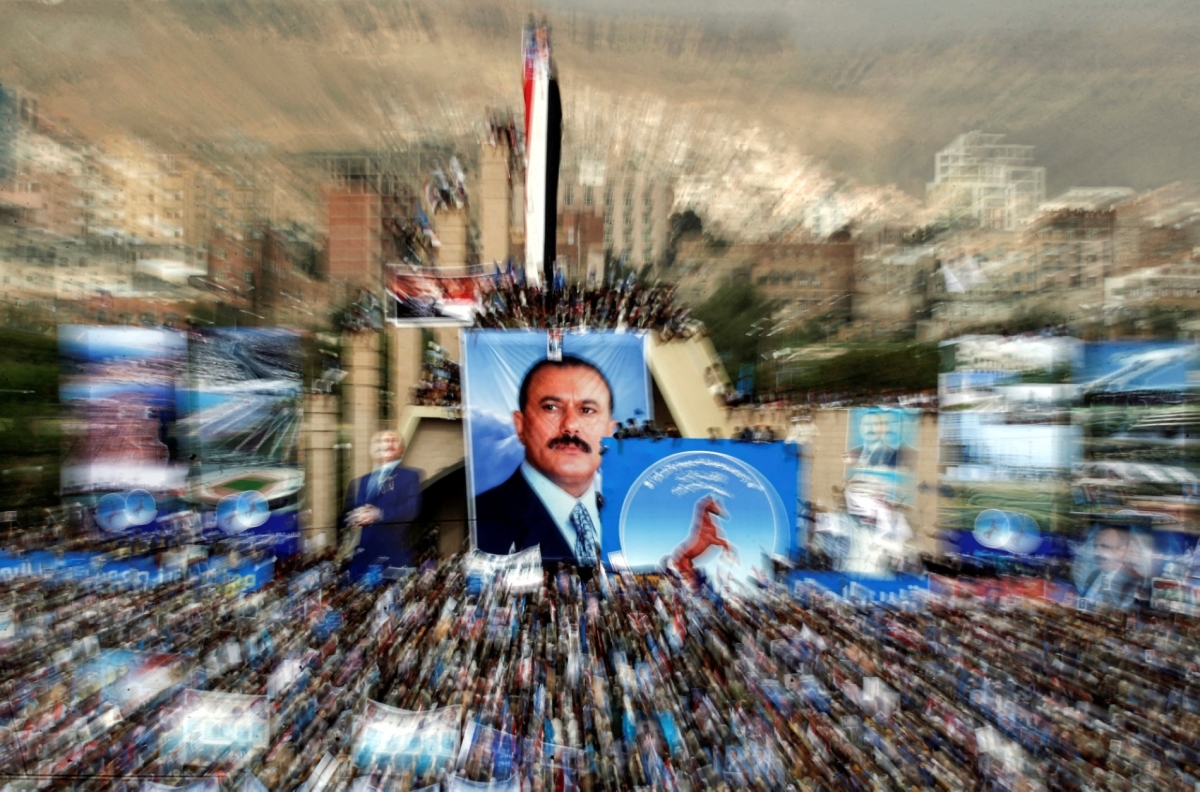
Thousands of Yemenis hold posters and portraits of Yemen's ex-president Ali Abdullah Saleh during a rally in support of the former president on 24 August 2017.
AFP
Thousands of Yemenis hold posters and portraits of Yemen's ex-president Ali Abdullah Saleh during a rally in support of the former president on 24 August 2017.

The last days of Ali Abdullah Saleh 

In recent years, debate has intensified over the circumstances, causes, and final hours leading up to the killing of former Yemeni president Ali Abdullah Saleh by Houthi militias. The controversy has persisted despite the near-definitive account provided by his son Madin, who remained by his father’s side until the final moments of his life.

The proliferation of politically diverse podcasts, together with the transformation of social media into an open public forum, has broadened the debate. Former political, military, and intelligence figures now compete for attention, offering testimony and conflicting accounts of what happened. The pattern has become increasingly clear: those who know usually remain silent, while those who speak often know the least.

Like other researchers and journalists concerned with Yemen, and perhaps more attentive than most to its details, I followed the relationship between Saleh and the Houthis from its inception and anticipated how it might end. During the final months of 2017, I monitored developments in Sana’a almost hour by hour, particularly after tensions peaked between Saleh, a central figure in Yemen’s deep state whom I knew, and the Houthis, the rapidly rising armed movement whose beginnings I had witnessed.
Reuters
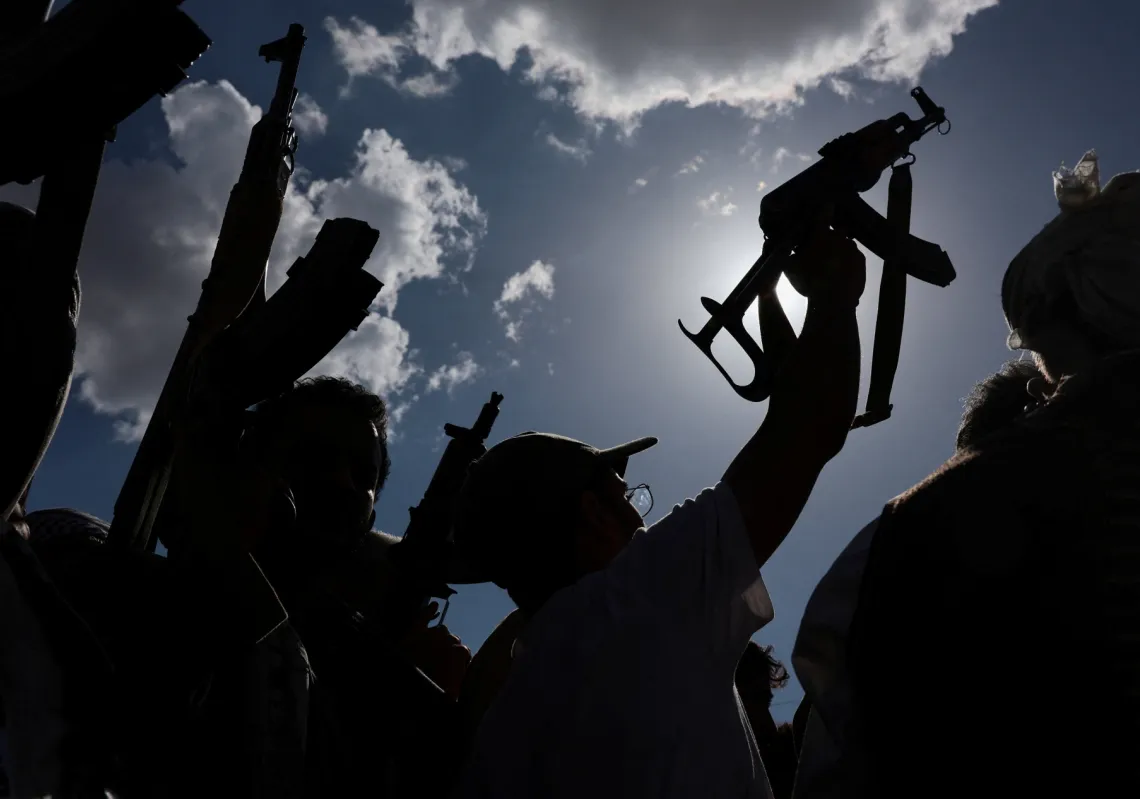
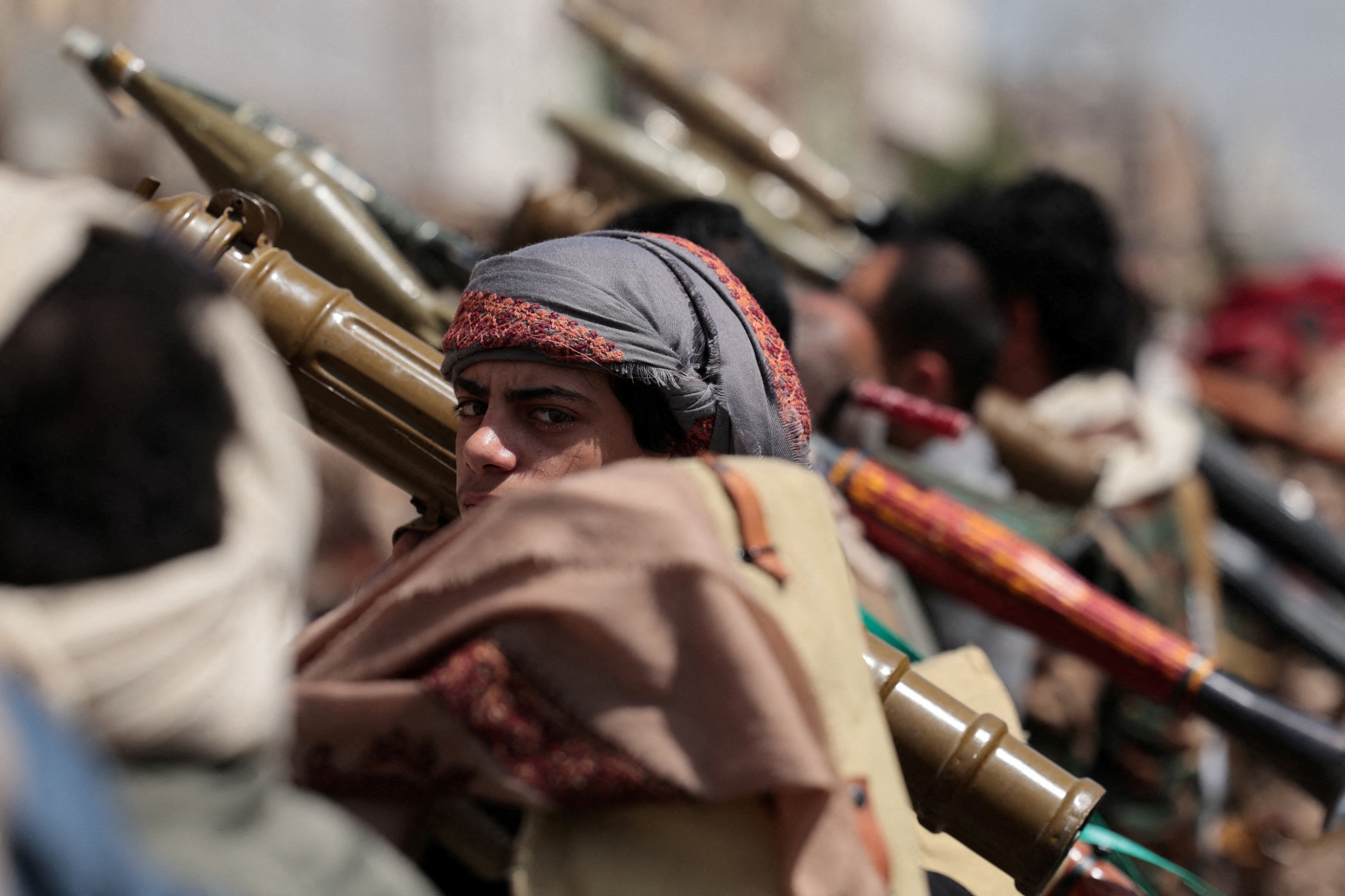
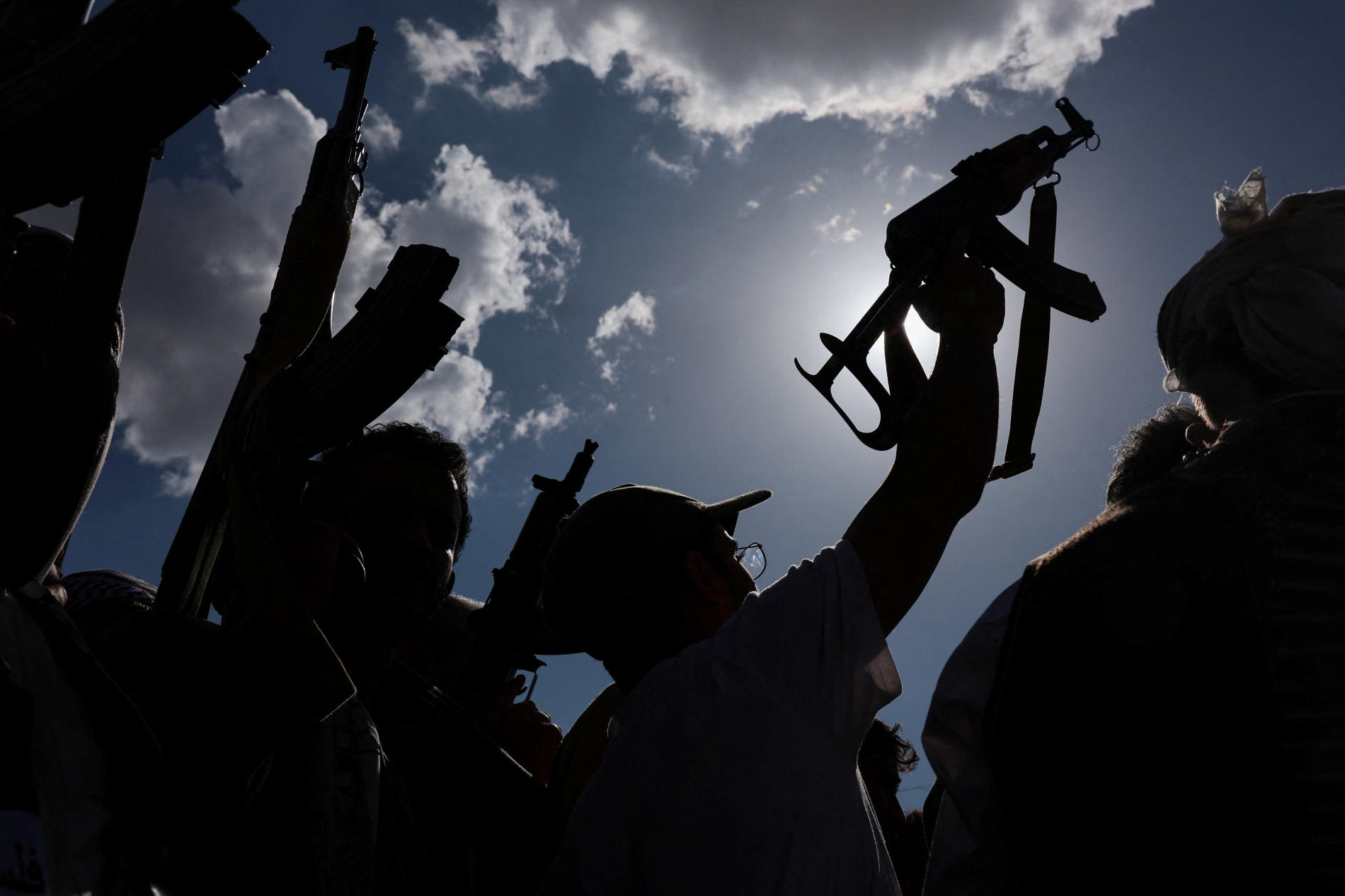
A Houthi supporter at a pro-Iran demonstration—amid the ongoing US-Israel-Iran conflict—in Sanaa, Yemen, April 6, 2026.

My reporting drew on an extensive network of sources and on long-standing relationships—repeatedly renewed and often close—with senior figures on both sides of the conflict. It also rested on nearly half a century of experience covering Yemeni affairs from within the country and abroad.

The origins of the alliance

In my assessment, three main factors drove Saleh’s rapprochement with the Houthis and shaped the events that followed.

The first was his desire for revenge against the military officers who had defected during what became known as the ‘Youth Revolution’ or the ‘Arab Spring’, led by his former ally, General Ali Mohsen al-Ahmar. Saleh also sought to settle scores with his Islamist adversaries, whom he accused of having “ridden the wave of that revolution”.

The second concerned Saleh’s view of his deputy and successor, the late president Abdrabbuh Mansur Hadi, whom he had personally chosen to succeed him. Saleh believed that Hadi had subsequently failed to restructure the Republican Guard and the other military and security formations that Saleh had spent years building, arming, and training. In his view, this weakened those institutions and reduced their ability to “protect the state and its achievements”.
Mohamed al-Sayaghi/AFP
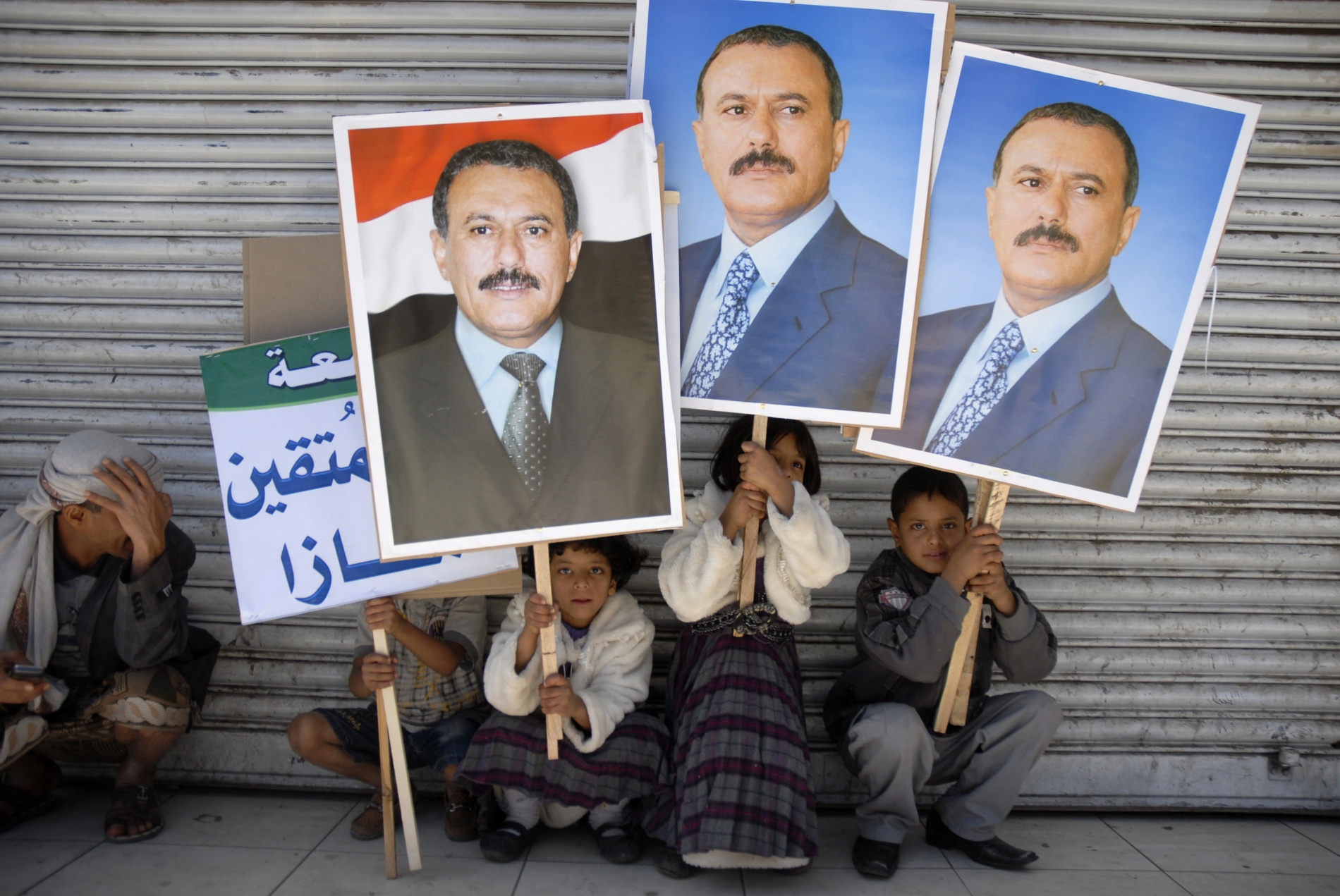
Children carry posters of Yemeni President Ali Abdullah Saleh during a rally to show their support in Sana'a on 11 November 2011.

The third factor lay in the Houthis’ duplicity and their eventual betrayal of the relationship Saleh had cultivated with them without the knowledge of the senior leadership of the General People’s Congress, his powerful party. A senior party official confirmed this to me, saying: “Saleh did so in order to use the group against his military and Islamist opponents, among others.”

During the political courtship that preceded the alliance, three men helped establish the relationship between Saleh and the Houthis. All three were childhood friends of mine from the al Dhari area of Khuban district in Ibb province, where I was raised and spent my earliest years. They were the late politician Zaid al Dhari, who had developed an early and close relationship with former Hezbollah leader Hassan Nasrallah; Nazih al Imad, the son of Major General Ahmed al Imad, who had been close to Saleh; and Hammoud Abbad, a former minister who now serves as mayor of Sana’a under the Houthi authorities.

The three acted almost as couriers between Sana’a and Saada, the Houthis’ stronghold, carrying messages between Saleh and the movement. At least one of them boasted to me that he had helped weave the “threads of the alliance” between the two sides in pursuit of what he called “the supreme national interest”.

The collapse of an alliance of necessity

Much has been said about Saleh’s role in helping the Houthis supplant his former regime as an act of revenge against the Islamist, nationalist, and leftist forces that had joined together to remove him during the protests of 2011. It was clear, however, that the alliance between Saleh and the Houthis would not last long, for reasons that soon became apparent.
Reuters
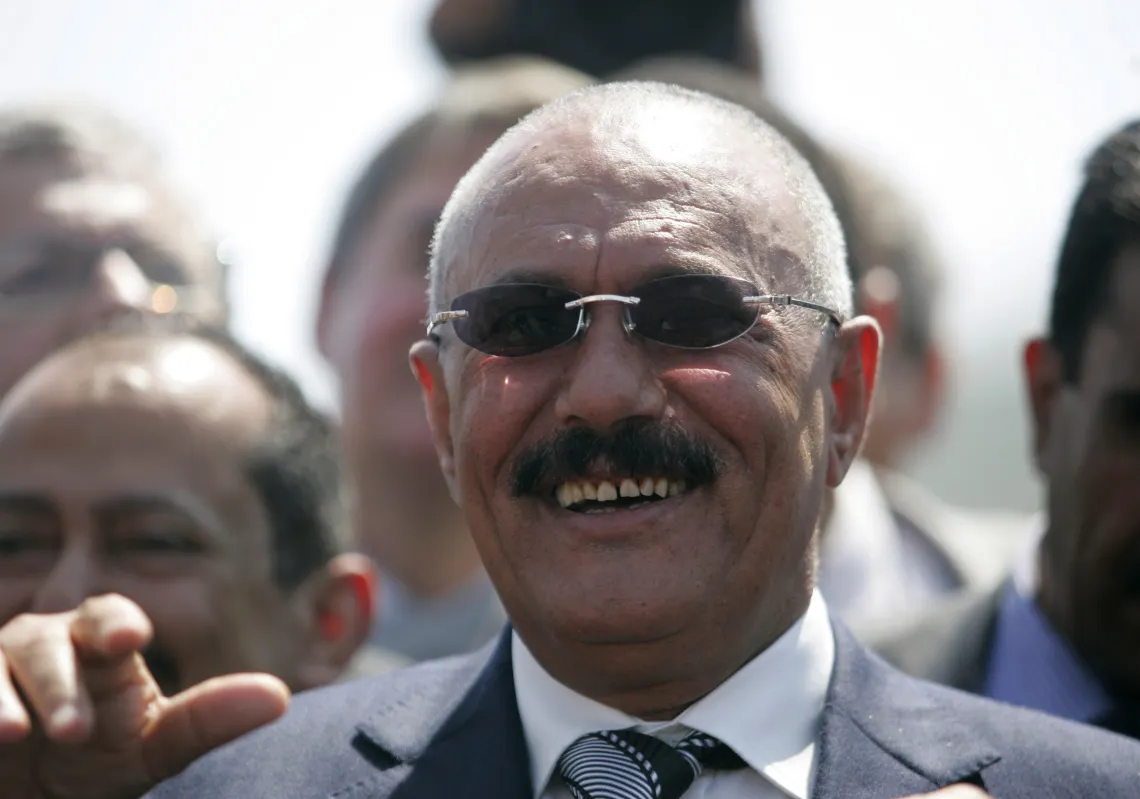
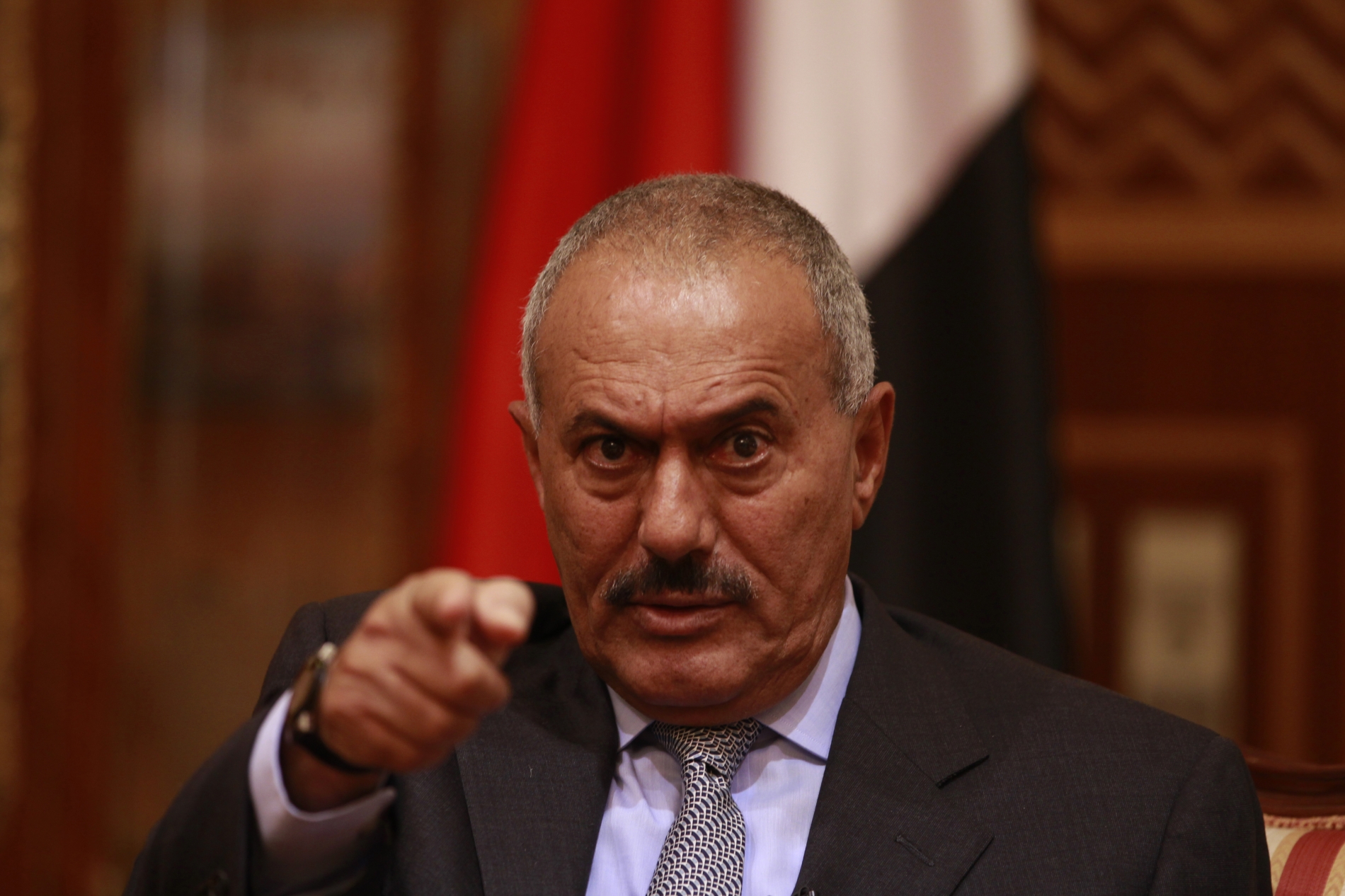
Yemen's President Ali Abdullah Saleh points during an interview in Sanaa on May 25, 2011.

The military intervention launched by the Arab coalition to reverse the Houthi coup and support the restoration of the Yemeni state gave the two sides a further reason to remain together. Their partnership nevertheless remained burdened by contradictions.

Saleh believed he could contain the Houthis by closing the chapter on the six wars they had fought against his government and entering into an alliance with them. He defended his position by saying: “When they rebelled against the state, we fought them. Today, however, they are a political force with which we must deal.” He knew better than anyone that they had not changed and would not change, and that they had little connection to politics in any meaningful sense.
Saleh believed he could contain the Houthis by closing the chapter on the six wars they had fought against his government and entering into an alliance with them

The divisions between the two sides were plain during the three rounds of Yemeni peace consultations. The first took place in Kuwait, while the second and third were held in Geneva and Biel, Switzerland. The delegation described as 'national', which had arrived from Sana'a, sat opposite the delegation of Yemen's internationally recognised government but was visibly divided. Houthi representatives occupied one section, while members of Saleh's General People's Congress sat beside them as a separate group.

Getty
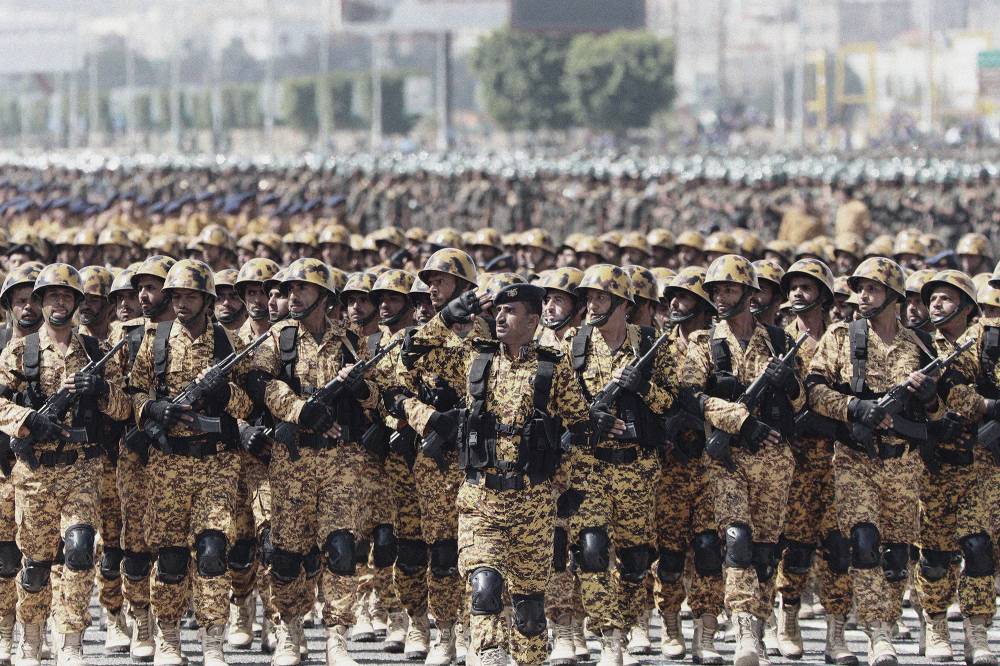
Aerial view of Houthi recruits take part in a military parade held by the movement, on September 15, 2022 in Sana'a, Yemen.

My conversations with representatives of both the Houthis and the General People's Congress made clear that they did not form a unified 'national delegation'. Each side had arrived with its own vision for ending the conflict rather than a shared position. Their political and security differences became more pronounced whenever they returned to Sana'a.

Events continued along that course until armed confrontation erupted between them in early December 2017. The fighting ended with the killing of Saleh and his deputy, Arif al Zouka, who had led the General People's Congress negotiating team.

The onset of tension and the siege

Saleh remained determined to preserve a broad security zone around his palace in central Sana'a. He relied on what remained of his personal guard and the Republican Guard, and also counted on the support of tribal fighters from what was known as the 'Sana'a tribal belt'. It soon became clear that his military resources could not compare with those of the Houthis. His fighting strength was dwarfed by the forces they had assembled, while his reliance on the tribesmen proved to be nothing more than an illusion.

Reuters
Supporters of the Houthi movement demonstrate in solidarity with Iran in Sana'a, Yemen, on 10 April, 2026.

The Houthis, meanwhile, had devised a carefully prepared plan. Its first stage involved tightening the encirclement of Saleh's security zone until their fighters reached the gates of his palace. The second aimed to neutralise the tribesmen.

Their military commander, Abu Ali al Hakim, met a number of tribal dignitaries and sheikhs and threatened dire consequences for anyone who considered siding with Saleh. He also vowed that Saleh would not be allowed to retain any security zone in Sana'a, declaring: "He will be denied one, even if no men are left."

As the siege tightened around him, Saleh surprised everyone on 2 December 2017 with a fiery interview on Yemen Today, the television channel he owned. "I call upon all our people to rise as one man in defence of the revolution, the republic, unity and freedom," he said, openly confronting the Houthis.

The leader's final testament

Circumstances at the time prevented the broadcast of a detailed statement by Saleh that appears to have been recorded on the same day as his first interview. Yemen Today, which had by then moved its operations to Cairo, eventually aired it on 14 June 2018. 

The recording resembled a final testament. In it, Saleh traced the origins and successive stages of his conflict with the Houthis, beginning with their insurgency and the six wars they had fought against the state. He then reviewed the events that followed his departure from power, the Houthi seizure of Sana'a on 21 September 2014, the role of the Arab coalition, and the events of 2 December 2017 that culminated in his killing two days later.

AFP
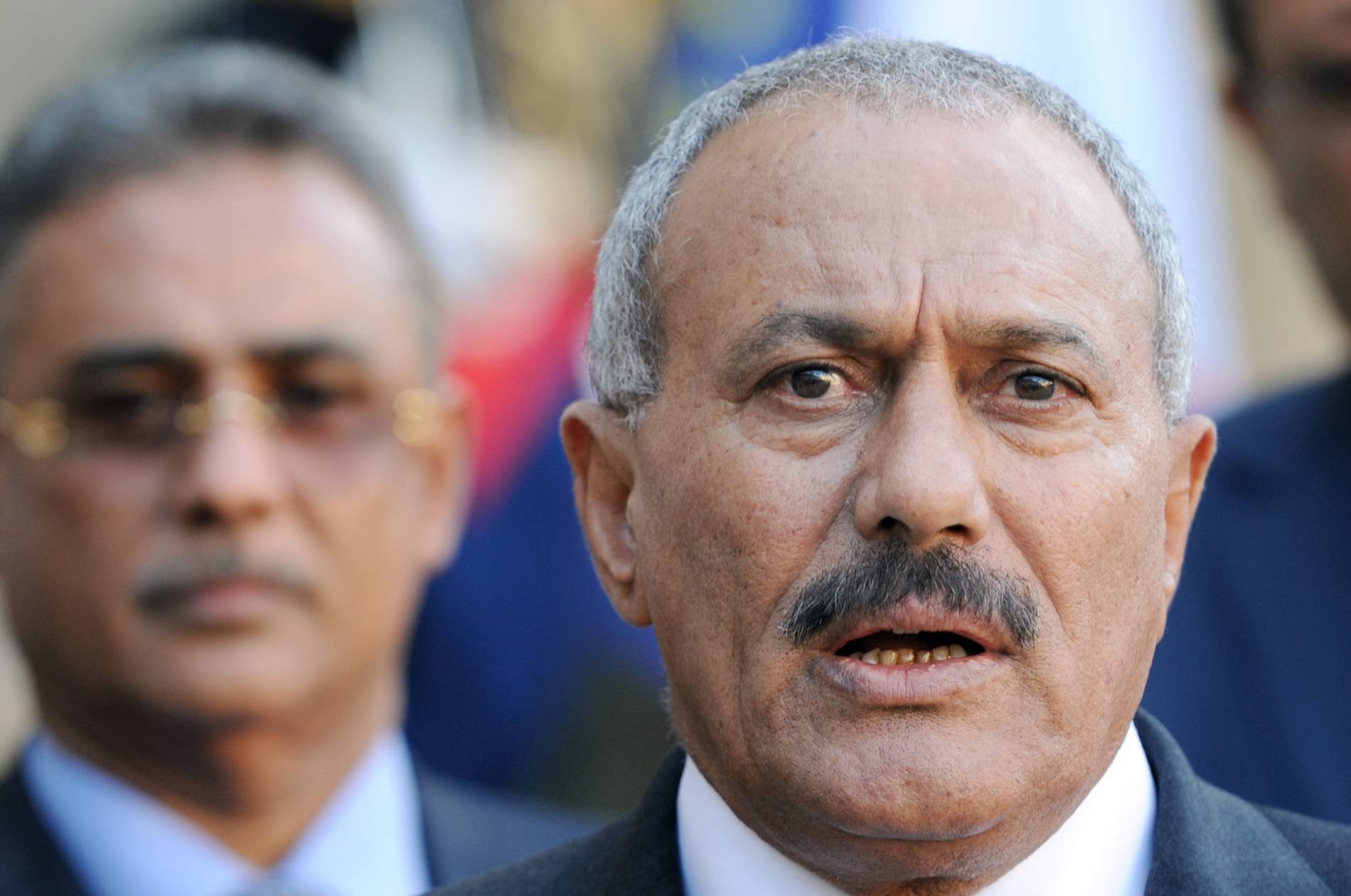
Former Yemeni President Ali Abdullah Saleh.

The first interview alone had been enough to provoke the Houthi militias and strike fear into their commanders and fighters. They sensed the danger that Saleh's supporters and his powerful party might answer his call and rise against them. They quickly stormed the headquarters of Yemen Today, then began an intense bombardment of Saleh's compound from the mountains surrounding Sana'a, using a range of medium and heavy weapons.

On the afternoon of Sunday, 3 December 2017, I received a message from al Zouka, Saleh's deputy and close companion. It read: "You know that Yemen Today has stopped broadcasting. If we need to make statements to the BBC, I want you to arrange it. When I decide to give a statement, I shall call you, or you can send me the number of the person who will organise it."

I told him that I would take care of it. When he called later that evening, I immediately arranged a telephone interview. His phone was being monitored and subjected to interference, so he sent me the number of one of his escorts. The BBC called him back on that line.

In one of the worst episodes of street fighting, dozens, if not hundreds, of Houthi fighters fell at the walls of Saleh's residence

The presenter asked what was happening and where Saleh was as fighting raged around his palace. Al Zouka replied: "The leader, Ali Abdullah Saleh, former president of the republic and chairman of the General People's Congress, is in Sana'a. He is a fighter of the September and October revolutions and a champion of unity."

His words indicated that Saleh was fighting bravely and would not leave his position.

The battle raged at its fiercest for nearly three days. Saleh's small band of fighters, deprived of sleep for several nights, became exhausted. In one of the worst episodes of street fighting, dozens, if not hundreds, of Houthi fighters fell at the walls of Saleh's residence. The Houthis nevertheless continued to send successive waves of men into the battle, determined to prevail regardless of their losses.

When the 'leader' realised how difficult it would be to repel the Houthi assaults on his home, he told his fighters that anyone who wished to withdraw should leave in order to save his life. Only a small number remained with him.

The final chapter

At noon on 4 December, Saleh managed to leave his residence with a small group of escorts, among them his deputy al Zouka and his son Madin. They headed towards his stronghold in the village of Bayt al Ahmar, in Sanhan district, south-west of Sana'a.

Reuters
A supporter of the late Ali Abdullah Saleh in Sanaa on 29 July 2011.

Dozens of pre-prepared ambushes awaited them and blocked the road near the village of al Jahshi. The final and decisive battle took place there, ending with the deaths of Saleh and al Zouka. The militias deliberately filmed Saleh's body wrapped in a red blanket and circulated the images. The degrading display was intended to send his supporters a clear message that everything was over.

In the immediate aftermath of the killing of Saleh and al Zouka, shock gripped Yemen and the wider region. Saleh's fate had been foreseeable, given the dangers and circumstances surrounding him in his final days, yet the blow was no less severe. His supporters were stunned and deeply shaken, while the Houthis and their followers rejoiced. Among ordinary Yemenis, there was palpable anxiety over what might follow.

The Houthis handed al Zouka's body to members of his tribe, who had travelled from Shabwa province to take it to his birthplace in al Said and bury him there. They retained Saleh's body, claiming that they had buried him in the presence of his two sons, who were then in their custody. The truth of that claim remains doubtful. They may later have exhumed the body to use it as a bargaining chip in future negotiations.

Given the geographical and historical ties between Yemen and Saudi Arabia, and the war waged by the coalition led by Riyadh against the Houthis in an effort to reverse their coup and restore the Yemeni state, the coalition's first reaction to Saleh's death came from its spokesman, Turki al Maliki.

"The former Yemeni president Ali Abdullah Saleh was one of the Arab leaders who were eliminated after the hand of Iranian treachery reached them," he said.

AFP
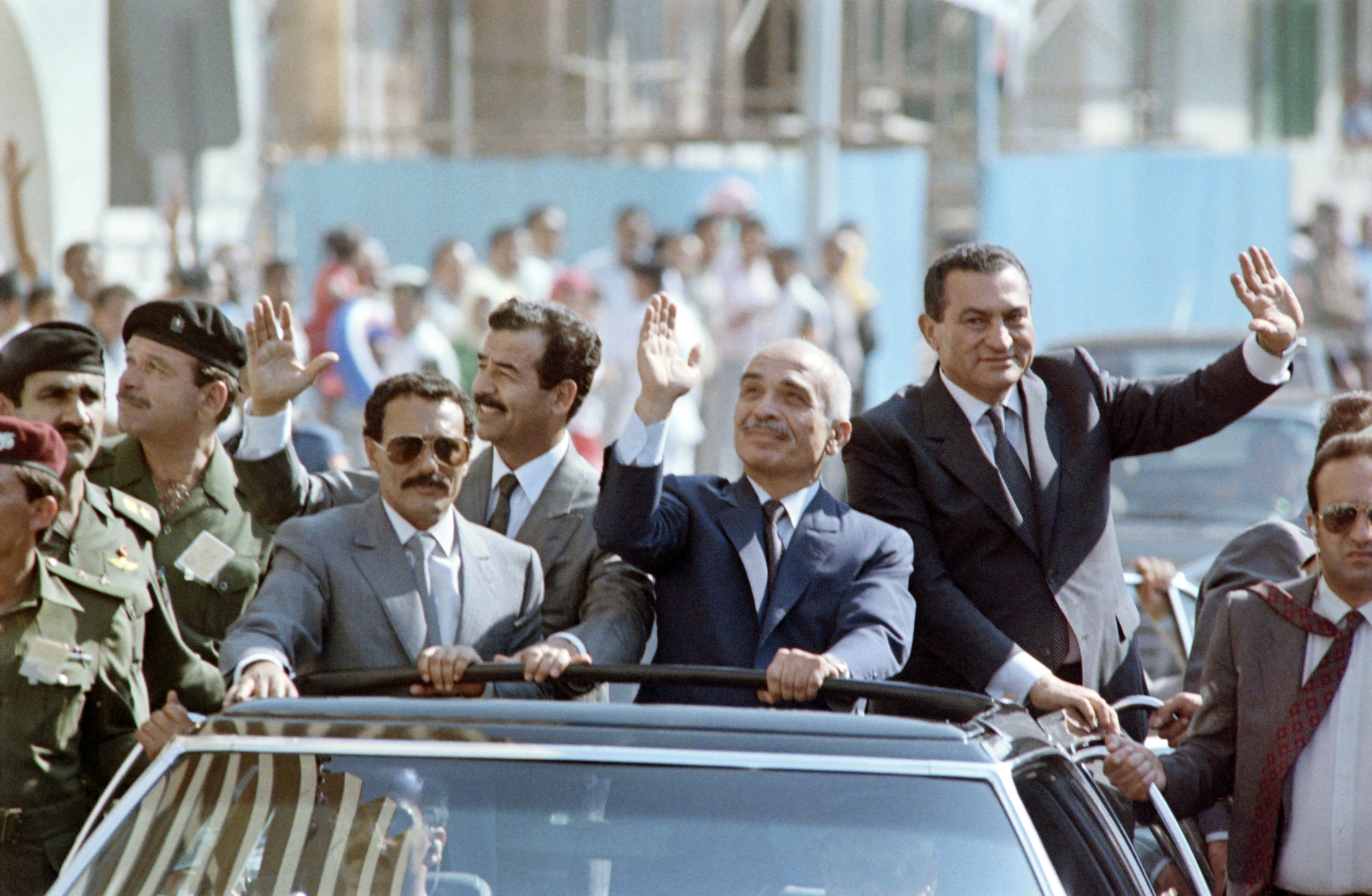
Ali Abdullah Saleh (front-right), alongside Saddam Hussein, King Hussein and Hosni Mubarak on 15 June 1989 in Alexandria, Egypt.

He added: "Despite our political differences with the Yemeni president while he was in office, we all know that he acted and dealt with matters in accordance with the interests of the presidency and the state."

Were there other options?

At the height of the conflict, Saleh had several possible means of saving himself. He could have left Sana'a for another destination, whether elsewhere in the region or in Europe. He regarded fleeing the country as a 'red line', however, and chose to remain in the capital, moving between several hiding places to avoid being targeted. He also rejected advice to relocate elsewhere inside Yemen, for example to Marib, if he intended to enter into an armed confrontation with the Houthis.

In reality, no effective mediation emerged to resolve the dispute. A few tribal figures made limited efforts and offered Saleh proposals for leaving the crisis through an arrangement that would "preserve his dignity and allow him to save face", as the hardline Houthi militia leader Mohammed al Bukhaiti later told me. Saleh, known for his firmness, dismissed them all with scorn.

Before Saleh's son Madin gave his account, many questions had occupied my mind. What would history record of these events beyond the militias' version? What could I do to document some of what had happened and at least record how I viewed it from my own vantage point?

I decided to produce a documentary examining the essence of the crisis and its successive chapters. I travelled to Abu Dhabi and Dubai on two consecutive occasions to meet Saleh's son, Brigadier General Ahmed Ali Abdullah Saleh, who had previously served as Yemen's ambassador to the UAE.

I also travelled to Muscat to meet some of Saleh's supporters and representatives of the Houthi movement who were then based there. The project faltered because many potential witnesses in Muscat, Abu Dhabi, and elsewhere had disappeared or refused to speak. Confusion and disarray still prevailed among Saleh's supporters in Yemen and across several parts of the region.

In Muscat, Sheikh Saleh Abu Awja, a member of the General Committee of the General People's Congress and a figure close to the Saleh family, told me: "The Houthis prepared their move amid delays, contacts, and repeated assurances. They organised themselves thoroughly. The plan had been drawn up in advance, and the decision had already been taken to settle the matter and eliminate the leader."

Georges Bendrihem/AFP
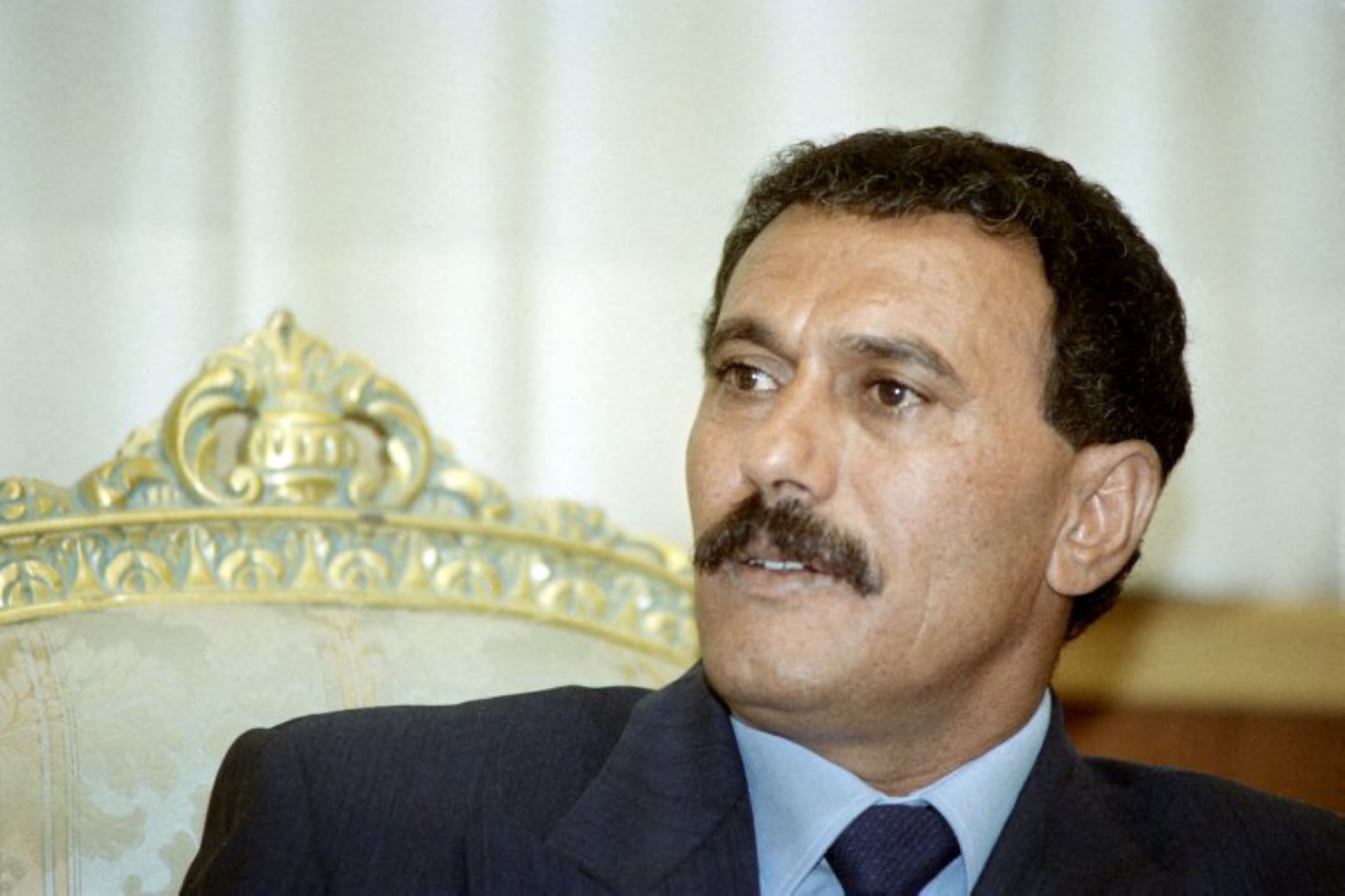
Picture released on 1 November 1991 of Yemeni President Ali Abdullah Saleh in Sana'a.

Abu Awja added that the Omanis had established a "special operations room" that worked around the clock "to maintain contact and follow developments". Its purpose was not mediation, despite Muscat's good relations with both sides of the conflict. By then, it appears, the time for mediation had already passed.

A senior figure in the General People's Congress, who telephoned me from an Arab capital, likewise confirmed that the Houthis had "closed their phones to the mediators, while their tanks began pounding the walls of Saleh's residence in preparation for storming it".

Accounts and claims

In late 2018, during the Stockholm consultations aimed at reaching an agreement to halt the internationally recognised government's offensive against the port of Hodeidah, I met Mohammed Abdulsalam, the Houthis' chief negotiator. I asked whether the events could have been avoided, particularly given reports of Omani mediation. "There was no Omani mediation," he replied. "The other side declared an all-out war against you and sought to eradicate your very existence. It announced this openly and called it an uprising based on total annihilation. This was a natural fate: he fought and was killed."

Hamid Rizq, news director at the Houthi-run Al Masirah television channel, which broadcasts from Beirut's southern suburbs, argued that Saleh "had been preparing himself for that moment and for that coup, rather than the other way round. Once his position was exposed, once he turned against the political partnership and reached out to Saudi Arabia, many abandoned him."

In an interview I conducted with him, Rizq further claimed: "The confrontation was not between Ansar Allah and Ali Abdullah Saleh. It was between the institutions of the state and the Political Council endorsed by the Yemeni people on one side, and the security agencies and militias recruited by Saleh on the other."

In a passage resembling an elegy, the researcher and political writer Lutfi Fouad Numan wrote in his short book, Saleh: The Uprising and the Farewell, that "the leader Ali Abdullah Saleh succeeded in choosing his own end, indeed in determining it long before it came". Numan added that Saleh remains a hero in the imagination of a broad section of the public. From time to time, stories about him top social media trends, drawing those who strain to hear them, those who still await his return, those who yearn for his memory, and those driven almost to madness by the mere mention of his name.

AFP
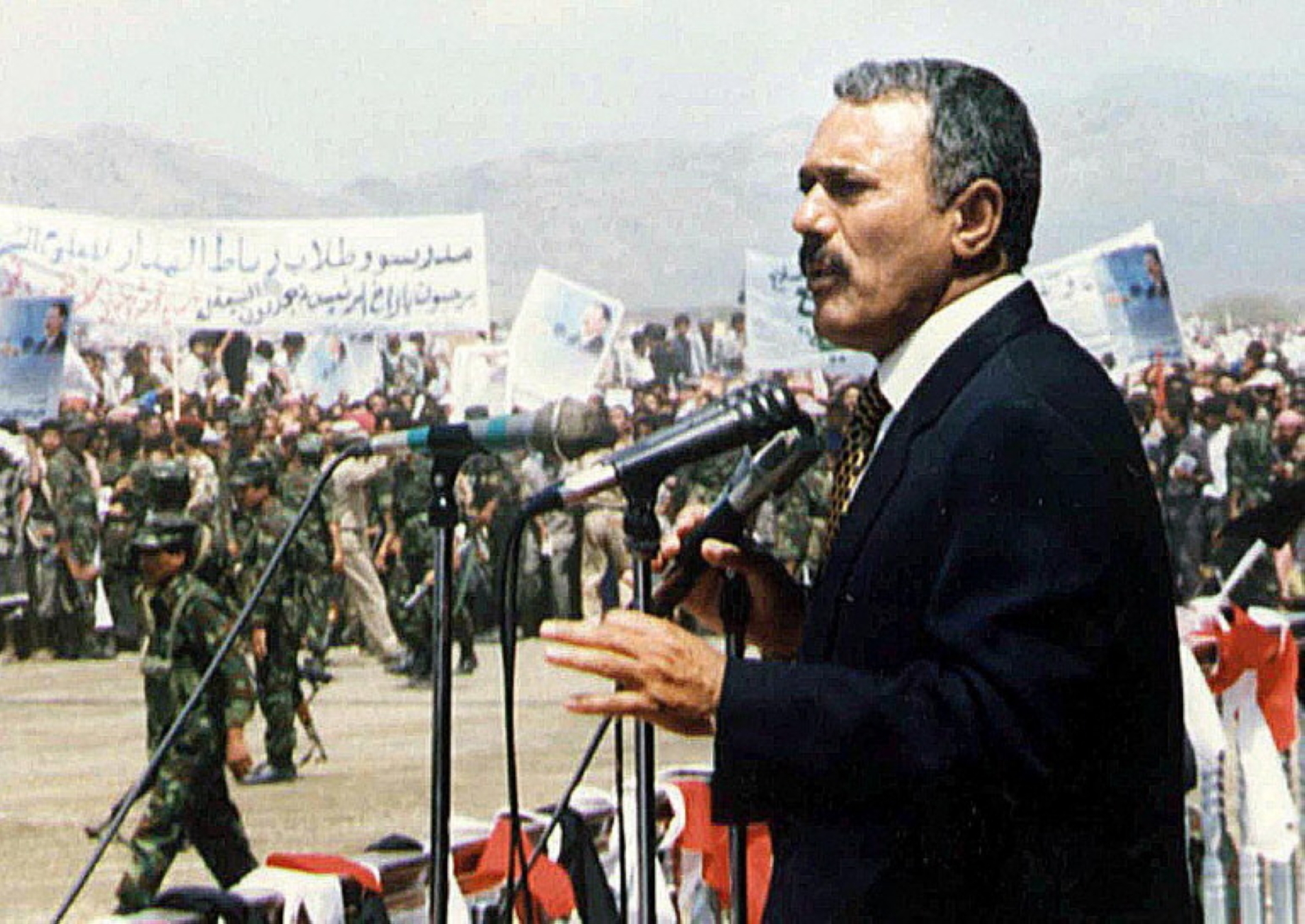
Yemeni President Ali Abdullah Saleh delivers a speech to his supporters in Taiz, 170km south of Sana'a, on 9 September 1999.

They lay upon him the burden of their own failures and impotence, especially those who could not remove him from political life before others came and removed him from life itself. Even then, they failed to silence his story. In death, as a martyr, he continued to occupy people's minds just as he had in life.

For all that he was and all that he became, Saleh will remain Saleh, or 'the leader', as people liked to call him. He remains a singular book in Yemen's modern political history, one that has yet to be read as it deserves to be read, and a story that has still not been properly written.

font change