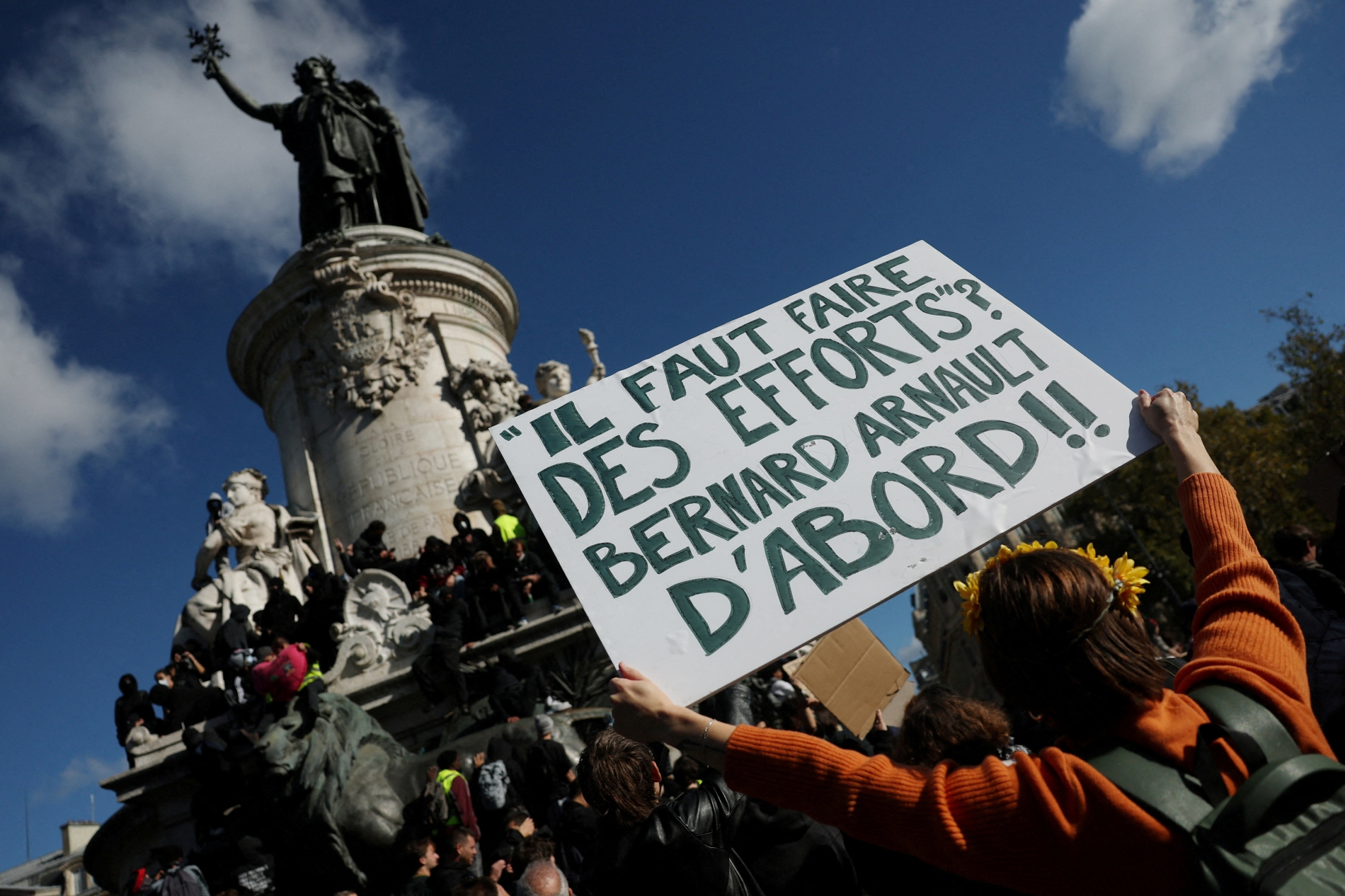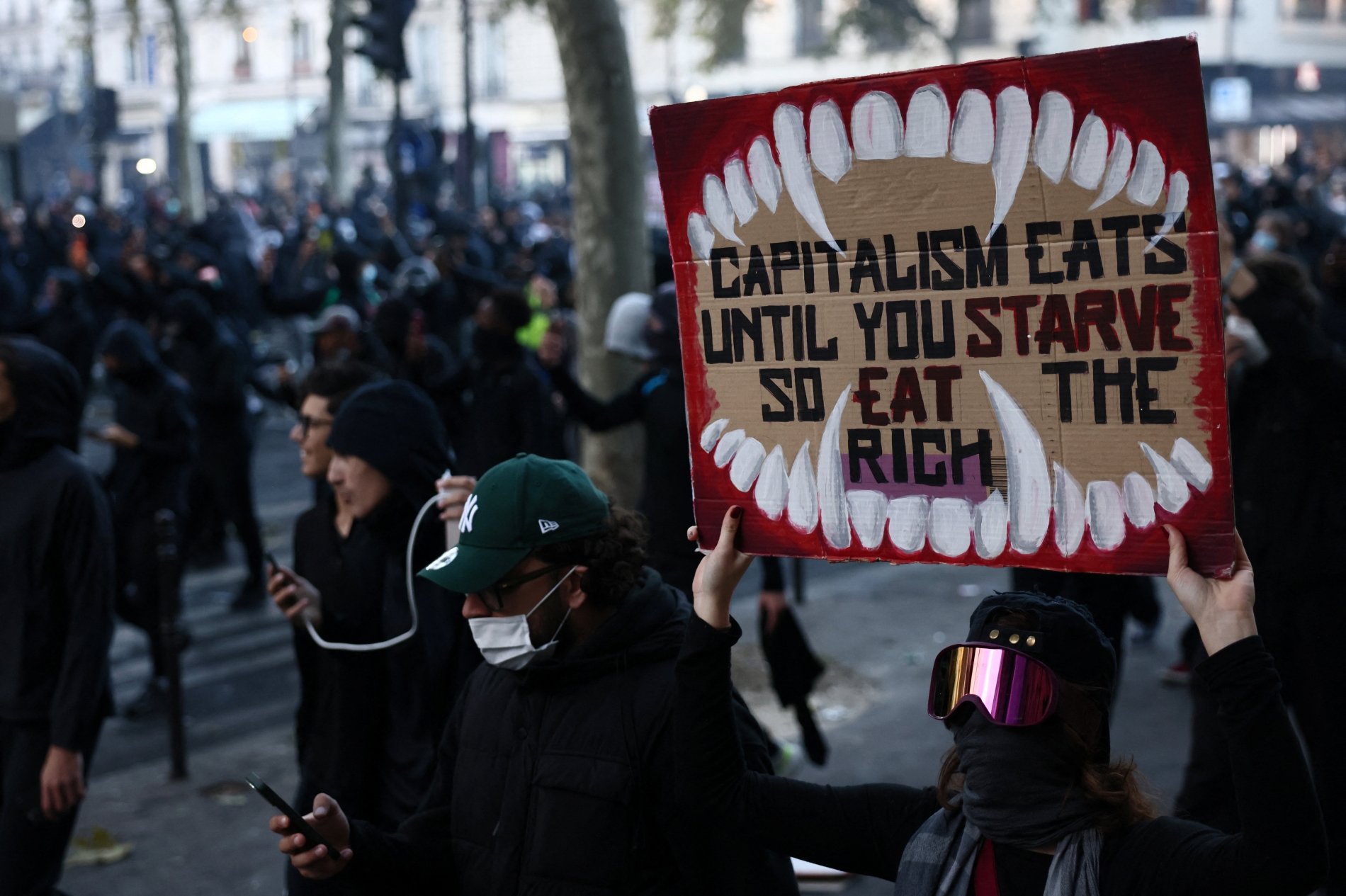

The French government’s hopes of containing the country’s secondary school protests appear to have been dashed, as the movement retained momentum into its fourth week. This was evident in the demonstrations on 13 October. The Interior Ministry reported that there were 161,500 demonstrators (including 41,500 in Paris), down from 266,000 a week earlier, but student organisations and trade unions put the figure at 480,000, up from 450,000. Both sides have an interest in massaging the statistics to suit their narrative.
The number of secondary schools closed by the protests reportedly fell from 800 to 214, but the drop was not immediately evident on the streets, as Tuesday’s march through Paris showed that the movement had lost none of its vigour and, if anything, had widened its circle of solidarity. The next is planned for Saturday 17 October, which is expected to bring together school and university students, trade unions, farmers, and groups associated with the Gilets Jaunes (Yellow Vests) protests in France in 2018.
Demands for educational reform are now accompanied by grievances over the rising cost of living and the plight of farmers. In the past, protests whose focus has diffused have tended to peter out, so the coming weeks will show whether the movement can sustain its campaign of social pressure. The demonstrations will also test the authorities’ response to this expanding mobilisation. Police tactics have already been criticised by politicians, unions, and human rights organisations, not least because many of the protesters are schoolchildren.
The protests come amid mounting economic pressure, months before France’s 2027 presidential election, when voters will elect a replacement for the centrist incumbent, President Emmanuel Macron. According to the French National Institute of Statistics and Economic Studies (INSEE), public debt reached 119% of gross domestic product (GDP) in June, one of the highest ratios in the world. Meanwhile, rising living costs and declining purchasing power are squeezing households.
All this sharpens demonstrators’ questions about public spending priorities, public services, and opportunities for the young. The protests have also opened a new front in the struggle between the political left and right over the future of France’s social model. In a recent issue, the conservative weekly news magazine Le Point asked whether that model had expired, as the far-right, led by Marine Le Pen’s National Rally (RN), argues.
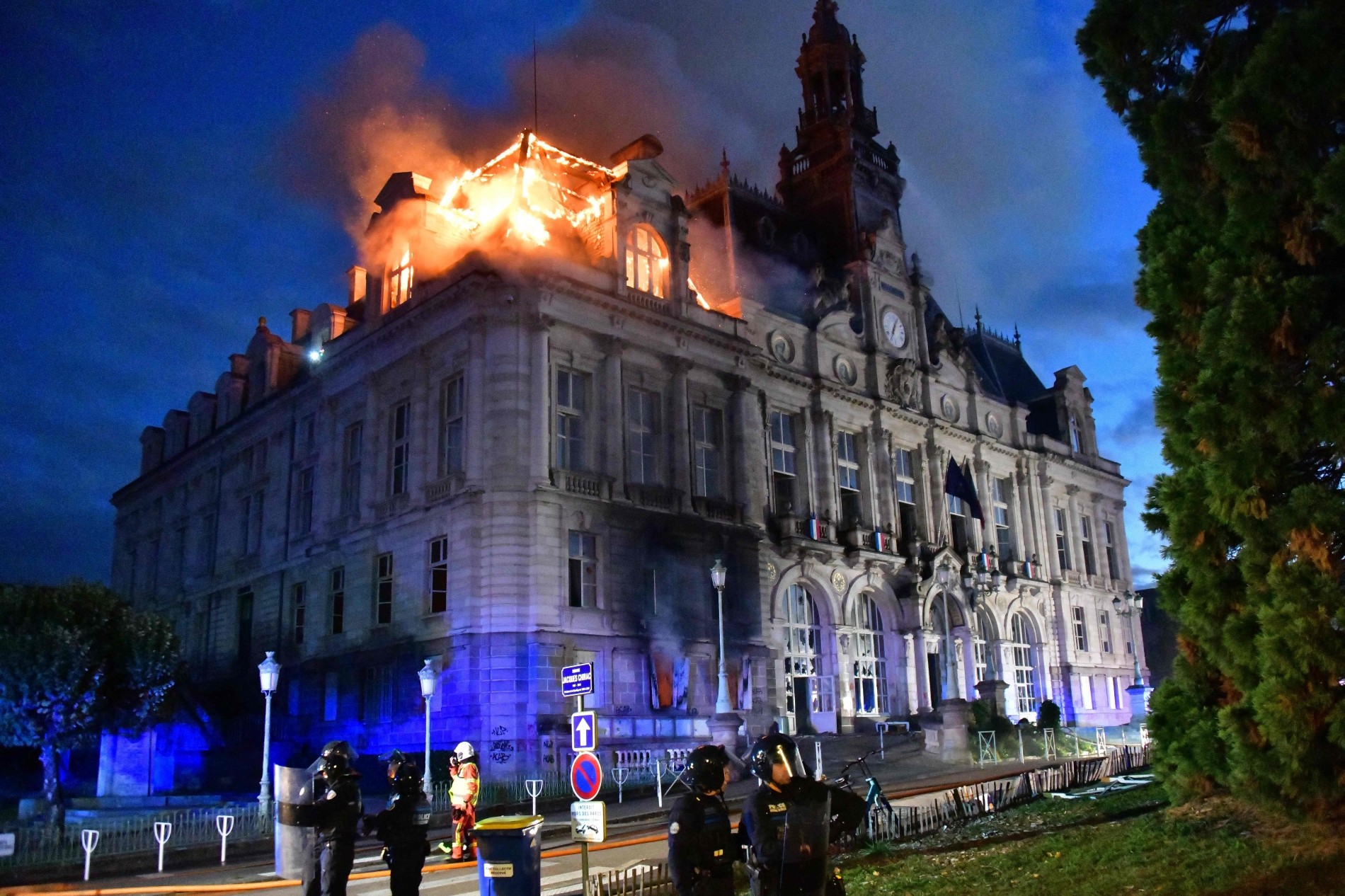
The government must now abate the public’s anger without abandoning its fiscal responsibilities, yet the protests are also an early test of politicians’ ability to win over a new generation of voters, as the crisis in education becomes entangled with the wider struggle over the country’s social and political future. The student protests began on 18 September in Créteil, a suburb south-east of Paris, then spread to other suburbs, including Saint-Denis, where pupils blockaded schools and disrupted classes.
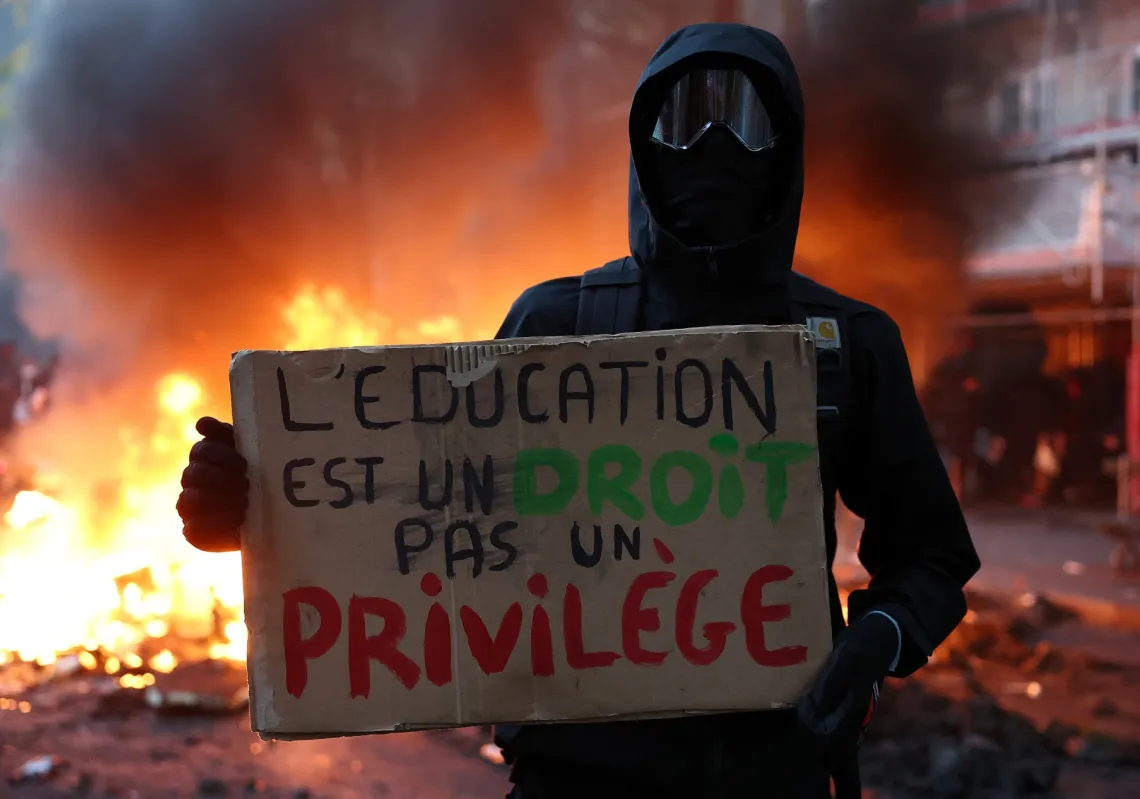
The demonstrations then spread beyond Paris, becoming a national demand not just for educational reform but for social justice and the political representation of young people. Key to the students’ anger are the French reality of overcrowded classrooms, teacher shortages, and school buildings in need of refurbishment to improve things like ventilation, heating, cleanliness, sanitation, kitchens, and equipment.
Demonstrators are also calling for the abolition of Parcoursup, the platform governing admission to undergraduate degree programmes, and Mon Master, which manages applications for master’s degrees. They want €10bn spent on improving conditions in secondary schools and reform of how educational opportunities are distributed among social groups and geographical locations, particularly in the suburbs of Paris.