Egypt’s new military brain tucked away deep in the sand

Army and intelligence units will decamp to the Octagon, a complex 65km outside Cairo, to fight the wars and manage the crises of the future

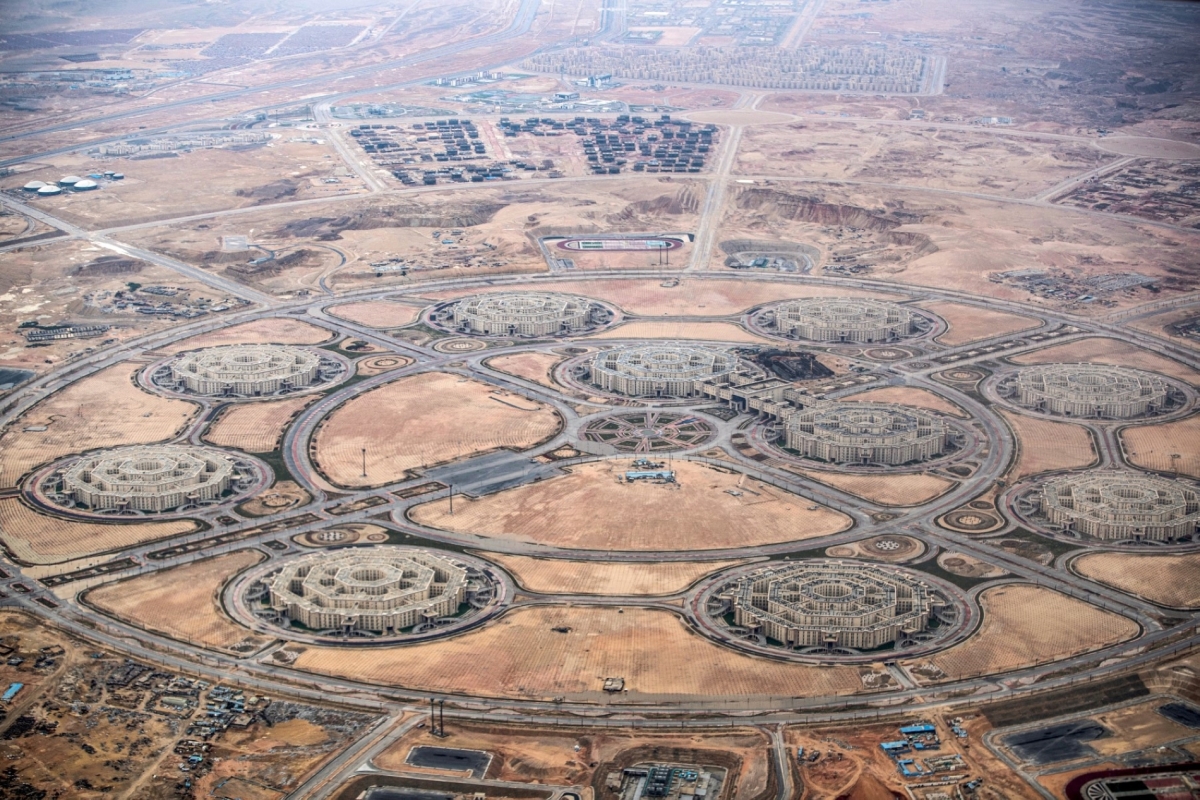
Egypt's new 'Octagon' complex outside Cairo will serve as its 'war brain'.
AFP
Egypt's new 'Octagon' complex outside Cairo will serve as its 'war brain'.

Egypt’s new military brain tucked away deep in the sand

The opening of Egypt’s Strategic Command Headquarters last week shows what Egypt has learned from its recent past and how it intends to deal with the changes impacting both geopolitics and the way that wars are fought. The multibillion-dollar project was opened by Egyptian President Abdel Fattah al-Sisi, a former military leader, but has been criticised as an “extravagance” in a country servicing a debt mountain, in need of loans and investment.

The complex is widely known as the Octagon. Similar to the Pentagon in the United States, it gets its name from its architecture, being built around eight outer buildings, each shaped like an octagon (an eight-sided figure). The eight buildings represent the eight branches of the Egyptian armed forces. Covering 22,000 acres, it is now the largest defence facility in the world.

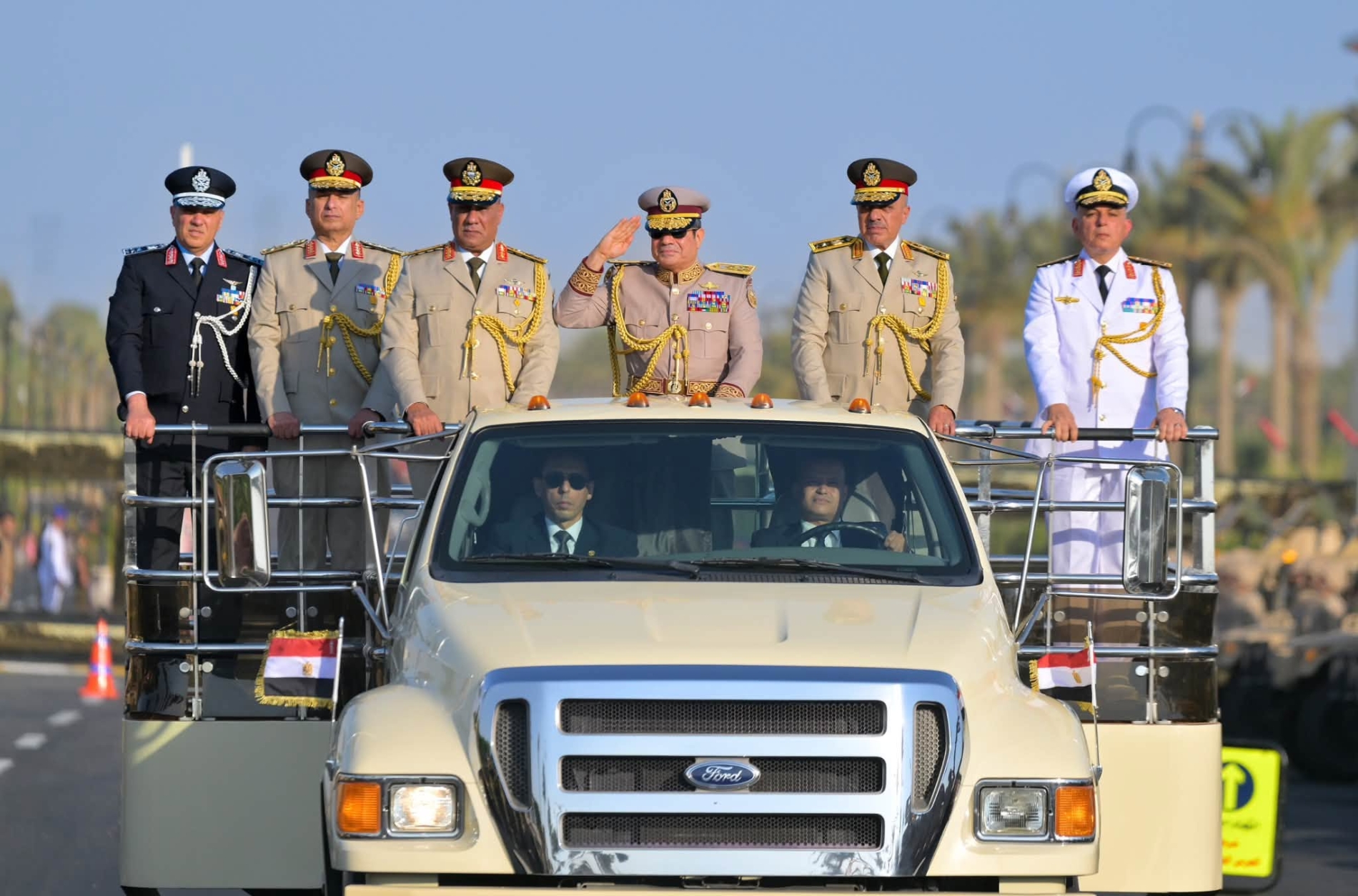
Surrounded by dozens of motorcycles on 4 July, Sisi’s car cruised along newly built desert roads in the blistering heat, shaping the background of Egypt’s New Capital, a megacity nearly the size of Singapore. Two Apache helicopters flew over the motorcade, like a scene from a movie. Sisi wore army fatigues, a rare sight these days, but one seen as a message about Egyptian sovereignty and military power. The complex will be the first and last line of defence for a state whose threats are digital as much as physical, where information is as important as conventional war tactics.

Strategic doctrine shift

Surrounding two command structures, these eight buildings are connected by corridors. The architecture draws from ancient Egyptian and Islamic motifs, probably for cultural symbolism and to denote order and continuity. It is made of 13 operational and logistical zones with a hardened construction and subterranean facilities, all protected by the Republican Guard.

The complex is designed to serve as a centralised national command hub for military operations, crisis management, and intelligence coordination, and its construction offers insights into the evolution of the armed forces’ doctrine, which is driven by past events, current conditions, and future predictions. It “constitutes a major shift in how Egypt plans its military operations, making them proactive, rather than reactive,” said Gen. Nasr Salem, a former reconnaissance commander. Speaking to Al Majalla, he said it would help the army stage effective cyber-operations.
The complex will serve as a centralised national command hub for military operations, crisis management, and intelligence coordination

Timing is everything, and the opening comes at a time of heightened regional tension, with ongoing conflict in the Red Sea, Gaza, Sudan, Lebanon, the Gulf, and the Horn of Africa. Egypt's Octagon should enable faster and more coordinated responses to challenges, say military analysts, because it shifts Egypt towards network-centric warfare doctrines.

Lessons from 2012

Sisi first mentioned the Octagon in 2019, in the hope that a new facility would prevent any recurrence of the kind of unrest that led to the toppling of President Hosni Mubarak, when demonstrators targeted government buildings in downtown Cairo, as well as police stations and prisons. This paralysed state institutions and stopped the state from functioning.

Egypt’s Official Media Digital Repository
President El-Sisi (centre) at the inauguration of the State Strategic Command outside Cairo.Headquarters.

Addressing a large gathering of government and army personnel, Sisi referred to the siege of the Constitutional Court in southern Cairo and the Ministry of Defence headquarters in northern central Cairo in 2012 and 2013. In citing such events, he threw light on the construction having been driven by the lessons of the recent past: the need to move Egypt's strategic command out of the densely populated capital.

Gen. Ali Hefzi, a former assistant to the Egyptian minister of defence, said demographic changes in Cairo was another factor. "Moving these institutions outside the capital protects them so they can keep operating without disruption," Hefzi told Al Majalla. The same thinking, he assumed, applies to the $58bn construction of the New Capital. "Planners want important institutions to be located where they would be immune from attack and siege, and away from population concentrations."

Safe in the sand

The new complex will serve as the nerve centre of the Egyptian state, and strategists believe they are creating a secure buffer zone deep in the desert, around 65km from Cairo. The Octagon has controlled entry points and military traffic is separate to nearby civilian, to safeguard transportation and communication at times of crisis. Centralising the management of information should assist decision-making and digital coordination.

Egypt’s Official Media Digital Repository
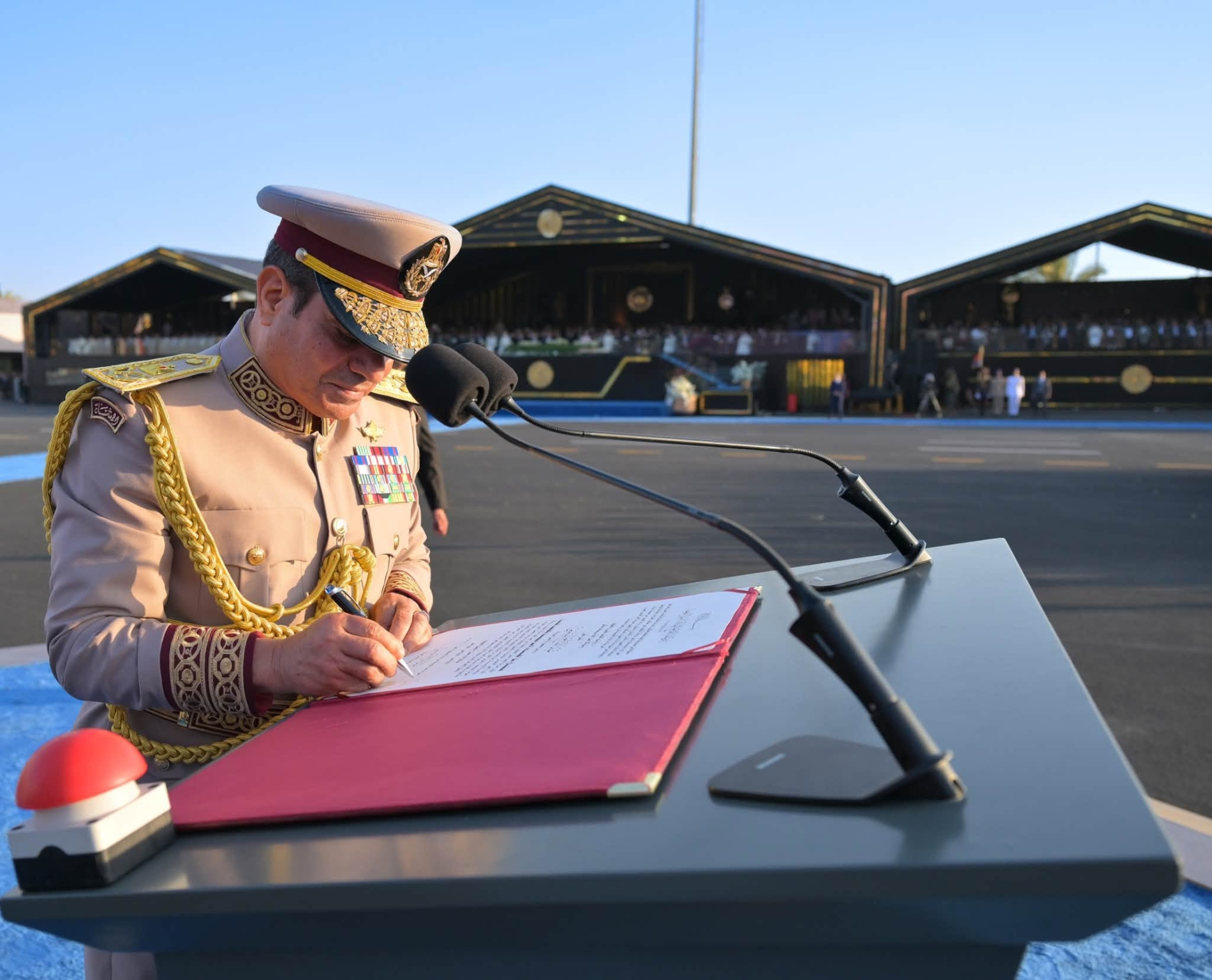
President El-Sisi signing the official charter inaugurating the State Strategic CommandHeadquarters.

War in the Middle East today can be hybrid wars, which blend conventional, irregular, and cyber warfare with disinformation, economic manipulation, and sabotage operations. "Wars are no longer about conventional armies or weapons," said Gen. Ibrahim al-Masri, head of Parliament's Committee on Defence and National Security. Advanced technology can now paralyse a state and destroy its infrastructure remotely.

Lessons have been drawn from the US-Israeli war on Iran (which began in 2025 and remains ongoing today). Intelligence proved key to crippling command systems and killing key figures, including nuclear scientists, army generals, senior politicians, and even Supreme Leader Ali Khamenei. "The presence of such a hardened command centre, where communications are protected, is crucial for state continuity," Gen. al-Masri said. One wonders which possible adversaries he may have in mind.

font change