
Whether from the Gulf, North Africa, the wider Middle East or beyond, there are no shortage of good films emerging onto our screens in 2026. In Al Majalla's monthly movie review, we highlight some of those that caught our eye.
Rabsha
Screenplay and direction by: Mohammed Makki
Country of production: Saudi Arabia
Rabsha is a single‑location film built around a small cast and a tightly focused narrative. Mohammed Makki’s first feature‑length narrative, it relies less on shifting settings or dramatic incident than on the psychological intensification of human relationships.
The film revisits the theme of marriage explored in Makki’s earlier short, The Sensible Wife (2012), in which the wife responds to the intrusion of another woman with startlingly unconventional measures, culminating in a blood‑soaked ending reminiscent of Michael Haneke’s Amour.
Makki began his artistic career in television drama with Taki, which first appeared on YouTube more than 14 years ago. Its high viewership established him as a leading figure in Saudi digital drama, confirmed by its later migration to Netflix. He went on to direct The Last Post (2018) for the Saudi Broadcasting Authority and was assistant director on Rise of the Witches, a Saudi‑British adaptation of Osamah Al Muslim’s celebrated novels.
Independent production is the most defining thread of his career and Rabsha continues that path. Shot in less than two weeks, the film blends suspense, drama, and comedy, building its central idea through small, accumulating moments drawn from everyday life. At its core is a young couple, Faisal (Aziz Al Gharbawi) and Noha (Najla Abdullah), celebrating their wedding anniversary.

The evening begins in a quiet domestic register, indistinguishable from any familiar family occasion, but the tone shifts with the sudden and suspicious arrival of Faisal’s friend Rayan (Saleh bin Zabin), who seeks help with Aisha (Rahaf Ibrahim), who has overdosed. Her presence pushes the story into more turbulent territory.
Relationships tighten, surprises unfold, and hidden aspects of the characters’ lives begin to surface. Dialogue is used sparingly, so body language is central. Aisha, in particular, is portrayed through an intensely physical style that suits both her character and her circumstances, her movements driven by fleeting and unstable emotional impulses.
The crisis deepens when a past relationship between Aisha and Faisal comes to light. This becomes the pivot of a four‑way conflict, subjecting each character to a different psychological test. In doing so, the film shows how an unforeseen event can plunge ordinary life into confusion—or into rabsha, as such disorder is known in Gulf dialect.
Backrooms
Screenplay: Will Soudick and Kane Parsons
Directed by: Kane Parsons
Countries of production: United States and Canada
Backrooms aims to ensnare the viewer from the start. At the centre of the story is Clark (Chiwetel Ejiofor), a failed architect who has withdrawn from professional life and now spends his days in the furniture shop he owns. His routine is disrupted when he discovers a crack in one of the walls.
The fissure widens into a mysterious passage leading to a parallel world of endlessly multiplying rooms and corridors, each more inscrutable than the last. The journey has a distinctly Sisyphean quality, returning Clark to his starting point whenever he opens a new door or moves into another room. Renate Reinsve appears as Mary, a psychotherapist gradually drawn into the unfolding labyrinth.
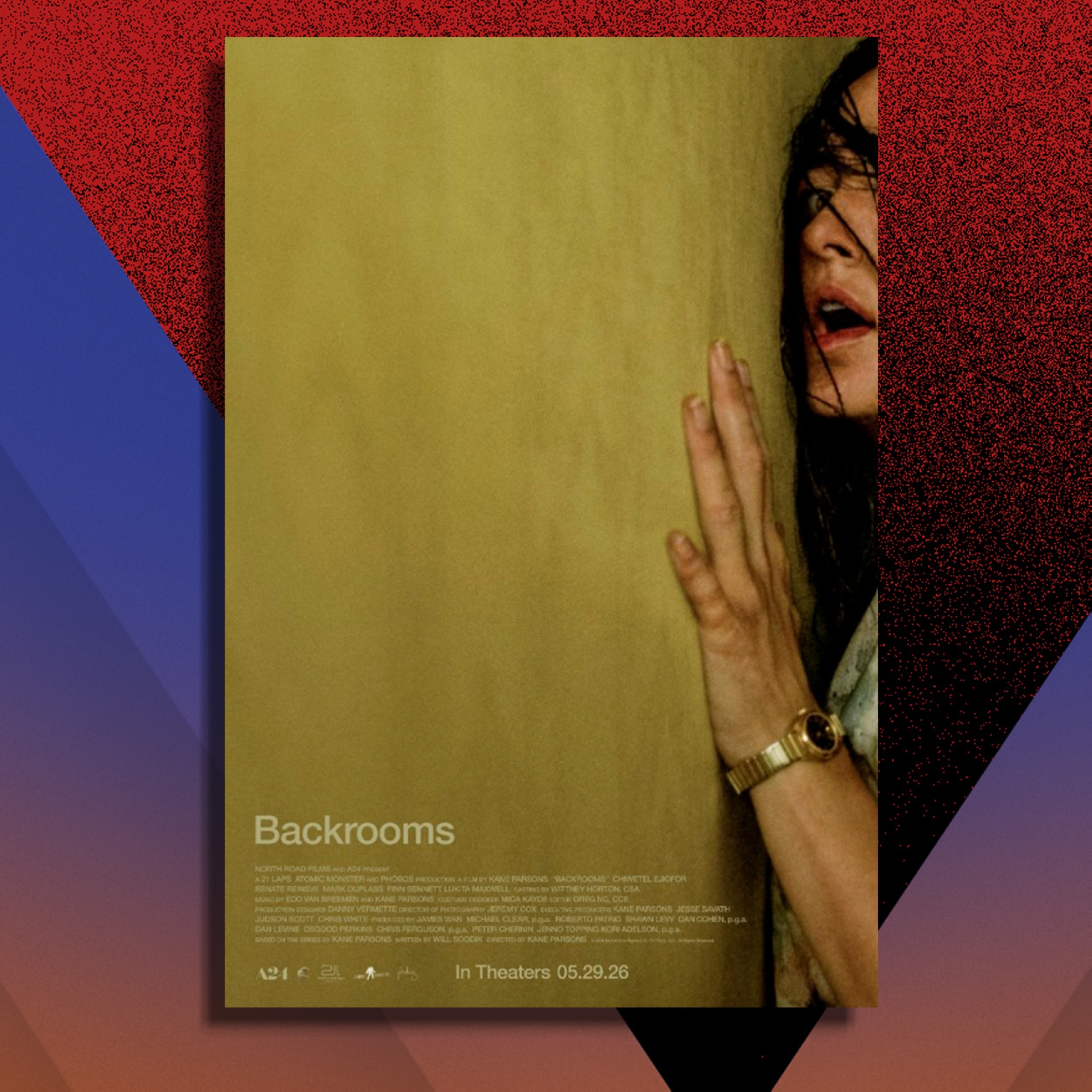
The film’s greatest challenge lies in transforming one of the digital world’s most famous myths—later expanded into video games and interactive experiences—into a feature‑length narrative with defined characters and sustained dramatic arcs. The young American YouTuber Kane Parsons manages this transition with skill, drawing on the series of videos he began releasing four years earlier. Those videos gave the project popular momentum, despite this being his first cinematic venture. At 21, he is the youngest filmmaker to join the independent studio A24.
The game’s premise traps the player inside a deeply unsettling world filled with terrifying backrooms and, eventually, confrontations with monsters or mysterious entities. The search for an exit becomes a struggle for survival, undertaken alone or in groups exploring the unknown. The film distils this structure into the experience of two characters—a man and a woman—facing a maze that resembles a Kafkaesque nightmare. Their hope of escape depends less on confronting danger than on deciphering the absurd logic governing this world, or finding some explanation for the revolt of the walls and the hostility of the space toward its inhabitants.