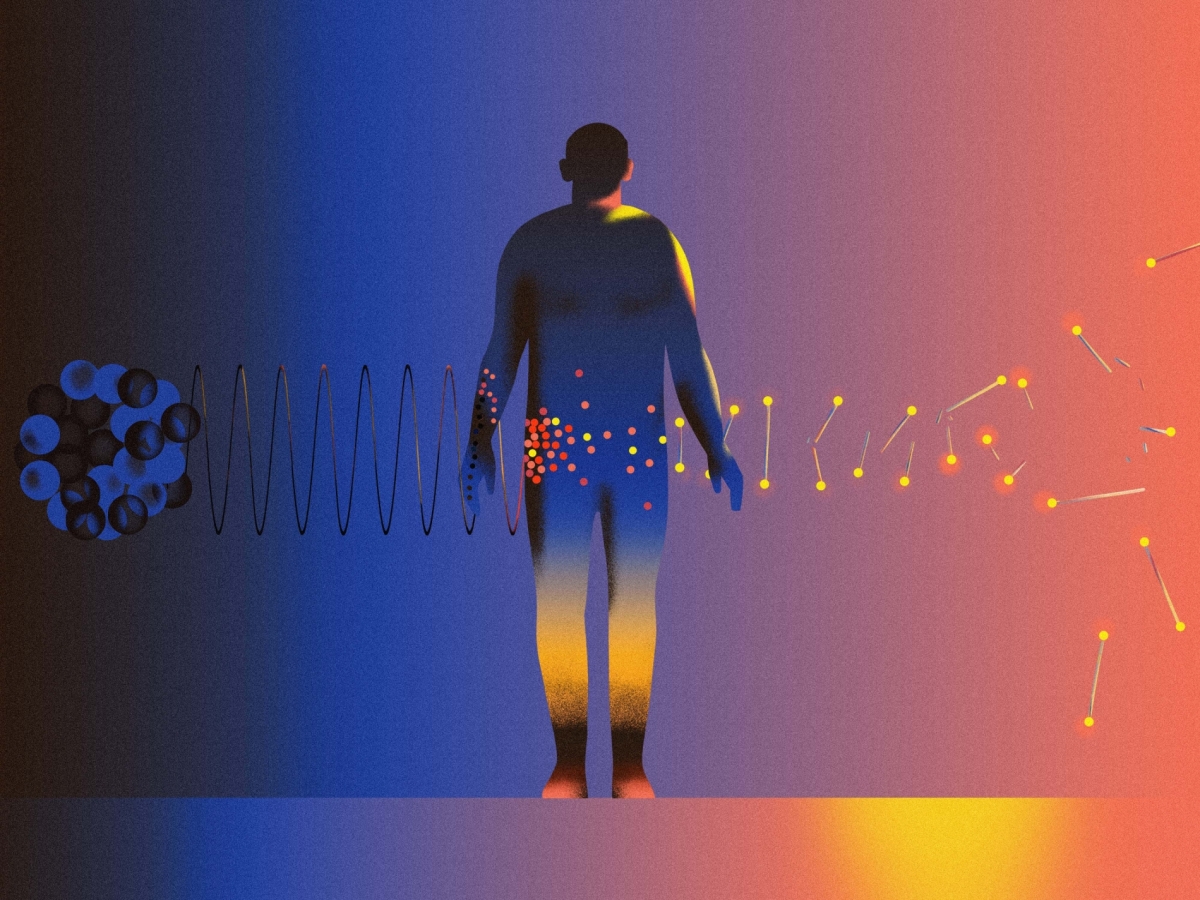
How nuclear radiation affects human DNA

From Los Alamos to Chernobyl, the 20th century offered several examples of high-dose radiation poisoning, and the effects are well-known, but what is happening on a cellular level?

Human DNA is affected by exposure to nuclear radiation.
Olga Aleksandrova
Human DNA is affected by exposure to nuclear radiation.

How nuclear radiation affects human DNA

In August 1945, the Second World War was drawing to a close after atomic bombs were dropped on the Japanese cities of Hiroshima and Nagasaki, forcing a surrender. But at Los Alamos National Laboratory, where the bombs had been developed, scientists were still conducting perilous experiments on a plutonium core reserved for another possible nuclear use should the war continue.

Experiments were conducted by hand, before later accidents forced far stricter safety standards, and on 21 August 1945, physicist Harry Daghlian accidentally dropped a piece of tungsten carbide onto the plutonium core. Daghlian tried to halt the reaction with his bare hands and received a high dose of radiation. Less than a month later, he was dead. In May 1946, physicist Louis Slotin had an accident during an experiment on the same core, when his screwdriver slipped, triggering a powerful flash of radiation. He died nine days later.

The tragedies offered an early lesson in what ionising radiation can do to the human body in a matter of seconds. Nearly four decades later, in the early hours of 26 April 1986, the Chernobyl nuclear power station disaster in Ukraine revealed another face of radiation exposure, this time outside a military laboratory. After Reactor No 4 at Chernobyl exploded, firefighters rushed to the scene without fully grasping the nature of the invisible danger before them.

Among them was Vasily Ignatenko, a 25-year-old Soviet firefighter who helped fight the initial fires. He received a high dose of radiation and developed acute radiation syndrome. He died two weeks later, on 13 May. His wife, Lyudmila, later recounted his final days in testimonies documented by the Belarusian writer Svetlana Alexievich, winner of the 2015 Nobel Prize in Literature, in her book Chernobyl Prayer. What Daghlian, Slotin, and Ignatenko had in common was exposure to large doses of ionising radiation. What is this composed of, and how does it affect the human body?

Essence of danger

Radiation is generally divided into two broad categories. The first is non-ionising radiation such as radio waves, visible light, and infrared rays, which usually lacks sufficient energy to strip electrons from atoms. The other is ionising radiation, such as gamma rays, alpha and beta particles, neutrons, and certain X-rays, which can separate electrons from atoms and turn them into ions. This capacity is the essence of the danger, because it allows radiation to alter the chemical structure of living molecules, above all DNA, the molecule that carries genetic instructions inside human cells.

James Watson and Francis Crick revealed DNA’s double-helix structure in 1953. The molecule consists of two strands coiled around each other, each made up of small units known as nucleotides. These units carry four nitrogenous bases: adenine, thymine, guanine and cytosine (known by most as A, T, G, and C). Adenine pairs with thymine, and guanine with cytosine, in a precise arrangement resembling the rungs of a ladder. From the order of these bases arise the genes that instruct the cell to produce proteins and regulate the functions of the body.

Valery Zufarov / TASS / AFP
An aerial shot, dated 31 December 1986, of the Chernobyl nuclear plant in the Ukraine. The explosion several months earlier affected 3.2 million Ukrainians.

Although this system is highly precise, it is not as fragile as it may seem. DNA sustains limited damage every day from natural processes within the body, including oxidation and errors that occur when genetic material is copied during cell division. For this reason, cells have lots of repair mechanisms, including to repair or correct damaged bases, mismatches during copying, and breaks in one DNA strand or in both. These correcting mechanisms have limits, however, and when damage is extensive, complex, or concentrated within a short period of time, accurate cell repair may be impossible.

Ionising radiation can damage DNA in two ways. The damage may be direct, as radiation strikes the DNA molecule itself and breaks its chemical bonds, or it may be indirect. The latter is a pathway of particular importance in human cells, because most of the cell is water. When radiation ionises water molecules, highly reactive free radicals are formed. These can attack DNA, proteins, and lipids inside the cell. As a result, radiation need not strike DNA directly to cause serious genetic damage.

Repairing the damage

Damage to DNA can range from small changes in its chemical bases to breaks in a single strand and, more dangerously, breaks in both strands at once. Double-strand breaks are among the most serious forms of damage, because the cell is forced to reconnect two severed ends in a molecule whose information is arranged with extraordinary precision. If the ends rejoin incorrectly, mutations may occur, parts of the DNA may be lost, genes may fuse abnormally, or chromosomes may be rearranged.

The cell then faces several possible outcomes: it may repair the damage and return to normal function; it may fail to repair and die (which can itself serve as a protective mechanism when the damage is severe); or it may survive while carrying a mutation or chromosomal defect. In such cases, the consequences do not always appear immediately. The danger may extend over years or even decades, especially if the mutations affect genes that control cell division, DNA repair, or tumour suppression.

Human cells are mostly water. When radiation ionises water molecules, highly reactive free radicals are formed

Here begins the link between radiation and cancer. The severity of the effect depends on the dose, the type of radiation, the rate of exposure, and the route by which it enters the body. A high dose received within minutes is more dangerous than a small dose spread over a long period, because cells do not have enough time to repair themselves. Types of radiation also differ in their ability to penetrate tissue. Alpha particles usually cannot penetrate skin, but they become highly dangerous if they enter the body through inhalation or ingestion. Gamma rays and neutrons, by contrast, can penetrate deeper tissues, making them a major hazard in cases of external exposure.

Tissues also vary in their sensitivity. Cells that divide rapidly, such as those in the bone marrow, the intestinal lining, and the tissues of embryos and children, are more vulnerable to radiation than cells that divide more slowly. This is why high doses produce acute problems in the blood, the immune system, and the digestive tract. In acute radiation syndrome, symptoms may begin with nausea, vomiting and fatigue. A latent period may then follow, during which the condition appears to stabilise, before serious complications emerge in the bone marrow, intestines, or nervous system.

Reuters
Dr Tatiana Sueta from the Red Cross checks the thyroid gland of a girl, as others children wait for their turn in school in the village of Miloslavichi, some 330 km east of Minsk. The Chernobyl radiation cloud covered Belarus.

The Los Alamos and Chernobyl accidents resulted in high exposure and a direct assault on the body's ability to renew its tissues. Yet not all the effects of radiation are immediate. At Chernobyl, for example, iodine-131 played a central role in the rise in thyroid cancer cases, especially among those who were children or still in the womb at the time. The thyroid absorbs iodine from the blood to produce its hormones. When radioactive iodine enters the body, it can concentrate in the gland and release localised radiation within its cells. This radiation may cause breaks in DNA. If those breaks are repaired incorrectly, major changes may arise, such as gene fusions or deletions of genetic material, which can push some cells towards uncontrolled division.

Radioactive contamination

A study published in the journal Science in 2021 analysed the genes of hundreds of thyroid cancer cases in Ukraine, including those involving people exposed to Chernobyl radiation in childhood or during foetal life. The findings showed that radiation exposure was associated mainly with patterns of DNA damage involving double-strand breaks and gene rearrangements, rather than a simple increase in the number of point mutations. This suggests that radiation does not always leave a single 'signature,' but can produce different patterns of genetic disruption depending on the tissue, the dose, and the age at exposure.

There is also a crucial distinction between radiation exposure and radioactive contamination. A person may be exposed to external radiation and then leave the site without becoming radioactive. Radioactive contamination occurs when radioactive materials adhere to the skin or clothing, or enter the body through breathing, food, or water. In such cases, exposure may continue from within the body, and the radioactive substance may accumulate in a particular organ, such as iodine-131 in the thyroid, strontium in the bones, or caesium-137 in various tissues of the body.

Ina Fassbender / AFP
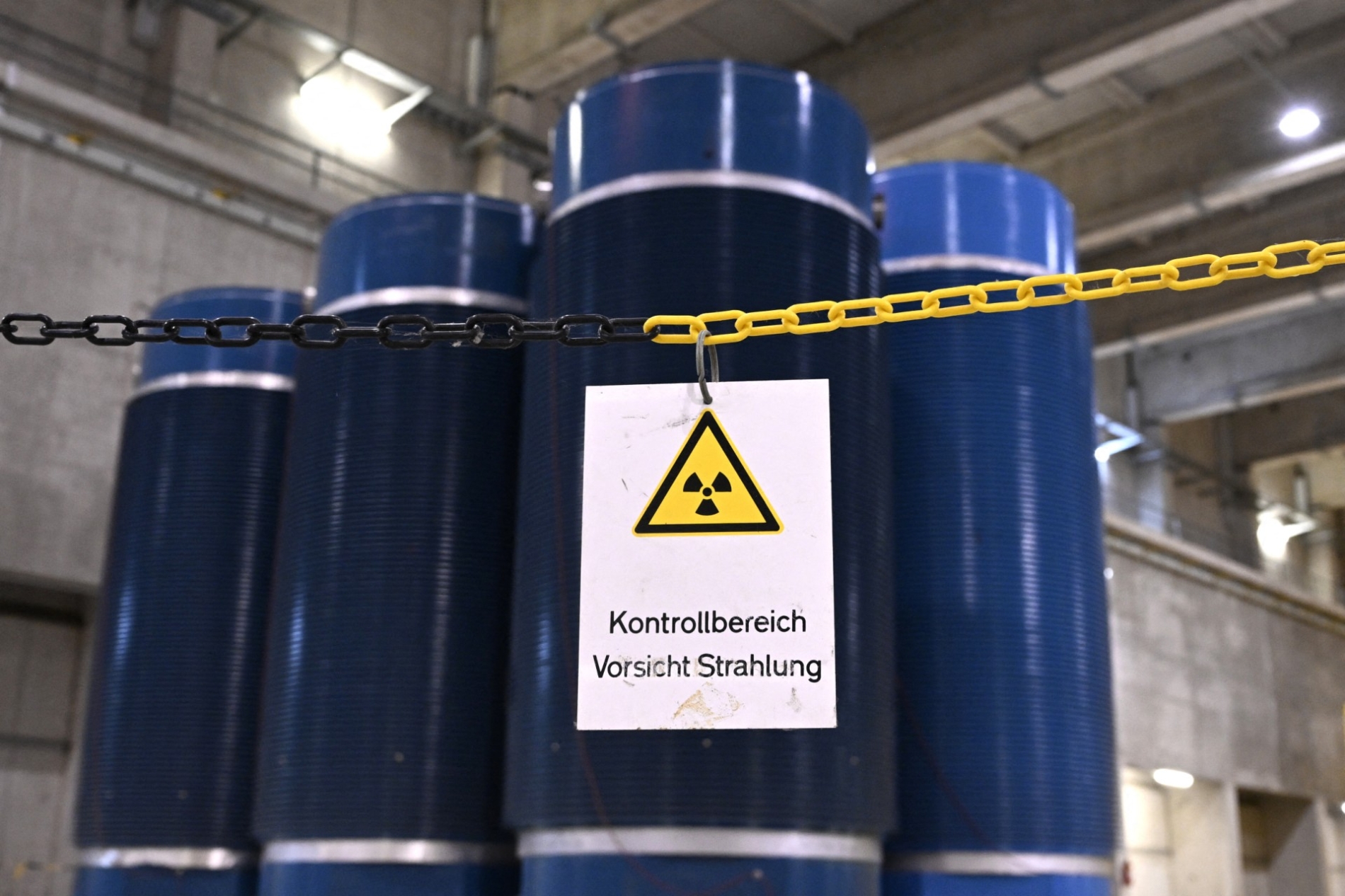
A sign reading 'Restricted area–caution radiation' in front of Castor containers for highly radioactive fuel elements in western Germany on 18 September 2025.

Scientists wondered whether radiation-induced mutations could be passed on to children. Biologically, radiation can damage germ cells, namely eggs and sperm. If such damage survives and becomes part of an embryo, it may become an inherited mutation. Yet direct human evidence for a clear increase in inherited mutations across generations after nuclear disasters remains limited and contested.

In the 1990s, a study published in Nature reported an increase in mutations in regions of DNA known as 'minisatellites' among children born in contaminated areas after Chernobyl, linking this increase to exposure to caesium-137. Yet the study was contentious because it focused on specific markers, rather than the whole genome. By contrast, a broader study published in Science in 2021 examined the whole genomes of children born after the accident to parents exposed to Chernobyl radiation. It found no clear increase in new mutations compared with natural rates.

Scientists therefore regard the transmission of radiation-induced mutations across generations in humans as biologically possible, but not clearly established based on the available human data. Today, the view is that DNA does not become radioactive when exposed to nuclear radiation, but that it may bear molecular scars: nitrogenous bases may be damaged, chemical bonds may be broken, and chromosomes may be rearranged incorrectly after exposure. This is an evolving area of science, though, and not one that is easily tested. As a result, our understanding may yet change.

font change