Maxime Prévot on Europe's push to reassert its relevance in the Gulf

Belgium's deputy premier and minister of foreign affairs also talks about the importance of a Palestinian state, upholding international law, and ties with Saudi Arabia

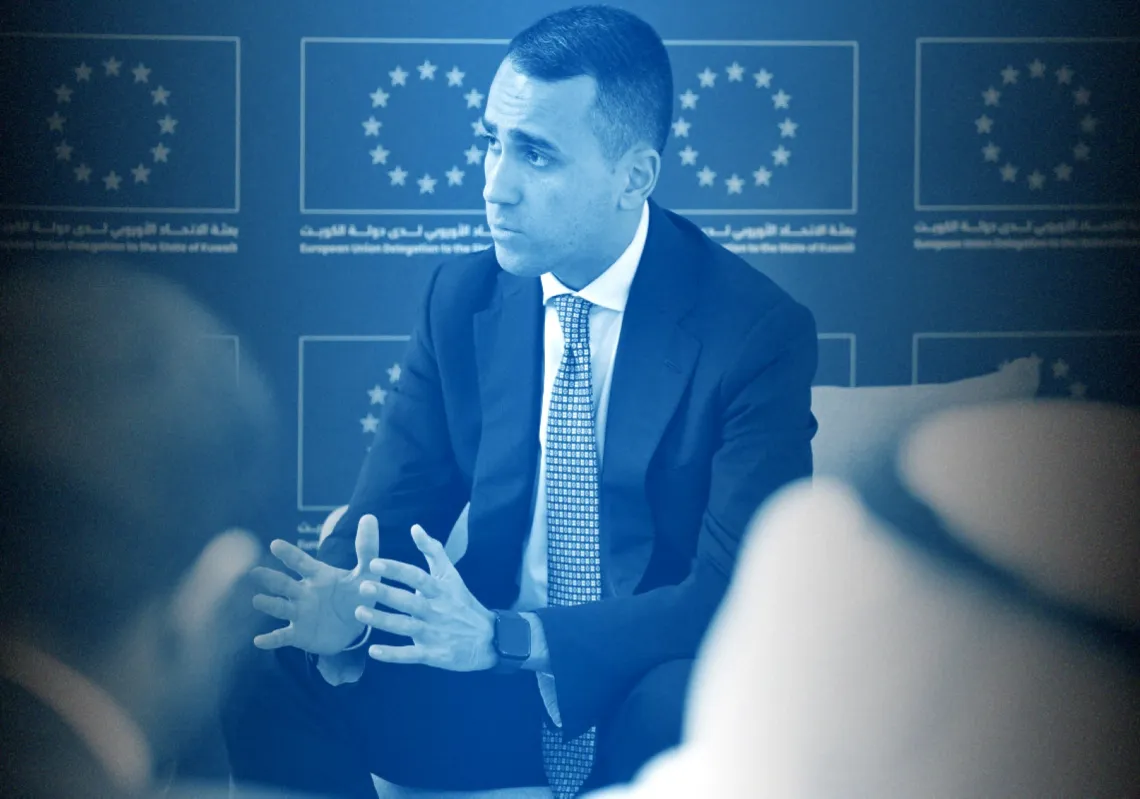
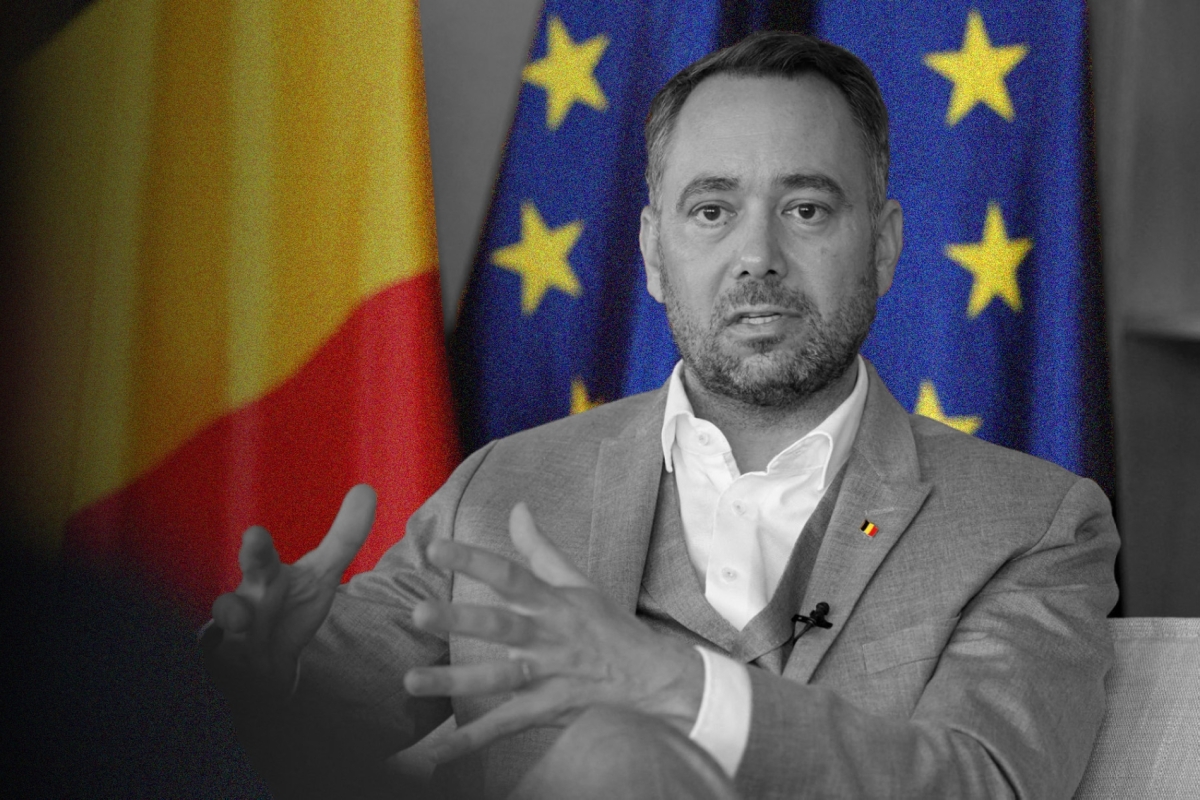
Belgium's Vice-Prime Minister and Minister of Foreign Affairs Maxime Prévot gestures during an interview with AFP in Brussels, on 5 September 2025.
Nicolas TUCAT / AFP
Belgium's Vice-Prime Minister and Minister of Foreign Affairs Maxime Prévot gestures during an interview with AFP in Brussels, on 5 September 2025.

Maxime Prévot on Europe's push to reassert its relevance in the Gulf

Belgian Deputy Prime Minister and Minister of Foreign Affairs Maxime Prévot speaks to Al Majalla at a delicate diplomatic moment for his country. In November, he will take part in one of the largest Belgian economic missions to Saudi Arabia in over a decade, led personally by Queen Mathilde, at a time when European governments are scrambling to reassert their relevance in a Gulf region reshaped by war, mediation, and shifting alliances.

Prévot views the US-Israeli strikes on Iran as a violation of international law, but also says he understands why they felt it was necessary to strike, citing Iran's refusal to end its ballistic missiles and nuclear programmes. He also offers a rare admission from a sitting European foreign minister that the EU was largely absent from the diplomatic and military architecture of the Iran-Israel war, conceding that Brussels remains, in his words, "a payer" rather than "a player" on the world stage.

He is pressed—and pushes back—on the precise legal status of Belgium's recognition of Palestine and candidly addresses Europe's growing anxiety over its dependence on American security guarantees, as France's proposed nuclear umbrella enters serious discussion in EU capitals.

During the discussion, Prévot alternates between the language of partnership and the language of reckoning—both with the Gulf, and with Europe's own limitations.

This is the discussion, edited for clarity and conciseness.


How would you characterise the current state of bilateral ties between Saudi Arabia and Belgium? And what do you see as the most underdeveloped areas of partnership between both sides?

I think that we have strong ties, full of respect. I remember that a couple of weeks ago, Saudi Arabia was hit with missile attacks from Iran. King Philip called Crown Prince Mohammed bin Salman to express our deep solidarity. There have been good connections between the two royal families for a long time. And it started in 1967, if I remember correctly, with King Faisal's visit to Belgium.

So we have a longstanding partnership, and it reflects, of course, in the trade sector. When I look at the figures, it seems that in recent years the trade volume and exports from Belgium to Saudi Arabia have increased. So that's a good thing.

But the last time we organised a mission in Saudi Arabia was 12 years ago, which was too long ago. It is time now to come back with a very large and important economic mission that will be led by Her Majesty the Queen of the Belgians, in order to strengthen our contacts, but also to increase the number of contracts, because we are facing the same kind of challenges in terms of energy.

Belgium is really impressed by Saudi Vision 2030. The ambition of the plan is among the highest in the world, and I think that Belgium can offer solutions to the various challenges Saudi Arabia faces. We have a lot of expertise to offer, especially regarding Riyadh's digital technology and its push toward a green transition away from oil revenues.
The US-Iran strikes on Iran violated international law, but we also understand why it was necessary to act.

Maxime Prévot, Belgian deputy prime minister

What is the central message that Belgium wants to send to the decision makers, policymakers, and investors in your visit to Saudi Arabia?

Belgium is back and wants to reinforce the historical ties we had and continue to have. Saudi Arabia remains an important economic partner in the region, and now's the right time to reinforce this partnership, given the troubled times we are living through.

You said publicly that the US and Israeli strikes on Iran do not meet the standards of international law, yet you also said that they can be justified from a global security perspective. How can you reconcile these two positions?

No, there is no contradiction. I think the two aspects are true. In our view, it was crystal clear that the attacks initially launched by Israel and the US against Iran were not in line with international law. But we also understand why it was necessary to act in the face of this standard, taking into consideration the absence of goodwill from the Iranian regime to end its ballistic missile and nuclear power programme, and taking into consideration the way the Iranian regime is acting against its own people.

AFP
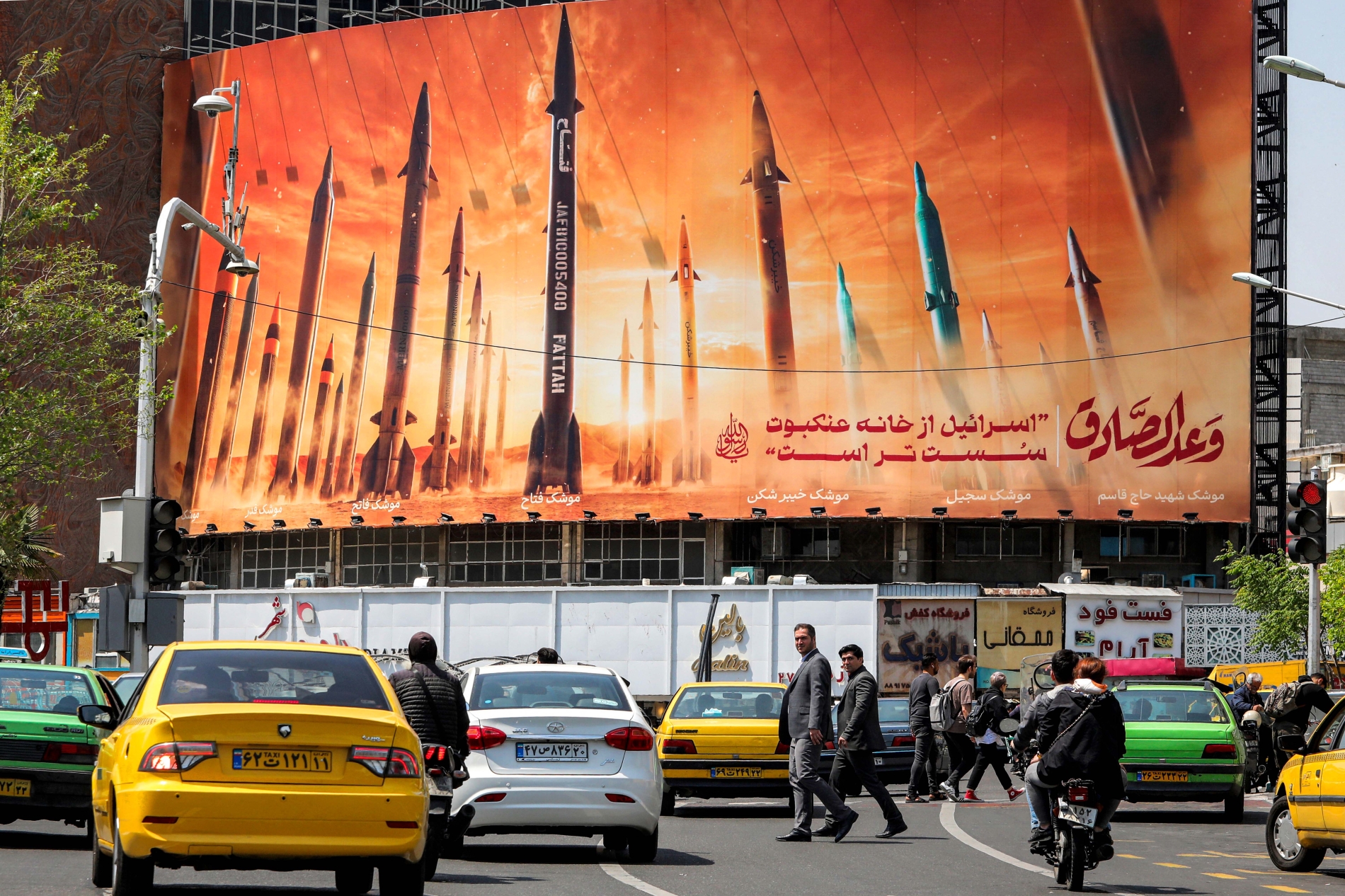
Motorists drive their vehicles past a billboard depicting named Iranian ballistic missiles in service, with text in Persian reading "Israel is weaker than a spider's web" in central Tehran on 15 April 2024.

Of course, it was time to take action, and it is one of the reasons Belgium has strongly advocated for putting the IRGC on the list of terrorist groups in Europe, and it has been done. So I think that we need to pay attention to the respect of international law from both parties.

It is the right time to end any war. All the people in the Gulf region, in the Middle East, deserve security, and it is the reason why Belgium has also mentioned that we are at the disposal of the Coalition of the Willing, led by France and the UK, in order to provide some support or mine-hunting expertise, in order to secure the Strait of Hormuz and to guarantee the freedom of maritime transit.

Just as Belgium is against Iran's proxies like Hamas and Hezbollah, who act against the security and territorial integrity of all, it is also against the way Israel is currently acting. Of course, Israeli people deserve to live in security, but they have to respect the territorial integrity of their neighbours, the sovereignty of other populations, and also offer guarantees in order to secure a two-state solution.

Some would argue that Europe was largely absent from the military and diplomatic architecture of the US-Iran war that began on 28 February. What is your view?

I agree and regret it. I've clearly stated at the European level that we are far too absent from various international conflict zones, and it is time to take action and stop outsourcing mediation processes to the US. Of course, we commend all efforts made by the US, Qatar, Egypt, Türkiye, and Pakistan, because we absolutely need to stop the war and offer the citizens a long-lasting peace.

I also think that the EU, for the moment, lacks credibility on the international stage. It is an important payer but not a strong player. This needs to change.

In the EU, we need absolute unanimity for most of the decisions we have to take, in accordance with the rules and the decision-making process for foreign and security policy, which sometimes makes it difficult to act. That is the reason I've pushed my government, last year, and asked it to take initiative and measures at the national level, because the situation on the ground in Gaza was a shame, and remains a shame, and totally unacceptable. Also unacceptable is the expansion of illegal Israeli settlements in the West Bank.

REUTERS/Mussa Qawasma
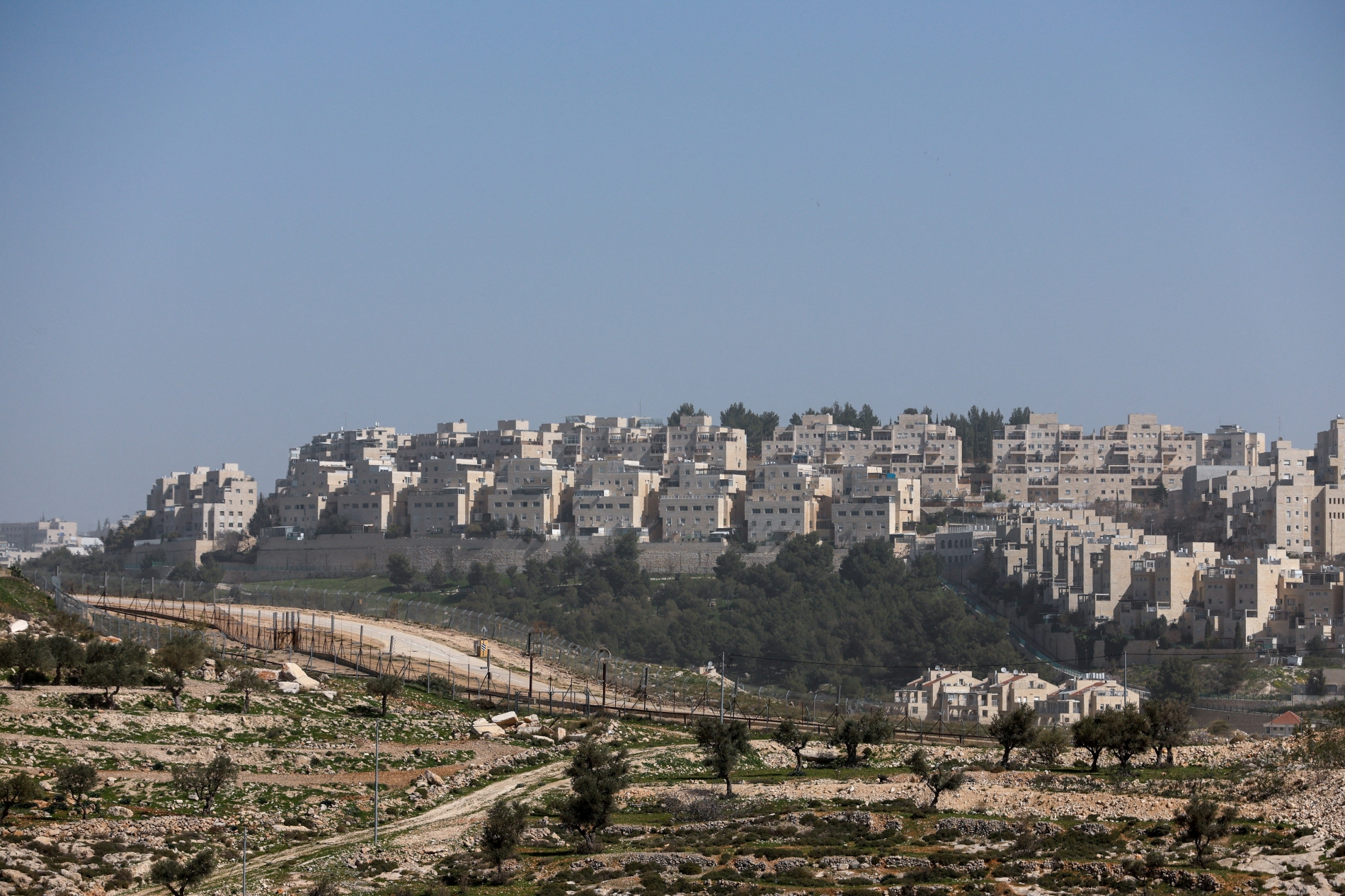
An Israeli settlement near Bethlehem in the Israeli-occupied West Bank, on 16 February 2026.

We are one of the front-runners in Europe in taking action against the Israeli government in order to influence its behaviour. We know that it is quite difficult, which is why we need strong decisions coming from a unified Europe. But some countries, for ideological reasons, for historical reasons, for economic reasons, hesitated or refused to take action, including sanctions, at the EU level against Israel.

Belgium recognises and supports the right of the Israeli people to live in security. We are not against Jewish people nor against Israeli people, but we condemn the way the Netanyahu government is acting. Furthermore, we need to offer Palestinians every opportunity to truly achieve a two-state solution. That's the only way to resolve the conflict in the region.

To this end, Belgium recognised the State of Palestine last year, at the political and diplomatic level, during the United Nations General Assembly. The only thing we have not done so far is act in a formal way, with a specific decision by the government. That's only a legal matter, but from a political and diplomatic standpoint, we strongly recognise the State of Palestine.

The Belgian government formalised recognition after the release of all hostages. But the second condition—that Hamas should not be involved in governing a Palestinian state—is the only aspect we still need to assess, because it appears to be in the surroundings of governance, and we need to avoid that. When it is crystal clear that they are really out, we will formally act on the recognition from a legal standpoint.

Israeli people deserve to live in security, but they have to respect the territorial integrity of their neighbours.

Maxime Prévot, Belgian deputy prime minister

Switching gears, France and Germany are discussing a European nuclear umbrella, with Belgium included. Can you speak more about this initiative?

Belgium is a member of NATO; we host its headquarters in Brussels, and we are convinced that we must take on a larger share of the burden to guarantee Europe's security, rather than always relying on the goodwill of the US.

The message sent by President Trump was crystal clear: it was time to wake up for Europe and take action. We have also decided in Belgium to increase our defence sector spending—we are now at 2% of GDP in defence sector investment, and we will continue to increase these investments.

We are in favour of a stronger European pillar within NATO and view the French initiative as aligned with this aim. So that's why we think it is an important opportunity to seize.

font change