Trump’s 2026 Iran deal differs from Obama’s 2015 JCPOA
Although an MOU will be officially signed on 19 June, there are already significant differences a decade later, despite the US aim being largely similar. Could Trump open Iran like Nixon opened China?
Trump’s 2026 Iran deal differs from Obama’s 2015 JCPOA
The US-Iran agreement to be signed in Geneva on 19 June cannot really be compared to the Joint Comprehensive Plan of Action (JCPOA) that former US President Barack Obama’s team negotiated with European, Russian, and Chinese help from 2013-15 to restrain Iran’s nuclear programme.
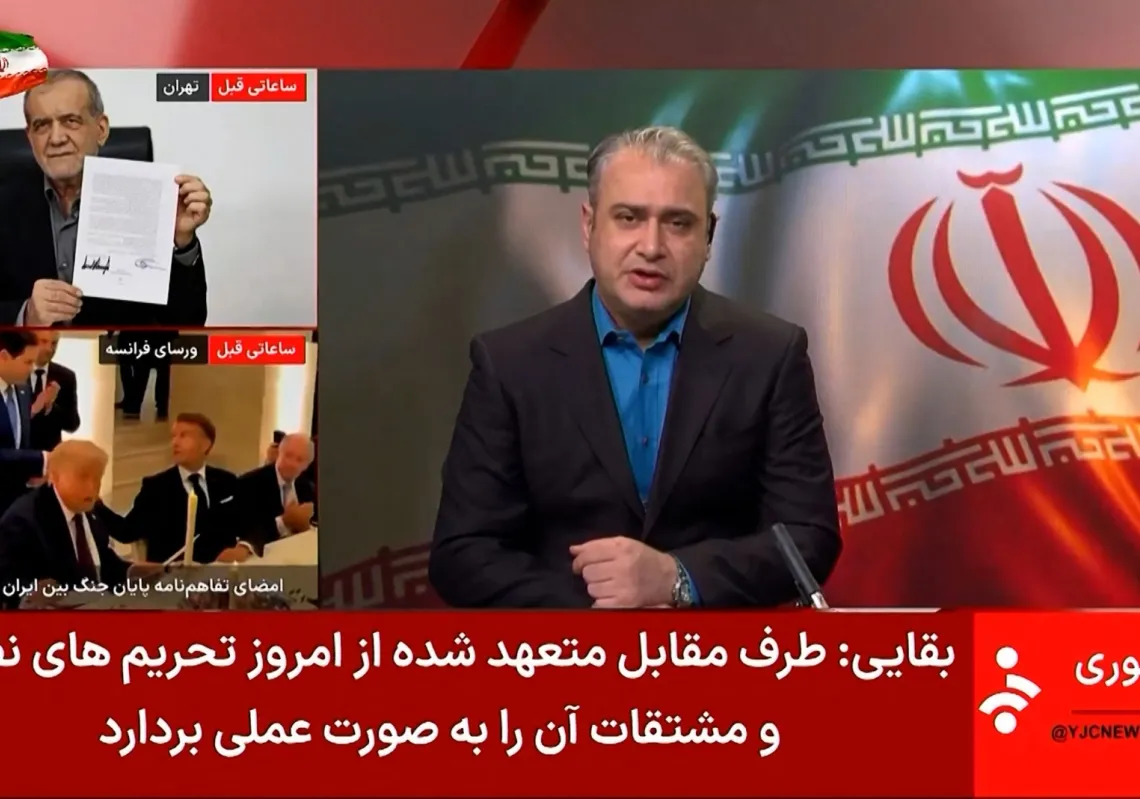
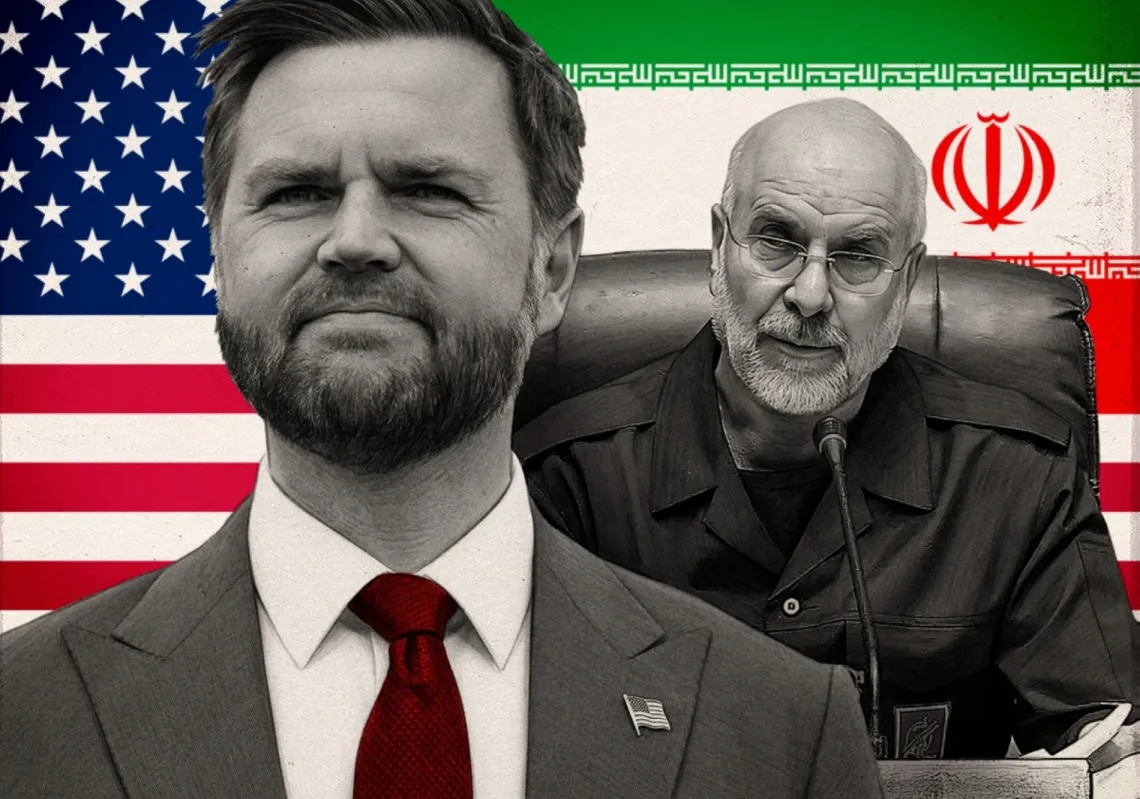
The most obvious difference is that the 159-page final agreement signed in 2015 had a basic text and five technical chapters, whereas US Vice President JD Vance has said that the 2026 memorandum of understanding (MoU) is less than two pages long. It essentially agrees a 60-day ceasefire to the war that the Americans and Israelis launched against Iran on 28 February 2026.
Navigation through the Strait of Hormuz will reopen, and the MoU contains an agreement to use the 60-day period to negotiate a resolution to Washington’s concerns about Iran’s nuclear programme and Iran’s demands that sanctions be lifted. Obama’s 2015 agreement focused on limiting Iran’s nuclear programme and Western financial measures in response.
The American military presence in the Middle East never came up (Obama would have said it was non-negotiable had it come up). In 2026, however, the Wall Street Journal reported that Tehran has demanded the closure of US military bases in the region as part of a longer-term agreement.
Up for negotiation
Some reports suggest that the MoU commits the US to not increasing its regional forces, with Washington withdrawing the extra forces it sent to the region within 30 days of a final agreement. If true, this would be the first time that US long-term deployments had been negotiated with Iran. The US military has been considering redeploying some forces beyond the reach of Iranian missiles for some time, and the targeting of US regional bases since March will only add urgency to any plans.
Trump says the MoU will commit Iran to never building a nuclear weapon. This is not new. In its initial principles, the JCPOA contained an Iranian pledge that “under no circumstances will Iran ever seek, develop or acquire nuclear weapons”. It then described detailed measures to restrict Iranian nuclear activity for 15 years.
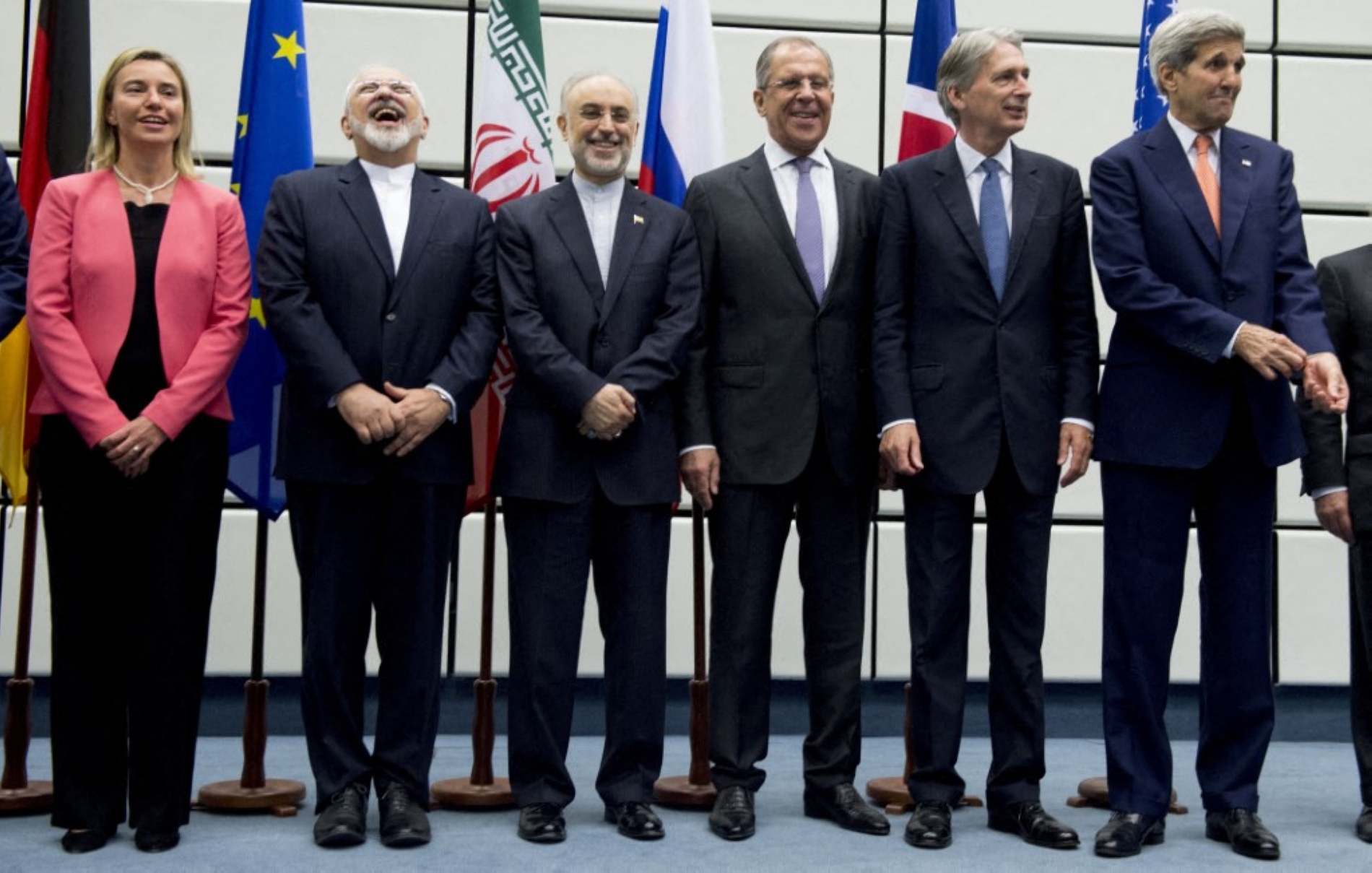
Foreign ministers of Iran, the US, the UK, the EU, and Russia pose for a group picture in Vienna, Austria, on 14 July 2015, after reaching the JCPOA nuclear deal that capped more than a decade of on-and-off negotiations.
Vance told American media on 15 June that the 2026 MoU will start a 60-day period of negotiations to finalise a nuclear deal, but the US and its international partners needed 20 months between 2013-15 to agree the JCPOA, so it is difficult to see how Trump's team on their own will only need two months, especially since there is now the additional issue of Iran’s 440kg of highly enriched uranium, developed since Trump withdrew from the JCPOA in 2018.
Vance said that the text of the agreed MoU includes Iranian acceptance of American and International Atomic Energy Agency (IAEA) involvement in diluting this highly enriched uranium and removing it from Iranian control. Again, there are echoes from a decade ago, with Obama having accepted in 2015 that Russia could hold the stockpile of enriched uranium.
The most obvious difference is that the 2015 deal was 159 pages, whereas the 2026 MOU is less than two pages long.
The right to enrich
Speaking to reporters at the end of May, Trump said he was uncomfortable with Russia or China taking the enriched uranium, so there appear to be many details still to resolve over this. Iran's uranium enrichment is perhaps the most sensitive issue. Obama finally accepted that Iran could enrich uranium, but only to a low level (3.67%) under monitoring by international inspectors for a period of 15 years.
After powerful 'bunker-busting' American strikes against Iranian nuclear facilities in 2025 and 2026, Iran's remaining enrichment capacity is unknown. Trump's team say they hope that Iran does not try to rebuild its nuclear programme—or at least agrees to suspend it. Trump told the media that he would like a pause of 15-20 years, but Iranian leaders are unwavering in their sovereign right to enrich uranium for civilian purposes. Today, Iranian scientists have a far greater knowledge of—and experience with—enrichment than they did in 2015.
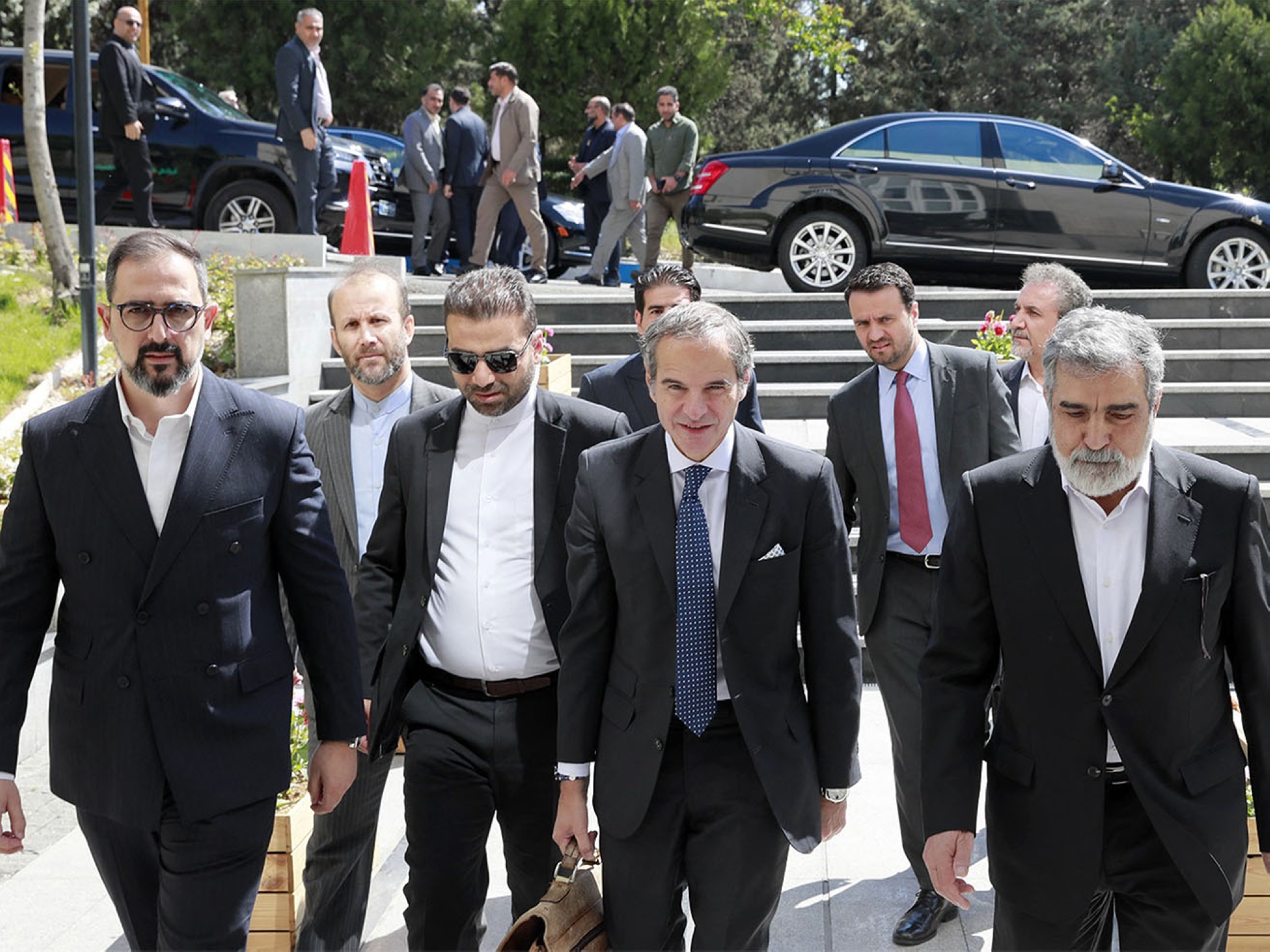
IAEA Director General Rafael Grossi, during his meeting with IAEA Spokesperson Behrouz Kamalvandi, in Tehran, on 17 April 2025.
Vance has said that the Iranians agreed to inspections of their nuclear programme by the IAEA in the MoU. The Agency's inspection regime was carefully negotiated for the JCPOA, including treatment of disputes between Iran and the inspectors (or other parties to the agreement) through a new joint commission. The technical details of the inspection regime must now be renegotiated.
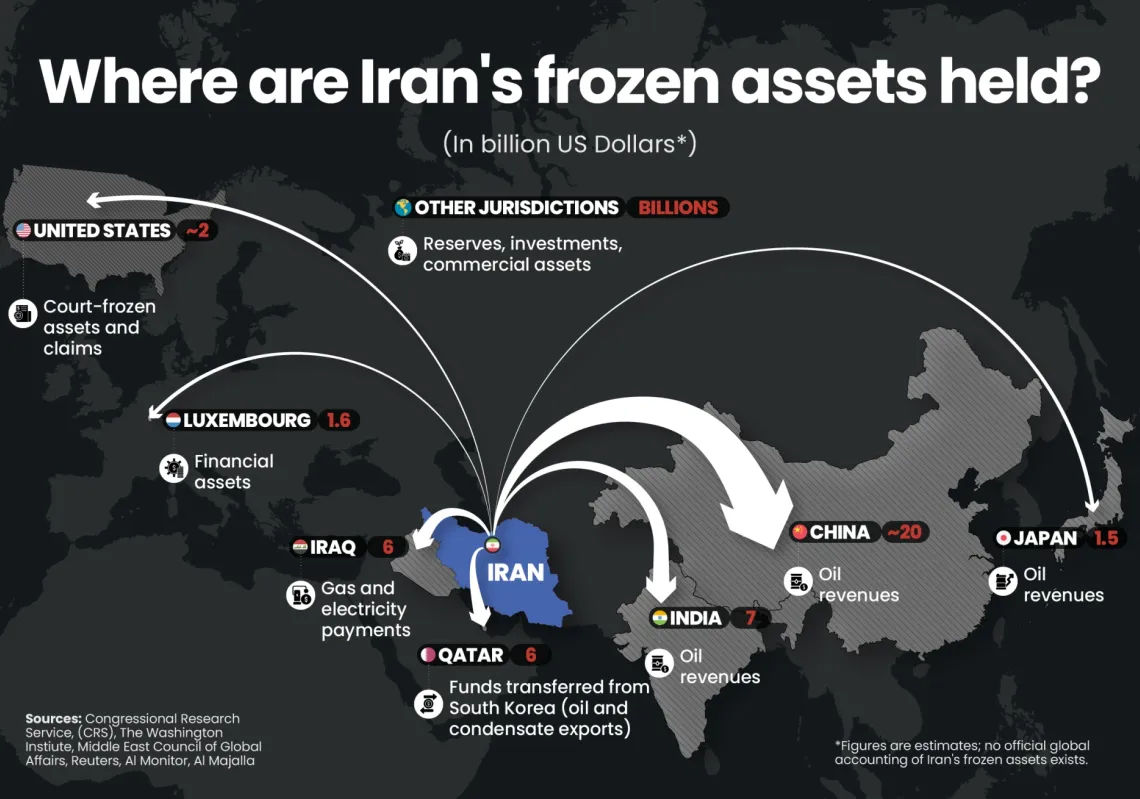
Obama compromised on financial sanctions and the unfreezing of Iranian financial assets held around the world. Under the JCPOA, countries agreed to lift restrictions on about half of Iran's frozen $110bn in assets. When Trump took office, Washington reimposed restrictions and blocked Iranian efforts to access large assets in South Korea and Qatar.
Carrot and stick
On 14 June, the Iranian Mehr news agency reported that Trump's team had agreed in principle that during the subsequent 60-day negotiating period it would release its hold on $24bn of frozen Iranian assets, with $12bn released at the beginning of this period. Trump administration officials deny this, even though the MoU terms remain secret.
Lifting sanctions is the other big financial issue. Under the terms of the JCPOA, Washington agreed to suspend (in early 2016) sanctions against non-Americans involved in commercial and financial transactions with Iran as well as sanctions on Iranian exports of oil, petrochemicals, and cars. As a result, Iran's foreign exchange earnings increased.
The Obama administration also lifted sanctions preventing the Iranian Central Bank from accessing the international banking system, but maintained other sanctions on Iran's economy because of its support for terrorist groups, human rights violations and its missile programme. This included a ban on American citizens and entities from engaging in any financial transactions with Iran.
Trump's team warns that any US measures to help the Iranian economy—such as releasing frozen financial assets and lifting sanctions—will depend on concrete Iranian actions, especially on its nuclear programme. At the time of writing, the precise timing of steps is unknown. Speaking on condition of anonymity, two US officials recently said that Washington was prepared to release some frozen assets and ease some sanctions at the beginning of the 60-day period if Iran took reciprocal steps.
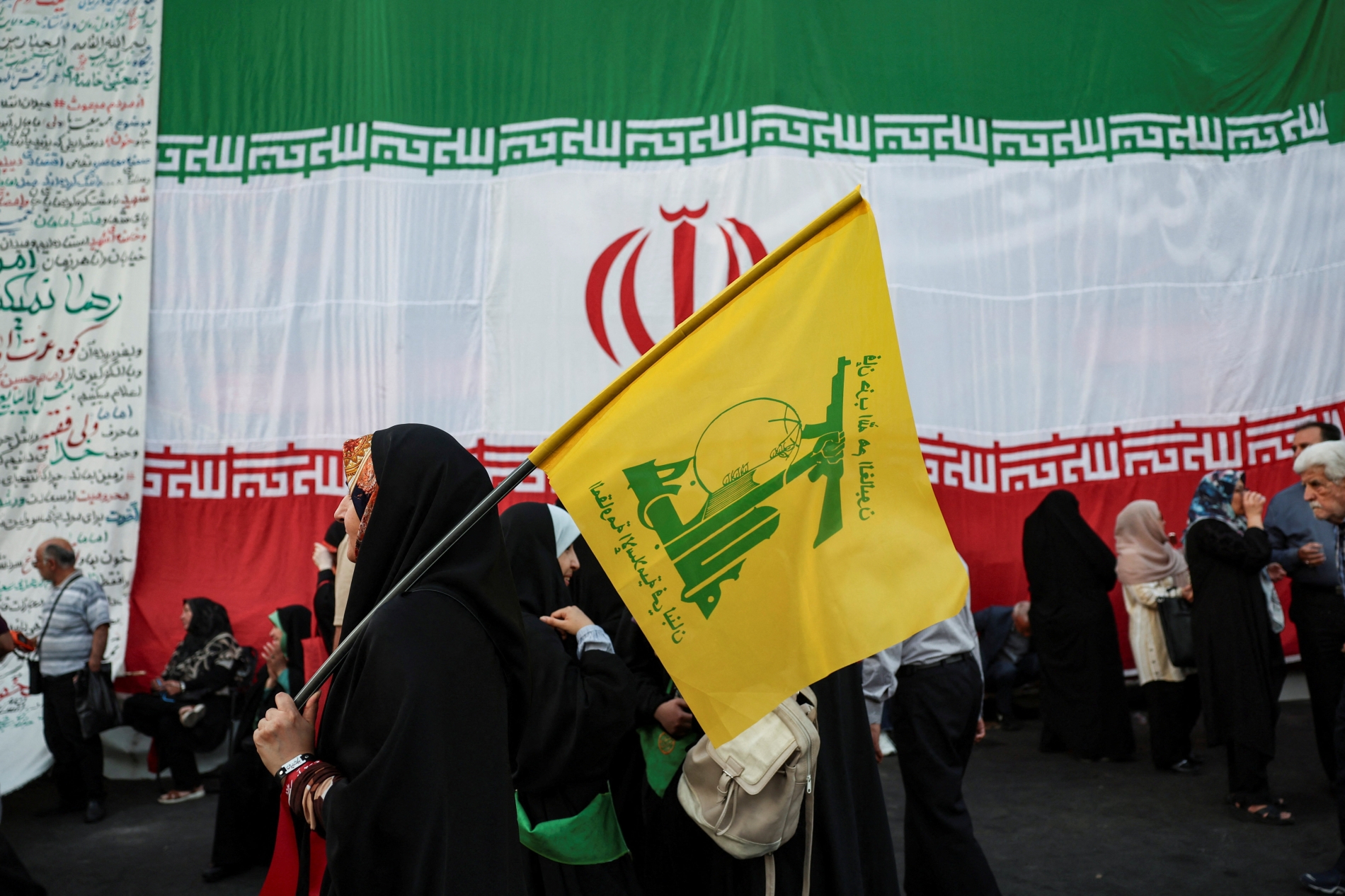
A woman holds a Hezbollah flag during a rally in support of Iran's Supreme Leader, Mojtaba Khamenei, in Tehran, Iran, on 4 June 2026.
Lebanon and Israel
The Obama administration made securing a nuclear agreement with Iran its top priority, instead of focusing on Iran's destabilising actions in the region. It also chose not to confront Iran over its intervention in the Syrian civil war, nor to condition its nuclear agreement on Iran's continued support for regional militias. I was the American ambassador to Syria from 2011-14, and the Obama administration had a strict policy of not discussing regional issues with Iran in detail during the nuclear negotiations.
Today, the situation appears to have changed. In 2026, Iran has insisted that a ceasefire must include Lebanon, where its proxy Hezbollah is being targeted by Israel. An Iranian foreign ministry spokesman stressed on 15 June that Israel must respect Lebanese sovereignty and territorial integrity. A day later, Iranian Foreign Minister Araghchi was more direct, claiming that the MoU will require Israel to withdraw from Lebanon.
Anxious to secure a ceasefire in the Gulf, Trump called Israeli Prime Minister Benjamin Netanyahu to urge a halt to the fighting in Lebanon. Unhappy with American pressure and annoyed with Trump's tough tactics, Israeli officials have stressed that Israel is not bound by the MoU between Washington and Tehran. Defence Minister Israel Katz said on 15 June that Israel would not withdraw from Lebanon, Gaza, or Syria, and National Security Minister Itamar Ben-Gvir insisted the MoU puts no obligations on Israel. In fact, Israel must disarm Hezbollah, Ben-Gvir stressed.
US officials say the MoU only calls for a ceasefire in Lebanon, not an Israeli withdrawal, and that any Israeli response to new Hezbollah attacks would not be inconsistent with its terms. An Israeli strike on a southern suburb of Beirut provoked a new missile attack from Iran against Israel on 7 June, briefly interrupting Iran's ceasefire negotiations, causing Trump to intervene in a terse phone call to Netanyahu.
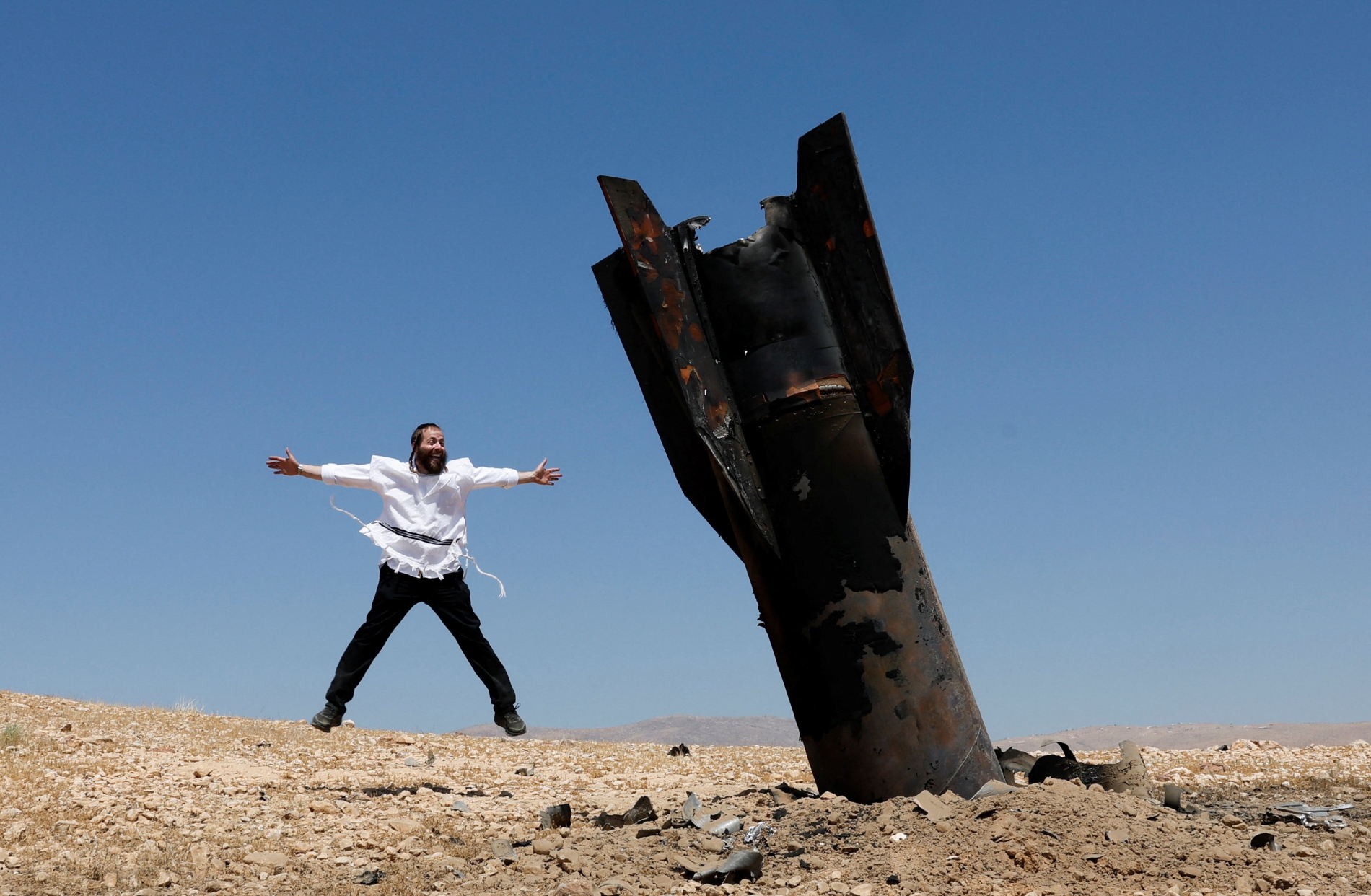
An Israeli Ultra-Orthodox Jew reacts near a part of a missile protruding from the ground, following strikes from Iran, in the central Israeli-occupied West Bank, on 8 June 2026.
As noted earlier, regional tensions were deliberately kept separate from the 2015 JCPOA nuclear deal, making Iran's inclusion of Lebanon a notable difference. As such, the ongoing Israeli-Hezbollah war in Lebanon could pose a constant risk during the short 60-day negotiating period.
The two senior US officials speaking to American reporters on 15 June described a possible future where Iran abandons its nuclear programme, focuses on economic development, and reintegrates into the region diplomatically. One said he could imagine a "new framework" for the region where countries did not try to destabilise adversaries and instead worked towards genuine peace and partnerships.
They said new Iranian leaders recognise "modern times" and see that Iran's nuclear programme was a failure, but it is not yet clear whether the powerful Islamic Revolutionary Guard Corps (IRGC) shares this view. It is understood that the American negotiators have not met senior IRGC commanders. While Trump's team may now be suggesting a future in which Iran plays a productive role, sharp criticism from Republicans and Netanyahu a decade ago restrained the Obama team from espousing such dreams in public.
Regional tensions were deliberately kept separate from the 2015 JCPOA nuclear deal, making Iran's inclusion of Lebanon a notable difference
Room for a deal
The American Senate rejected the 2015 agreement in a vote required by the US Constitution, and therefore the Obama administration—and initially the Trump administration—met its obligations under the agreement without it having any domestic legal standing.
There are some grumbles from Republicans about the MoU with Iran, not least because its contents had not been divulged, but Trump dominates the Republican Party and is ready to confront Netanyahu when he perceives his own political interests are at stake, so this grumbling is unlikely to foment serious unrest. In the same way that the arch anti-communist President Richard Nixon normalised relations with communist China in 1972, Trump has the domestic political space to make a nuclear deal with Iran.
It would require patience, persistence, an understanding of the adversary's interests, and acceptance of advice from American technical experts. To date, Trump's negotiators have displayed no such inclination. Iranian conservatives, for their part, are heralding this moment as a victory. Even in the best-case scenarios, the road to a deal over the coming months will be exceedingly difficult.