Hafsia Herzi: the quiet powerhouse of French cinema

Back on the Croisette for two highly-anticipated feature films, the French-Tunisian-Algerian actress keeps on wowing directors and audiences

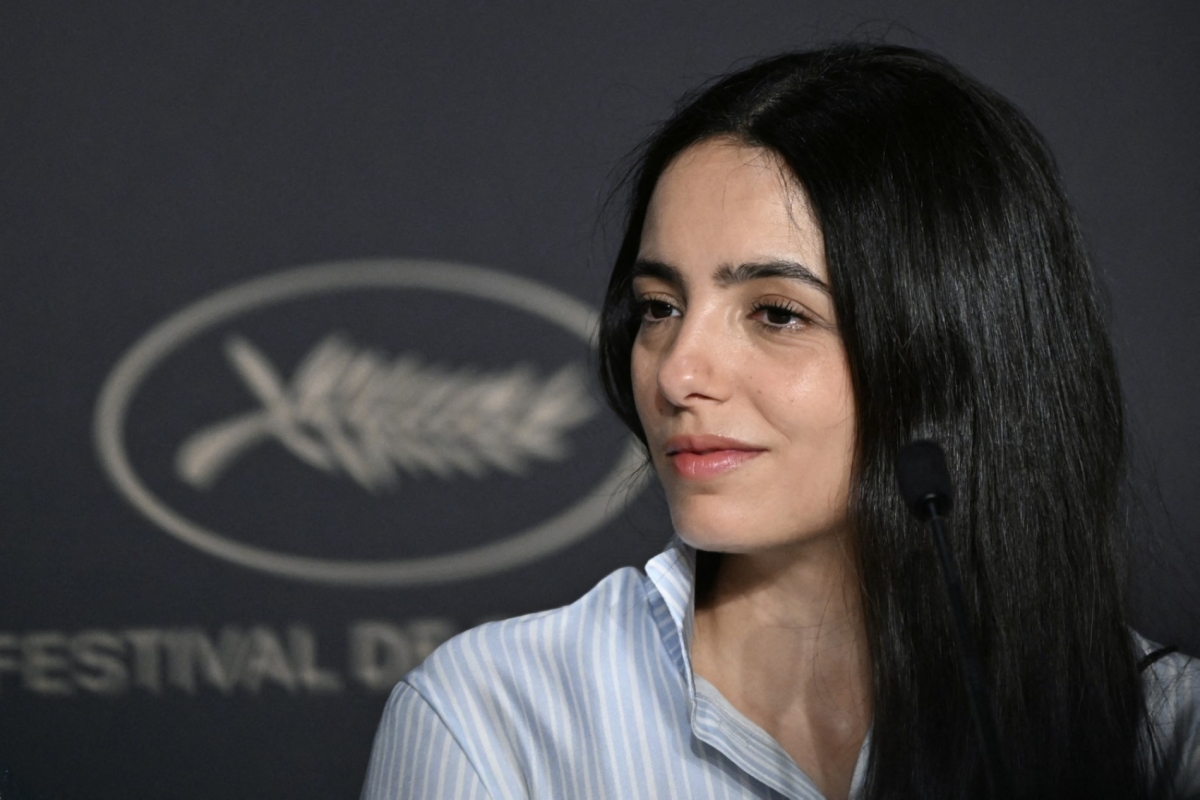
French actress Hafsia Herzi attends a press conference for the film "Histoires de la nuit" (The Birthday Party) at the 79th edition of the Cannes Film Festival in Cannes, southern France, on 23 May 2026.
Julie SEBADELHA / AFP
French actress Hafsia Herzi attends a press conference for the film "Histoires de la nuit" (The Birthday Party) at the 79th edition of the Cannes Film Festival in Cannes, southern France, on 23 May 2026.

Hafsia Herzi: the quiet powerhouse of French cinema

Once again, Hafsia Herzi has solidified her unique bond with the Cannes Film Festival. This year, the French-Tunisian-Algerian actress and filmmaker appears in two of the festival’s most anticipated films: Words of Love by Rudi Rosenberg and The Birthday Party by Léa Mysius, presented in the Official Competition and adapted from the thriller novel by award-winning writer Laurent Mauvignier. The two films are radically different in tone and aesthetics, yet in both she plays a mother willing to do anything to protect her children.

In Words of Love, Hafsia Herzi plays a woman helping her daughter search for the father who abandoned her. Rudi Rosenberg’s film, warmer and more emotionally resonant, explores the wounds left by absence and the possibility of rebuilding family ties. By contrast, The Birthday Party descends into a much darker tension. Adapted from Laurent Mauvignier’s novel, Léa Mysius’ film, also starring Monica Bellucci, unfolds in a suffocating atmosphere in which the family home becomes a place of fear and resistance. Yet in both films, Herzi portrays women who refuse to surrender to danger or abandonment.

“When Rudi offered me the role of Erika in Words of Love, this mother accompanying her daughter in the search for the father who left them, he told me: ‘She’s not a good mother, she’s a bad mother,’ as a reference to my film Good Mother. And I told him, ‘No, no—you chose me, so she’s a good mother!’ I really wanted to defend my character because she’s a woman who would do anything for her children, even when she disagrees with their choices,” the actress explains.

Rudi Rosenberg adds: “Hafsia made me cry once again. I’ve seen the film 200 times, but I was still overwhelmed during the screening here in Cannes.”

This maternal figure naturally echoes Bonne Mère (Good Mother), Herzi’s second feature film as a director. Presented at Cannes in 2021 in the Un Certain Regard section, the film followed a working-class Marseille woman exhausted by social hardship yet determined to keep her family together. Even then, Herzi was already drawn to these discreet heroines, often invisible in French cinema: working-class North African women, strong despite fatigue and sacrifice. She likely found inspiration in her own mother, who raised four children alone after the death of Herzi’s father when Hafsia herself was only one year old.
Sameer AL-DOUMY / AFP
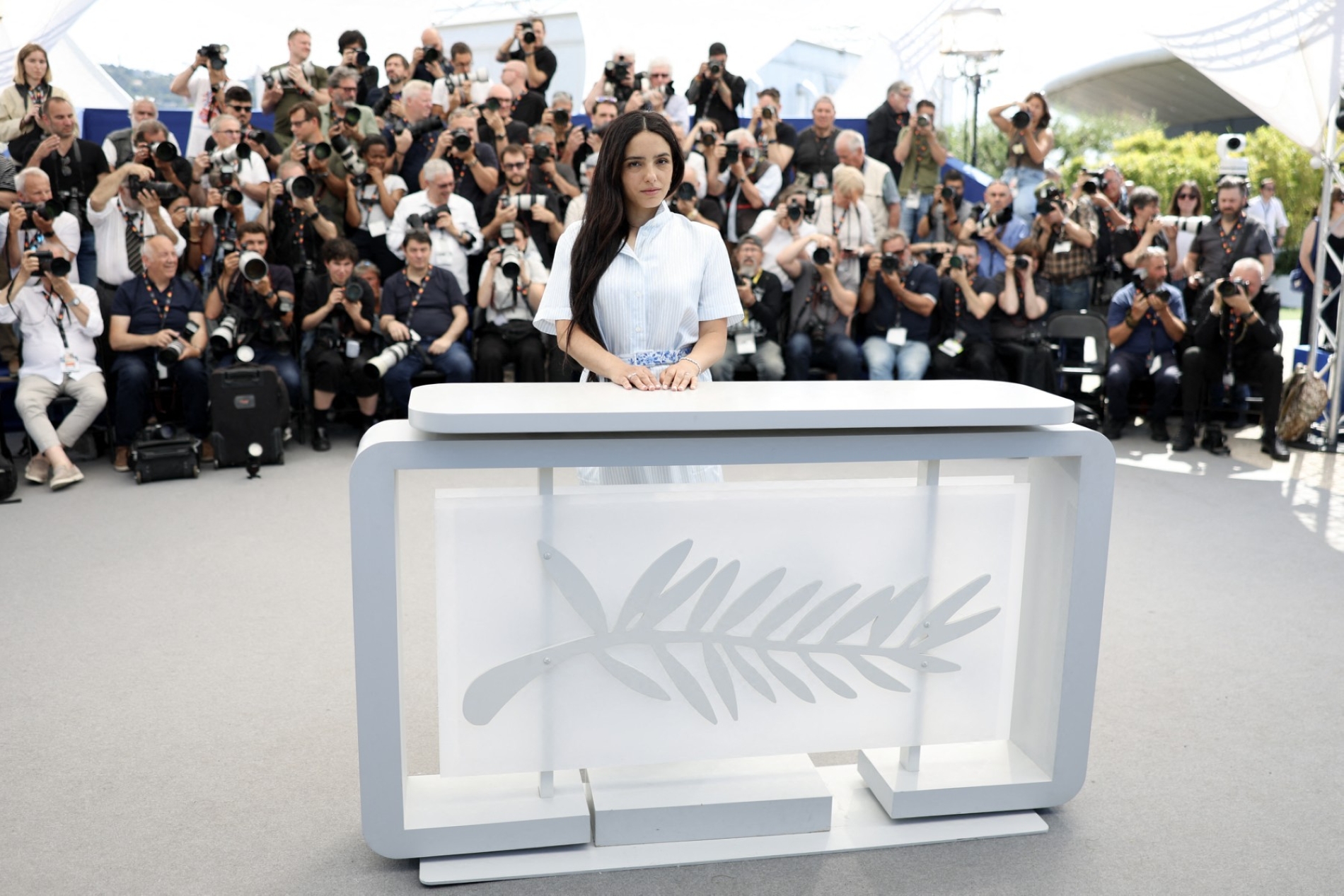
French actress Hafsia Herzi poses during a photocall of the film "Histoires de la nuit" (The Birthday Party) at the 79th edition of the Cannes Film Festival in Cannes, southern France, on 23 May 2026.

Unlikely rise

While Cannes now seems to have become Herzi's natural habitat, nothing initially destined her for such a trajectory. Born in Manosque to an Algerian mother and a Tunisian father, she dreamed of becoming an actress from the age of 12, despite the near-absence of North African representation on screen at the time.

“It makes you want to succeed and fight for it in a way,” she says.

She grew up in Marseille in a modest environment, far removed from Parisian cinema circles.

“I didn’t know anyone in the film industry, and we all know it’s not easy. Most importantly, I never really believed I would make it one day, so I took every role as a chance, telling myself that even if I never worked again afterward, at least I would have fulfilled my dream of cinema once in my life,” she admits humbly.

As a teenager, she dreamed of acting but had no idea how to enter the industry. Her life changed when she met Abdellatif Kechiche, who offered her her first major role in The Secret of the Grain in 2007.

The impact was immediate. At just 20 years old, Hafsia Herzi stunned audiences with her raw naturalism, emotional intensity, and ability to embody a character without artifice.
Beyond the gowns, red carpets, and camera flashes, one thing remains unchanged: Herzi's desire to tell deeply human stories

"At the time, I wondered why Kechiche had chosen me. I didn't really understand it. But in the end, maybe it's better not to know. I tell myself it was fate. Looking back over all these years, I'm proud of my journey because I didn't come from a background where things were easy for me." Her performance earned her the César Award for Most Promising Actress and established her as one of the new faces of French cinema.

Non-conformist roles

But perhaps more importantly, Kechiche opened a rare door: a different representation of Arab women on screen. Through Herzi, French cinema discovered an actress who refused the simplistic clichés of the "suburban girl" or the secondary North African woman.

Very quickly, she began choosing complex, sometimes provocative, always free roles. And it is precisely this freedom that may have sometimes surprised part of the audience from Arab and Muslim communities. In environments where collective judgment and "what will people say?" can weigh heavily on women, Herzi embraced and also wrote scenes involving desire, sexuality, vulnerability, and violence without ever trying to conform to an "acceptable" image.

In her third feature film, Herzi stepped into the director's chair with the multi-award-winning The Little Sister, crowned at the 2025 Cannes Film Festival and at the César Awards the same year, is further proof of this artistic courage. Adapted from the autobiographical novel by Fatima Daas, the film follows a young woman from a Muslim family discovering her homosexuality while remaining deeply attached to her faith and values.

Bertrand GUAY / AFP
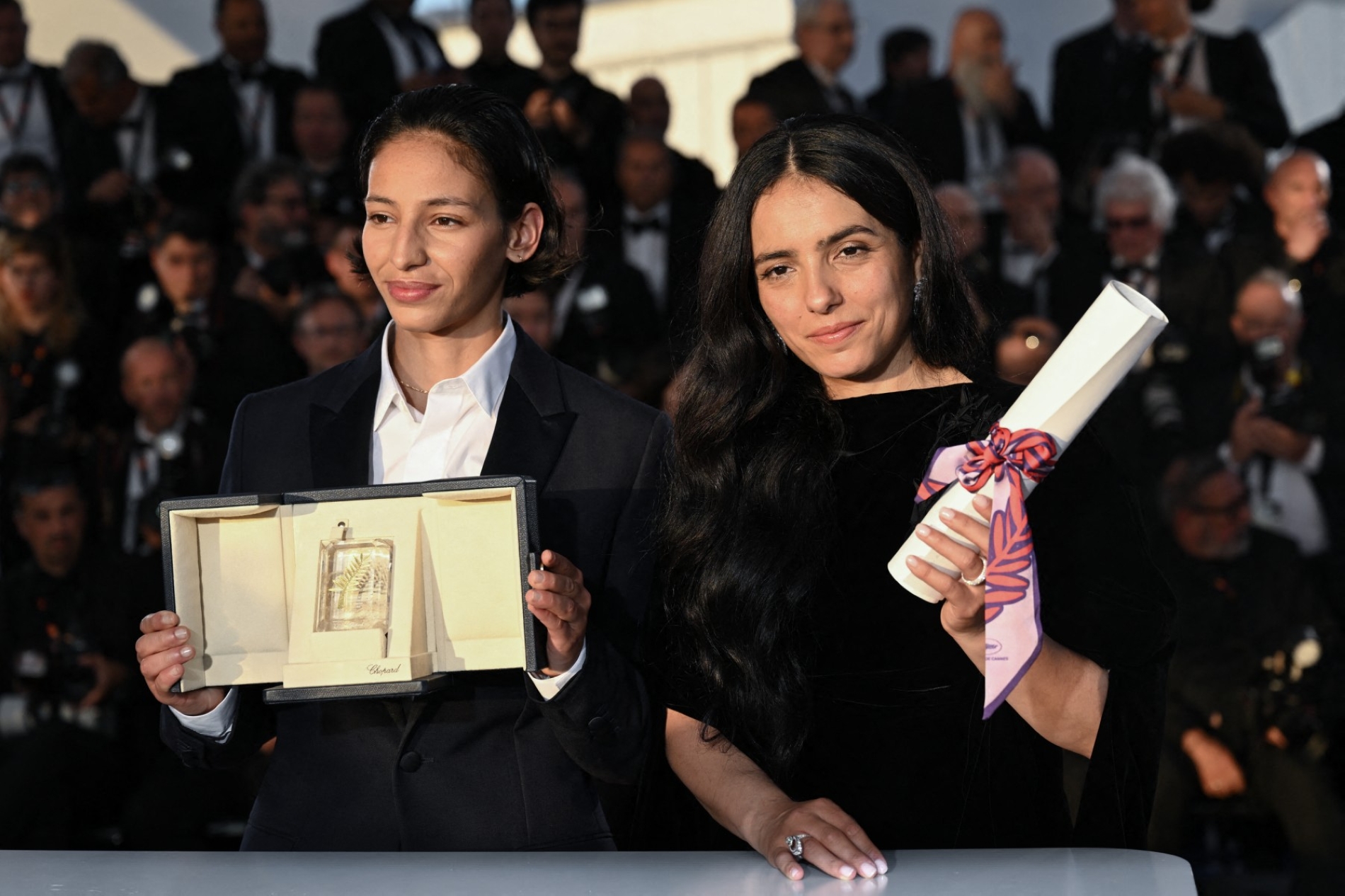
French actress Nadia Melliti (L) poses with French director and screenwriter Hafsia Herzi at the Cannes Film Festival in southern France on 24 May 2025.

This choice was never driven by provocation. For Herzi, it stems from an instinctive relationship to creation. She has always seemed guided by a single principle: portraying human beings before portraying identity symbols. This independence surely explains why her career now resonates far beyond France.

"I don't know if it always worked, but I never wanted to betray myself. Cinema is truly my passion, and from the beginning I knew I wasn't doing this for money or anything else. I simply wanted to discover a profession while remaining faithful to my convictions and commitments."

For many viewers across the Arab world, Herzi represents a singular figure: a woman from North African immigrant backgrounds who managed to assert her own voice within a European cinema often dominated by other narratives.

"Everyone is different, but I'd say the important thing is to follow your heart and trust yourself," the filmmaker suggests.

Herzi's films often focus on women moving forward despite exhaustion, characters resisting without spectacular heroism.

In the director's chair

Over the years, she has built up a deep and complex filmography, alternating between auteur cinema and more accessible projects. But above all, she gradually moved behind the camera. In her directorial debut, You Deserve a Lover, she showcased deeply personal sensitivity: an intimate gaze on romantic relationships, loneliness, and female contradictions. Then came Bonne Mère, arguably her most personal work to date, deeply rooted in Marseille and the social realities of working-class families.

This transition to directing also changed the way people viewed her. Hafsia Herzi was no longer simply the actress revealed by Kechiche: she became a true auteur filmmaker. A director attentive to bodies, silences, and invisible social tensions. Her films often focus on women moving forward despite exhaustion, characters resisting without spectacular heroism.

This is probably why her presence in Words of Love and The Birthday Party feels so coherent today. In both films, she brings something profoundly human to the mothers she portrays: a toughness mixed with tenderness, a capacity to protect without ever turning these women into idealised figures.

"Hafsia is very different from the character in Laurent Mauvignier's novel, who is blonde, wears tight jeans, smokes constantly, and is very outspoken. But I've always been fascinated by Hafsia, so I adapted the character around her. She's mysterious both in life and on set—you never quite know what she's thinking. For me, she fit the role perfectly," explains director Léa Mysius, who also admitted that filming Herzi was extremely interesting.

Herzi laughs in response: "My friends have always told me that—my mother too. When people asked her how I was doing, she would always say she had no idea because I never spoke! I suppose it helped me in the end. People often said I was strange because I was quiet, but I don't think being like that is strange at all. We all have different personalities, and I don't see why everyone should fit into the same mould."

Despite her rise to stardom, Herzi never fully severed ties with her working-class roots or with Marseille, the city that continues to shape her imagination.

Staying true to her roots

In Cannes, Herzi now moves with striking ease. The Palais Red Carpet, once an inaccessible symbol, has become familiar ground. Yet she retains something rare in contemporary French cinema: the image of an artist who never fully severed ties with her working-class roots or with Marseille, the city that continues to shape her imagination.

Her journey also tells another story about French cinema: that of a North African actress who refused to let others define her roles. Instead, Herzi built her career by following her instincts.

Today, as she returns to Cannes with two major films, that freedom appears to be the common thread running through her entire career. An artistic freedom gradually conquered, from her beginnings with Kechiche to her now central place within French auteur cinema. Beyond the gowns, red carpets, and camera flashes, one thing remains unchanged: an actress driven above all by the desire to tell deeply human stories.

And when asked whether she considers herself a feminist filmmaker, she answers immediately: "Yes, I am—and I'm very proud of it."

font change