Iran's new security doctrine and its old dilemma

Tehran has emerged from the US-Iran war more willing to take risks, less constrained by fears of escalation, and more convinced military pressure can yield results

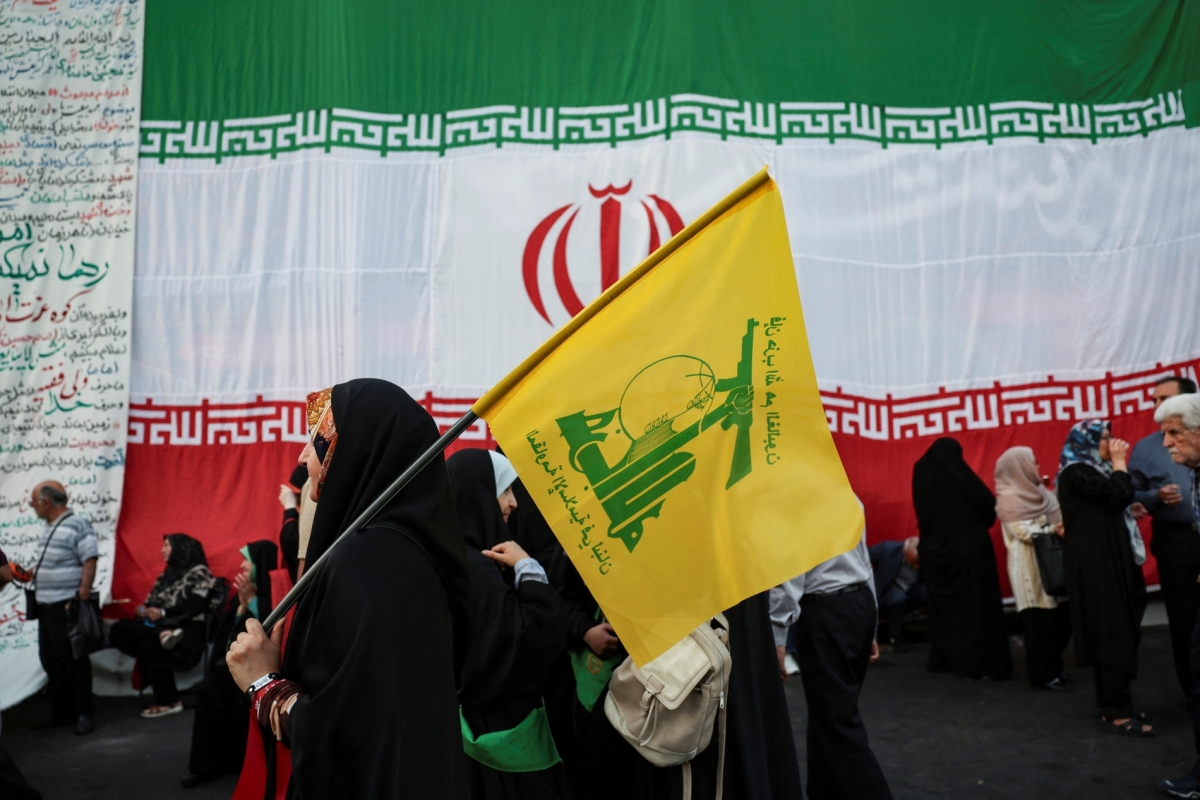
A woman holds a Hezbollah flag during a rally in support of Iran's Supreme Leader, Mojtaba Khamenei, in Tehran, Iran, on 4 June 2026.
Majid Asgaripour/WANA/Reuters
A woman holds a Hezbollah flag during a rally in support of Iran's Supreme Leader, Mojtaba Khamenei, in Tehran, Iran, on 4 June 2026.

Iran's new security doctrine and its old dilemma

Iran's latest missile strikes against Israel, launched this week in response to an Israeli strike on Beirut's suburb of Dahiyeh, have confirmed a view increasingly prevalent in Western capitals: that Tehran has emerged from the US-Iran war more willing to take risks, less constrained by fears of escalation, and more convinced than ever before that military pressure can generate political results.

The tit-for-tat Israeli and Iranian strikes came despite an April ceasefire and despite public pressure from the US to stand down. Israel responded with its own strikes on Iranian targets within hours. Some believe this cycle of low-intensity war might become the new norm, and they are not necessarily wrong. But it only tells half the story.

Focusing solely on the missile exchanges risks missing a more consequential debate unfolding inside Iran—one that might ultimately shape Tehran's behaviour more than any single military operation.

The clearest articulation of the emerging Iranian strategic posture came from Sadegh Amoli Larijani, chairman of Iran's Expediency Council, who, following the most recent strikes, declared that the operation was "not merely a military response" but "the official declaration of a strategic doctrine." Attacks on any component of the 'Axis of Resistance'—militant groups allied to Iran across the region—he argued, should now be expected to generate responses extending beyond geographical boundaries. "Tehran," he concluded, "has opened a new chapter in its defence policy."

Such language might once have been dismissed as wartime rhetoric. But similar sentiments have been expressed across Iran's political and security establishment with notable consistency. For his part, Foreign Minister Abbas Araghchi argued that the April ceasefire applied "without any ambiguity" to all fronts, including Lebanon.

Foreign Ministry Spokesman Esmail Baghaei described the post-truce situation as "extremely fragile and dangerous" and accused Washington and Israel of repeatedly violating the understandings that ended the war. Esmail Kowsari, a hardline member of parliament's National Security Committee and former Revolutionary Guards commander, insisted that "the resistance is one front" and that "no distinction should be made between Iran and Lebanon." The era of "one-sided violations," he added, was over.
Majid Asgaripour / Reuters
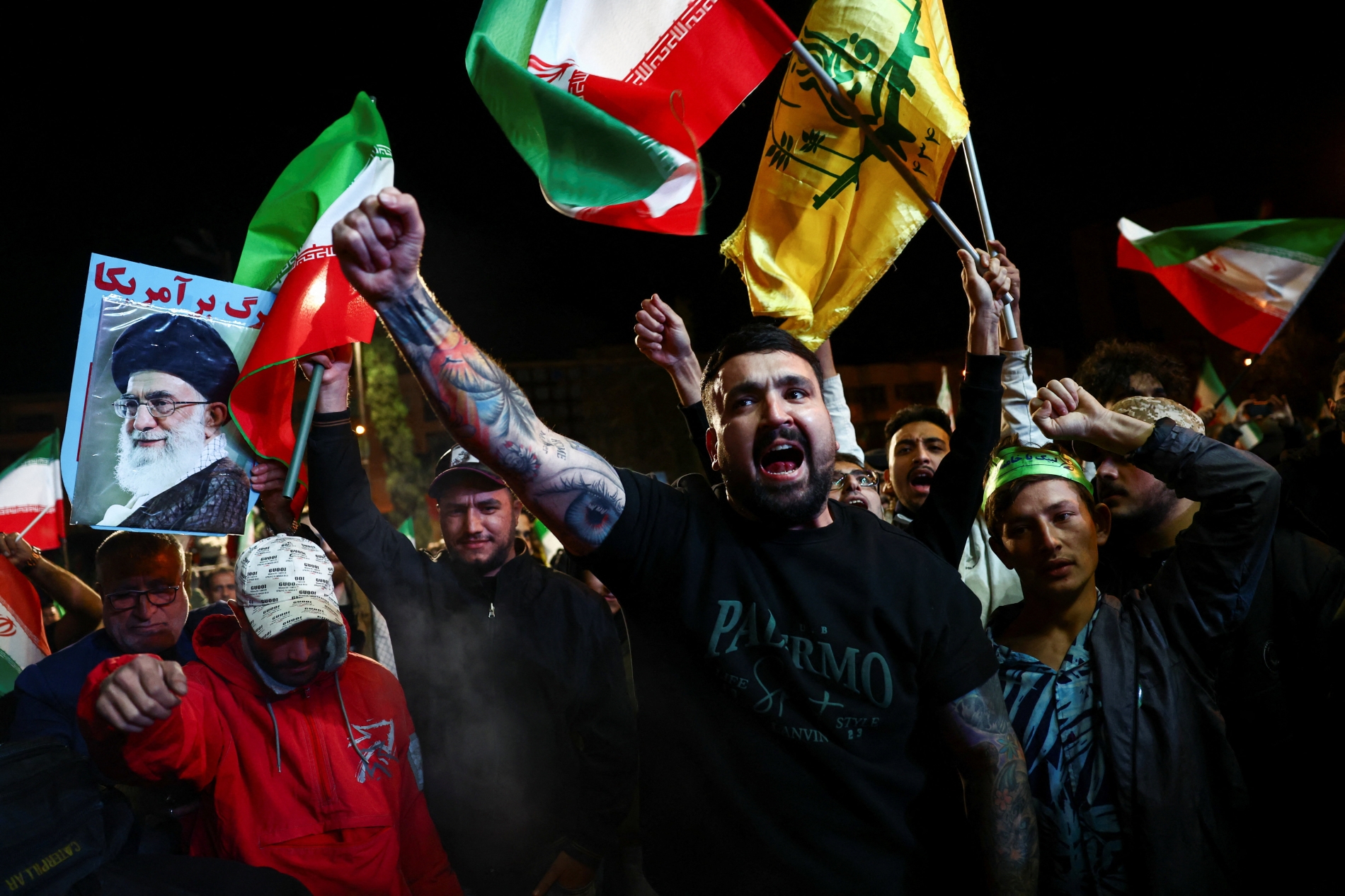
People shout slogans as they gather after a two-week ceasefire in the Iran war was announced, in Tehran, Iran, 8 April 2026.

'Unity of Arenas'

The concept underpinning this language is what Iranian commentators call the Unity of Arenas—the idea that Iran, Lebanon, Iraq, Yemen, and Palestine form a single integrated strategic theatre. It is not an entirely new concept; variations of it circulated during and before the Gaza war. What is changing is Tehran's apparent willingness to enforce it directly with Iranian military power.

The logic is rooted in hard experience. For decades, Iran's regional strategy rested on forward defence: confront threats as far from Iranian borders as possible through a network of allied militant groups such as Hezbollah in Lebanon or the Houthis in Yemen. The trauma of the Iran-Iraq War (1980-88) convinced Iranian leaders that national defence could not begin at the border.
The Unity of Arenas concept is not new, but Tehran's apparent willingness to back it up with military power is.

But the emerging argument goes further than traditional forward defence. Increasingly, officials describe the security of Hezbollah, Iraqi militias, and other partners not merely as instruments of Iranian security but as inseparable from it. Under this logic, an attack on Hezbollah is not an attack on an ally. It is an attack on a broader security architecture in which Iran is a central pillar—and must respond accordingly.

Yet here is where Iran's strategic confidence runs into something it cannot missile-strike its way out of. Even among supporters of the new assertive posture, there is a growing, openly acknowledged recognition that military resilience alone cannot sustain national power.

ATTA KENARE/AFP
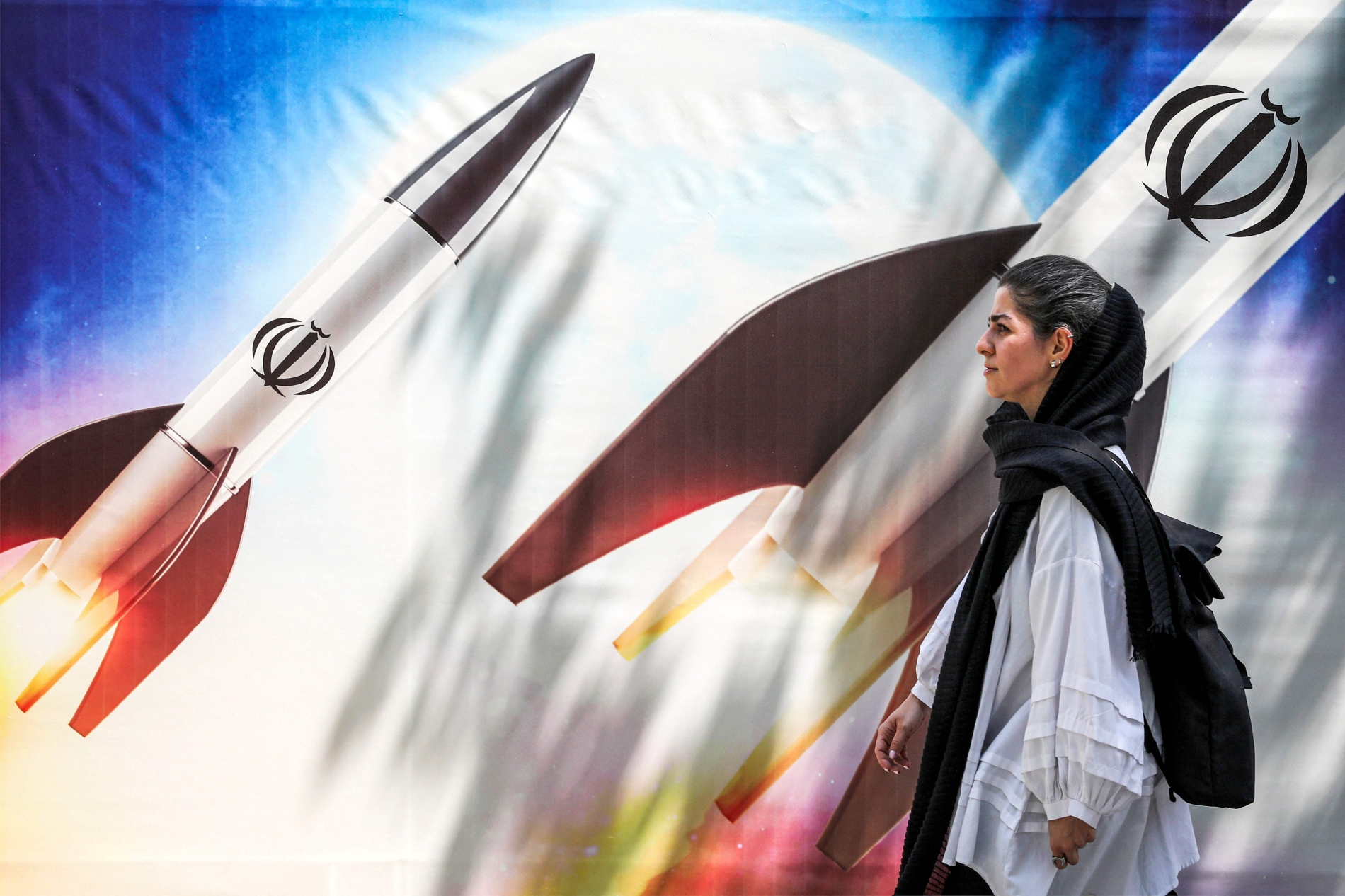
A woman walks past a banner depicting launching missiles bearing the emblem of the Islamic Republic of Iran in central Tehran on 15 April 2024.

Economic dilemma

While the recent war demonstrated Iran's institutional durability and its capacity to absorb punishment, it also inflicted serious economic damage. Energy infrastructure has been degraded. Inflation is acute. Sanctions and the impact of the US-enforced blockade remain crushing. Investment is massively constrained. Millions of Iranians face declining living standards and deepening uncertainty about the future.

No country can indefinitely project power from a collapsing economic base. Iranian officials know this, and they say so. Former Central Bank governor Valiollah Seif made the point with unusual bluntness: even a successful diplomatic agreement with the West would merely create an opportunity, not a solution. Economic recovery, he argued, would still require structural reform, banking modernisation, fiscal discipline, and improvements in governance. Diplomacy can open a door. It cannot walk through it on Iran's behalf.

Former minister Abbas Akhoundi went further, arguing that recent events exposed the fundamental limitations of relying on non-state actors as guarantors of Iranian security. Rather than deepening the resistance model, he suggested that Iran should move toward formal regional security arrangements and economic interdependence. For Akhoundi, the lesson of the war is not that Iran should double down—it is that the current model has a ceiling.

These are not marginal voices. The fact that such arguments are made publicly, in a country that has just come through a devastating war, reflects how seriously the economic question is being taken within the establishment.

This is the context in which Supreme Leader Mojtaba Khamenei's recent public messaging becomes significant. Western coverage focused on his declarations of resistance and victory. But the central themes of his interventions were unity, social cohesion, morale, and the dangers of internal division. He returned to these themes repeatedly.

That emphasis is telling. It reflects a leadership that understands military success and national strength are not the same thing. Iran may have survived the war and demonstrated resilience. But wartime solidarity does not automatically solve underlying economic problems or guarantee long-term political stability. The Supreme Leader's call for unity is in part an acknowledgement that the harder challenge lies ahead.

REUTERS/Ammar Awad
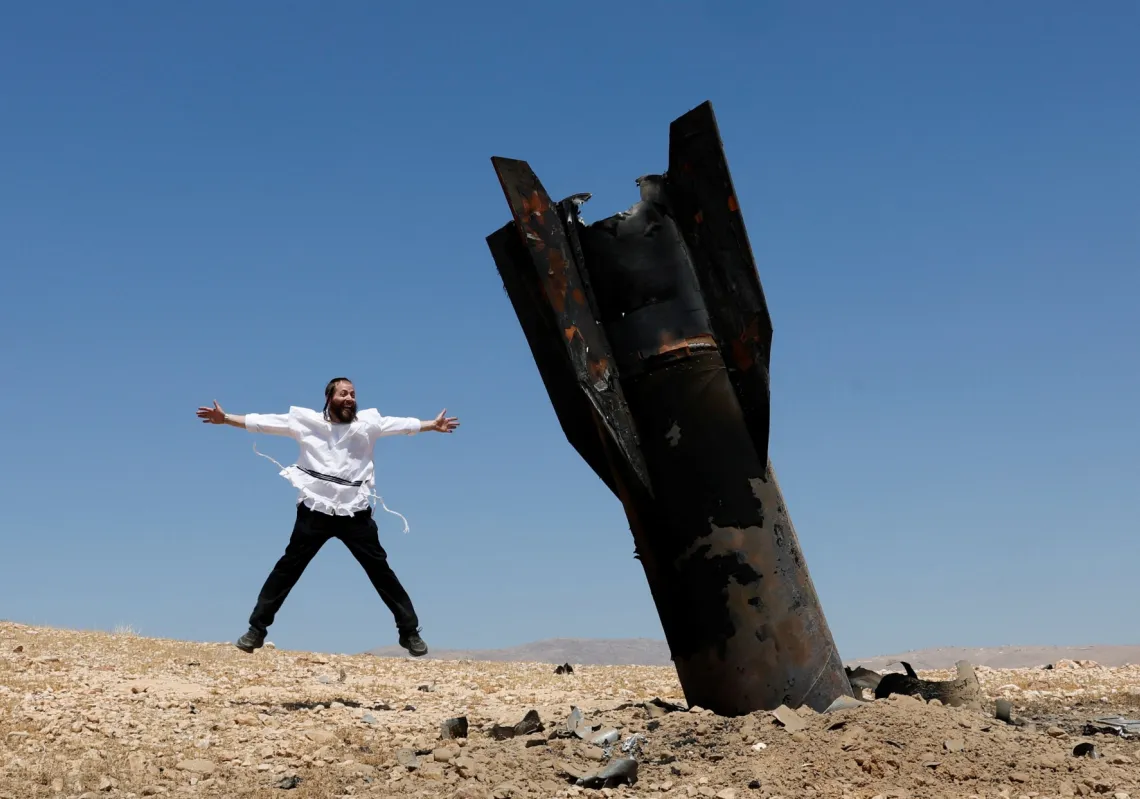
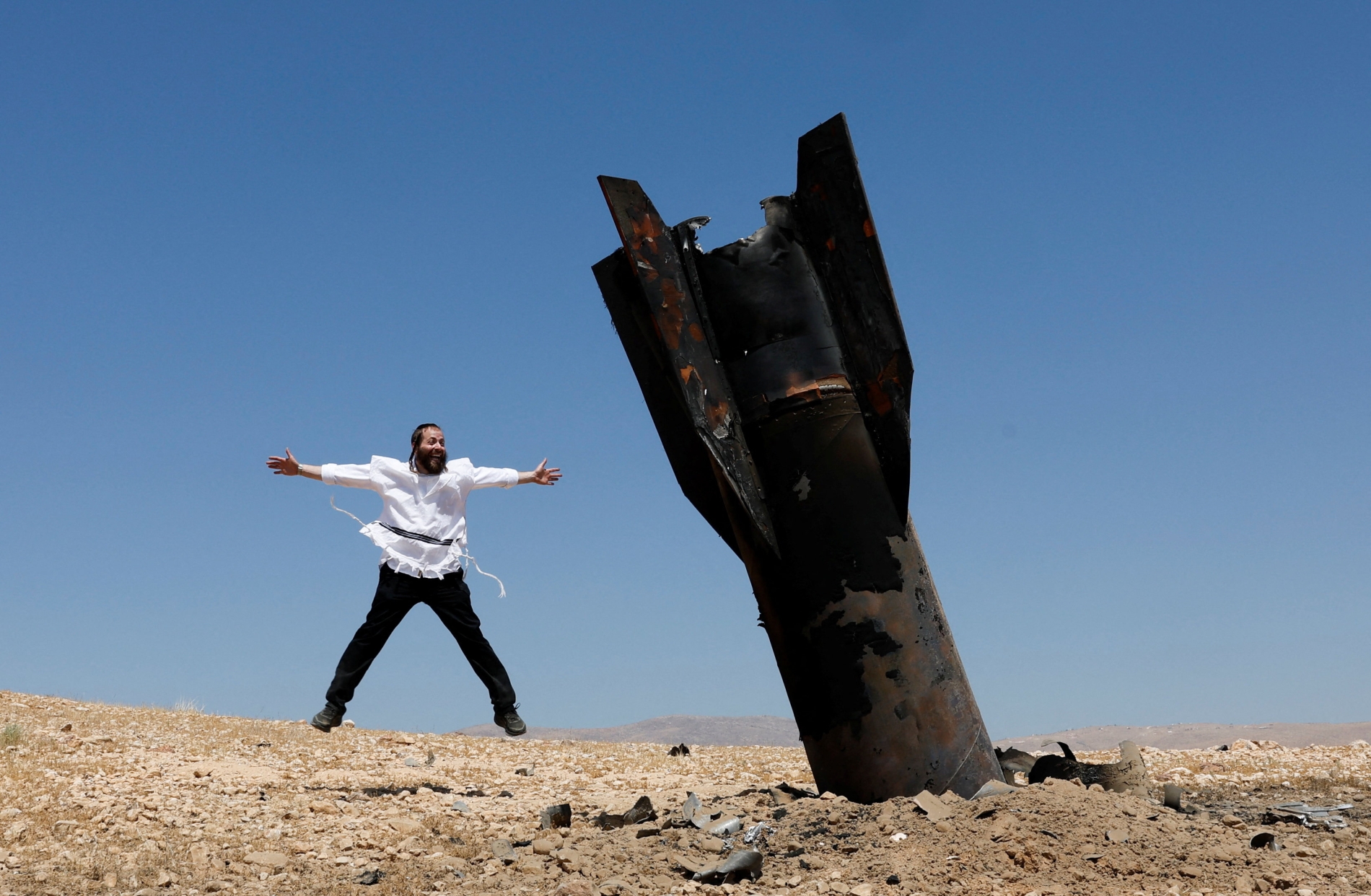
An Israeli Ultra-Orthodox Jew reacts near a part of a missile protruding from the ground, following strikes from Iran, in the central Israeli-occupied West Bank, on 8 June 2026.

Regional implications

In the short term, Iran will almost certainly behave as a more risk-acceptant actor. The lesson many in Tehran have drawn from recent events is that restraint was punished and pressure worked. The language of "new rules," "one front," and unified responses to threats against the 'axis' will shape Iranian decision-making in the months ahead. Policymakers in Washington, Tel Aviv, and Gulf states should expect a Tehran more willing to test limits.

But it would be a serious mistake to treat this as Iran's settled long-term strategy rather than what it more likely is: an attempt to break the blockade, restore deterrence, and create bargaining leverage from a position of demonstrated strength. The missile strikes are in part a negotiating tool. Tehran wants relief from the economic pressure that is hollowing out the Islamic Republic from within, and it wants it on terms that do not require dismantling the regional posture it has spent decades constructing.

Iran's assertive military posture is, in part, a negotiating tool. It wants relief from the economic pressure that is hollowing out the Islamic Republic from within.

Unsustainable posture

The challenge for Washington and regional actors alike is therefore not simply to contain a more assertive Iran. It is to ensure that Tehran does not conclude that permanent confrontation serves its interests—that the aggressive posture which may make short-term tactical sense becomes calcified into long-term strategic doctrine.

There are many voices inside Iran echoing that precise warning. They are not doves. They are officials, former policymakers, and economists who support strengthening Iran but question whether a strategy built on coercive leverage can deliver the economic recovery and social stability the country desperately needs. They argue, with increasing urgency, that no nation can sustain an ambitious regional posture while its economy deteriorates and its social fabric frays.

For now, the security hawks have momentum. But their argument has an internal contradiction that will not disappear: the power they are projecting rests on a domestic foundation that is visibly weakening. That tension—between the Iran that fires missiles and the Iran that cannot pay its bills—is the real story of where the Islamic Republic stands today.

font change