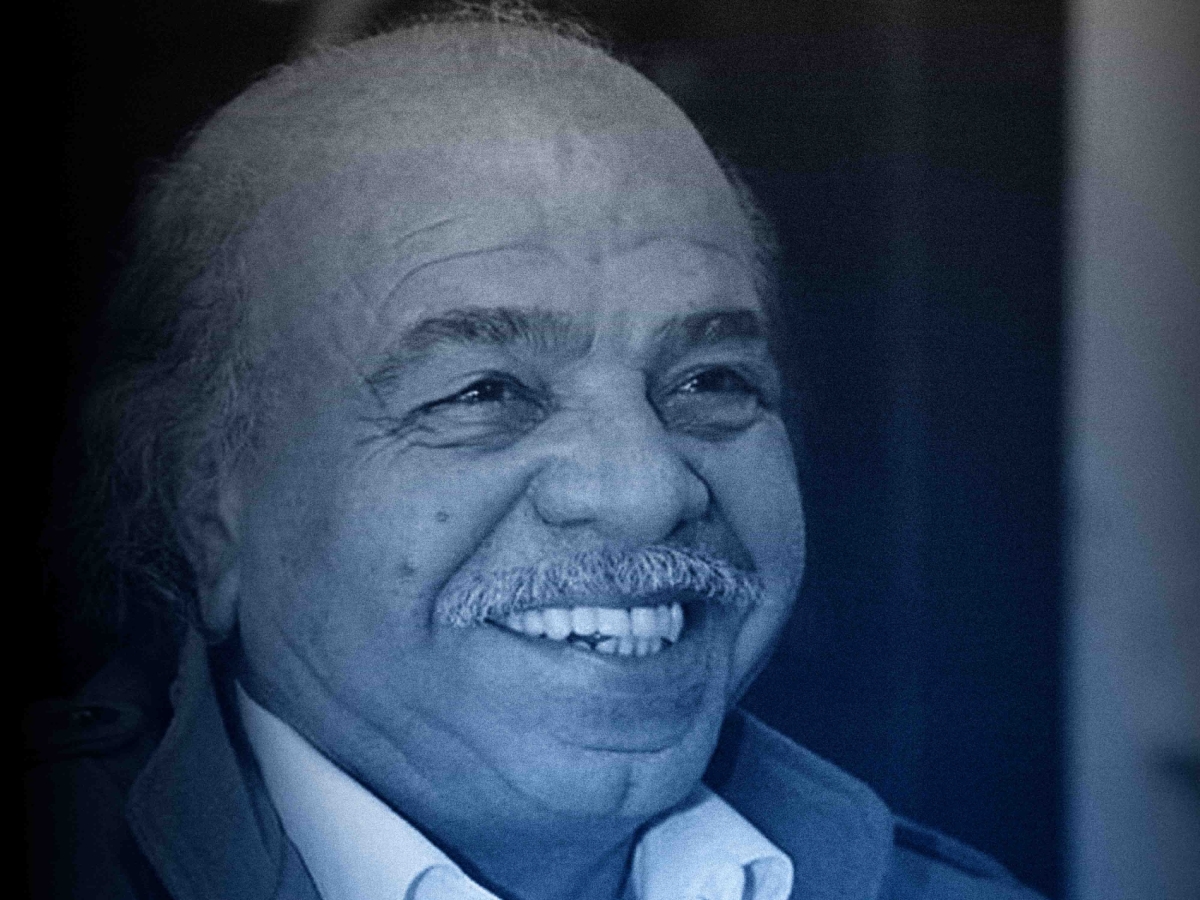

Jordanian writer Rashed Issa uses rich, elevated language that draws deeply on metaphor as an instrument of vision and expression. In his new collection, titled The Button and the Loop, he invites the reader into contemplation and inquiry through a narrative experiment that brings together the short story and the very short story.
The sumptuous, condensed language calls for alert readers able to engage with the text and uncover the signs and deeper meanings concealed between its lines, as the collection unfolds across ten spaces: Whims of the Soul and Invasions of the Body, Opposites, Failed Questions for Successful Answers, Fantasy, Pleasures of Deprivation, Truthful Lies, Recycling Despair, Love and Wars, Respectable Insects and Plant Ethics.
The collection engages with a range of human questions, including freedom and pain, the philosophy of life in its varied manifestations, as well as deprivation, love and war, and humanity’s relentless attempts to “recycle despair” and reproduce meaning. Here is Al Majalla’s conversation with him.
You introduced your collection with a whisper rather than a declaration, describing it as a secret collaboration between “the mouth of the narrating ant” and “the mouth of the poetic bee”, under “the hawk’s eye”. What is the significance of this dedication?
This ‘whisper’ at the beginning is a passage visa for the reader, preparing him to absorb the philosophical dimensions of the stories. I do not write purely realist stories. Rather, I aim for the contemplative and the intellectual.
The ant represents lived reality and the pursuit of livelihood. The bee represents the poetic state of life and the dreams that lie dormant within it. The hawk is a symbol of the force of domination and of man’s submission to destiny and inevitable death. I see the entire universe as a poetic condition of narration, and as a web of beings entangled with dreams while wrestling with the questions of life.
You divided your collection into spaces that include short stories and very short stories. How do you determine the appropriate form for each idea and which form do you find more difficult?
Every story in the collection is a brief distillation of a poetic stance. I like to poeticise narrative and narrativise poetry. As for condensation, great literature has no fondness for verbosity. It offers the finest phrase in the finest style.
In the condensed story, there is no room for excessive verbal kneading. It is a process of sifting, sieving and refining, for the contemporary reader lives in an age of acceleration. The short story is at its best when it is luminous, suggestive, and marked by linguistic frugality and semantic generosity, so that the door of interpretation remains open to the pleasure of discovery and intuition.
You opened the collection with the space ‘Whims of the Soul and Invasions of the Body’. Why this entry point?
I chose it because the human being is engaged in a continuous conflict between the integrity of the soul, its childhood and its various innocences, and the betrayal of the body, with its appetites and sensual impulses. Writing here becomes a form of purification, an emptying of the heart of the algae of sorrow and the murk of successive disappointments.
The story The Three Gloaters advances the idea that the dignity of the creator reveals itself in old age more than in youth. How do you view this idea in light of the reality of creators today?
The creator, like any human being, wrestles with the inevitability of ageing. Youth is a reckless form of giving that deludes the creator into thinking he is immortal. Old age, by contrast, is a kind of sorrow and a form of regret, as the creator reconsiders his accounts only to discover, in the end, that he has gained nothing except loss, and that all he has achieved amounts to the gasps of a drowning man.
For human beings in general, there remains only the pleasure of illusion and the sweetness of despair, so long as every joy is destined to vanish. I am an advocate of the philosophy of pleasure: the past is buried, the future is unreliable, and all we possess is the present moment.
In Love and Wars, you condense images of suffering in wartime, especially those connected to children, love and dreams. Yet a clear thread of hope remains. How do you balance the harshness of pain with the radiance of hope?
Life, from the moment it came into being, has been a struggle between the necessity of war and the necessity of love. By war, I mean man’s greed and his enslavement to the desire to possess everything. By love, I mean peace between the self and itself, and between the self and the other. Love is serenity, while war is smouldering anxiety.The most beautiful love is that which flowers amid war, like blossoms growing at the mouths of volcanoes. Literature creates for the writer a kind of balance that allows him to go on dreaming, only dreaming. That is why, in these stories, I find myself proposing, imagining and playing in the garden of illusion, the illusion that spring will never become autumn.
Condensation and symbolism stand out in your very short stories. How does the symbolic image take shape for you?
The emergence of the symbolic image from insects and plants is something I deeply believe in. Some insects and plants, in their ethics and delights, rival many human beings: the bee, the silkworm, singing birds, the palm tree and the olive tree. These creatures are essential partners in human life. They teach man, and learn nothing from him.