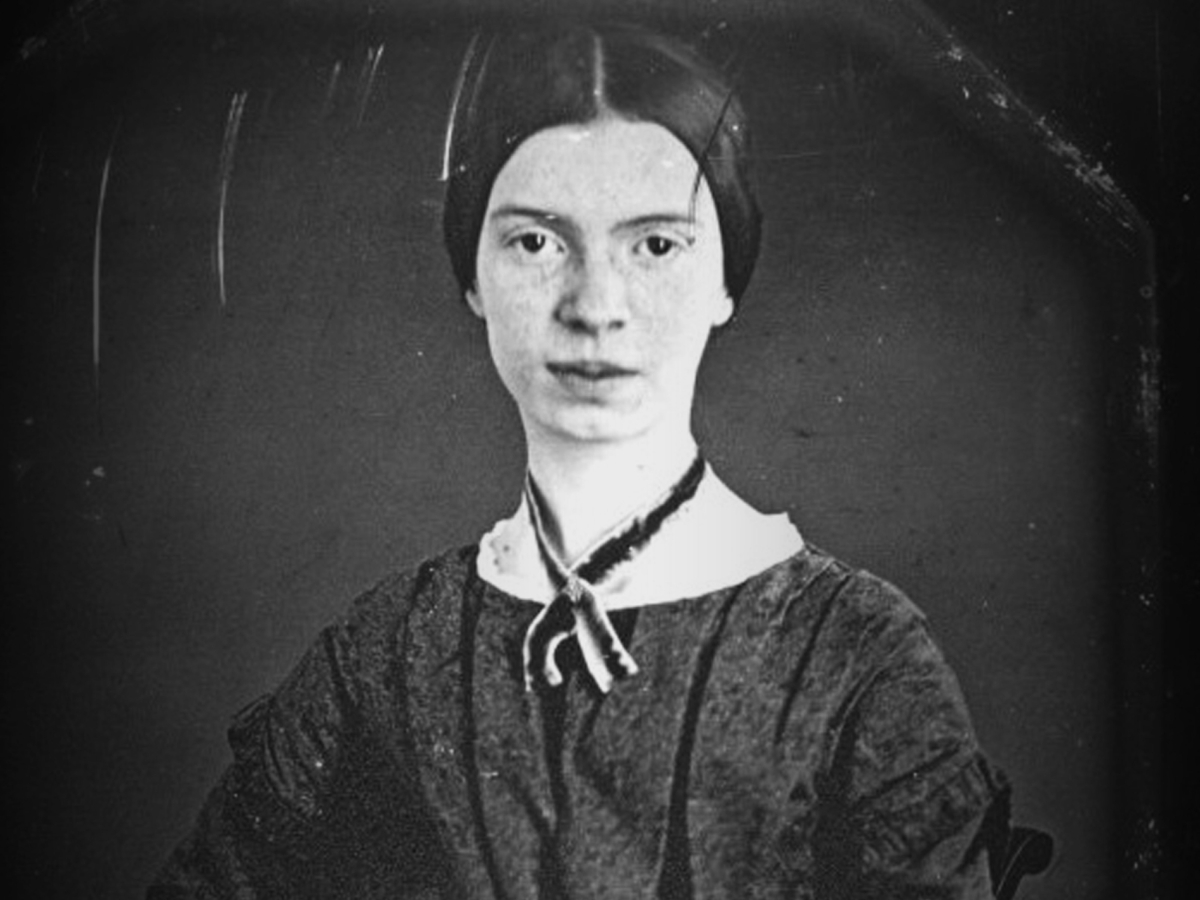

"As the years passed, her sensitive nature gradually withdrew from almost all contact with the external world, turning ever more deeply towards the vast reserves of her own inner life as her only companion, illuminated, as was said, by the light of her own fire."
So read the obituary of the American poet Emily Dickinson, published in the Springfield Republican on 15 May 1886 and written by her closest friend and sister-in-law, Susan Gilbert Dickinson, in a tone closer to precise poetic portraiture than to elegy.
Today, 140 years after her death, and after all the mystery surrounding her private life, this tribute rings true of the poet’s essence. It presents solitude as a purposeful path, built on a gradual withdrawal from the outer world into an inner one, where simple things suffice to keep her flame alive.
On that May day, Dickinson fell asleep in her family home in Amherst, but never woke up. She was only 55. The poet had spent most of her life in that house, more precisely in her room overlooking the garden, where she contemplated snow, birds, flowers and the changing light, and where the world, for all its vastness, could be observed from a distance and carefully reconstructed from within.
Dickinson wasn't famous at the time of her death. Of the 1,800 poems discovered after she died, only a handful had appeared in print—12 poems in all. She died without knowing that these poems would endure across generations and become some of the most influential texts in Western literature. This modernity, which gives Dickinson’s poetry so much of its singular force, cannot be overlooked. It surely springs from the fact that her poetry was born in that remote inward place, apart from all that surrounded it.
The dates of some poems suggest that, during certain periods of her life, Dickinson was writing around one poem a day. Set this creative abundance beside the poet’s solitude, and it seems her solitude nurtured her gift for poetry and the written word.
A formative environment
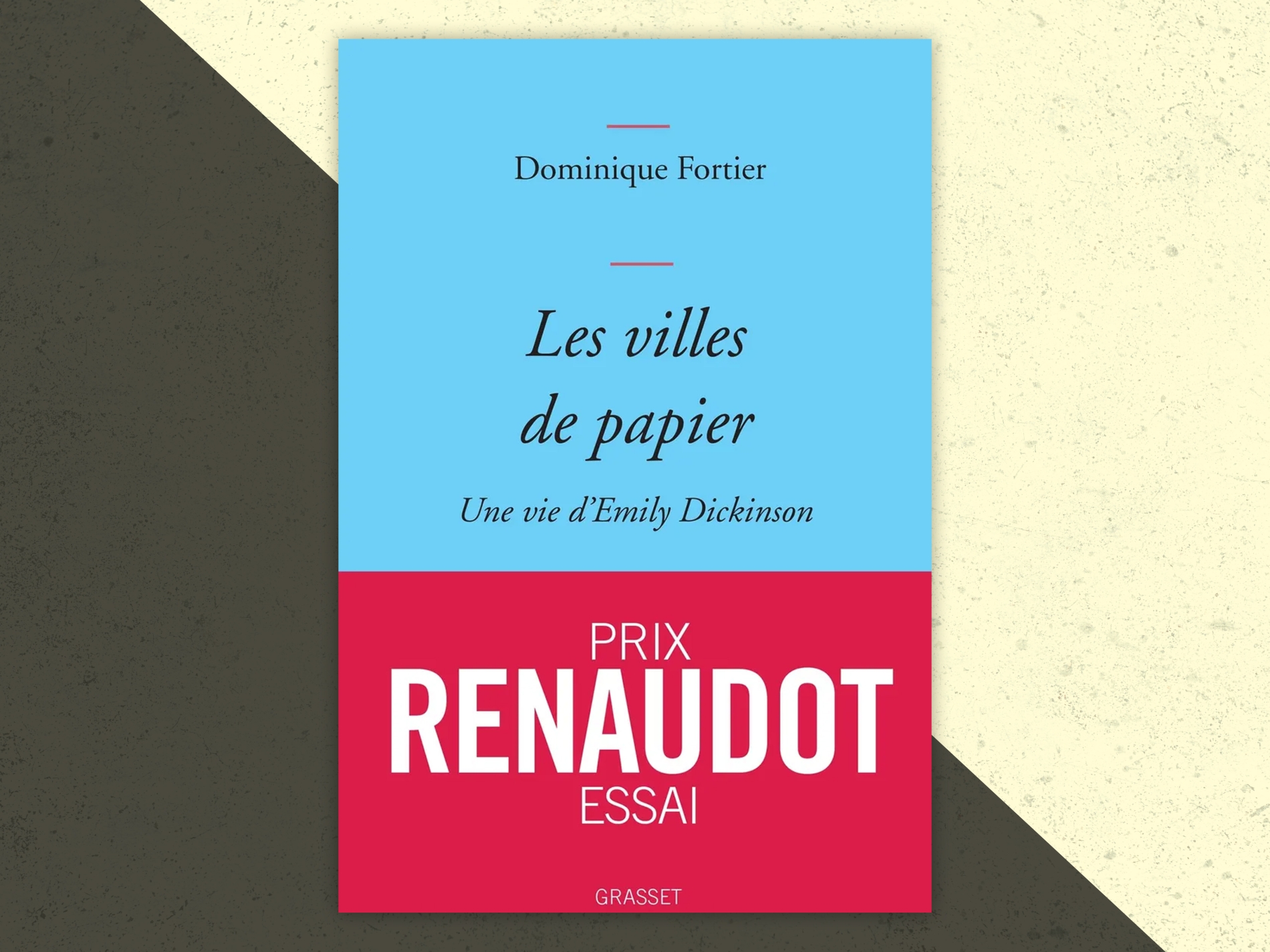
This understanding of solitude as a form of self-sufficiency is captured in a sentence from Paper Houses, a novel by Canadian writer Dominique Fortier and inspired by the life of Emily Dickinson. Fortier describes Dickinson's solitude with exquisite tenderness: "She needs only a very few things, so few that she could be dead, or not exist at all."
Fortier's novel isn't a traditional biography of Emily Dickinson. Instead, it seeks to understand the poet's immediate living space that nurtured her creativity. The house, the room, the window, the staircase, the paper, the garden: all become active elements in shaping the poet’s existence and her world—a world no less expansive than the one beyond it.
The novel doesn't open with an event, nor is it built around a conventional narrative plot. It advances through meditative fragments, in a form attuned to the experience it seeks to grasp: a life understood through small details rather than grand events. From here, the novel seems to revolve around a central question: how can one remain in one place all the time and still find inspiration?
She concludes that solitude ceases to be a social condition and becomes a discipline of attention to the details of a world that suddenly appears infinite. It is a world in which the poet records, with precision, the death of a flower, and searches for poetry in "the small hearts of creatures not yet born."
Fortier goes even further in probing the depths of this self-contained world in which Dickinson lives and which she remakes through writing. It is a paper world in which poetry becomes an exercise in dissolution. "As she writes, she erases herself," Fortier writes, ending the story with Dickinson's eventual passing.

Constructing a bridge
In her second novel on Dickinson, titled White Shadows, Fortier picks up where she left off: with Dickinson's death. If Paper Houses is the novel of the poet’s inner world, White Shadows constructs a bridge between Dickinson and the outside, telling the story of how her poems found their way to the world only after her death.
Here, Dickinson is no longer the main character. She becomes a trace, diffused through the bodies and places she left behind. The book revolves around the women who helped rescue her poems from oblivion and shape her fate as we know it: Lavinia, her sister; Susan, her friend; Mabel, the cultivated woman whose relationship with the family was complex; and Mabel's daughter, Millicent.
Fortier traces each of these figures’ relationships with the poet, with poetry itself, and with life through a delicate, deeply lyrical weaving of their individual stories. She grants them a measure of quiet heroism and justice, even within a narrative that is, to a considerable extent, imagined. Each of these women appears as a white shadow, gently urging Dickinson a little further into the light.