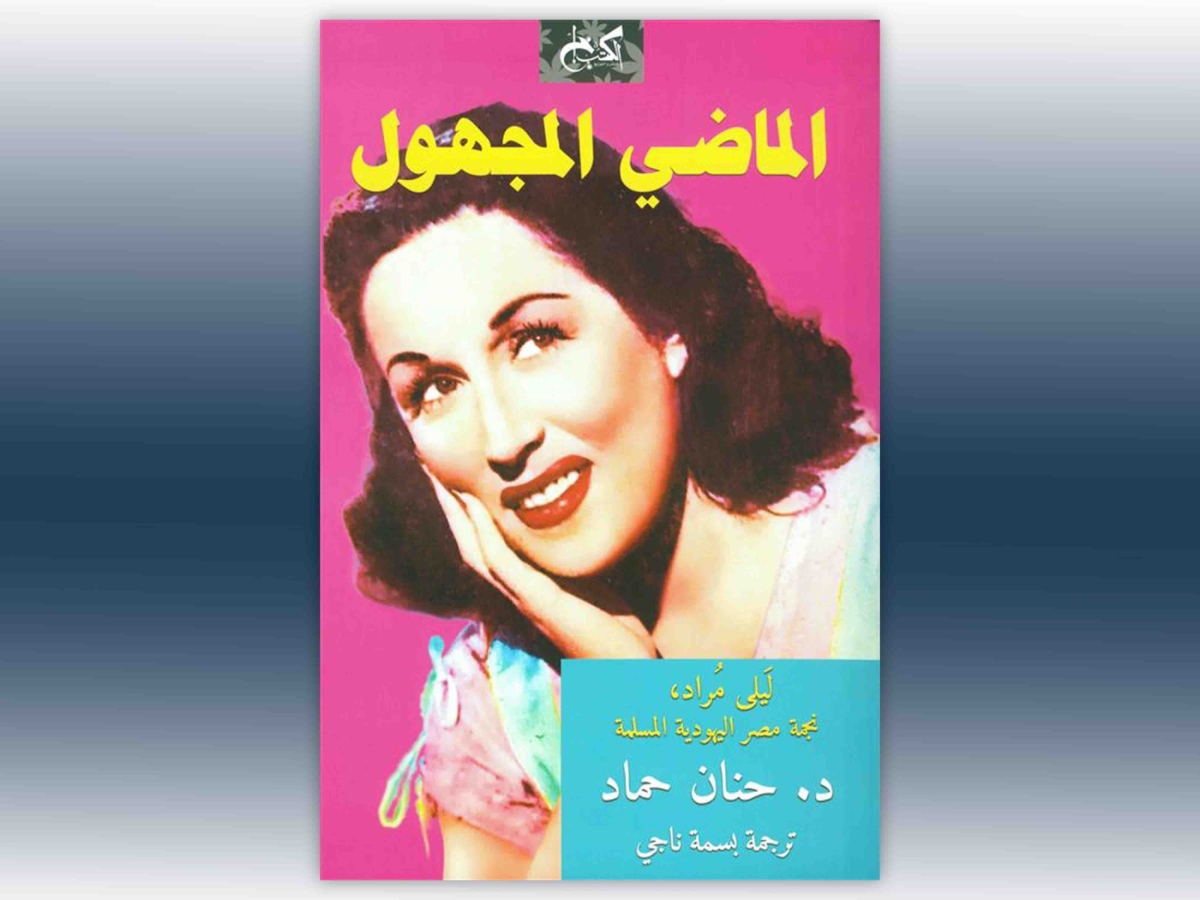

In the opening chapter of The Unknown Past: Leila Mourad, Egypt’s Jewish Muslim Star, its author Hanan Hammad highlights the pains to which screen stars went to shape their public image—and the realities that sometimes contradicted it.
By way of example, she cites two statements published in the press and attributed to the book’s subject matter, the celebrated Egyptian singer and film star of Moroccan origin, Leila Mourad. In the first, from 1948, she says: “Because of my inclinations, it was only natural that I should become a singer, but my father resisted my wish at first.” Yet in 1954, she said, “I never wanted to be a singer or an actress. I used to dream of becoming a teacher or a wife... Then my father threw me, like the last card in his hand, onto the table of life, so that I might earn a living for him and my siblings.”
Mourad’s account thus shifts from that of an artist defying her family’s wishes to that of someone who would have preferred marriage or a socially-sanctioned profession, had her father’s circumstances not driven her into art at an early age. Elements intersect between the two—neither of which may be wholly true—including her family circumstances. They may also reflect the political climate after the establishment of the State of Israel in 1948, and its repercussions for Mourad, a Jewish Muslim woman who was boycotted in Syria. Egypt itself had moved from a monarchy with liberal traditions into the hands of young, conservative officers keen to assert their authority.
The book traces Leila Mourad’s rise and her long semi-retirement through a wide range of sources, including press articles written by journalists who may have been less committed to factual accuracy than to helping stars shape their image. In Egypt during the early 20th century, sexuality almost inevitably became a moral axis in art and in the discourse surrounding artists, at a time when some still openly condemned women for working or studying, and when modern education and technology could still be considered enemies of authenticity and values.
This moral framework first delayed the emergence of Egyptian female talent on stage. Abu Khalil al-Qabbani, for instance, had to bring female singers from the Levant to perform in his plays. Munira al-Mahdiya, the first Muslim woman to appear in musical theatre in Egypt, sometimes performed in male roles. Iconic Egyptian singer Umm Kulthum long concealed her femininity beneath a loose cloak and a headband, surrounded by her father and brother.
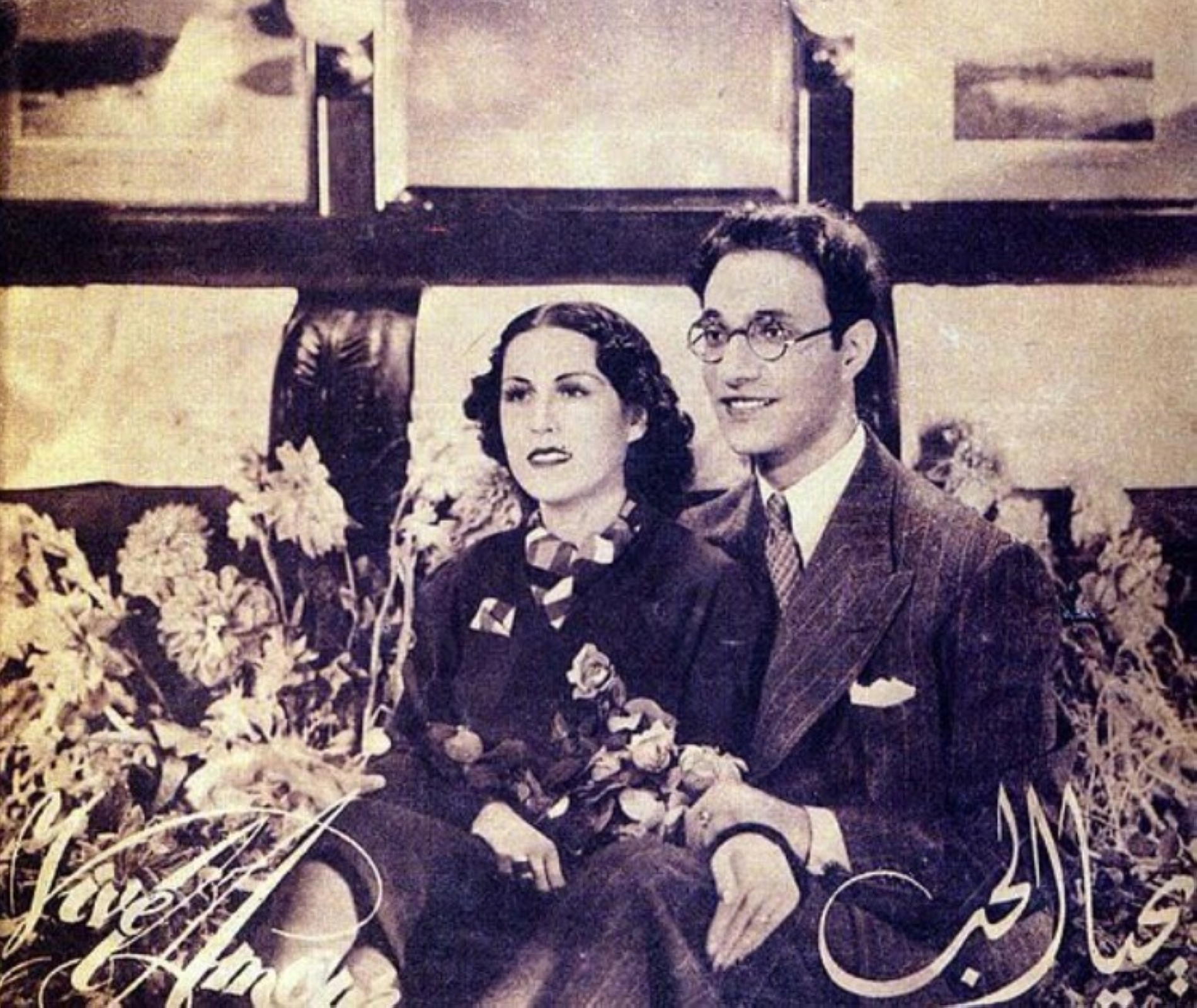
For decades, including during the early years of cinema, female talent came from the Levant or from Egypt’s religious minorities, with figures such as Nadra Amin (whose mother was Lebanese), Asmahan (born in Syria), Mourad (Moroccan-Jewish heritage), Sabah (Lebanese), Nour al-Hoda (Lebanese), and others. Within this, Mourad shone early on as the heroine of Long Live Love (1938) opposite Mohamed Abdel Wahab, the most celebrated singer of his age.
Leila’s father, the veteran singer Zaki Mourad, had returned empty-handed from a long sojourn abroad, only to find that public tastes had moved on from his style, so he drew on his connections to train his daughter and arrange concerts for her. It was the start of what would be a remarkable ascent. The first woman to be called ‘Cinderella’ in Egyptian cinema, Leila Mourad had a strong personality and was more than capable of negotiating her fees for both film and concert performances. Off-screen, she bore little resemblance to the frail, helpless girl projected on-screen in several of her films.
A tradition flourishes
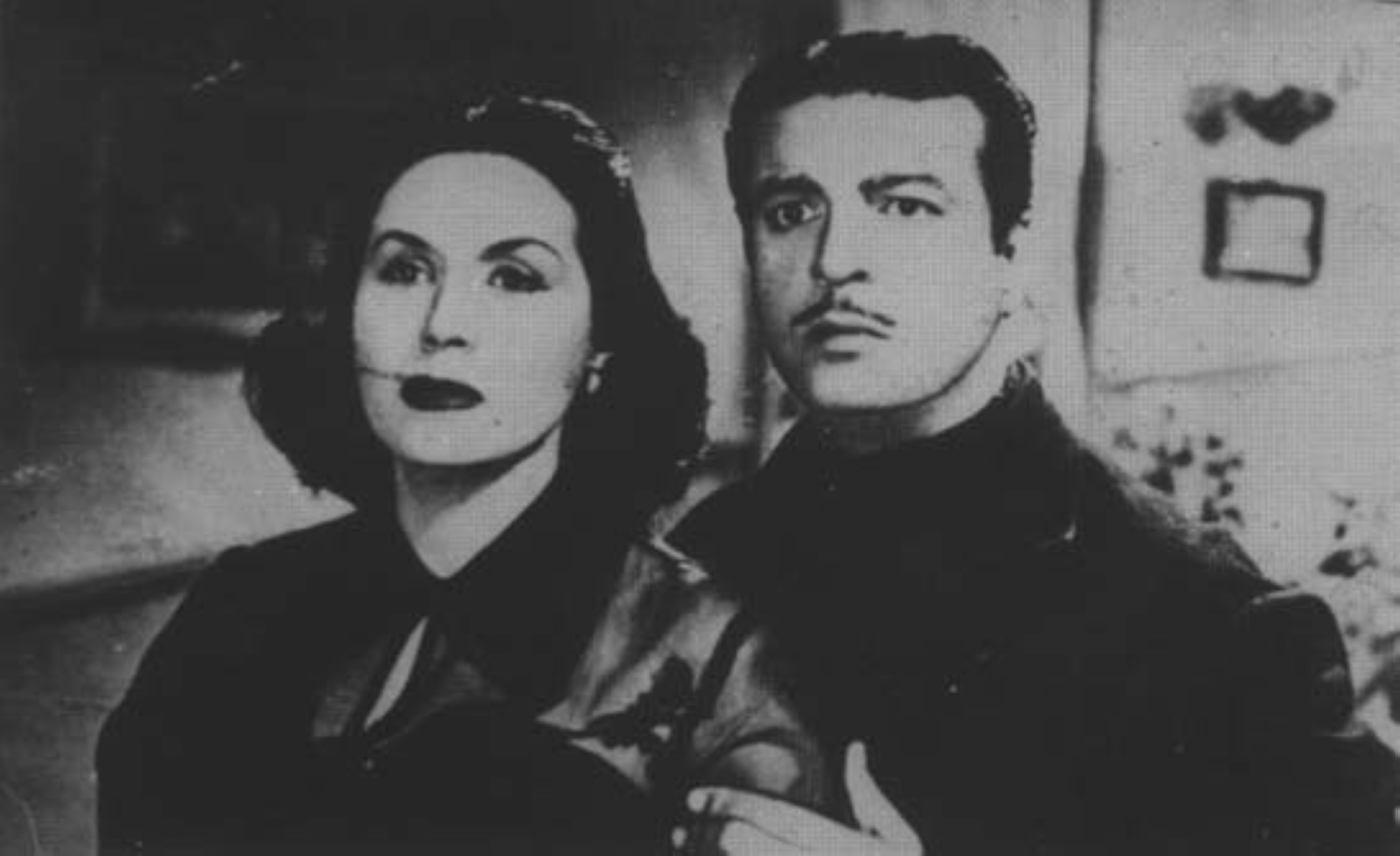
The author notes the beauty of the musical sequences for which she is known, the opulence that became Anwar Wagdi’s hallmark, and his contribution to cinema as Leila Mourad’s husband, but does not examine their origins. They seem to stand apart from the tradition of musical theatre as we know it, a tradition that began with Abu Khalil al-Qabbani and Maroun al-Naqqash, flourished with Sheikh Salama Hijazi, and was greatly enriched after the First World War by Sayed Darwish, Kamel al-Kholai, Dawood Hosni, then Zakaria Ahmed and their generation.
The visual and conceptual source of these spectacular tableaux (as they appear in the films of Mourad, Farid al-Atrash, and Mohamed Fawzi) seems instead to have come from the world of the casino (such as Badia Masabni’s) and the shows she staged from the Second World War onwards, which led to the discovery of major names who later made their way into cinema. The Unknown Beloved (1955) was Leila Mourad’s final film and the last of her famous works.
The book reveals that Mourad, then at the height of her fame, aged just 37, repeatedly tried to return to cinema but failed. She performed numerous songs for the radio in Egypt and across the Arab world, but they never achieved the same degree of popularity as her films. Some were banned for political reasons. Songs she performed during Mohamed Naguib’s rule were later banned under Abdel Nasser, while others she sang during the war against Israel were later banned under Anwar Sadat.
Understanding the end
At its core, the book appears to be an attempt to understand the semi-retirement that came to envelop Leila Mourad, and its connection to the failure of her marriage to Anwar Wagdi, then to her short relationship around 1954 with the officer Wagih Abaza, with whom she had a child. It also examines her position as a woman within this changing social and political framework, as well as the significance of her Jewish origins (even though she had publicly embraced Islam by 1948) and the effect this had on the distribution prospects of her films, especially in Syria, where the regime banned her work, accusing her—without evidence—of supporting Israel.
The book examines aesthetics, the male gaze, and its demands upon the female body, with expectations that took no account of age or motherhood. Leila Mourad’s crisis thus appears at the intersection of femininity, religious origin, male attention, conservative discourse, and political change. No single cause seems sufficient, on its own, to explain what happened to her. Rather, the path was created by a confluence of factors.
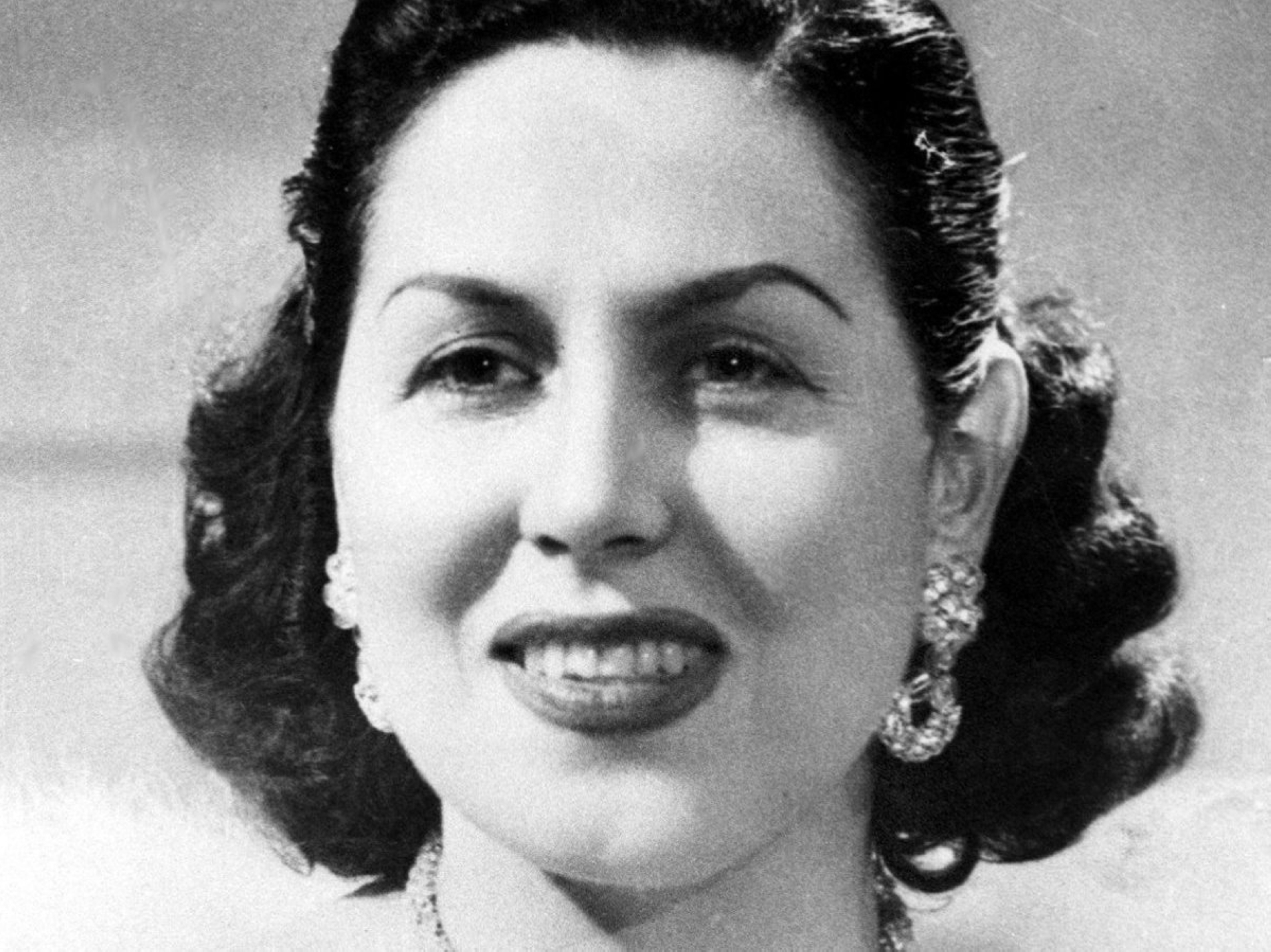
After she became one of cinema’s most famous and highest-paid stars, her success continued with her marriage to Anwar Wagdi, with whom she made some of the period’s most celebrated films, including Ghazal al-Banat. Hammad refutes rumours that Wagdi was a miser who withheld Mourad’s pay, citing his travel expenses, holidays, gifts, and costly clothes for his wife. At the same time, she thinks Wagdi exploited the press attention to enhance publicity for his own films.
Hammad also notes that, while he and Mourad were in conflict, the fabricated public image drew on the prevailing conservative discourse—and ultimately reinforced it. He presented himself as a man eager to have children, a wish supposedly denied by a wife obsessed with money, while she presented herself as the fragile victim who had never wanted anything more than a happily married life.
A life in context
Leila Mourad converted to Islam in 1947, but the announcement of this later seems linked to the public’s reaction to the declaration of the State of Israel in 1948 and the subsequent war of the same year. It appears to be an attempt to affirm her belonging to Egypt, as though her Jewish heritage could contradict it. She sang for Mohamed Naguib, then, after Abdel Nasser’s triumph over him, was invited once again to sing at the Revolution’s concerts. Syria’s ban on her was never formally lifted, but was overtaken by the declaration of unity between Egypt and Syria in 1958.
The Syrian ban was based on hearsay reports that Mourad was secretly aiding Israel. Hammad does not endorse the idea that Anwar Wagdi, her ex-husband, was behind these accusations, claiming that he, in fact, supported her during this time, despite their divorce. It appears to have been mutual, as Mourad seemed to travel to Paris, where he was receiving treatment, to stand by him in his struggle with illness.
It appears unlikely that the Egyptian regime imposed any form of retirement on Leila Mourad for political reasons before the mid-1950s. Her singing for Mohamed Naguib was overlooked, as it was for many singers at the time, and the regime supported Mourad after she was accused of backing Israel. The author seems to overstate the impact of the Syrian ban on producers who supposedly feared working with Mourad. Her final film aired in 1955, whereas the ban took effect at the end of 1958, and the Syrian market accounted for no more than 10% of regional revenues.
Abaza and Ashraf
The more decisive factors seem to lie elsewhere. Around 1954, she became romantically involved with the officer Wagih Abaza, who wielded considerable influence within the Egyptian regime, at a time when many rising young officers were entering romantic relationships with film stars, princesses, or daughters of prominent families. Hammad assumes that the two entered into an unregistered customary marriage, from which her son Ashraf was born.
It was a long time before Abaza was finally acknowledged as Ashraf's father. He initially denied paternity and even refused to meet the boy (they only ever met by chance, after a minor traffic accident involving the cars of father and son). Abaza came from a large conservative family and was already married to a female relative, so presumably denied it out of embarrassment, especially as some of his rivals were using it against him. Hammad adds that Egypt's ruler Abdel Nasser personally intervened in such cases to stop his top officers exploiting their influence for sexual and romantic purposes.
The most important aspect in ending Leila Mourad's film career may have been the concealment of her pregnancy and then of her child, followed by an effort to bring Ashraf into her public life after her swift marriage to director Fatin Abdel Wahab in 1956 and the birth of her second son. Combined, this kept Mourad out of the public eye for nearly two years and placed her in a sanatorium in 1957. Two births also affected her weight and figure, at a time when most directors and industry figures has a particular image of what they wanted.