Arab Film Festival Berlin holds its ground amid Gaza backlash

ALFILM director Pascal Fakhry tells Al Majalla she won't back down from platforming Palestinian voices despite coming under mounting pressure from the German government

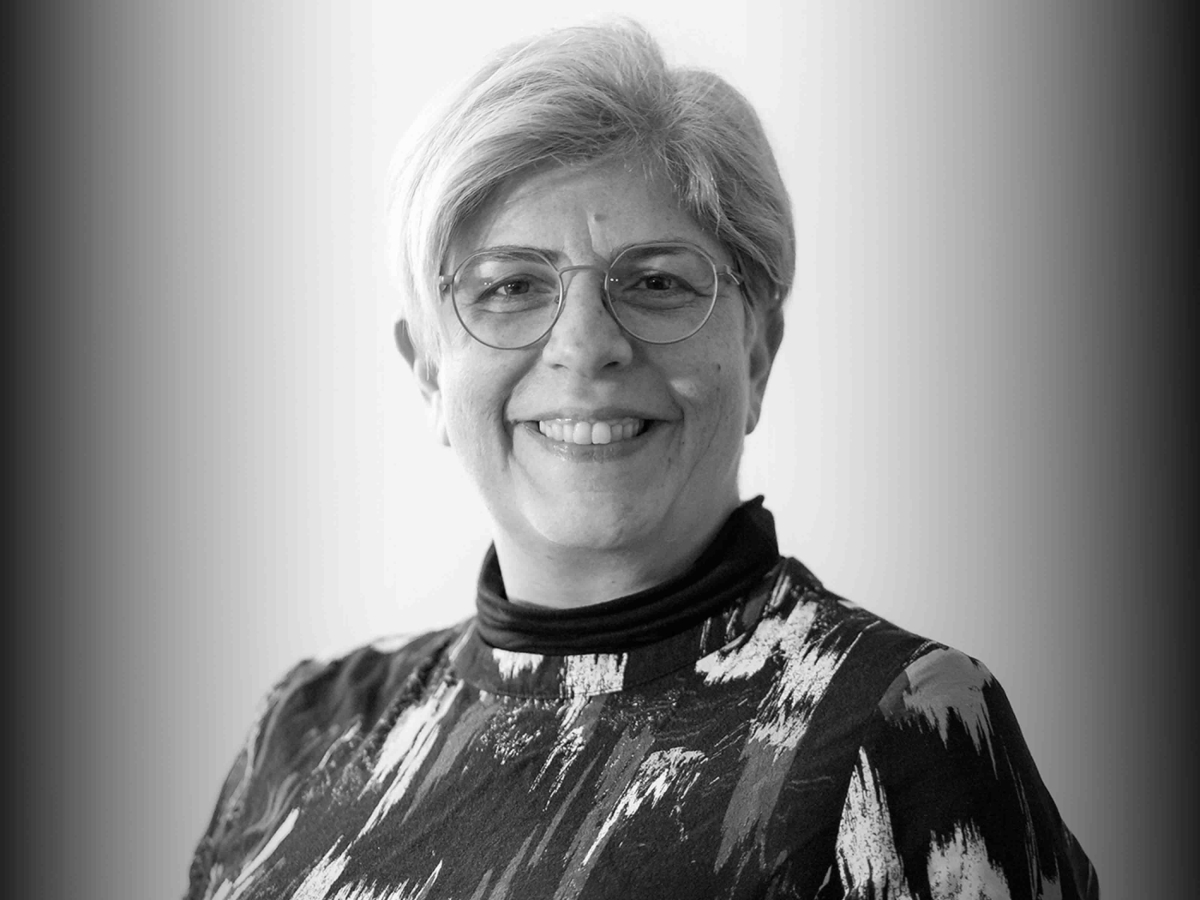
Pascal Fakhry, ALFILM director

Arab Film Festival Berlin holds its ground amid Gaza backlash

Since October 2023, Arab cinema has found itself at the heart of Germany’s intensifying debate over the war in Gaza. This is especially true of Berlin, which has long been regarded as an open space for cultural expression. The city’s cultural sphere has been marked by acute tension, with panel discussions and cultural events involving Palestinian artists and supporters of Palestine cancelled amid an increasingly charged atmosphere.

At the opening of this year’s Berlinale in February, jury president Wim Wenders was asked about “selective empathy”, meaning the relative ease with which solidarity is expressed for Iran or Ukraine compared with Gaza. He replied that filmmakers should keep away from politics, a remark that cast a long shadow over the festival. More than 80 actors, directors, and writers from around the world signed an open letter criticising what they saw as a “double standard” in the treatment of human suffering.

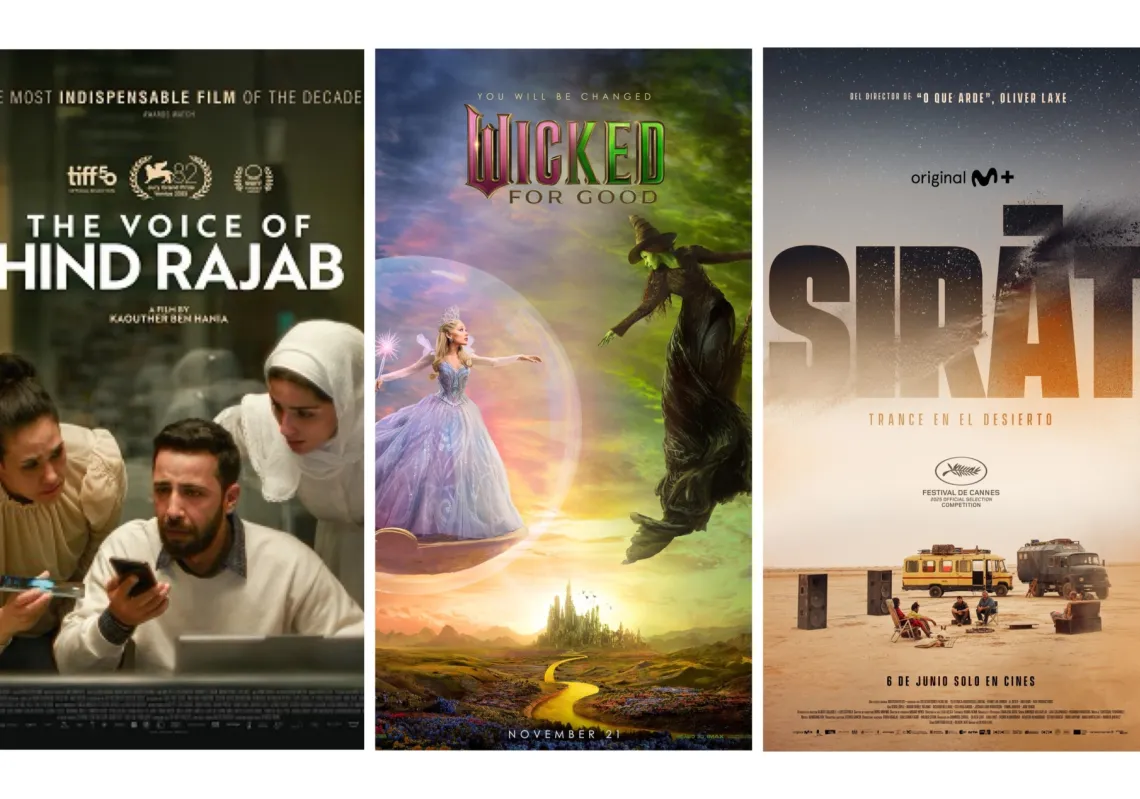
The Tunisian director Kaouther Ben Hania refused to accept her award for The Voice of Hind Rajab. At the closing ceremony, the Palestinian-Syrian director Abdallah Al-Khatib sparked controversy when he accused the German government of complicity in the genocide in Gaza, prompting the German environment minister to leave the hall in protest. Similar tensions surfaced during the festival’s 2024 edition, when Palestinian director Basel Adra and Israeli director Yuval Abraham, whose film No Other Land won the Berlinale Documentary Film Award, faced similar criticism from German politicians after condemning Israel’s actions and Germany’s support for them.

In response, independent initiatives emerged, including Palinale, launched in 2024 as a parallel platform to the Berlinale to foreground Palestinian voices. Pascal Fakhry, director of the Arab Film Festival Berlin (ALFILM), remembers that year well, describing the 2024 edition of ALFILM as “an extremely difficult year. We fought hard to preserve our artistic freedom, and we succeeded”.

“The pressure on cultural institutions was intense, forcing them to avoid any position seen as supportive of Palestine,” recalls Fakhry, who has led the festival since 2020. “The reactions came mainly from cinemas and screening venues that feared accusations of antisemitism or the loss of funding.” One venue, for example, refused to host the film Here and Elsewhere, though it was later screened at another cinema.

Funding squeeze

There have been no direct attempts by the German government to interfere in ALFILM’s content. Instead, the deeper challenge lies in funding, particularly as the city’s support for cultural activity has declined. “It no longer funds art and culture as it once did,” says Fakhry. “Politics, and the shrinking space for voices critical of the government over the genocidal war, are part of that reality as well... At present, we have funding for four years. Next year is the last of them, and after that, we do not know what the future holds.”

As controversy surrounding the Berlinale intensified, pressure from the German Ministry of Culture on the Capital Cultural Fund, which finances both the Berlinale and ALFILM, also increased. That pressure has stirred fears over the independence of cultural decision-making in funded projects, especially after the fund’s committee, the HKF, refused earlier this month to finance a project by the literary scholar and translator Miriam Rayner to translate into German previously untranslated works by major 20th-century Palestinian writers such as Mahmoud Darwish and Ghassan Kanafani.

Volodymyr Zelensky was invited, yet when it came to Palestine, the festival suddenly ceased to be political

Pascal Fakhry, ALFILM director

Fakhry also criticised the Berlinale's professed identity as a festival shaped by political engagement: "Volodymyr Zelensky was invited, yet when it came to Palestine, the festival suddenly ceased to be political."

The Berlinale crisis earlier this year came close to costing festival director Tricia Tuttle her position, until more than 700 directors, actors, and cinema professionals signed an open letter in support of her. "What happened damaged the reputation of both the festival and the country," says Fakhry, who hails from Lebanon's Beqaa Valley. "The director remained, but under conditions, and she no longer enjoys full freedom of action. Had I been in her place, I would have resigned. Today, no one is able to take a courageous stand and say that what the German government is doing is unacceptable, that this war is genocide, and that the shipment of weapons must stop. No one dares, for fear of meeting the same fate, especially after the Berlinale reactions. Even silence may not save you from being cast aside."

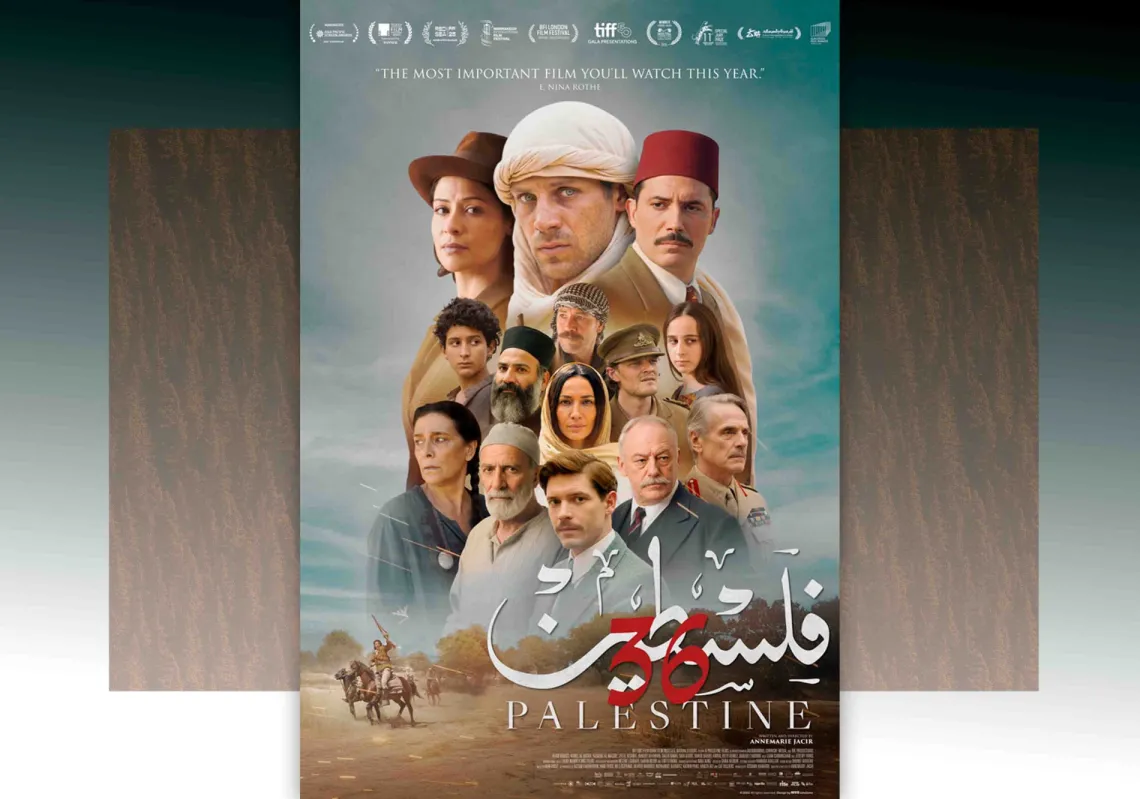
The 17th edition of ALFILM, which began on 22 April and runs until 28 April, features around 60 feature films, documentaries, and short films from across the Arab world. For the third consecutive year, it opens with a Palestinian film, Palestine 36, by the Palestinian director Annemarie Jacir. 

The choice is no coincidence. "Palestine lies at the root of the conflicts our region continues to endure," says Fakhry. "Germany's position on Palestine has not changed, even after the war on Gaza, so we bring the Palestinian narrative to the fore in order to affirm its presence."

ALFILM's orgins

The idea for ALFILM was first conceived in 2009 by Fadi Abed Al Nour and Essam Haddad, Palestinian and Lebanese respectively. It began as a modest platform introducing German audiences to Arab cinema before gradually growing into an annual event that brings together audiences with an interest in Arab film and culture. Fakhry, who moved to Berlin in 2008, joined the festival in 2013.

"Our work was voluntary, and our aim was to speak, as Arabs, about ourselves," remembers Fakhry of those early years. Initially, the festival's audience was largely European. That began to change with the arrival of Syrian refugees in 2015, a moment that marked a turning point for Arab communities in Germany. "Our role expanded, and our audience became more Arab."

A second turning point came in 2020, when the festival received its first funding from the city of Berlin. That same year, Fakhry became its artistic director, and in 2022 she assumed its presidency. Now, 17 years after its founding, she says the festival has entered a new phase: "A great deal has changed. We now have more films, and the funding has given us greater scope to develop the programme."

This year's opening film, Palestine 36, addresses a subject that is rarely seen on screen, says Fakhry. The Palestinian revolt of 1936. "Everyone tells the story of the conflict from the Nakba onwards, yet very few speak of what came before the Nakba, the period of British colonial rule, during which the Zionist occupation took root and Palestinian institutions were dismantled," she explains. "The first movements of resistance emerged in 1936. For us, this was therefore a vital subject to bring to light, even for us as Arabs, since the story so often begins with the Nakba."

Sudan in focus

This year, however, the festival's spotlight section is devoted to the war in Sudan, which entered its fourth year this month. For the first time, the festival invited the Sudanese artist Talal Afifi to curate the section, which includes films such as The Station, Khasha, Cotton Queen, and Khartoum. It also features historical works from the 1970s and 1980s, such as Recovered Films: Cinema of the Vanguard, an art exhibition, and a discussion session on archives and the role of European institutions in preserving them.

"Sudan has been an urgent subject for some time, and sadly no one is talking about it. It remains marginalised, whether in Arab media or European media," says Fakhry. "We felt it was essential to work with a Sudanese artist in shaping this programme, since we ourselves are not from Sudan. That is why Afifi was chosen."

Germany's Palestine stance hasn't changed, even after Israel's war on Gaza. We bring the Palestinian narrative to the fore to affirm its presence.

Pascal Fakhry, ALFILM director

There is also a strong Saudi presence at the festival, including screenings of Hobal, which is being shown in Berlin for the first time. "Hobal is an extraordinary film in terms of its production, its desert cinematography, and its narrative power. It is set in the 1990s, during the Gulf War, among a tribe in the desert, with its customs, the hardships woven into those customs, and the place of women within that world."

The festival's management, explains Fakhry, has always sought to screen films that "engage with issues on a level deeper than mere entertainment, and Hobal reaches for that deeper register. That is what set it apart for us." She also points to the Night Courier, which was screened two years ago. "There is a clear movement in Saudi cinema, sustained by strong state support, and that is something we encourage. Each year, we try to screen a film from the Gulf, while also ensuring representation from other countries such as Iraq and Jordan. Our aim has always been to present Arab cinema in all its variety and richness."

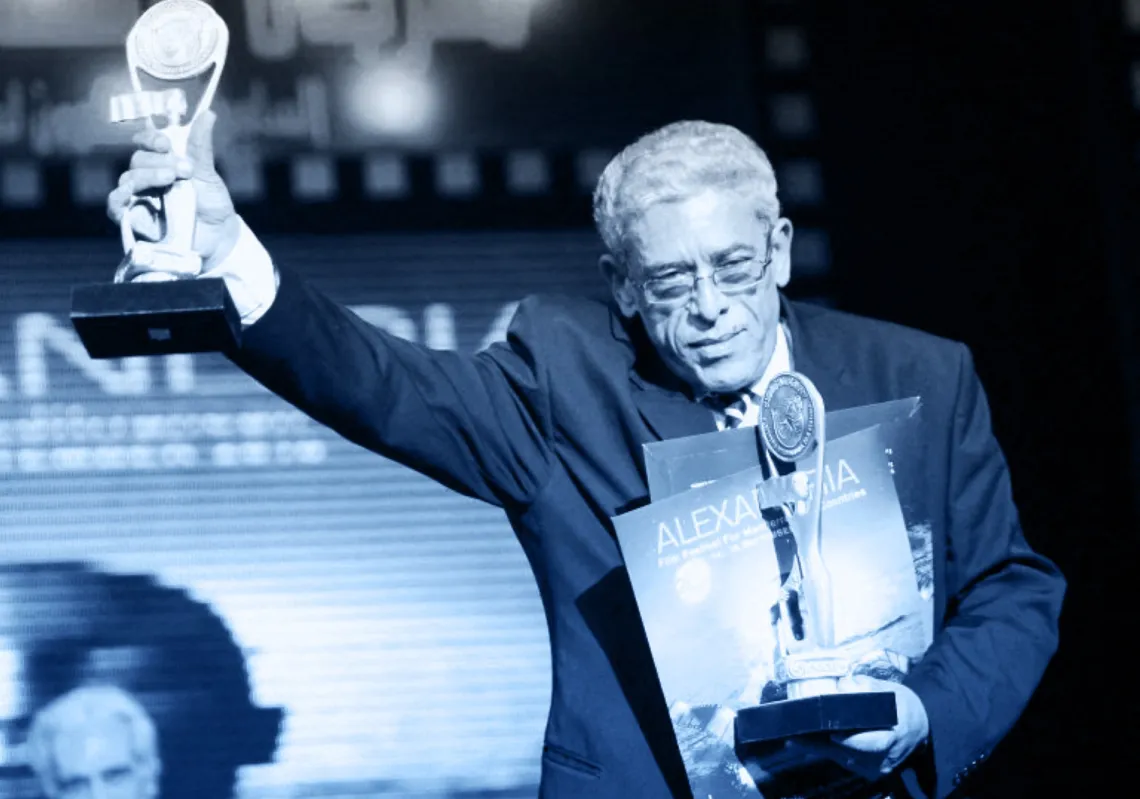
This year's edition also pays tribute to a number of influential figures in Arab cinema, including the Palestinian actor Mohammad Bakri and the Egyptian director Daoud Abdel Sayed, both of whom died in December last year. The festival is also marking the centenary of Egyptian director Youssef Chahine.

There will be screenings of Ameer Fakher Eldin's The Stranger, featuring a deeply moving performance by Mohammad Bakri, as well as Abdel Sayed's Land of Dreams and Chahine's Adieu Bonaparte. Also included is Sites of a Family Film, in which filmmaker Viola Shafik explores her relationship with her former husband, production designer Onsi Abou Seif, their son Ani, who lives in Germany, and the bond she and Onsi share through Arab cinema. The film will be screened in the presence of all three, and Abou Seif will deliver a masterclass on art direction.

"Onsi Abou Seif is the connecting thread," says Fakhry. "He worked on most of Daoud Abdel Sayed's films, as well as with Youssef Chahine, and he was the architect of the visual worlds of some of the most important works in the history of Egyptian cinema." 

font change