
Since October 2023, Arab cinema has found itself at the heart of Germany’s intensifying debate over the war in Gaza. This is especially true of Berlin, which has long been regarded as an open space for cultural expression. The city’s cultural sphere has been marked by acute tension, with panel discussions and cultural events involving Palestinian artists and supporters of Palestine cancelled amid an increasingly charged atmosphere.
At the opening of this year’s Berlinale in February, jury president Wim Wenders was asked about “selective empathy”, meaning the relative ease with which solidarity is expressed for Iran or Ukraine compared with Gaza. He replied that filmmakers should keep away from politics, a remark that cast a long shadow over the festival. More than 80 actors, directors, and writers from around the world signed an open letter criticising what they saw as a “double standard” in the treatment of human suffering.
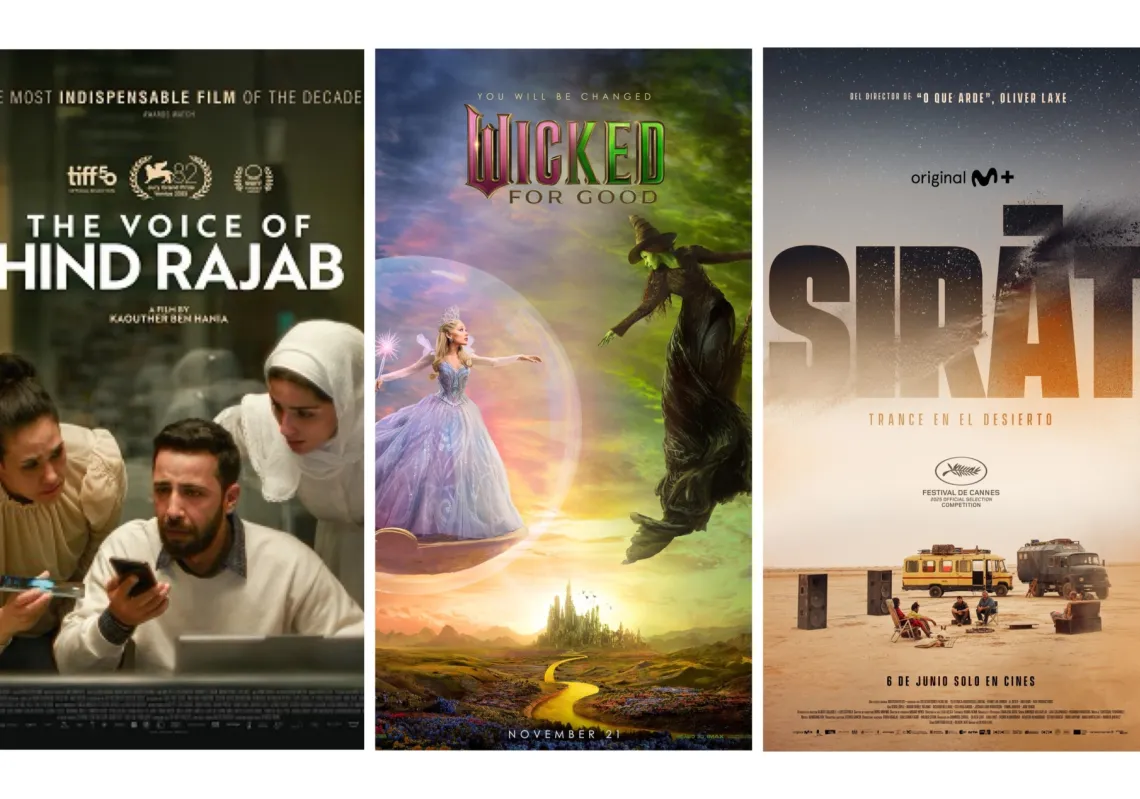
The Tunisian director Kaouther Ben Hania refused to accept her award for The Voice of Hind Rajab. At the closing ceremony, the Palestinian-Syrian director Abdallah Al-Khatib sparked controversy when he accused the German government of complicity in the genocide in Gaza, prompting the German environment minister to leave the hall in protest. Similar tensions surfaced during the festival’s 2024 edition, when Palestinian director Basel Adra and Israeli director Yuval Abraham, whose film No Other Land won the Berlinale Documentary Film Award, faced similar criticism from German politicians after condemning Israel’s actions and Germany’s support for them.
In response, independent initiatives emerged, including Palinale, launched in 2024 as a parallel platform to the Berlinale to foreground Palestinian voices. Pascal Fakhry, director of the Arab Film Festival Berlin (ALFILM), remembers that year well, describing the 2024 edition of ALFILM as “an extremely difficult year. We fought hard to preserve our artistic freedom, and we succeeded”.
“The pressure on cultural institutions was intense, forcing them to avoid any position seen as supportive of Palestine,” recalls Fakhry, who has led the festival since 2020. “The reactions came mainly from cinemas and screening venues that feared accusations of antisemitism or the loss of funding.” One venue, for example, refused to host the film Here and Elsewhere, though it was later screened at another cinema.
Funding squeeze
There have been no direct attempts by the German government to interfere in ALFILM’s content. Instead, the deeper challenge lies in funding, particularly as the city’s support for cultural activity has declined. “It no longer funds art and culture as it once did,” says Fakhry. “Politics, and the shrinking space for voices critical of the government over the genocidal war, are part of that reality as well... At present, we have funding for four years. Next year is the last of them, and after that, we do not know what the future holds.”
As controversy surrounding the Berlinale intensified, pressure from the German Ministry of Culture on the Capital Cultural Fund, which finances both the Berlinale and ALFILM, also increased. That pressure has stirred fears over the independence of cultural decision-making in funded projects, especially after the fund’s committee, the HKF, refused earlier this month to finance a project by the literary scholar and translator Miriam Rayner to translate into German previously untranslated works by major 20th-century Palestinian writers such as Mahmoud Darwish and Ghassan Kanafani.