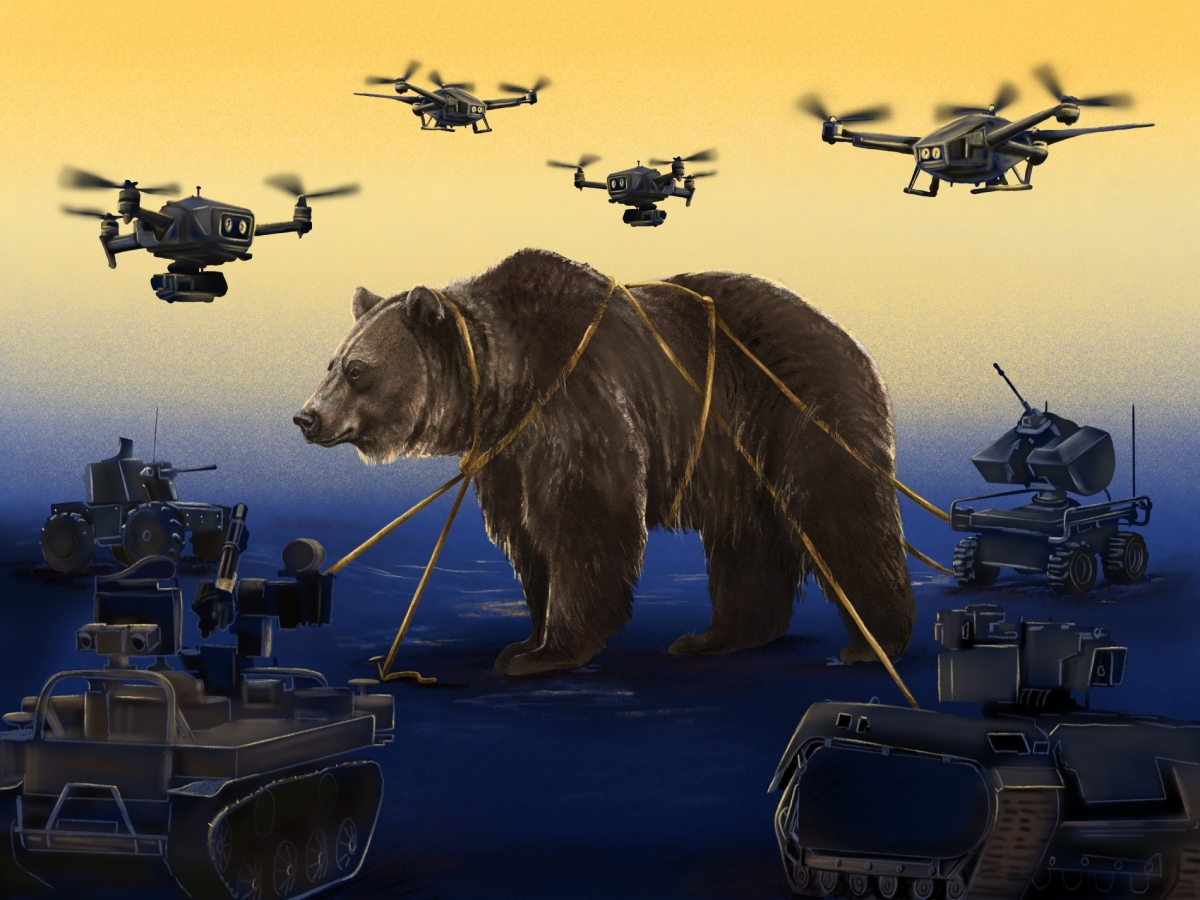

In a development that reveals how deeply warfare has been transformed by technology, Ukraine is increasingly relying on robots and intelligent machines to conduct combat missions in place of soldiers. Far from science fiction, this is the reality now unfolding across the battlefield, where machines enter combat zones and undertake operations that, until very recently, were undertaken by soldiers. This is both preserving lives and securing military advantage through unconventional means.
In a way, Kyiv's use of robots is recasting the very concept of fighting. Ukrainian President Volodymyr Zelensky recently announced that his forces had captured an enemy position using only unmanned ground systems and drones, without deploying infantry and without sustaining any human losses. Zelensky did not present the episode as a narrowly tactical success; he sought to widen its significance, declaring that “the future is already present on the frontlines,” adding that Ukraine was helping to shape it.
Zelensky noted that autonomous systems such as Ratel, Termit, Ardal, Lynx, Zmii, Protector, and Volia had carried out more than 22,000 missions in just three months. The messaging carried a distinctly political charge: Ukraine is not simply adapting to the conditions of war, but striving to offer a new model, pushing robots and unmanned systems into the very centre of the battlefield both to reduce human losses and to offset Russia’s numerical advantage.
In Ukraine’s armed forces today, its soldiers no longer storm positions or face immediate danger alone. Remotely operated machines are an essential component of daily military operations. In one field operation, Russian soldiers surrendered to Ukrainian ground robots and drones, with no human soldiers present at the point of engagement. The operation—conducted by the NC13 unit affiliated with the Third Assault Brigade—was seen as setting a striking precedent, with a military position seized and soldiers captured without a single human shot being fired.
Although it is difficult to verify whether this was the first operation of its kind anywhere in the world, it nonetheless reflects the extent of Ukraine’s progress in weaving technology into the fabric of combat operations, the country’s armed forces having used drones to great effect from the offset, making the movement of Russian soldiers more dangerous.
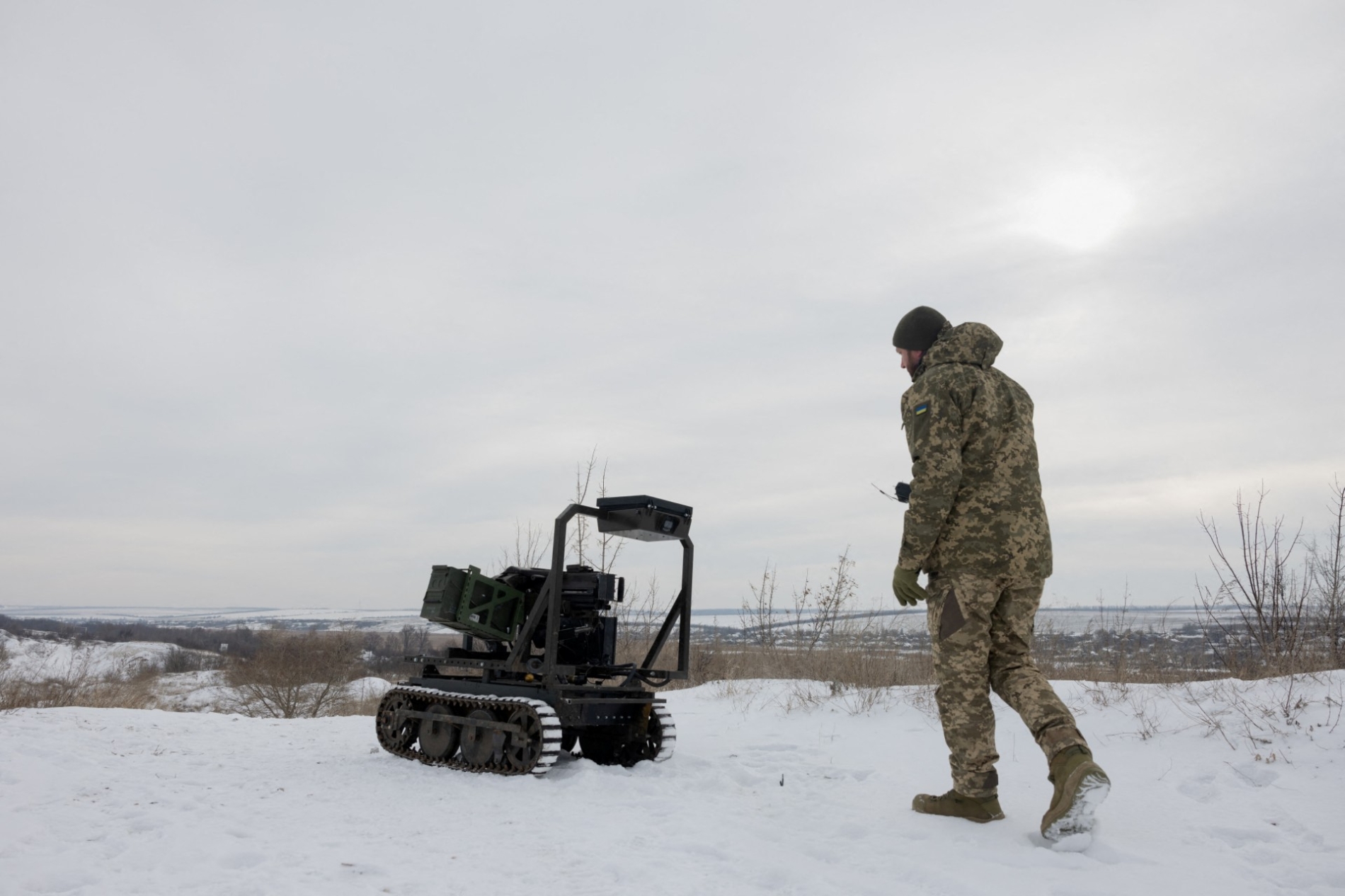
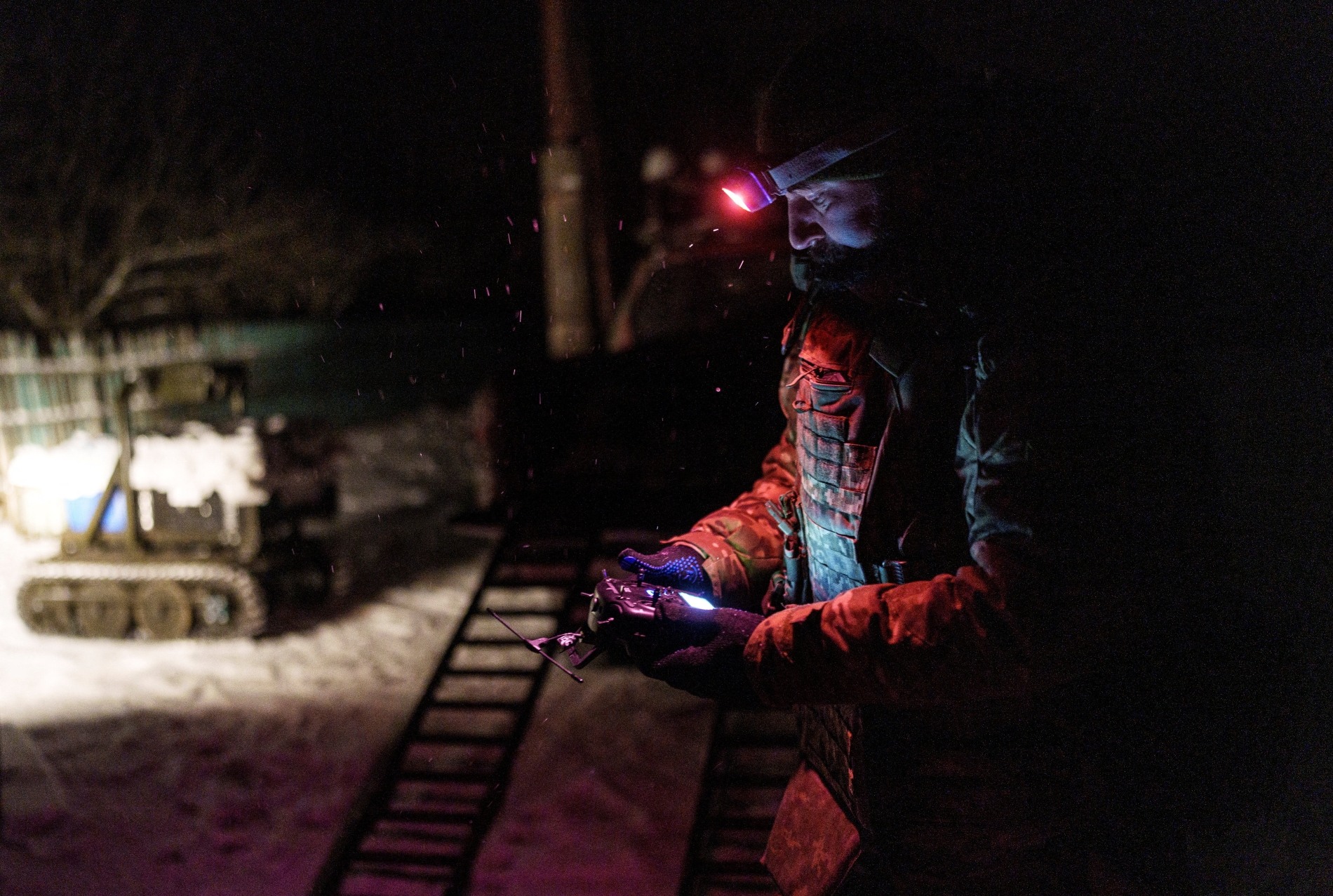
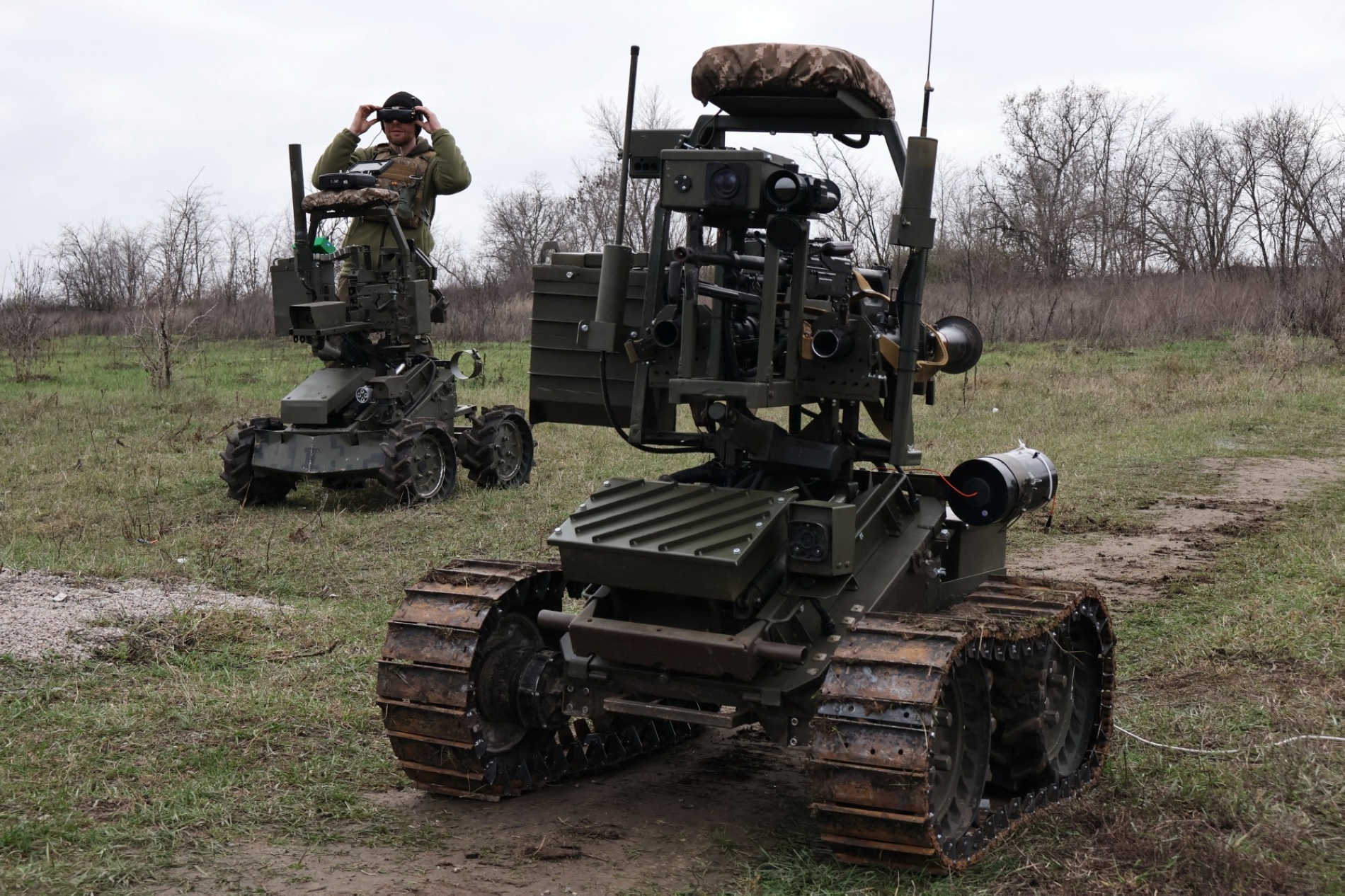
This encouraged the Ukrainian army to develop and deploy ground robots—vehicles that move on wheels or tracks and are controlled remotely. At first, their use was limited to evacuating wounded soldiers and transporting supplies, but their role quickly expanded to include direct attacks and advanced reconnaissance missions. These robots are distinguished by their ability to operate in harsh conditions that conventional vehicles cannot withstand.
More difficult to detect and target than larger platforms, they can carry heavy combat equipment and remain in action for longer periods thanks to extended battery life. In one notable case, a ground robot equipped with a mounted machine gun held back a Russian advance for 45 days, requiring only light maintenance and periodic recharging.
Specialised robots
When Zelensky refers to these systems, he is not speaking of a single weapon in isolation, but of an integrated ecosystem of unmanned ground robots performing multiple roles along the front. Some are designed for supply and casualty evacuation, others for reconnaissance or the transport of combat equipment. Many can be adapted according to the nature of the mission. Together, they bolster Ukraine’s effort to build an unmanned ‘ground layer’ that complements the role of drones in the sky.
The Ratel platform is among the most versatile systems. Its variants can transport ammunition, evacuate casualties, serve as a platform for carrying explosive charges, and act as a mobile launch point for drones. Its use reduces the risk to soldiers, particularly on the approach towards hostile positions or during high-risk missions.