Since the fall of the Assad regime in Syria on 8 December 2024, the country’s border with Lebanon has been subject to an unprecedented mobilisation, with Damascus ramping things up in recent weeks by sending heavy reinforcements to the frontier to confront Hezbollah’s smuggling operations.
Under Assad, the Iran-backed militia operated extensively both in Syria and across the lucrative border area, so it has deployed hundreds of its own operatives to the same area since December 2024 to protect its interests and channels, albeit under the pretext of countering any Syrian military intervention.
Al Majalla understands from several sources that Hezbollah continues to move both weapons and fighters across the border and to recruit Syrian fighters, including those who last fought during the Assad era, prompting the Syrian government to significantly reinforce its border forces, particularly since the US-Israeli war against Iran began on 28 February. Yet although Damascus has managed to tighten control, some smuggling consignments are still getting through from Syria into Lebanon, according to sources.
Extensive threat
Fully sealing the border is impossible, they say, not least due to logistics and terrain. Another factor is the influential families whose land and contacts straddle both sides of the border. Alongside this, and related to it, there are reports of an intricate tunnel network built over many years during the Assad era, during which Hezbollah fighters fought alongside Assad’s army in the Syrian civil war.
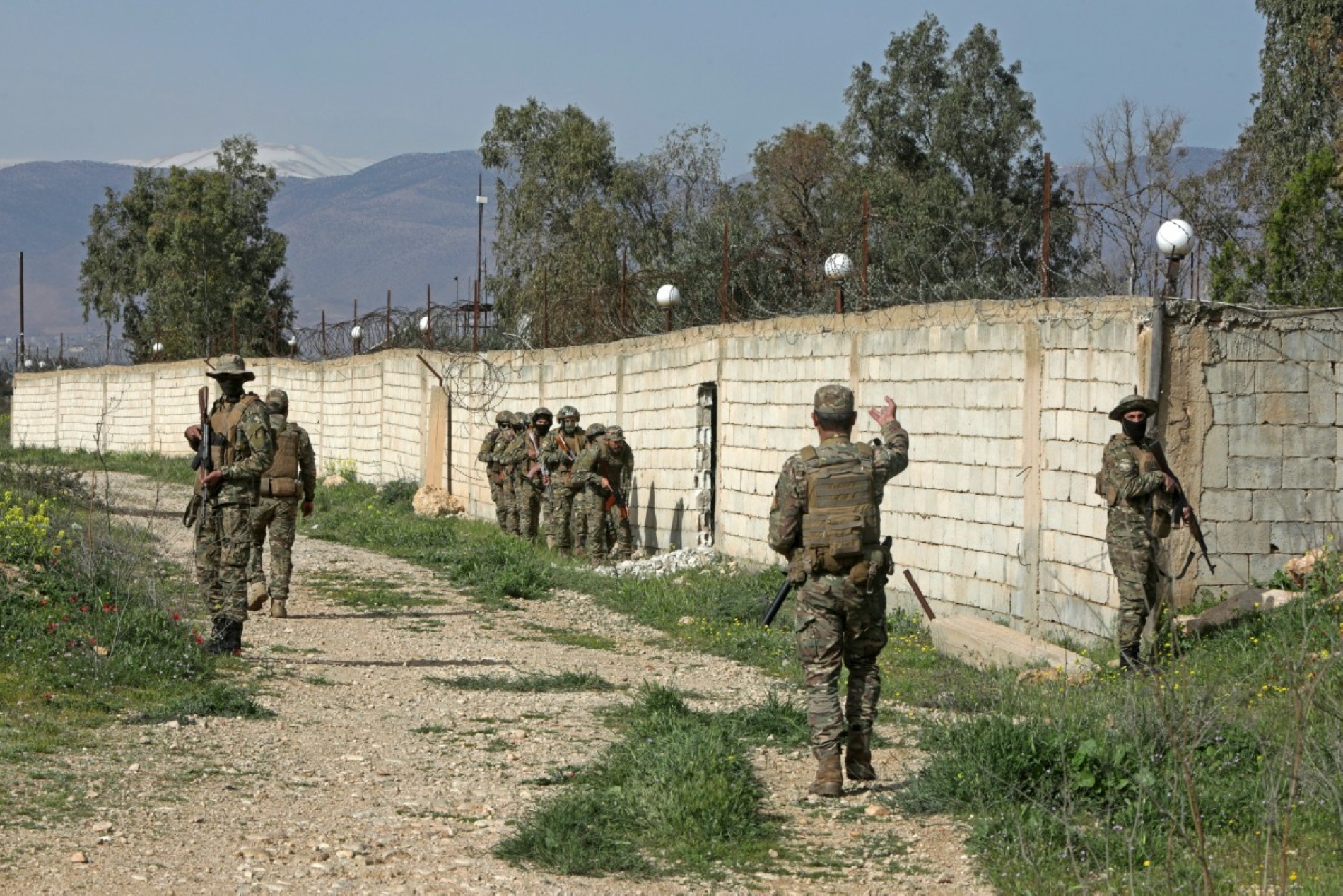
Syrian army soldiers patrol along the Syrian–Lebanese border in the rural area of Al Qusayr on 1 April 2026.
Damascus believes the threat extends beyond the border area into Syria’s cities, so it has intensified its security measures in the capital, Homs, Deir ez-Zor, Daraa, Tartus, Zabadani, al Qusayr, and elsewhere, carrying out weekly raids against cells that remain linked to Hezbollah and other Iranian militias.
On 19 April, the Interior Ministry said it had foiled several attempts—including one in Quneitra—aimed at undermining stability and harming public security, explaining that those efforts had been orchestrated by members of the former regime and cells connected to Hezbollah. In Quneitra, a Hezbollah-linked cell is suspected of preparing to target Israeli territory from inside Syria. The ministry said the weapons seized included rockets and launchers that had been “professionally prepared and concealed aboard a civilian vehicle”.
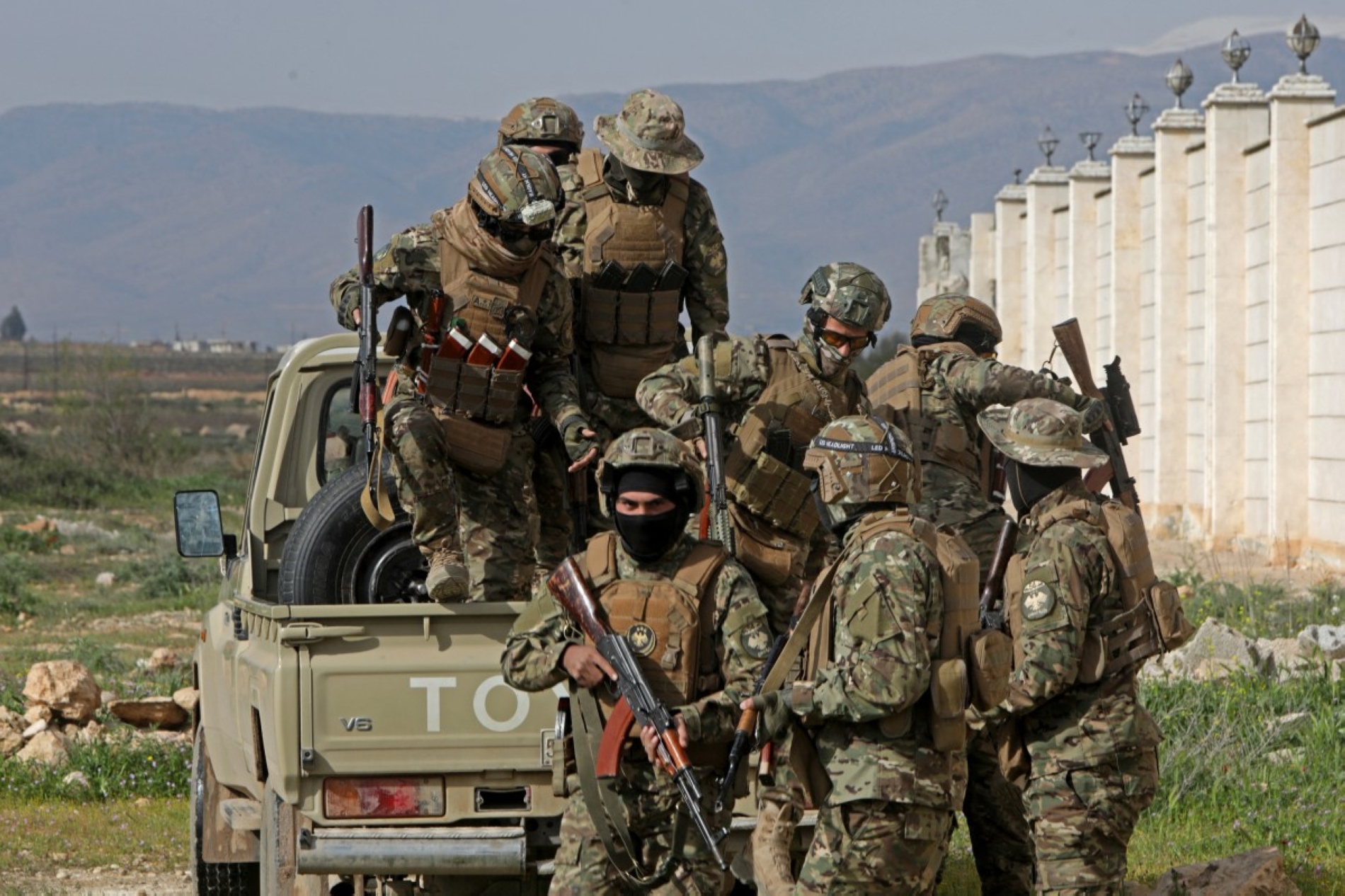
The Syrian army has dispatched hundreds of personnel to the border region over the past two weeks
Mobilising forces
A major Syrian intelligence effort is underway to dismantle the recruitment networks run by Hezbollah and other pro-Iranian militias, including those in Iraq (many operatives left Syria for Iraq after the fall of the Assad regime). Al Majalla has learnt that former fighters from those militias are being enticed back into the fold by salaries of $300.
Al Majalla understands that the Syrian army has dispatched hundreds of personnel to the border region over the past two weeks, including anti-terrorism and anti-smuggling teams from the Interior Ministry. This mobilisation followed information that Hezbollah was trying to transfer Syrian operatives across the border into Lebanon, alongside weapons it had left behind in Syria.
Syrian army soldiers patrol along the Syrian–Lebanese border in the rural area of Al Qusayr on 1 April 2026.
Hezbollah has worked with some border smugglers for decades and has built close ties within the various Syrian-Lebanese border communities. Nevertheless, the Syrian government is understood to have thwarted several smuggling attempts in recent weeks, but completely controlling the border remains exceptionally difficult. Those working in the area say it would require a much larger force, more advanced equipment, and secure and reliable channels of communication with the Lebanese.
The weapons from Syria are intended to replenish Hezbollah's stockpile, after Israel attacked its warehouses in recent weeks. Al Majalla understands that Hezbollah has been trying to transfer rockets, machine guns, and anti-personnel mines in Lebanon, but that it is not trying to smuggle in light arms, since the risk outweighs the need.
Alongside its anti-smuggling operations, the Syrian government's investigations teams are piecing together intelligence to accelerate the arrest of cells that could carry out operations within Syria, possibly against Israel.
The interrogation of a Hezbollah cell arrested in Deir ez-Zor at the end of last March led to the dismantling of at least four more cells across Syria during several raids on 18 April. All were interconnected and working for Hezbollah. The Interior Ministry said those arrested had been involved in "booby-trapping, preparing improvised explosive devices, and readying mines" and that they had "received specialised training abroad".
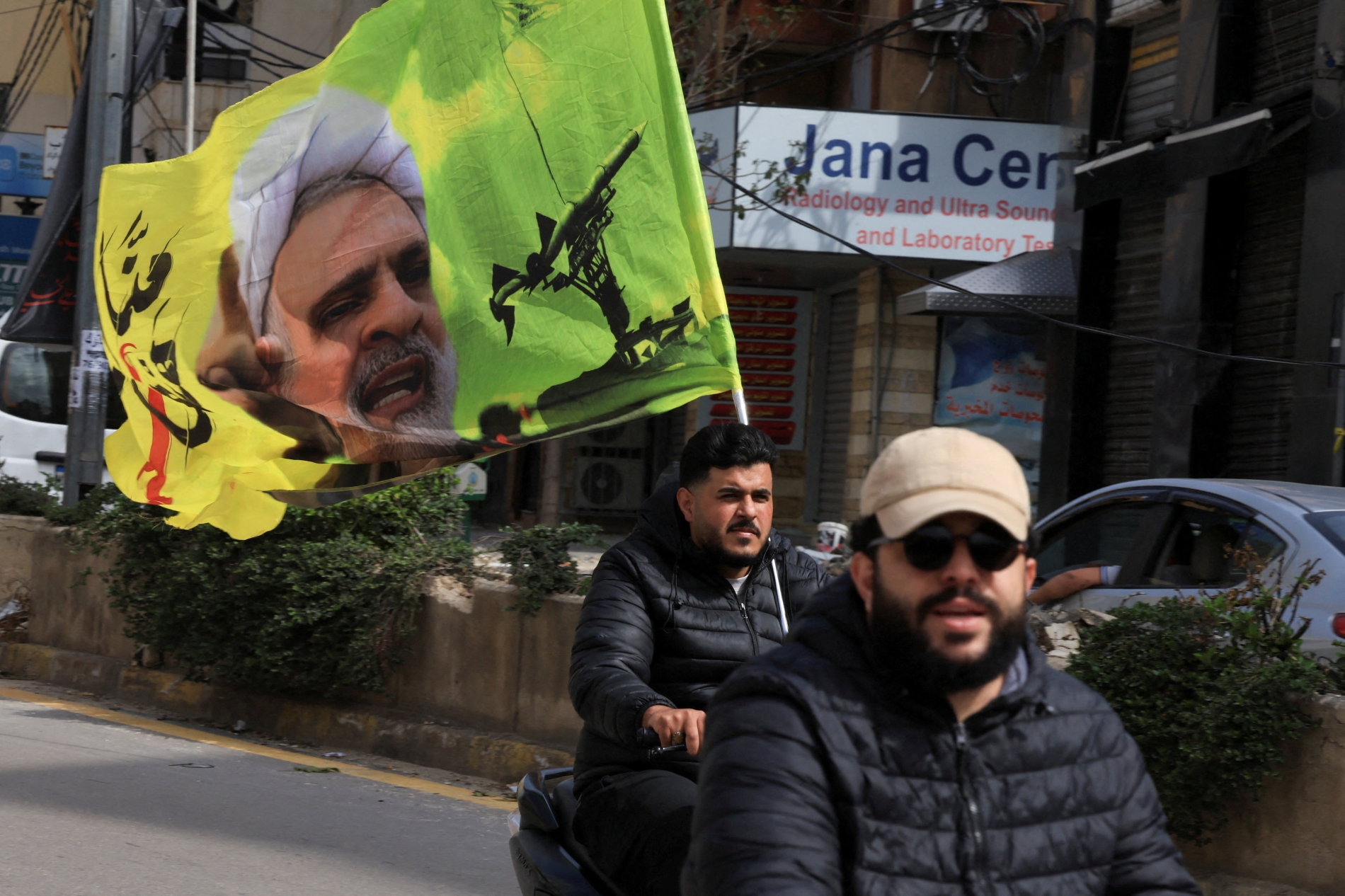
A man flies a falg of Hezbollah leader Naim Qassem in the southern suburbs of Beirut, Lebanon, on 17 April 2026.
Outlining positions
Hezbollah's leaders have repeatedly insisted that it has not intervened in Syrian affairs since December 2024, but its activity on the ground tells a different story, not least through the government's announcement of arrests. There are now reports that Syria's army could be considering military action in Lebanon in support of the disarmament of Hezbollah, which the Iran-backed group appears to be taking seriously.
Hezbollah has recently sent hundreds of its operatives to border areas facing the countryside of Damascus and Homs. According to sources, those deployed include Syrians who once served in the Assad regime and in militias affiliated with Hezbollah and Iran, and who fled after Assad's departure. These operatives have been told that they are in a "state of readiness for confrontation" should the Syrian government decide to carry out operations in Lebanese territory.
In his video address on 13 April, Hezbollah leader Naim Qassem said that "those who spread poison in order to create a problem… are committing a grave crime". He specifically mentioned "the Syrian army or someone from Syria intervenes in Lebanon's affairs while Israel is in a state of aggression against Lebanon".
He added: "The Syrian leadership and the Syrian people are aware of the danger of America, Israel, and these states that want to drag Syria and Lebanon into a problem between them." Qassem said Hezbollah has "no problem with Syria," adding: "Our only enemy is the Israeli enemy, cloaked in the American mantle." Yet he did not address the issue of sending his own fighters to the Syrian border areas.
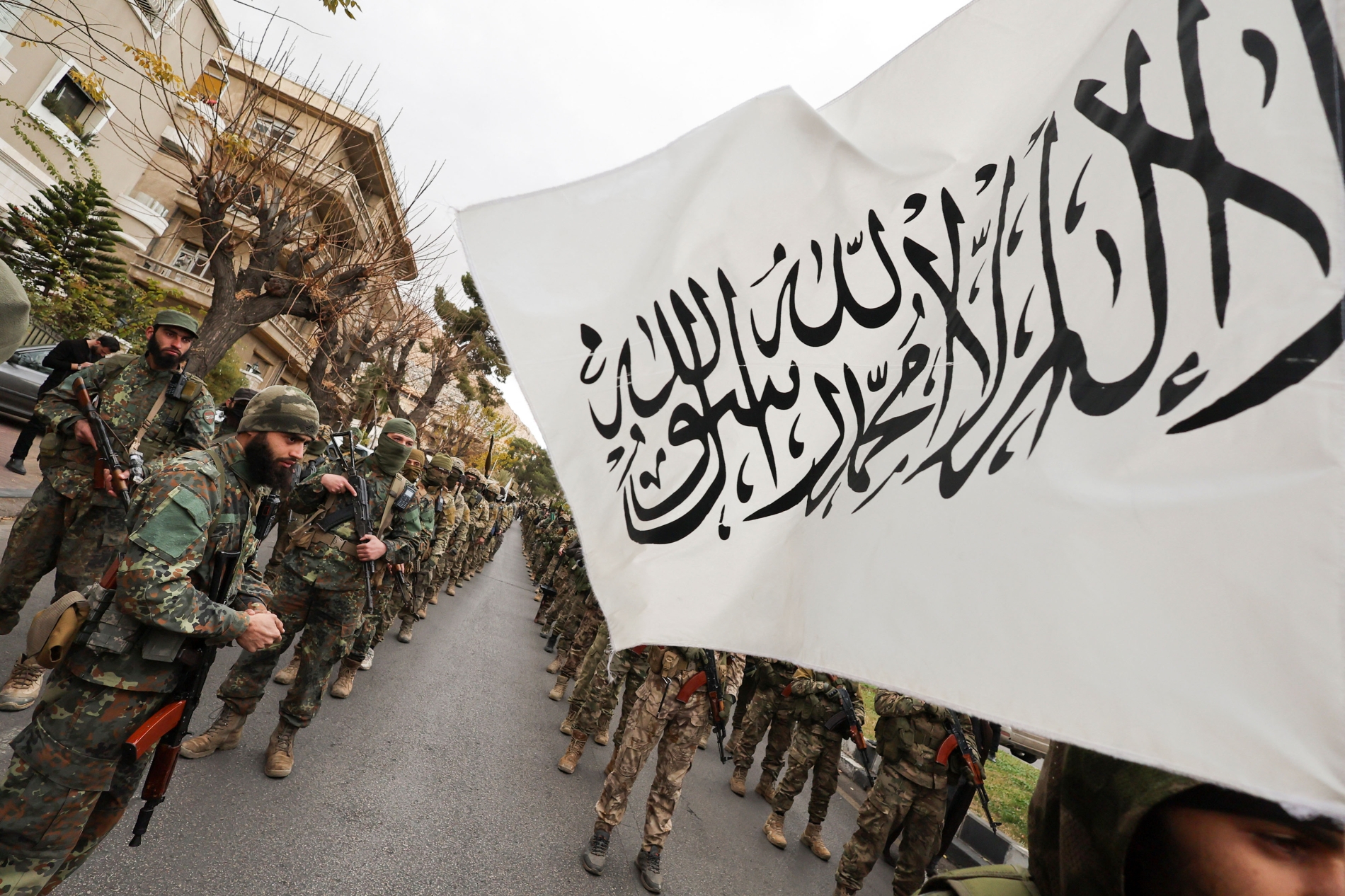
Khaled Brigade, a part of Hay'at Tahrir al Sham (HTS), holds a military parade in Damascus on 27 December 2024.
Picking battles
So far, the Syrian government has sought to avoid being drawn into any confrontation with Hezbollah, but it has intensified its efforts to secure its borders and dismantle Hezbollah's cells inside Syria, particularly any that are trying to entangle Syria in the war with Israel.
Damascus has repeatedly told Beirut that it does not seek any direct confrontation with Hezbollah and does not plan to intervene in Lebanon, but has stressed that Lebanese officials must try to secure the border and prevent Hezbollah from pursuing its agenda and launching attacks through Syrian territory. In these efforts, Damascus has said it stands ready to provide every form of support to the Lebanese army.
Analysts generally think that the Lebanese army does not have the capacity and capabilities to control the border from its side, not least because it is already on high alert to implement any possible agreement with Israel and to secure southern Lebanon. The army's fight to control the border is a difficult one, too, given Hezbollah's extensive control over border areas facing Damascus and Homs.
The Lebanese army would need significant time, effort, and resources to establish authority. For the many who maintain that disarming Hezbollah and giving the Lebanese state a monopoly over arms in its territory are the key to resolving many of the region's tangled crises, the issue of the Lebanon-Syria border will only strengthen their argument.