Saudi networks can redraw oil, gas, and trade routes

With Iran’s effective closure of the Strait of Hormuz, alternatives for Gulf energy transit are being sought. Could the Saudi landmass straddling two seas be bridged for the benefit of all?

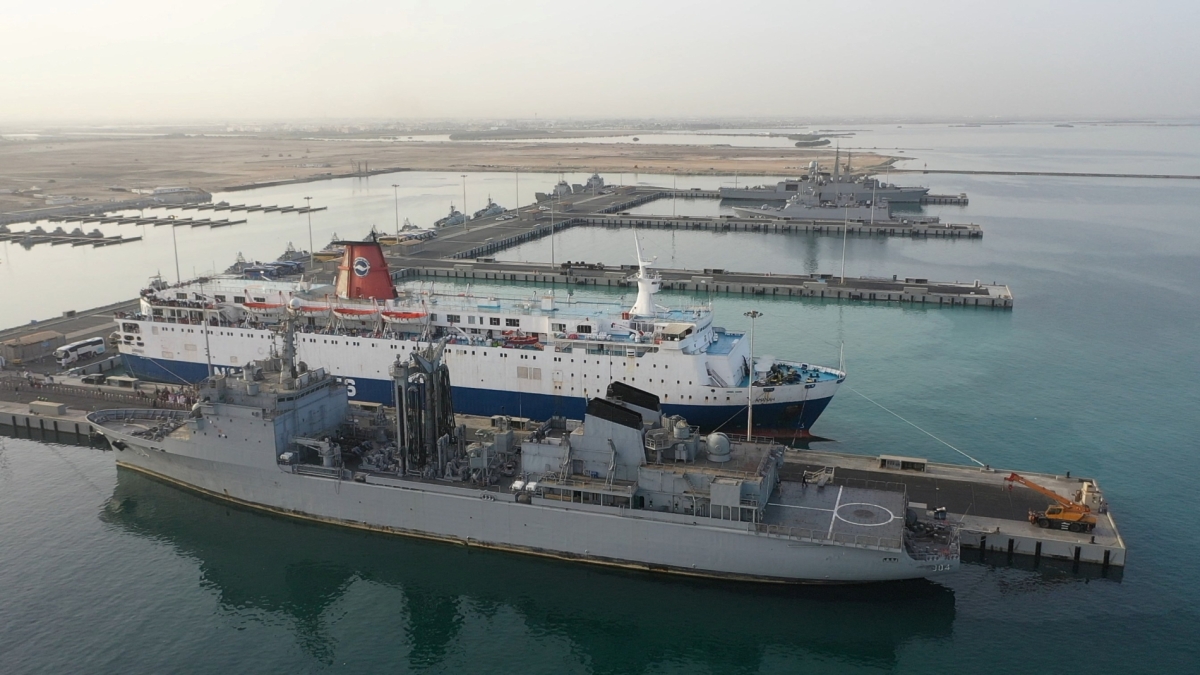
A Saudi commercial ship at Jeddah Sea Port, Jeddah, Saudi Arabia, 26 April 2023.
Saudi Ministry of Defence
A Saudi commercial ship at Jeddah Sea Port, Jeddah, Saudi Arabia, 26 April 2023.

Saudi networks can redraw oil, gas, and trade routes

More than just a sensitive waterway, the Strait of Hormuz has become a test in recent weeks of the Gulf’s economic model. For decades, Gulf oil and gas have flowed through the strait on their way to world export markets, the region’s energy industry always assuming that this vital artery would remain open regardless of any geopolitical tensions. As has been seen since March, however, that assumption now seems misplaced.

As a result, states are looking for workable alternatives, even if those alternatives are partial, costly, or temporary. At the heart of those ideas is Saudi Arabia. It is the region’s largest oil exporter, and its landmass stretches from the Gulf to the Red Sea. It is capable, both in theory and in practice, of redirecting energy flows away from maritime chokepoints. The question now, therefore, is not just how Saudi Arabia can protect its own exports, but how it might become a platform for reshaping the Gulf’s trade and energy routes.

Historic precedent

This idea is not new. Almost 80 years ago, construction began on the Trans-Arabian Pipeline (known as Tapline), stretching from Saudi Arabia’s east coast to Lebanon’s Mediterranean city of Sidon. Completed in 1950, the aim was to carry Saudi oil overland to Europe, bypassing the Gulf altogether. It established the principle that maritime geography can be bypassed through Saudi geography.

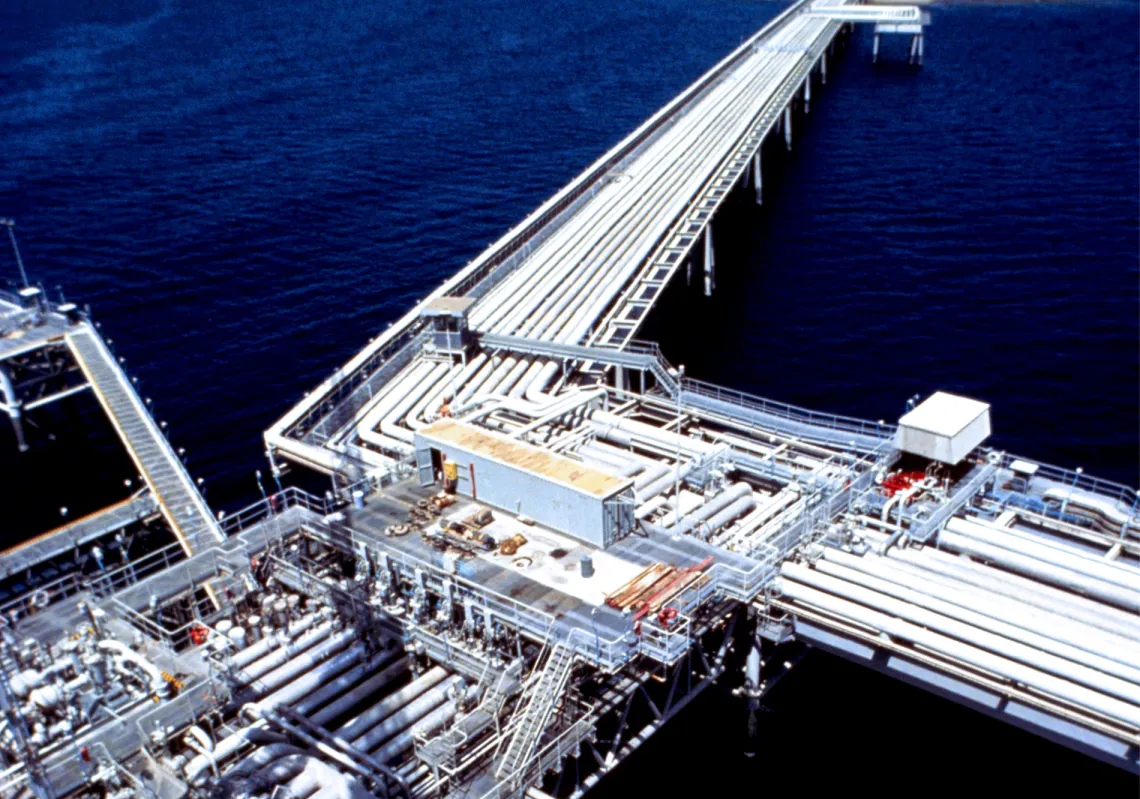
In 1980, with the outbreak of the Iran-Iraq War, that principle became a necessity. The ‘tanker war’ attacks of the 1980s pushed Riyadh to build the East-West Pipeline, carrying oil from the eastern fields to the port of Yanbu on the Red Sea. It was the first practical response to the possibility of the Gulf being choked off, and the first successful model for moving energy away from Hormuz.
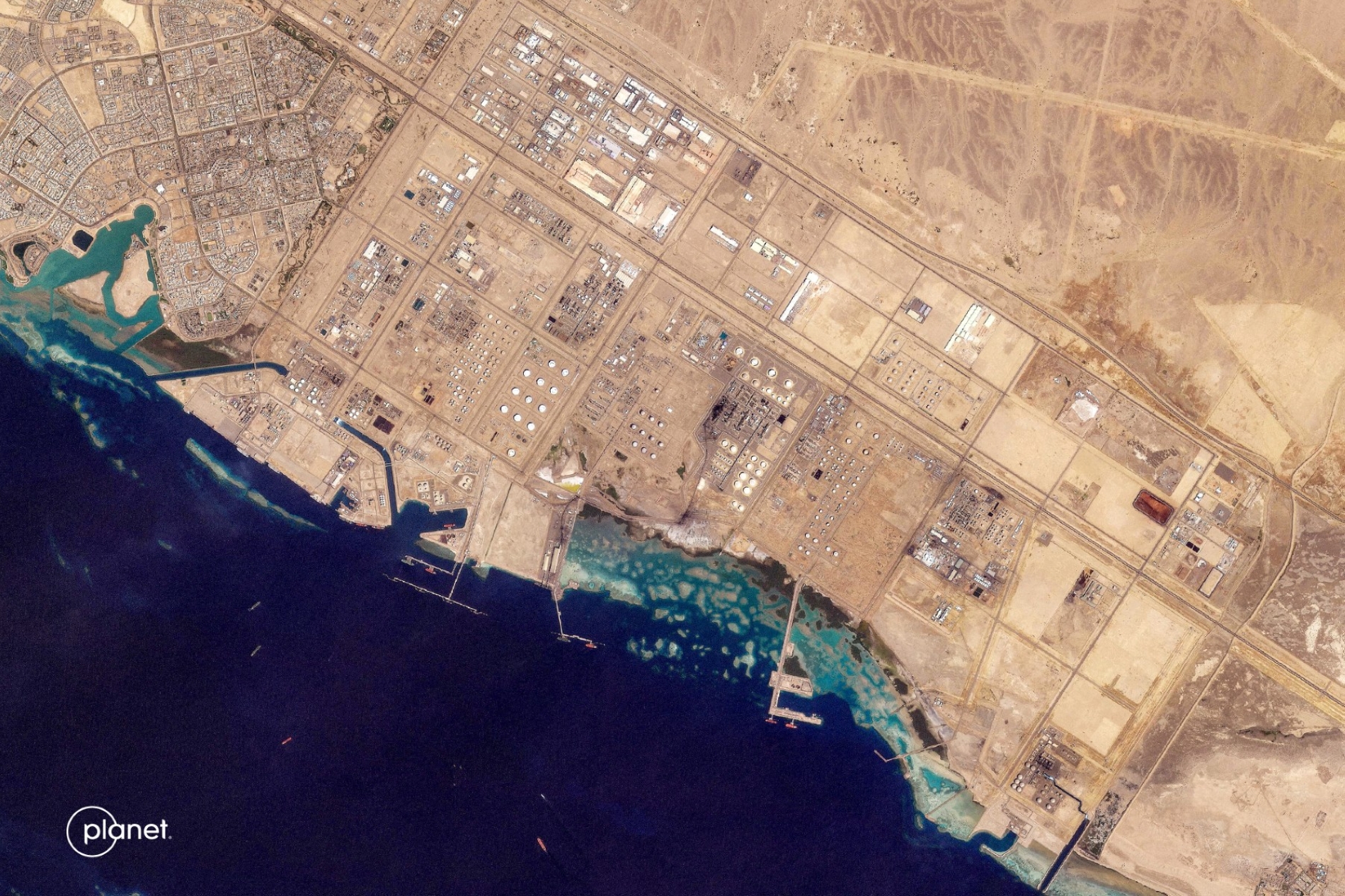
PLANET LABS PBC / AFP
A satellite image of the oil infrastructure at Saudi Arabia's western Red Sea port of Yanbu on 4 March 2026.

In the late 1980s, Iraq sought to use Saudi territory as an alternative route, building the IPSA (Iraqi Pipeline in Saudi Arabia) from Basra in Iraq to the Red Sea. For a brief period, it seemed that there was a move towards a broader, regional model of energy transit, but Iraqi President Saddam Hussein’s 1990 invasion of Kuwait brought that project to a halt, and the pipeline was mothballed.

In the years that followed, the idea remained in the background, but never developed into an integrated system. Projects such as the 25km King Fahd Causeway (a series of bridges and embankments), completed in 1986, link Bahrain to Saudi Arabia, giving it a single overland outlet. Likewise, the Gulf railway project, announced in 2009, sought to connect all Gulf Cooperation Council states via a land transport network to reduce dependence on sea transport.
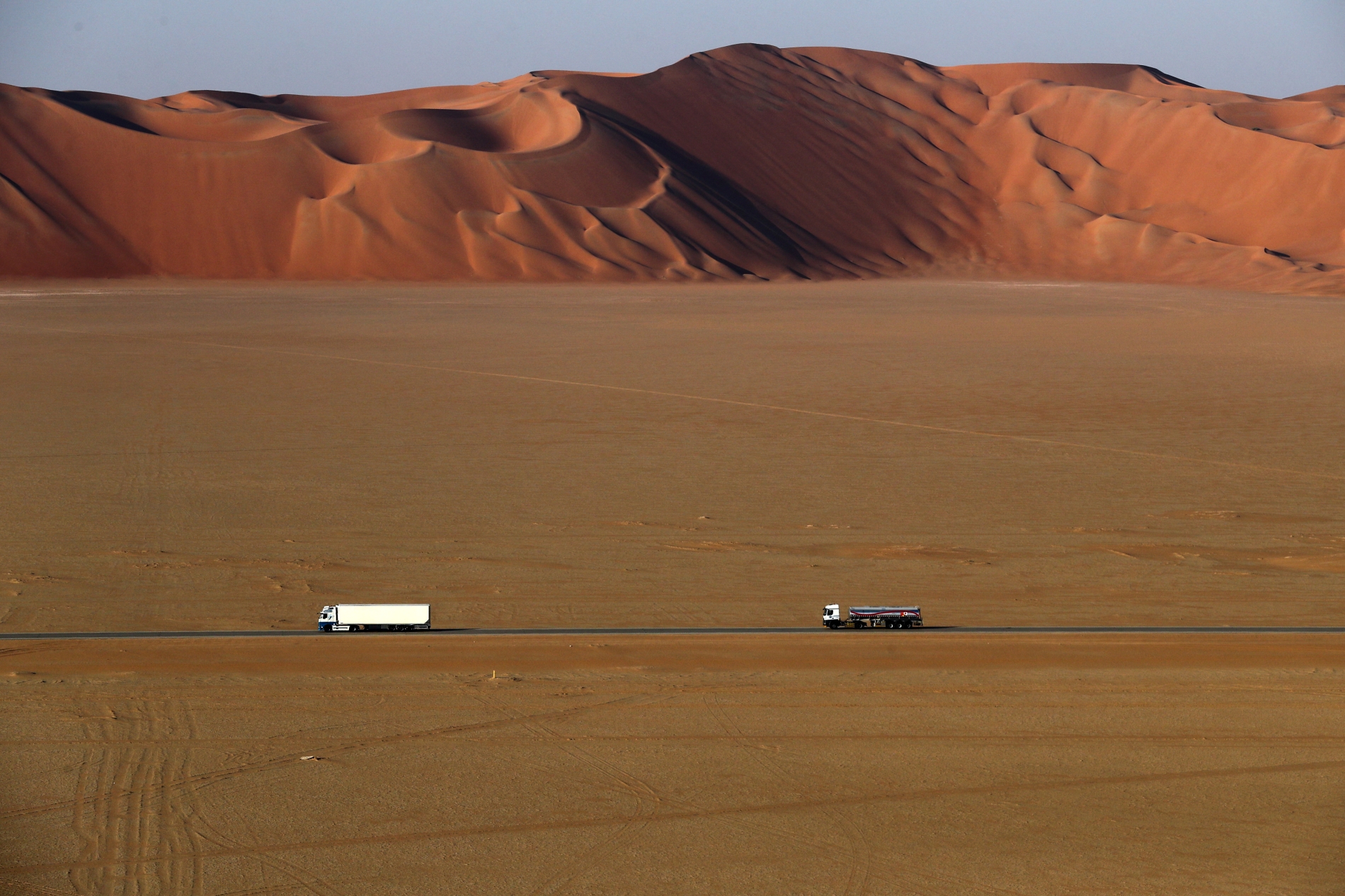
REUTERS/Hamad I Mohammed
Cargo trucks drive through the newly open Saudi-Oman border road crossing the Empty Quarter, in Shubaytah, Saudi Arabia, on 11 January 2024.

Adding urgency

These projects, for all their importance, were not built under the pressure of an existential crisis. Instead, they were based on the logic of gradual economic integration, resulting in uneven and slow implementation. Today, the context has changed. A closed Strait of Hormuz is reviving alternative thinking. The aim now is for the survival of an industry, not integration in the name of efficiency.

Gulf states are not trying to replace the Strait, which would be unrealistic in the short term. The aim, instead, is to reduce its centrality to the point where its disruption no longer becomes catastrophic. Saudi Arabia has stepped up its use of the East-West Pipeline, moving oil towards the Red Sea, while shipping companies have begun turning to land bridge solutions, with containers transported from Gulf ports to Red Sea ports via road or rail. This is costly and complex, but it carries a deeper significance: trade has already begun, however partially, to move beyond its traditional route.
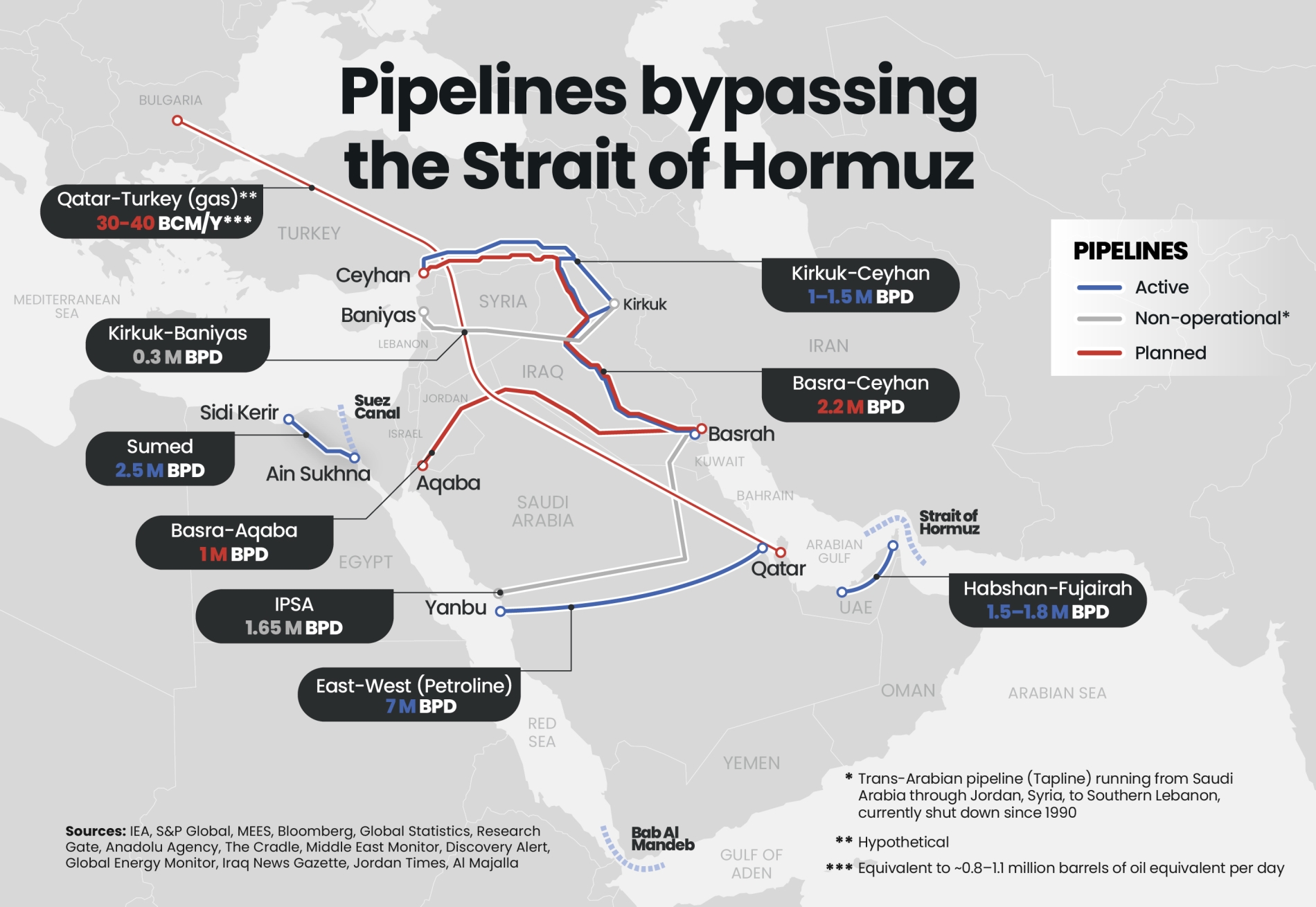
The question now is not just how Saudi Arabia can protect its own exports, but how it might become a platform for reshaping Gulf trade and energy routes

These solutions remain temporary and limited. They cannot compensate for the immense volume of flows passing through Hormuz, nor do they provide a sustainable alternative for all states. The evaluation process now requires a step-change in thinking, which is where Saudi Arabia features. Can the country evolve from an emergency corridor into a permanent regional passage?

The answer lies in infrastructure. Under discussion is a pipeline network linking the Gulf states (particularly Kuwait and Bahrain) to the Red Sea ports, and perhaps even to the Arabian Sea, through Saudi territory. This would mean Gulf Arab oil was no longer tied to a single passage vulnerable to Iranian pressure, but distributed across multiple routes, reducing risk and strengthening stability. Yet for all its logic, such a project faces formidable political and financial obstacles. It would require an unprecedented degree of coordination and trust between states, along with vast investment.

Redistributing trade

In parallel, the Gulf railway project is returning to the fore as a strategic instrument. A rail network linking Kuwait to Saudi Arabia and then to the Red Sea could redistribute overland trade and provide a partial alternative to maritime transport. But trains are less efficient than pipelines for moving energy, so the role of rail will remain complementary rather than substitutional.

Al Majalla

The deeper shift lies in the repositioning of the Red Sea itself. With the development of the ports of Yanbu and Jeddah, together with the wider projects along Saudi Arabia's western coast, the Red Sea could yet become supremely important. That would align with Saudi Arabia's Vision 2030, which seeks to establish the country as a global logistics hub. Yet these alternatives may not suit everyone. Qatar's economy, for instance, depends on exports of liquefied natural gas (LNG), which require maritime shipment and cannot readily be replaced by pipelines.

For now, major overland energy connections through Saudi Arabia remain ideas that are both conceivable and complex. If undertaken, it would amount to the redefinition of the region's economic geography. By virtue of its location, Saudi Arabia can bridge two seas and two models: one dependent on a single passage, the other built on a network of multiple routes. This transformation will not be quick, but it has already begun.

Should pressure on Hormuz persist, the coming decade may bring a gradual shift from a fragile system dependent on a single chokepoint to one that is more complex and more resilient, with risk distributed across several routes. In that new landscape, the Strait of Hormuz will gradually lose its monopoly. Ultimately, trade routes will not be lost, but redrawn.

font change