Iran's out-of-sight Supreme Leader fuels speculation

Questions abound regarding the appointment, health, and role of Mojtaba Khamenei, who replaced his father on 9 March, a week after he was assassinated

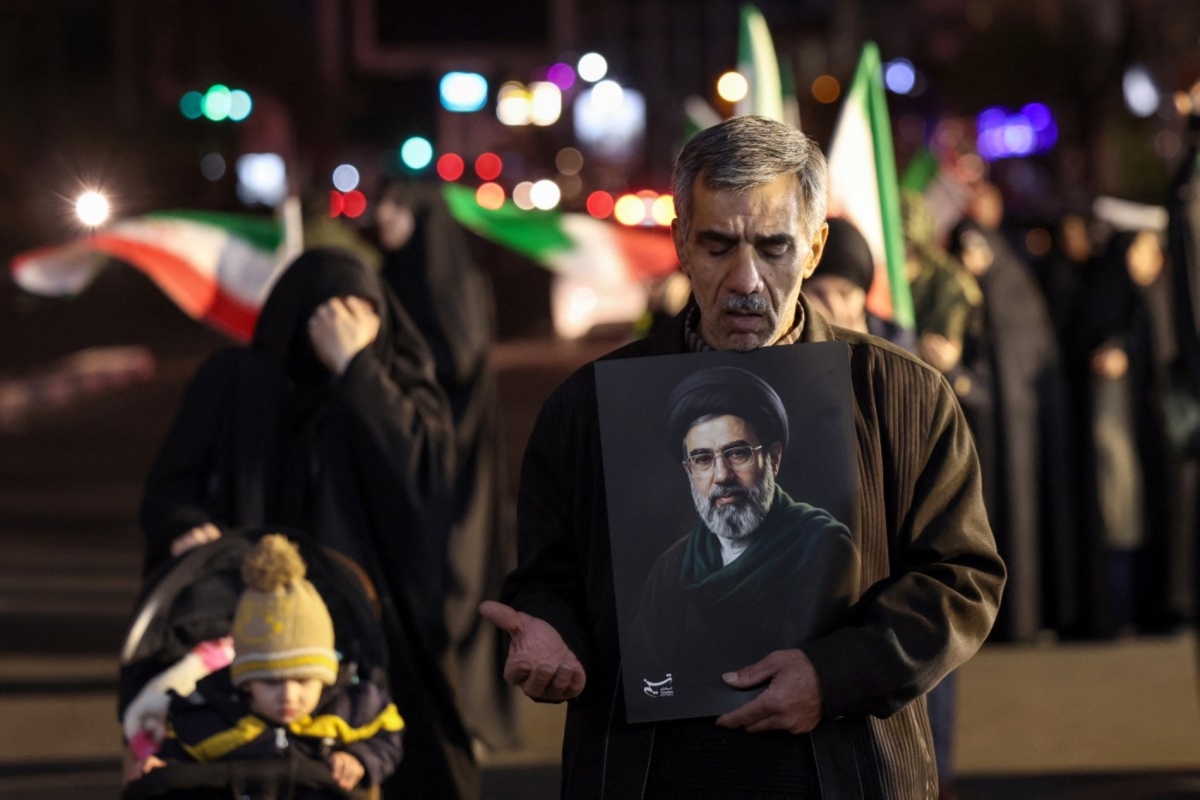
A man reacts as he holds a portrait of Iran's supreme leader Mojtaba Khamenei as people march in support of the Iranian armed forces in central Tehran on 25 March 2026.
AFP
A man reacts as he holds a portrait of Iran's supreme leader Mojtaba Khamenei as people march in support of the Iranian armed forces in central Tehran on 25 March 2026.

Iran's out-of-sight Supreme Leader fuels speculation

On 28 February 2026, the first day of the US-Israeli war, Iran’s Supreme Leader Ayatollah Ali Khamenei was killed, along with several senior military figures and members of his family. His son, Mojtaba Khamenei, 56, was wounded in the same strike that also killed Mojtaba’s mother, Mansoureh Khojasteh Bagherzadeh, his wife, Zahra Haddad Adel, and one of his sons.

On 9 March 2026, Iranian state television announced that the Assembly of Experts had chosen Mojtaba as the new Supreme Leader in a swift wartime decision taken under emergency conditions, but since the strike, Mojtaba has not been seen in public. No photos or videos of him have emerged, nor have any eyewitness accounts surfaced to confirm his survival. Western media reports about his condition range from claims of minor injuries to suggestions that he is in a coma.

In early reporting in March 2026, American sources said he had suffered a fractured foot, bruising around his left eye, and superficial facial wounds. Citing unnamed officials, they claimed that he escaped by just minutes, having left the compound shortly beforehand. Statements issued in his name were later read out by TV presenters. CNN reported that Mojtaba was hiding in a safe location, while US Defence Secretary Pete Hegseth said his injuries were likely severe.

By April 2026, the reporting took a darker turn. Israeli newspapers The Times of Israel and The Jerusalem Post said he was “unconscious” and “in critical condition,” based on a joint US-Israeli diplomatic intelligence memorandum shared with regional allies. They said he was being treated in Qom and was unable to govern. The New York Post and other US outlets repeated the claims. So, exactly who is ruling Iran?

A report in the Israeli newspaper The Jerusalem Post claims that the Revolutionary Guard is in control and that Mojtaba is just a figurehead. Unnamed sources were quoted as saying that real power had passed to old Islamic Revolutionary Guard Corps (IRGC) figures, such as Parliamentary Speaker Mohammad Bagher Ghalibaf, and to the Supreme National Security Council.

Donald Trump expressed disappointment over Mojtaba's appointment, believing that a change at the top of the power structure would make Iran more willing to make concessions, as happened in Venezuela with Delcy Rodríguez, the vice president to Nicolás Maduro.
AFP
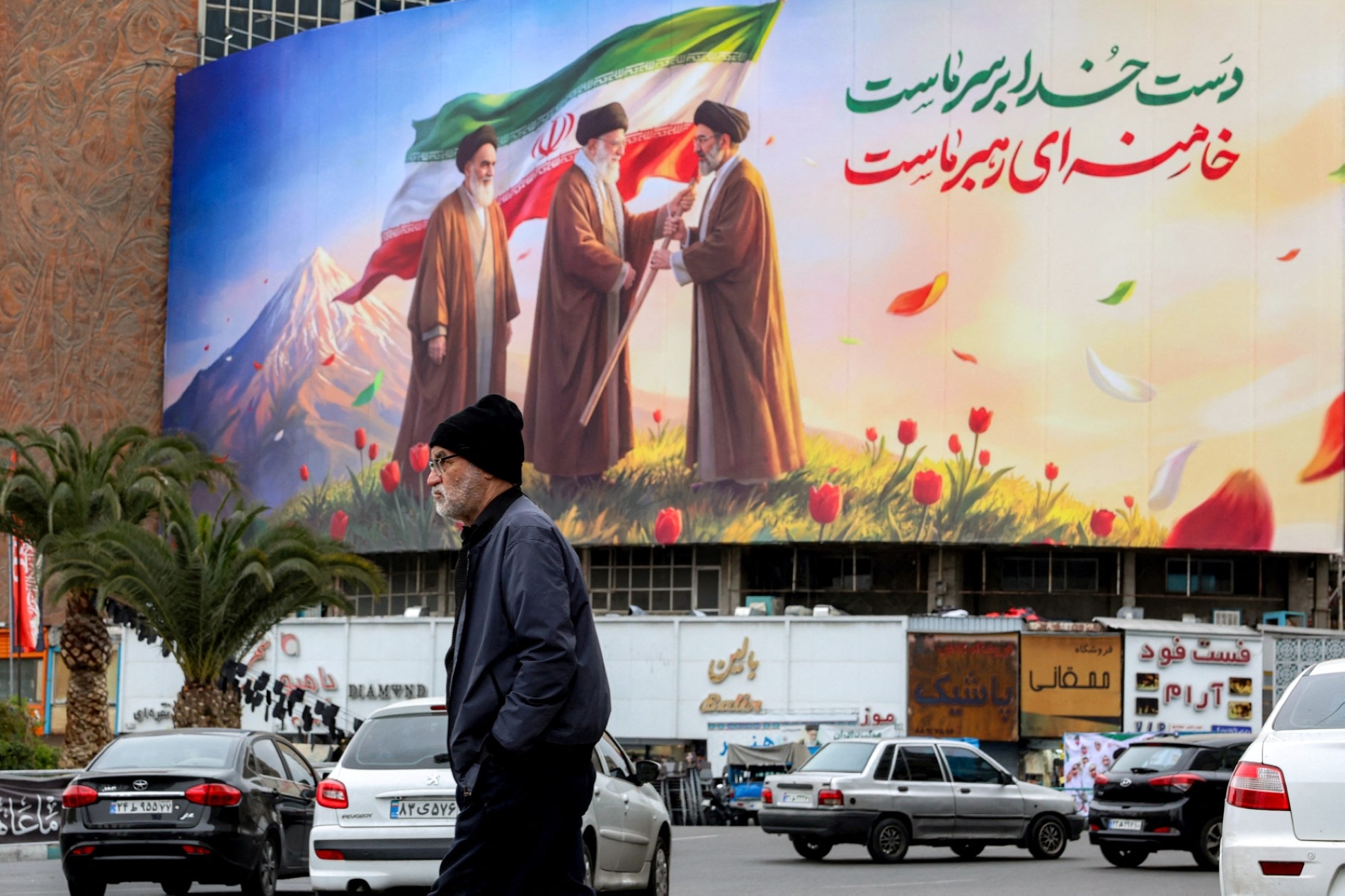
A banner depicting Iran's late supreme leader Ayatollah Ruhollah Khomeini watching as his successor, the late Ayatollah Ali Khamenei, hands over a national flag to his son Mojtaba in Tehran on 10 March, 2026.

Supreme announcement

Rumours that Mojtaba had been killed in the same attack were dispelled only after four days of official silence, with outlets reporting that he was “alive and overseeing Iran's important affairs, and providing counsel”. It wasn't until 9 March that the Iranian state media announced the Assembly of Experts had appointed Mojtaba Khamenei as the third Supreme Leader of the Islamic Republic.

The Assembly of Experts meeting coincided with US-Israeli strikes on its headquarters in Qom, where Mojtaba Khamenei's appointment was announced eight days into the war. Hossein Shariatmadari, editor-in-chief of Kayhan, the newspaper closely aligned with the Supreme Leader's office, said that Mojtaba had been "chosen by Imam al-Mahdi", the 12th Imam in Shiite belief. Obedience to Mojtaba's orders, he said, was therefore a duty, tantamount to obeying the commands of the Hidden Imam.
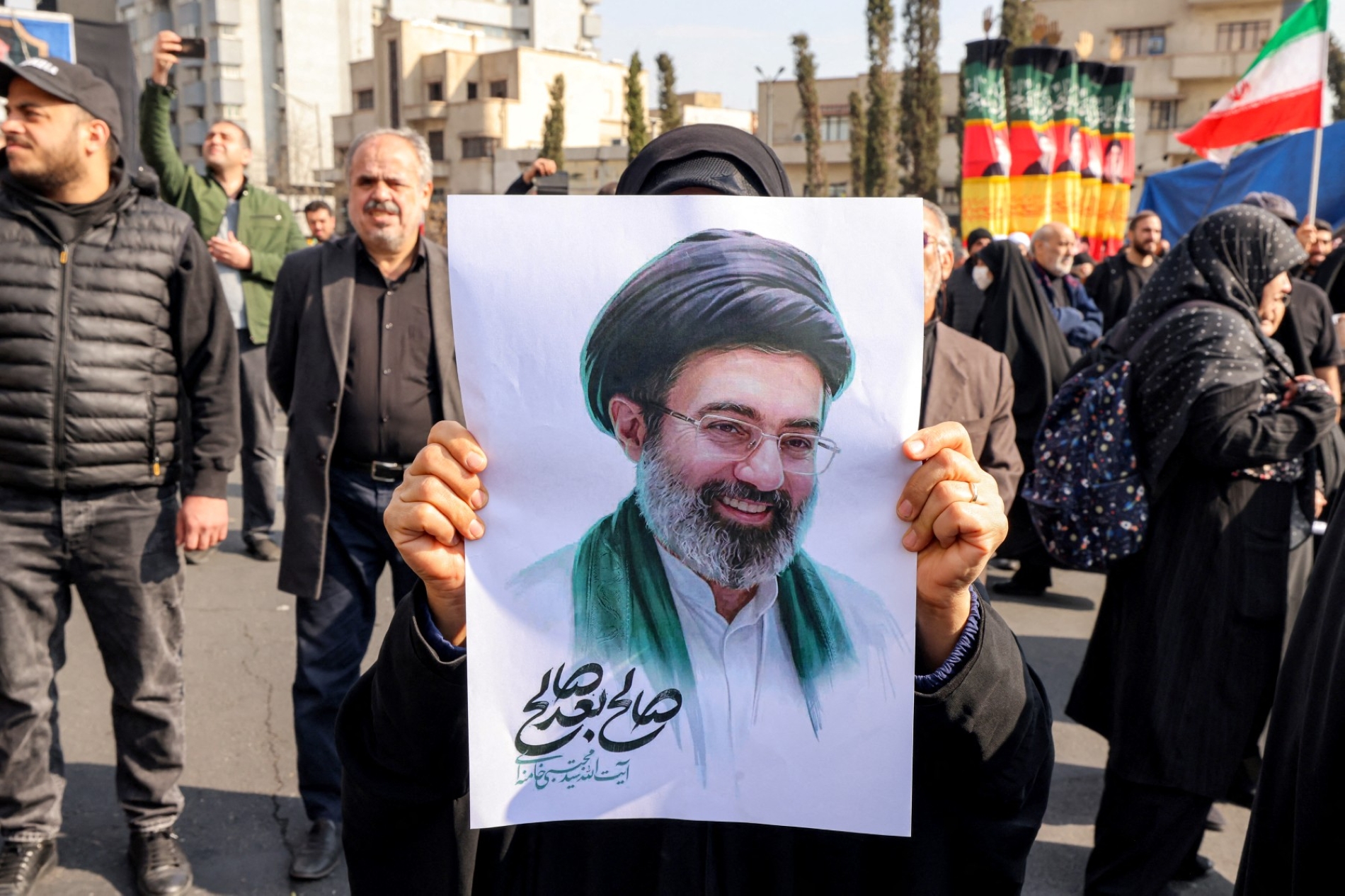
Mojtaba was selected as Supreme Leader on 9 March, but has not been seen in public since he was wounded in a US strike that killed his father, Ali

Mojtaba was not a familiar public figure in Iranian political life before the 2005 presidential election, during which the candidate Mehdi Karroubi wrote to Ali Khamenei alleging that the vote count had been manipulated in favour of the hardline candidate Mahmoud Ahmadinejad. Karroubi accused Mojtaba of interfering on Ahmadinejad's behalf, arguing that it amounted to a scandal. Ahmadinejad went on to defeat the former president Akbar Hashemi Rafsanjani.

Mojtaba's name came up again during the 2009 presidential election, which pitted Ahmadinejad against the reformist Mir-Hossein Mousavi. After Ahmadinejad won, thousands of protesters took to the streets chanting slogans against Mojtaba Khamenei, believing that he had rigged the elections and suppressed the subsequent demonstrations.

Inside Iran, official media have adopted a policy of silence on Mojtaba's health. Official outlets have limited themselves to photos and messages issued in his name. But lips are sealed regarding his whereabouts and current medical condition, a knowledge gap that is readily filled by rumour. State TV has simply said that he was "wounded in war".

ATTA KENARE / AFP
A woman poses with a picture of Iran's new Supreme Leader Ayatollah Mojtaba Khamenei during a rally in support of him at Enghelab Square in central Tehran on 9 March 2026.

Political ambiguity

Writing in Radio Farda—the Iranian branch of the US government-funded Radio Free Europe/Radio Liberty—Iranian political analyst Vahid Pourestad said: "Iran is passing through a period of profound ambiguity regarding its political leadership. The dysfunction does not stem solely from Ali Khamenei's absence, but from the fragmentation of the decision-making centre at the apex of power. Iran is at war and living through an exceptionally sensitive moment, so one would have expected the emergence of a supreme figure vested with broad strategic authority over the country's principal affairs. Yet what we see is uncertainty in precisely this regard."

Mojtaba's father, Ali, was the "absolute authority and the principal centre of decision-making in the Islamic Republic" for three decades, Pourestad said. "His absence, in a political structure where all major strategies were subject to his will and judgment, represents a structural dislocation of power. All this has coincided with war and the elimination of part of the senior military leadership. It appears that Ali Khamenei's death has scattered the very structure of authority and the centre of decision-making that had long been concentrated in his person."

Mojtaba's appointment "offers no remedy for the fragmentation among the centres of power and authority," he added. "It has only deepened the ambiguity." 

But Iranian parliamentarian Hojjat al-Islam Alireza Salimi sees things differently. In remarks to the news website Tabnak, he said that Mojtaba "will steer the country safely through this historic turning point, and that his election as Leader was sound," adding: "It sent a message that the Islamic system stands on exceptionally solid ground and is capable of rebuilding itself even under the harshest conditions."

font change