Hannah Arendt’s banality of evil has a new face in 2026

Throughout history, intellectuals have struggled to come to terms with the arrival of violence and the sudden discarding of values and morals once considered foundational

Lina Jaradat

Hannah Arendt’s banality of evil has a new face in 2026

The tragic ends of some writers and artists, viewed across time, seem less a reflection of personal fragility than a mirror of the great ruptures through which humanity has passed.

For instance, the joint suicide through poisoning of Austrian writer Stefan Zweig and his wife in 1942, as World War II waged, can only be understood as an expression of one of the darkest moments in modern history. They were living in Brazil at the time, exiled from Zweig’s country, forced to watch from afar as Europe, his “spiritual home,” sank into darkness. In his final message, he wrote: “I salute all my friends. May they live to see the dawn after this long night. I, all too impatient, go on before.”

Cultural history shows that this was no isolated event. Suicides among intellectuals and artists can often seem inseparable from their historical moment. Such a period occurred in Russia after the Bolshevik Revolution in 1917 and Stalin’s rise to power, and in Europe with the rise of fascism in the 1930s.

Lost lives

In 1939, German playwright Ernst Toller, a Jewish left-wing playwright from Bavaria, ended his life in exile in New York, watching Europe slide towards catastrophe. Walter Benjamin, a German Jewish philosopher, took his own life in 1940 on the Spanish border, overdosing on morphine in a hotel after being told he would be returned to the Nazis the next day. “In a predicament with no way out, I have no choice but to end everything,” wrote the world-renowned intellectual. “My life will end in a small village in the Pyrenees where no one knows me.”

In the Arab world, a similar pattern emerged after the 1967 war. Jordanian poet and novelist Tayseer Sboul ended his life in 1973, six years after the Arab armies’ military defeat. It had profoundly affected him and an entire generation of intellectuals raised on an Arab nationalist discourse that promised liberation and progress, rendering their cultural and political projects futile.
AFP
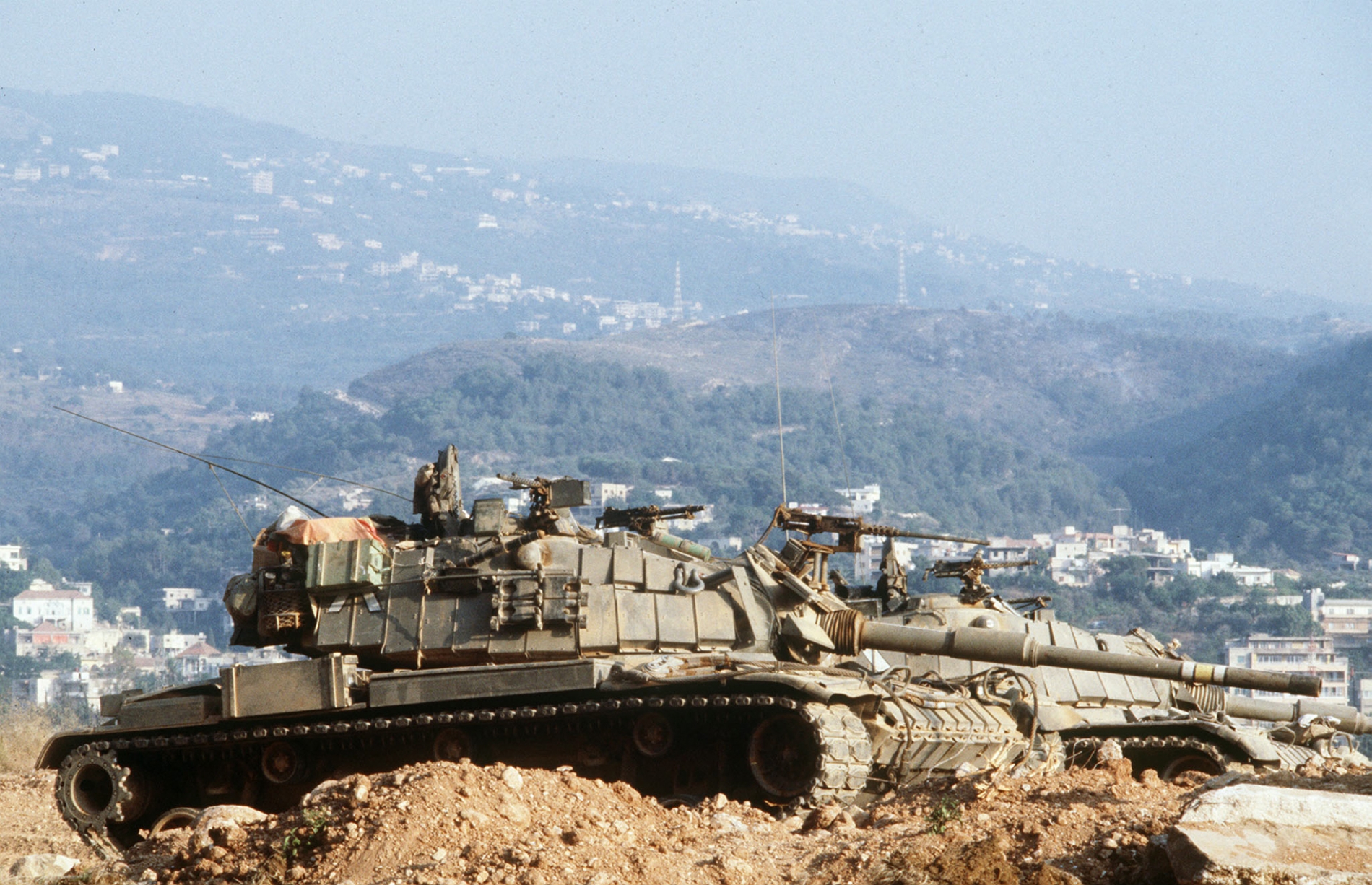
Israeli tanks surround Beirut on 21 July 1982.

In 1982, the scene was repeated in Beirut, as the Israeli army invaded the city. Lebanese poet Khalil Hawi stood on the balcony of his flat on Hamra Street, watching the end of the world for which he had fought, the collapse of his dreams. He was outraged at Lebanon’s inability to stand up for itself and at the silence of Arab states in the face of Israeli aggression. Unable to stand it, he shot himself with a rifle.

History repeating

Every suicide carries its own psychological and human complexities and cannot be reduced to a single political or historical explanation. Nevertheless, their occurrence in periods of war and crisis shows how historical shock can transform into existential helplessness, as entire moral orders and structures of value that once gave meaning begin to disintegrate. If artists and writers are more attuned to those orders, it follows that their sudden ending will have a far bigger effect.
Suicides among intellectuals and artists can often seem inseparable from their historical moment

Today's world is reproducing the collapses of the past. As millions follow the war in real time on their screens, the despair felt now can seem to be an extension of the despair that drove these creatives to end their lives following major upheavals, in which helplessness and estrangement become an almost universal collective experience, swallowing individuals, diminishing their role, and stripping them of agency.

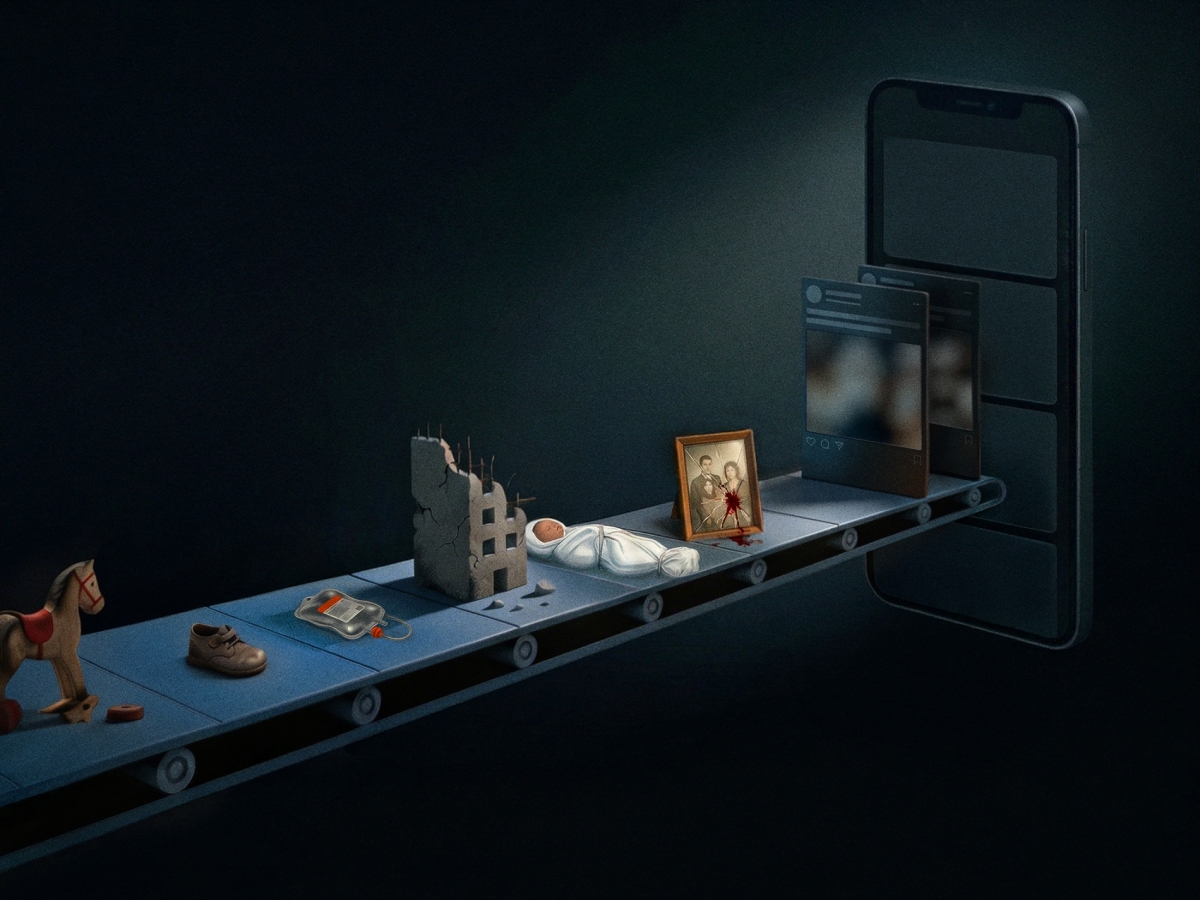
The very tools that produce helplessness today also amplify it. As technology and media transform wars into endlessly repeated visual content for instant consumption, violence enters our homes, streets, and workplaces. We can neither escape it nor cease questioning our role in a world where values collapse, and morality is deprioritised.

This level of direct exposure leaves little room for reflection or comprehension. Our helplessness extends beyond the inability to act; it stretches to the limits of understanding itself. Faced with scenes of cities disappearing and maps being redrawn over ruins, violence is organised and continuously fed into daily life, paralysing action, understanding, influence, and even feeling.

John MACDOUGALL / AFP
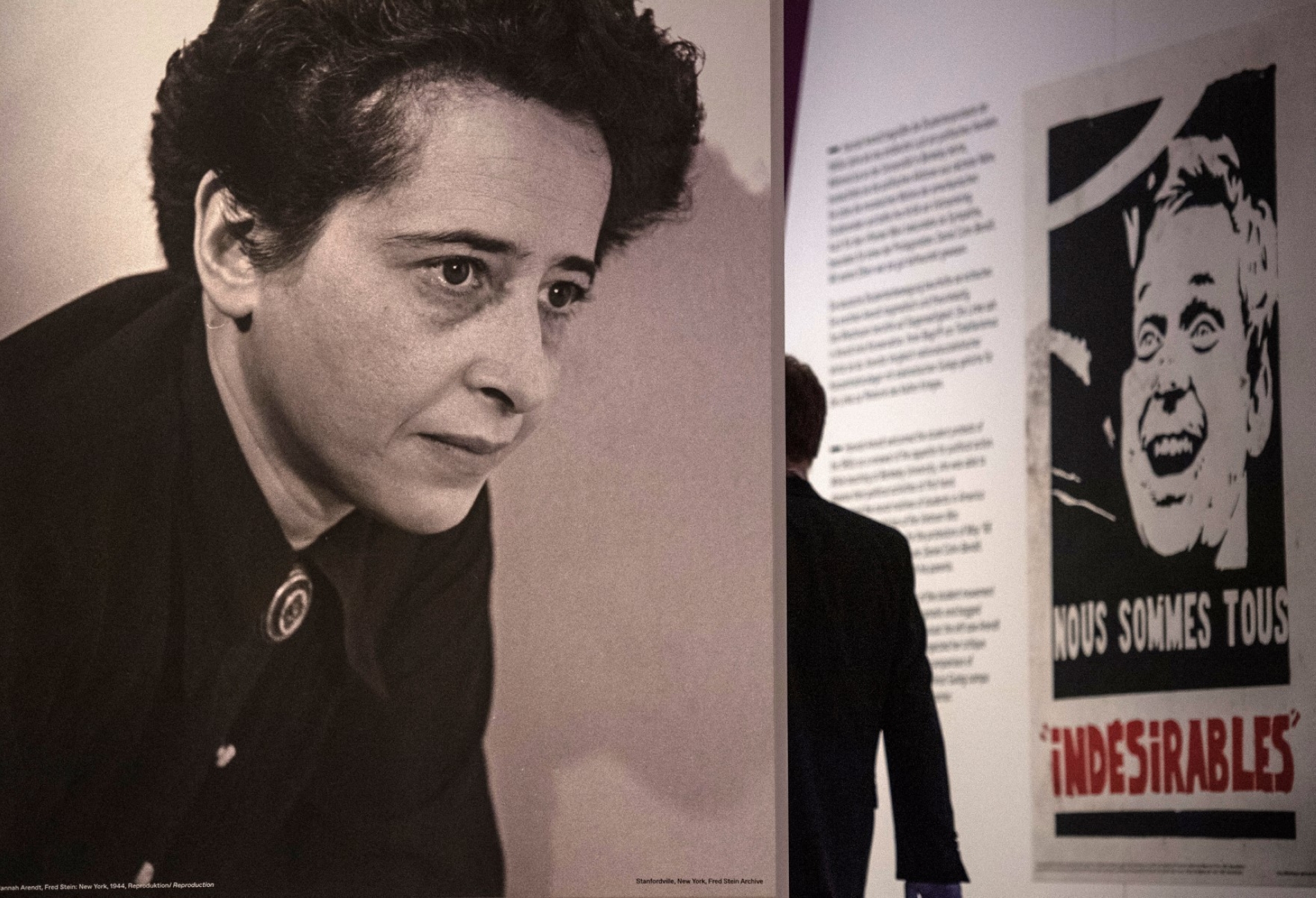
A visitor stands next to a photograph of German-American philosopher Hannah Arendt at the German Historical Museum in Berlin on 6 May 2020.

Used to violence

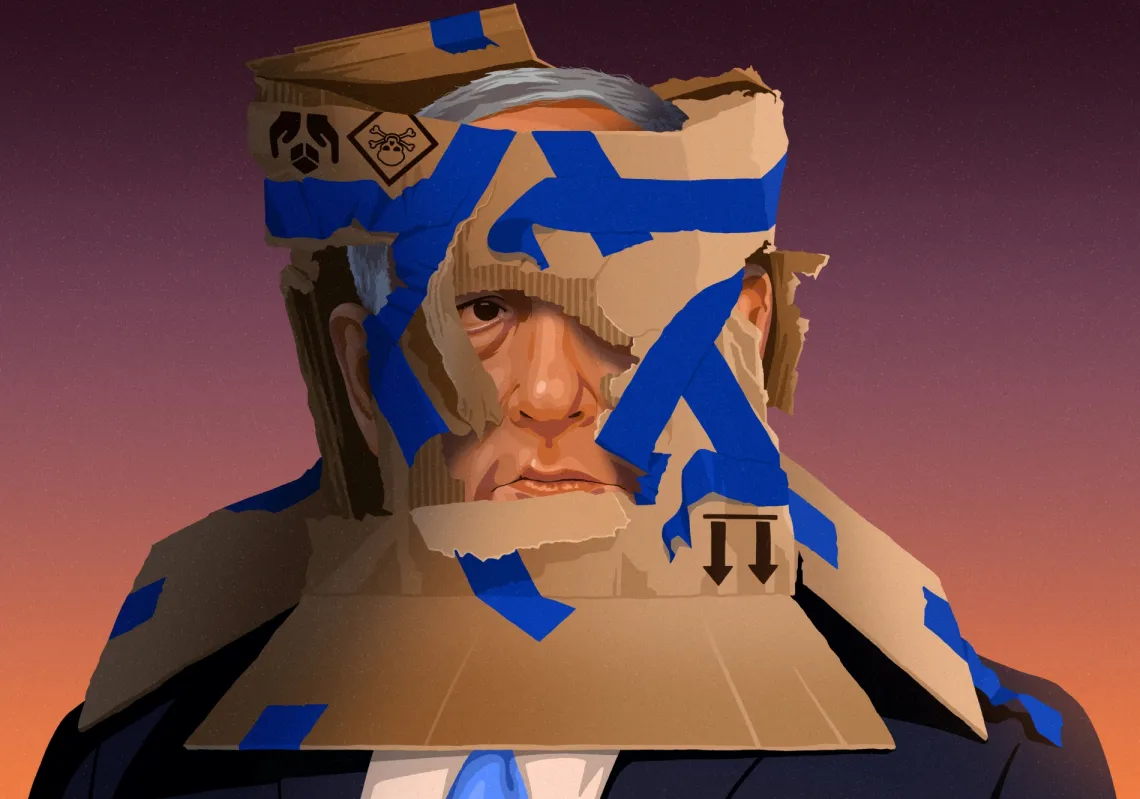
In Eichmann in Jerusalem, the German philosopher Hannah Arendt introduced the concept of the "banality of evil" to describe the systematic transformation of killing into bureaucratic routine stripped of any moral dimension. Observing Adolf Eichmann's trial, she noted that he was an ordinary man, neither inherently monstrous nor driven by particular hatred, but one who believed he was merely doing his job, showing no remorse despite the catastrophic human consequences.

In much the same way, crimes and acts of extermination are now committed against entire populations while being framed as necessary. Violence is delivered as a stream of news, recast in rational language, rapidly consumed, and endlessly shared in a digital space that reproduces tragedy as daily content.

Crimes and acts of extermination are now committed against entire populations while being framed as necessary.

As Stefan Zweig wrote: "Every generation believes its time is the most turbulent, yet history is nothing but a chain of catastrophes and tragedies." It feels as though evil has never been so banal, systematised, accessible and openly displayed—borrowing from Guy Debord—amid a glaring absence of laws originally designed to protect humanity and prevent the repetition of catastrophes.

Today's world is one that constantly violates every human dignity, at every moment. In this context, the tragic ends of writers in cultural history become more intelligible—as signs of moments when individuals experienced profound helplessness as they watched the world they knew disintegrate before them; when ordinary life, stripped of fundamental human values, became a daily burden. The very idea of a just world continues to recede until, one day, it will be no more than a thought.

font change