Between war and peace: will Iraq cross the Rubicon?
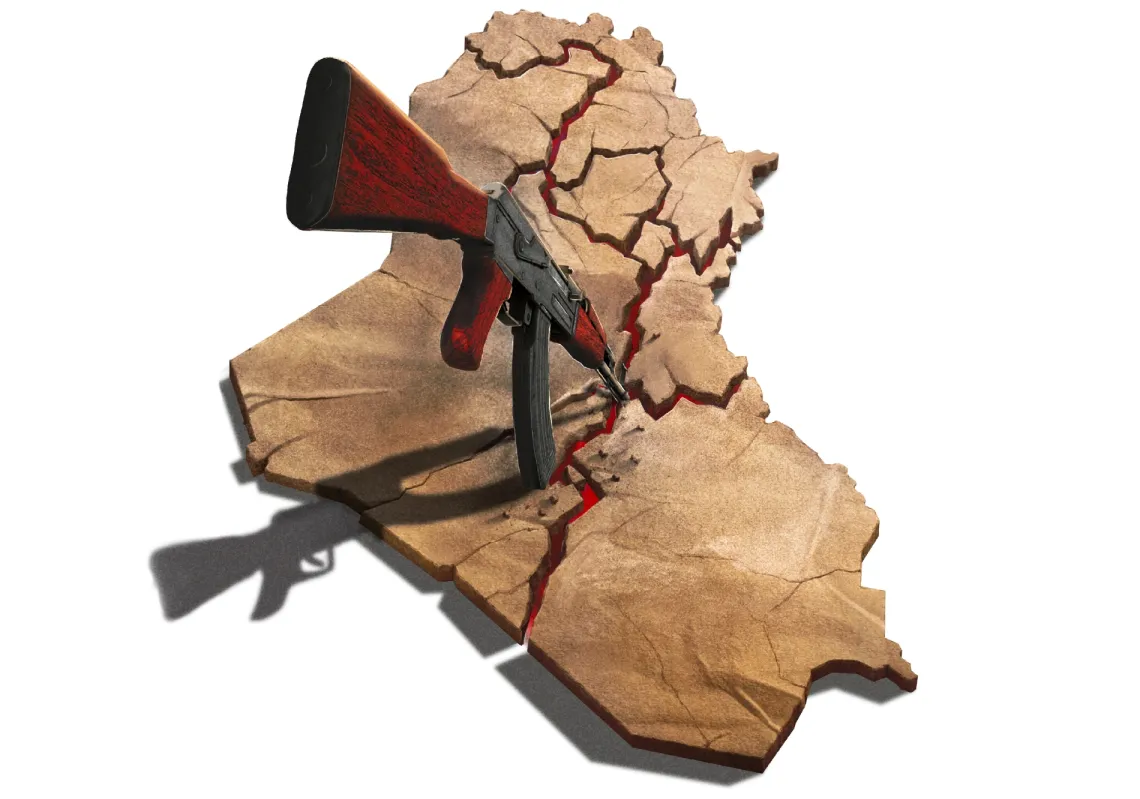
Powerful militias have usurped the state's authority by opening a war front to support Iran. At this critical juncture, Iraq needs statesmen willing to put the state first.
Gregori Saavedra
Between war and peace: will Iraq cross the Rubicon?
Since October 2023, the Middle East and North Africa have been set ablaze, with war coming to Gaza, Israel, Lebanon, Yemen, Sudan, Syria, and Iran, to name but a few. In large part, Iraqis felt that they had been dodging bullets, miraculously emerging mainly unscathed amidst the mayhem. In recent weeks, however, that has changed.
Before the outbreak of the US-Israeli war against Iran on 28 February, Mohammed Shia’ al-Sudani’s outgoing government (now serving in a caretaker capacity) had even boasted of keeping Iraq away from the conflict. No longer. Even oil- and gas-rich Gulf states such as Saudi Arabia, the United Arab Emirates, Bahrain, Kuwait, Qatar and Oman have been attacked, despite some serving as mediators.
Iraq finds itself caught between war and peace. Today, it is increasingly becoming a battlefield for the warring parties, with Iran’s focus trained on getting rid of American presence in Iraq, while the US and Israel want to degrade the Iran-aligned Popular Mobilisation Forces (PMF), a powerful militia, who recently joined the war as a support front for Iran, targeting foreign diplomatic missions in Baghdad and the Kurdistan Region, as well as government institutions and oil facilities.
Inviting attack
In Baghdad, where warplanes are repeatedly heard flying overhead, the government is limiting itself to statements of condemnation, denouncing attacks from all sides. Al-Sudani rejects any attempt to usurp the state’s decision to declare war, but war seems to be approaching. Explosions are sometimes heard (the city has no air-raid warning sirens, other than over the diplomatic Green Zone). Some incidents are announced publicly, others are not, even when the targets are residential areas.
The airstrikes are either carried out by US forces targeting specific places or people, or armed Iraqi factions. The latter claim responsibility in statements issued by names such as the Islamic Resistance Coordination Committee in Iraq, Awliya Al-Dam, or Ashab Al-Kahf. The Kurdistan Region of Iraq has been attacked by drones launched by armed Iraqi factions and by missiles or drones from Iran. Targets are not limited to areas hosting US military forces or the US consulate in Erbil. They now extend to other facilities, including hotels and residential compounds.
Armed groups in Iraq once used the justification of confronting the American military presence in the country. They now see their role primarily as helping to defend Iran, its ruling system, and its battle against the United States and Israel. This makes them part of the wider struggle for influence in the Middle East.
Iraqi politicians seem to be in a state of denial that the PMF's allegiance isn't to Iraq but to a cause that transcends the state
Iran-backed militias
The PMF has close links to the Iraqi state and its armed forces, although they are separate entities. From the first day of the US-Israeli war against Iran, PMF headquarters were attacked. Neither the US nor Israel officially claimed responsibility, but an aircraft that was filmed doing so was identified as an A-10 Thunderbolt, developed for the US Air Force.
A spokesperson for the US State Department said: "Any claims that the US targeted Iraqi security forces are categorically false and inconsistent with the US-Iraq partnership." The inference is that the Americans do not recognise the PMF as part of Iraq's official military establishment.
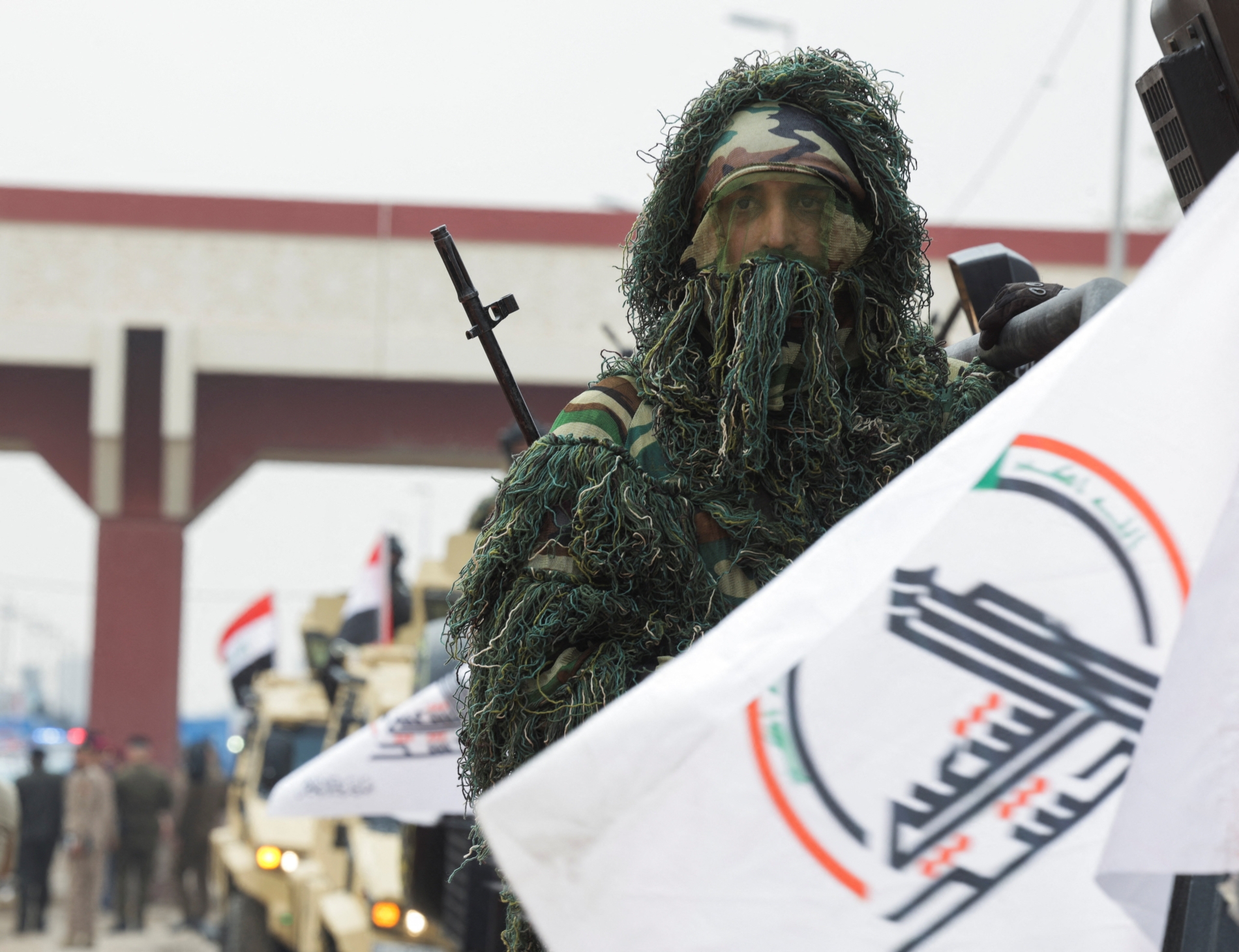
A member of the Popular Mobilisation Forces (PMF) rides in a military vehicle next to a flag during a parade marking the eighth anniversary of defeating Islamic State militants, in Baghdad, Iraq, on 10 December 2025.
Iraq's politicians appear to be in a state of denial over the longstanding ambiguity surrounding the PMF, and the fact that this is no longer acceptable, even though armed factions openly declare that the time has come to enter the battle, and that their allegiance is to a cause that transcends the state and its borders and does not recognise the concept of sovereignty. All the while, the government continues to insist that arms must remain in the hands of the state alone—and that the state alone has the authority to decide when to go to war.
Iraqi militias reject any discussion of disarmament, insisting that their weapons exist for protection against both internal and external threats. They have become deeply embedded within the political order without acknowledging that the American conditions leave no room for any armed non-state actors in Iraq. This has led to a murky situation where weapons have neither remained under lock and key nor been handed over for exclusive use by state bodies.
This has left some exasperated. Just as many feel that Iraq urgently needs functioning state systems and a reaffirmation of its role in managing regional dynamics, the ruling class has been accused of undermining state sovereignty. The reason lies in the pathology of political bargaining and power-sharing deals.
Playing politics
Iraq is currently ruled by a caretaker government and a parliament awaiting instructions, but key politicians have still not agreed on either a president or a prime minister. Meanwhile, the war next door is having an undeniable impact.
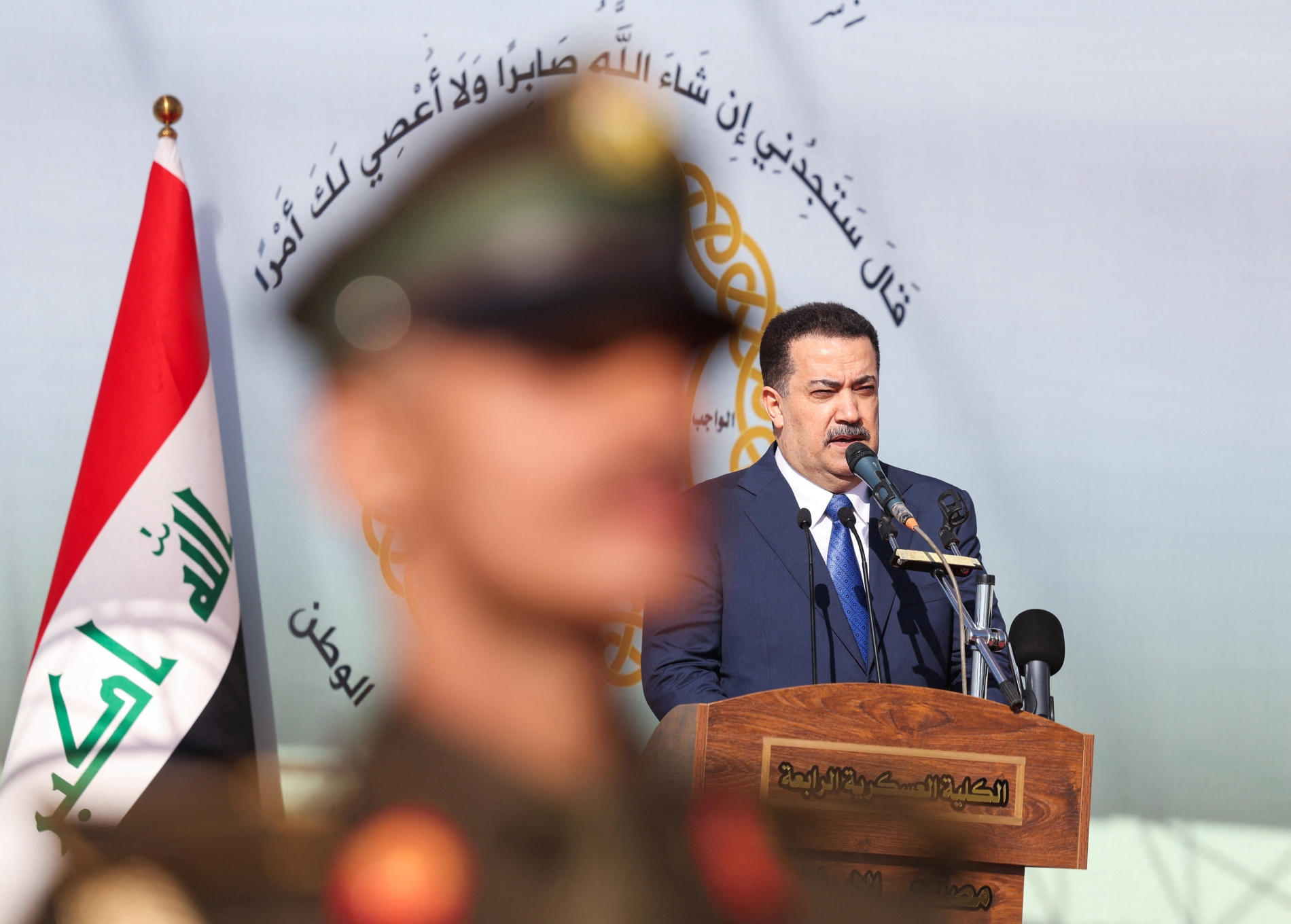
Iraq's Prime Minister Mohammed Shia al-Sudani delivers a speech to mark the 105th anniversary of the founding of the Iraqi army at the First Military College in Baghdad, on 6 January 2026.
For its part, Al-Sudani's outgoing government has been accused of politicking, keeping Iraq trapped between war and peace. It could have confronted armed parties seeking to seize Iraq's sovereign decision-making powers over war, but critics accuse it of weighing that choice against its desire for a second term. This kind of opportunistic pragmatism has turned Iraqi politicians into mere spectators.
Many Iraqi political actors once operated under the Iranian umbrella. As such, they may not want to accelerate the formation of a new government keen on implementing American conditions, not least the cutting of ties to Iran, including ending its influence in Iraq.
In a sense, Iraq resembles Janus, the Roman god with one head and two faces. On one side, there is the official state; on the other, armed groups. It results in multiple centres of decision-making. President of the Supreme Judicial Council Faiq Zaidan likened it to the confiscation of the state's authority over war and peace.
The dangers of this current moment will become clearer after the war ends. Iraq wants to strengthen political and economic relations with its neighbours, but will they trust it? Those seeking to form a new government are led by the same political actors who sat and watched the US and Israel wage war on Iran from the sidelines.
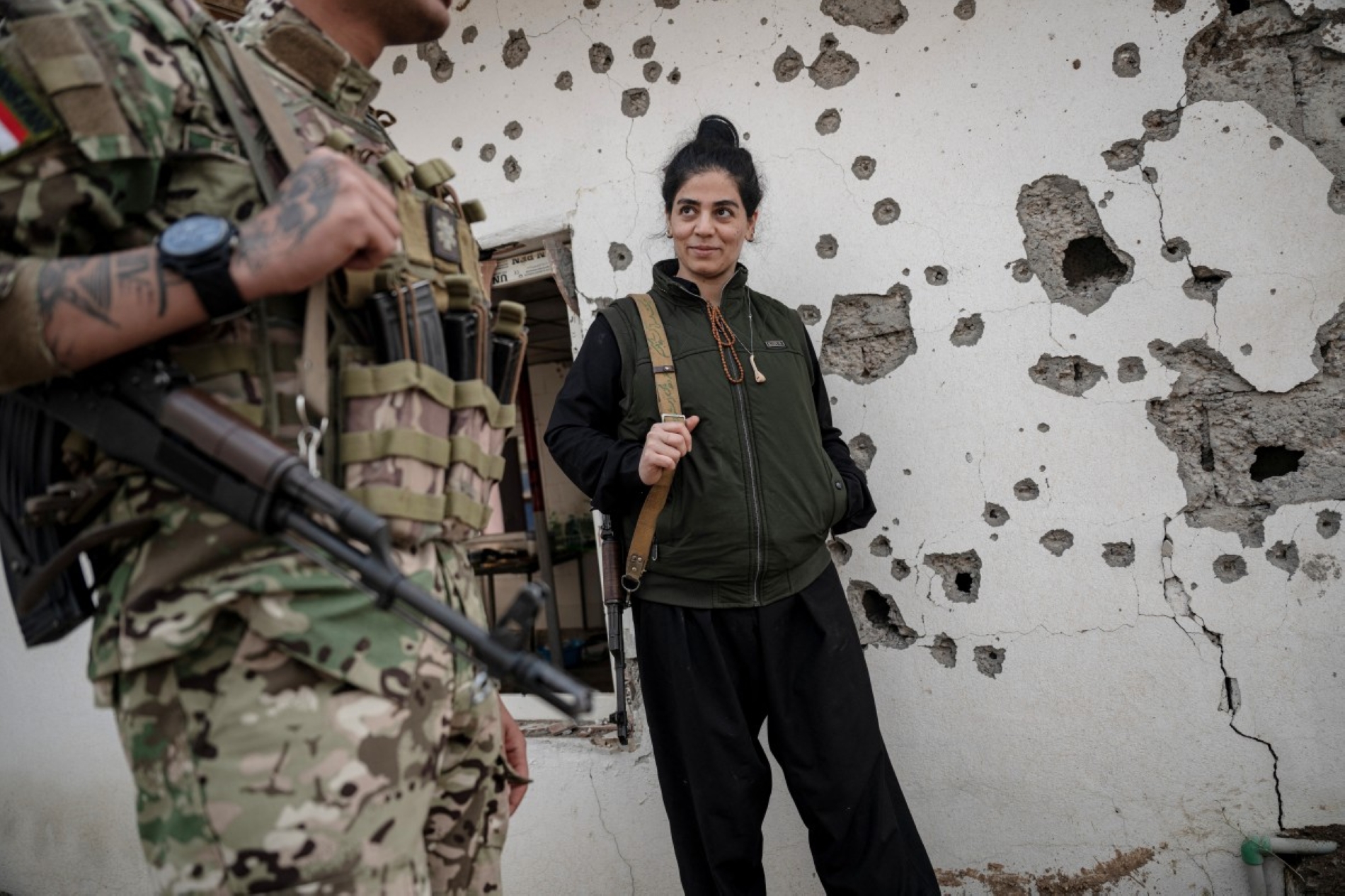
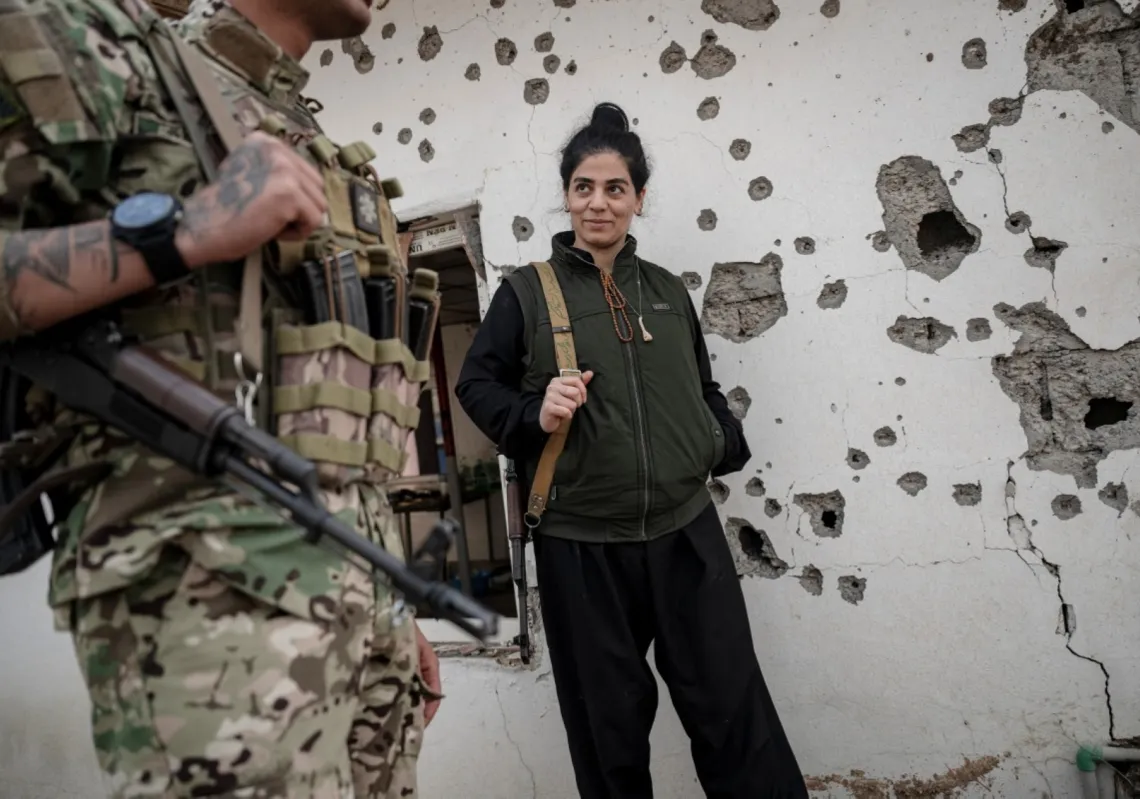
A member of The Organisation of Iranian Kurdistan Struggle stands in front of a shrapnel-scarred wall of a damaged building, following an Iranian drone attack on their base near Erbil on 9 March 2026.
Kurdish considerations
Iraq's Kurds, centred in the Kurdistan Region in the country's north, have been attacked by both Iranian missiles and drones and by armed factions inside Iraq. Kurdish politicians say they maintain good relations with Iran but are accused of conspiring with Israel and the United States against it.
Iraqi Kurdistan has become a safe haven for Kurds from Türkiye, Iran, and Syria, but Iran sees it as a 'soft flank' through which the US can arm Kurdish fighters. And rightly so, given that some groups have announced the formation of an alliance to overthrow the Iranian regime.
For their part, Kurdish party leaders in Erbil and Sulaymaniyah say they will not become party to the war. They understand that openly siding with the US against Iran would make Kurdistan a target. They have sought to strike a balance in their relations with both sides and have not shown enthusiasm for a proposed American plan to open Iran's north-western front through areas where Iranian Kurdish forces are present.
Equally, history shows the Kurds that the Americans are not reliable partners. Therefore, the leaders of Iraqi Kurdistan appear willing to absorb blows—at least for now—believing that fighting back would invite Iran to unleash its full wrath on Erbil, Duhok and Sulaymaniyah.
Preparing for tomorrow
Iranian commanders once boasted of controlling four Arab capitals through their development of armed proxies such as Hezbollah in Lebanon. If it survives this war, the Iranian regime looks set to spend a long time licking its wounds, preserving the gains of the 1979 revolution that produced the Islamic Republic while temporarily halting the export of that revolution, which it has championed for 47 years.
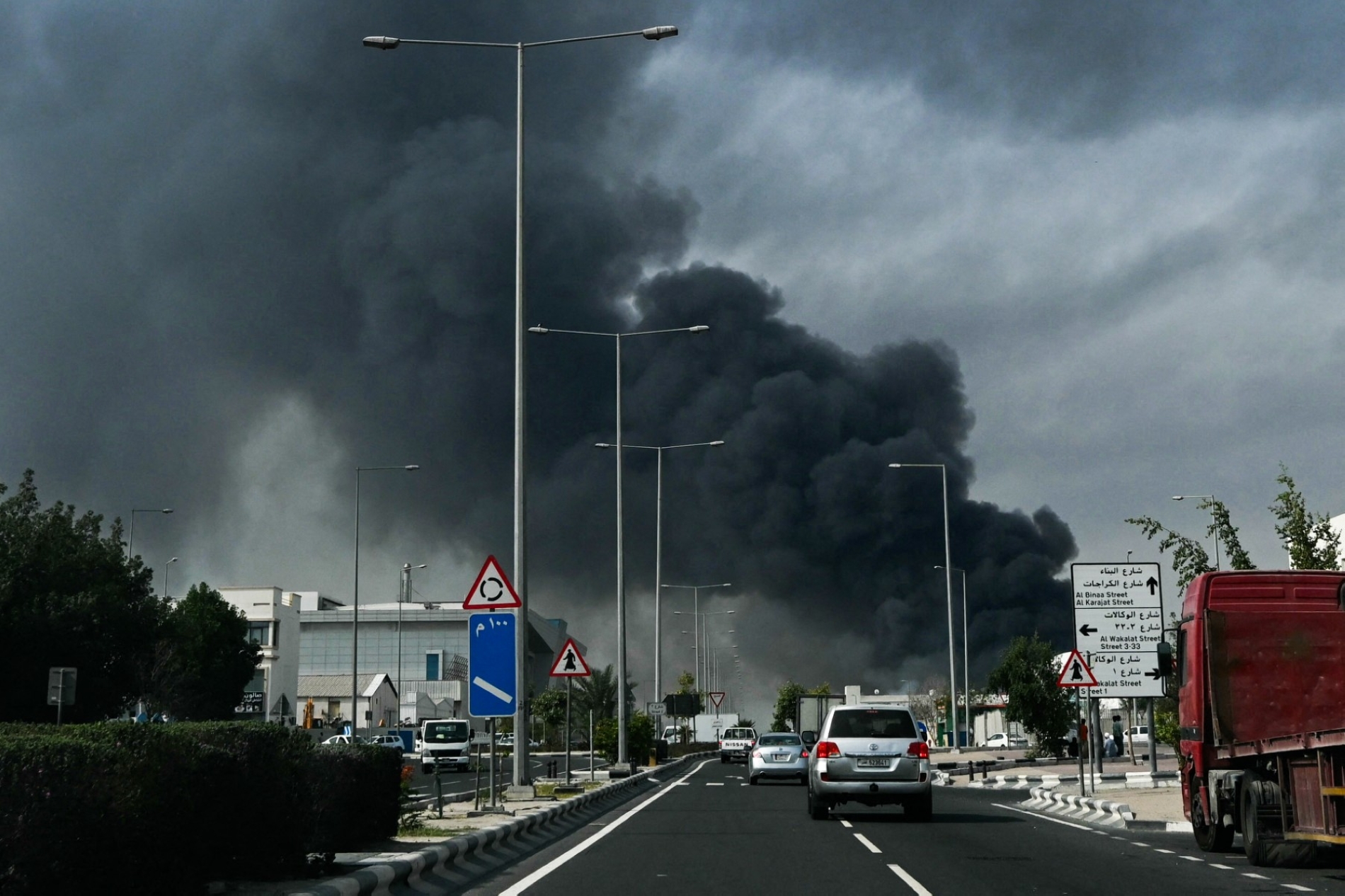
Motorists drive past a plume of smoke rising from a reported Iranian strike in the industrial district of Doha on 1 March 2026.
However, Western sanctions are likely to remain in place, and Iran's neighbours in the Gulf won't forget how Tehran targeted them in recent weeks, including their vital economic infrastructure. US President Donald Trump is now threatening to do the same to Iran's own civilian infrastructure, including its power and water desalination plants. Depending on talks being held by the regime's leadership, Iran may decide to 'go down fighting'.
Currently, most regional states are seeking creative ways to avoid being drawn into the war. However, most agree that it is a war that will reshape the Middle East, whose new contours are being outlined by military and intelligence power. If Iraqi politicians hope to extend relations after the war is over, they will know that the Gulf states (with whom they hoped to do so) have explicitly rejected attacks from Iran-aligned armed factions in Iraq that targeted their facilities and infrastructure, describing them as aggression.
Recent weeks have revealed Baghdad's impotence and inability to preserve the gains made in previous years. It has also shown that Iraqi partnership agreements built through diplomacy will remain fragile so long as armed non-state actors continue to usurp the government's war powers.
To many, Iraq must grasp the nettle and restore the state's standing and those of its institutions before reaching out to its Arab neighbours, once the dust has settled. This will undoubtedly be difficult, but not impossible. Iraq needs statesmen willing to put the state first. Whether such people exist is another matter.