For Iraq, this is a strange moment both politically and militarily. The state of Iraq has proximity to—but no direct connection to—the fierce battle raging between Iran on one side and Israel and the United States on the other, with Gulf states becoming Iranian targets as a result.
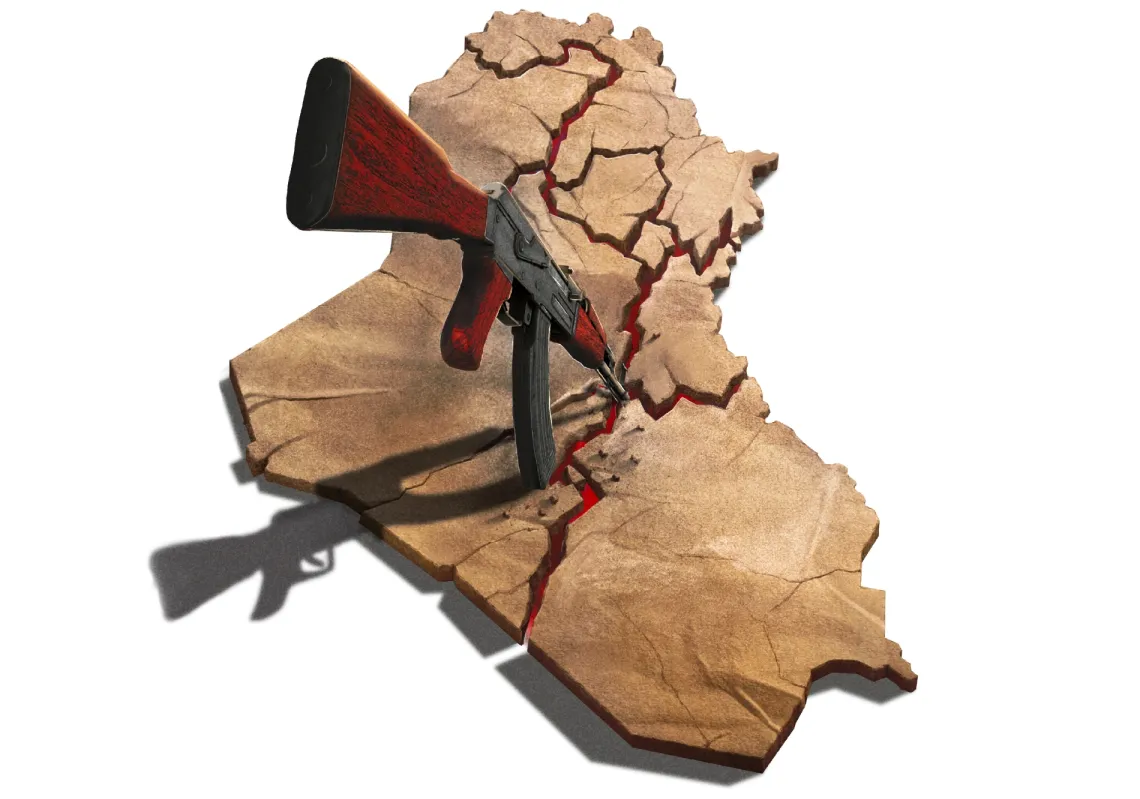
That is the state of Iraq. For the pro-Iran armed factions of Iraq, it is a different story. They are attacking groups and sites, often within Iraq itself, essentially opening up a new war front. The aim of their attacks is both to shape the course and outcome of the war against Iran and to determine Iraq’s future political order.
For their part, government officials say that Iraq is in no way participating in the war. But here is where it gets complicated: Some of the armed groups now fighting form part of Iraq’s state defence apparatus. The Iraqi army, the Kurdish Peshmerga forces, the Popular Mobilisation Forces (PMF), and the intelligence service (whose headquarters were recently targeted) all fall within Iraq’s lawful military structure. Armed factions aligned with the PMF, such as Kataeb al Nujaba and Iraq’s Hezbollah, therefore enjoy security protection from the PMF, as well as political cover from the government.
During the first two weeks of the war that began on 28 February, 300 attacks were recorded across the Kurdistan Region. They targeted civilian institutions, sites belonging to Iranian Kurdish parties, Peshmerga positions, and diplomatic missions in the region, particularly European, American and Gulf. At the time of writing, the number of attacks in Iraq had risen to more than 1,000.
The US embassy in Baghdad, a US logistics base at Camp Victory near the city’s International Airport, US military bases, and Italian and French bases in the Kurdistan Region have been attacked by rockets and drones dozens of times. The headquarters of Iraqi intelligence in the heart of Baghdad was hit by a drone strike on 21 March, killing one agency officer. Like these and many of the other airstrikes, it went virtually unanswered by the Iraqi government.
Observers say the targets in these attacks show what has long remained concealed within Iraq’s political and public life, namely that since the Islamic State (IS) group was defeated in Iraq in 2017: two divergent forces have existed within the country, locked in perpetual rivalry. One is Iranian power and influence; the other is the US and, by extension, the Kurdistan Region in Iraq’s north. Both need to be understood.
Iraqis allied to Iran are extremely anxious about their political and security future if Tehran were to fall, so they are acting pre-emptively.
Iraqi researcher Jabbar al-Mashhadani
Battle for influence
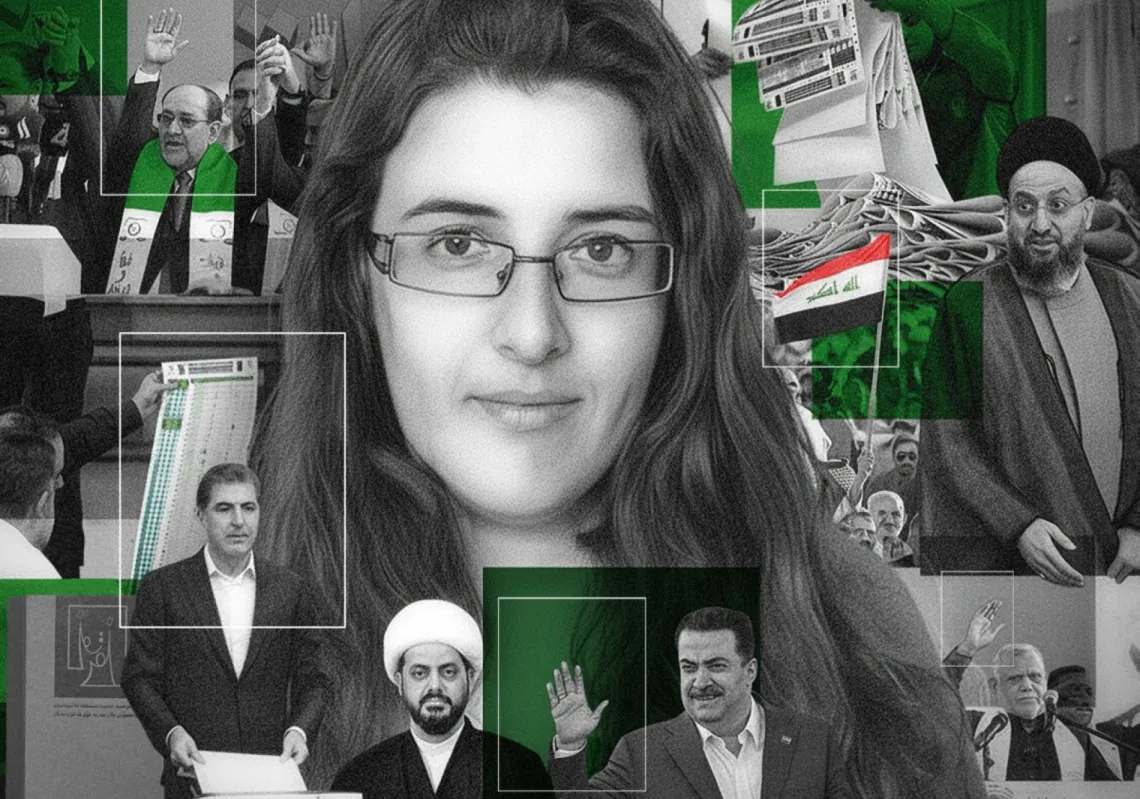
First, Iran. Those who look to Tehran for direction have relied politically on the constellation of Iraq's Shiite parties, gathered under the umbrella of the Coordination Framework. In terms of security, it has looked to the factions of the PMF, alongside what are known as the Iraqi 'resistance' factions. For years, Iran has sought to dominate and control Iraqi affairs, but has been met with opposition from American and Kurdish forces, and from certain Iraqi state military and intelligence institutions.
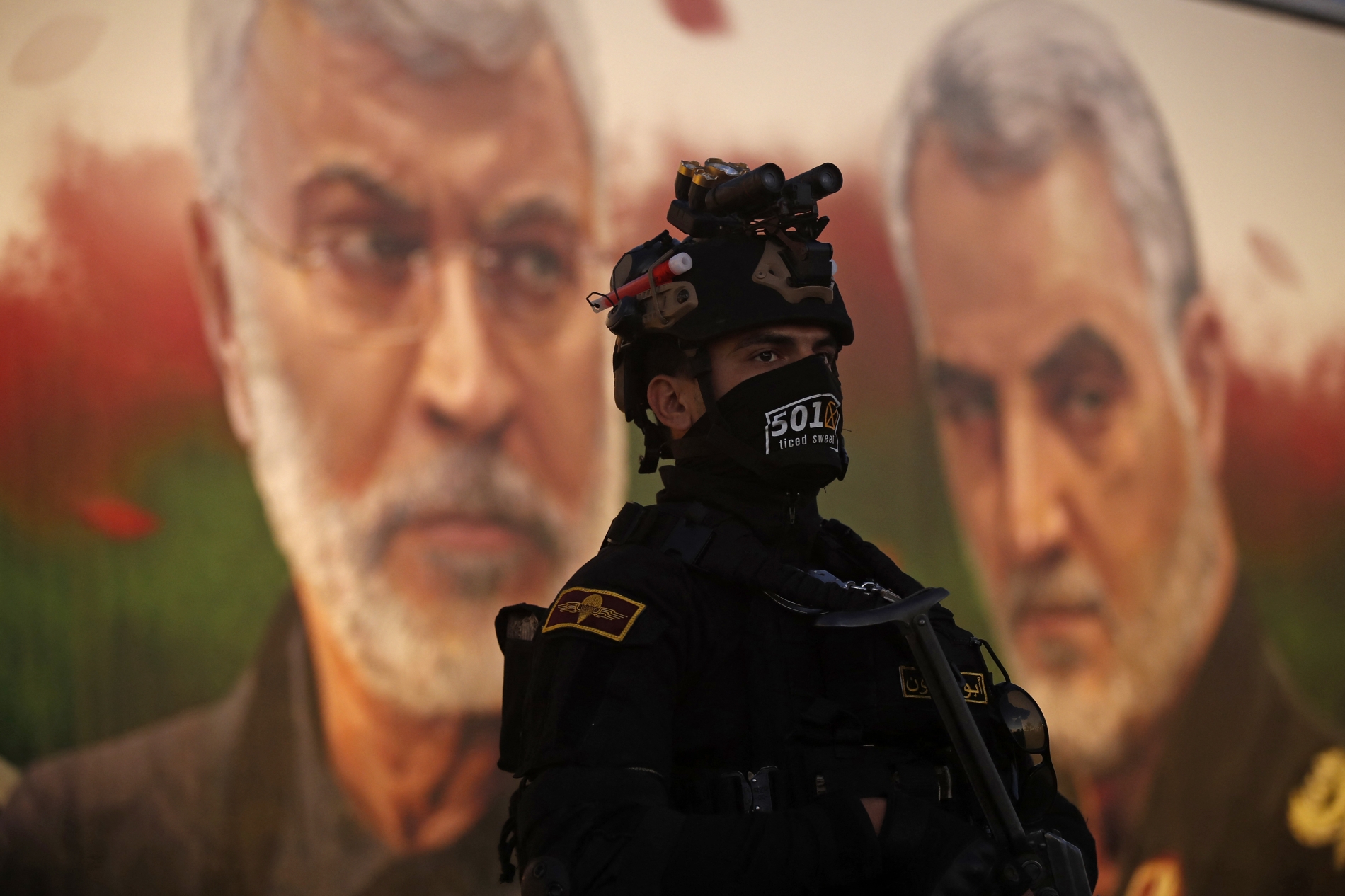
This dynamic has produced an ongoing battle for influence. In early 2020, those who backed Iran pushed through a parliamentary law requiring the government to end all forms of foreign military presence in the country after a US drone strike killed Iranian commanders Qasem Soleimani and Abu Mahdi al Muhandis near Baghdad airport.
A member of Iraq's PMF stands in front of a banner depicting slain Iraqi commander Abu Mahdi al-Muhandis (L) and IRGC commander Qasem Soleimani, on Jan 2, 2023, at a ceremony marking the anniversary of their assassination.
Pressure continued to build until an agreement in July 2021 providing for the gradual withdrawal of American forces from Iraq. The relationship has been far from easy. The US has applied immense economic and political pressure on Iraqi institutions to push back against Iranian influence by repeatedly threatening to cut off Iraq's oil revenues, which pass through the US.
Soon after, the semi-autonomous Kurdistan Region came into focus. Iraqi parliamentarians, many of whom are allied with Tehran, passed laws depriving Kurdistan of financing and subjected it to centralising measures. It was denied some of its allocation from the federal budget (preventing it from paying public-sector salaries), and none of the laws agreed by Kurdish parties with successive Iraqi governments (most notably concerning oil and gas) was passed. Several constitutional issues, including those relating to the arming of the Peshmerga, were suspended.
The Kurdistan Region's military headquarters were attacked, as were its civilian facilities and energy stations. Despite the pressure, Kurdish leaders gave no political concessions and maintained a clear margin of independence from Iranian influence. But while Iran sees the Kurds as adversaries, it refrained from a direct assault, for fear of a US response.
Iran's Iraqi allies view certain Iraqi state institutions as impediments to their role and checks on their ambitions, so they have intervened repeatedly in the formation of successive Iraqi governments. In 2020, matters came to a head when the Tripartite Alliance tried to form a government, with several names proposed for the offices of president, speaker and prime minister being pushed aside.
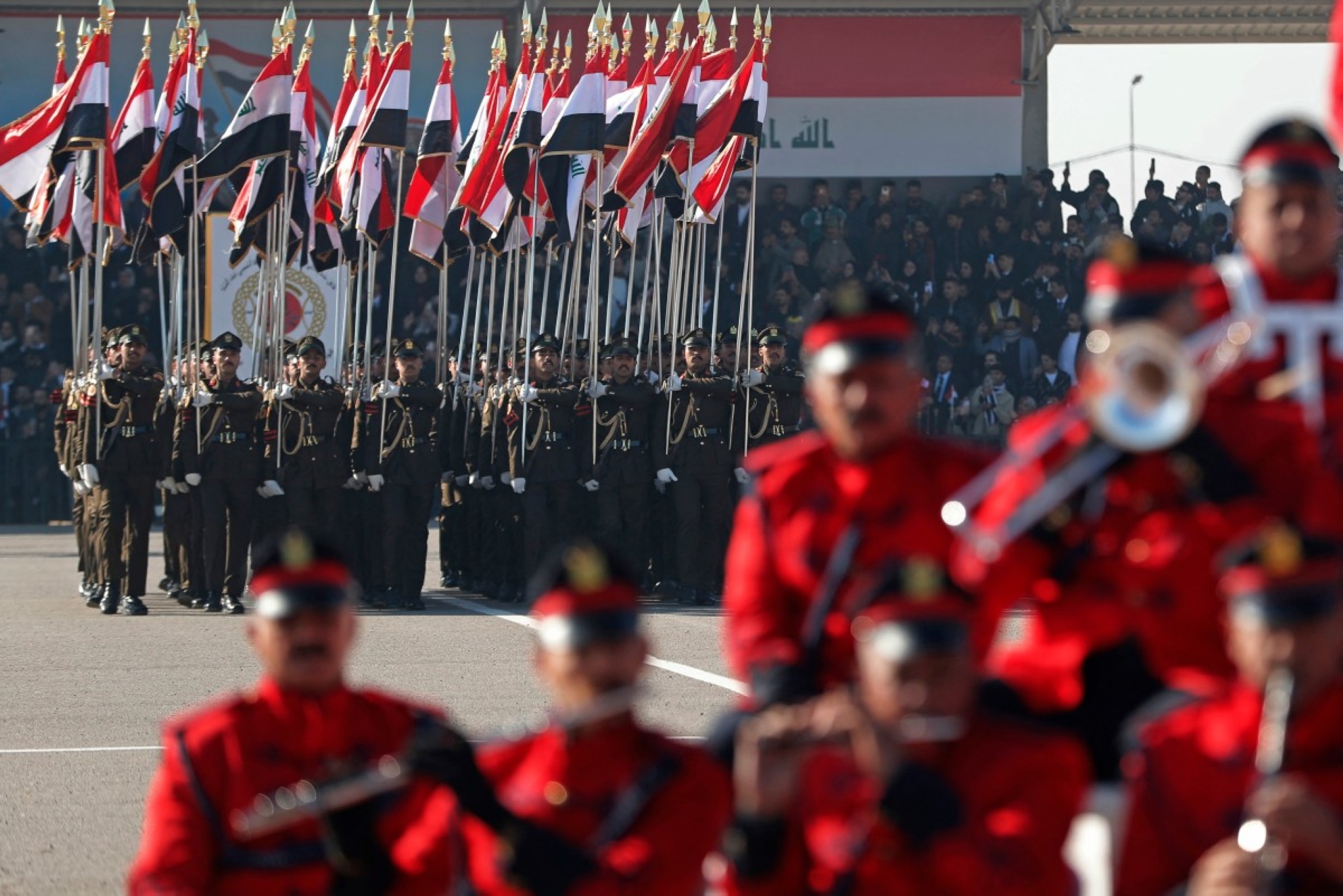
Newly graduated Iraqi army officers march in a military parade during the Army Day celebrations, marking the 105th anniversary of the founding of Iraqi army, at Military College in Baghdad on 6 January 2026.
Eye on the army
Iraq's military is among the most fought-over state institutions, given that it alone has the capacity to restrain and dismantle armed militias tied to Iran. So far, it has shied away from doing so, but recent attacks linked to the war in Iran may change things.
Speaking to Al Majalla, Iraqi researcher Jabbar al-Mashhadani describes the current situation as an "eruption of Iraq's previously cold wars". He presents it as a pre-emptive struggle over Iraq's future, both politically and militarily.
"For nearly a full quarter of a century, Iraq has lived with two kinds of political dynamics for producing power," al-Mashhadani says. "One was legitimate, operating through the mechanisms of authority and the state institutions formed after 2003. Alongside it, however, and often with greater force, stood actors whose influence, power and presence surpassed those institutions, such as the United States, Iran, and the will of the political parties that created this political order itself."
The US and Iran could dominate Iraq in the years after Saddam Hussein and the American invasion, but the two were at odds and could not coexist; neither was able to defeat the other, resulting in "many zero-sum confrontations," al-Mashhadani says.
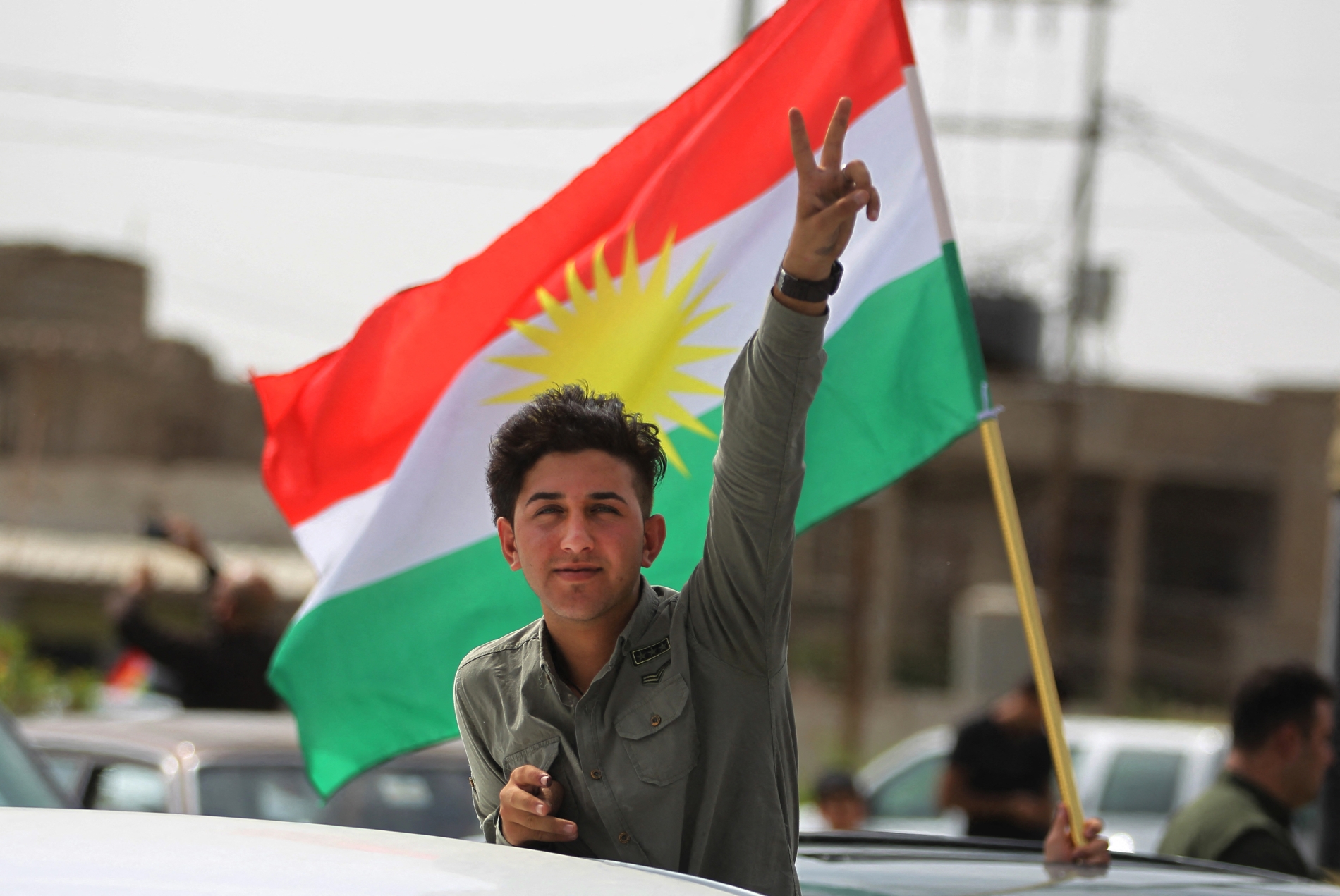
An Iraqi Kurdish youth flashes the victory gesture in front of a Kurdish flag amid celebrations in the city of Kirkuk in northern Iraq, on 25 September 2017, as Iraqi Kurds vote in a referendum on independence.
"The civil war of 2007-08, the confrontation with IS from 2014-17, the Kurdistan Region's bid for independence in 2017, US President Donald Trump's first-term attempt to roll back Iranian influence, the October protest movement, and the targeting of Prime Minister Mustafa Al-Kadhimi's home...all were manifestations of the same dynamic, and their collective failure to produce a decisive outcome confirmed the old impasse born of the convergence of two impossibilities."
"Iraqis allied to Iran are now extremely anxious about their political and security future if Tehran were to fall," al-Mashhadani explains. "For that reason, they are seeking a pre-emptive blow that may preserve something of their political future."
"For their part, the official Iraqi government, the Kurdistan Region, and the US are all avoiding a direct clash for now because they believe time is on their side," al-Mashhadani concludes.