
In a wide-ranging conversation with Al Majalla, Palestinian Foreign Minister Varsen Aghabekian Shahin gave a measured yet unwavering assessment of where the Palestinian cause stands—and where it must go. She argues that Israel's conduct since the 1993 Oslo Accords has not only strained the peace process, but systematically dismantled it through deliberate and sustained unilateral action.
Oslo itself, she insists, wasn't the problem, but rather Israel's lack of compliance. Every demographic shift, every settlement expansion, every legal manoeuvre in the occupied West Bank was, in her view, part of a long-running effort to render Palestinian statehood physically and legally impossible. The October 7 attacks and the war in Gaza did not create this reality, but exposed how far it had already progressed.
Yet the minister resists the language of defeat. The recognition of Palestinian statehood by 160 countries is, she argues, an irreversible diplomatic fact—one that no Israeli government can undo. And while she acknowledges that international law is under serious strain, she rejects the conclusion that it should be abandoned altogether. On the contrary, she argues that its erosion makes the fight to uphold it more urgent, not less. A world without international law, she argues plainly, is a world in which the powerful simply consume the weak.
On the regional crisis, Shahin argues that the US-Iran war carries very real consequences for Palestinians because regional conflagration historically serves as cover for more Israeli violations in occupied Palestine.
Here is the interview in full.
With the current geopolitical tensions across the region, the West Bank risks being overlooked as the Israeli government pursues deep structural and legal changes to the demography and legal status of the occupied territory. Do you believe the Oslo framework and the two-state solution are still viable?
Israel has been systematically undermining the Oslo process for decades—through demographic and geographic changes designed to create facts on the ground that render the two-state solution unworkable. The problem was never with Oslo itself. It was a framework designed as a pathway to peace. The failure lies in Israel's consistent violation of every element of that process over four decades.
This did not happen overnight; it's been a cumulative erosion. That doesn't mean the idea behind Oslo was wrong—it means that the implementation was fatally undermined by the unilateral actions of the occupying state. Oslo remains a binding agreement between the Palestinian people and Israel, but because it has been stifled, we are now seeking other avenues.
We are working to internationalise the Palestinian issue as widely as possible, pursuing recognition of the State of Palestine, welcoming the New York Declaration and the Global Alliance for the Two-State Solution, and pressing for accountability measures that Oslo never delivered. Israel was granted impunity under Oslo, which is precisely why its violations were able to continue unchecked.

Some would argue, however, that the situation has moved beyond Oslo in practical terms. The West Bank is undergoing legal transformation. Israel doesn't want the Palestinian Authority to play a role in Gaza, Hamas is still there, and Israel now occupies huge swathes of the Strip. How is the PA navigating these very real constraints on the ground?
The constraints are real, and Israel has deliberately engineered them to make the two-state solution appear impossible. But we cannot simply surrender to illegally-created facts. The international community must engage seriously—not just the Palestinians— through international mechanisms, to address a reality that has been constructed in violation of international law.
On the PA's presence in Gaza: we are there. Even under Hamas rule, PA staff continued working across several ministries—health, education, and civil affairs. They did not stop during the war, and they have not stopped today. But we need the full implementation of UN Security Council Resolution 2803 and the Sharm el-Sheikh agreement to enable us to officially govern Gaza. All parties who signed in the presence of guarantors must ensure compliance. Our goal is the reunification of all occupied Palestinian territory under one law, one government, and one legitimate authority.
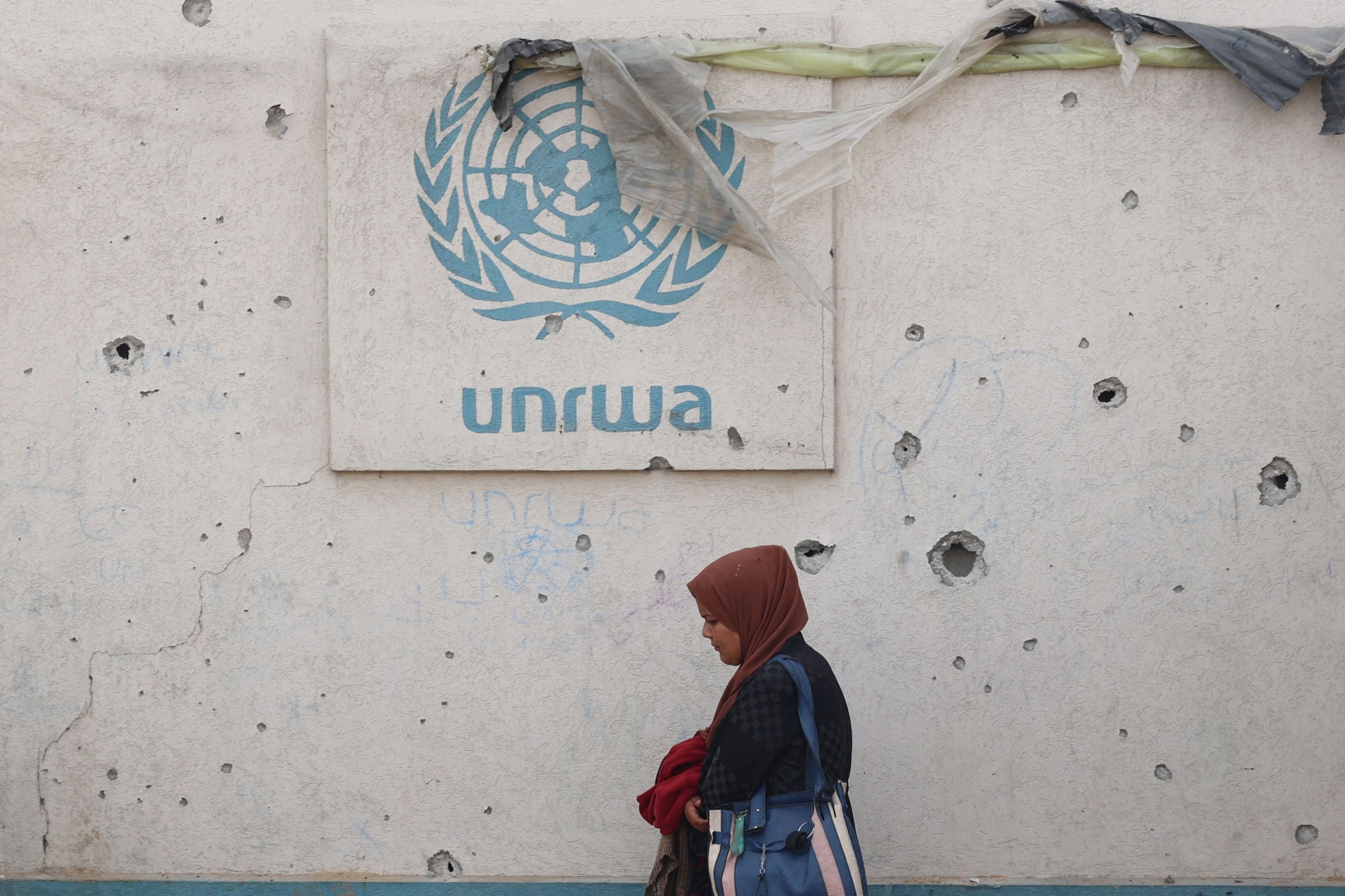
You have invoked international law several times during this conversation. But I have to press you on this: the International Court of Justice has issued rulings that Israel has ignored. Meanwhile, the United Nations Relief and Works Agency for Palestine Refugees (UNRWA) was abolished. Does the PA still consider international law to be a viable and effective framework?
International law is under profound threat today—we know that, and the international community knows it. But the solution shouldn't be to abandon it. Without international law, there is only chaos. The stronger devour the weaker. That is not a world any of us should accept.
The PA continues to work within international law because it remains the only legitimate compass available. And frankly, shame on those who don't comply with it or believe in it.