As most eyes stay trained on Iran, another front is presenting a crucial challenge to Middle East regional stability: Israel’s military campaign in Lebanon and the status of Hezbollah, Iran’s decades-long proxy partner.
Israel's defence minister said on Tuesday that Israel plans to expand the territory under its control in southern Lebanon, suggesting it was ramping up its ground offensive against the Iranian-backed militia Hezbollah. In a statement, Israel Katz said Israel will retain control of the land south of the Litani River. Israeli forces have destroyed all crossings over the Litani River in Lebanon’s south. The Qasmiyeh Bridge, destroyed by the Israeli military earlier on Sunday, is a main route linking the south to central Lebanon near the coastal city of Tyre. This critical infrastructure, belonging to the Lebanese state, is used by its civilian population.
Meanwhile, another minister in Israel’s government, the right-wing extremist Finance Minister Bezalel Smotrich, this week called for Israel to annex southern Lebanon and extend Israel’s border. Israel says it is degrading the capacity of Hezbollah to pose a threat, but the ongoing bombing campaign has displaced more than one million Lebanese citizens.
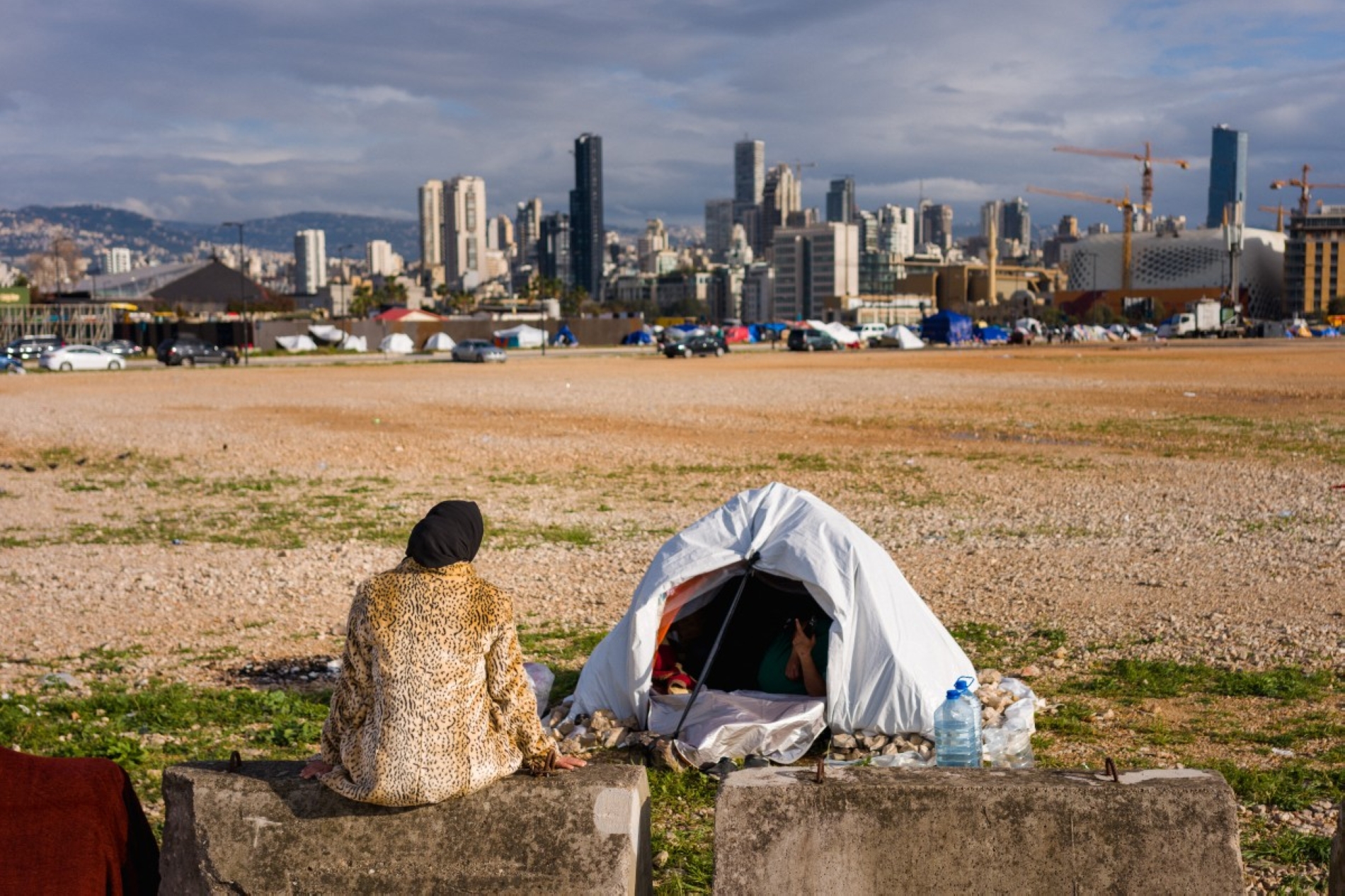
A displaced woman sits next to her tent in an unofficial camp, erected along Beirut’s seafront area on 22 March 2026.
Impact on Beirut
As the campaign unfolds, its impact on the standing and legitimacy of the Lebanese government will be key, not least the ability or otherwise of the Lebanese Armed Forces (LAF) and other security institutions to uphold law and order.
War is the continuation of politics by other means, as the Prussian general and military strategist Carl von Clausewitz once said. But in today's Middle East, war is often conducted with no clear view of the desired political outcome or end goal. This is particularly true when it comes to Lebanon and US policy towards it—a policy that essentially has focused on letting Israeli military actions take the lead.
The US policy on Lebanon is to disarm Hezbollah, and the US-Israeli war against Iran is linked to this policy goal in Lebanon
A strategic risk of Israel's war in Lebanon is that it undermines an already fragile state and produces conditions for another civil war, creating a "Mogadishu on the Mediterranean," as two years of war in Gaza ultimately produced. External actors have already undercut state stability in Yemen, Iraq, Syria, and Libya. Attacking the Iranian regime without a strategy only increases the risks of a failed state that is home to more than 90 million people.
Steady, strategic US diplomatic engagement is a key ingredient—and it is missing. In the second Trump administration, the US policy on Lebanon is to disarm Hezbollah, and the US-Israeli war against Iran is linked to this policy goal in Lebanon.
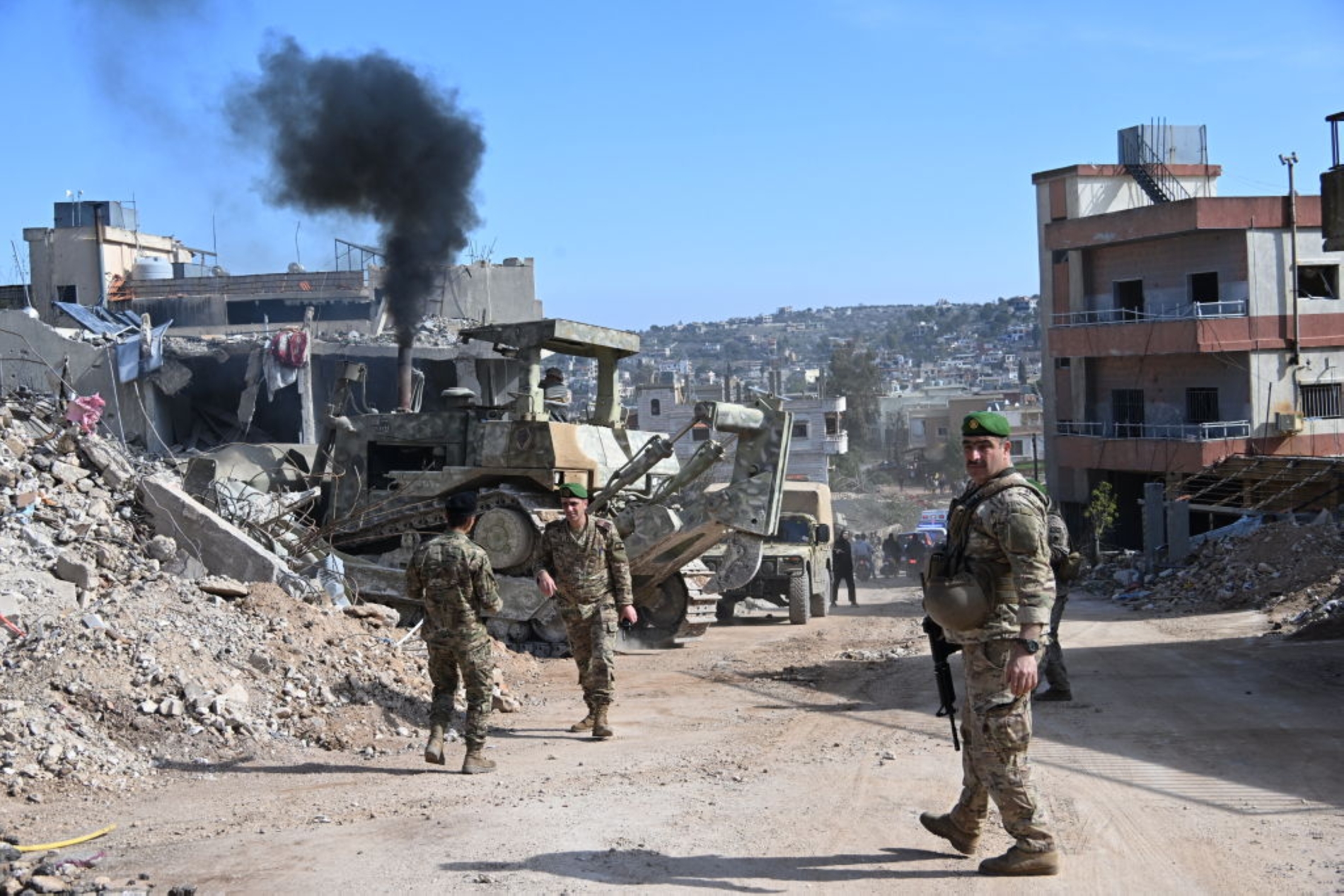
Lebanese army units stationed in the Aitaroun municipality of southern Lebanon on 2 February 2025 after the Israeli armywithdrew.
LAF support
Beyond Hezbollah's disarmament, the US hopes to help the Lebanese state restore sovereignty and create a pathway to peaceful relations with its neighbours. To this end, the US has doubled down on its decades-long investment in the Lebanese Armed Forces (LAF), assisting with coordination. In addition, the US Treasury Department is cracking down on the black-market economy used by Hezbollah and other adversaries misusing Lebanon's financial system.
Congress has given the Trump administration the tools and a framework to tackle Hezbollah. The 2026 National Defence Authorisation Act, which was passed, provided funding for the LAF and set conditions for measuring progress on disarming Hezbollah and countering other groups that threaten the security of Lebanon and its neighbours. But a steady, coherent strategic diplomatic engagement by the US is still missing, and this is hampering policy implementation.
Some of the challenges witnessed elsewhere in US President Donald Trump's second term—a lack of sufficient diplomatic personnel empowered to coordinate the various tools of US policy, an overreliance on a small group of individuals close to the president, unexplained personnel changes, and a systematic gutting of America's 'soft power' tools it traditionally used to shape the landscape in other countries—are a key challenge in US policy in Lebanon, too.
US Ambassador to Lebanon Michel Issa is a go-to person on the country, but his responsibilities as ambassador limit his ability to deal with other key aspects needed to tackle this challenge at a time of conflict. The same can be said about US Ambassador to Türkiye Tom Barrack, who acts as special envoy in several key countries of the region. His role in Lebanon has received mixed reviews from key Lebanese constituencies needed to win the diplomatic and political battle there.
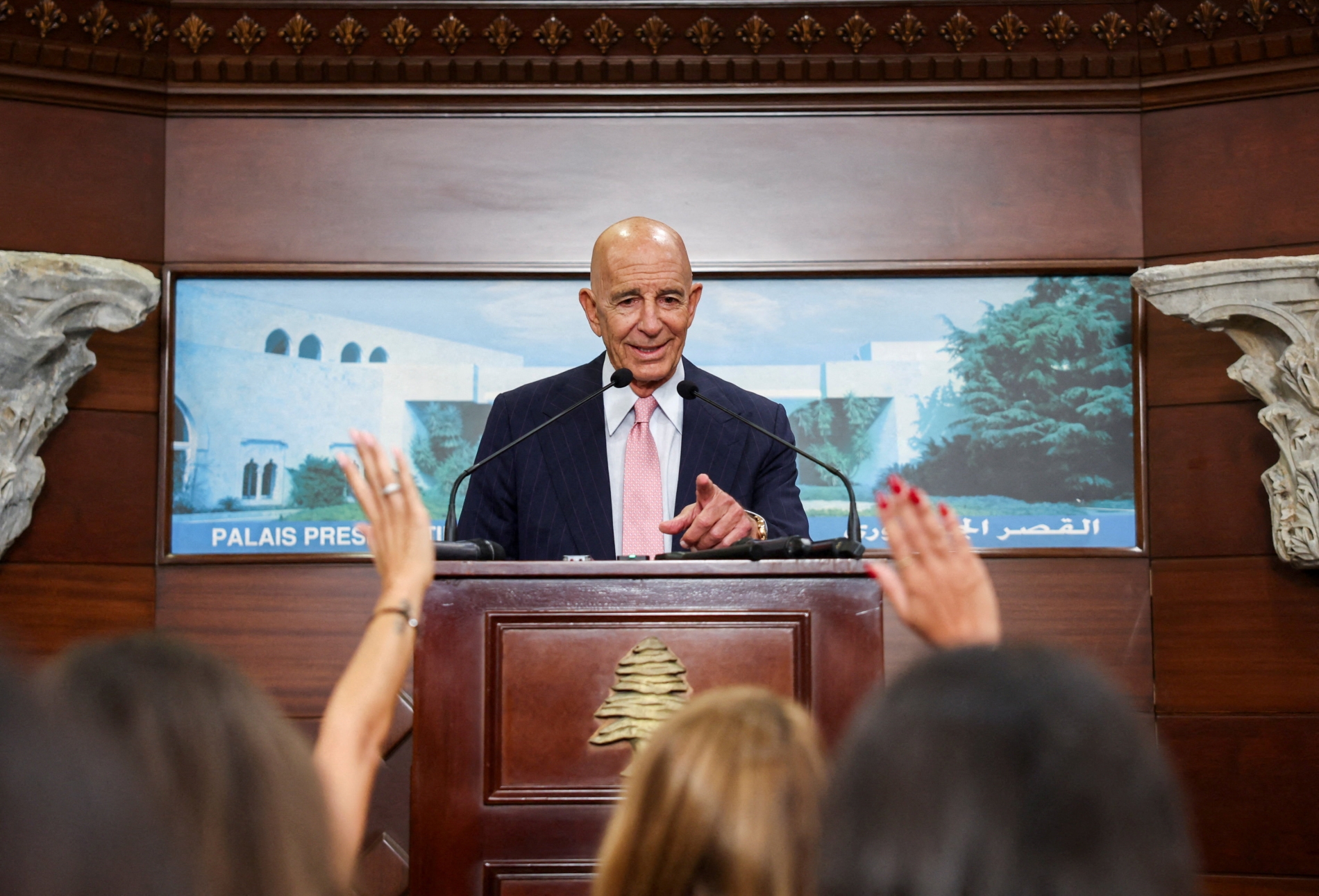
US Ambassador to Türkiye Tom Barrack, also special envoy to Syria, fields questions from journalists after meeting with Lebanese President Joseph Aoun at the presidential palace in Baabda, Lebanon, on 18 August 2025.
Diplomatic void
Furthermore, the US State Department still lacks a Senate-confirmed senior diplomat in charge of the broader Middle East more than a year into the second Trump administration. It is also missing a 'diplomatic quarterback'—someone senior who has the ear of the president, links to key actors in the US government and regional actors, and is focused exclusively on Lebanon.
Last year, the current Lebanese government began to take unprecedented steps towards disarming Hezbollah and countering Iranian influence in the country, but it did not move as quickly as the US and Israel had hoped and expected, so Israel continued to strike Hezbollah targets and maintained a presence inside of Lebanon. Hezbollah's decision to attack Israel after Israel and the US attacked Iran on 28 February further incentivised Israel to move towards a war footing and launch a new phase of the military campaign in Lebanon.
Tom Barrack's role in Lebanon has received mixed reviews from key Lebanese constituencies needed to win the diplomatic and political battle there
Importance of building
What is built, rather than what is destroyed, is what matters in the long run. The US needs to step up its strategic diplomatic engagement with Lebanon and support the country's political leaders who are taking on Hezbollah. Disarming the group is not just a security or military exercise; it is a political exercise to finally remove a 'state within a state'.
US strategic diplomatic engagement on Lebanon also means setting the table for direct talks between Lebanon and Israel. The aim would be to safeguard Lebanon's sovereignty and prevent another years-long Israeli occupation. Lebanese President Joseph Aoun and Prime Minister Nawaf Salam have spoken out in favour of this. The US can help if it dedicates its time, attention, and diplomatic heft. US strategic diplomacy in Lebanon is a necessary component of the broader war against the Iranian regime, whose critics say uses Lebanon as a pawn in its own game of power and influence.
However, military operations alone—whether in Lebanon or Iran—won't bring peace and stability to the region. The essential missing ingredient is a political vision for what must be built after the death and destruction. To get there requires an investment in strategic diplomacy that strengthens America's partners in the region—especially the Lebanese people and those in the new government willing and able to stand up to Hezbollah and its backers in Tehran.