How trauma leaves a lasting imprint on the brain

The relatively new field of epigenetics is revealing how neurological changes as a result of war, suffering, and displacement can be passed down through the generations

Eoin Ryan

How trauma leaves a lasting imprint on the brain

Research increasingly suggests that wars, conflicts, and major political ruptures do not pass through human life without consequence, but rather imprint over the long term, impacting the brain’s vital processes and even indirectly affecting subsequent generations through something resembling a biological trace. How?

Humans may encounter many forms of trauma over the course of their lives, from abusive relationships to loss and bereavement, but the kind of trauma that engulfs an entire community is far less common. Arising from major events that affect a group of people simultaneously, collective trauma is a state of acute psychological and emotional strain brought about by large-scale political or social upheaval.

War, revolution, and unrest all fall into this category. Such events often leave deep marks on society. The fear and dislocation permeate the shared memory of its members, and their effects can outlive the generation that endured them directly.

Transgenerational trauma is a term used to describe the transmission of the effects of severe pressures from the generation that experienced them first-hand to those that follow. These effects can include recurring psychological and emotional patterns such as chronic anxiety, a diminished sense of safety, weakened trust in others, and a heightened vulnerability to depression.

The psychological effects of collective trauma are carried forward through what is known as collective memory. This is the shared reservoir of experiences and recollections passed on within communities orally or in writing through education and culture. The experience of slavery or genocide, for instance, does not end with the generation that lived through them; it persists in the consciousness of later generations, despite them not witnessing it.
AFP
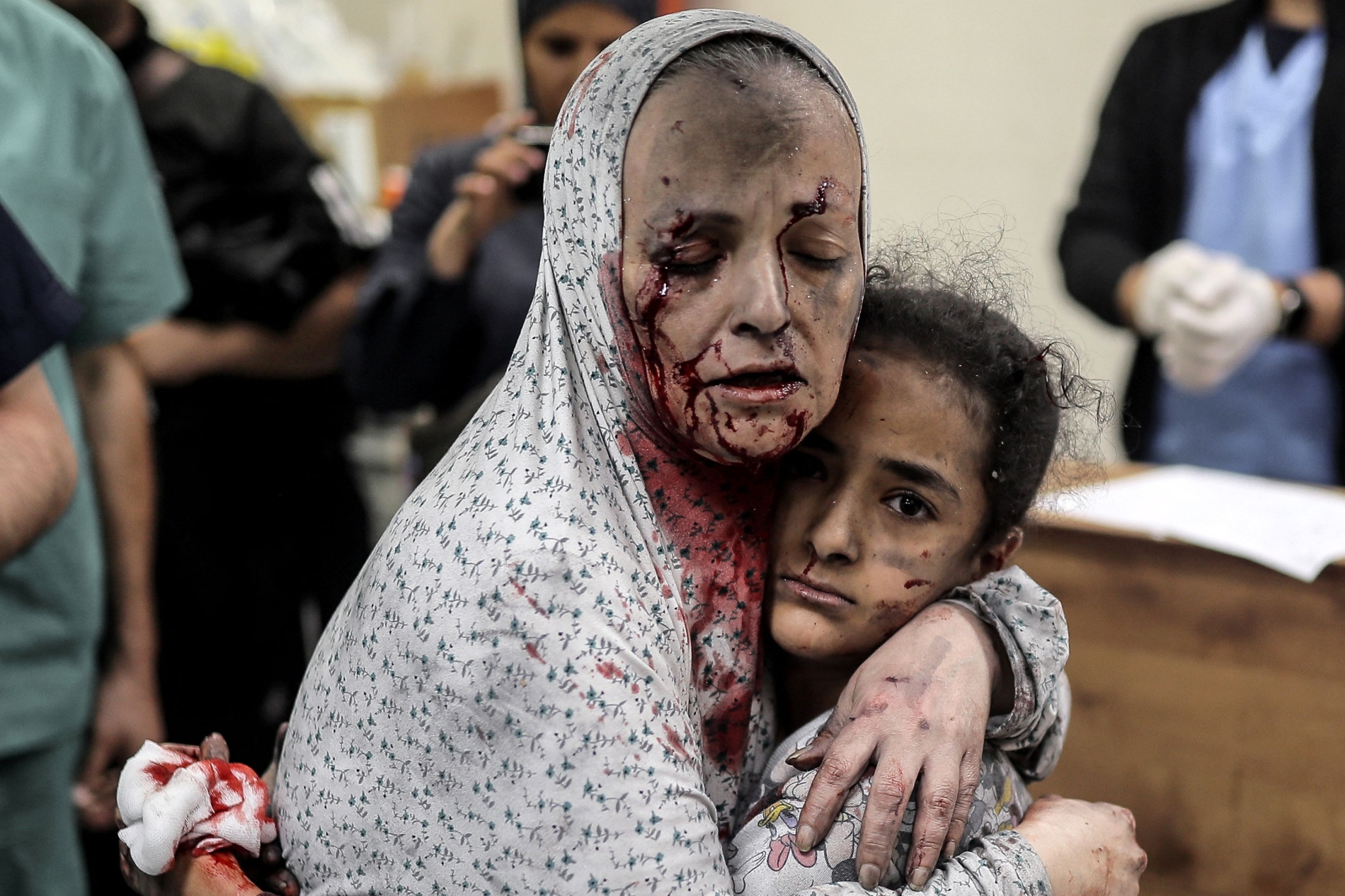
An injured Palestinian mother and daughter hug each other after surviving Israeli bombardment of Gaza in October 2023.

A collective memory can be transmitted through the accounts of those who lived through something, as well as through literature, education, and media. One study published in Moscow in 2015 showed how Russian university students in the city viewed the Soviet era positively, citing less corruption, etc., despite them having been born after the fall of the Soviet Union in 1991.

The psychological effects of trauma can register across the generations. A survey study published on 11 October 2023 examined the long-term impact of the Second World War on Polish society. During the war, Poland was occupied by both the Nazis and the Soviet Union, with mass killings, large-scale displacement, and the destruction of the country’s infrastructure. The study found a prevalence of post-traumatic stress disorder (PTSD) among those who lived through this at a young age, with elevated levels of chronic physical pain and sleep disorders.
Weakened trust in others, a diminished sense of safety, chronic anxiety, and a heightened risk of depression can be passed down genetically

This reflects the close connection between traumatic experience and the body, which may bear the imprint of such suffering for many years. Yet these effects did not remain confined to the generation that lived through the war itself; they extended to the children of survivors. Although they had never experienced the war themselves, they nonetheless displayed certain psychological effects associated with those experiences, including persistent anxiety.

The researchers felt the transmission of these effects was linked to the role played by family and the wider social environment in conveying memories and experiences connected to traumatic events, allowing their influence to endure over time, but more recent research suggests that the effects of PTSD are transmitted through more than just narratives and memory. The effects may travel along biological pathways that govern how genes function in the body. In some cases, traumatic experiences can even change the way that genes are switched on or off. This is called epigenetics.

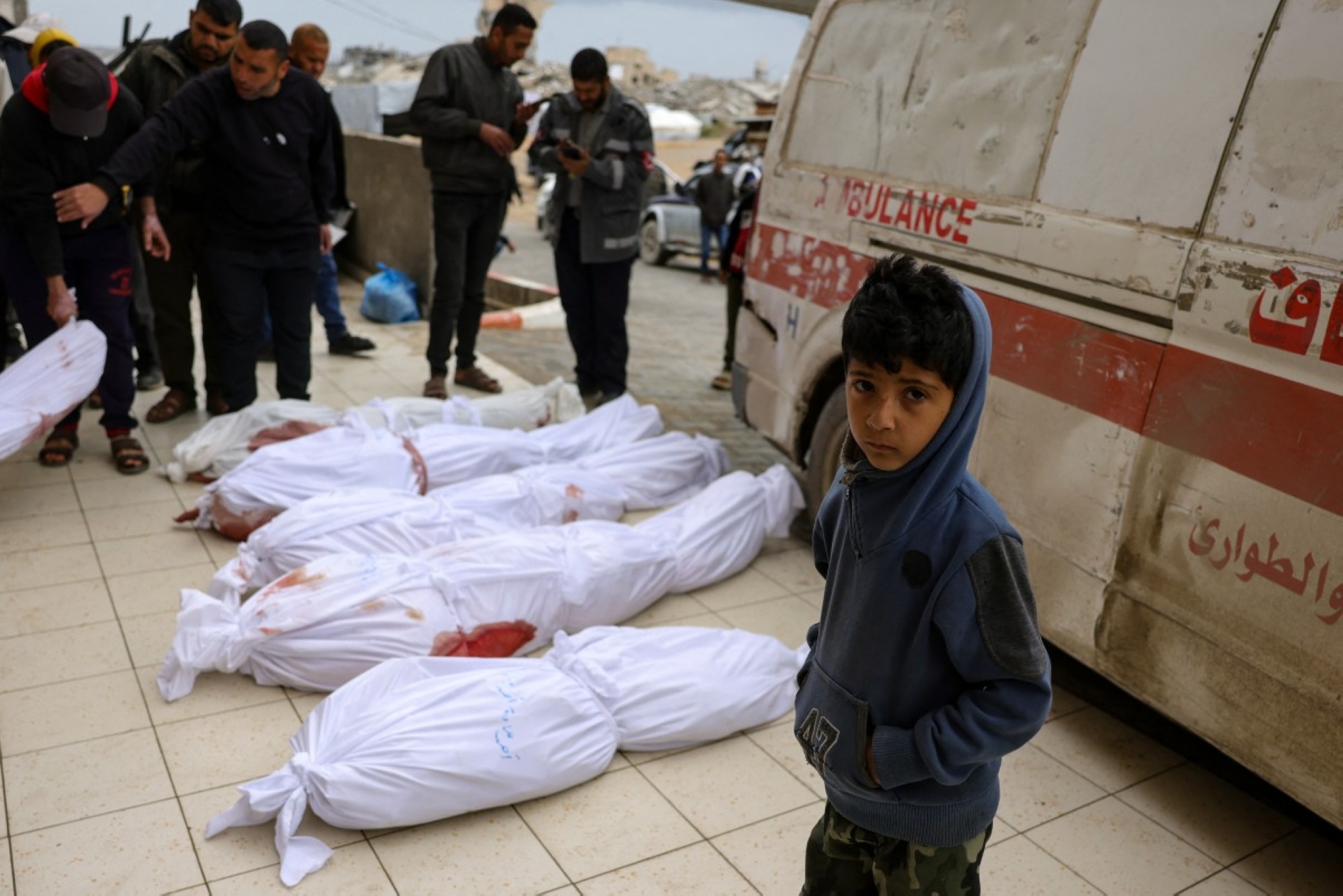
 BASHAR TALEB / AFP
A Palestinian child looks on as bodies of victims of Israeli overnight airstrikes in the northern Gaza Strip lie on the ground in front of the Indonesian Hospital in Beit Lahia on 20 March 2025.

These epigenetic mechanisms involve alterations in gene expression without altering the genetic code itself or the underlying sequence of hereditary material. Among the most prominent of these mechanisms is DNA methylation, a process in which a chemical group known as a methyl group is added to specific sites on the DNA molecule. This can reduce the activity of certain genes or partially suppress their function, thereby helping regulate how genes operate within the cell.

What is the connection between these changes and PTSD? Studies suggest that certain genes are involved in the body's response to stress and psychological strain, including FKBP5, which plays an important role in regulating the body's response to cortisol, the hormone most closely associated with stress.

Research has shown that exposure to traumatic experiences or severe abuse may reduce the level of DNA methylation associated with this gene, thereby increasing its activity. As a result, the body's response to stress may be altered in ways that heighten the likelihood of post-traumatic stress symptoms. These findings suggest that harsh experiences may leave a biological imprint in hereditary material, whose effects may extend across generations.

This idea was reinforced by a recent study examining the biological effects of trauma caused by war and violence, and the extent to which these effects might be transmitted to later generations. It looked at 48 Syrian families comprising 131 participants. Their DNA was collected to analyse whether exposure to violence left intergenerational traces.

The researchers considered direct exposure to violence, indirect exposure during pregnancy (when the mother was pregnant during war), and the possibility that such effects may be transmitted through the eggs and sperm. The study, published on 27 February 2025, concluded that the transmission of trauma across generations may occur through epigenetic mechanisms, particularly via changes in DNA methylation.

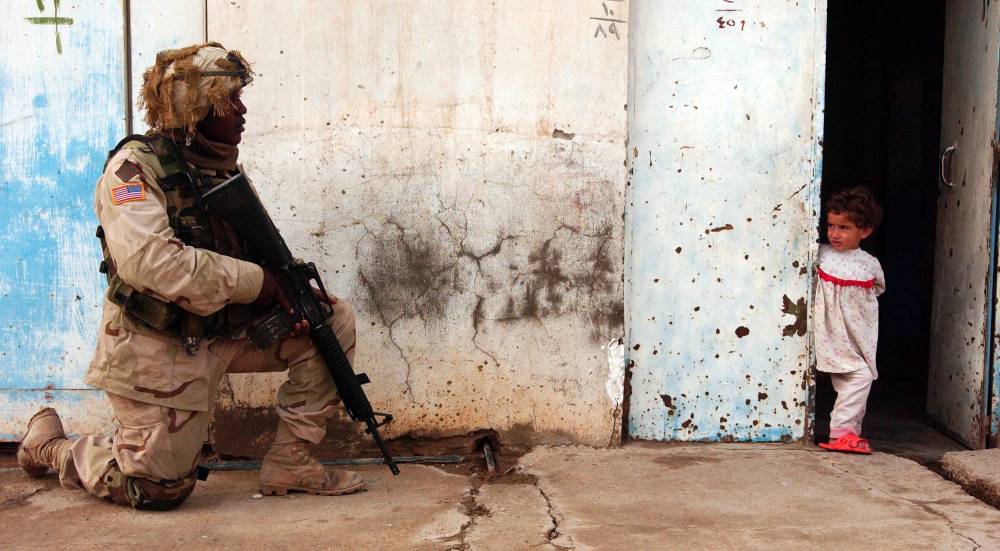
EPA
PFC Marcus Atkinson of Sumter, South Carolina, a US soldier from 1-22, 4th Infantry Division, guards a street during a patrol in Tikrit, Iraq, 18 December 2003.

Numerous studies have examined the mental health of Iraqis in the aftermath of the 2003 US occupation, including the prevalence of PTSD among Iraqi academics and intellectuals who were forced to emigrate. Many had criticised political authorities, for whom they and their families had been abducted, detained, or tortured. The study, published in 2010, found high rates of PTSD among academics and intellectuals in Baghdad after the occupation. The Iran-Iraq War of 1980-88 and the violence and insecurity that followed also left wide-ranging psychological and neurological effects across the population, as millions of Iraqis were forced to leave their homes.

A research team conducted a scholarly review aimed at analysing the impact of trauma resulting from the Islamic State's sweep across large parts of Iraq in 2014. It drew on studies published across a range of scientific databases, covering data from around 5,764 participants drawn from Iraq's diverse ethnic and religious communities, including Kurds, Arabs, Yazidis, and Christians.

Collective traumas don't end with the generation that lived through them; they persist in subsequent generations' consciousness

Published in October 2024, it revealed a strikingly high prevalence of psychological disorders among the displaced. PTSD was identified in almost 62% of cases, depression in 49%, and anxiety in 51%. Suicidal behaviours were also recorded at alarmingly high levels of 67.5%. Yazidi women and girls, who had been subjected to enslavement, were among the groups most severely affected, with very high rates of PTSD and self-harming behaviours.

The severe psychological strain produced by trauma and major upheaval prompts important biological changes within the brain. This extends to alterations in neural structure and function. Neuroscientific studies indicate that trauma can reshape the brain networks responsible for fear, memory, and the regulation of thought.

Among the most important regions of the brain is the amygdala, which plays a central role in processing emotions, particularly those associated with fear, threat, and danger perception. The amygdala helps activate the fight-or-flight response and has been likened to an alarm system that is triggered whenever danger is sensed. In PTSD, activity in this region becomes heightened, rendering the sufferer more vulnerable to persistent anxiety and more sensitive to situations that may be interpreted as threatening, even when no real danger exists.

REUTERS/Mohammed Salem
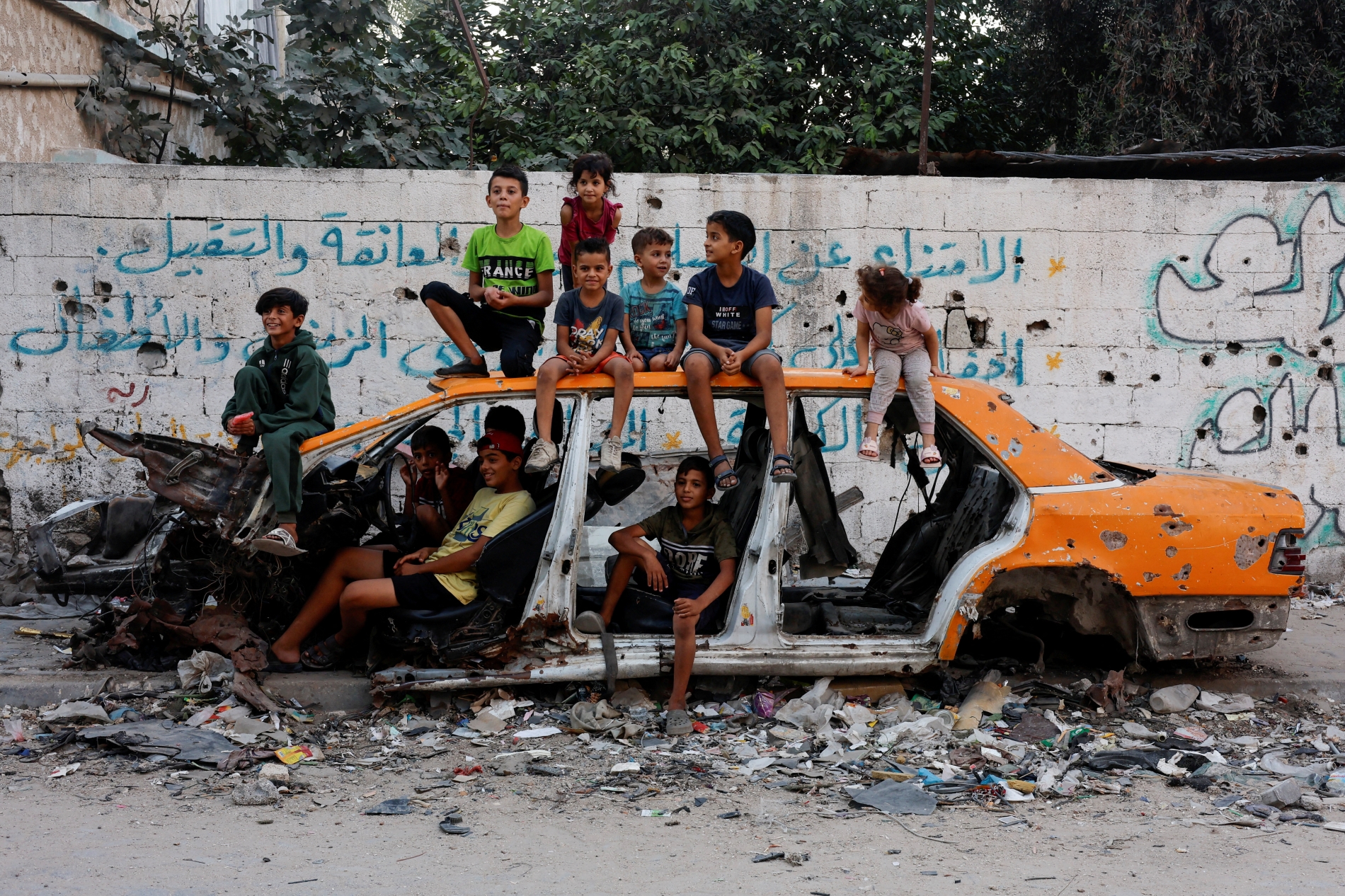
Palestinian children play in a destroyed car amid Israel's war on Gaza in Khan Younis in the southern Gaza Strip, 30 September 2024.

The hippocampus is one of the brain's main centres for the formation and organisation of memory. It helps distinguish between past and present, and processes the emotions bound up with memory. Sustained psychological stress associated with PTSD may lead to a reduction in the size of the hippocampus. This is linked to elevated levels of cortisol, known as 'the stress hormone', which may impair the formation of nerve cells and diminish the hippocampus's performance. The result can be memory impairment, the recurrence of painful memories, and a heightened fear response.

The prefrontal cortex, meanwhile, is needed for logical reasoning, emotional regulation, and the control of affective responses. It also helps temper fear signals issuing from other regions of the brain. PTSD may reduce activity in this area, weakening the brain's capacity to regulate emotion and restrain reactions tied to fear and anxiety.

The effects of major trauma include profound social transformations that alter the way people perceive life and its meaning. In some cases, this leads to higher suicide rates, as seen after the Soviet Union's collapse and the resulting period of deep social disorientation, when millions suddenly had to adjust to a new political, economic, and social reality after decades in a Soviet framework.

The effects of major trauma alter the way people perceive life and its meaning. In some cases, this leads to higher suicide rates.

The concept of 'anomie' was coined by French sociologist Émile Durkheim to denote a state in which the social values and norms that regulate individual conduct begin to disintegrate, leaving people with no clear framework by which to orient their lives. A study published in 2015 suggested that anomie may lead to higher suicide rates owing to the loss of a clear sense of social direction, the weakening of the rules that structure daily life, the erosion of social bonds such as family ties, and the pressures generated by rapid economic change and the difficulty of adjusting.

Another study, which analysed data from 15 former Soviet republics from 1992-2019, pointed to the links between the economic transformation that followed the Soviet collapse—including rising unemployment—and the marked increase in suicide rates, especially among working-age men, which is linked to the loss of the social role associated with employment and, with it, the erosion of meaning and purpose in life.

Science is gradually revealing the deeper dimensions of war and conflict, the losses from which are increasingly measured in more than just the lives cut short or the economies laid waste. The heavy inheritance of trauma extends to the psychological and biological effects carried by survivors' families that may endure across generations.

font change