Remembering Jürgen Habermas: the last guardian of the Enlightenment 

On 14 March, the world bid farewell to the German philosopher and sociologist who profoundly shaped 20th-century political and social thought

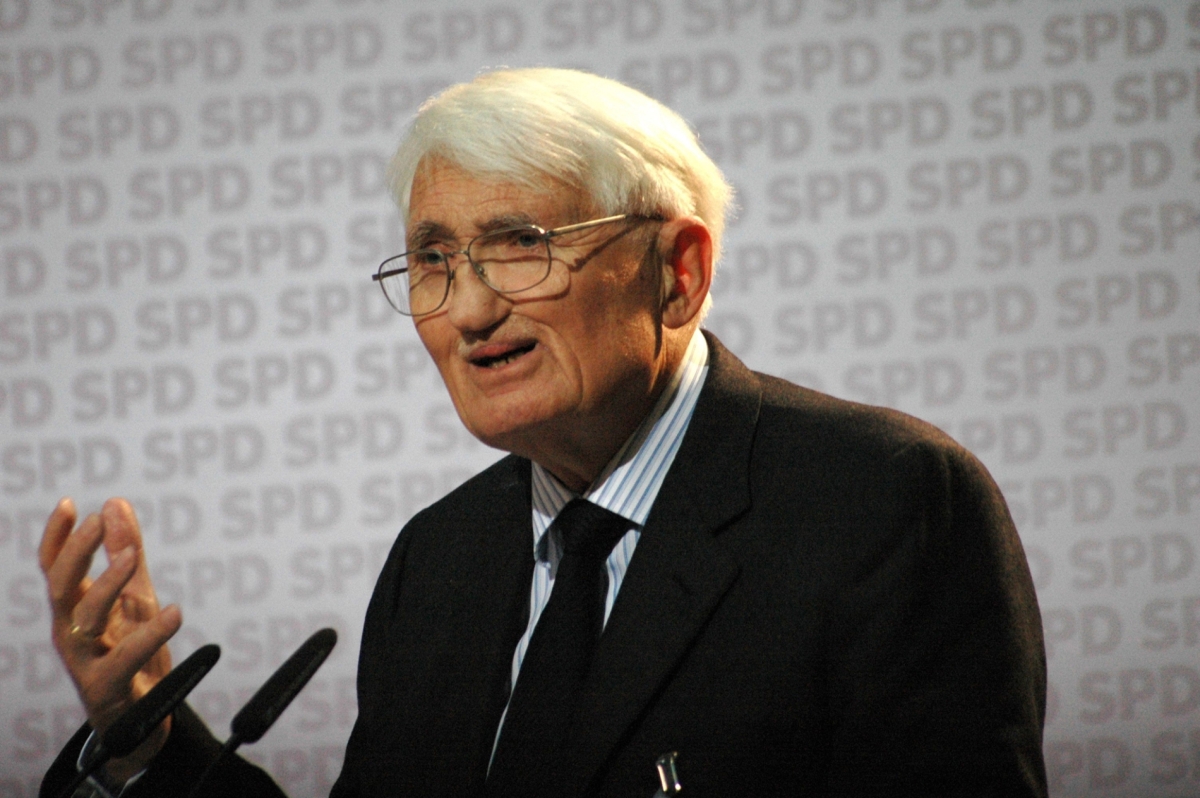
German philosopher Jürgen Habermas speaks from a podium at an event on philosophy and politics at the Willy Brandt House in Berlin, on 23 November 2007.
Shutterstock
German philosopher Jürgen Habermas speaks from a podium at an event on philosophy and politics at the Willy Brandt House in Berlin, on 23 November 2007.

Remembering Jürgen Habermas: the last guardian of the Enlightenment 

This is a direct translation of an article that originally appeared in Arabic.


On 14 March, the world bid farewell to German philosopher and sociologist Jürgen Habermas, aged 96, turning the page on a mind that profoundly shaped 20th-century political and social thought. His passing represents the fading of a prominent Frankfurt School pillar, a voice dedicated to defending democratic civil society against theories centred on the self or race. Understanding his legacy requires deconstructing the historical and sociological contexts that shaped his project, which positioned communicative rationality as an alternative to the dominance of instrumental reason.

To grasp Habermas’s profound legacy, one must return to the historical shocks that shaped his consciousness. Born in 1929 in Germany, he lived his adolescence under the Nazi regime, later grasping the magnitude of its atrocities. This engendered a strict commitment to defending a democracy capable of preventing such disasters. Inheriting the Frankfurt School tradition from Max Horkheimer and Theodor Adorno, he rejected their radical pessimism regarding the Enlightenment's trajectory.

Instead, he restored hope in the Enlightenment, arguing the flaw lay not in reason itself, but in its reduction to an instrumental dimension serving domination. His project emerged to redefine rationality from a social and communicative perspective, crystallising standards to ensure societies remain free and capable of self-critique without slipping into authoritarianism. Thus, his philosophy bridged abstract theorisation and political practice. He remained an engaged intellectual throughout his life, tackling issues from student movements to European integration, globalisation, and terrorism.

The Theory of the Public Sphere

The public sphere is one of Habermas's most important contributions to democratic thought; it is a social space where ordinary citizens discuss the public interest, relatively independent from state and economic power. Its success depends on critical, rational debate accessible to an independent public.

Habermas traced this sphere's historical formation to the European bourgeoisie's rise, when cafes, salons, and the press became free spaces recognising the power of argument over class distinctions. However, he also provided a critical diagnosis of the decline afflicting this space in contemporary societies. He warned of a "re-feudalisation" of power, where powerful organisations integrate into the public sphere, using institutional influence to dominate it. Under advanced capitalism and the encroachment of directed media, critical debate is sidelined in favour of passive consumption.

Public issues are now managed through pre-engineering, serving political and economic elites. This diagnosis is even more relevant today, given social media; despite initial promises of democratic expansion, algorithms now reinforce polarisation and hinder rational, independent public opinion.
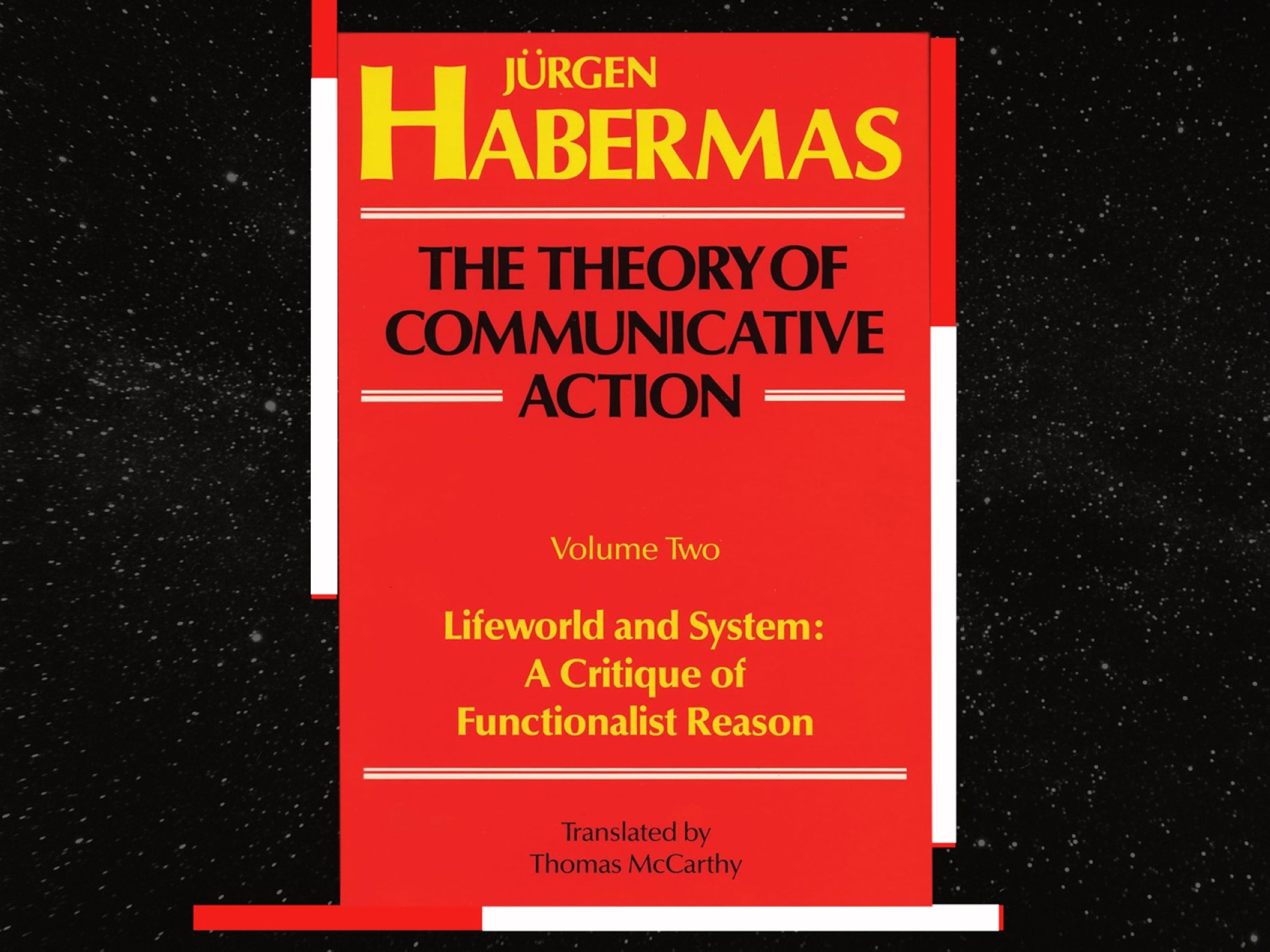
Habermas's legitimation crisis theory posits that capitalism harbours oppressive and irrational contradictions

Legitimation Crisis Theory 

Habermas further deconstructed the structural contradictions of the contemporary capitalist system. His legitimation crisis theory posits that capitalism harbours oppressive and irrational contradictions, rendering legitimacy a central issue for any system that justifies its existence and power. All governments must legitimise their rule to justify monopolising power, ensuring compliance and preventing collapse. 

Habermas focused on identifying crisis points in advanced capitalist societies and how the modern state manages them to maintain legitimacy. Achieving stability requires a delicate balance between three fundamental subsystems: the economic, the political, and the socio-cultural. In advanced capitalism, the state increasingly intervenes to manage market instability and mitigate inequality. However, this intervention shifts the centre of gravity in crises from the economic to the political sphere, making the state directly responsible for economic failures. 

Habermas argues Western democracies tend to produce four crisis types: economic (production deficits), rationality (planning failures), legitimation (lost popular support), and motivation (declining civic participation). If any subsystem fails, a systemic explosion becomes inevitable. To avoid collapse, legitimacy relies heavily on effectively managing popular expectations and bolstering confidence in the system's ability to face challenges. 

The Theory of Communicative Action 

This theory is the cornerstone of his sociological legacy, seeking a way out of the instrumental rationality overwhelming modern societies. He distinguishes between strategic action—aimed at individual ends and control—and communicative action, which aims at non-coercive mutual understanding. 

He presents a sociological model differentiating the system from the lifeworld. The lifeworld represents our subjective daily experiences, distinct from the objective world of the sciences. The system represents domains governed by money and power, namely the economy and bureaucratic administration. This reformulates Émile Durkheim's distinction between social and systemic integration. 

The major dilemma lies in the "colonisation of the lifeworld" of linguistic communication and spontaneous relations. State and market intervention into private life is a primary source of the legitimation crisis in Western democracies. The encroachment of Weberian rationality—sanctifying bureaucratic efficiency over social bonds—leads to the reification of human relations and empties democracy of its moral content. Communicative action acts as resistance to restore the lifeworld's sovereignty, asserting that social coordination must be built on free conviction and open dialogue, not market dictates. 

Religion and rationality

In his final decades, in response to geopolitical shifts, Habermas realised that secularisation did not eliminate religion from the public sphere, contrary to classical sociological predictions. He subsequently formulated the "post-secular society," acknowledging vital religious traditions alongside secular tendencies. This was not a concession of his Enlightenment project, but an expansion of communicative rationality to include sidelined voices. 

He argues that deliberative democracy requires mutual effort: religious citizens must translate their convictions into a rational public language, while secularists must engage with faith's moral content to support solidarity and social justice. This provides a framework to transcend polarisation in our Arab region between religious and civil currents, establishing coexistence built on mutual translation and respect for a shared public sphere. 

Odd ANDERSEN / AFP
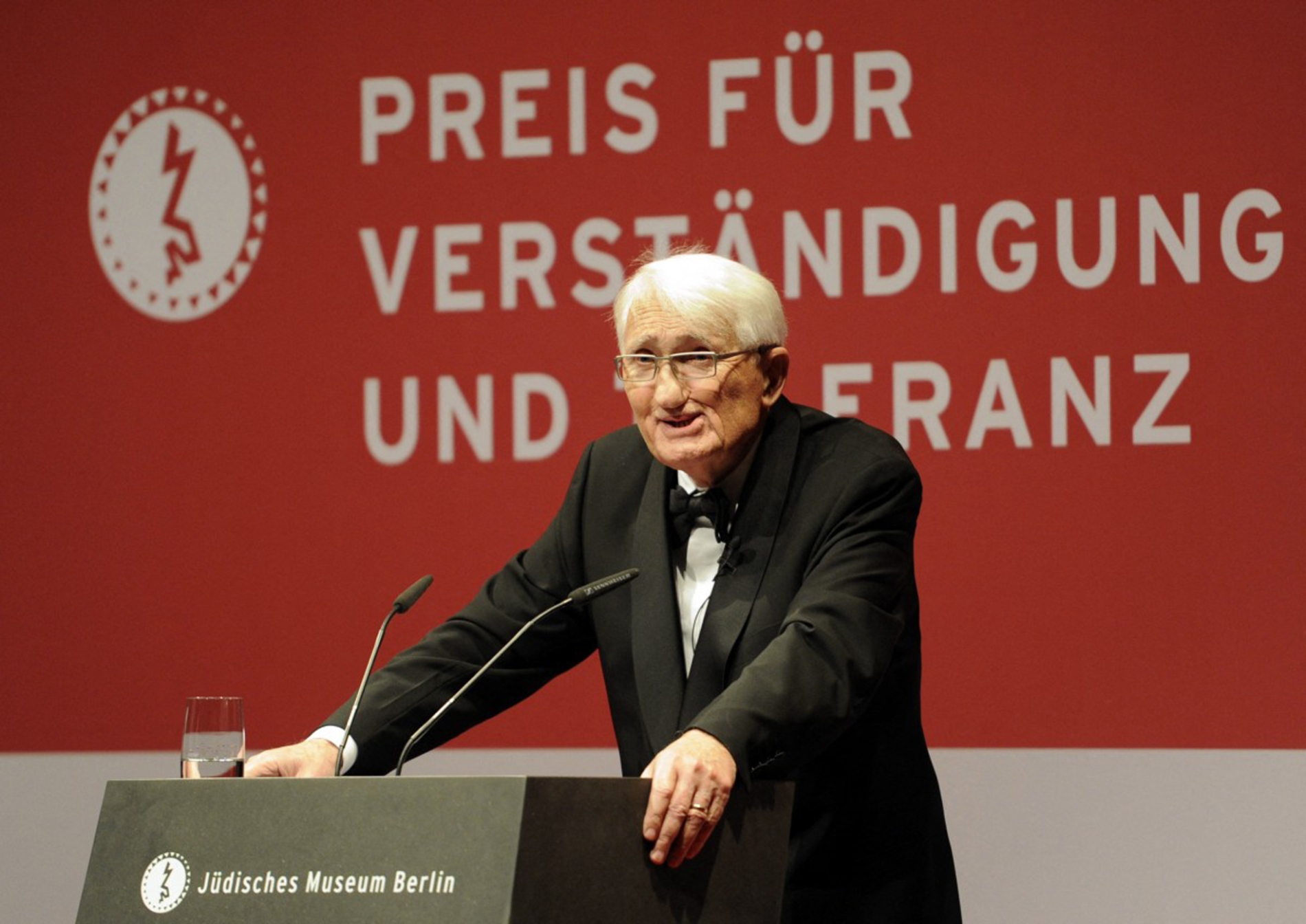
German philosopher Jürgen Habermas speaks at the Jewish Museum in Berlin during the award ceremony for the "Understanding and Tolerance" prize, on 13 November 2010.

A rare moral compass

With Habermas's passing, the world loses a rare moral and critical compass in an era dominated by chaos and populism. He leaves behind a conceptual legacy that provides vital tools for dissecting contemporary crises. As democratic values retreat in favour of charismatic authority and fast-paced transactional diplomacy, his theories remind us that true stability is built on legitimacy acquired through free, public debate. 

The challenge for sociologists is not simply to recall their theories, but to adapt them to a changing reality. How do we protect the public sphere from algorithmic colonisation and digital capital? And how do societies with deep legitimation crises establish a social contract based on communicative rather than strategic action? Habermas may be gone, but his thorny questions remain, inviting us to search for rationality in a world tilting increasingly toward the irrational. 

font change