Pessoa and Sufi luminous solitude

Chosen isolation is a door that opens and closes, teaching us to approach the world with greater awareness

A waiter walks past the statue of Portuguese poet Fernando Pessoa in front of the famous A Brasileira café in Lisbon, on 14 July 2021.
Patricia de Melo Moreira / AFP
A waiter walks past the statue of Portuguese poet Fernando Pessoa in front of the famous A Brasileira café in Lisbon, on 14 July 2021.

Pessoa and Sufi luminous solitude

This is a direct translation of the article that originally appeared in Arabic.


There is a small moment known to those who choose solitude of their own accord: a moment when the screen goes dark, and the sound of the city softens, and silence appears as a new space inside the room, as if the walls had suddenly expanded. Breathing slows, the rhythm calms, and simple sounds emerge: a clock, a distant footstep, the rustle of a curtain. The outer scene remains unchanged, yet the feeling inside shifts: a deeper layer of awareness begins to move, receiving this opening with breadth and clarity, stepping out of the crowd of thoughts and allowing accumulated fatigue to finally speak, before the heart settles back into place.

At that very moment, the Portuguese poet Fernando Pessoa appears as an unexpected companion. His presence is understandable, for he wrote of solitude from within it. He lived it as an everyday room, then turned it into a lens through which he observed the self and the world, catching the faintest tremors of feeling before they faded.

Pessoa presents solitude as a “space” for the self, where the voice fractures and multiplies. He writes as if more than one person lives within him, each with a distinct tone and mood, as if the page were a table of dialogue where visions sit side by side and disagree. On the other shore, Sufism offers a meaning close to common human intuition, what we may call “luminous solitude”: a retreat that calms the inner self, purifies it, and brings its voices into order, leaving the individual lighter and more sincere, better able to return to others with a clear mind and a steadier heart.

In Pessoa’s experience, solitude appears as a fullness that overflows even in silence. Solitude, in his view, opens the door to more than one voice and more than one possibility, making the interior vast enough to accommodate contradiction and astonishment at once.

By contrast, luminous solitude in Sufism proposes another form of aloneness: a lightness born from disciplining inner noise and organising the movement of the heart until silence becomes a clear energy rather than an ambiguous void. Between these two tendencies, solitude sometimes appears as a small daily habit: a moment of regained attention and a skill that protects awareness from dispersal, returning the individual to himself with practical clarity while maintaining a living and flexible connection to the world.

Pessoa’s solitude slips from any attempt to grasp it from a single angle. Whenever one approaches its meaning, that meaning seems to open another door. Solitude becomes a room whose architecture shifts from within. It expands, contracts, then expands again according to the pulse of thought. In this way, solitude in his world becomes a fullness disguised as silence: a silence that functions like a calm surface beneath which constant movement unfolds, an inner life that never ceases and a desire to rename things again and again.

In The Book of Disquiet (Livro do Desassossego), Bernardo Soares needs only the details of an ordinary day to feel either the heaviness or the lightness of life: an office, a street, a room. Then the interior begins to expand, as though it had finally drawn breath. Soares writes like someone observing himself from a short distance, for the self in his world shifts rapidly and seldom settles into one form.

Disquiet takes on the shape of a permanent dwelling, a way of seeing that rearranges things. Daily detail becomes the material for long contemplation, and the silent moment becomes the womb of a new voice. Solitude works here like a delicate magnifying instrument: it leaves reality almost unchanged yet amplifies its impact inside until the interior becomes the truest stage, the most densely inhabited and most present.

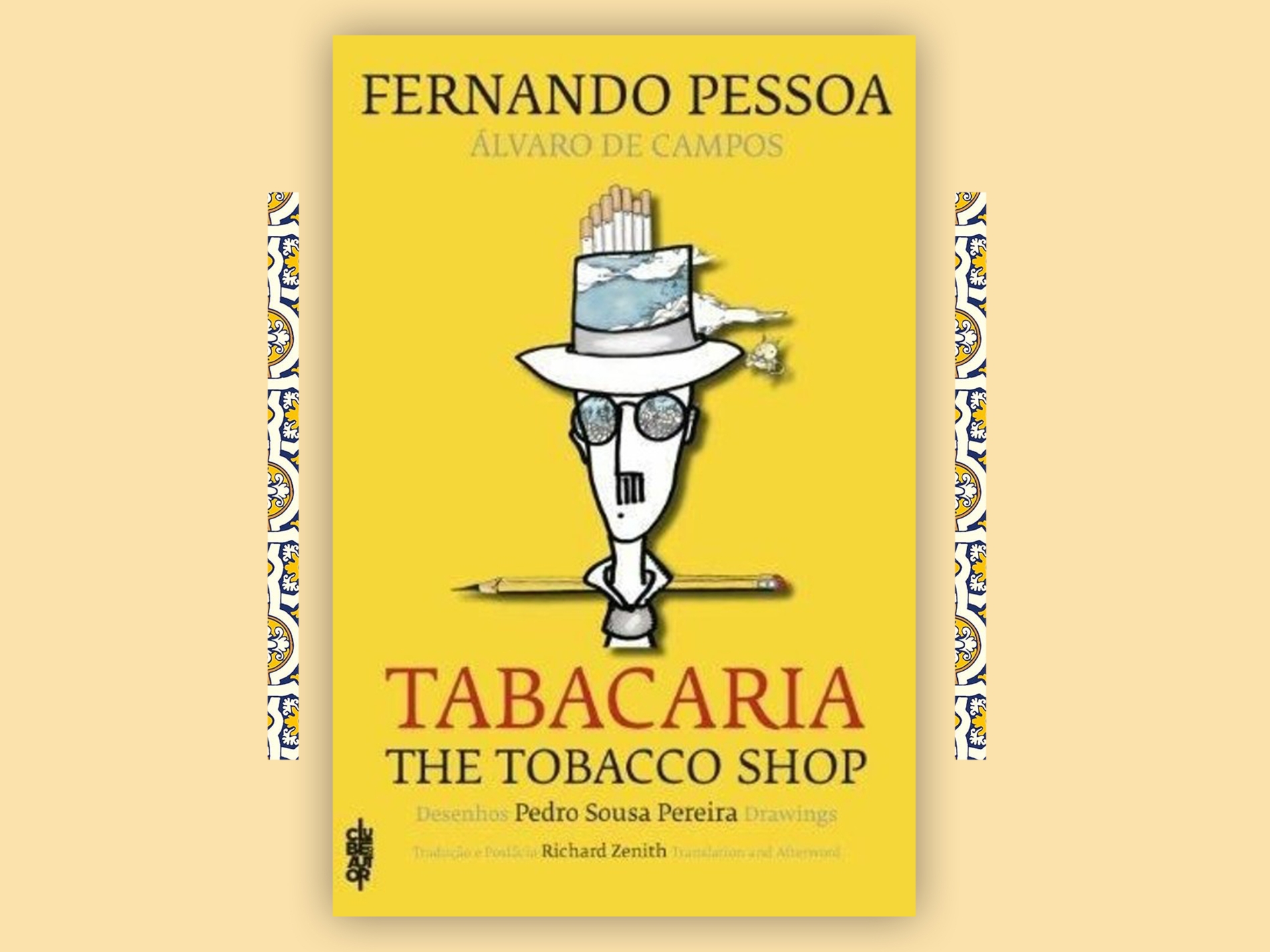
Then comes the poem Tobacco Shop (Tabacaria) by Álvaro de Campos, like a gentle slap. The poem appears simple in its scene: a window, a street, a tobacco shop, a man looking out. Yet what occurs behind this frame becomes a silent explosion, because solitude here turns into an immediate awareness of the fragility of feeling and the excess of consciousness. Campos is fully present in the world, yet the distance between him and things widens.

Solitude becomes an inner separation rather than a physical withdrawal: a sharp vision with unsettling clarity, a pause before life, as though it passes a step away before slipping from reach. This solitude multiplies its owner: thoughts proliferate, possibilities crowd together, and ways of reading a single moment multiply until the moment becomes larger than the capacity to bear it and heavier than can be carried easily.

Pessoa writes solitude and then grants it faces that walk across the page, as though a single voice were too narrow to bear the burden of life. Multiple names emerge as a literary way of living: one writer writes with near-natural coolness, another with burning nerves, a third with a simplicity resembling awakening. Each possesses a different angle of vision and rhythm of feeling. This multiplicity gives solitude its true texture; the solitude of a being who multiplies himself in order to endure himself, then finds in that multiplication a form of truth.

At this point, the concept of “polyphony” articulated by Mikhail Bakhtin emerges with striking clarity: the text becomes a field where multiple voices coexist, each retaining its individuality and pushing meaning into motion rather than stillness. With Pessoa, that field expands beyond the limits of the novel and settles within the writer himself, where meaning disperses across layers of perception and sensation and visions intertwine without the need for a single governing voice.
Pessoa, even as he opens the door to endless multiplicity, seems to place within the same house a corner of tranquillity

With this distribution, the authority of the single author naturally recedes. Pessoa seems to realise intuitively what Roland Barthes later described as the "death of the author": meaning grows beyond the guardianship of a single intention, freed from dependence on a figure who alone explains and decides. Pessoa achieves this in practice rather than theory, stepping back so that voices may advance and lightening the centre of the self until writing becomes a field of multiple directions. The text becomes an open experience, welcoming numerous interpretations instead of remaining a single report about the world.

The abundance of voices offers clear richness but may also open the door to exhaustion when the inner city becomes an unending crowd. At that threshold, luminous solitude appears as another meaning of solitude, one that places multiplicity in its proper position without glorifying or condemning it, then proposes another direction: the intensity of voices softens, their rhythm becomes ordered, and the room is arranged from within rather than expanding endlessly.

In simplified Sufi language, retreat becomes a training in inner lightness, freeing the self from its impulses and refining habits that disturb and exhaust it. With practical spirit, Al-Ghazali presents this idea as a discipline of attention: a measured withdrawal from distractions to recover the inner compass, restore connection to meaning, and return to people and life with greater clarity and balance.

From within his own multiple experiences, Pessoa himself offers a thread that approaches this meaning. Alberto Caeiro appears with a voice that seeks to calm interpretation, choosing to see things simply as they are and to ease the mental burden placed upon the world, as though looking itself were enough when properly aligned.

This stance carries the outline of a light that appears when excess diminishes: a simpler presence, a consciousness less prone to excess, and a moment of clarity that both eye and heart can accommodate. Pessoa, even as he opens the door to endless multiplicity, seems to place within the same house a corner of tranquillity, a corner that asks for inner order and allows meaning to shine without noise.

Thus, two images of solitude stand side by side in a single space: a solitude that produces an inner city that nourishes creativity yet drains serenity when its crowding intensifies, and a solitude that clarifies the interior and relieves consciousness of the burden of daily weight. The first seduces through multiplicity because it opens the gates of meaning; the second through lightness because it arranges meaning and makes it livable. Between these two temptations, solitude reveals itself through its effects: a wider awareness, greater gentleness, a stronger ability to dwell peacefully in life, or an inner congestion that exhausts its bearer and narrows the paths of living.

After this oscillation between enticing multiplicity and a clarity that shines when the burden lightens, another face of solitude appears: one that requires the right rhythm rather than great distances. This face emerges in the middle of the ordinary day: the road to work, the corner of a café, a minute of silence before speaking, a small pause that grants the mind the chance to gather itself. Solitude descends here from the level of grand idea to that of habit, becoming a way of managing attention and crafting an inner distance that protects awareness from exhaustion. 

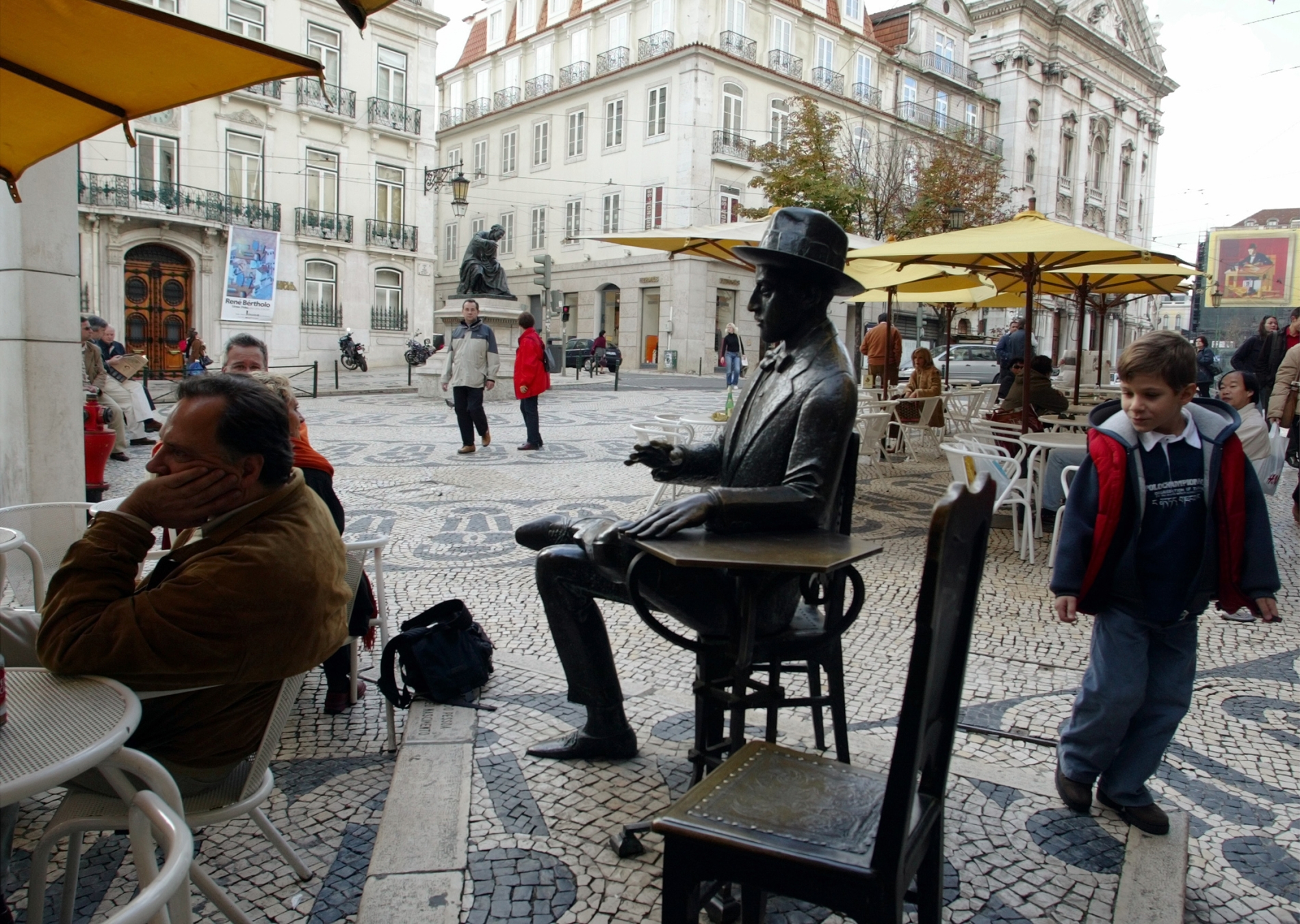
Jose Manuel Ribeiro / REUTERS
Statue of the Portuguese poet Fernando Pessoa in a square in downtown Lisbon, Portugal, on 23 November 2003.

Pessoa offers a natural gateway into this transformation: he lived his solitude mostly within the city, within a life modest in its outward shape yet dense in its interior, until solitude became closer to a daily rhythm than a distant ritual.

Solitude sometimes appears in the form of a closed room, sometimes as an inner distance that precedes reaction, or as a brief truce from automatic responses to everything. Readers of The Book of Disquiet notice that Bernardo Soares lives inside an ordinary day: an office, papers, a street, and a return to a room. Then attention begins its work like a precise instrument, capturing details before they dissolve. Solitude becomes an internal system that protects sensation from distraction and rearranges rhythm from within. Soares writes as though catching himself at the last moment before drifting away, preserving a healthy distance from the current of the day while remaining close to people without dissolving entirely into the outside world.

This comes into focus when we recall that Pessoa wrote much of his work while seated in Lisbon cafés – places that present themselves as the opposite of solitude. Noise surrounds him, cups move, faces change. Yet he creates an inner island invisible to others. This island becomes a space against distraction, preserving attention and giving it a stable form amid movement. Solitude becomes a practical skill: presence among people combined with an economy of exhaustion, a corner of silence that one keeps for oneself, a quiet silence working within without announcement or display.

Here, Georg Simmel's reflections on the modern city draw close to the experience, even when expressed in simple language. Simmel argued that the multitude of stimuli in urban life pushes individuals to build a psychological barrier that protects them from the weight of speed and noise and preserves their capacity to endure.

In Pessoa's reading, this barrier appears as an art of distance, a distance that allows awareness to observe rather than be swallowed, to pause rather than react impulsively, rescuing meaning from dissolving into quick responses and restoring to life something of its depth within the crowded day.

With time, this distance becomes a mark of maturity, a sign of the ability to manage oneself amid the crowd. The psychologist Donald Winnicott spoke of the "capacity to be alone" as a sign of inner health, because sitting with oneself opens the door to balance and grants security from within. Pessoa presents this capacity in one of its most delicate forms.

Sitting with oneself sometimes carries explicit disquiet, yet it grants something precious: clarity in hearing one's own voice, a finer distinction between genuine feeling and what one absorbs by contagion from the surrounding noise, and a renewed ability to return to the day without permanent confusion.

Because daily life moves with a harsh rhythm, the idea succeeds when it appears in practice. Pessoa helps us here through a simple, revealing scene in Tobacco Shop: a window overlooking a street, a tobacco shop below, and a man observing the world from behind glass. The window becomes a tool of solitude, a device that grants awareness a distance from immediate involvement and opens a moment in which a person watches his life rather than being carried by motion as objects are carried. In this scene solitude becomes a brief suspension of rhythm so that details may emerge, and with them a meaning that does not surface in hurried running and cannot expand within accelerated time.

This everyday solitude may resemble the luminous solitude glimpsed earlier, for it is a practical training in quieting inner noise even while external noise continues without interruption. Sufism, when read simply, presents retreat as an education of the inner self: rearranging the rhythm, calming the soul's impulses, and learning to possess a moment before emotion possesses it. At this point, light becomes a tangible effect born in a sincere minute of silence that returns the heart to its place, grants the mind practical clarity and leaves in behaviour a gentleness that remains after the moment ends.

Within Pessoa's work there is something that supports this meaning. The voice of Alberto Caeiro appears with sharp simplicity in dealing with the world, as though establishing a single clear rule: things are seen as they are and received in their presence, easing the burden of tension and excessive interpretation. This simplicity gives Pessoa's depth a passage for air, making it breathable rather than oppressive. The project that builds an inner city sometimes seems to search for an exit from its own congestion, finding it in brief moments: pure attention, relief from excessive explanation, and a practical acceptance that the present moment, when truly seen, gives enough and restores meaning to its luminous boundaries.

Here, Michel de Certeau's idea of the "practices of everyday life" is particularly fitting. He argued that individuals living within large systems that press upon them invent small tactics that preserve a measure of freedom and allow them to act within the day rather than merely drift through it. When translated into the life of solitude the picture becomes clear: it is enough to create small points of silence within the day, to establish distance from exhaustion and to learn to pause the flow for a moment so that awareness may regain its balance. In this sense, Pessoa—with his office life and his writing scattered across notebooks, cafés and streets—appears to train himself daily in such tactics until solitude becomes a habit working smoothly and producing its quiet effects.

Solitude becomes luminous when it is used with clear awareness, for inner distance has two faces: one that protects against distraction and another that becomes an elegant mask for escaping what ought to be faced. Solitude sometimes appears as clarity, yet can turn inwardly into coldness or withdrawal when it loses its connection to life. At that point, a simple measure emerges without blunt formulation: the solitude that benefits its owner returns him gentler, clearer and less impulsive; the solitude that confuses its owner returns him more closed and more tense.

Attention can be defended, and presence preserved, even while living among others. Every day solitude serves that purpose. It protects the heart from being consumed, keeps time from being scattered, and stops the self from becoming an open screen for everything. In Pessoa, that protection hinges on a modest habit: an inner distance that shelters meaning and gives awareness room to gather itself. One returns to the world lighter, less battered by its noise, more able to listen, and nearer to a practical peace that holds in the small facts of the day.

Pessoa lived his solitude mostly within the city, until solitude became closer to a daily rhythm than a distant ritual

In the end, solitude appears less as a place we go to or a stance we declare than as a light trace that remains within us after we return to movement. It resembles the scent that lingers on clothes after leaving an old house, invisible to the eye yet instantly recognised by the wearer because it lives in memory and sensation.

The importance of outward form then recedes: a silent room, a crowded café, a long road. What matters instead is the effect, a change in the way of seeing, a refinement in listening, a clearer presence in the next step and a greater capacity to move with less distraction, with attention that gathers the scattered interior rather than dispersing it.

Pessoa offers a beautiful paradox when he gives us an image of solitude that resists settling into a final answer. Solitude in his work becomes a moving mirror that reveals the multiplicity of our faces while making us feel the weight of that multiplicity itself, pushing us toward a calmer path inward. Where the meaning of luminous solitude shines, light becomes a tangible experience: noise softens slightly, the distance between feeling and reaction widens, and a person returns to others with a purer heart and a lighter hand. The burden of hostility lessens, and its old imprint fades from tone and gaze.

Perhaps this is why chosen solitude resembles a door that opens and closes, teaching us how to enter the world with greater awareness. Whoever emerges from solitude lighter emerges inwardly arranged, having regained balance and capable of carrying the day with a steady hand. Whoever emerges from it more closed emerges burdened by a new noise, because the interior has replaced the noise of the outside with another noise.

Between these two departures, the value of solitude reveals itself in its smallest trace: a change in the tone of voice, a softness in the shape of the gaze, a clearer life in the heart as it passes through the surrounding noise, and the capacity to remain present without fragmentation.

font change

Related Articles