Medusa as our ambivalent self: Racha Mounaged’s new poeticshttps://en.majalla.com/node/329719/culture-social-affairs/medusa-our-ambivalent-self-racha-mounaged%E2%80%99s-new-poetics
Medusa as our ambivalent self: Racha Mounaged’s new poetics
In her debut work, 'The Metamorphoses of Medusa', Belgian-Lebanese poet Racha Mounaged reworks Greek myth through marine science, translation, and political reflection
Medusa as our ambivalent self: Racha Mounaged’s new poetics
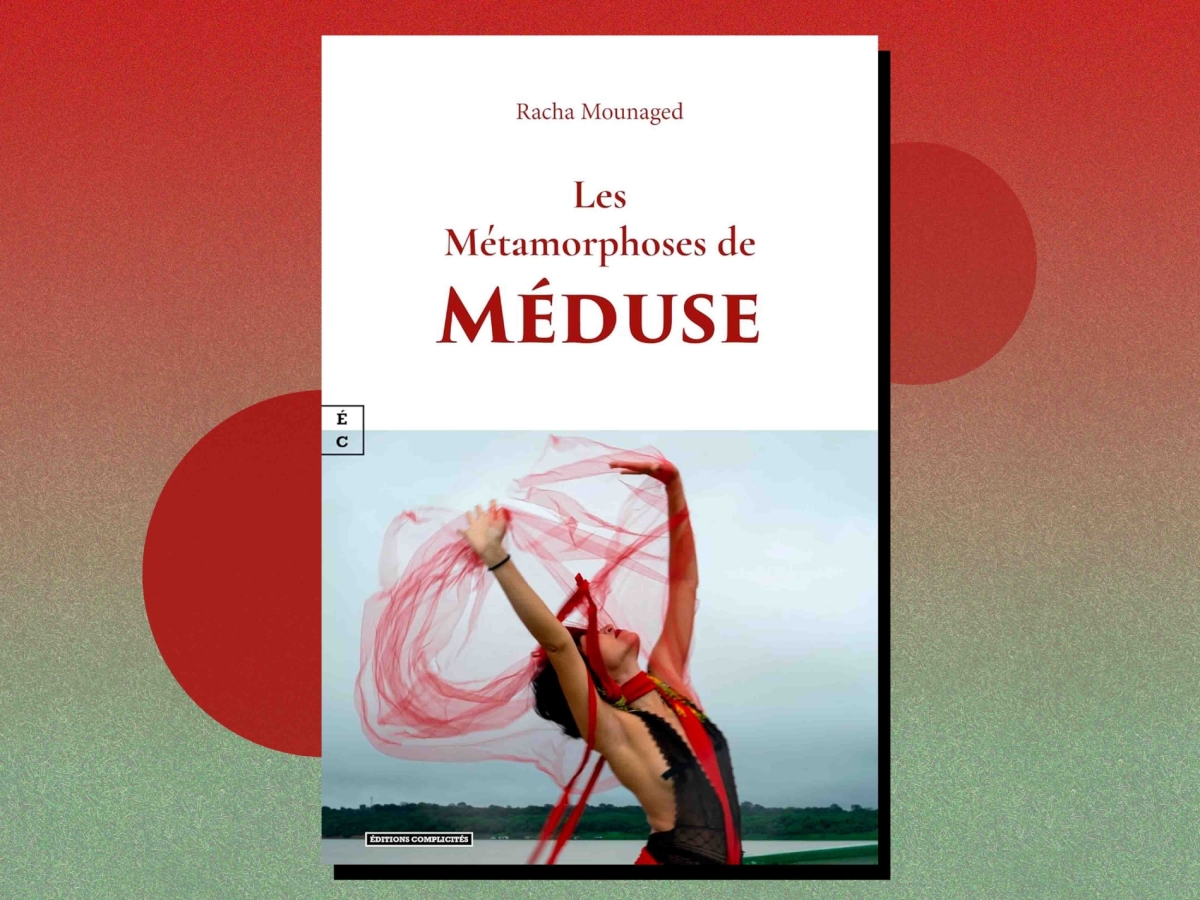
Racha Mounaged’s debut poetry collection, The Metamorphoses of Medusa, reveals an imaginative mind interrogating the philosophical legacy of Greek mythology. Self-described as a ‘poetics on ruin and traces’, the work forms a sustained engagement with Medusa, the snaked-haired monster whose gaze turned onlookers into stone.
The notion of ‘ruin’ here invites comparison beyond the Greek archive, particularly given Mounaged’s own cross-cultural positioning. Yet, unlike the classical Arabic poem, whose conventional opening lingers over abandoned campsites and lost love, this Belgian-Lebanese poet’s language is devoid of the highly specialised, challenging rhetoric of the ancient Arabic tradition. The parallel is therefore structural rather than stylistic: both begin among ruins, but they inherit and deploy them differently. Instead, Mounaged surprises us with unpretentious albeit highly symbolic verse.
If we were to draw a parallel with the Arabic tradition, we might think of the descriptive scene/poem (wasf) because of this work’s focus on images as events. Here, description does not merely ornament meaning but generates it. The poetry carries us on a scenic, non-linear journey in which biological and mythological strata accrue meaning, like stalagmites gradually rising from a grotto’s floor over geological time.
Readers of Mounaged’s first novel, Wounded, published in 2021 and also marked by beautiful poetic language, may remember a tentative interest in Greek mythology, expressed by the child protagonist, Jad. In this new work, her poetic fragments arise from the traces of a novel unable to write itself. As Mounaged reflects in an audio recording about her writing process: “The main character was supposed to be a marine biologist, but I encountered obstacles along the way, and little by little, Medusa, who was initially only a secondary motif, a figure of speech, took over completely; I fell under her spell.”
Before Medusa, there is the sea. The text then follows a more scientific order—dinosaurs, meteors, glaciation—until the appearance of homo sapiens, who come to dominate their Neanderthal cousins. It is not until the second poem that Medusa, as speaker, comes into being.
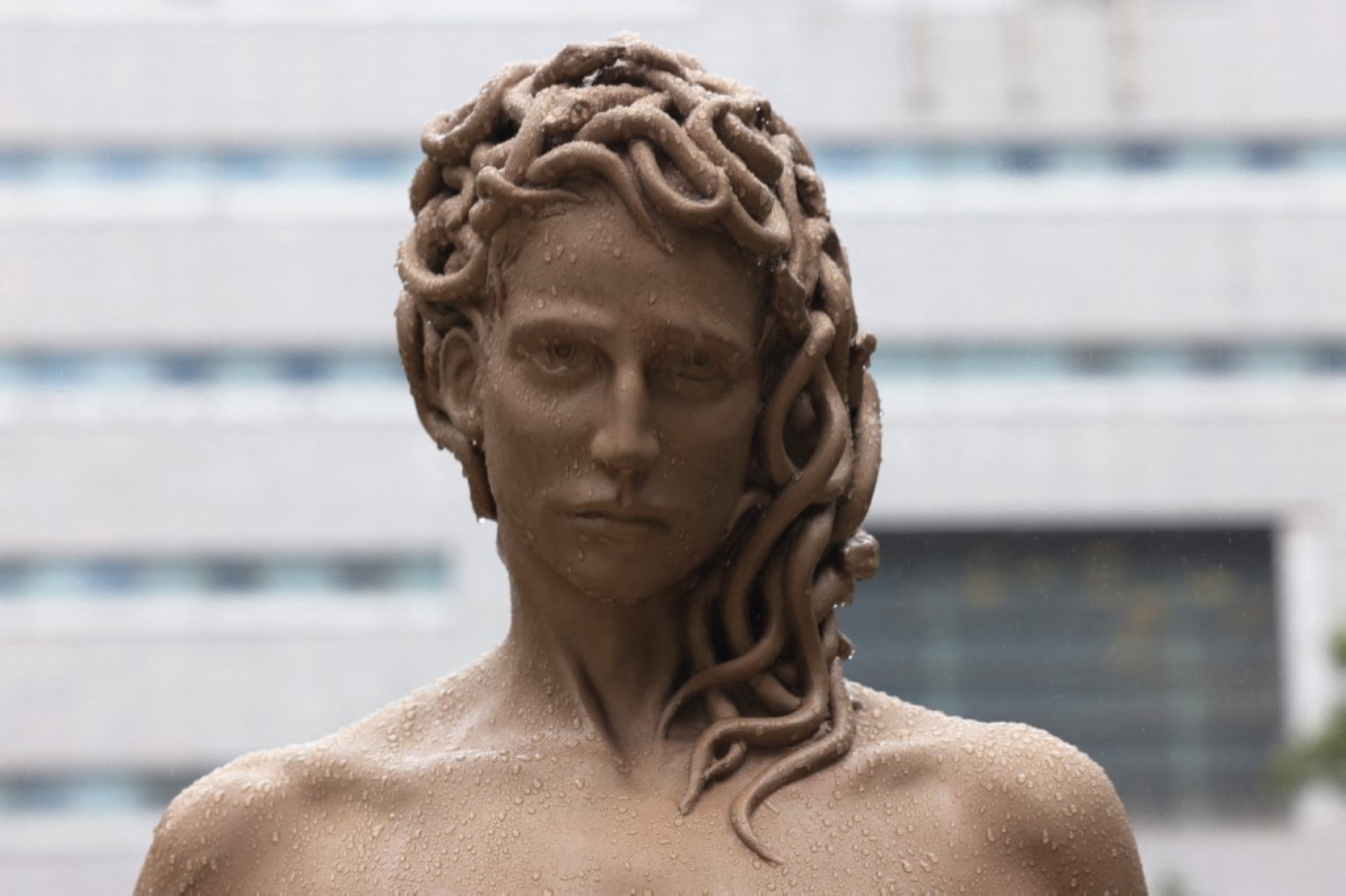
Detail of Medusa's head from the sculpture by artist Luciano Garbati, in Collect Pond Park, New York, on 13 October 2020.
Recurring symbol
Throughout Medusa’s journey, liquidity remains a recurring symbol in the collection. The poems are of particular interest to scholars of the blue humanities, a branch of environmental studies that examines the historic and imaginative entanglement between the ocean and literature. In Mounaged’s work, the sea is not merely a metaphor but a material presence, shaping both imagery and thought.
Some of the most powerful examples of figurative language have been fed by the physical ocean, recalling Hester Blum’s exclamation that “the sea is not a metaphor.” Moby Dick is an obvious example.
In the poem Dive, Mounaged begins at Lacydon, the ancient port of Marseille. What follows introduces a rare outburst of religious imagery, prompting us to wonder whether it signals a momentary attempt of re-enchanting the world?
Medusa, who was initially only a secondary motif, a figure of speech, took over completely; I fell under her spell
Lebanese-Belgian poet Racha Mounaged
From the contrasting littoral—sometimes soft, sometimes calcified—we plunge beneath the surface, as if in a film by the French oceanographer Jacques Cousteau, witnessing the fierce struggle between flora and fauna: invasive limpets, discreet skeleton shrimp, a bed of anemones with translucent filaments, a squid egg mass nestled in a dark cavity.
"Observe the gorgonocephalus," the speaker tells us. "A starry disc from which spring
five divided arms,
fine spiral branches,
twisted hooks
which imprison the prey.
Then, guide it towards the central mouth
for the feast.
Forty metres under the surface"
The poem ends with a single, brightly coloured marine creature, isolated in a cave and reduced to its scientific binomial: "At Jarre's cave, an orange apogon imberbis, coral, yellow and lone: Leptopsammia pruvoti."
The poem abandons metaphor at the very moment it turns to the classificatory language of modern science, a system formalised in the 18th century by the Swedish naturalist Carl Linnaeus.
Yet Linnaean taxonomy never entirely shed the cultural and mythological imagination from which it arose. The French word for jellyfish—méduse—coined in the 18th century under Linnaeus's influence, recalls Medusa's serpentine hair. The poem's turn to scientific nomenclature, therefore, does not abandon myth so much as reveal how scientific language remains entangled with figurative and cultural histories—a tension central to the blue humanities.
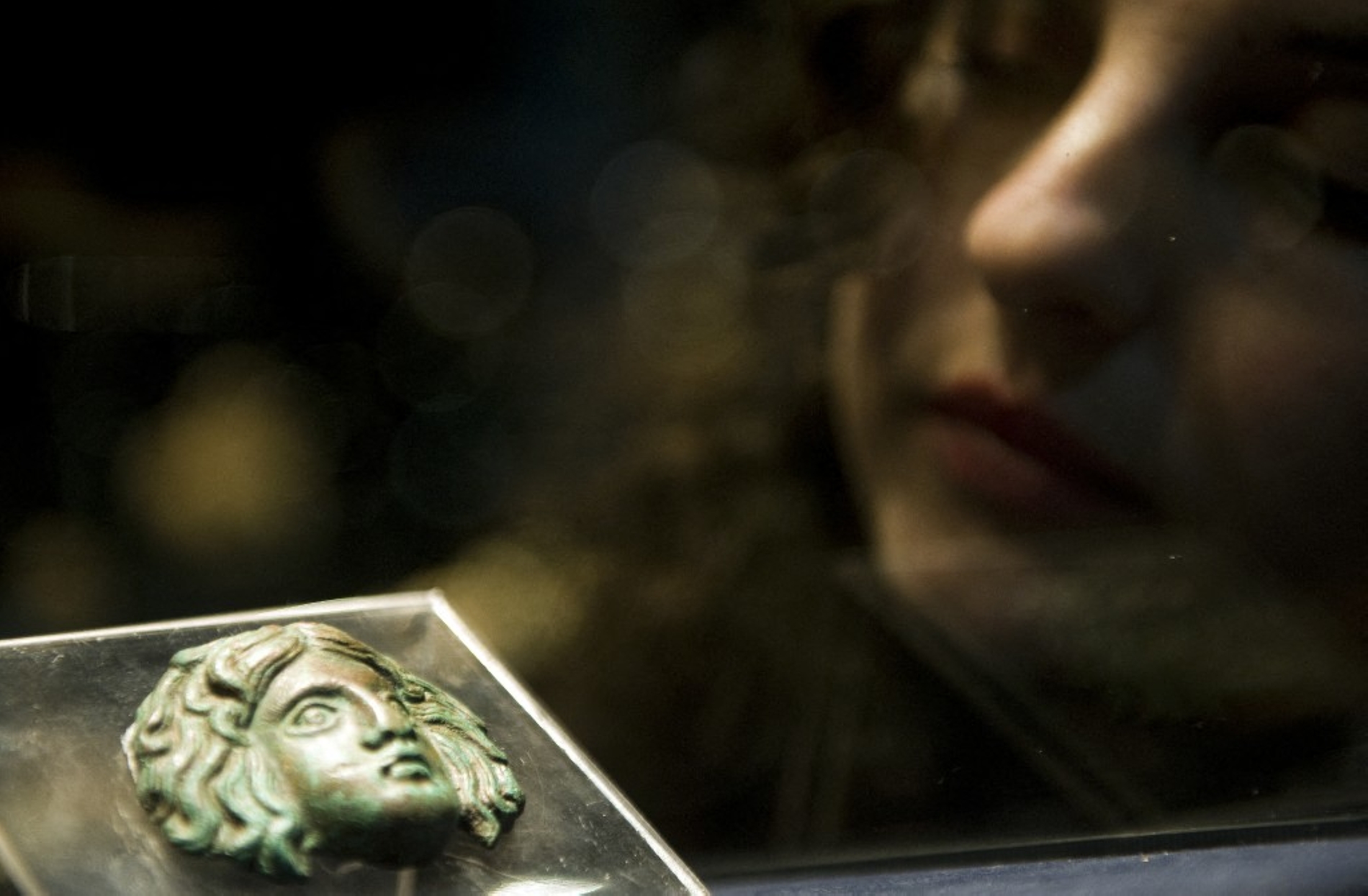
A woman looks at a third century bronze plated head of the Greek mythological figure Medusa presented during the annual archaeological exhibition at the Museum of the City of Skopje on 26 December 2013 in Skopje.
Shifting perspective
In the collection's second poem, Birth of Medusa, the perspective shifts from the third to the first person.
It was there too,
Somewhere between the rumbling of origins and the first babblings of prehistory, that Medusa was born.
And for the first time,
I spoke.
To tell the story
From this empowering start, that confidence falters. What emerges is not so much a feminist Medusa—of the kind reimagined by generations of poets and painters, most famously in Hélène Cixous's challenge to Sigmund Freud's reading of the myth—but an ambivalent, even oxymoronic figure.
"I, the hybrid being, the woman of a thousand and one reptiles."
There are moments of haunting interiority—'everything is at peace except my spirit' and 'despite the beauty of the landscape traversed...why wasn't I happy?'—that sustain a recurring motif of powerlessness. The influence of Charles Baudelaire is unmistakable. As in his work, we remain confined to the horizontal plane, where transcendence seems inaccessible. The only ascent is literal rather than spiritual—from the subterranean caves of the underworld to the shore—never towards the heavens. Both poets dwell in ambivalence, suspended at a crossroads: clarity or darkness, beauty or harshness, life or death.
The poem unfolds within a world saturated with references to Greek mythology: Medusa's genealogy; a therapy session with the blind seer Tiresias, himself a hybrid figure; and the speaker's preference for Aphrodite, goddess of beauty, over the vengeful Athena.
A fairytale figure threads its way through this mythic landscape: a little witch emerging from the shores of Marseille, dancing—not to seduce, but simply to exist. Medusa initially rejects her, only to return to her, recognising in this strange and seductive figure a reflection of her own desire. The witch seeks the world's gaze, and ultimately captures Medusa's. In her, the tragic victim finds a double. Through this figure, Medusa confronts the power she has been denied—a version of herself she longs to inhabit but cannot. The poem underscores this recognition typographically, rendering these lines in bold, as if to mark their centrality.
"The victim dreams of being a witch/ As soon as her eyelids close."
The line crystallises Medusa's contradictory nature. Riven with doubt, she is both a figure of alterity and a mirror of the self—at once similar and different. Rather than rehearsing the familiar interpretation of Medusa as a victim—raped by Poseidon and unjustly punished by a jealous Athena—the collection leads us to a different conclusion. Here, Medusa's self-reflection reaches an existential impasse, and so the collection ends:
How many dead ends I take. How many echoes find me
Alone,
On returning from the path.
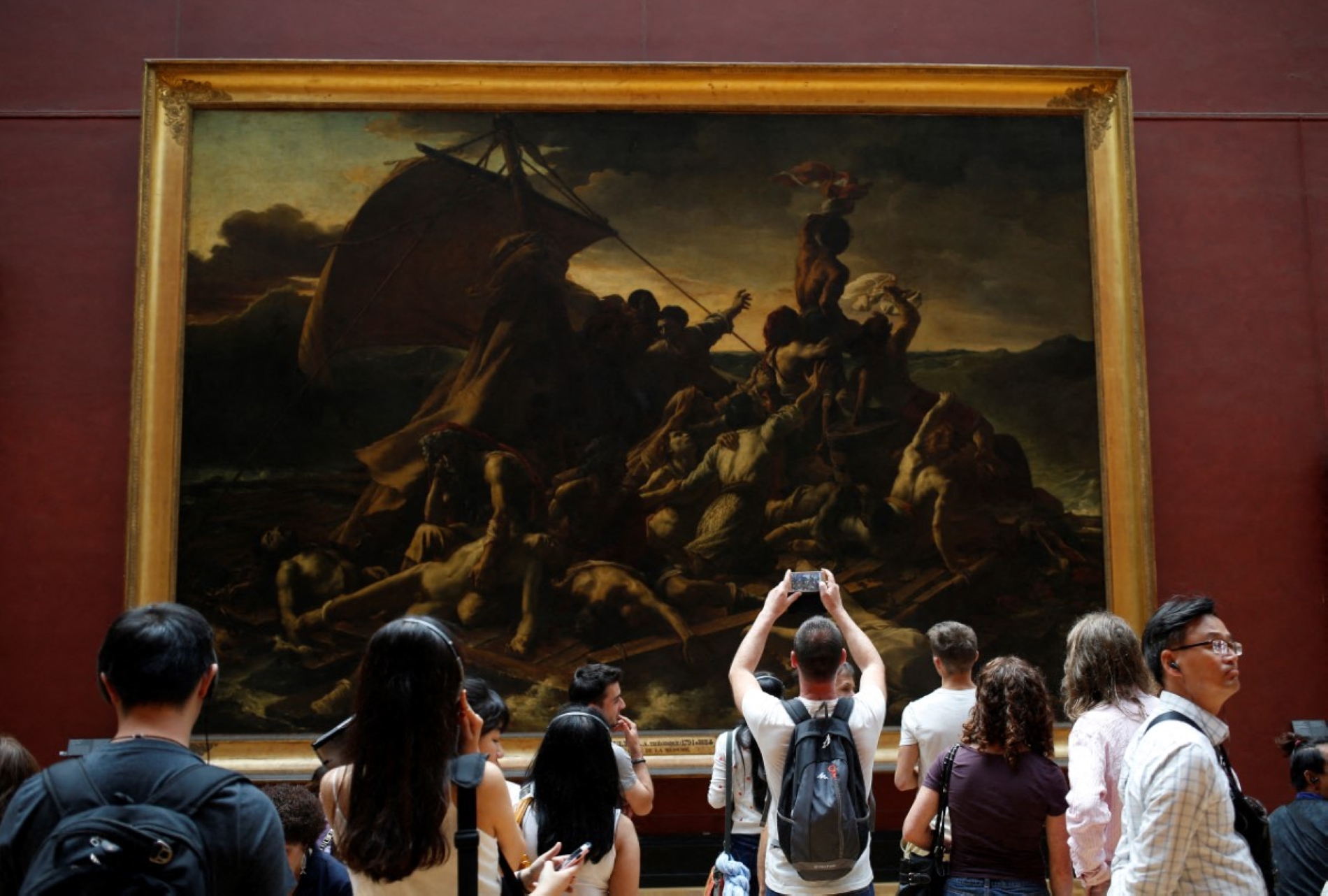
Visitors contemplate Théodore Géricault's "The Raft of the Medusa" (1819) at the Louvre Museum in Paris.
Joyous and rich
Despite the mythic frame in which the collection unfolds, moments of lived reality surface: the noisy markets of Marseille, its tiled roofs and sumptuous sunsets. These passages—whether realistic or fantastical—are a joy to read. Readers well-versed in Greek mythology, however, will find the experience richer still.
My grandmother was one such reader. One of the few girls in her class, she came of age in Belgium at a time when those privileged enough to receive an education were schooled in Latin and Greek. As we read the collection together, curled up on my couch beside a December fire, she took pleasure in recalling the origins of the myths and tracing them with me.
The Arabic translation, titled Medusa and Silence (ميدوسا والصمت) by Faten Faour فاتن ف. فاعور, a retired sociologist based in Canada who has also translated the work of poet Nadine Ltaif, includes helpful footnotes explaining the collection's many mythological references.
What, then, are we to make of this version? As the Italian saying goes, the translator is a traitor. The rhythmic subtleties that arise from shared linguistic roots inevitably falter when moving between languages as structurally and etymologically distant as French and Arabic. The task borders on the impossible.
Yet Faour's rendering, natural and immediate in tone, reshapes the original poetics in subtle ways. In tempering the ambivalence that animates the French, it produces a text that feels more declarative, less suspended in doubt. I found myself reading both versions side by side, turning to the Arabic to clarify certain images, despite having learned French as a child and Arabic as an adult.
One of my favourite poems, Les Brumes, spans eight pages in the original. Midway through its odyssey-like movement, Faour introduces a structural intervention of her own, inserting a new subtitle—Return to Hell (العودة من الجحيم). This decision follows a perceptible shift in the poem's register, from an active first-person interiority to a more passive, depersonalised metafictional voice. In this instance, the translator does not simply carry the text across languages; she interprets it.
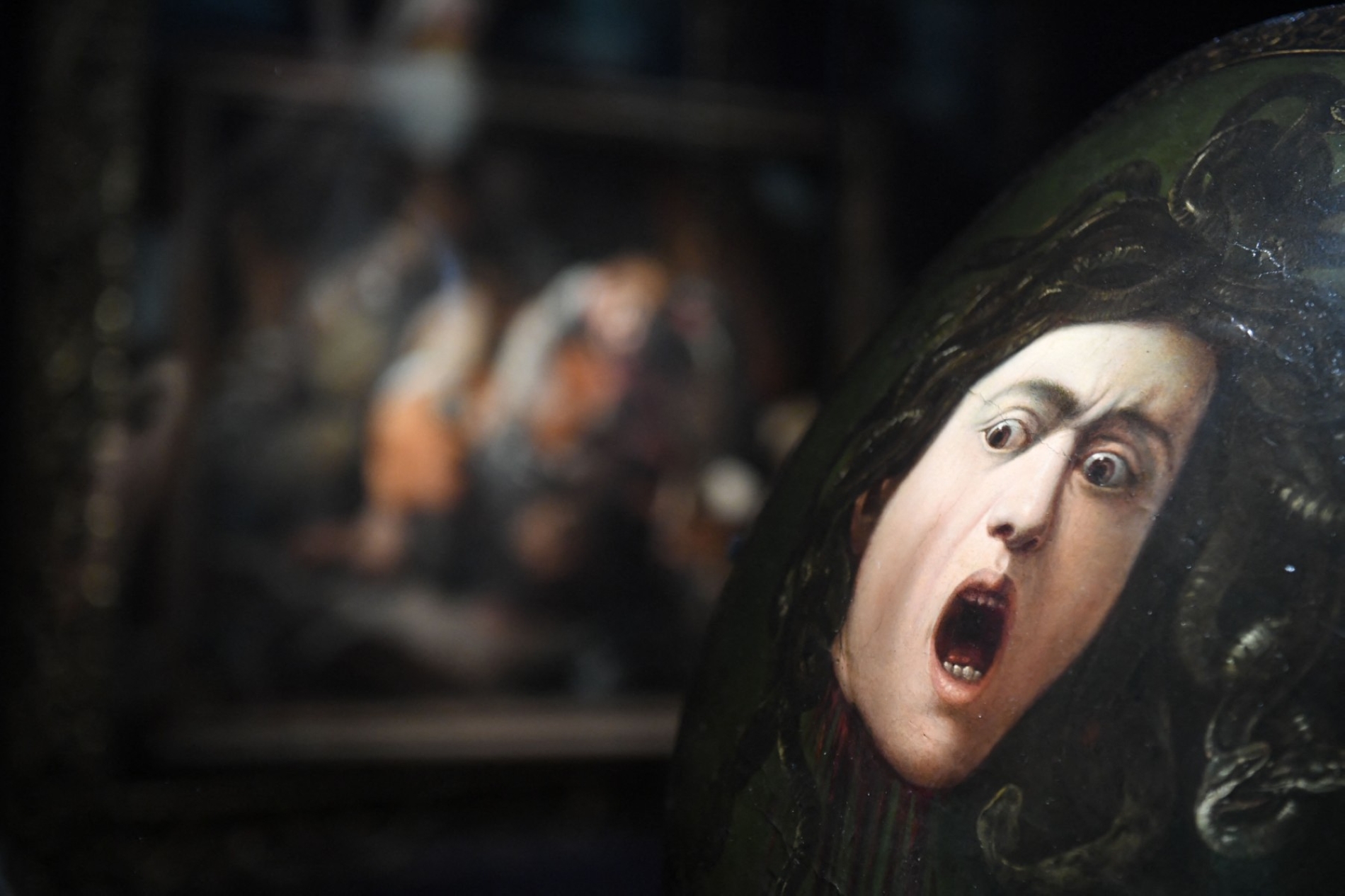
"Medusa" by Michelangelo Merisi at the Alte Pinakothek museum in Munich, southern Germany, on 16 April 2019.
Plunged into modernity
Another notable decision was not to translate the second part of Mounaged's collection, Medusa 2.0. In this section, we are jolted from prehistoric grottos to a contemporary world of stuffy Airbnb basements. The movement mirrors—in the author's own words—the first part, but refracts it through a critique in which "speed replaces profundity."
In this second section, earlier traces of Medusa, Tiresias, and the little witch are stripped of high symbolism and reduced to a bare, colloquial language. "This time, it's really me who speaks!!!" the second poem declares.
Paradox is no longer sustained but resolved. "The ocean whispers to her, welcome home," another poem concludes. (Several of the 2.0 poems can be heard in recordings read in the soothing voice of Mounaged's former rhetoric teacher, Céline Dupont).
The collection concludes with a direct political epilogue—an ode to weirdos: foreigners, the neurologically divergent, the hypersensitive, the overly philosophical, those shaped by multiple cultures. Its appeal is simple: stop fighting against ourselves; accept our strangeness. Which of the two iterations one prefers will depend largely on a reader's appetite for difficulty or clarity.
Yet even in its more 'accessible' register, Mounaged remains faithful to the collection's ethos of contradiction. Across both sections, she repurposes the myth of Medusa to confront a troubling question: how do we live with an inheritance that has cast us as monsters? The answer lies in reconciling with our own paradoxes—and with those of others.