Iran’s wartime leader isn’t a dealmaker

Ali Larijani has a pragmatic temperament—but a worldview shaped by the system he now leads.

Ali Larijani participates in a ceremony held by Hezbollah to commemorate the first anniversary of the assassination of its leader Hassan Nasrallah, in the suburbs of Beirut, on 27 September 2025.
Reuters
Ali Larijani participates in a ceremony held by Hezbollah to commemorate the first anniversary of the assassination of its leader Hassan Nasrallah, in the suburbs of Beirut, on 27 September 2025.

Iran’s wartime leader isn’t a dealmaker

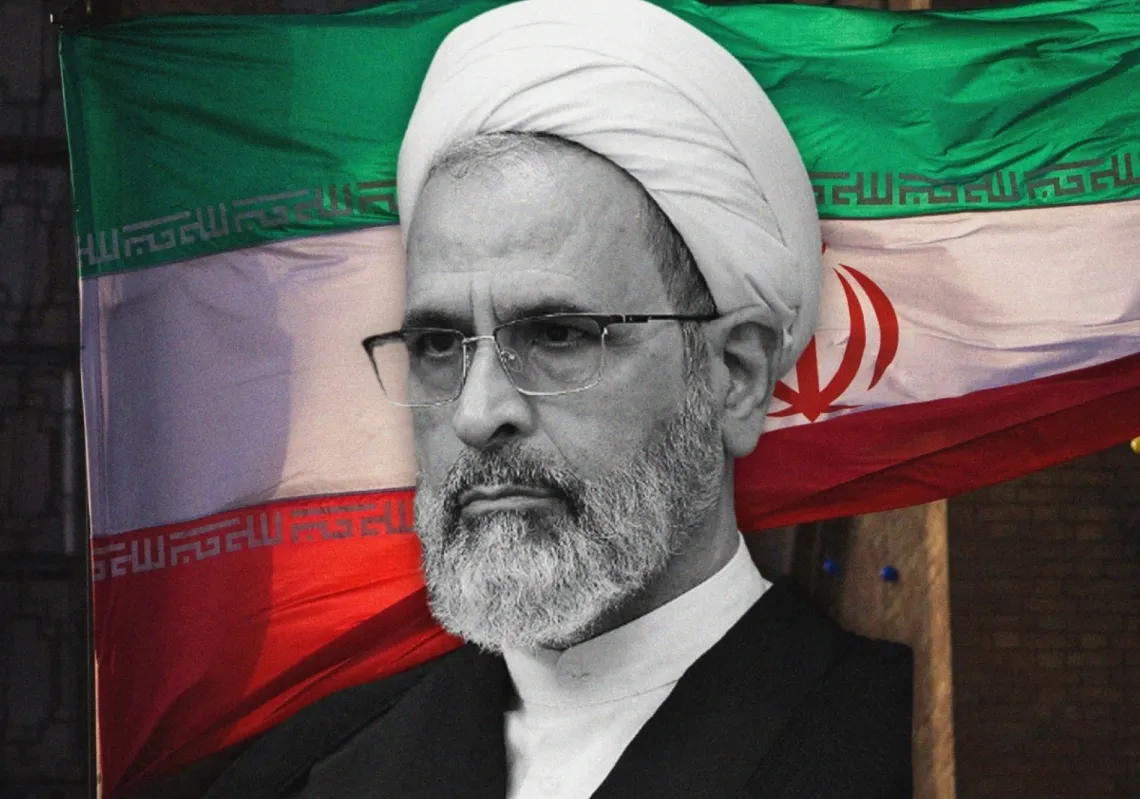
In the aftermath of the 28 February assassination of Iranian Supreme Leader Ayatollah Ali Khamenei, attention has turned to Ali Larijani as the country’s de facto wartime leader. His position as secretary of Iran’s Supreme National Security Council (SNSC), roughly analogous to the US national security advisor, places him at the centre of Tehran’s strategic decision-making amid the all-out assault on Iran.

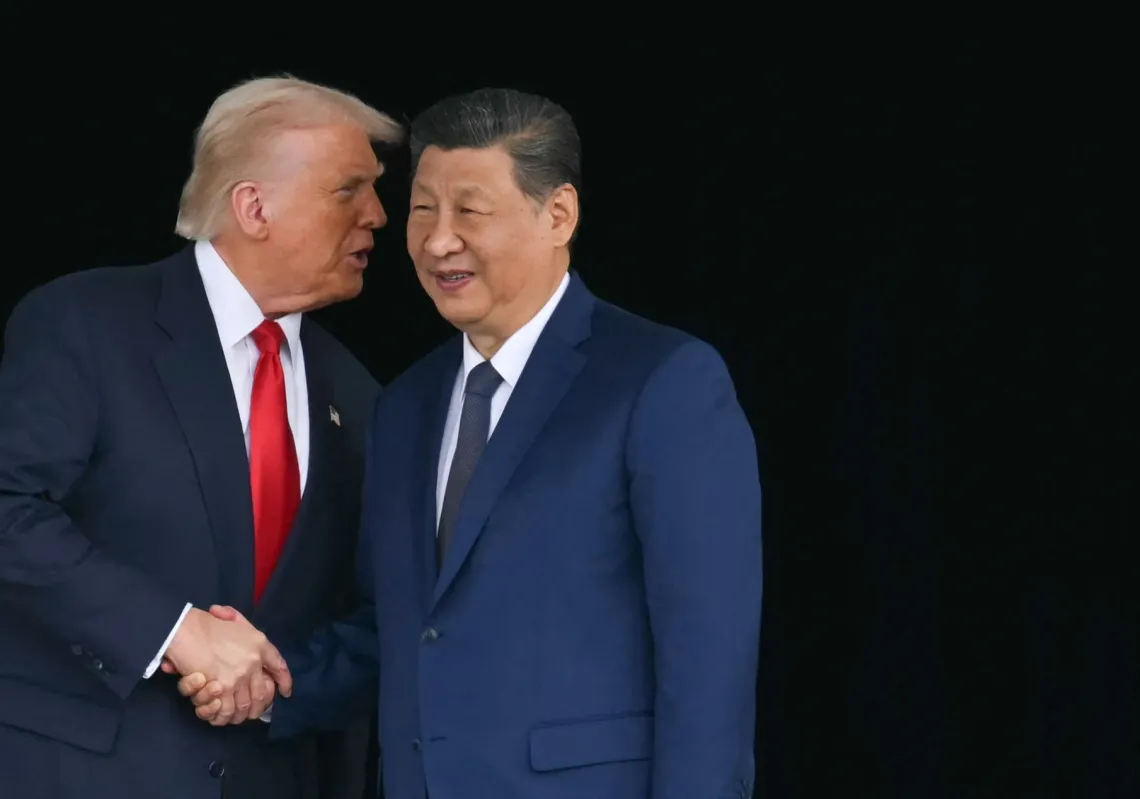
Many observers now portray Larijani as a pragmatic interlocutor with whom US President Donald Trump might strike a deal, much as he did with Venezuelan Vice President Delcy Rodríguez. But assessing that likelihood requires a deeper understanding of who exactly Larijani is—and, more importantly, the institutions of the Islamic Republic in which he has been immersed for his entire adult life and now ostensibly leads.

Born in 1957 in the holy Shiite city of Najaf, Iraq, into an Iranian clerical family, Larijani grew up in an environment shaped by religion. His father, Mirza Hashem Amoli, was a respected scholar who moved the family to the seminary town of Qom in 1961 amid rising Arab nationalism and hostility toward Iranians in Iraq. Unlike many sons of clerics, Larijani did not pursue theology. Instead, he studied computer science at Aryamehr University of Technology, later named Sharif University, a prestigious institution founded by the Pahlavi regime to train technocratic elites. During the politically turbulent 1970s, he remained largely apolitical, avoiding the era’s dominant ideological movements such as Marxism and Islamism.

His entry into politics came through marriage. In 1977, he married Farideh Motahari, daughter of Morteza Motahari, a prominent cleric and close associate of Ayatollah Ruhollah Khomeini. After the 1979 revolution, Motahari—then the chairman of the Council of the Revolution, which was tasked with establishing an Islamic republic—helped secure positions for Larijani and his brother Mohammad Javad at the state broadcaster, Islamic Republic of Iran Broadcasting (IRIB). Although Motahari was assassinated later that year, Larijani’s bureaucratic career had begun.
Anwar AMRO / AFP
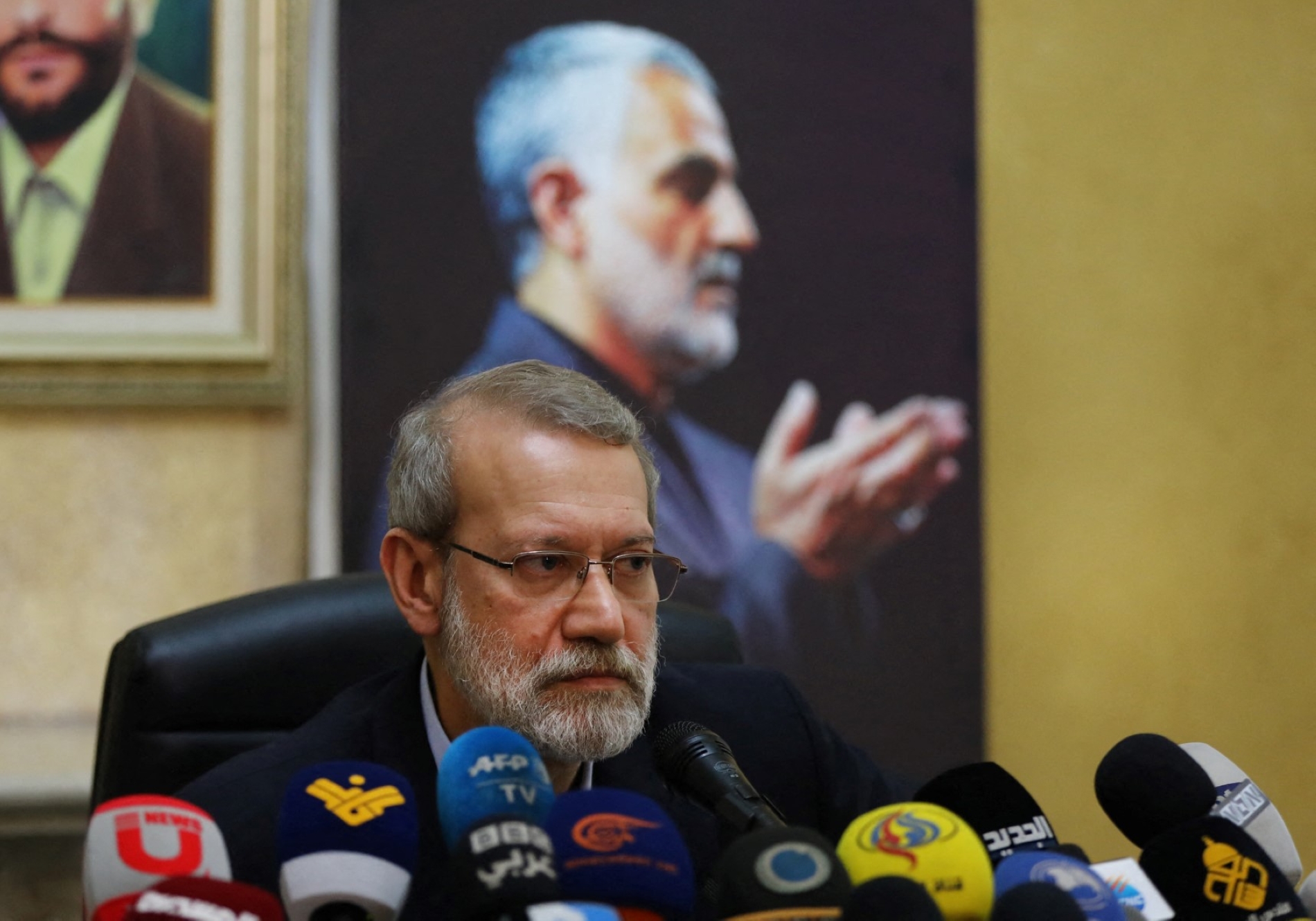
Iranian Parliament Speaker Ali Larijani gives a press conference at the Iranian embassy in the Lebanese capital Beirut on 17 February 2020 in front of a portrait of Iran's late top general Qasem Soleimani.

In 1982, two years after Iraq invaded Iran, Larijani joined the Islamic Revolutionary Guard Corps. Though he later admitted he was “not a guardsman by temperament,” he rose through the organisation and eventually became a brigadier general and the deputy chief of its joint staff.

His connections with powerful political figures, particularly former President Akbar Hashemi Rafsanjani, proved decisive. Rafsanjani appointed him as minister of culture and Islamic guidance in 1992. There, Larijani demonstrated pragmatic instincts, legalising videocassette recorders and foreign films rather than continuing ineffective bans.

His administrative abilities soon attracted Khamenei’s attention. In 1994, Khamenei appointed him as the director of IRIB and the leader’s representative to the Supreme National Security Council. Although Larijani initially belonged to Rafsanjani’s technocratic circle, he opportunistically shifted his allegiance to Khamenei.

During President Mohammad Khatami’s reformist administration, IRIB under Larijani became a powerful conservative platform, broadcasting televised confessions of political prisoners and promoting, with Khamenei’s blessing, narratives portraying reformists as threats to the Islamic Republic. At the SNSC, Larijani derided Khatami and then-Secretary Hassan Rouhani for seeking nuclear compromise with the West, dismissing their diplomacy as “trading pearls for bonbons.”

In 2005, Khamenei appointed Larijani as the secretary of the Supreme National Security Council and Iran’s chief nuclear negotiator. His strategy combined ideological firmness with tactical pragmatism: advancing Iran’s nuclear programme while maintaining diplomatic engagement with European mediators such as Javier Solana.
Reuters
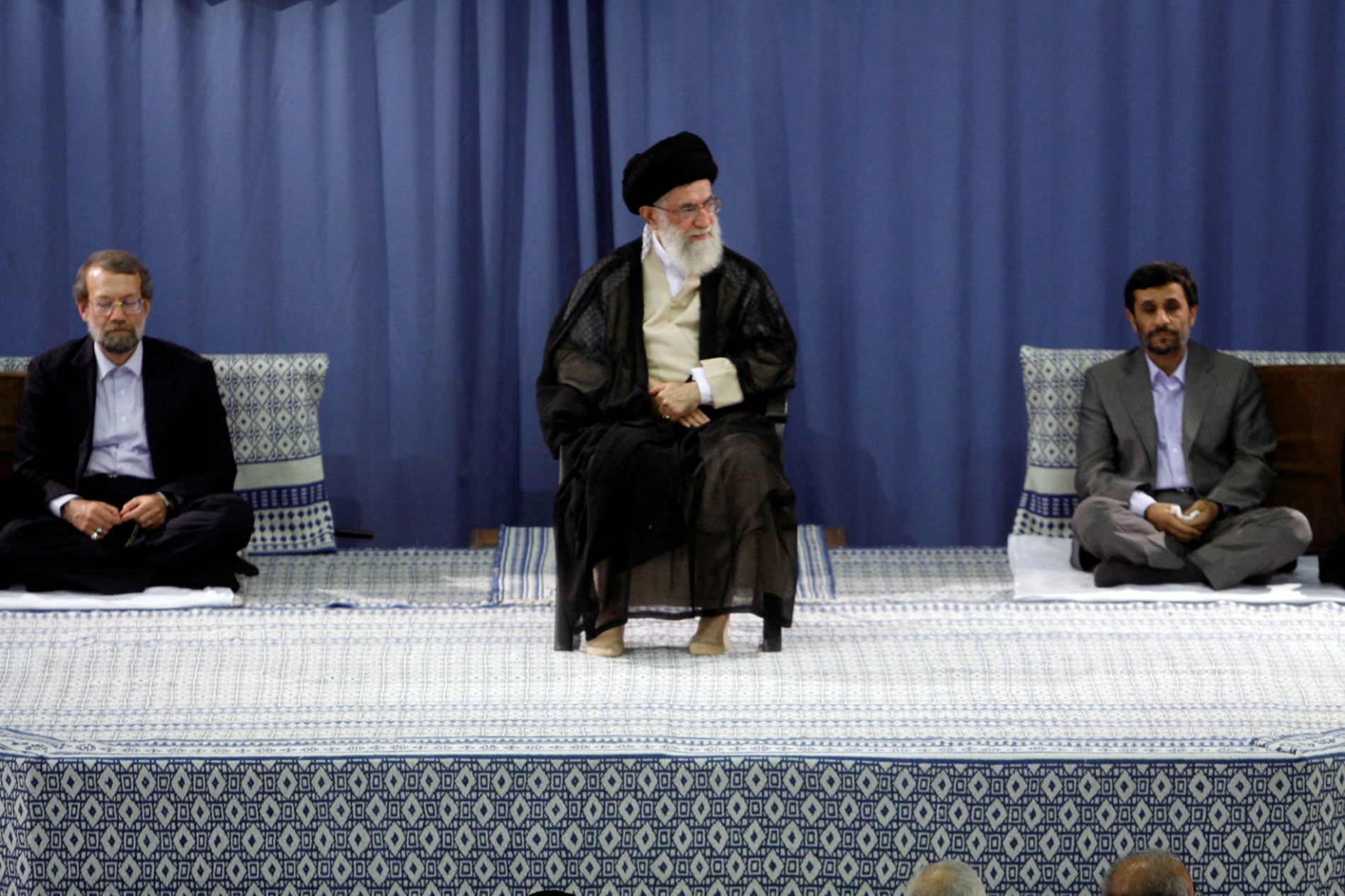
Iranian President Mahmoud Ahmadinejad and Ali Larijani listen to a speech by Supreme Leader Ali Khamenei during Ahmadinejad's inauguration ceremony for a second term as president of Iran in Tehran, on 3 August 2009.

Tensions with President Mahmoud Ahmadinejad, whose incendiary rhetoric against Israel helped the latter mobilise world opinion against Iran, eventually led Larijani to resign from his post on the SNSC in 2007.

The setback proved temporary. In 2008, Larijani was elected speaker of parliament, a position that he held until 2020. At the same time, his younger brother, Sadegh, served as chief justice from 2009 to 2020, the first time two brothers simultaneously headed two branches of government in the Islamic Republic. As speaker, Larijani cultivated a reputation as a pragmatic conservative mediator during crises, including the suppression of the 2009 Green Movement protests—the leaders of which were prosecuted in show trials by Sadegh—and disputes over Iran’s nuclear programme.
Iranian policymakers seek a deal with the US that preserves the Islamic Republic while allowing Iranian oil to gradually return to global markets

By the late 2010s, the family's influence had declined. In 2019, Khamenei removed Sadegh from the judiciary, and Larijani was barred from running in the 2021 and 2024 presidential elections, as the supreme leader favoured other conservative candidates—namely, Ebrahim Raisi and Saeed Jalili.

Iran's mounting crises in the mid-2020s unexpectedly revived Larijani's fortunes. Domestically, the regime faced waves of increasingly violent protests, most notably the 2022-2023 uprising triggered by the violent enforcement of the hijab law and the death of 22-year-old Mahsa Amini in police custody. Externally, Iran suffered major strategic setbacks: Israeli attacks on Hezbollah in September 2024, the collapse of the Assad regime in Syria in December of the same year, Israeli strikes on Iranian territory in June 2025, and subsequent US bombardment of Iranian nuclear facilities.

Together, these shocks created demand within Iran's leadership for experienced crisis managers, paving the way for Larijani's return to the Supreme National Security Council. Larijani's appointment as secretary of the SNSC in 2025 restored him to the centre of Iran's strategic decision-making apparatus. Yet the structure of the Islamic Republic limits the authority of any single official. Any agreement with the United States will require the consent of a broad constellation of political and military actors.

Even before Khamenei's assassination, Iran had begun drifting toward collective leadership. By 2024, the ageing supreme leader had become increasingly isolated, and his seclusion deepened after the June 2025 war revealed him as a prime target for Israeli assassination.

AFP
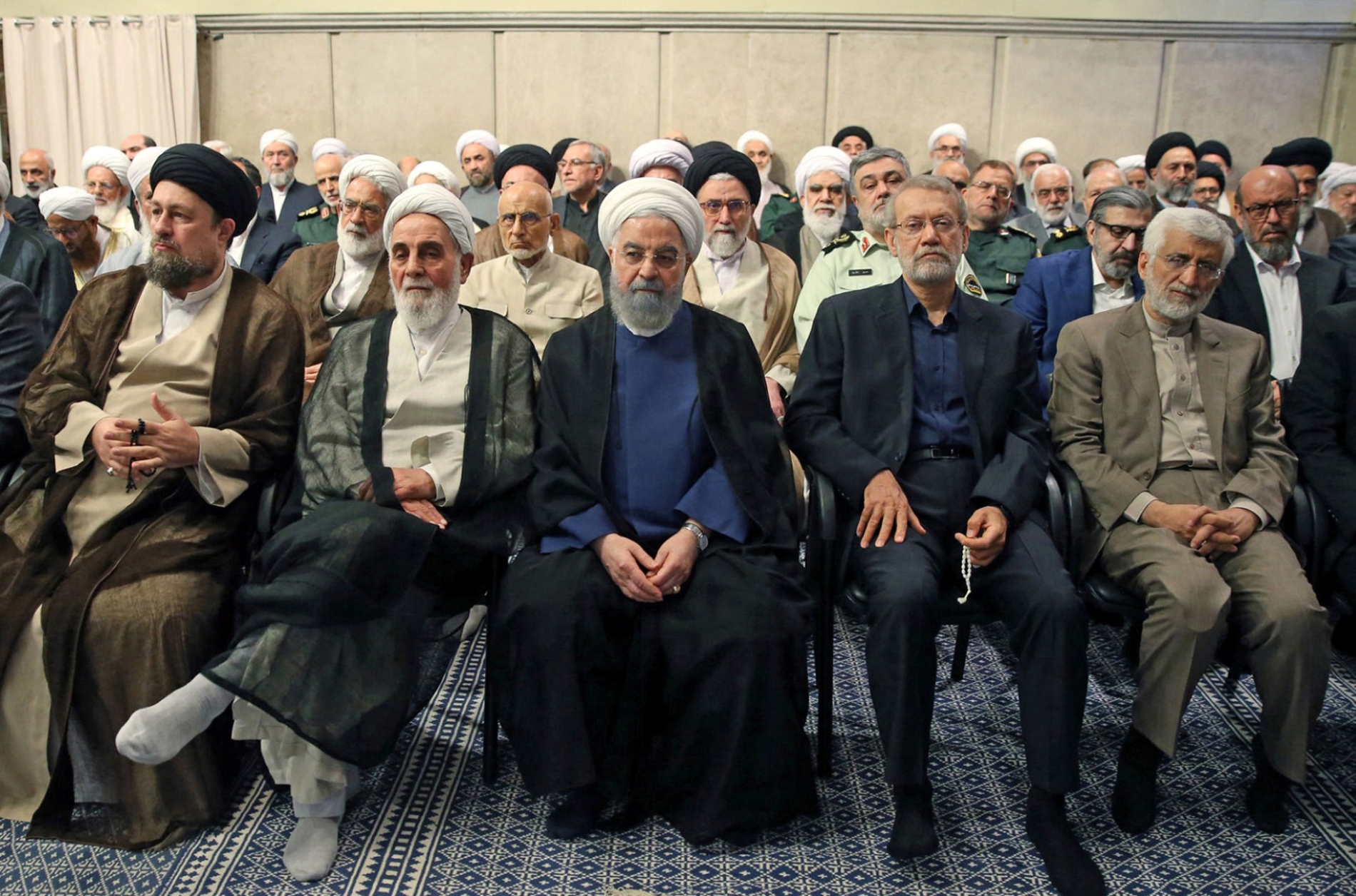
Hassan Khomeini, Ali Akbar Nategh-Nouri, Hassan Rouhani, Ali Larijani, and Saeed Jalili, during the ceremony where Khamenei endorsed the appointment of Masoud Pezeshkian as President of Iran, on 28 July 2024.

In practice, governance shifted to an informal leadership council composed of President Masoud Pezeshkian, Parliamentary Speaker Mohammad Bagher Ghalibaf, Chief Justice Gholam-Hossein Mohseni Ejei, and representatives from both the Islamic Revolutionary Guard Corps and the regular army. This body chose not to enforce the Hijab and Chastity Law passed after the hijab protests, fearing renewed unrest. In Khamenei's absence, it also accepted the cease-fire that ended the June 2025 war. Following Khamenei's assassination on 28 February, the council has continued to govern Iran and is also likely to do so after a new leader has been elected.

As SNSC secretary, Larijani functions primarily as a coordinator—collecting proposals from across the security bureaucracy, presenting options to the leadership council, and implementing the decisions that emerge. Ironically, Israel's strikes simplified its institutional environment. Khamenei, whose ideological rigidity at times constrained diplomacy, is gone. So too is Adm. Ali Shamkhani—a former SNSC secretary who, after the June 2025 war, headed the newly revived Supreme Defence Council, widely seen as an institution designed to limit Larijani's influence. With Shamkhani removed, Larijani faces fewer internal rivals.

Yet the central question remains whether he can deliver an agreement that satisfies Washington without undermining the Islamic Republic's survival strategy. For decades, the Islamic Republic has sought a paradoxical equilibrium with the United States: resisting US pressure rhetorically while quietly exploring arrangements that allow the regime to survive economically and politically. Iran's negotiating posture under Larijani may introduce novelties such as direct talks between Iranian and US government representatives, but it is unlikely to represent a fundamental break with the past. 

Reuters
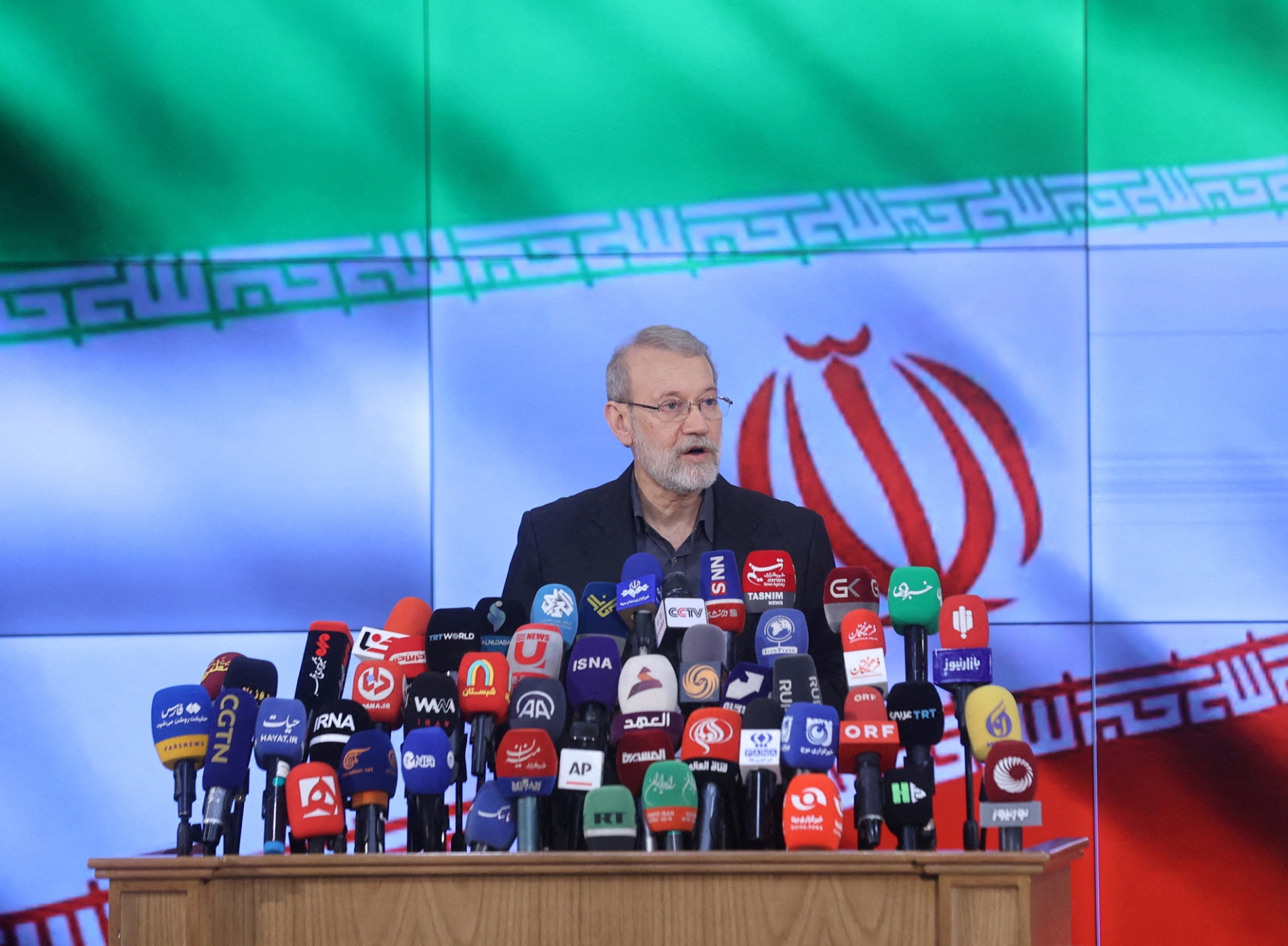
Ali Larijani, during a press conference after registering his candidacy for the presidential elections at the Ministry of Interior in Tehran, on 31 May 2024.

From the perspective of collective leadership, a Venezuelan model may not be unattractive. Washington has shown willingness to strike limited transactional deals with Caracas, permitting partial sanctions relief and oil exports in exchange for modest concessions. Iranian policymakers have watched closely. What they seek is not normalisation with the United States but a similar arrangement, one that preserves the Islamic Republic while allowing Iranian oil to gradually return to global markets.

But Tehran also believes that negotiations with Trump cannot begin from a position of weakness. Concessions offered without leverage invite pressure rather than compromise. The regime, therefore, appears to be constructing leverage of a different kind. Having suffered strategic losses of its proxies, Tehran's remaining instrument of coercion lies in the vulnerability of the global energy system, which explains the regime's targeting of regional shipping and energy infrastructure.

The implicit message to Washington is stark: Should the United States pursue the Israeli policy of regime change, there will be catastrophic consequences for global energy markets. In that sense, Iran's strategy resembles strategic hostage-taking. The pipelines, refineries, terminals, and shipping lanes that sustain the global economy become the silent backdrop to diplomacy. Tehran may have little desire to ignite such a conflagration, as it would endanger the regime itself, but by demonstrating that it retains the capacity to do so, it seeks to shape Washington's calculations.

Larijani's role is therefore less that of a peacemaker than of a manager of calibrated escalation. Whether a deal emerges will depend not only on him but also on the collective leadership now guiding Iran—and on the choices made in Washington.

font change