Ruchir Joshi on the long shadow of history

Indian author Ruchir Joshi discusses his 920-page reimagining of 1940s Calcutta, its mosaic structure, and the enduring roots of violence and division that continue to shape the present

Ruchir Joshi on the long shadow of history

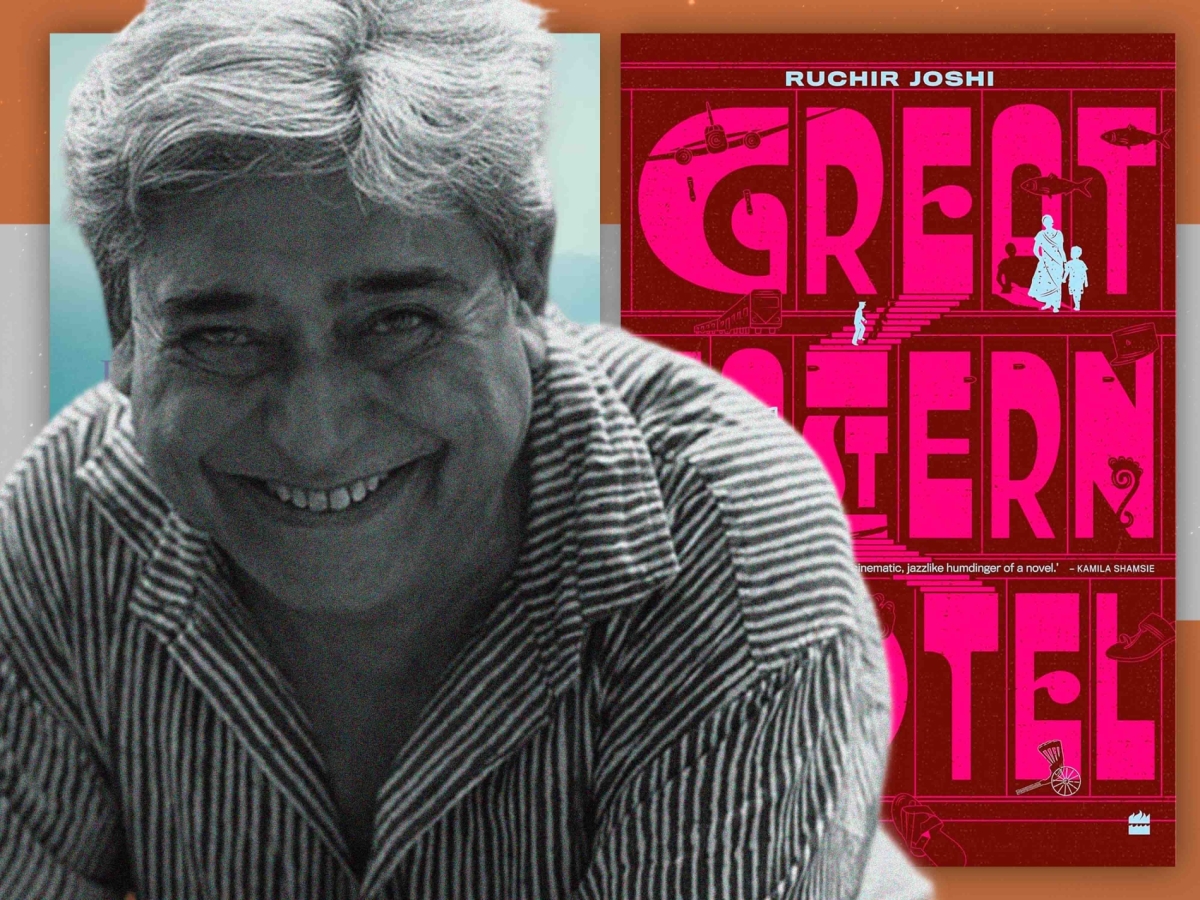
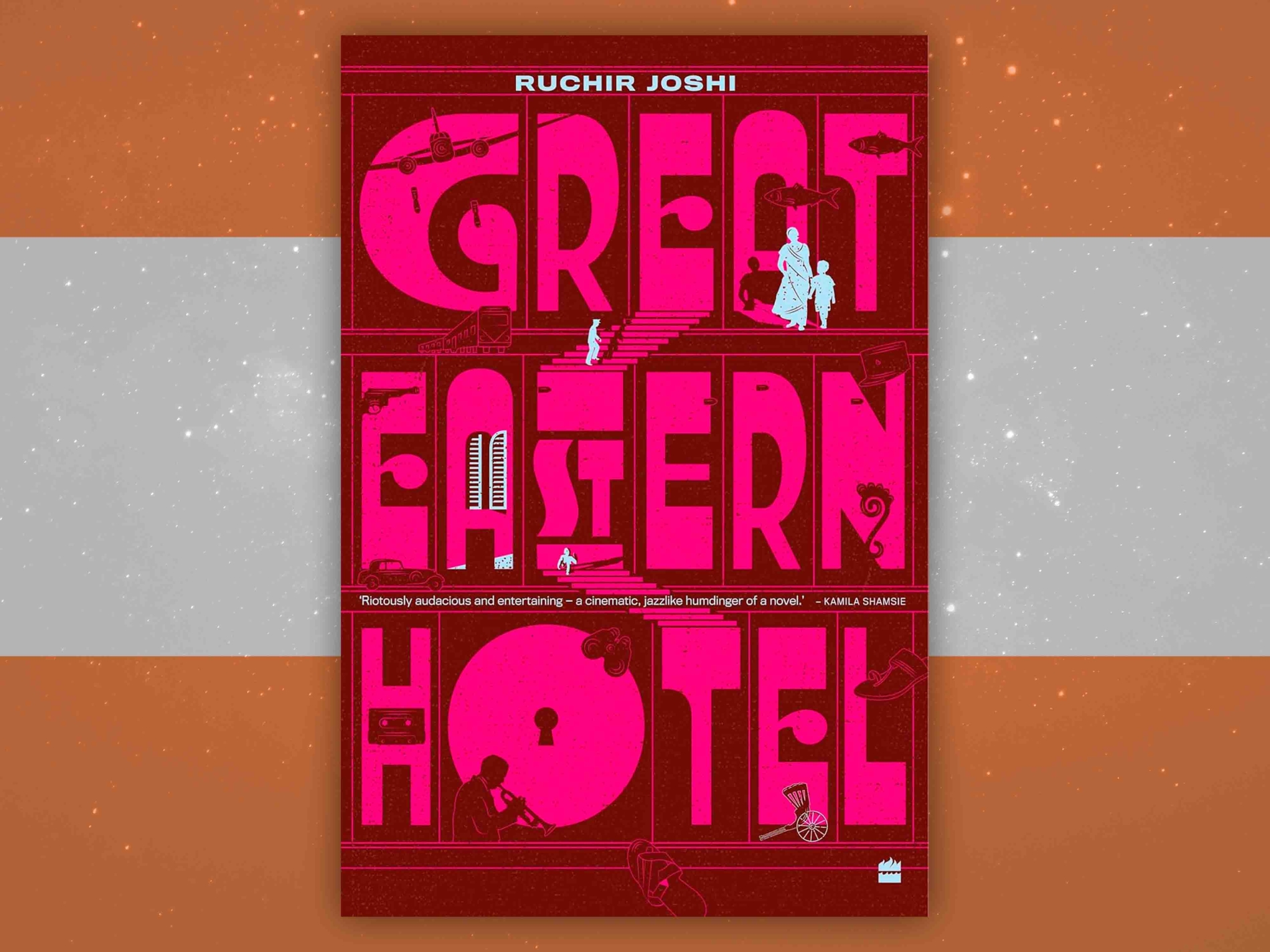
After a gap of more than 20 years, the Indian writer, filmmaker, and columnist Ruchir Joshi published his second novel, Great Eastern Hotel, last year to critical acclaim.

Born and raised in Kolkata (formerly Calcutta), and the son of writer and dramatist Shivkumar Joshi, he released his debut novel, The Last Jet-Engine Laugh, in 2000. Although he has written other non-fiction works since then, the release of his latest novel marks a return to the expansive, formally inventive storytelling that first established his reputation.

Great Eastern Hotel is 920 pages—well over 300,000 words—and is a serious undertaking for any reader. Below, the author—renowned for his ability to render place and time so masterfully—talks to Al Majalla about the turbulent history of 1940s Calcutta, the novel’s mosaic-like structure, and the roots of contemporary violence and division.


In your novel Great Eastern Hotel, you depict Calcutta in the 1940s as a city on the brink—politically, socially, and humanly. Why did you want to revisit this particular moment in history?

The history of Calcutta during the Second World War, and until the years just after Partition and independence, is as unique as the histories of, say, London, Stalingrad, Singapore, or Berlin at that time.

In a densely populated urban area of roughly 78sq km, you simultaneously find: the cultural capital of the subcontinent, with vibrant literary, musical, theatrical, and visual arts milieus; the most varied and intense concentration of political parties competing to take over India from the British; the biggest concentration of allied troops from so many different countries; and the most cosmopolitan mix of people in the subcontinent. Between 1942 and 1952, successive waves of refugees were added to this mix—first the Indians escaping Burma, then the victims of the famine in rural Bengal, and then the mass of people who came over from East Bengal/Pakistan because of Partition.

1940s Calcutta is an early laboratory for inter-faith strife and hatred, as well as the movements to counter that poison

Indian writer/filmmaker Ruchir Joshi

At the same time, a significant number of people left Calcutta between 1946 and 1950. This included the Muslims who moved to East Pakistan (in 1939, Calcutta had actually been a Muslim-majority city by a small percentage), the thousands of troops who departed for their home countries after the war, and the British who left after independence. In 1939, Calcutta had a population of roughly 2.5 million. By 1952, this had increased to 7.5 million—a threefold increase in the number of people living in the same area.

This history throws up a number of lessons and models for our times. Significant cultural and political turmoil contributed to the creation of the countries that would become India and East Pakistan. The hundreds of thousands of victims of the Bengal famine can be seen not only as economic and political refugees but also as precursors to today's environmental refugees, as one of the most fertile regions on the planet is bled dry of food. In today's world, where religion is being weaponised in so many cultures, 1940s Calcutta is an early laboratory for inter-faith strife and hatred, as well as the movements to counter that poison.

I didn't start writing the novel having thought these things through. I began writing to explore a period of my city's history that had always fascinated me. During the long writing period (over 20 years, for a number of reasons), there were several moments when I doubted myself and wondered why I was trapped in this time bubble while so many upheavals were taking place around us. But now, having finished it, the whole project makes a strange kind of sense. As often happens, the finished work teaches you how to look at it.

You have previously said that a city cannot be reduced to a single identity. How did this awareness shape the construction of your characters?

Finding and developing characters, I consciously resisted the urge to have them be 'a typical example of' a certain class, ethnicity, or political movement. I wanted to avoid writing a history textbook pretending to be a novel, and one decorated with representative characters. I was interested in these people precisely because they were outliers, atypical individuals, young city dwellers who were obliged to break out of their social and ideological sectors and engage with others very different from them.

Do you view Great Eastern Hotel as a novel about the past or about the present—one that continues to reproduce violence and division?

The aim was to write about the past intensely and vividly, with the stories depicted also throwing some light on our own turbulent times. Yes, some of the current forms of division and violence are new, but if we look hard enough into the past, we can trace their roots through earlier phases and variations. Perhaps knowing how we entered these deadly mazes will give us clues to getting out of them.

I came to writing through painting, photography, and non-linear essay film-making

Indian writer/filmmaker Ruchir Joshi

With its considerable length and intricate structure, Great Eastern Hotel arrives at a time defined by speed and short-form writing. Was it a conscious aesthetic choice to resist that rhythm, or did the novel impose its own scale regardless of contemporary expectations?

The novel imposed its own scale and pace. It's a long book in one way and, yes, quite intricate when you're getting into it, but it's also a text comprising 116 short sections divided into 10 'books'. The longest section is about 15,000 words, but most sections are much shorter. As I got deeper into the writing, I began to see these sections as interlocking tiles, each important in itself but, together, forming a large mosaic, with the lines separating the pieces remaining visible.

Perhaps it was presumptuous to imagine a reader starting a second or third reading of the book, but I wanted the structure to be such that someone could begin their re-reading at different points in the book and perhaps complete it via their own sequence, somewhat in the spirit of Julio Cortázar's great novel Hopscotch.

As for the book's physical size, in this era of slim volumes, I'm getting all sorts of reactions from readers and potential readers. Some people have bought the book and kept it for a gap in their lives when they can read it. Others have managed to read it in small bits over several months. Many have said they found it an easier read than they imagined; that once they began, it was not difficult to finish, that the 'size' seemed to disappear. It's not an easy book to carry on a commute. It's not an easy book to read if you like reading while lying down. There are plans to release box sets containing two volumes of roughly equal size, and I'm curious to see what effect that has on readers.

With more than two decades separating your debut novel and Great Eastern Hotel, would it have been possible to write this book at an earlier stage in your life?

No, this book could only have been written when it was. When I first began writing long-form fiction, like many authors, I had a fantasy visual of the finished book being around 300 pages. With my debut, I exceeded that by about 70 pages. Great Eastern Hotel was initially conceived as a trilogy, but as I wrote, the story resisted three—or even two—complete narrative arcs. As the weave began to take shape, it became clear it had to unfold as one continuous succession of small sections. Next time, I will aim for a novella—not a word beyond page 180.
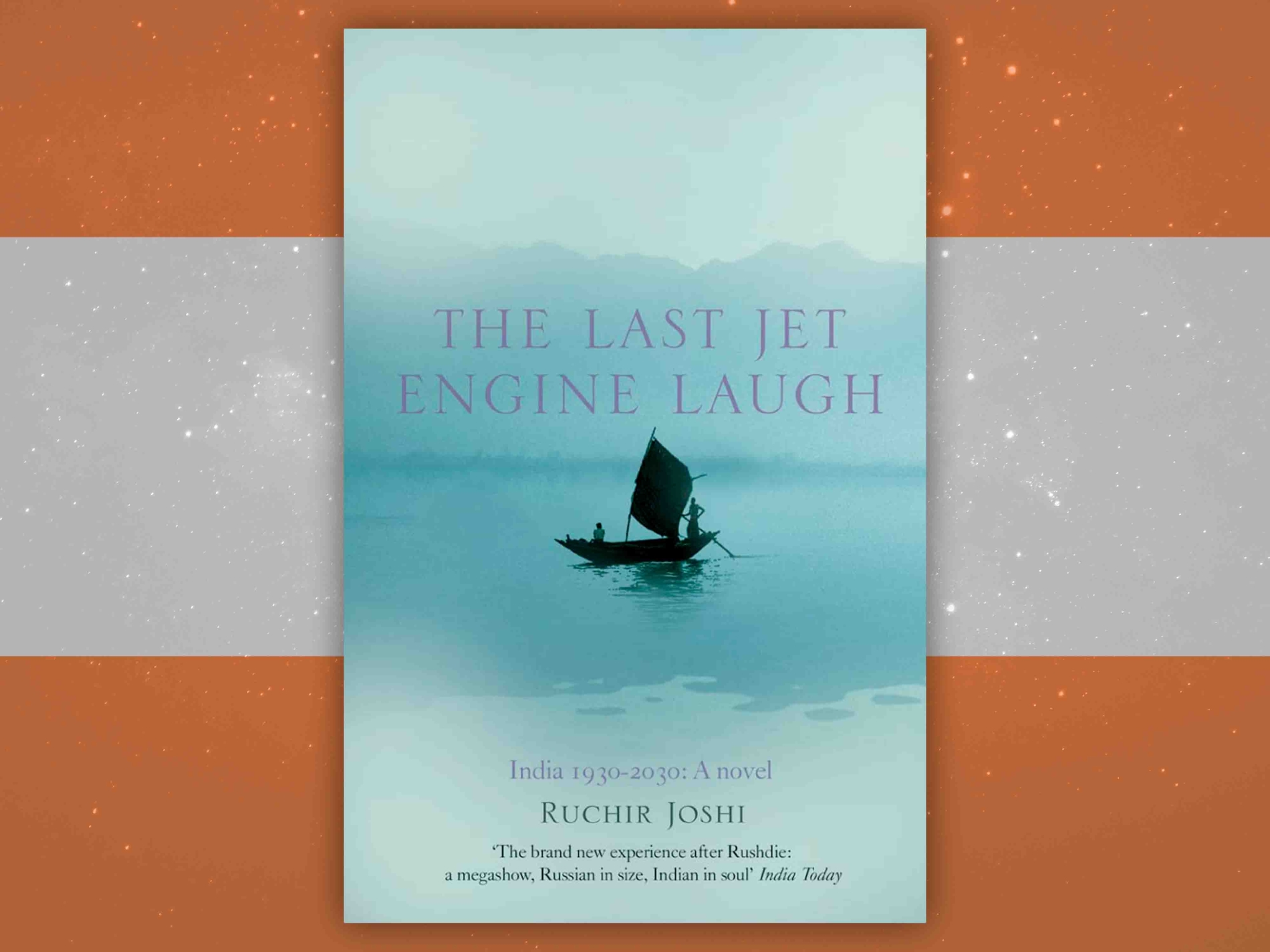
In your debut, The Last Jet-Engine Laugh, the narrative moves across multiple time frames—from the colonial period to an imagined future. Why did you choose a non-linear structure, and what did it allow you to do with history that a more conventional narrative might not?

Early in the writing of The Last Jet-Engine Laugh, I stumbled across the idea that forms the central conceit of the novel—the history of a family and a nation across 100 years, 30 of which were still yet to come. This gave me the license to place fragments of the past—with its unstable, questionable nation-forming narratives—alongside moments from an equally unstable, uncertain, nation-disintegrating near future. What I was really examining, of course, was that contemporary moment—India in the final decade of the 20th century (though now I would specify urban India of the west, east, and north). That examination seemed to demand toggling between the lenses of the past and future.

I came to writing through painting, photography, and non-linear essay film-making. My foundational forms were the collage, the non-linear clustering of photographs, and the assemblages of the painter and graphic artist Robert Rauschenberg, in which the 'canvas' could support anything from screen-prints to rubber tyres to soiled beds. Film makers like Jean-Luc Godard, Chris Marker, and, at the other end of the spectrum, Miklos Jansco, with his long single takes, were also important inspirations, as was the music of Laurie Anderson. Behind all this, at an even deeper level, were formative years marinated in the non-linear epic structures of the Ramayana and the Mahabharata. Given all this, I was never too interested in rendering straight narratives.

In The Last Jet-Engine Laugh, violence and technology carry strong symbolic weight. Do you view the technological progress of the 20th century as a continuation of colonial power by other means?

I see technological progress as a complex, double-edged sword. In one obvious instance, the railways, the printing press, and the telegraph were all inventions deployed to further the British Empire's interests in India. Yet, the Indian independence movement, or indeed the way Gandhi formulated non-violent resistance, would not have been possible without his well-thought-out use of these technologies of imperialism.

Today's neo-colonialists will, of course, use every means available to them to maintain or extend hegemony—from satellites, warplanes, and drones to carbon fibre and nano-robotics—but I'm optimistic that there will always be cracks and opportunities in the networks of these supposedly invincible technologies for those of us who would resist these power structures. The word 'laugh' in The Last Jet-Engine Laugh feels both ironic and unsettling. Is this laughter a final act of resistance against history's violence, or an acknowledgement of the absurdity of trying to master or fully understand it? I would say both.

Literature helps us bear witness, resist, laugh at our situation, and celebrate.

Indian writer/filmmaker Ruchir Joshi

In a world increasingly burdened by violence and division, does literature possess the power to resist, or is its role primarily to bear witness?

Literature, including fiction, rewires the brain. Using the simple means of the text helps you make different connections, think and see in different ways. Fiction often crosses membranes in unpredictable ways, finding its way into scientific and social thought, into practical action, into redesigning our desires and expectations. I think literature helps us bear witness, resist, laugh at our situation, and celebrate.

When you write, do you keep the reader in mind? Or does the text, in the moment of writing, impose its own internal logic, independent of expectation?

A piece of writing that's working for me nearly always imposes its own logic on my keyboard. But, like most writers, when I re-read and make corrections on a print-out, say, I try to become an unbiased reader of my own text. There, I will work to clarify or strengthen connections for an imaginary reader.

The translation scene in India has never been better, with more and more writers and titles finding spaces in English and other languages

Indian writer/filmmaker Ruchir Joshi

I generally don't have a particular reader in mind, but I do consciously try not to privilege some Western, so-called 'first world' reader who needs constant footnoting within the text or the constant home-delivery of simplified 'meaning'. So I suppose I write for a reader who is vaguely like myself, or who shares the same (I'd say fairly wide) range of references—a similar familiarity with the contexts within which the book is being written.

James Joyce, Marguerite Duras, or Italo Calvino didn't write their books while worrying about whether someone in Cairo, Kanpur, or Kuala Lumpur would understand what they were writing. Having grown up as a reader who had to decode all sorts of things from French menus in PG Wodehouse to philosophical references in translated European, Latin American, and Japanese texts, I see no reason not to write from inside my own culture and political universe, just as those writers have done.

Despite the immense richness and linguistic and cultural diversity of Indian literature, the global literary scene still centres on a limited number of names, leaving many significant works in the shadows. How do you explain this marginalisation? And what must happen for lesser-known voices to be heard beyond the circuits of the market and prizes?

Well, first of all, it's important to take our focus away from the international audience, or from thinking only about this imaginary readership mostly residing in the 'north-by-northwest'. If we in the subcontinent have a vibrant exchange of books translated from one non-English language (I've long maintained that English is a bona fide Indian language) to another, and more and more English translations of books from other local languages, the better off we will be. Likewise, greater exchange between countries of the Global South—for instance, between South Asian languages and Arabic—might help to recalibrate the north-by-northwest gaze. Perhaps through such intertwined processes, more writers could emerge from the shadows and find a genuinely international readership. In the meantime, I'd say the translation scene in India has never been better, with more and more writers and titles finding spaces in English and other languages.

font change

Related Articles