Ukraine: the war that shook the world

The conflict has forced Russia to scale back its global footprint and NATO to boost its defence spending. Meanwhile, China and Middle powers have emerged as key beneficiaries.

Pete Reynolds

Ukraine: the war that shook the world

Four years after Russia’s all-out invasion of Ukraine in February 2022, it’s clear that the war has been transformative. Obviously, the most significant impacts have come in Ukraine. The Centre for Strategic and International Studies has estimated Kyiv has seen 100-140,000 military deaths and up to 500,000 more wounded, while the UN has verified almost 15,000 civilians killed, with the actual number expected to be much higher.

In addition, large swathes of eastern Ukraine have been effectively annexed by Russia through battlefield gains, refugees have fled, while cities have been shelled, bombed and shattered. The CSIS report says Russia has suffered 1.2 million casualties, including up to 325,000 troop deaths, a figure that Moscow says is inaccurate.

Meanwhile, draconian Western sanctions, military conscription and even tighter political repression have deeply impacted Russian society. But this conflict has stretched far beyond the two central protagonists. It has shaken geopolitics, helping usher in a global order quite different from what went before.

A confirmation of multipolarity

The invasion and its aftermath did not create today’s multi-polar order, but it confirmed its arrival. In that sense, it was a bit like the 1991 Gulf War. Structural change in the late 1980s effectively ended the bipolar order of the Cold War, but it wasn’t until the ejection of Saddam Hussein from Kuwait that a unipolar ‘New World Order’ led by the United States became apparent.

That unipolarity collapsed more slowly than the sudden death of the Cold War order, with the failures of America's War on Terror, the 2008 Financial Crash and the rise of China all slowly chipping away at US global supremacy. The 2010s saw the US retreat in some arenas, such as the Middle East, while Russia, China and regional powers increasingly challenged the US’ agenda, but it was not yet clear how these shifts would impact the world order.
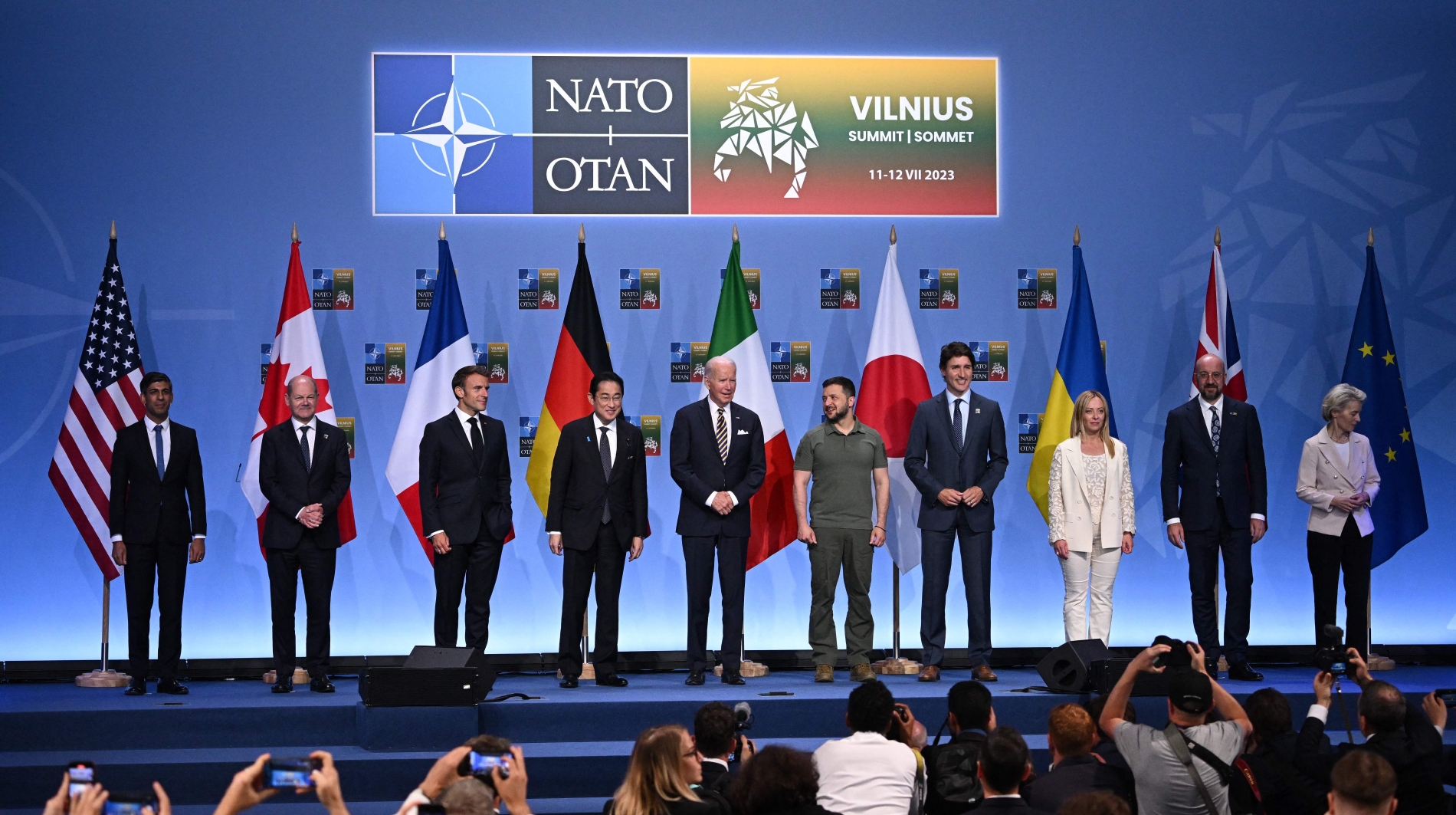
Paul ELLIS /  AFP
US President Joe Biden and mainly Western leaders agree a Joint Declaration of Support for Ukraine during the NATO Summit in Vilnius on 12 July 2023.

Russia’s 2022 invasion, though, revealed the answer. While Washington—led by then-President Joe Biden—tried to rally the world to condemn Moscow’s aggression, much as George HW Bush did against Saddam Hussein, the world had changed. Only Western allies, including Japan and South Korea, joined the US in imposing sanctions on Russia. China, Brazil, India, South Africa and the entire Global South refused.

The Middle East also refused. Key US allies like Israel, Saudi Arabia and the UAE not only didn't join the sanctions, but the latter two also refused Biden’s request to produce more oil to help compensate Europeans for losing access to Russian gas. It became clear that—though still allies of the US—such Middle Powers no longer felt compelled to toe the US line when it diverged from their interests.
While Russia's invasion of Ukraine didn't create today's multi-polar order, it clearly confirmed its arrival

New realities

Aside from Russia and Ukraine, the most dramatic impact of the invasion has been felt in Europe. European states had enjoyed the "peace dividend" at the end of the Cold War, which allowed them to reduce high defence spending in the belief that there were fewer threats to security. Having already attacked Georgia in 2008, and Crimea and the Donbas in 2014-15, Vladimir Putin's 2022 invasion shook leaders out of this complacency and raised the alarm that the Baltic States, Poland and other eastern European states could be next.

While Europe's immediate response, in concert with Washington, was to lend military and economic support to Kyiv and to sanction Russia, the long-term outcome has been a change in mindset. Defence spending has rocketed, from roughly €218bn across the EU in 2021 to around €381bn in 2025. While only three NATO members met the target of spending 2% of GDP on defence in 2014, by last year all 32 members had hit the target, with Poland, the Baltic states and Norway—those most fearful of Russia—outspending the US proportionally.

NICOLAS TUCAT / AFP
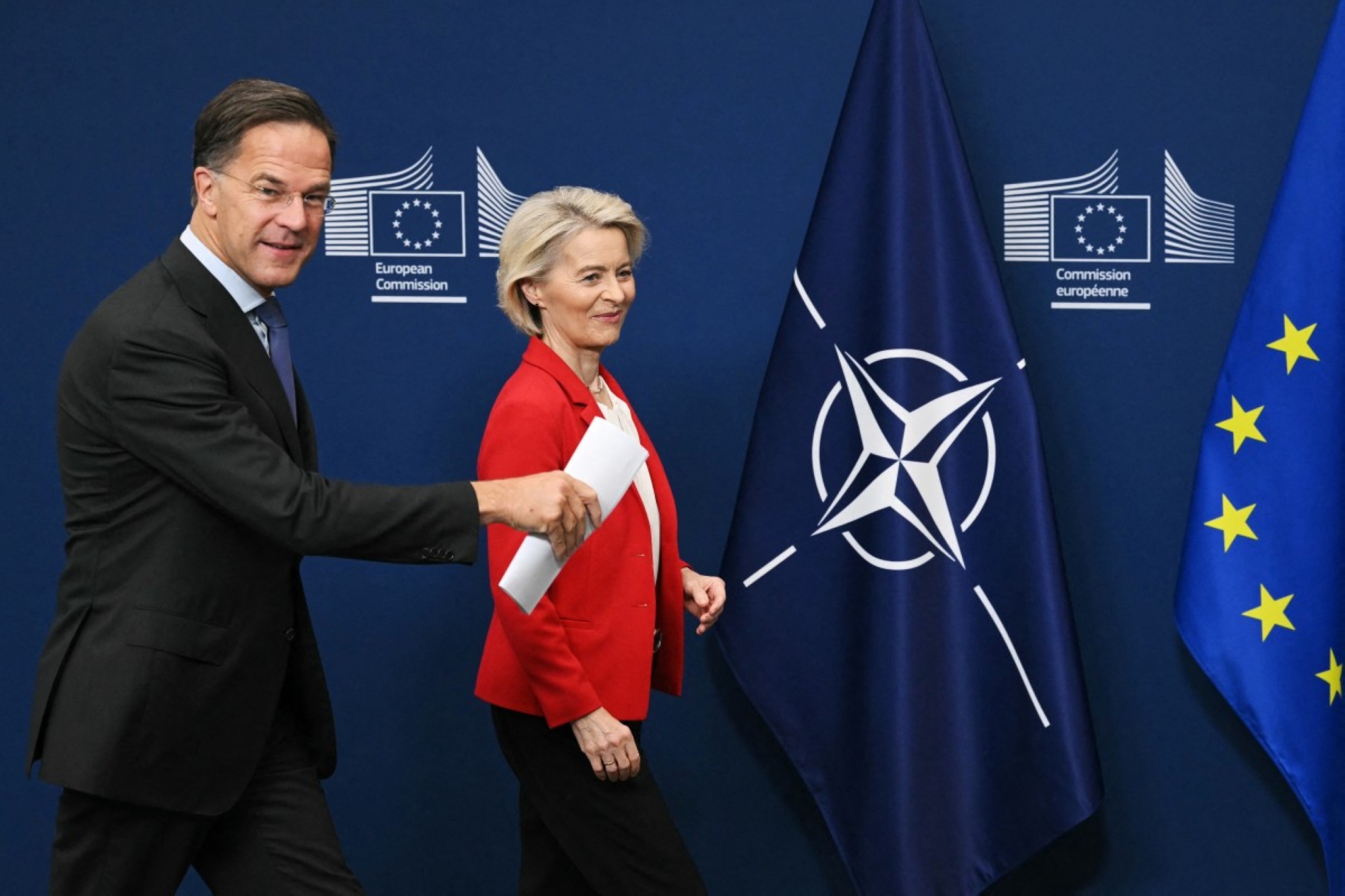
European Commission President Ursula von der Leyen (R) and NATO Secretary General Mark Rutte at the EU headquarters in Brussels, on 30 September 2025.

Europe's institutions have adapted in ways unforeseen just a few years ago. The EU, primarily a political and economic organisation, has become a key player in the continent's defence, expanding mechanisms like the European Peace Facility to help members rearm. Likewise, NATO has expanded, with Finland and Sweden, worried about the threat from Russia, abandoning their historical neutrality to join the defence bloc in 2023 and 2024, respectively.

But though most European states have rallied, the Western alliance has proven not as robust as some hoped. Viktor Orban's Hungary, though small, has repeatedly expressed its sympathy with Russia and sought to delay and limit the EU's collective response. Türkiye, though a NATO member, has close trading ties with both Russia and Ukraine and has remained neutral in the conflict. Ankara even held up the entry of Sweden and Finland into NATO, concerned with the former's support for Kurdish militants.

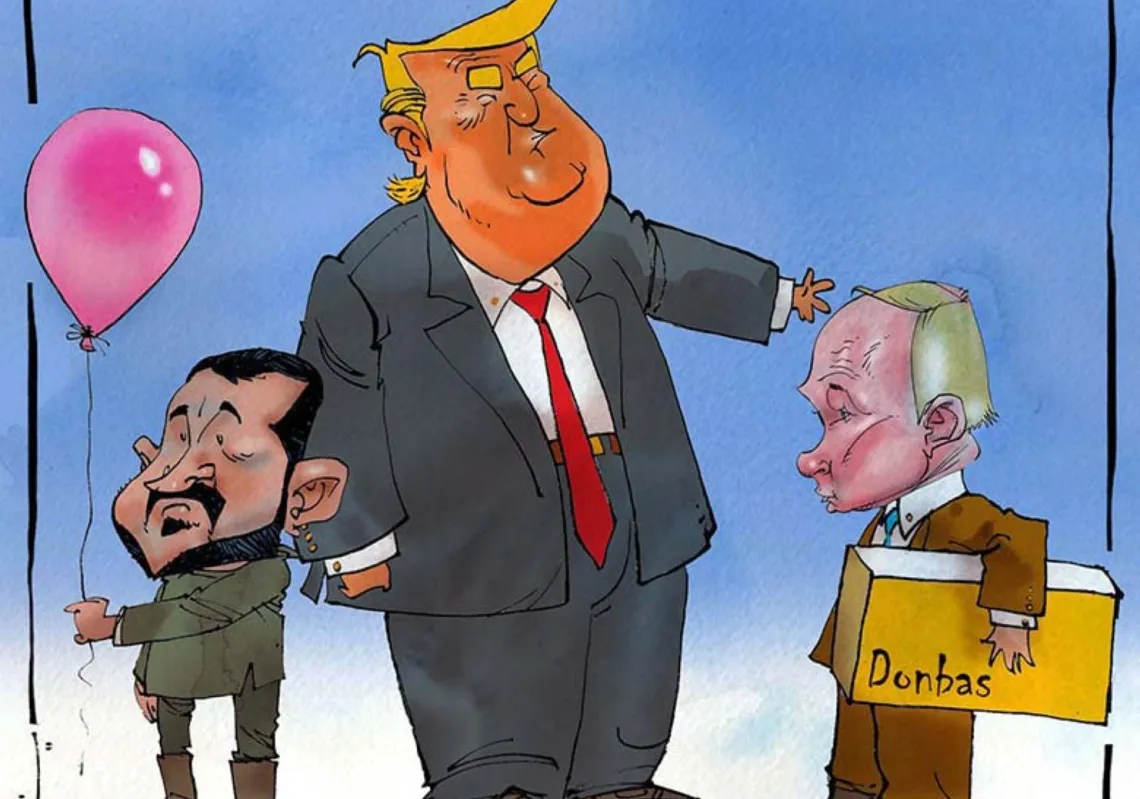
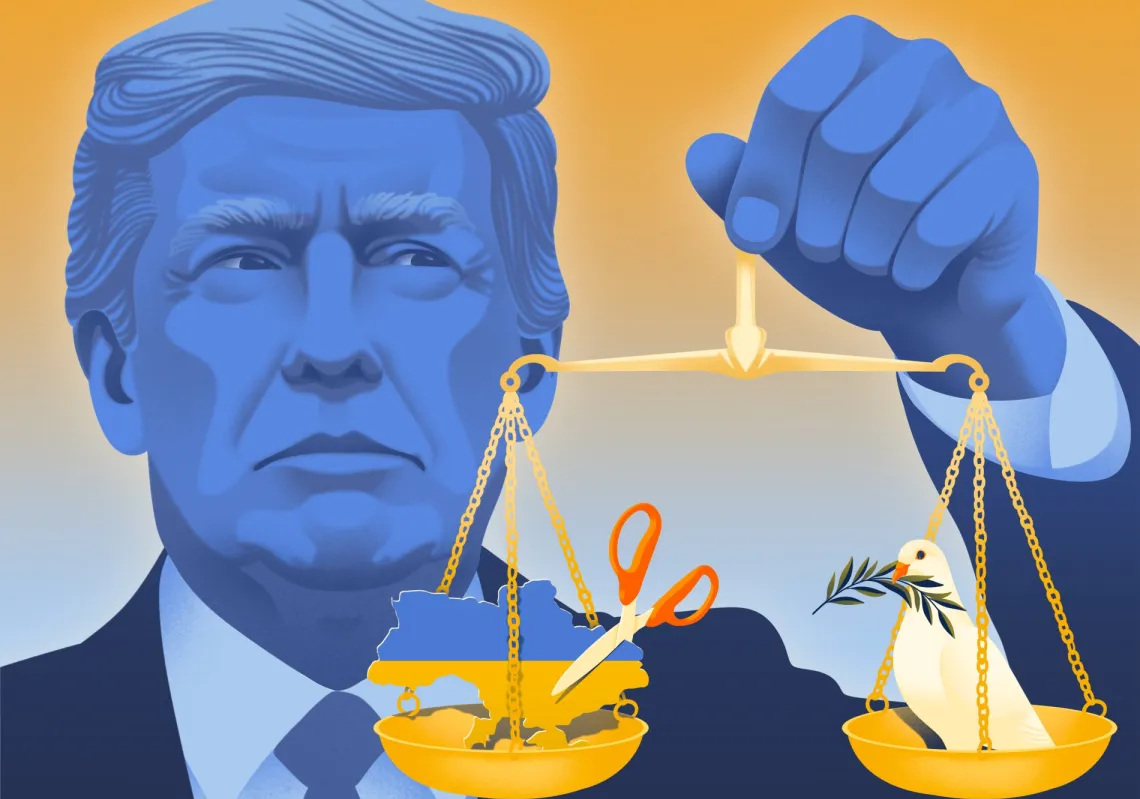
More recently, the re-election of Donald Trump has transformed the US's position, with many in the MAGA movement questioning the value and necessity of supporting either Ukraine or, for that matter, Europe. It remains to be seen whether this view wins out and Washington either cuts support or forces Kyiv into a peace deal that favours Russia. However, the war has become a totem issue for some on the populist right, contributing to a weakening of the Western alliance from within.

The rise of Middle powers

The geopolitical changes brought by the conflict have had some beneficiaries, however, primarily in the Global South. China is one. The collapse of Russia's relationships with the West has made it more dependent on China for trade and vital goods. This has shifted what was once a comparatively equal relationship in the 2010s to one of clear subservience.

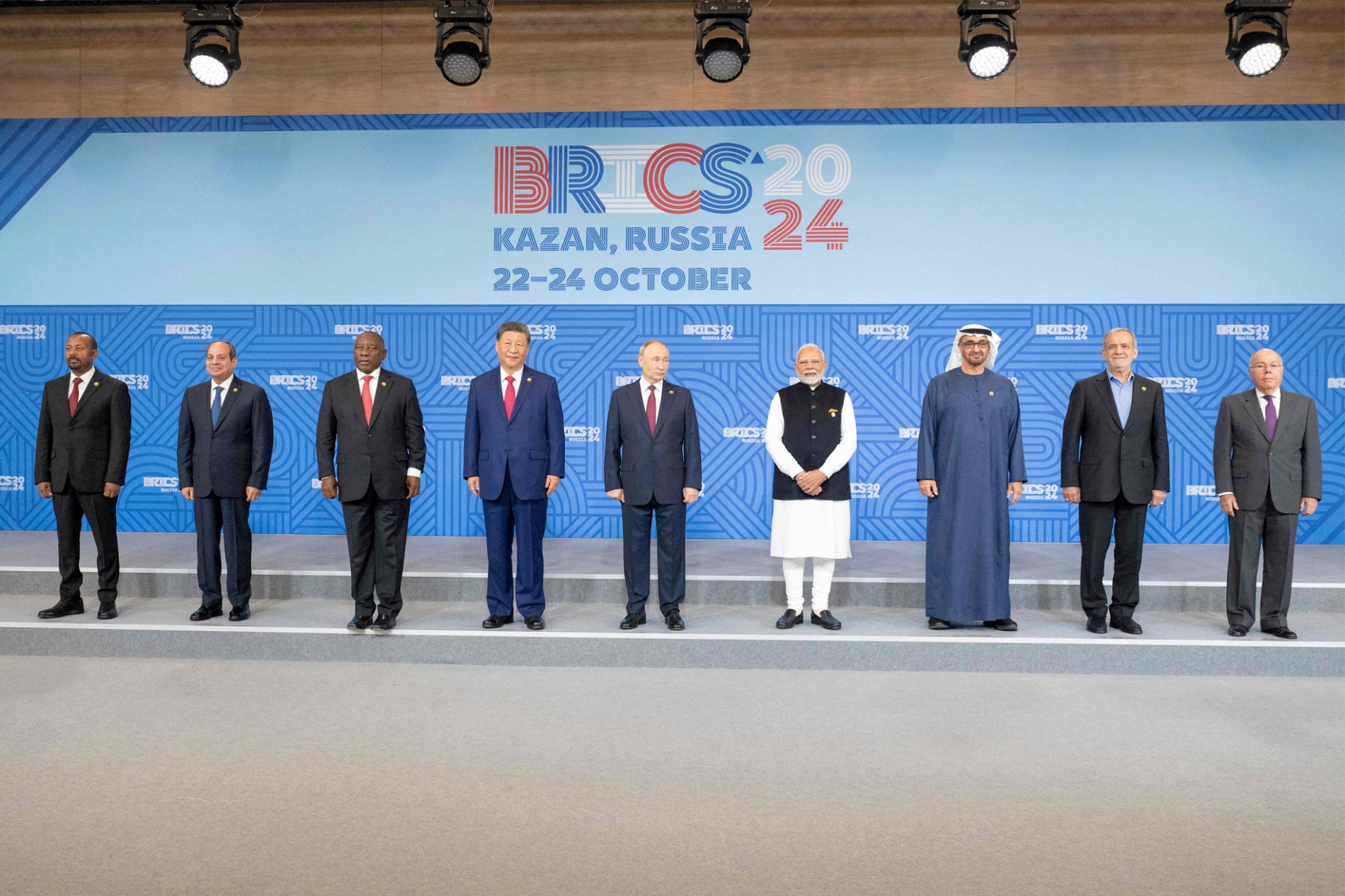
Russia's isolation also prompted Moscow to support the expansion of the BRICS bloc in 2024, adding Egypt, Ethiopia, Iran, and the UAE to its ranks. This has given these Middle powers, and those that have become more closely associated with the grouping, like Saudi Arabia and Türkiye, a further platform to promote the interests they lacked before 2022.

AFP
The presidents of Egypt, South Africa, China, Russia, UAE, and Iran, the prime ministers of Ethiopia and India and Brazil's foreign minister pose for a family photo during the BRICS summit in Kazan on 23 October 2024.

At the same time, Russia's focus on Ukraine has weakened its global position, opening opportunities for others where it once dominated. The most obvious example of this is Syria, where Moscow proved unable and unwilling to expend valuable resources rescuing Bashar al-Assad for a second time, leading to his fall in 2024. Regime change in Damascus has seen Türkiye, Saudi Arabia and Qatar's influence expand at Russia's expense. Moscow's influence in Libya and Sudan has similarly weakened.

How permanent Russia's global weakness is remains to be seen. Should the Trump administration cut a favourable deal on Ukraine in Moscow's favour, Russia could soon recover some of its past global influence, but should the war continue, it could prove a serious drain and even threaten Putin's domestic position.

Reversal unlikely

Whatever happens, though, it is unlikely that other changes from the war will be reversed. Multipolarity is here to stay, and even if there is a nominal peace in Ukraine, European leaders are unlikely to slow their rearmament.

Meanwhile, ruptures within the Western alliance could heal when Trump leaves office, but even then, Europeans are unlikely to leave themselves as exposed to the whims of Washington policy makers again. Even if we cannot yet see how the conflict will end, we can see how deeply it has shaken global politics.

font change