From development to doctrine: the Pentagon fast-tracks AI

Donald Trump’s administration has ordered military chiefs to incorporate Artificial Intelligence into almost everything that it does, and to do it quickly.

Eduardo Ramon

From development to doctrine: the Pentagon fast-tracks AI

On 9 January 2026, the United States’ Department of War launched its Artificial Intelligence Acceleration Strategy. The American military has been testing AI technology for a while now and wants to rapidly integrate it into the heart of its defence doctrine. For the Pentagon and the White House, there is no time to lose.

For centuries, states have vied for technological supremacy in warfare, and it is clear that the use of AI will be a key determinant of hard power in the 21st century, as the strategy acknowledges. “AI-enabled warfare and AI-enabled capability development will redefine the character of military affairs over the next decade,” the accompanying memo states, adding that the American military must become “an AI-first warfighting force across all components, from front to back”.

Announced by US Defence Secretary Pete Hegseth, the strategy seeks to embed AI in the US armed forces, treating it as core to combat, intelligence, and operations management, rather than being merely a supporting technology. The military’s primary aim is to get from development to deployment faster by reducing bureaucratic “barriers”.

Race to the future

The strategy requires an expansion of computing infrastructure, secure data, and more specialised talent to keep the American military one step ahead of adversaries that are also incorporating AI into their war machines. Delaying the introduction of AI into the military is now treated as a strategic risk that could negatively affect force readiness and the country’s ability to deter and compete.

Hegseth could hardly have been clearer on this point. “Military AI is going to be a race for the foreseeable future, and therefore speed wins,” he wrote in his memo to commanders. “We must weaponise learning speed, and measure and manage cycle time and adoption rates as decisive variables in the Al era. We must accept that the risks of not moving fast enough outweigh the risks of imperfect alignment.”

AI is being integrated into weapons systems, battlefield technologies, combat simulators, decision-making mechanisms, data management, threat analysis, and the coordination of operations across the different service branches (army, navy, air force, etc.). Whereas AI was once kept at arms' length from life-and-death battlefield decisions, today it is well and truly part of them, the Pentagon strategy talking of “AI-enabled battle management and decision support, from campaign planning to kill chain execution”.
Reuters
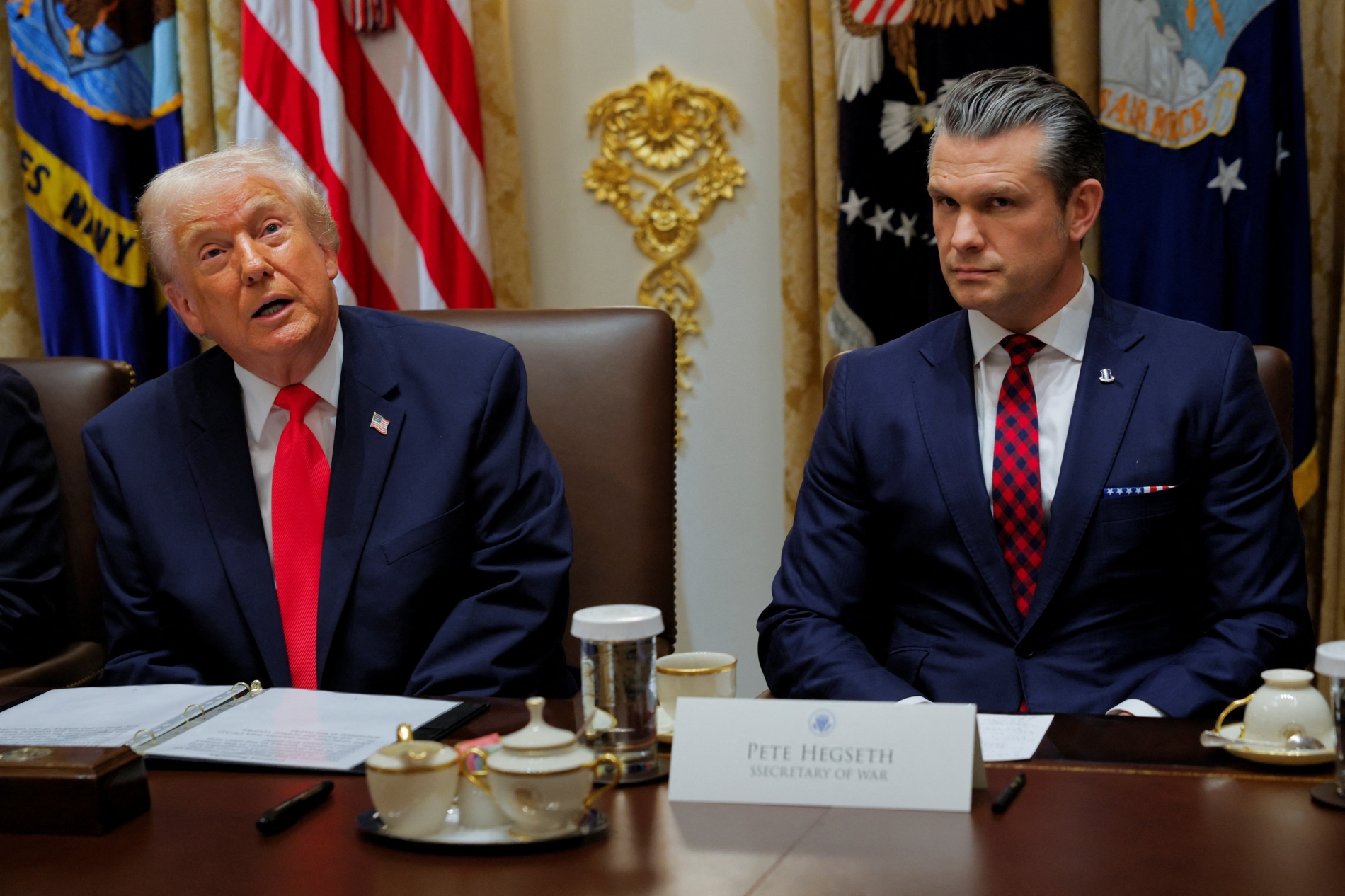
Trump with US Secretary of Defense Pete Hegseth at the White House in Washington, DC, on 2 December 2025.

Rapid application

Hegseth and his boss, US President Donald Trump, want the main message on AI integration to be the need to accelerate. Instead of waiting years to approve new systems, the Department of War (DoW) is pushing for rapid testing and practical application in real operational environments, with wider use expanding as soon as effectiveness is proven.

They acknowledge the rapid pace of AI development and explicitly state that America's military needs to incorporate the latest technology as soon as it becomes available. "We are seeing unprecedented velocity in the evolution of the frontier AI models," Hegseth writes. "They are becoming smarter and more robust every day. The Department cannot be working off models that are months or years old. We must have the latest and greatest AI models deployed for our war fighters."
Military AI is going to be a race for the foreseeable future, and therefore speed wins

US Secretary of War Pete Hegseth

The plan organises AI efforts across three main tracks. The first is combat operations, where AI will improve coordination and responsiveness on the battlefield. The second is intelligence, where AI will speed up the analysis of vast quantities of data and convertit into actionable information. The third is supporting operations, including logistics and planning, as well as resource management.

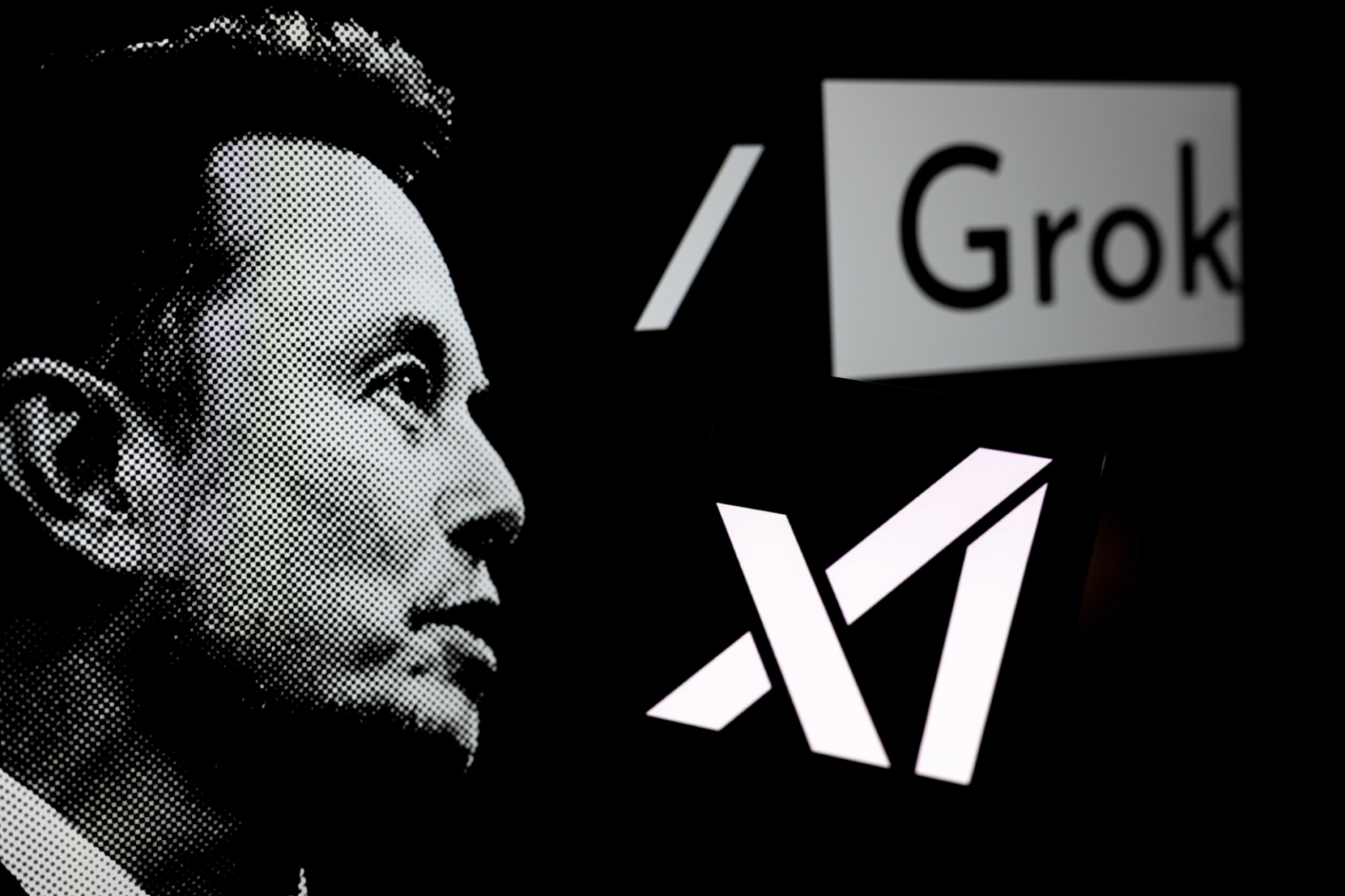
The strategy announces a set of time-bound projects with clear objectives, designed to serve as practical models for how AI can be employed within the armed forces. In parallel, the DoW has announced the expansion of its internal AI platforms, led by GenAI.mil, alongside advanced models from the private sector, such as Google's Gemini and xAI's Grok, the latter being Elon Musk's chatbot.

Shutterstock

Explicit timescales

This is the Department's third AI acceleration strategy in four years, analysts noted, but this one makes timescales explicit, such as incorporating new AI models into the military within 30 days of their availability. Only recently, it took Microsoft 18 months to make ChatGPT4 available on the US government's secure cloud server.

Reliance on advanced private-sector generative AI models suggests that the US military establishment is no longer relying solely on internal development. The strategy makes it clear that the armed forces will leverage private sector data centre capacity and other AI infrastructure.

The new AI edicts reflect a broader revision of how the American military makes decisions, manages risk, and awards contracts. The former bureaucratic model that once insisted on military systems incorporating Diversity, Equity, and Inclusion (DEI) frameworks has been ditched in favour of speed, flexibility, and mission-focused models, not message-driven ones.

Contracts are now being awarded with these values in mind, and instead of relying almost exclusively on big traditional contractors, DoW money is increasingly flowing to start-ups and private-sector technology providers, especially those developing solutions in AI, autonomy, and unmanned systems.

The changing institutional mindset—to one that values speed over perfection—is reflected in practical terms in the Replicator programme, including in the delivery and purchase of systems linked to unmanned platforms and counter-drone capabilities, as part of Replicator's second phase.

At its core, Replicator is designed to bypass traditional contracting cycles and rely on ready solutions from start-ups, with an emphasis on speed, scale, and flexibility rather than complexity and long-term dependence on large, expensive systems. In this sense, the programme is not a standalone initiative. It shows how the US military is reintegrating AI and operational autonomy into its deterrence architecture.

AFP
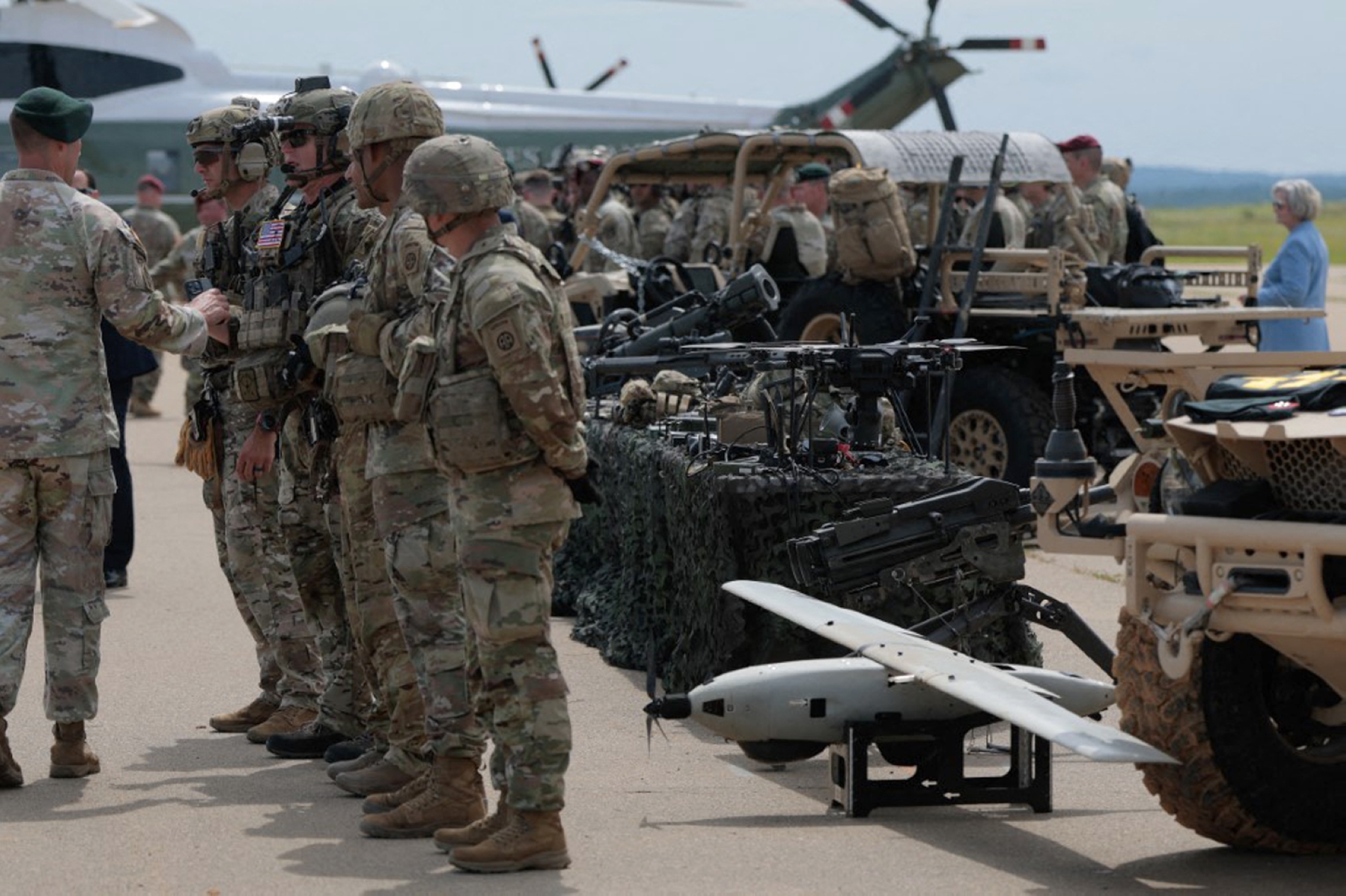
Fort Bragg US military base

More adaptable

The AI strategy shows how the US military is reshaping itself to be more adaptable, faster in decision-making, and more open to innovation from outside its own structures.

In January 2025, in one of his first executive orders, Trump directed that obstacles to US leadership in AI be removed, cancelling earlier policies that imposed expanded safety testing and reporting requirements.

Tens of billions of dollars are being spent on the construction of data centres and other AI infrastructure, but there is a parallel push to unify federal AI policy and recruit technical talent into government, not least because Washington knows it is in an AI race against its adversaries. This is an era in which AI is now inseparable from instruments of state power and influence. And the major powers know it.

font change

Related Articles