The NSS reflects the growing utility of technology

Those with the most advanced chips and algorithms can integrate them into their military infrastructure to create a potent fighting machine. As a key White House document shows, the race is on.

shutterstock

The NSS reflects the growing utility of technology

On 4 December 2025, the United States unveiled its National Security Strategy (NSS), a guiding framework covering foreign policy, economics, defence, national security, and international relations. Traditionally, the NSS has served as the compass of American power, with implications for the Pentagon, the Treasury, the State Department, and, increasingly, major US technology companies.

This is not the first NSS to underscore the importance of technology, but it is among the most consequential. In a sense, it redefines power, with technology joining conventional military force and diplomatic influence at the heart of the equation. In this way, the NSS reveals a growing conviction in Washington that the balance of power in the 21st century will be determined less by aircraft carriers or overseas bases than by algorithms, knowledge, and technological innovation.

The strategy presents technology as the “decisive weapon” shaping America’s position in the international order, both economically, militarily, financially, and geopolitically. It assumes that mastery of artificial intelligence (AI), semiconductors, advanced energy technologies, cyber infrastructure, and space is no longer just a matter of technical advantage but a first-order national security imperative.

According to this theory, those who dominate these domains will govern their development, regulate their use, shape the rules of the emerging world order, direct global growth, and influence the strategic choices of other states. Technology is therefore seen not as an isolated sector but as a structural force influential in economic management, geopolitical alliances, and military conflicts.

It is no longer a supporting instrument of power, but the foundation upon which strength is built, woven throughout the strategy’s core themes. This underscores the depth of America’s reliance on tech superiority, with US military deterrence now as closely tied to advances in AI, autonomous systems, and cyberspace as it is to traditional weaponry. No longer a subsidiary tool or complement to public policy, technology is now key to political decision-making itself.

There is recognition that the most serious threats confronting the state are no longer exclusively traditional or military but increasingly digital, including cyberattacks, information warfare, manipulation of public opinion through digital platforms, and assaults on critical infrastructure. These can all undermine a system’s cohesion and stability, creating a political threat.

Tech pushes sovereignty beyond borders

AI can be a productive technology, able to enhance efficiency, but it can also provide early warnings, advanced analysis, risk anticipation, and rapid crisis response, meaning that its deployment (whether defensively or offensively) is tied to sovereignty in the 21st century. Sovereignty today is no longer confined to defending territorial borders. It encompasses the protection of data and digital networks, whose control is essential to managing the public sphere and exercising authority.

The White House aims to integrate AI across government and public institutions, with President Donald Trump recently launching the National Artificial Intelligence Plan to embed AI in both civilian and military sectors, explicitly linking it to national security and global competition.
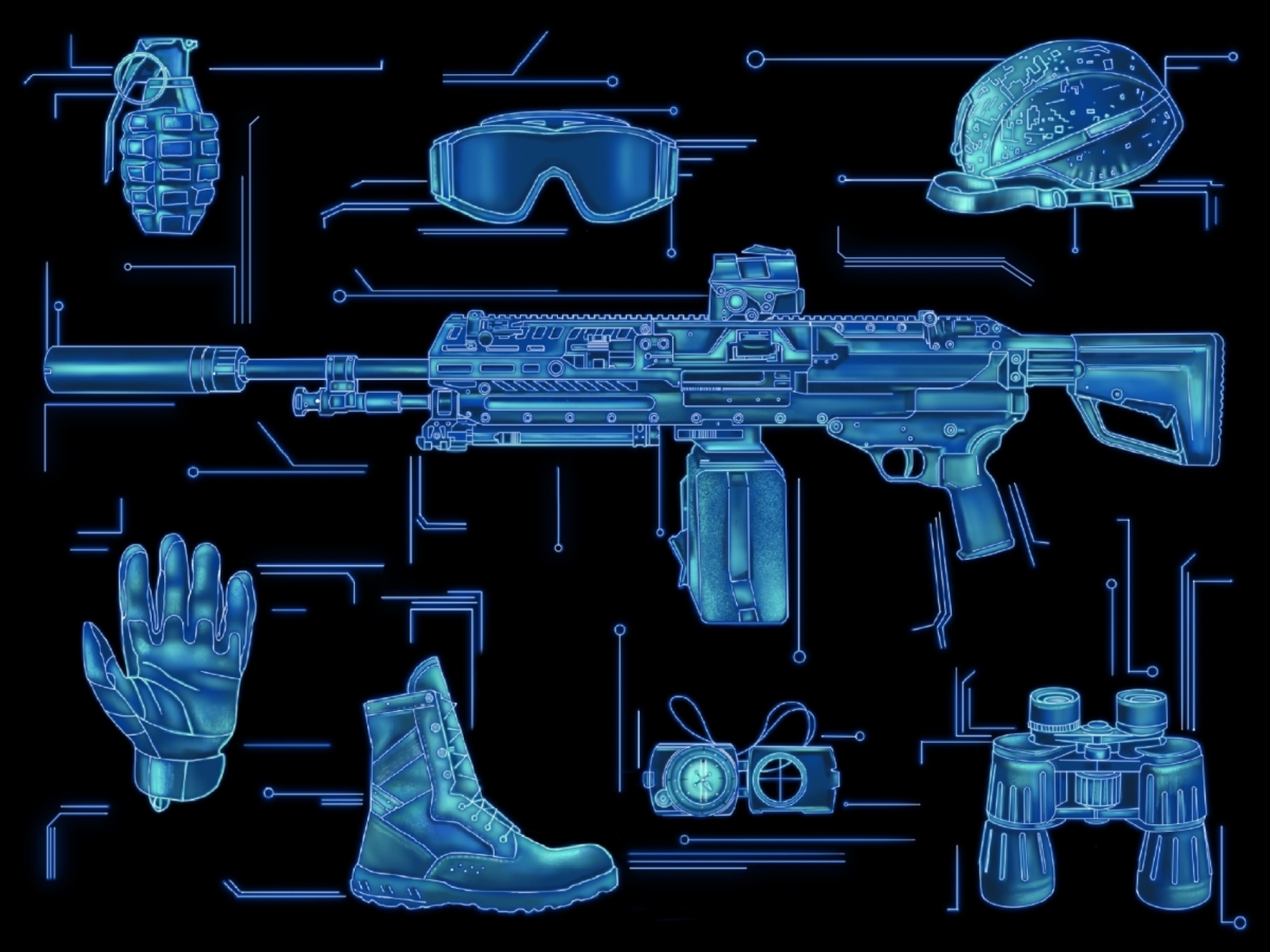
AI can be a productive technology able to enhance efficiency, but it can also provide early warnings, advanced analysis, risk anticipation, and rapid crisis response

An executive order he signed on 11 December imposes federal restrictions and penalties on US states that try to limit the development or use of AI. Federal policy is that AI is a strategic instrument whose development must be protected from delay, fragmentation, or constraint at the state level.

In recent years, there has been a concerted effort to build and modernise America's digital infrastructure, expanding capacity to host and operate advanced AI models, and revising information security policies to strengthen data protection. As part of this, the Department of Defence launched the GenAI.mil platform to provide a secure Generative AI (GenAI) tool to all personnel, mandating its immediate integration into daily workflows. This directive embeds AI into military decision-making, analysis, planning, and operations. 

Grace Russell

Read more: The promise and danger of AI in the military

Setting standards

Domestically, the mandated use of AI redefines the nature of US public institutions and instruments of government. Externally, the US can use its technological architecture to set global standards and norms, exporting not just products and solutions but entire models of digital governance. States that adopt these models effectively integrate into American economic, political, and technological networks.

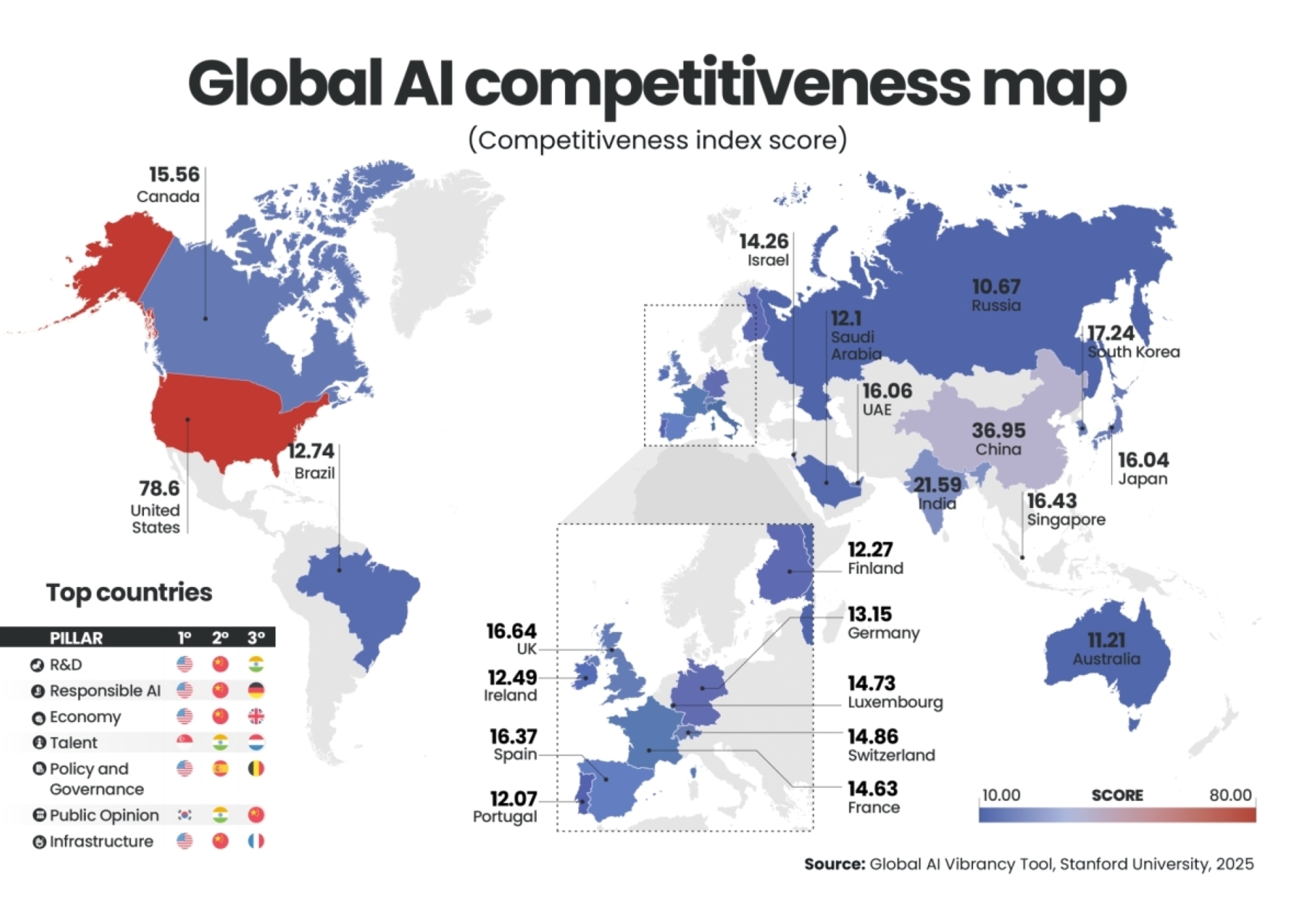
Within this framework, China is the United States' principal technological rival. Confrontation with Beijing is not framed as a conventional trade dispute or competition over market share, but rather as a structural struggle over who will define the future of global technology, setting its rules and standards. Washington's export restrictions on semiconductors and sensitive technologies are therefore aimed at slowing China's ascent, as evidenced by the advanced H200 chips.

While Washington's initial partial readiness to permit limited exports appeared to be tactical flexibility within its broader containment policy, Beijing's cautious response revealed a determination to reduce China's long-term dependence on US technology, even at the cost of short-term developmental progress. The conflict has thus moved beyond the logic of bans and export licences. China now appears to want a strategic decoupling while it builds independent tech ecosystems with alternative standards.

Expanding America's digital base is an important factor in the country's overall economic growth. A recent analysis published by Fortune found that investment in data centres and computational infrastructure linked to AI accounted for nearly 92% of US gross domestic product (GDP) growth in the first half of 2025, while a report by Forrester Research, an advisory firm, noted that US spending on digital technology reached $2.7tn in 2025. In 2025, the semiconductor industry employed hundreds of thousands of Americans directly, while many others were indirectly linked through supply chains, engineering, and logistics.

Al Majalla

Eye-to-AI with China

The NSS provides no data or indicators to quantify the size or direct contribution of technology, but it does treat it as a sovereign instrument and a cornerstone of reindustrialisation, supply-chain security, and long-term competitiveness. The strategy's treatment of technology is therefore political and strategic, rather than quantitative. It affirms the necessity of advancing AI, autonomous systems, and frontier technologies, but refrains from specifying investment needs or financial commitments.

The 2025 NSS does propose that technology has become the essence of modern military power, with superiority no longer dependent on arsenals or combat platforms but rather on the ability to manage the pace and trajectory of warfare. AI, unmanned systems, space, and advanced computing are all identified as decisive factors in the great power rivalry between Washington and Beijing.

China has expanded and structurally transformed its armed forces, redesigning its operations around AI and unmanned systems. This is in line with a 2023 US Department of Defence report, which confirmed that Beijing was embedding AI across its combat systems, including reconnaissance, electronic warfare, fire control, and unmanned vehicles.

China's new operational model integrates manned and unmanned systems, with combat swarms of highly autonomous drones able to manoeuvre and coordinate with piloted platforms

A study by RAND (a US think-tank) in August 2025 found that China was constructing a new operational model based on the integration of manned and unmanned systems, centred on combat swarms of highly autonomous drones able to manoeuvre and coordinate with piloted platforms. This model is designed to achieve tactical advantage through speed, dispersion, and multi-axis attack, its systems communicating, distributing tasks, and making collective tactical decisions in combat.

The NSS acknowledges that the US is developing comparable capabilities. Deploying thousands of intelligent, cooperative drones could alter the rules of combat, weakening traditional defence systems designed to counter limited, predictable threats while making density and flexibility decisive factors on the battlefield.

Time is of the essence

To reinforce American deterrence, the NSS envisions accelerating the development of autonomous air, sea, and land systems capable of operating in high-risk environments, and expanding the use of AI in command-and-control structures by combining data from satellites, radar, aircraft, and sensors to create a unified operational picture managed by algorithms. The aim is for technology to enable faster decision-making and a more comprehensive situational awareness than competitors. 

Andy Potts
Technological and scientific advances have opened the door to military opportunities and threats beyond our atmosphere.

Read more: Stellar competition: Will the next world war be over space?

Space is central to this intensifying military competition. The US depends on an extensive constellation of satellites for navigation, communications, early warning systems, and surveillance, described by US intelligence as the world's largest military space infrastructure, but China also operates hundreds of satellites with military functions and is rapidly developing capabilities to disrupt American space assets via electronic jamming or the targeting of orbital sensors.

The 2025 strategy concludes by stressing that technological superiority cannot be sustained without an independent and resilient defence-industrial base, particularly in semiconductors and other sensitive components that constitute the proper fuel of intelligent systems. A technology-driven competition cannot be won if critical supply chains fall within an adversary's sphere of influence.

In this sense, the strategy offers a definitive portrait of 21st century power. Technology is no longer an instrument used to enhance weapons; it has become a weapon itself. Control over intelligent systems, space, and the digital infrastructure of modern armies will determine the global balance of power in the decades ahead.

font change