Why the ‘unreliable allies’ narrative doesn't track in Africahttps://en.majalla.com/node/329549/politics/why-%E2%80%98unreliable-allies%E2%80%99-narrative-doesnt-track-africa
Why the ‘unreliable allies’ narrative doesn't track in Africa
A growing ‘unreliable allies’ narrative claims Russia and China are abandoning their African partners. The evidence suggests otherwise.
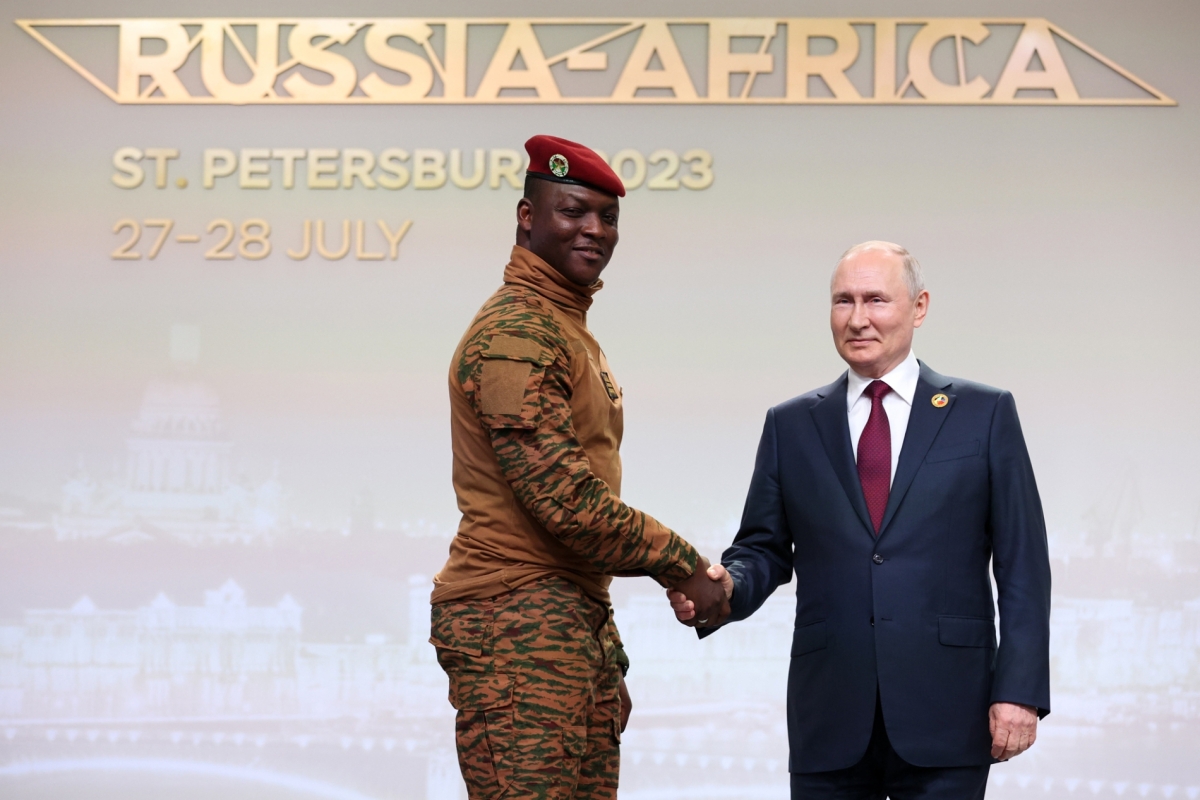
Burkina Faso's Capt. Ibrahim Traore, left, and Russian President Vladimir Putin shake hands before an official ceremony to welcome the leaders of delegations to the Russia Africa Summit in St. Petersburg, Russia, July 27, 2023
Why the ‘unreliable allies’ narrative doesn't track in Africa
A recurring theme has gained traction in transatlantic analysis and media commentary lately: Russia and China are said to be ‘abandoning their allies’, triggering growing ‘concern in Africa’. From the Sahel chapter of the Munich Security Report to briefings on West Africa, the cases of Syria and Venezuela are presented as cautionary tales for Sahelian regimes and other partners of Moscow and Beijing.
There is a kernel of reason in this argument. These crises do raise legitimate questions about the limits of external support. Yet, as the narrative is transposed onto Africa, it functions less as an analytical tool than as a pre-interpretive frame—one that shapes expectations about future crises rather than explaining the observable behaviour of African actors.
The very phrase ‘concern in Africa’ points to a disqualifying analytical error: essentialism. This is not a matter of stylistic carelessness or journalistic shorthand, but a fundamental failure of reasoning that renders subsequent conclusions methodologically unsound. A continent composed of dozens of states, regimes, and elite configurations is reduced to an imagined collective sentiment.
Such reduction does not merely simplify reality; it nullifies agency, replacing concrete decisions and interests with an abstract ‘mood’. To speak of ‘Africa’s anxiety’ without specifying governments, institutions, or decision-making mechanisms is not to analyse the region, but to appropriate the authority to speak on its behalf. In this sense, essentialism is not a rhetorical flourish but a load-bearing pillar: remove it, and the entire analytical structure collapses.
A narrative in search of evidence
If one looks to institutionally observable indicators, the empirical basis for directly extrapolating claims of Russian and Chinese ‘unreliability’ to the African context remains limited. In the public policy of African states, there has been no discernible wave of terminations or revisions of security agreements explicitly justified by mistrust of Moscow or Beijing; nor have there been official statements in which such ‘unreliability’ is cited as a decisive reason for reorienting foreign policy.
This does not, of course, preclude informal reassessments of risk or the expression of latent doubts. In African and Middle Eastern commentary, texts have begun to appear questioning the real value of Russian and Chinese guarantees in the wake of Venezuelan President Nicolás Maduro’s arrest and referring to a ‘quiet unease’ among elites.
A photo posted by US President Donald Trump shows Venezuelan President Nicolas Maduro aboard the USS Iwo Jima aircraft carrier after he was captured by the US military on 3 January 2026.
Yet, for now, this amounts primarily to a layer of interpretation, not to an established pattern of institutional decisions. The distinction is critical, for it is precisely here that analysis gives way to political action.
It is telling that the initial impulse behind this narrative originates primarily from outside the region, within the transatlantic analytical sphere. In reports and briefings produced by European and American think tanks, the fall of Assad and the crisis surrounding Maduro are presented as a universal ‘lesson’ for African regimes: Russia and China are said to lack both the resources and the political will required for sustained long-term support. Some formulations state this explicitly, arguing that ‘African leaders must recognise that Moscow and Beijing will not risk themselves for regime survival in the way the West once did for its clients’.
There has been no discernible wave of terminations or revisions of security agreements explicitly justified by mistrust of Moscow or Beijing
Within African elites, however, this logic is typically articulated far more cautiously—framed as a pragmatic question about the limits of possible support rather than as a definitive verdict. This divergence between the source of the narrative and regional political practice suggests not merely an external origin, but that the argument is being exported as a ready-made interpretation, rather than emerging from local political experience.
The function of this narrative is fairly transparent. It operates as a pre-emptive abandonment script, encouraging elites to assume in advance that, once pressure mounts, partners will not provide decisive support. Its intended audience is not the wider public, but a narrow circle of decision-makers: heads of state, senior military leadership, security and intelligence services, and key business interests.
Their expectations in moments of crisis often determine whether the choice is made in favour of consolidation and endurance, an interim accommodation, or fragmentation and realignment. In this respect, the narrative does not describe reality so much as intervene in it, shaping elite calculations before the crisis itself unfolds.
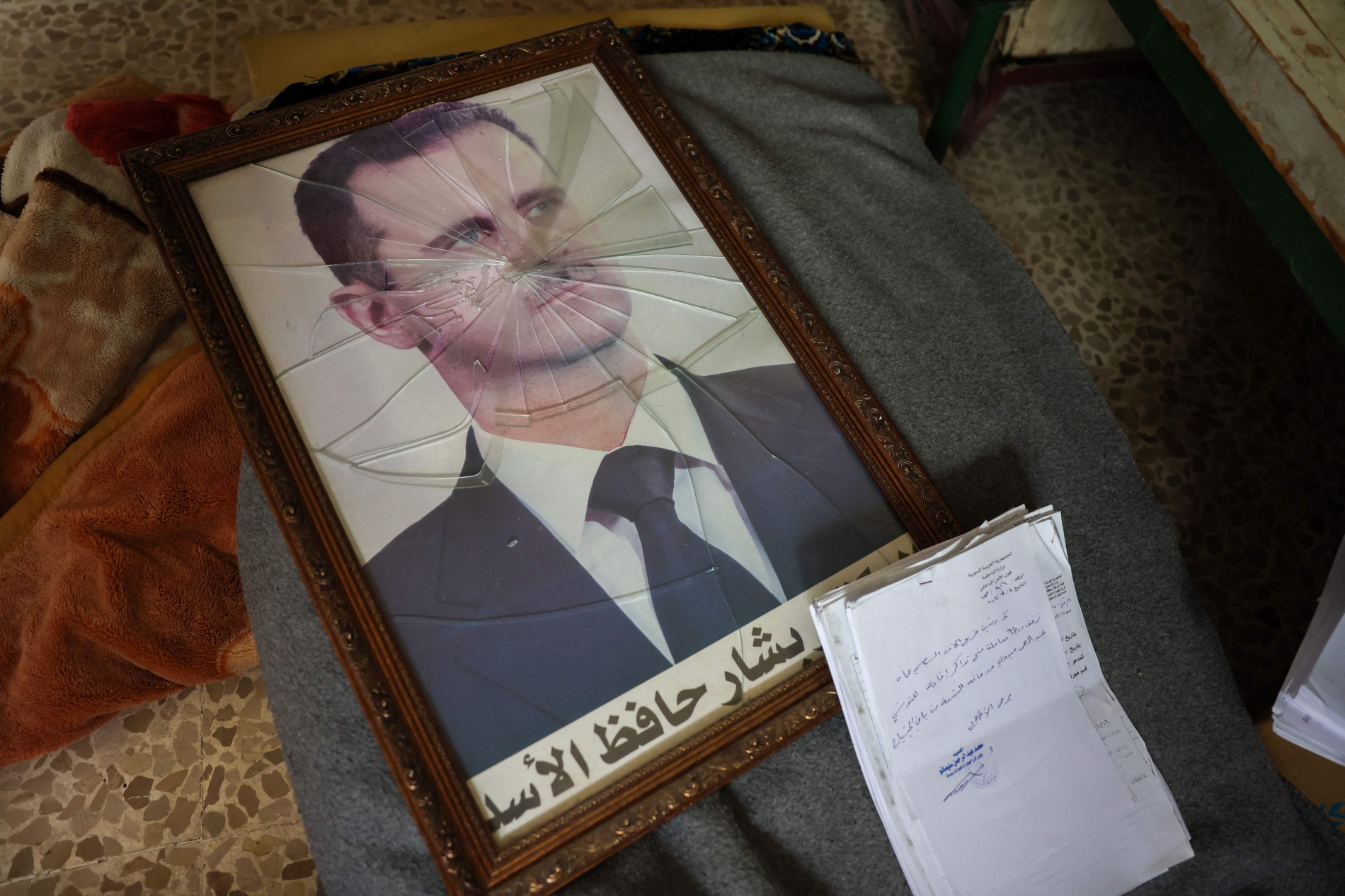
A portrait of Syrian President Bashar al-Assad is pictured with its frame broken in a Syrian regime's Political Security Branch facility on the outskirts of the central city of Hama following its capture.
What Syria and Venezuela actually show
The cases on which this narrative relies—Syria and Venezuela—do illuminate the limits of external support, but in a far more complex configuration than is commonly suggested.
In Syria, external intervention by Russia and Iran played a decisive role in preventing the regime's military defeat and preserving the core of state institutions. Portraying Bashar al-Assad as an 'abandoned ally' sits uneasily with the record: support was not withdrawn but intensified at the most critical stages of the conflict. At the same time, the Syrian experience demonstrated the outer limits of what external backing can achieve. Such assistance can buy time and military capacity, but it cannot remedy structural defects, restore lost legitimacy, or offset long-term economic decay. Scale alone does not convert a fragile internal architecture into a durable one.
Venezuela, by contrast, is often invoked as evidence of Russia's 'unreliability'. Yet this interpretation does not withstand scrutiny. Support from Moscow and Beijing was limited by design: loans, debt restructuring, energy and defence contracts, and diplomatic cover—without any commitment to direct military intervention at all costs. The boundaries of that support were shaped not only by external resources and risk tolerance but also by domestic dynamics: elite fragmentation, control over the security apparatus, and the strategic calculations of key actors.
It is precisely here that a point of fundamental importance—one systematically overlooked—comes into focus: the limits of support are the product of interaction between two sides. Even where the will to assist is strong, an external actor cannot substitute for internal elite consolidation; cannot impose political or coercive choices a regime is unwilling to make; and cannot construct a durable base of legitimacy in place of decaying institutions. To assess a partner's 'reliability' in isolation from the behaviour of the regime itself is not merely methodologically flawed, but analytically dangerous, as it sustains the illusion of automatic rescue and displaces responsibility for resilience.
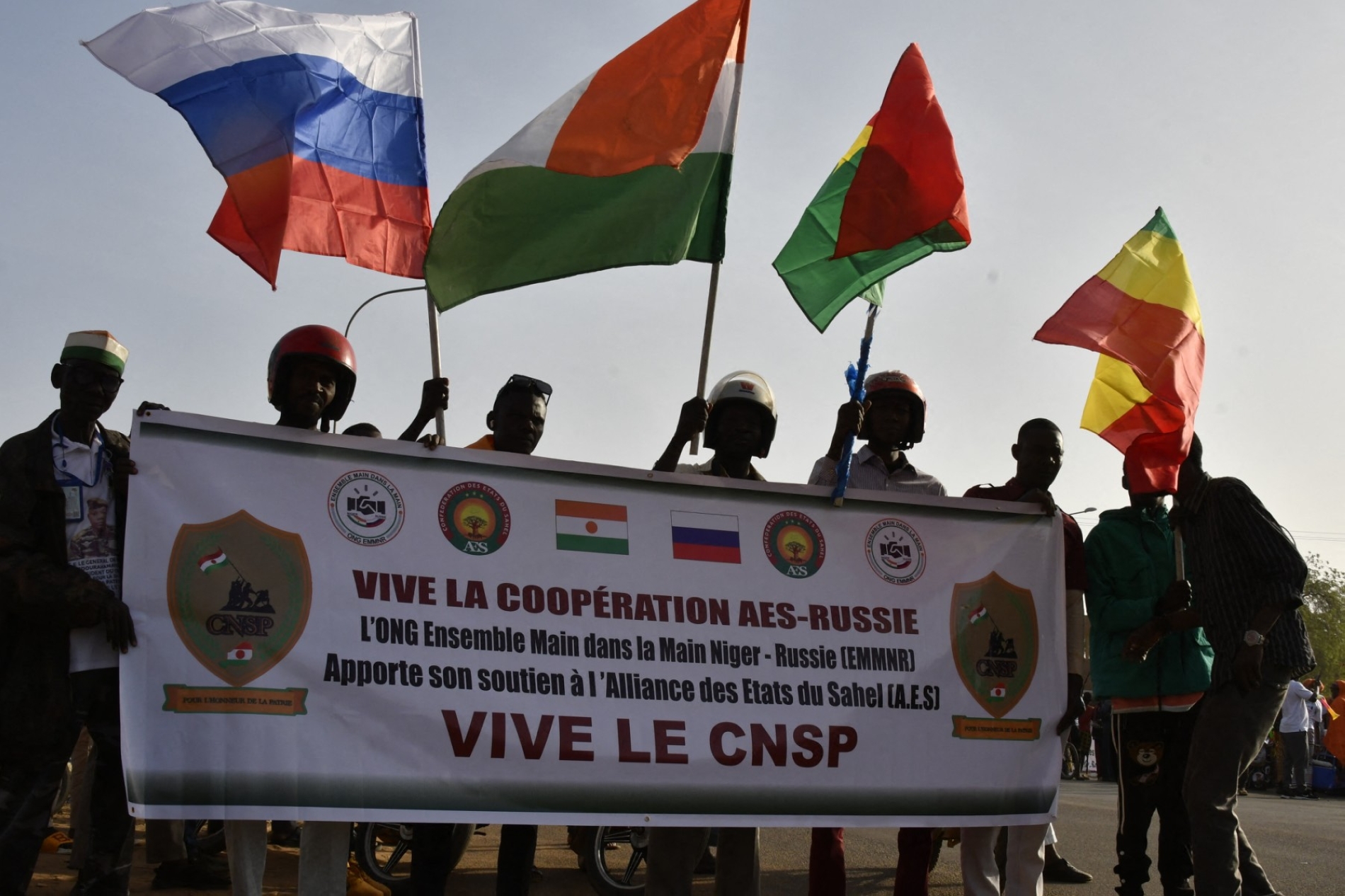
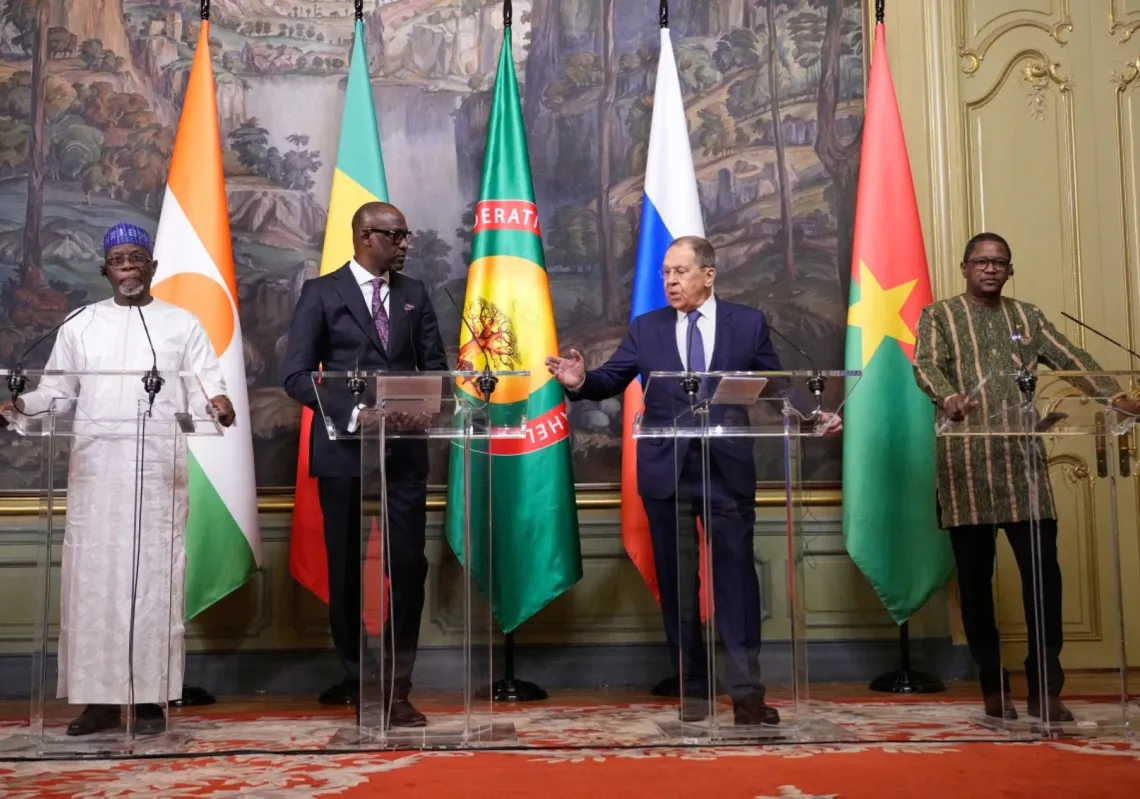
Flags of Russia, Niger, Burkina Faso and Mali during a gathering to celebrate these countries' withdrawal from the Economic Community of West African States (ECOWAS) in Niamey on 28 January 2025.
False equivalences and strategic anxiety
Comparing Syria and Venezuela with Sahelian states to argue for the 'non-viability' of Russian and Chinese guarantees is analytically weak. A high-intensity civil war, elite fragmentation within an oil-based populist regime, and asymmetric insurgency in the Sahel represent distinct types of crisis, each with different opportunity structures for external actors.
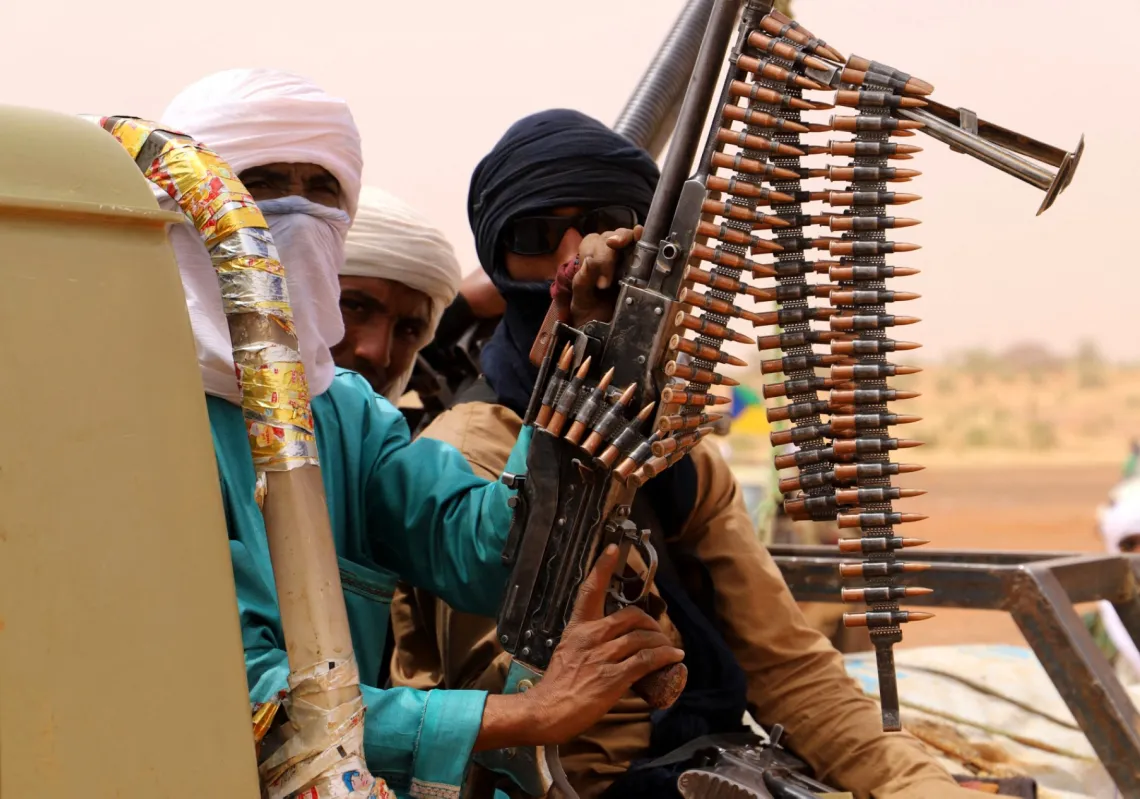
In the Sahel, Russian military contingents operate under limited mandates, alongside national armed forces, law-enforcement bodies, and local militias, countering separatist and jihadist insurgencies—not conducting large-scale ground interventions. Collapsing such disparate contexts into a single explanatory model serves the convenience of a warning narrative, rather than the accuracy of prognosis or a serious understanding of African security dynamics.
The timing of this narrative's amplification is revealing. It gains force against the backdrop of the crisis of Western security models in the Sahel, the contraction of European military presence, the growing role of alternative partners, and the consolidation of the Alliance of Sahel States (AES) around new external linkages.
As the capacity to directly shape events through military missions and institutional levers diminishes, interpretation increasingly becomes a substitute for lost power. Managing expectations—including by casting doubt on the 'reliability' of competitors—emerges as a surrogate instrument of influence where earlier mechanisms of control no longer operate at previous levels.
Russia and China, however, are not offering Cold War-style patronage. Their engagement in Africa and beyond is largely transactional: limited military assistance, arms supplies and training, political cover in international institutions, and economic projects—without formal security guarantees or commitments to intervene under all circumstances.
The empirical record does not support interpreting this approach as evidence of an impending abandonment of partners; nor does it justify treating it as a comprehensive insurance policy against internal crisis. Support has limits, and those limits are shaped not only by external resources but by the extent to which regimes themselves are willing and able to construct an internal configuration of power compatible with such engagement.
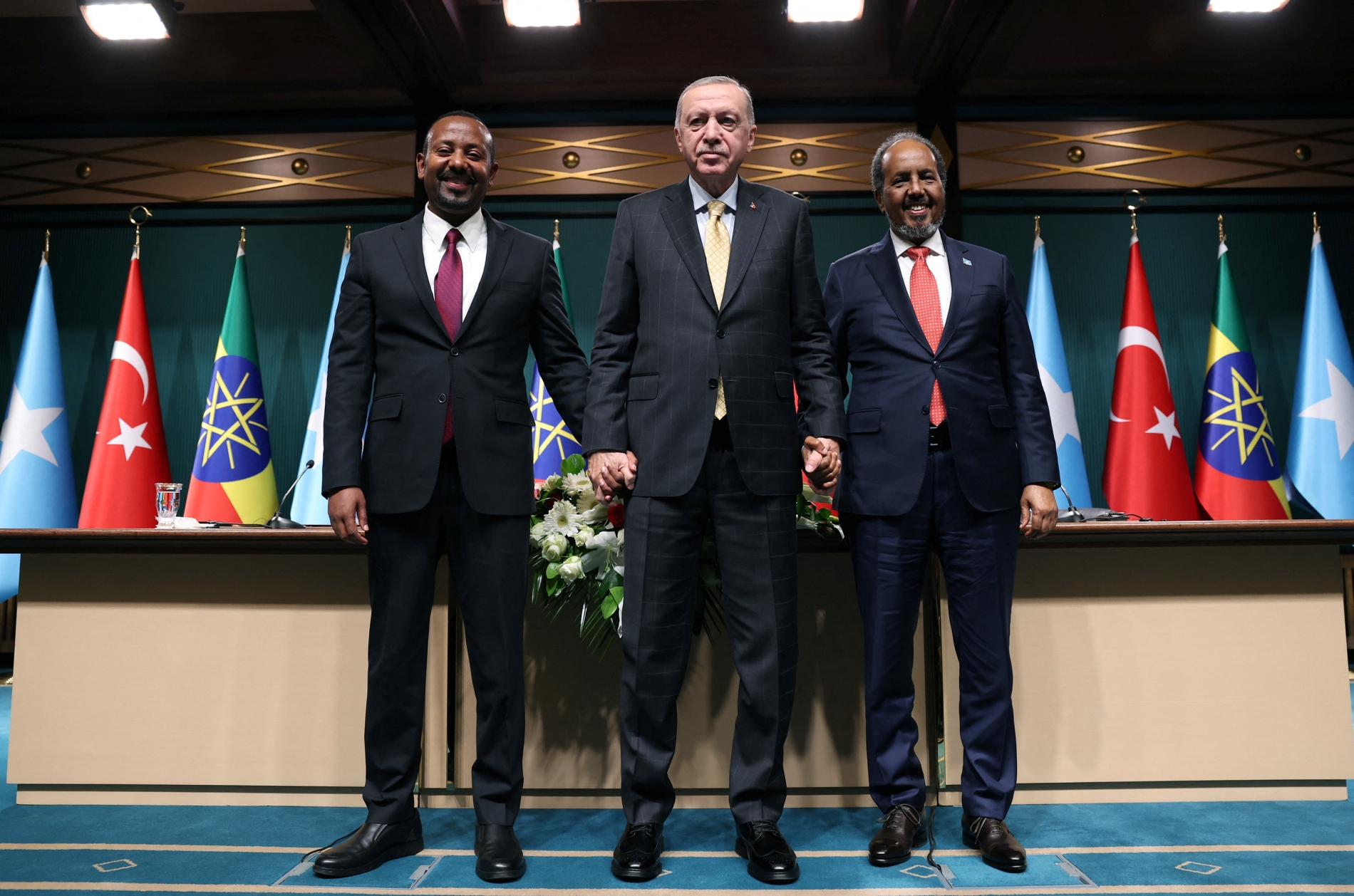
Turkish President Tayyip Erdogan with Somali President Hassan Sheikh Mohamud and Ethiopian Prime Minister Abiy Ahmed, following a press conference in Ankara, Türkiye, on 11 December 2024.
Autonomy, not patrons
For African states, the central lesson lies not in the search for a 'reliable patron' capable of guaranteeing regime survival, but in the construction of an autonomous strategy. The question is how to use external partners—Western, Russian, Chinese and regional—to widen room for manoeuvre without ceding critical control over security and political institutions.
In practice, this is already underway. Countries in the Sahel, including those aligned within the AES, are deepening engagement with Russia and China while maintaining and expanding ties with Türkiye and the Gulf states. Governments in eastern Africa, meanwhile, combine programmes with the US, the European Union, and China, without reducing their security posture to any single centre of gravity. In this logic, diversification is not an expression of a supposed 'African anxiety', but a rational strategy for reducing dependence.
It is precisely here that the narrative of 'unreliable allies' becomes genuinely dangerous. Its principal risk lies not in the inaccuracy of particular claims, but in its displacement of responsibility from internal factors to external ones—and in its cultivation of an expectation of inevitable abandonment among elites. Such expectations demoralise ruling coalitions, encourage pre-emptive realignment, and accelerate fragmentation—fragmentation that is then presented as proof of the narrative's validity.
This is the narrative's destructive function. It does not merely describe reality; it intervenes in it, recalibrating expectations and behavioural calculations. That is why it constitutes a threat: not because it may be wrong, but because, once internalised by parts of the elite, it can itself become a driver of crisis. In this sense, talk of 'unreliable allies' ceases to be analysis and becomes an instrument of pressure—one whose consequences may prove more damaging than any objective limits on external support.
Whatever the configuration of external partners, the outcome of African crises will ultimately be determined not by the abstract 'reliability' of allies, but by the extent to which regimes themselves are prepared to live with the limits of any external assistance—and to assume responsibility for resilience that cannot be outsourced to Moscow, Beijing, or anyone else.